Unlock Your Dream Trip: Top Generative AI Tools for Personalized Travel

Introduction
Remember the old way of planning a trip? The chaos of a dozen open browser tabs, a spreadsheet that’s grown into a monster, and the nagging fear that you’ve missed the one perfect café tucked away in a Roman side street. The excitement of adventure was often preceded by hours of logistical legwork. That era is officially over. Welcome to the age of smart travel, powered by generative AI.
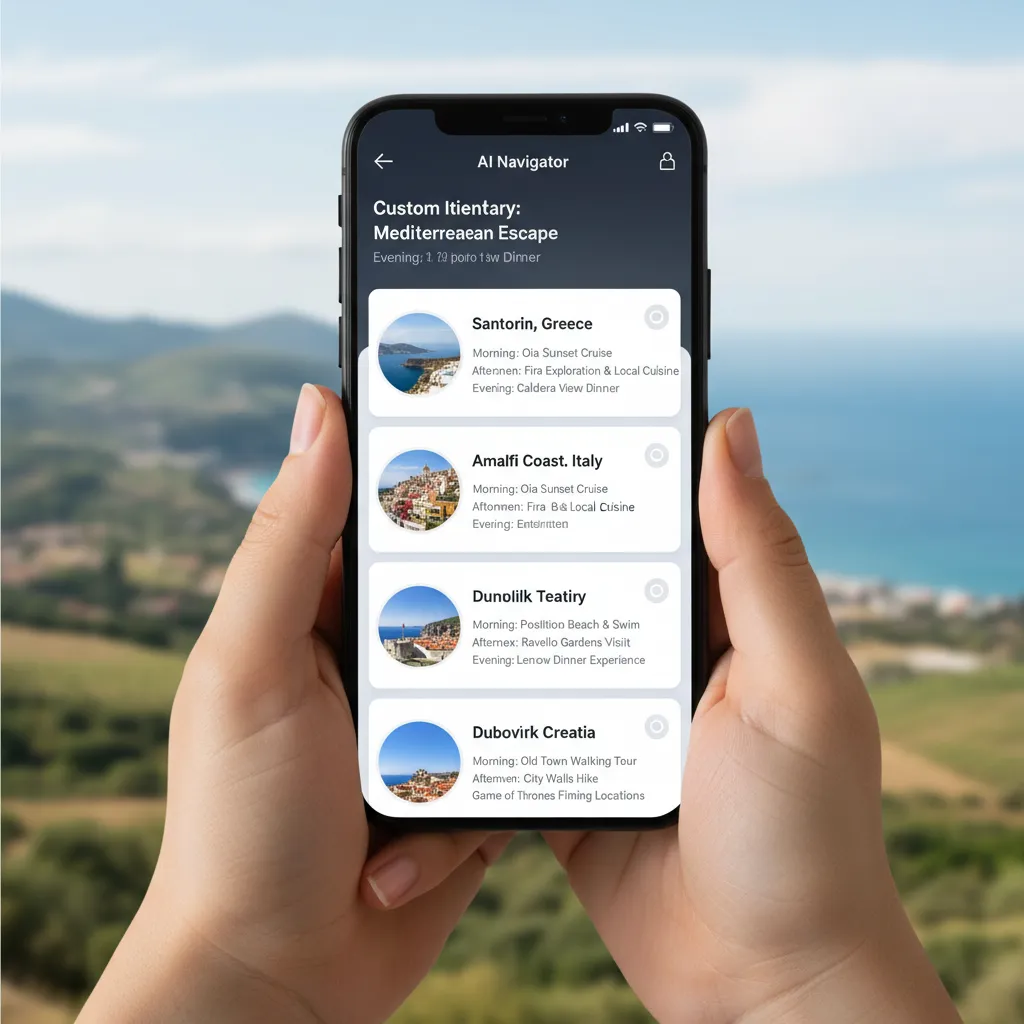
The rise of generative AI travel tools is not just another tech trend; it’s a fundamental shift in how we explore the world. Imagine having a personal travel concierge, a logistics expert, and a local guide all rolled into one, available 24/7 in your pocket. This is the promise of the modern AI itinerary planner. These intelligent systems go beyond simple searches, offering AI-driven trip design that crafts journeys tailored to your unique interests, budget, and travel style.
In this comprehensive guide, we’ll dive deep into the world of personalized travel AI. You’ll discover the best AI-powered travel apps on the market, learn a step-by-step process for planning your entire vacation with AI, and see how this technology is creating bespoke experiences for every kind of traveler—from solo adventurers to families on the go. Get ready to unlock a smarter, more seamless, and truly personalized way to travel.
The Dawn of a New Travel Era: Beyond the Spreadsheet
For decades, the “art” of travel planning involved a manual, often tedious, process of information gathering. We pieced together itineraries from generic guidebooks, scattered blog posts, and well-meaning but often outdated advice from friends. The result was often a cookie-cutter trip that didn’t quite capture our personal definition of adventure.
This traditional method is filled with pain points:
- Information Overload: The sheer volume of online reviews, articles, and booking options can be paralyzing.
- Logistical Nightmares: Trying to optimize routes, align booking times, and manage a budget in a spreadsheet is time-consuming and prone to error.
- Lack of Personalization: A top-10 list doesn’t know you’re a vegetarian who loves Renaissance art but dislikes crowded museums.
- Static Plans: A printed itinerary can’t adapt to a sudden rainstorm or a spontaneous desire to explore a different neighborhood.

Enter the AI travel assistant. This new wave of AI travel technology consumes and analyzes vast amounts of data in seconds—flight schedules, hotel availability, user reviews, maps, event calendars, and more. It then uses this information not just to present options, but to synthesize a cohesive, optimized, and custom travel itinerary AI that feels like it was made just for you. This marks the most significant leap in travel planning innovations AI has delivered yet.
What is a Generative AI Travel Planner, and How Does It Work?
At its core, a generative AI travel planner is a sophisticated application that uses large language models (LLMs)—the same technology behind tools like ChatGPT and Gemini—to understand natural language and generate new content. In this case, that content is a detailed travel plan.
Here’s a simplified breakdown of the process:
- Understanding Your Intent: You start by giving the AI a prompt. Instead of just keywords like “Paris hotels,” you can write a full sentence: “Plan a 5-day romantic trip to Paris for two in May. We love art museums, quiet cafes, and walking. Our budget is around $3,000.”
- Massive Data Analysis: The AI sifts through its extensive knowledge base. It analyzes museum opening times, reads summaries of cafe reviews, calculates walking distances between points of interest using map data, and checks hotel price averages for that time of year.
- Generating the Itinerary: The AI then generates a logical, day-by-day plan. It might suggest visiting the Louvre on a weekday to avoid crowds, plotting a walking route through Montmartre that ends at a highly-rated, quiet cafe, and recommending boutique hotels within your budget that have romantic ambiances.
- Refining and Iterating: The best tools allow you to refine the plan. You can ask it to “replace the Eiffel Tower visit with something less touristy” or “find a hotel with a balcony,” and the AI will adjust the itinerary accordingly.
This automated travel planning AI transforms a multi-hour research project into a conversation, making planning feel less like a chore and more like an exciting part of the journey itself. Related: AI Personal Assistants: Revolutionizing Daily Productivity
The Best AI Travel Planners to Supercharge Your Next Adventure
The market for AI travel agent apps is exploding. While many tools offer similar features, they each have unique strengths. Here are some of the best AI travel planners available today, broken down by what they do best.
1. Wanderlog: The Ultimate Organizer and Collaborator
- Best For: Detailed trip planning, group travel, and visualizing your journey on a map.
- Key Features: Wanderlog’s standout feature is its powerful integration with a map. As you add places, it automatically plots them, helping you build a logical and efficient AI route planner. Its AI assistant, “Wanderbot,” can suggest places and build out daily schedules based on your interests. The platform excels at collaboration, allowing multiple people to edit the itinerary in real-time.
- How it Creates Personalized Trips: You can import flights and hotel bookings, and Wanderlog will structure them into a timeline. Then, you can ask its AI to fill the gaps, for example: “Find three highly-rated pasta restaurants near the Colosseum for Tuesday evening.”
- Pricing: Freemium model with a Pro version for advanced features like offline maps and route optimization.
2. GuideGeek: The 24/7 AI Travel Assistant in Your Pocket
- Best For: On-the-go planning, quick recommendations, and real-time answers.
- Key Features: GuideGeek operates entirely within messaging apps like WhatsApp, Instagram, and Facebook Messenger. This makes it incredibly accessible. You can ask it anything, from “What’s the best way to get from JFK to Manhattan?” to “Create a 3-day itinerary for a solo traveler in Lisbon.” It’s like texting a hyper-knowledgeable local friend.
- How it Creates Personalized Trips: GuideGeek’s strength lies in its conversational nature. It remembers the context of your conversation, allowing you to build on your requests to create a truly AI for personalized trips experience without ever leaving your chat app.
- Pricing: Free to use.
3. TripIt: The Master of Logistics
- Best For: Organizing bookings and creating a master itinerary automatically.
- Key Features: TripIt’s magic is its simplicity. You just forward your confirmation emails for flights, hotels, car rentals, and event bookings to a specific address. The app then automatically parses this information and builds a detailed, chronological master itinerary for your entire trip.
- How it Creates Personalized Trips: While not a “generative” planner in the same way as others, it provides the essential backbone for any trip. The Pro version adds real-time flight alerts, gate change notifications, and airport navigation, making it a powerful digital travel assistant AI.
- Pricing: Free version for basic itinerary management; TripIt Pro offers advanced real-time features for an annual fee.
4. Curiosio: The Adventurer’s AI Route Planner
- Best For: Complex road trips and multi-destination journeys.
- Key Features: Curiosio is an AI trip generator built specifically for travelers who love the open road. It lets you plan trips based on various parameters: your starting point, your destination, the number of travel days, your budget, and your interests (e.g., hiking, history, beaches).
- How it Creates Personalized Trips: Curiosio generates multiple possible itineraries, complete with driving times, accommodation suggestions, and points of interest along the way. It’s one of the best AI tools for adventurers who want a detailed plan but also the flexibility to explore.
- Pricing: Free to use.
A Practical Guide: How to Plan Your Entire Trip with AI
Knowing the tools is one thing; using them to create a seamless plan is another. Here’s a step-by-step workflow for leveraging smart travel planning with AI.
Step 1: The Ideation Phase - Brainstorming with AI
Before you even open a dedicated travel app, start with a broad generative AI tool like Google’s Gemini or ChatGPT. Use it as your creative partner.
- Example Prompt: “I’m looking for a 10-day European summer vacation for my family of four (kids aged 8 and 11). We enjoy a mix of history, nature, and hands-on activities. We want to avoid huge crowds. Our budget is around $6,000 excluding flights. Give me three different destination ideas with a brief pros and cons list for each.”
The AI can provide you with incredible AI travel insights you may not have considered, like suggesting Slovenia for its beautiful lakes and caves or the coast of Portugal for its family-friendly beaches and castles.
Step 2: Structuring Your Itinerary with a Dedicated Planner
Once you’ve chosen a destination, move to a specialized AI vacation planner like Wanderlog.
- Action: Input your chosen destination and dates. Start by adding your flights and accommodation to create the basic framework.
- Example AI Prompt (within Wanderlog): “We’re staying near the Alfama district in Lisbon for 5 days. Fill out our itinerary. We want to see historical sites in the mornings and do something relaxing or kid-friendly in the afternoons. Include suggestions for restaurants that are good for families.”
The tool will generate a day-by-day plan, complete with an optimized route on a map to minimize travel time.
Step 3: Booking and Logistics with an AI Assistant
As you book your flights, hotels, and tours, use a tool like TripIt to keep everything organized.
- Action: Simply forward every confirmation email you receive to
[email protected]. The app will build your master itinerary automatically, giving you one central place for all your confirmation numbers and schedules. This is the essence of AI travel optimization. Related: Budget Travel Hacks for 2024: Explore More, Spend Less
Step 4: Real-Time Adjustments On the Go
Plans change. This is where a real-time AI travel agent app like GuideGeek shines.
- Scenario: Your planned beach day in the Algarve gets rained out.
- Action: Send a quick message to GuideGeek: “It’s raining in Lagos, Portugal. What are some good indoor activities for a family with two kids nearby?”
- Within seconds, you’ll get suggestions like visiting a local museum, an indoor market, or a science center—complete with opening hours and directions.
AI-Powered Travel for Every Type of Adventurer
The beauty of generative AI holiday planning is its adaptability. It’s not a one-size-fits-all solution; it’s a chameleon that can cater to any travel style.
The Solo Traveler’s Companion
For those traveling alone, AI is an invaluable safety and efficiency tool.
- AI for solo travel planning can help identify safe neighborhoods, find highly-rated hostels or hotels, and suggest activities perfect for one, like joining a walking tour or finding a cozy cafe to read in. It can also serve as a quick translator or currency converter.

The Ultimate Family Trip AI Planner
Planning a trip that keeps everyone from toddlers to teenagers happy is a monumental task.
- A family trip AI planner can balance the itinerary with activities for all ages. It can find parks near museums, suggest restaurants with kids’ menus, and ensure travel times between locations are manageable for little legs.
Optimizing Business Travel
For corporate travelers, efficiency is everything.
- Business travel AI tools can optimize schedules to the minute. They can find hotels close to conference centers with reliable Wi-Fi, suggest quick lunch spots between meetings, and automatically organize expense receipts, making the entire process frictionless.
Collaborative Planning for Group Trips
Coordinating a trip with friends can be chaotic.
- Tools like Wanderlog allow everyone to add their suggestions to a shared plan. The AI can then help organize these ideas into a logical itinerary that incorporates everyone’s interests, preventing the “too many cooks in the kitchen” problem.
The Future of Travel Planning is Intelligent and Personalized
What we’re seeing now is just the beginning. The future of travel planning AI is headed toward a state of hyper-personalization and proactive assistance.
- Predictive Recommendations: Imagine your AI assistant knowing you enjoyed the Uffizi Gallery in Florence and proactively suggesting you book tickets for the Prado Museum on your upcoming trip to Madrid.
- Seamless Integration: Your AI tour generator will not only plan your day but also integrate with ride-sharing apps to have a car ready, book your restaurant table, and purchase museum tickets automatically.
- Augmented Reality Previews: Future AI-powered travel apps will likely integrate AR, allowing you to point your phone at a street in a foreign city and see information about restaurants or historical facts overlaid on your screen.
- Sustainable Travel: AI will play a crucial role in promoting eco-friendly tourism by providing AI travel recommendations for lower-carbon transportation options, suggesting eco-certified hotels, and highlighting local businesses that support conservation. Related: Sustainable Smart Homes: The Future of Eco-Friendly Tech

Conclusion
The world of travel planning has been irrevocably transformed. The tedious, time-consuming tasks that once stood between you and your dream vacation are now being handled by intelligent, efficient, and surprisingly creative AI. These tools are democratizing the role of the travel agent, putting a powerful AI travel assistant in everyone’s hands.
By embracing generative AI travel tools, you’re not outsourcing your sense of adventure; you’re upgrading it. You’re freeing yourself from the logistical burdens to focus on what truly matters: immersing yourself in new cultures, creating lasting memories, and experiencing the world in a way that is uniquely yours. The future of travel is here, and it’s more personalized than ever.
So, for your next trip, why not let an AI be your co-pilot? Choose one of the tools we’ve explored, start a conversation, and watch as it builds the journey you’ve always imagined.
FAQs
Q1. Is there an AI that can plan my entire trip?
Yes, absolutely. Tools like Wanderlog, GuideGeek, and Curiosio are designed to be AI trip generators. You can provide them with your destination, dates, interests, and budget, and they will generate a comprehensive day-by-day itinerary, including suggestions for activities, restaurants, and logistical routes.
Q2. What is the best AI trip planner?
The “best” AI trip planner depends on your needs. For collaborative and visual map-based planning, Wanderlog is a top contender. For quick, on-the-go questions and real-time help, GuideGeek is excellent. For organizing all your bookings automatically, TripIt is unmatched. For designing complex road trips, Curiosio is the specialist.
Q3. Can AI book flights and hotels directly?
Currently, most generative AI planners focus on creating the itinerary and providing recommendations with booking links. They typically don’t book flights and hotels directly on your behalf due to the complexities of payment and personal data. However, they streamline the process by taking you directly to the booking page with your dates and preferences pre-filled.
Q4. Is using an AI itinerary planner free?
Many of the best AI travel planners operate on a freemium model. They offer a robust set of free features for planning and organization, with a paid “Pro” version that unlocks advanced capabilities like offline maps, real-time flight alerts, or more complex route optimization. Tools like GuideGeek and Curiosio are often completely free to use.
Q5. How is AI changing the travel industry?
Beyond personal planning, AI is revolutionizing the entire travel industry. Airlines use AI for dynamic pricing and fuel optimization. Hotels use it to personalize guest experiences and manage bookings. This widespread adoption of generative AI for tourism is leading to more efficient operations, better customer service, and ultimately, more personalized and seamless travel experiences for everyone.
Q6. What are the limitations of AI travel planners?
While powerful, AI planners have limitations. They can sometimes pull outdated information, like a restaurant’s new opening hours. They also lack the nuanced, personal touch and liability of a human travel agent. It’s always a good practice to double-check critical details like visa requirements or booking confirmations yourself. Think of AI as a powerful assistant, not a replacement for your own judgment.