Spatial Computing: Bridging Digital & Physical Worlds for Future Productivity

Introduction
For decades, our digital lives have been confined to glowing rectangles. We tap on glass screens, click with a mouse, and stare into monitors, forcing our three-dimensional world into two-dimensional windows. But what if our digital tools could break free from these constraints and exist in the space all around us? What if data, applications, and communications could be woven into the very fabric of our physical reality?
This is the revolutionary promise of spatial computing. It’s more than just a buzzword or the next iteration of virtual reality; it’s a fundamental shift in human-computer interaction. Spatial computing enables machines to understand and interact with the physical world in 3D, allowing us to place and manipulate digital content as if it were truly there.
This article delves into the transformative world of spatial computing. We’ll explore what it is, how it’s different from the metaverse, and the groundbreaking spatial computing applications already revolutionizing industries. From the industrial metaverse to your living room, get ready to discover how this immersive technology is set to redefine the future of work, creativity, and our connection to the digital realm.
Beyond the Screen: What Exactly is Spatial Computing?
At its core, spatial computing is the concept of blending digital information and media directly into our physical space. It’s the technological layer that facilitates a true digital-physical convergence. Instead of you entering a computer’s world (like traditional VR), the computer’s world enters yours.
Think of it as the next evolutionary step after personal and mobile computing.
- Personal Computing: We went to a specific place (a desk) to interact with a machine.
- Mobile Computing: The machine came with us in our pockets, accessible anytime, anywhere.
- Spatial Computing: The digital world is no longer confined to a device but is overlaid onto our environment, accessible through new forms of wearable tech and sensors.
This technology allows digital objects to have a sense of presence and persistence. You could leave a virtual sticky note on your real-world fridge, and it would be there when you return. An architect could walk through a full-scale holographic model of a building on the actual construction site. This real-world integration is what makes it so powerful.
The Pillars of Spatial Computing: More Than Just Headsets
Spatial computing isn’t a single technology but an ecosystem of interconnected components working in harmony. This complex system is often categorized under the umbrella of Extended Reality (XR).
1. Mixed, Augmented, and Virtual Reality (MR/AR/VR)
These are the primary interfaces for experiencing spatial computing.
- Virtual Reality (VR): Fully immerses you in a completely digital environment, blocking out the physical world.
- Augmented Reality (AR): Overlays digital information onto your view of the real world, typically through a smartphone camera or smart glasses.
- Mixed Reality (MR): The true engine of spatial computing. MR not only overlays digital content but allows that content to interact with the real world in real-time. A virtual ball can bounce off a real table; a digital character can hide behind your actual sofa.
2. AI and Machine Learning
AI in spatial computing is the brain behind the operation. Sophisticated algorithms are required for:
- Scene Understanding: Using cameras and sensors (like LiDAR) to map a room, identify surfaces (floors, walls, tables), and recognize objects.
- Object Recognition: Differentiating between a chair, a person, and a pet to enable realistic interactions.
- Intuitive Interaction: Powering the spatial user interface through gesture tracking, eye tracking, and voice commands, creating a seamless 3D interaction model. Related: The AI Revolution in Content Creation: An Ultimate Guide
3. Persistent Digital Content and the Spatial Web
This is the idea that digital information can be “anchored” to specific physical locations and remain there for others (with permission) to see and interact with. This creates a shared, layered digital reality, often referred to as the spatial web or AR Cloud. It’s the framework that will allow these experiences to be collaborative and consistent across different users and sessions.
4. Edge Computing and Connectivity
To feel real, spatial experiences require immense computational power with near-zero latency. Sending all that sensor data to a distant cloud server and back is too slow. Edge computing for spatial tech solves this by processing data closer to the user, either on the device itself or on a nearby local network. This is supercharged by 5G and future wireless technologies, ensuring the fluid, instant feedback necessary for true immersion.
The Spatial Computing Revolution: Transforming Industries
While consumer applications are gaining traction, the most profound impact of spatial computing today is in the enterprise sector. Companies are leveraging this technology to boost efficiency, safety, and innovation in what’s being called the industrial metaverse.
The Industrial Metaverse: A New Frontier for Enterprise
Enterprise spatial computing is creating tangible value across the entire business lifecycle, from design to operations and maintenance.
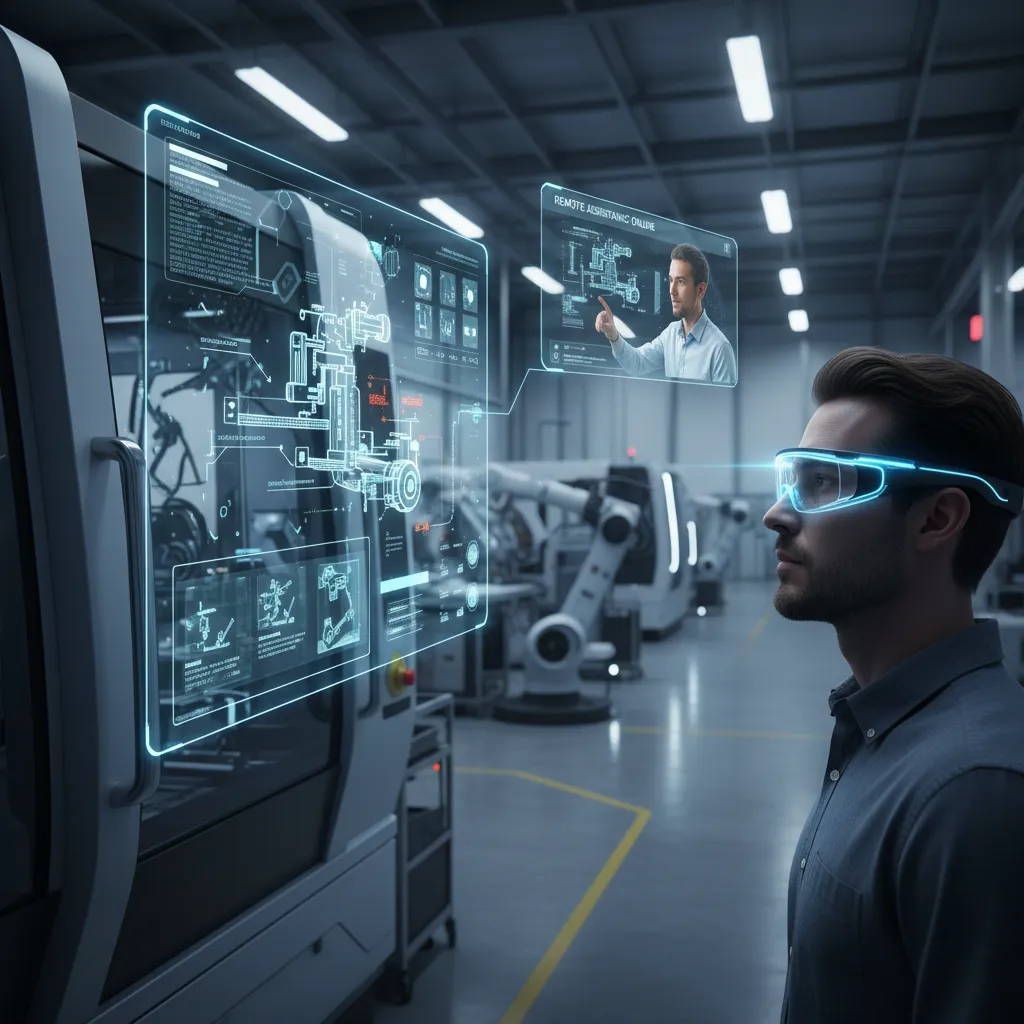
- Remote Assistance and Collaboration: Imagine a complex machine breaks down on a factory floor. A local technician wearing AR glasses can stream their point-of-view to an expert thousands of miles away. The expert can then annotate the technician’s view with instructions, diagrams, and highlights, guiding them through the repair step-by-step. This remote assistance spatial capability drastically reduces downtime and travel costs.
- Training and Simulation: For high-stakes jobs like surgery, aviation, or operating heavy machinery, spatial computing offers a risk-free training ground. Training and simulation spatial environments allow trainees to practice complex procedures in hyper-realistic scenarios, building muscle memory and decision-making skills without real-world consequences.
- Digital Twins: A digital twin is a virtual, real-time replica of a physical object or system, like a jet engine, a factory, or even an entire city. By feeding sensor data from the real asset to its digital counterpart, companies can run simulations, predict maintenance needs, and optimize performance in ways that were previously impossible.
Redefining Design and Creativity
Spatial computing is fundamentally changing how we create and visualize in 3D. Sectors that rely on complex spatial data are experiencing a renaissance.
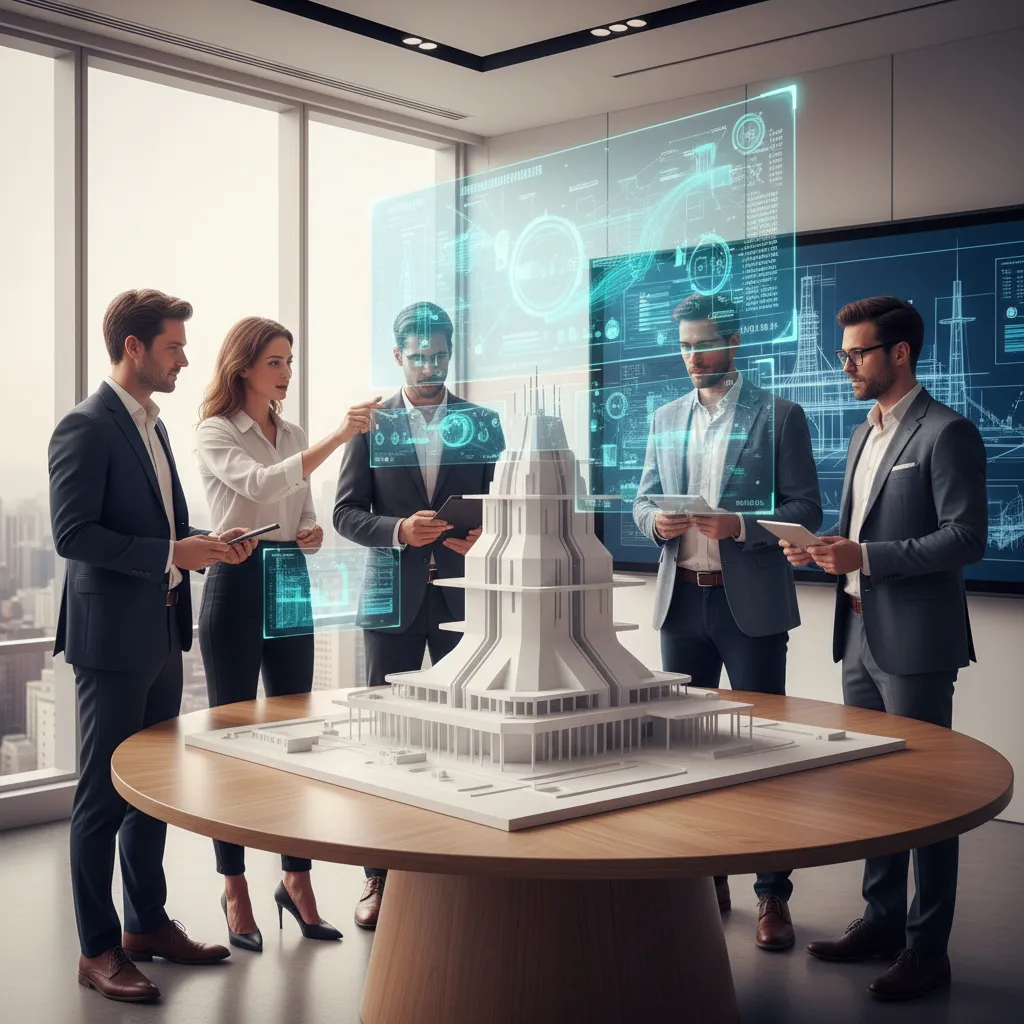
Architects, engineers, and construction professionals can now move beyond flat blueprints and small-scale physical models. Using immersive collaboration tools, they can project a full-scale holographic building onto a plot of land, walk through its rooms, and make changes in real-time. This shared perspective helps identify design flaws early, saving millions in costly rework. This is a core part of building the collaborative spaces of the future.
Smart Cities and Geospatial Intelligence
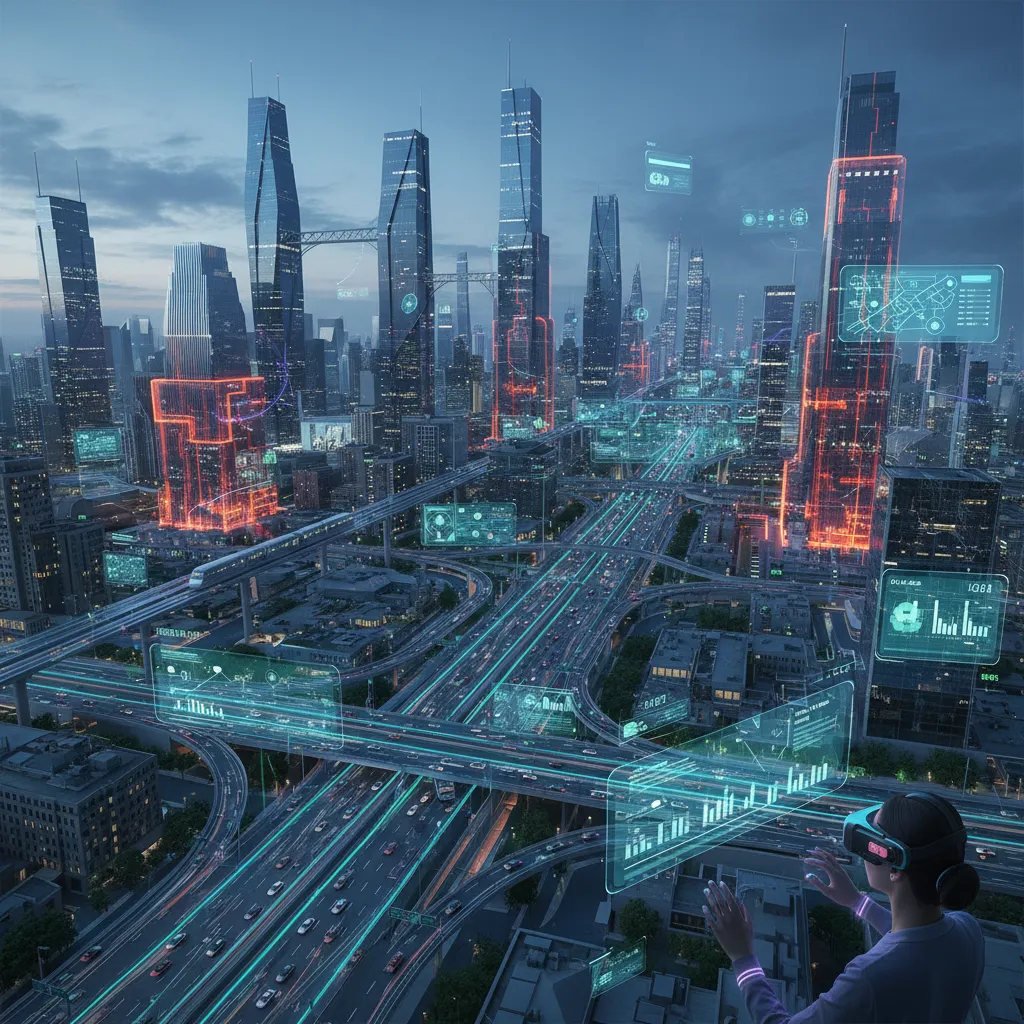
Urban planners and civic leaders can leverage spatial computing for advanced data visualization spatial analysis. By overlaying real-time data onto a city’s digital twin, they can visualize traffic patterns, air quality, energy consumption, and public transit flows. This geospatial intelligence enables more informed decision-making for sustainable and efficient urban development.
The Consumer Experience Reimagined
The impact of consumer spatial computing is poised to be just as massive, fundamentally changing how we shop, learn, and play.
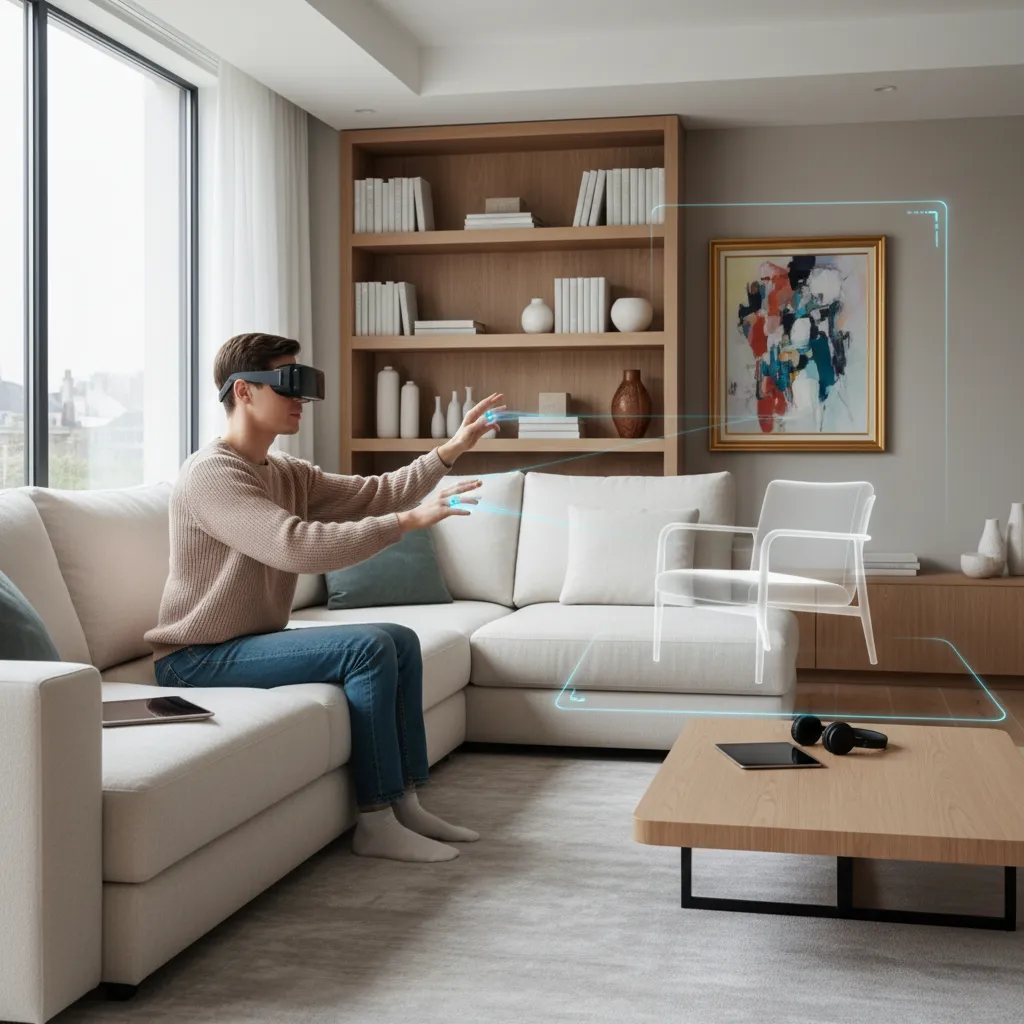
In retail, the “try before you buy” concept is reaching a new level. You can see how a new sofa would look in your living room, perfectly to scale, or try on a pair of sneakers virtually. In entertainment, experiences are breaking free from the TV screen, with games and interactive stories that use your physical environment as the playground. Related: The AI Revolution in Gaming: The Future of Immersive Play
Spatial Computing vs. The Metaverse: Understanding the Difference
The terms “spatial computing” and “metaverse” are often used interchangeably, but they represent different concepts. Getting the distinction right is key to understanding the landscape of this future of computing.
-
Spatial Computing is the Technology (the “How”): It is the foundational technological framework that enables computers to understand and interact with 3D space. It’s the collection of hardware (headsets, sensors) and software (AI, rendering engines) that makes the digital-physical convergence possible. You can have a powerful spatial computing application without it being part of a “metaverse.”
-
The Metaverse is the Destination (the “Where”): It is a conceptual, persistent, and interconnected set of virtual spaces. It’s a vision for a future internet that you are inside of, rather than looking at. The metaverse will be built upon spatial computing technologies.
Think of it this way: Spatial computing is the engine, the wheels, and the chassis of a car. The metaverse is the vast network of roads, cities, and destinations you can travel to with that car.
The Road Ahead: Challenges and the Future Trajectory
While the potential is immense, the path to mainstream spatial computing is paved with challenges that need to be overcome.
Technological and Societal Hurdles
- Hardware and Ergonomics: For all-day use, wearable tech needs to become lighter, more comfortable, and more power-efficient, with a socially acceptable form factor.
- The Spatial User Interface (UI): We are in the early days of designing the spatial user interface. Moving beyond hand-tracking to create a universally intuitive and non-fatiguing system for 3D interaction is a massive design challenge.
- Cost and Accessibility: High-end spatial computing devices are still expensive, limiting access for the average consumer and smaller businesses.
- Data Privacy: These devices capture an unprecedented amount of data about you and your environment. Establishing strong ethical guidelines and robust security protocols will be critical for public trust. Related: AI in Fraud Detection: Securing Digital Payments
The Fusion of AI and the Future of Work
The synergy between AI and spatial computing will define the next decade of productivity. Future collaborative spaces will not be just physical or virtual but a seamless hybrid. A team could consist of people in an office, others working from home, and AI-powered avatars, all collaborating on a single, interactive holographic project.
This integration will lead to more intelligent systems that can anticipate our needs, automate complex tasks, and present data in the most intuitive way possible. The development of more powerful and efficient AI PCs will be a crucial enabler for this future.
Conclusion
Spatial computing represents a paradigm shift from interacting with computers to coexisting with them. It is the quiet but powerful force that will dissolve the boundaries between our physical and digital worlds. This is not a futuristic fantasy; it’s a technological evolution happening right now, with tangible applications transforming how we design, build, learn, and connect.
From the surgical suite to the factory floor, from the architect’s studio to your own home, this immersive technology is laying the groundwork for a more intuitive, efficient, and collaborative future. The journey is just beginning, but one thing is clear: the days of being confined to flat screens are numbered. The world is the new desktop.
Frequently Asked Questions (FAQs)
Q1. What is spatial computing in simple terms?
In simple terms, spatial computing is technology that allows digital content to be seamlessly blended with and interact with the real world. Instead of using a flat screen, you can see and manipulate digital information in the 3D space around you, like placing a virtual TV on your actual wall.
Q2. Is spatial computing the same as AR/VR?
Not exactly. Augmented Reality (AR) and Virtual Reality (VR) are key components or interfaces for spatial computing. Spatial computing is the broader concept that includes AR/VR, but also the underlying AI, sensors, and real-world mapping that allow digital objects to understand and realistically interact with your environment.
Q3. What is a real-world example of spatial computing?
A great example is an interior designer using a device like the Apple Vision Pro or Microsoft HoloLens to place a true-to-scale virtual sofa in a client’s actual living room. The client can walk around it, change its color, and see how it fits the space before buying, because the device understands the room’s dimensions and layout.
Q4. Who is the leader in spatial computing?
Several major tech companies are leaders in different aspects of spatial computing. Apple has pushed the concept into the mainstream with its Vision Pro. Microsoft has a strong enterprise focus with its HoloLens 2 platform. Meta is a leader in consumer VR with its Quest headsets, and companies like NVIDIA are building the core chips and software platforms (like Omniverse) to power these experiences.
Q5. Is the Metaverse part of spatial computing?
The Metaverse is a vision that is built on spatial computing. Spatial computing provides the foundational technology (the “how”) for creating immersive, 3D digital experiences that interact with the real world. The Metaverse is the conceptual, interconnected virtual world (the “where”) that you would access using that technology.
Q6. What are the main components of a spatial computing system?
A spatial computing system typically consists of input sensors (cameras, LiDAR, microphones), output displays (like see-through lenses in glasses), powerful processors (often using edge computing), and sophisticated software driven by AI for mapping environments and enabling human-computer interaction via gestures, gaze, and voice.
Q7. How will spatial computing change the way we work?
Spatial computing will revolutionize work by enabling true “presence” and collaboration regardless of physical location. Teams will be able to work together on complex 3D models, engineers can get remote expert assistance instantly, and employees can be trained in realistic simulations, leading to increased productivity, reduced errors, and enhanced creativity in a more flexible future of work.