The Multimodal AI Revolution: Beyond Text & Images

Introduction
For years, we’ve interacted with artificial intelligence through distinct, separate channels. We typed commands into chatbots, asked voice assistants to play music, and used image recognition to sort our photos. Each of these AI systems was a specialist, living in a world of its own—a world of either text, sound, or pixels. But that era is rapidly coming to an end. We are now in the midst of a profound shift, a leap forward in ai technology trends known as the multimodal AI revolution.
So, what is multimodal ai? Imagine an AI that doesn’t just read the words in a recipe but can also look at a picture of your ingredients, listen to your questions as you cook, and even watch your technique to offer suggestions. This is the essence of multimodal artificial intelligence: building intelligent systems that can process, understand, and generate information from multiple types of data—text, images, audio, video, and more—simultaneously. It’s about creating a more holistic, human-like ai understanding of the world.
This article will take you beyond the buzzwords to explore the core of this transformation. We’ll break down how ai fusion models work, showcase the incredible real world ai applications changing industries from healthcare to finance, and look ahead at the future of ai. Get ready to discover how ai beyond text and ai beyond images is shaping the next generation ai.
What is Multimodal AI, Really? A Look Beyond the Buzzwords
At its heart, multimodal AI is an approach to building AI systems that mirrors human perception. We experience the world through a constant stream of information from our five senses. The smell of rain, the sight of dark clouds, the sound of thunder, and the feeling of a cool breeze all combine to tell us one thing: a storm is coming. We don’t analyze each piece of data in isolation; our brain fuses them into a single, coherent understanding.
For a long time, AI couldn’t do this. A text-based model like an early chatbot had no concept of what a “cat” looked like. An image recognition model could identify a cat in a photo but couldn’t read the word “cat” written next to it. These were unimodal systems, locked into a single data type.
Multimodal AI shatters these walls. It enables a single AI system to:
- See and Read: Analyze an image of a restaurant menu and answer spoken questions about which dishes are vegetarian.
- Listen and Visualize: Generate a detailed image of a “serene beach at sunset with calming waves” based on a spoken description.
- Watch and Understand: Analyze a video of a physical therapy session and provide textual feedback on the patient’s form.
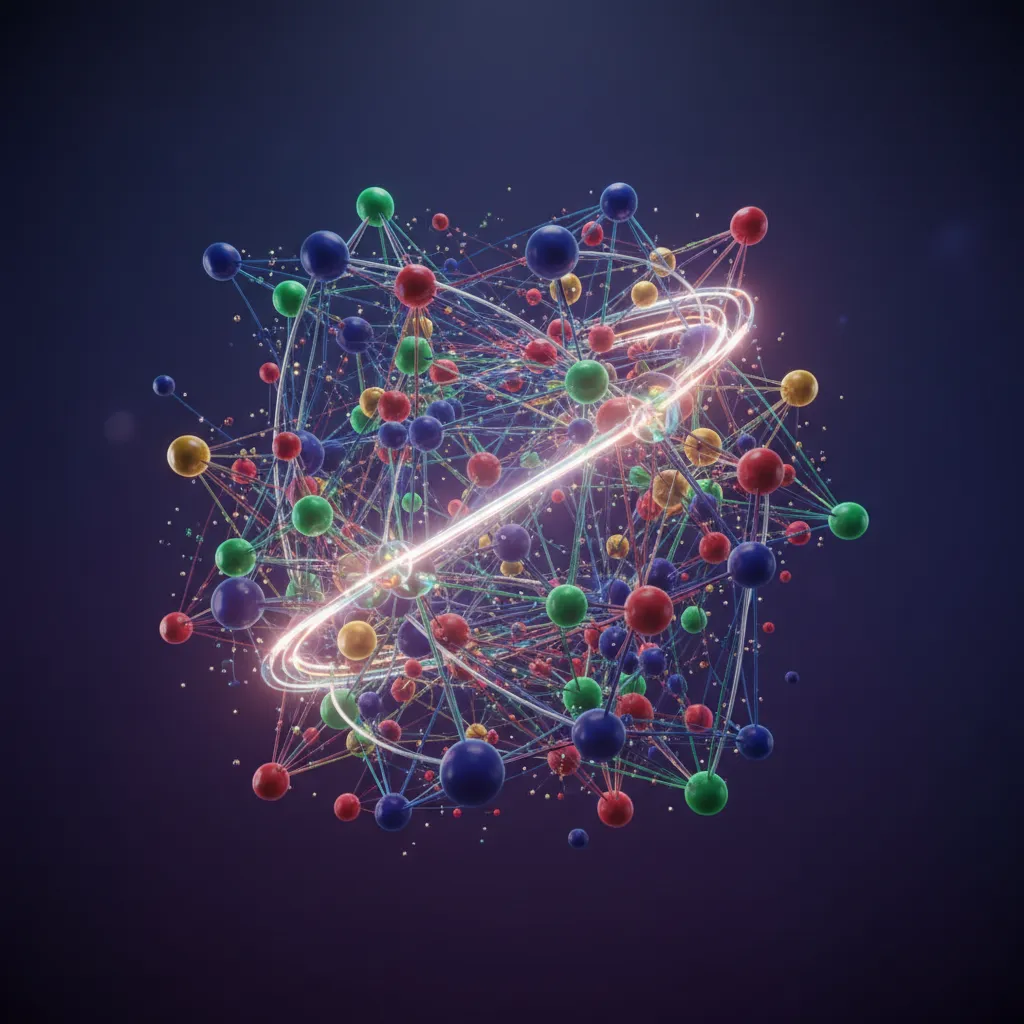
This is achieved through complex ai systems that learn to find the relationships and patterns between different data types. They create what’s called a “shared representation space,” where the word “dog,” the sound of a bark, and a picture of a golden retriever are all connected, representing the same core concept. This is a monumental step towards creating more context-aware and human-like ai.
The Engine Room: How Do Multimodal AI Systems Learn and Understand?
The magic behind multimodal AI isn’t really magic—it’s a combination of sophisticated architecture and massive amounts of data. The central challenge in ai learning for these models is “data fusion,” the process of intelligently combining information from different sources. Let’s look at the key techniques that power this ai innovation.
H3: Data Fusion Strategies
How an AI combines data streams is critical to its performance. There are three primary strategies:
- Early Fusion: This method combines raw data from different modalities at the very beginning of the process. For example, the pixels of an image and the raw audio waves of a sound could be merged into a single large data vector before being fed into the neural network. It’s simple but can be clunky, as different data types don’t always align perfectly.
- Late Fusion: In this approach, separate AI models process each modality independently. One model analyzes the text, another analyzes the image, and their individual conclusions are combined only at the very end to produce a final result. This allows for specialized models but can miss subtle, early-stage interactions between the data types.
- Intermediate (or Hybrid) Fusion: This is the modern, state-of-the-art approach. It involves multiple layers of fusion throughout the neural network. The AI can learn the relationships between text and images at various levels of abstraction, from simple features to complex concepts. This method, often powered by advanced architectures, delivers the most nuanced
ai understanding.
H3: Transformer Architectures and Cross-Modal Attention
The real breakthrough in ai advancements came with the rise of the “transformer” architecture, which is the backbone of models like GPT-4o. A key mechanism within transformers is “attention,” which allows the model to weigh the importance of different parts of the input data.
Cross-modal attention is an evolution of this concept. It allows the model to pay attention to connections across different modalities. When analyzing a meme, for instance, a cross-modal attention mechanism can figure out which words in the caption relate specifically to which objects or actions in the image. This is fundamental to achieving deep contextual understanding. These computational advancements are pushing the boundaries of what’s possible. Related: Unlocking Quantum AI for Business
H3: Creating a Unified Language for AI
The ultimate goal of these techniques is to create a unified internal representation—a sort of “language of thought” for the AI. In this space, the AI learns a concept like “apple” not just as the letters a-p-p-l-e, but as a fusion of that text, the visual of a red or green fruit, the taste profile, and its relationship to other concepts like “tree,” “pie,” and “healthy.” This rich, interconnected web of knowledge is the foundation of machine perception and is a core goal of ai research 2024.

The Revolution in Action: Real-World Multimodal AI Applications
While the technology is complex, its impact is becoming increasingly tangible. Generative multimodal ai and analytical models are already reshaping entire industries. Here’s a look at some of the most exciting real world ai applications.
H3: Healthcare and Medical Innovation
In medicine, context is everything. Multimodal ai in healthcare is providing clinicians with powerful new tools.
- Medical Imaging Analysis: AI can analyze a patient’s X-ray or MRI (image data) while simultaneously reading the radiologist’s notes (text data) and the patient’s medical history (structured data) to detect diseases like cancer with greater accuracy.
- Surgical Assistance: AI systems in operating rooms can process video feeds from laparoscopic cameras, monitor a patient’s vital signs (sensor data), and listen to the surgeon’s voice commands to provide real-time guidance.
- Drug Discovery: By analyzing complex datasets that include molecular structures (visual), scientific papers (text), and experimental results (numerical), AI can accelerate the process of finding new, effective drugs. Related: The AI Revolution in Healthcare
H3: Conversational AI and Intelligent Assistants
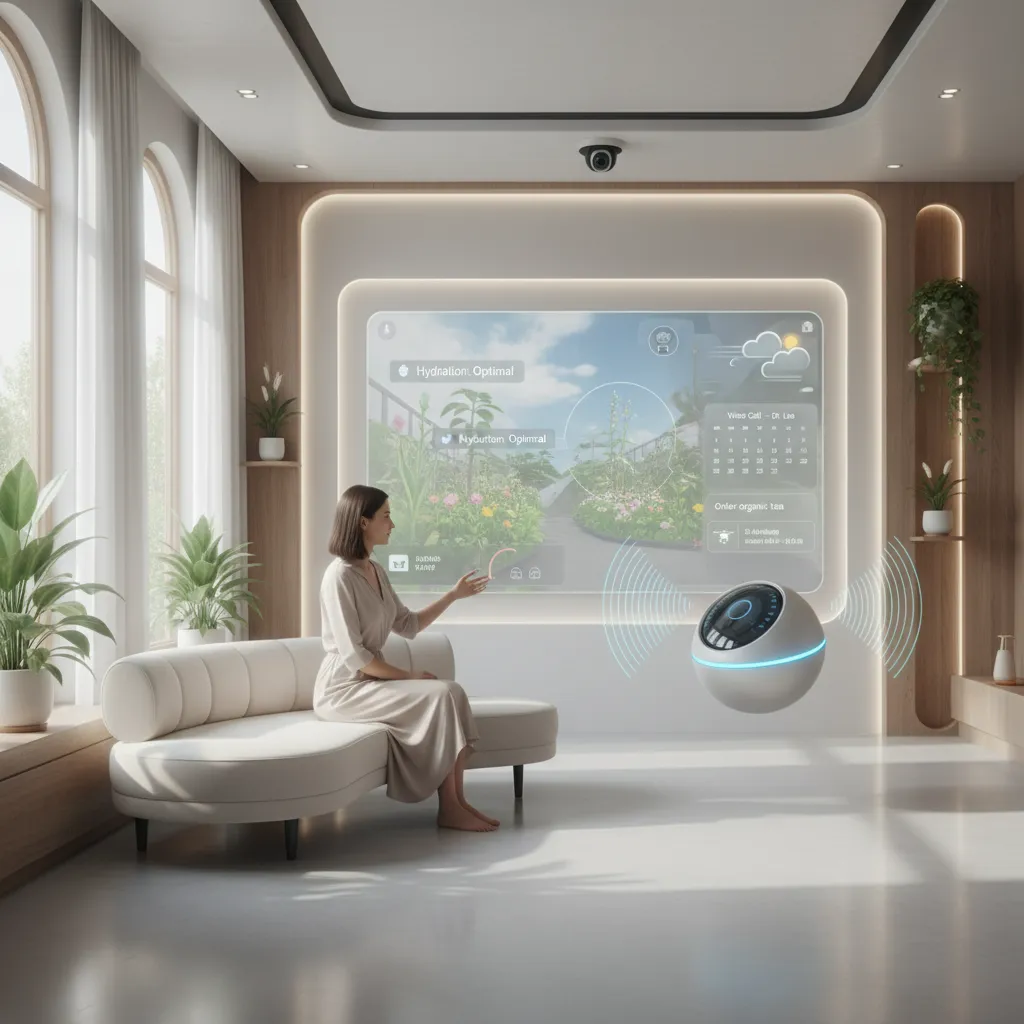
The conversational ai evolution is one of the most visible applications of multimodal AI. Clunky chatbots are being replaced by sophisticated digital assistants that can see, hear, and speak.
- Next-Gen Assistants: Models like OpenAI’s GPT-4o and platforms like
Apple Intelligencecan analyze what’s on your screen, listen to your spoken query about it, and execute a complex task. You could show it a picture of a plant and ask, “What kind of plant is this and how much water does it need?” - Customer Service: An AI can handle a video call with a customer, analyze their tone of voice for frustration, read the error message on their screen via screen sharing, and pull up the relevant troubleshooting steps.
- Accessibility Tools: For visually impaired users, multimodal AI can describe the world through their phone’s camera, reading text, identifying objects, and describing scenes in real-time. Related: What is Apple Intelligence? An iOS 18 Guide
H3: Robotics and Autonomous Systems
For a robot to navigate and interact with the physical world, it must perceive it as humans do. Multimodal ai in robotics is the key.
- Warehouse Automation: Robots use computer vision to “see” packages, LiDAR (light detection and ranging) to map their environment in 3D, and internal sensors to “feel” the weight and balance of the items they carry.
- Autonomous Vehicles: Self-driving cars fuse data from cameras (visual), radar (radio waves), LiDAR (laser), and GPS (location) to build a comprehensive, real-time model of the road, other vehicles, and pedestrians.
- Human-Robot Collaboration: In manufacturing, a robot can listen to a worker’s voice command, watch their gestures, and use sensors to ensure it operates safely alongside them.
H3: Finance and Data Analysis
The financial world is a sea of data in different formats. Multimodal ai in finance helps find the signal in the noise.
- Market Prediction:
AI for data analysiscan correlate stock price charts (image/numerical) with corporate earnings reports (text/numerical), news sentiment (text), and even statements made by CEOs in video interviews (video/audio/text) to make more informed predictions. - Fraud Detection: AI can flag a transaction as suspicious by combining location data, the user’s typical spending pattern, and even the way they type their password (biometric data).
- Insurance Claims: A system can analyze photos and videos of a car accident, read the police report, and check it against the policyholder’s information to automate and accelerate the claims process.
H3: Creative Industries and Education
The ability of AI to both understand and create across modalities is unlocking new frontiers.
- Generative Art and Music: Tools can now generate entire video clips from a simple text prompt or compose a unique piece of music based on a descriptive paragraph. Related: Unleash Your Inner Composer with AI Music Generators and Related: The Complete 2024 Guide to Text-to-Video AI
- Personalized Learning: In
ai in education, an e-learning platform could watch a student’s facial expressions to detect confusion, listen to their verbal explanation of a problem, and adapt the lesson plan in real-time to provide targeted help.
The Next Generation of AI: Current Research and Future Trends
The field of multimodal AI is moving at a blistering pace. The ai development trends we see today are laying the groundwork for even more incredible ai capabilities tomorrow. Here’s where the future of ai is heading.
H3: Deeper Contextual and Causal Understanding
Current models are excellent at identifying correlations (e.g., clouds are associated with rain), but the next frontier is causal understanding (e.g., an accumulation of water vapor causes clouds, which in turn causes rain). Future intelligent systems will be able to reason about cause and effect by observing the world through multiple modalities, leading to more robust and reliable AI. The debate around AI’s impact on our lives and careers will only intensify as these systems become more capable. Related: Will AI Take Your Job? The Ultimate 2024 Guide
H3: Enhanced Human-AI Interaction
The future of ai interaction is seamless and intuitive. Instead of typing into a box, we will interact with AI as we do with other people—through speech, gestures, and shared context. Imagine pointing your phone at a complex engine, circling a part with your finger on the screen, and asking, “What is this, and how do I fix it?” This level of natural interaction will make technology radically more accessible and powerful for everyone.

H3: The Rise of Embodied AI
Embodied AI refers to systems that exist within a physical body—like a robot or a drone—and can learn from direct interaction with the physical world. This is the ultimate multimodal challenge, requiring the integration of vision, touch, hearing, and proprioception (the sense of self-movement and body position). These AI will be able to learn complex physical tasks not from a dataset but from trial and error, just as humans do.
H3: AI for Scientific Discovery
Some of the world’s most complex challenges, like climate change modeling, materials science, and genomics, involve massive, heterogeneous datasets. Multimodal AI will be an essential tool for scientists, capable of finding hidden patterns across satellite imagery, sensor data, experimental results, and millions of pages of scientific literature to accelerate discovery and ai innovation.
Navigating the Challenges: The Hurdles in Building a Multimodal Future
Despite the immense promise, the path to a fully multimodal AI future is not without significant obstacles. Addressing these challenges is a primary focus of current ai research 2024.
- Data Complexity and Alignment: Gathering and annotating massive, high-quality datasets where different modalities are perfectly aligned is incredibly difficult and expensive. How do you perfectly sync a video’s audio transcript with the precise visual frames they describe?
- Computational Cost: Training large-scale
ai fusion modelsrequires enormous computational power, consuming vast amounts of energy and costing millions of dollars. Making these models efficient and accessible is a major engineering challenge. - Bias and Fairness: If one modality in the training data contains societal biases (e.g., text data with racial stereotypes), the AI can learn and even amplify these biases. Ensuring
ethical ai multimodaldevelopment is crucial to prevent these systems from perpetuating harm. - Explainability (The “Black Box” Problem): Understanding why a complex multimodal model made a particular decision is notoriously difficult. If an AI denies a loan application based on a fusion of data, we need to be able to understand its reasoning to ensure fairness and transparency.
Conclusion
The move from unimodal to multimodal AI is not just an incremental update; it is a paradigm shift. It’s the difference between an AI that can read a map and an AI that can navigate a city. By breaking down the barriers between data types, we are building ai systems that have a richer, more contextual, and fundamentally more useful understanding of our world.
From revolutionizing medical diagnostics and enabling truly intelligent assistants to powering the next generation of robotics, the impact of multimodal ai advancements is already here and is growing exponentially. While significant challenges in ethics, cost, and complexity remain, the trajectory is clear. The future of ai is not just about smarter algorithms; it’s about systems with a more holistic perception, capable of interacting with us and the world on our own terms. The multimodal AI revolution is here, and it’s just getting started.
FAQs
Q1. What is a simple example of multimodal AI?
A great real-world example is Google Lens. You can point your phone’s camera at a flower (image input), and the AI will identify the species and give you its name and care instructions (text output). It seamlessly combines visual understanding with a vast database of text-based information.
Q2. Why is multimodal AI a significant advancement?
It’s significant because it allows AI to develop a more human-like, contextual understanding of the world. By processing information from multiple sources at once, multimodal AI can solve more complex problems, interact with humans more naturally, and understand nuanced situations that a single-modality AI would miss.
Q3. What is the main difference between unimodal and multimodal AI?
The main difference is the type of data they can process. A unimodal AI is a specialist, designed to handle only one type of data—like a language model that only works with text or an image classifier that only works with pictures. A multimodal AI is a generalist, capable of understanding and reasoning about multiple data types (e.g., text, images, audio) simultaneously.
Q4. Is a model like GPT-4o considered multimodal?
Yes, absolutely. GPT-4o (the ‘o’ stands for ‘omni’) is a prime example of a state-of-the-art generative multimodal ai model. It was designed from the ground up to natively accept and generate a combination of text, audio, and image inputs, making it one of the most advanced and versatile multimodal ai systems available to the public.
Q5. What are the primary challenges in developing multimodal AI?
The three main challenges are: 1) Data Alignment: Collecting massive datasets and ensuring the different modalities (like video frames and their corresponding audio) are perfectly synchronized. 2) Computational Cost: Training these complex ai fusion models requires immense processing power, which is expensive and energy-intensive. 3) Ethical Concerns: Ensuring that biases present in one data source aren’t learned and amplified across the entire system, leading to unfair or harmful outcomes.
Q6. What is generative multimodal AI?
Generative multimodal AI refers to models that can not only understand multiple data types but can also create new content across different modalities. For example, a user could provide a text prompt like “Create a short video of a robot walking on Mars with a funky soundtrack,” and the AI would generate the video, the visuals, and the music, all from that initial text input. Related: The Complete 2024 Guide to Text-to-Video AI