Boost Your Business: How Generative AI is Revolutionizing Marketing
Introduction
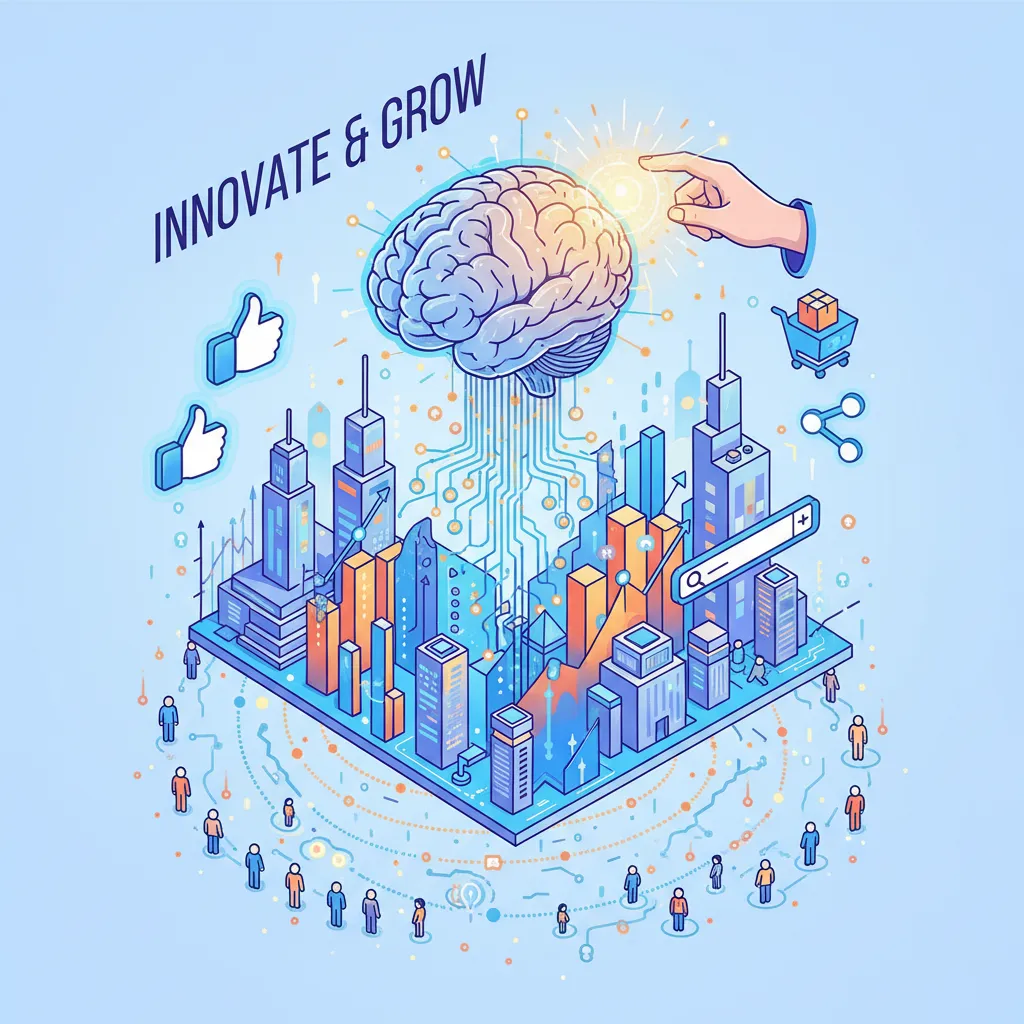
The digital marketing landscape is in a constant state of flux, but every so often, a technology emerges that isn’t just an update—it’s a seismic shift. Generative AI is that shift. It’s moved beyond being a futuristic buzzword to become a practical, powerful force reshaping how businesses connect with their audiences. From crafting hyper-personalized emails to generating entire ad campaigns from a single prompt, artificial intelligence marketing is no longer a concept; it’s a competitive advantage.
If you’re wondering how to use ai for business growth, you’ve come to the right place. This guide will demystify generative ai, explore its game-changing applications in marketing, and provide a clear framework for integrating these tools into your strategy. We’ll dive deep into how this technology works, the tangible benefits it offers, and why it’s crucial for everything from ai for small business marketing to enterprise-level brand growth ai strategies. Get ready to discover how to unlock unprecedented efficiency, creativity, and customer connection.
What is Generative AI in Marketing? (And Why It’s Not Just a Buzzword)
Before we unpack its applications, let’s clarify what is generative ai marketing. Unlike traditional AI, which primarily analyzes existing data to provide insights or predictions, Generative AI creates something entirely new. It uses complex models, like Large Language Models (LLMs) and Generative Adversarial Networks (GANs), to produce original content.
Think of it this way:
- Traditional AI is like a detective, analyzing clues (data) to solve a mystery (predict an outcome).
- Generative AI is like an artist, using their knowledge and tools to create a brand-new painting (text, image, video, or code).
In the context of marketing, this means AI can now act as a creative partner. It’s the engine behind the digital marketing evolution, moving us from pure marketing automation ai—which handles repetitive tasks—to a new era of AI-augmented creativity and strategy. This is a fundamental change that allows marketers to scale their efforts in ways previously unimaginable, directly impacting business growth.
The Engine Room: How Does Generative AI Work for Marketers?
You don’t need a Ph.D. in computer science to leverage generative ai, but understanding the basics helps. At its core, the process is a sophisticated dialogue between you and the AI model.
- Training on Massive Datasets: These models are trained on vast amounts of text, images, and code from the internet. This is how they “learn” about language, context, visual styles, and marketing principles.
- The Power of the Prompt: The marketer provides a specific instruction, or “prompt.” This prompt is the key. A vague prompt like “write a blog post” will yield a generic result. A detailed prompt like “Write a 1,000-word blog post in a witty and authoritative tone about the benefits of AI-powered SEO for e-commerce, targeting marketing managers” will produce a far more useful and targeted piece of content.
- Content Generation: The AI processes the prompt, accesses its learned patterns and information, and generates new, original content that matches the request. It can draft ad copy, design product images, write email sequences, or even brainstorm campaign ideas.
The magic lies in its ability to understand nuance, tone, and intent, making it an indispensable tool for modern ai driven marketing campaigns.
Game-Changing Generative AI Business Applications in Marketing
This is where the theory becomes practice. Generative AI isn’t a single tool; it’s a versatile technology that enhances nearly every facet of marketing. Let’s explore the most impactful generative ai business applications.
1. Hyper-Personalization at Scale: The End of One-Size-Fits-All
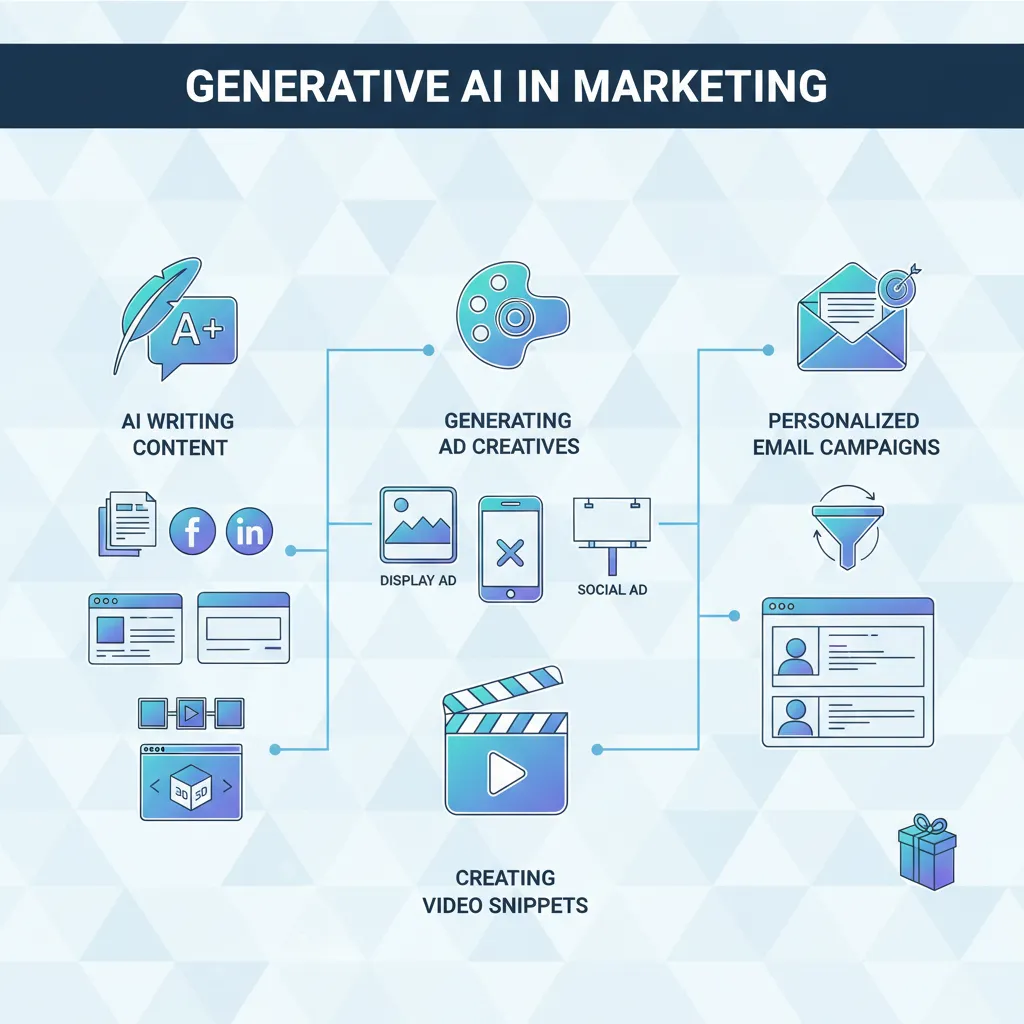
For years, personalization has been the holy grail of marketing. Generative AI finally makes it achievable at scale. By analyzing customer data—browsing history, past purchases, and demographic information—AI can create truly unique experiences for every single user.
- Dynamic Email Campaigns: Instead of one email blast, AI can generate thousands of unique versions, each with personalized subject lines, product recommendations, and body copy that resonates with the individual recipient.
- Personalized Website Content: AI can alter website headlines, hero images, and calls-to-action in real-time based on who is visiting the site, dramatically improving conversion rates.
- Targeted Ad Creatives: Move beyond A/B testing two ad versions. Generative AI can create hundreds of variations of ad copy and imagery tailored to different audience segments for
targeted advertising ai, ensuring maximum relevance and impact. This data-driven approach is the cornerstone of an enhancedai customer experience.

2. Supercharging Content Creation: Your New Creative Co-Pilot
Content is the fuel of modern marketing, but it’s incredibly time-consuming to produce. AI content creation for business acts as a force multiplier for content teams, smashing through writer’s block and accelerating production.
- Blog Post & Article Drafting: Generate outlines, first drafts, or meta descriptions in seconds.
- Social Media Management: Create a month’s worth of social media captions, tailored for different platforms (LinkedIn, Twitter, Instagram), in a single session.
- Video & Podcast Scripts: AI can write compelling scripts, suggest visuals, and even generate synthetic voiceovers. Related: The Best AI Video Generators of 2024
- Product Descriptions: E-commerce businesses can generate thousands of unique, SEO-friendly product descriptions, saving countless hours.
The key to successful content marketing ai is collaboration. AI generates the foundation, and human marketers refine, fact-check, and infuse it with brand personality and strategic oversight.
3. Predictive Analytics and Strategy: Seeing the Future of Your Market
Beyond content creation, AI’s analytical power is revolutionizing marketing strategy itself. By sifting through enormous datasets, predictive analytics marketing can uncover patterns and forecast trends with startling accuracy.
- Trend Forecasting: Analyze social media conversations, search trends, and news data to predict the next big thing in your industry.
- Customer Churn Prediction: Identify customers who are at risk of leaving and automate retention campaigns to keep them.
- Campaign Optimization: Predict which marketing channels and messages will deliver the highest ROI, allowing you to allocate your budget more effectively and
boost sales with ai.
4. Enhancing Customer Engagement and Support
Modern customer engagement ai goes far beyond basic chatbots. Generative AI enables more sophisticated, human-like interactions that build brand loyalty.
- Intelligent Chatbots: AI-powered bots can handle complex customer queries, understand context, and provide personalized support 24/7, freeing up human agents for more critical issues.
- Sentiment Analysis: Monitor brand mentions across the web and instantly gauge public sentiment, allowing for rapid response to both positive and negative feedback.
- Personalized Outreach: Generate empathetic and helpful responses to customer reviews or social media comments, showing your audience that you’re listening. Related: AI in Interactive Storytelling

Tangible Benefits: Why Your Business Needs AI Marketing Strategies Now
Adopting ai marketing strategies isn’t about chasing trends; it’s about unlocking concrete business value. So, is generative ai good for business? The evidence is overwhelmingly positive.
- Massive Efficiency Gains: Automating tasks like content drafting, data analysis, and email personalization frees up your team to focus on high-level strategy and creativity.
- Significant Cost Reduction: Reduce reliance on external agencies for copywriting or ad creative production. AI tools can perform these tasks at a fraction of the cost.
- Enhanced Creativity and Innovation: Use AI as a brainstorming partner to generate fresh ideas for campaigns, product names, or content angles you might never have considered. It’s a key driver of
ai innovation business. - Deeper Customer Insights:
Data driven marketing aican process information at a scale and speed that humans simply cannot match, revealing hidden opportunities and a deeper understanding of your customer base. - Measurably Improved ROI: Through better targeting, personalization, and optimization,
ai driven marketing campaignsconsistently outperform traditional methods, leading to higher conversion rates and a better return on investment.
How to Use AI for Business Growth: A Strategic Framework
Ready to get started? Don’t just randomly subscribe to ai tools. A strategic approach will ensure you get the most out of your investment.
Step 1: Define Your Goals and Start Small What is your biggest marketing challenge right now? Is it lead generation, content production speed, or customer retention? Pick one specific, measurable goal. For example, “Reduce the time it takes to draft a blog post by 50%” or “Increase email open rates by 15% through better personalization.”
Step 2: Identify High-Impact Use Cases
Based on your goal, identify where AI can make the biggest difference. If your goal is content speed, focus on ai content creation for business. If it’s email performance, explore personalized marketing with ai tools.
Step 3: Choose the Right AI Tools
The market for best generative ai tools for marketing is exploding. They generally fall into these categories:
- Text Generators: (e.g., Jasper, Copy.ai, ChatGPT) for writing copy. Related: ChatGPT-4o: The Ultimate Guide
- Image & Video Generators: (e.g., Midjourney, DALL-E 3, Sora) for creating visuals.
- All-in-One Marketing Platforms: (e.g., HubSpot, Salesforce) that have generative AI features built-in.
- Productivity Suites: Many tools now incorporate AI features to streamline workflows. Related: Best AI Tools for Personal Productivity
Step 4: Train Your Team and Foster an AI-Ready Culture Technology is only effective if people know how to use it. Invest in training your team not just on the tools, but on the strategy behind them—like prompt engineering and ethical AI use. Encourage experimentation and learning. Related: AI and Upskilling Your Workforce
Step 5: Measure, Analyze, and Iterate Track the key metrics you defined in Step 1. Did the AI tool help you achieve your goal? Analyze the results, gather feedback from your team, and refine your approach. The world of AI changes fast, so continuous learning is essential.
The Future of Marketing with AI: What’s Next?
The future of marketing with ai is evolving at a breakneck pace. We’re moving towards a world where AI is not just a tool, but a fully integrated partner in the marketing department. We can expect to see:
- Hyper-Automation: Entire marketing workflows, from ideation and creation to distribution and analysis, will be seamlessly managed by interconnected AI systems.
- Immersive, AI-Generated Experiences: Imagine AI creating personalized virtual reality shopping experiences or interactive ad campaigns that adapt to user choices in real-time. Related: AR Glasses: The Future Beyond Smartphones
- Proactive Strategy: AI will move from predicting trends to proactively recommending complete marketing strategies, complete with budget allocation and creative concepts, before a human even asks.
Conclusion
Generative AI is far more than a technological novelty; it is a fundamental catalyst for business growth and marketing innovation. It empowers businesses of all sizes to operate with greater speed, intelligence, and creativity than ever before. By embracing ai marketing, you’re not replacing your human marketers—you’re amplifying their abilities, freeing them from tedious tasks to focus on the strategic thinking and genuine human connection that AI cannot replicate.
The revolution is here. By understanding its applications, adopting a strategic framework, and fostering a culture of innovation, you can harness the power of generative AI to not just keep pace with the competition, but to define the future of your brand. The first step is the most important one: start exploring today.
FAQs
Q1. What is generative AI marketing in simple terms?
Generative AI marketing uses artificial intelligence to create new, original content and experiences for marketing purposes. Instead of just analyzing data, it can generate text (like emails and blog posts), images (like ad creatives), and videos from simple text prompts, enabling highly personalized and efficient campaigns.
Q2. How can AI improve marketing strategies?
AI improves marketing strategies by providing deep data insights, automating content creation, enabling hyper-personalization at scale, and predicting market trends. This allows marketers to make more informed, data-driven decisions, optimize campaigns for better ROI, and engage customers with highly relevant content.
Q3. What are some examples of generative AI in action for businesses?
Common examples include using AI tools like Jasper or ChatGPT to draft blog posts and social media updates, using Midjourney to create unique ad images, leveraging HubSpot’s AI features to write personalized sales emails, and using AI-powered chatbots to provide 24/7 customer support.
Q4. Is AI good for small business marketing?
Absolutely. Generative AI is a great equalizer for small businesses. It provides access to powerful content creation and data analysis tools that were previously only available to large corporations with big budgets. This allows small teams to increase their marketing output, compete more effectively, and achieve significant growth.
Q5. What are the limitations or risks of using AI in marketing?
The primary risks include the potential for generating inaccurate or biased information (AI “hallucinations”), the need for human oversight to ensure brand consistency and quality, and data privacy concerns. It’s crucial to fact-check AI-generated content and use AI as a co-pilot, not on complete autopilot.
Q6. How do I start implementing AI into my marketing plan?
Start small. Identify a repetitive or time-consuming task in your current workflow, such as writing email subject lines or social media captions. Choose a user-friendly AI tool, experiment with it, and measure the impact on your efficiency and results before expanding to more complex applications.