AI’s Shield: Protecting Earth with Smart Planetary Defense
Introduction
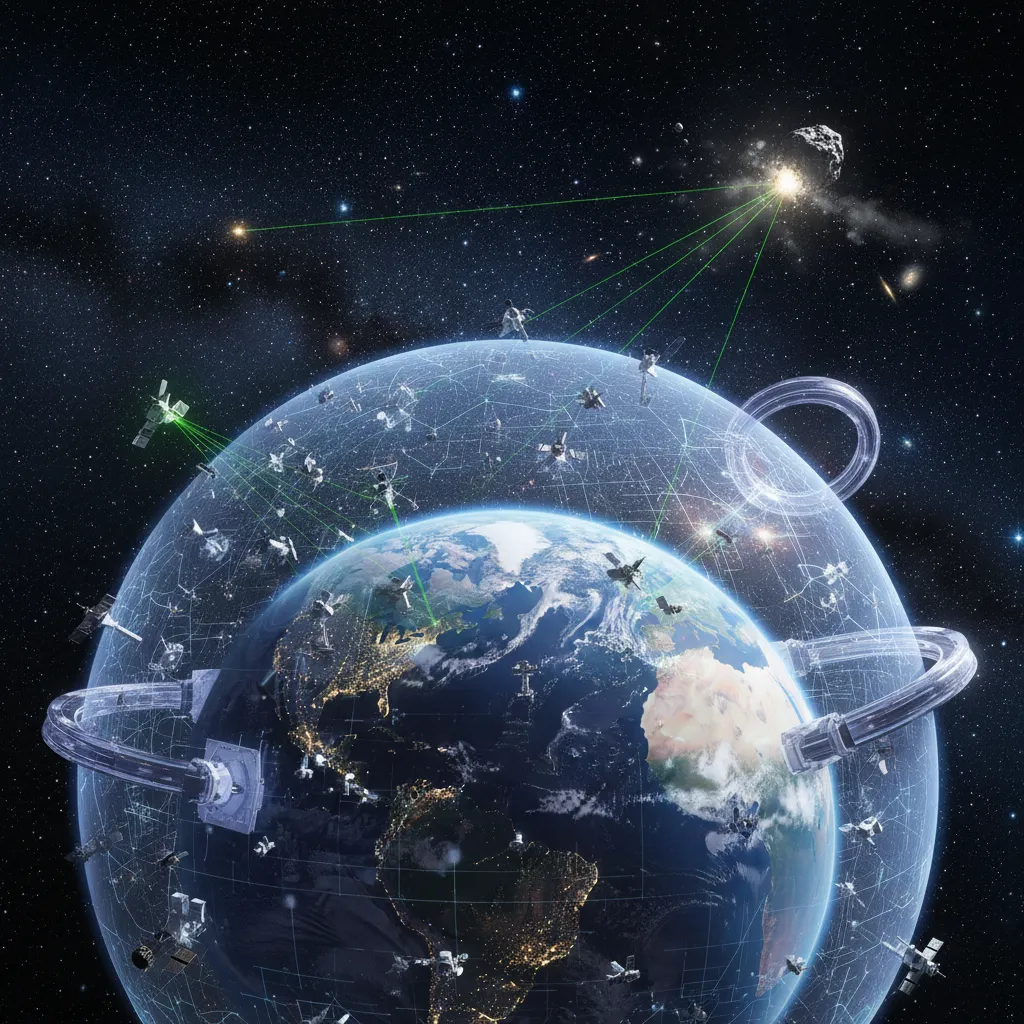
The universe is a cosmic shooting gallery, and Earth is constantly moving through it. While Hollywood loves to dramatize a last-minute mission to save the world, the reality of planetary defense is far more complex, data-intensive, and, increasingly, intelligent. For decades, our approach to identifying potentially hazardous asteroids has been a painstaking process of human observation. But in an era where data is measured in petabytes and threats can emerge from the blackness of space with little warning, human limitations are becoming a critical bottleneck.
Enter artificial intelligence. This isn’t science fiction anymore. AI is rapidly becoming our planet’s invisible shield, an indispensable partner in the mission-critical task of protecting Earth from asteroids. From sifting through overwhelming amounts of telescope data to plotting the perfect interception course, planetary defense AI is transforming our ability to detect, track, and mitigate cosmic threats.
In this deep dive, we’ll explore the groundbreaking role of artificial intelligence in asteroid defense. We’ll uncover how machine learning algorithms are becoming our sharpest eyes in the sky, how AI is planning the future of autonomous asteroid intercept missions, and what the future holds for this ultimate high-stakes collaboration between human ingenuity and machine intelligence.
The Cosmic Challenge: Why We Need a Smarter Shield
Our solar system is far from empty. It’s filled with millions of rocky bodies, remnants from its formation, known as asteroids and comets. Objects whose orbits bring them close to Earth are called Near-Earth Objects, or NEOs. While most are harmless, a tiny fraction are designated as Potentially Hazardous Asteroids (PHAs), and they represent a significant, if low-probability, threat.
The challenge is threefold:
- Scale: There are an estimated 25,000 NEOs larger than 140 meters in diameter—big enough to cause regional devastation—and we’ve only found about 40% of them. The number of smaller, city-block-sized objects is in the millions. Manually searching for them is like finding a specific grain of sand on every beach on Earth.
- Speed: These objects are moving at incredible velocities, often tens of thousands of miles per hour. The window between detection and potential impact can be frighteningly small. An effective automated space threat response is not a luxury; it’s a necessity.
- Data Overload: Modern observatories like the upcoming Vera C. Rubin Observatory will generate a staggering 20 terabytes of data every night. It’s a data tsunami that no team of human astronomers could ever hope to analyze in real-time.
This is where the traditional methods of astronomical observation fall short. We need a system that can see everything, analyze it instantly, and never get tired. We need an intelligent system.
The AI Spotter: Revolutionizing Asteroid Detection and Tracking
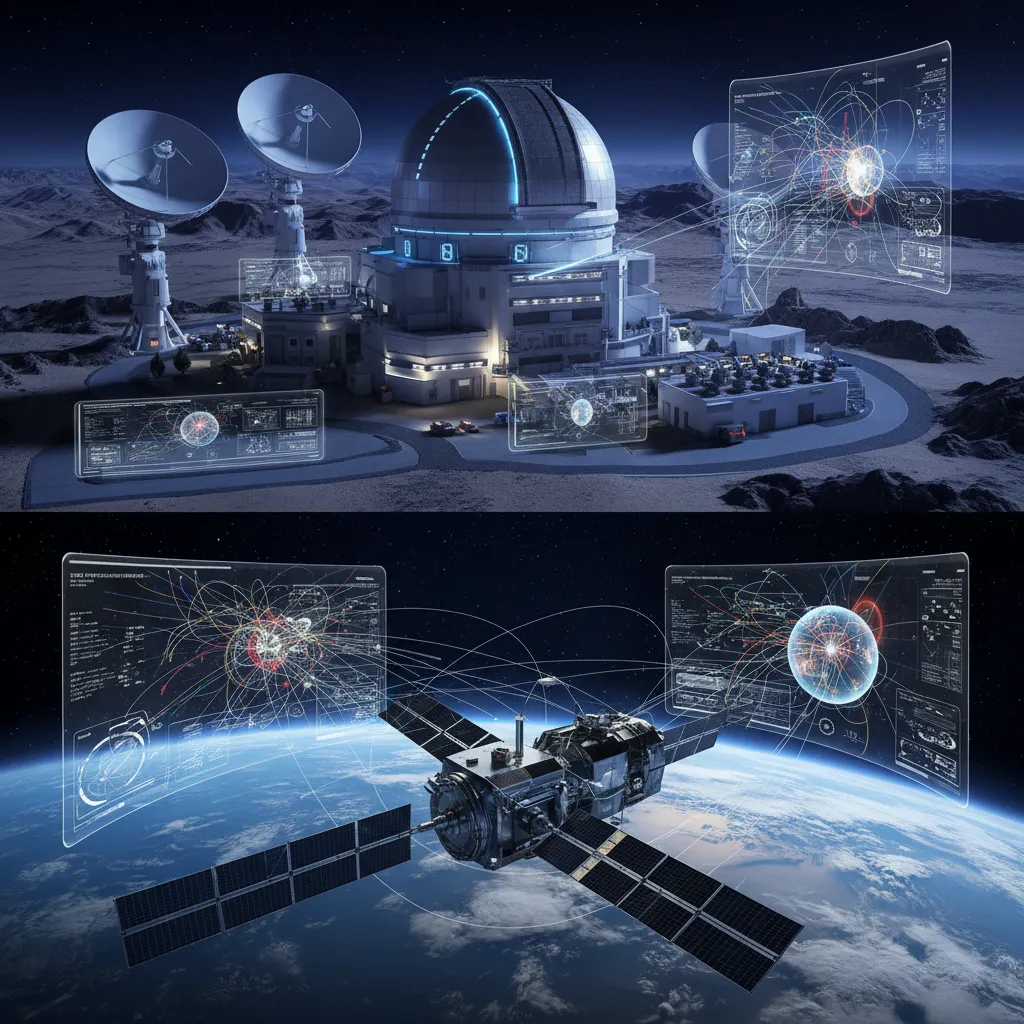
The first line of defense is knowing what’s out there. Asteroid detection AI is our new frontline scout, leveraging sophisticated algorithms to turn raw telescope imagery into actionable intelligence with unprecedented speed and accuracy.
From Data Tsunami to Actionable Intelligence
AI, particularly machine learning in space defense, excels at pattern recognition. Telescopes capture vast fields of stars, and finding a faint, moving dot against this static background is the core challenge. An AI algorithm can be trained on millions of archival images to learn what an asteroid looks like and how it moves.
One such algorithm, called HelioLinc3D, was recently used to find a new PHA, the 600-foot asteroid 2022 SF289, in data from the ATLAS survey. This demonstrated the power of AI to find objects that were previously missed by human analysis. These systems connect the dots between faint observations across different nights, piecing together an orbit and flagging a new object for human verification. This capability is crucial for near-earth object detection.
The Power of Neural Networks in Space Astronomy
Deep learning space threats analysis takes this a step further. Convolutional Neural Networks (CNNs), the same technology used in facial recognition and self-driving cars, are being adapted for space object classification AI. They can analyze the shape, light curve (how its brightness changes as it tumbles), and spectral data of an object to not only detect it but also begin to characterize it.
Is it a solid piece of iron, or a loosely-packed “rubble pile”? This information is vital for planning a mitigation strategy. A solid rock might require a different deflection technique than a flying pile of gravel. This level of advanced space threat analysis was once the domain of years-long research projects; now, AI can provide preliminary classifications in minutes.
Related: Private AI: The Future of On-Device Data Security
AI for Early Warning: The Need for Speed
The primary goal of AI space surveillance is to provide as much warning time as possible. The earlier we detect a potential impactor, the more options we have to deal with it. A threat discovered decades in advance might be nudged off course with a tiny, precise push. A threat discovered with only months to spare requires a much more forceful and risky intervention.
AI systems provide this critical lead time by:
- Automating the Search: Running 24/7 without fatigue, analyzing data as soon as it comes in.
- Predicting Orbits: Quickly calculating an object’s trajectory and projecting it years or even decades into the future to see if it intersects with Earth’s orbit.
- Flagging High-Priority Targets: Using intelligent triage to alert astronomers to the most potentially dangerous objects first, ensuring human expertise is focused where it’s needed most.
This forms the backbone of an AI for early warning space system, a crucial component of modern space defense technology.
Beyond Detection: AI-Powered Threat Mitigation
Once a threat is identified, what’s next? This is where AI driven space safety transitions from passive observation to active defense. AI is not just about finding the needle in the haystack; it’s about helping us figure out how to move the haystack.
Intelligent Mission Planning for Deflection
NASA’s successful DART (Double Asteroid Redirection Test) mission in 2022 was a landmark achievement, proving that a kinetic impactor could indeed alter an asteroid’s orbit. The planning for such a mission is incredibly complex, involving countless variables: the interceptor’s velocity, the impact angle, the asteroid’s mass and composition, and the desired change in trajectory.
AI space mission planning can run thousands of simulations in the time it would take a human to run a handful. It can optimize for the most effective impact with the least amount of energy (or rocket fuel), a critical factor for any space mission. This allows mission planners to develop robust asteroid deflection systems and strategies long before they are ever needed.
Related: Boost Your Productivity: 10 Essential AI Tools for Work and Life
The Rise of Autonomous Interceptors
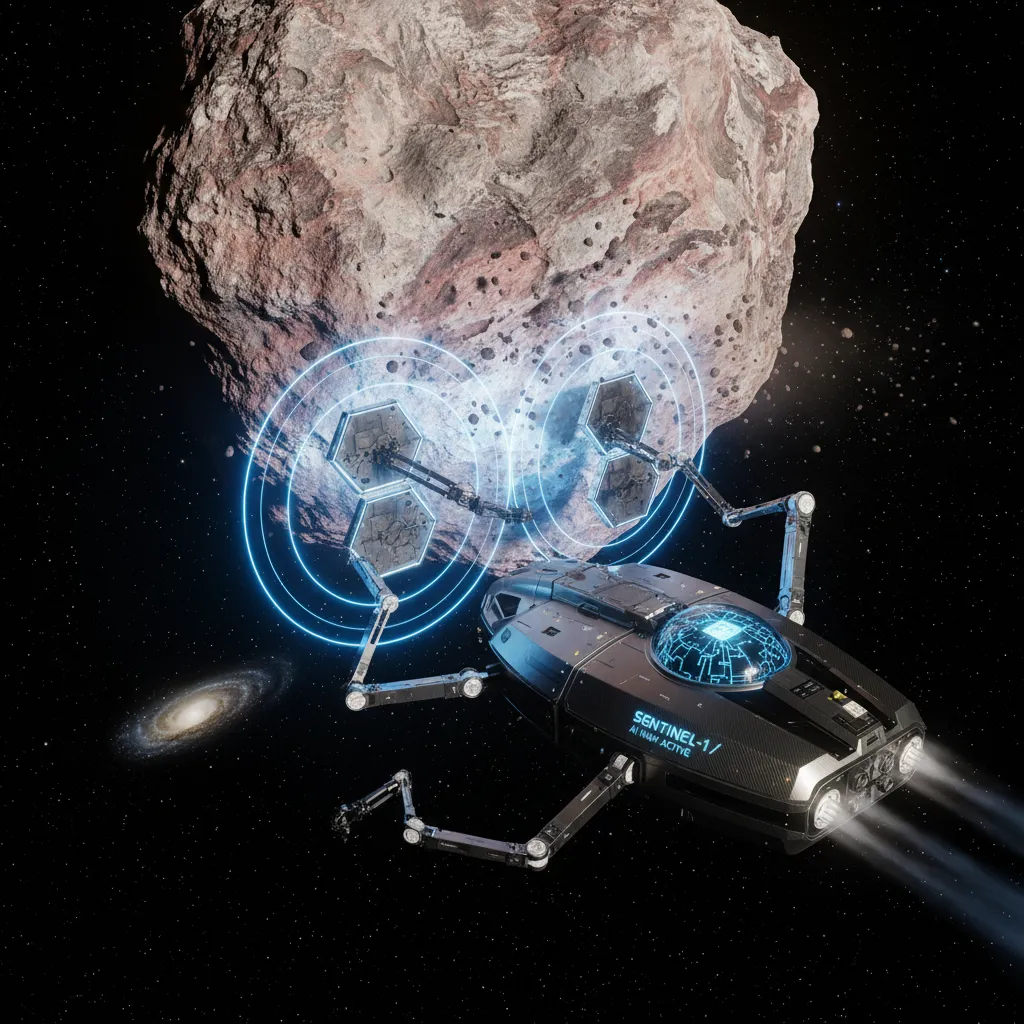
In a time-critical scenario, there may not be minutes to spare for communication delays between an interceptor spacecraft and mission control on Earth. The future of robotic planetary defense lies in autonomous asteroid intercept capabilities.
An AI-powered spacecraft could:
- Navigate Autonomously: Using its own sensors and star-tracking AI to navigate the final approach to the target.
- Make Real-Time Adjustments: If the asteroid is tumbling or venting gas, the AI could adjust its trajectory on the fly to ensure a perfect hit on the target’s center of mass.
- Execute the Mission: In the most extreme scenarios, an AI could be authorized to make the final decision to intercept without a human in the loop, removing the light-speed delay as a factor.
This level of autonomy is essential for creating a truly responsive and effective intelligent space defense system.
A Global Effort: AI in Space Security and Collaboration
Planetary defense is not one nation’s responsibility; it’s a global one. An impact affects everyone. This is where AI space security plays a crucial role in fostering international collaboration.
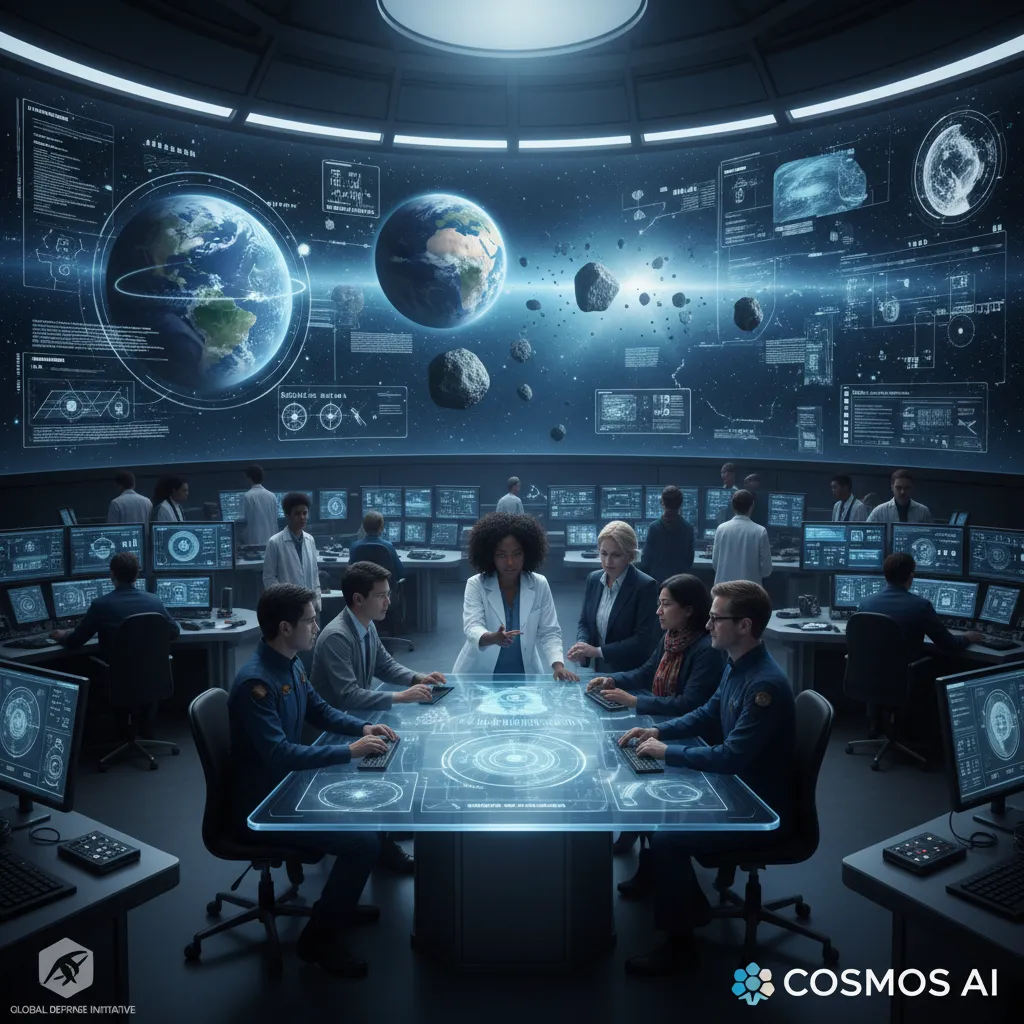
Different countries and organizations operate various telescopes and deep space radar systems. AI can act as a universal translator and data fusion engine, creating a unified, global picture of the near-Earth environment. By standardizing data from multiple sources and running a central AI-driven threat assessment, we can build a more comprehensive and resilient defense network.
This collaborative approach extends to protecting our vital orbital assets. AI space infrastructure protection uses similar algorithms to track and predict the movement of space debris, preventing collisions with satellites that provide us with everything from GPS navigation to climate monitoring. A cohesive global strategy, powered by AI, is the cornerstone of the future of planetary defense.
Related: AI in the Urban Revolution: Building Smarter, More Sustainable Cities
Challenges and the Ethical Frontier
While the promise of AI in space research is immense, it’s not without its challenges and ethical considerations.
- The Black Box Problem: Some complex deep learning models can be “black boxes,” meaning even their creators don’t fully understand their internal reasoning. For a decision as critical as launching an interceptor, we need transparent and explainable AI (XAI).
- Data Integrity: The old adage “garbage in, garbage out” is critically important here. An AI is only as good as the data it’s trained on. We must ensure the integrity of our astronomical data and protect our defense networks from adversarial attacks that could feed the AI false information.
- Autonomous Decisions: The most significant ethical hurdle is the prospect of a fully automated space threat response. Who is responsible if an autonomous system makes a mistake? At what point do we cede ultimate authority to an algorithm? These are profound questions that scientists, policymakers, and ethicists must grapple with as the technology matures.
Related: Ethical AI for Financial Wellness: Smart Money Habits for a Secure Future
Conclusion: The Dawn of an AI-Protected Planet
The threat of an asteroid impact is a cosmic constant, a matter of “when,” not “if.” For the first time in the history of life on Earth, one species has developed the intelligence and technology to do something about it. We are no longer just passive observers waiting for fate to strike.

Artificial intelligence is the force multiplier that makes a robust and reliable planetary defense system possible. It is the tireless watchman, the brilliant navigator, and the swift defender. From the deep space AI defense networks that scan the outer solar system to the nimble robotic planetary defense craft that stand ready to act, AI is weaving a shield of data and logic around our world.
The journey ahead involves overcoming significant technical and ethical AI space exploration challenges. But the collaboration between human oversight and artificial intelligence represents our best hope for ensuring that the fate of the dinosaurs is not our own. The sky is vast and the universe is wild, but with AI as our shield, the future of Earth is looking safer than ever.
Related: AI Companions: The Rise of Virtual Relationships and Their Impact on Society
Frequently Asked Questions (FAQs)
Q1. How is AI used for planetary defense?
AI is used in several key areas of planetary defense. Primarily, it excels at asteroid detection AI, where machine learning algorithms sift through massive volumes of telescope data to find and identify Near-Earth Objects (NEOs) much faster and more accurately than humans. It also aids in tracking their orbits, predicting potential impacts, and even planning and simulating mitigation missions, such as robotic interceptors.
Q2. Can AI predict asteroid impacts?
Yes, AI can significantly improve our ability to predict potential asteroid impacts. By analyzing observational data, AI for asteroid tracking can calculate an object’s trajectory with high precision and project it far into the future. It can then run complex simulations to determine the probability of that orbit intersecting with Earth’s, providing a crucial early warning for any credible threats.
Q3. What is the role of machine learning in space defense?
Machine learning space defense is foundational to modern planetary protection. Its main role is pattern recognition. Algorithms are trained on vast datasets to learn the visual and behavioral signatures of asteroids, allowing them to automatically spot new objects, classify them by size and type, and flag any unusual or potentially dangerous behavior that requires further human investigation.
Q4. How does AI help in space threat mitigation?
Beyond just detection, AI is crucial for space threat mitigation. It assists by running thousands of complex simulations to determine the most effective method for deflecting a specific asteroid. This AI space mission planning can optimize the trajectory of a kinetic impactor (like NASA’s DART mission) or calculate the subtle gravitational push needed from a “gravity tractor” spacecraft, ensuring the highest chance of success.
Q5. What is an autonomous asteroid intercept?
An autonomous asteroid intercept refers to a robotic spacecraft capable of hunting down and neutralizing an asteroid threat without real-time human command. This is a key goal for future planetary defense. Such a system would use onboard AI to navigate deep space, identify its target, make final adjustments to its course, and execute its mission, overcoming the communication delays between Earth and deep space.
Q6. Are there current AI systems protecting Earth from asteroids?
Yes, AI systems are already being deployed. For example, the Asteroid Terrestrial-impact Last Alert System (ATLAS) and the Pan-STARRS observatory use sophisticated software and AI-driven tools to scan the sky and identify new NEOs. Algorithms like HelioLinc3D are actively being used to find asteroids in existing datasets that were previously missed, proving the real-world value of artificial intelligence asteroid defense today.