AI’s Urban Revolution: Building Smarter, Sustainable Cities with Intelligent Tech

Introduction
Imagine a city that anticipates your needs. Traffic flows smoothly, even during rush hour. The air is cleaner, energy is used efficiently, and public services are just a tap away. This isn’t a scene from a distant sci-fi future; it’s the emerging reality of AI smart cities. As urban populations swell and resources become more strained, cities worldwide are turning to artificial intelligence to not just survive, but thrive. This is the urban revolution, and intelligent technology is its engine.
The concept of a “smart city” has evolved from simple connected devices to a complex, interwoven ecosystem where data and AI work in harmony. The goal is to create more livable, workable, and, crucially, sustainable urban environments. By harnessing the power of predictive urban analytics and intelligent city solutions, urban planners and leaders are finding innovative AI solutions urban problems that have plagued metropolises for decades.
In this deep dive, we’ll explore the transformative impact of AI in urban development. We will dissect how smart city technology is reshaping everything from our daily commute to our environmental footprint. You’ll learn about the core components of smart city infrastructure, see real-world urban AI applications, and understand the profound synergy between AI and urban sustainability. Welcome to the blueprint for the future of cities.
The Digital Backbone: Smart City Infrastructure and AI
Before a city can become “smart,” it needs a central nervous system. This digital backbone is built on a foundation of interconnected technologies that collect, transmit, and process vast amounts of data in real-time. Without this core infrastructure, AI would have no information to learn from or act upon.
The Trinity of Smart Infrastructure: IoT, 5G, and Cloud
The foundation of any connected urban environment rests on three pillars:
- The Internet of Things (IoT): This refers to the massive network of physical devices—sensors, cameras, meters, and even vehicles—embedded throughout the city. These
IoT in smart citiesdevices are the city’s eyes and ears, collecting data on everything from traffic density and air quality to energy consumption and waste levels. - High-Speed Connectivity (5G and beyond): All the data collected by IoT devices needs to be transmitted instantly. 5G networks provide the ultra-low latency and high bandwidth required to support millions of devices communicating simultaneously, making real-time responses possible.
- Cloud and Edge Computing: Raw data is computationally expensive to process. Cloud platforms provide the massive storage and processing power needed for
urban data analytics AI. Increasingly, edge computing is used to process data locally on or near the device, reducing latency for critical applications like autonomous vehicle navigation.
AI acts as the brain that makes sense of this torrent of information. It identifies patterns, predicts future events, and automates decisions, transforming raw data into actionable intelligence for a more efficient and responsive city.
Reimagining Urban Mobility: AI-Powered Intelligent Transportation Systems
Traffic congestion is the bane of modern city life, costing commuters time and money while contributing significantly to pollution. Urban mobility AI offers a powerful antidote, creating intelligent transportation systems that are predictive, adaptive, and efficient.
AI Traffic Management in Action
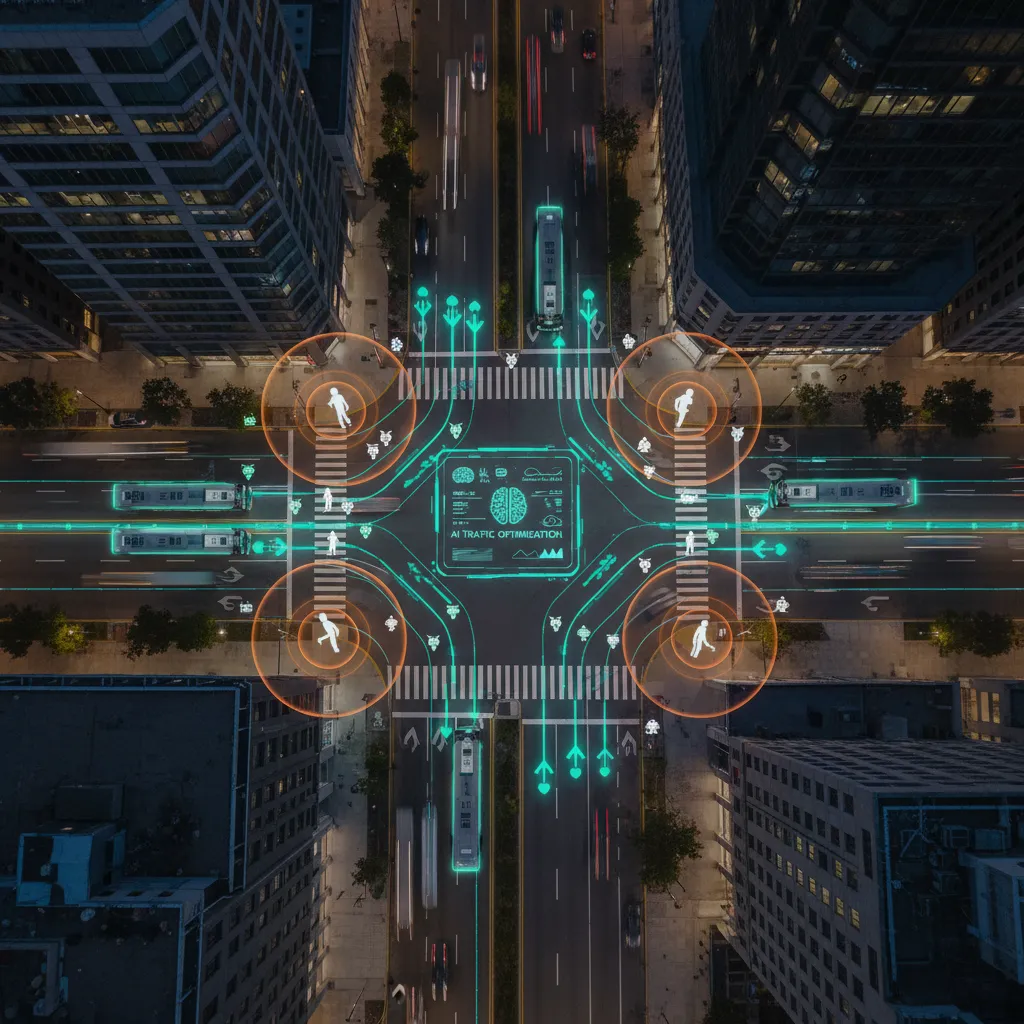
Forget static, timer-based traffic lights. AI traffic management systems use a network of cameras and sensors to analyze traffic flow in real-time. Machine learning algorithms can predict congestion points before they form and dynamically adjust signal timings to keep vehicles moving.
This system can:
- Adapt to real-time events: Prioritize routes for emergency vehicles, reroute traffic around accidents, and adjust for public events.
- Reduce idling and emissions: By minimizing stop-and-go traffic, AI helps cut down on fuel consumption and air pollution, contributing to
green smart cities. - Optimize parking: Smart parking apps, guided by AI, can direct drivers to available spots, reducing the time spent circling blocks and further easing congestion.
The Future of Public Transit
AI is also revolutionizing public transportation. Instead of rigid, underutilized bus routes, AI algorithms can enable on-demand shuttle services that dynamically create routes based on real-time user requests. For existing systems, AI performs predictive maintenance on trains and buses, identifying potential equipment failures before they cause service disruptions. This data-driven approach ensures a more reliable, convenient, and user-friendly public transit experience for everyone. Related: Spatial Computing’s Next Leap: Redefining Digital Interaction
Powering the Future: AI in Smart Energy and Utilities
Sustainable cities require sustainable resources. AI is a game-changer for managing energy, water, and waste, ensuring that urban growth doesn’t come at the expense of the environment. This is a cornerstone of AI and urban sustainability.
Building Smart Energy Grids
Traditional power grids are often inefficient, struggling to match energy supply with fluctuating demand. Smart energy grids infused with AI can overcome this challenge. By analyzing data from smart meters, weather forecasts, and historical usage patterns, AI can:
- Predict energy demand: Utilities can forecast demand with incredible accuracy, preventing both blackouts and wasteful energy overproduction.
- Integrate renewables seamlessly: AI helps manage the intermittent nature of solar and wind power, ensuring a stable and reliable energy supply.
- Detect and isolate faults: Machine learning algorithms can pinpoint issues in the grid in real-time, allowing for faster repairs and minimizing downtime. This
future urban techmakes our power supply more resilient and efficient.

Intelligent Water and Waste Management
Resource management extends beyond energy. AI waste management systems utilize sensors in public bins to notify sanitation departments when they are full. This allows for the optimization of collection routes, saving fuel, time, and labor costs. Similarly, AI-powered systems can monitor municipal water pipes for pressure anomalies, detecting leaks long before they become catastrophic breaks, conserving a precious resource. Related: Sustainable Travel Guide: Explore the World Responsibly & Ethically
Sustainable Urban Planning and Green Living
The very design and layout of our cities can be optimized with AI. Sustainable urban planning is no longer a matter of guesswork; it’s a data-driven science that aims to create healthier, more equitable, and environmentally friendly spaces.
Data-Driven City Planning
Before a single brick is laid, AI city planning tools can create sophisticated “digital twins”—virtual replicas of a city. Planners can use these models to simulate the impact of new developments. They can test how a new skyscraper might affect wind patterns and sun exposure, or how a new public park could impact local property values and traffic. This predictive urban analytics allows for smarter, more sustainable decisions that consider long-term environmental and social impacts.
Smart Environment Monitoring for Healthier Cities
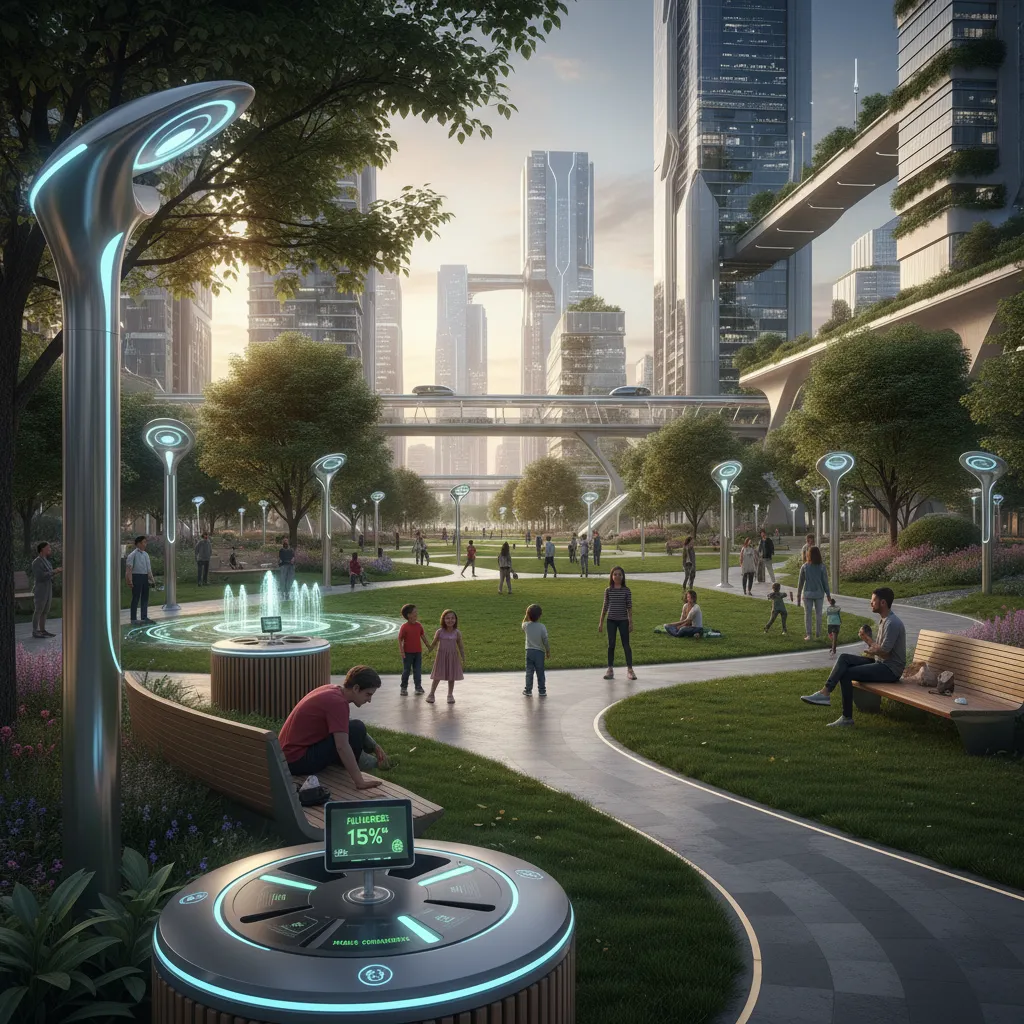
A key aspect of smart city living is a healthy environment. AI-powered sensor networks provide granular, real-time data on urban ecosystems.
- Air Quality: Sensors mounted on buildings, lampposts, and public vehicles create a detailed map of air pollution, identifying hotspots and helping policymakers target interventions.
- Noise Pollution: AI can analyze urban sounds to map noise pollution, informing decisions on traffic calming measures or zoning regulations.
- Green Space Management: AI can optimize irrigation systems in public parks, conserving water while ensuring green spaces flourish.
By actively monitoring and managing the urban environment, cities can significantly improve the health and well-being of their residents.
Enhancing Quality of Life: AI-Driven Public Services and Safety
A truly smart city leverages technology to make life safer, easier, and more engaging for its citizens. From emergency response to bureaucratic processes, AI driven public services are setting a new standard for civic life. Related: The Future is Now: AI Revolutionizing Personalized Learning & Education
AI for Public Safety
Safety is a primary concern for any urban resident. AI for public safety provides tools that help law enforcement and emergency services become more proactive and efficient. AI can analyze data from various sources to optimize the dispatch of ambulances and fire trucks, ensuring they reach the scene of an emergency via the fastest possible route. In disaster scenarios, AI can quickly assess satellite imagery to identify damaged areas and help coordinate relief efforts. These smart city innovations are critical for building urban resilience. Related: AI-Powered Predictive Home Security & Smart Systems
AI-Powered City Administration and Citizen Services
Interacting with local government can often be a frustrating experience. AI-powered city administration aims to change that. AI-driven chatbots on city websites can answer citizen queries 24/7, from providing information on trash collection schedules to guiding them through the process of applying for a permit. This frees up human staff to handle more complex issues while providing residents with instant, accessible support. These hyper-personalized interactions are becoming a hallmark of modern digital life. Related: Hyper-Personalized AI: The Future of Tailored Intelligent Systems

The Human Element: Navigating the Challenges and Ethics of AI Smart Cities
The journey toward fully realized AI smart cities is not without its hurdles. These smart city challenges are not just technical but deeply ethical and social. Addressing them head-on is crucial for building a future that is not only smart but also just and equitable.
Data Privacy and Surveillance Concerns
A city that collects vast amounts of data must also be a city that fiercely protects its citizens’ privacy. The potential for mass surveillance is a significant concern. Robust data governance policies, transparency about what data is collected and how it’s used, and strong cybersecurity measures are non-negotiable. Citizens must have control over their personal data.
Algorithmic Bias and Digital Equity
AI systems learn from the data they are trained on. If that data reflects existing societal biases, the AI will perpetuate and even amplify them. For example, a predictive policing algorithm trained on biased arrest data could unfairly target minority communities. It’s imperative to ensure that the benefits of smart city technology are accessible to all residents, avoiding a “digital divide” that leaves vulnerable populations behind.
Cybersecurity and Infrastructure Resilience
Connecting critical urban infrastructure like the power grid and water supply to the internet makes them potential targets for cyberattacks. A successful attack could be catastrophic. Building resilient, secure systems is a top priority for any smart city initiatives, requiring constant vigilance and investment in cutting-edge cybersecurity defenses. Related: Apple Intelligence Guide: iOS 18’s New AI Features
Conclusion
The urban revolution is here, and artificial intelligence is its driving force. From untangling traffic jams with intelligent transportation systems to fostering sustainability through smart energy grids and data-driven planning, the future of cities AI is being written today. The potential to create more efficient, resilient, and enjoyable urban environments is immense.
However, this technological transformation must be guided by human values. The smartest cities will be those that prioritize privacy, equity, and security alongside efficiency and innovation. By fostering a collaborative approach that includes citizens, policymakers, and technologists, we can build the connected urban environments of tomorrow—cities that are not just intelligent, but wise.
The journey is complex, but the destination is a brighter, greener, and more connected future for urban living. The integration of AI smart cities technology isn’t just an upgrade; it’s a fundamental reimagining of what a city can be.
What AI-powered innovation are you most excited to see in your city? Share your thoughts in the comments below!
Frequently Asked Questions (FAQs)
Q1. What exactly is an AI smart city?
An AI smart city is an urban area that uses artificial intelligence and other smart city technology, like the Internet of Things (IoT), to collect and analyze data. This data is then used to manage assets, resources, and services efficiently, with the goal of improving the quality of life for its citizens and promoting sustainability.
Q2. How does AI improve urban sustainability?
AI contributes to urban sustainability in several key ways. It optimizes energy consumption through smart energy grids, reduces pollution via AI traffic management, improves AI waste management with optimized collection routes, and helps conserve water by detecting leaks. It also aids in sustainable urban planning by modeling the environmental impact of new developments.
Q3. What are the biggest challenges in implementing AI in cities?
The primary smart city challenges include ensuring data privacy and preventing mass surveillance, mitigating algorithmic bias to ensure equitable outcomes for all citizens, and protecting critical smart city infrastructure from cybersecurity threats. High implementation costs and the need for a digitally literate workforce are also significant hurdles.
Q4. What role does IoT play in smart city technology?
IoT in smart cities acts as the sensory network. IoT devices are the millions of sensors, cameras, and meters that collect real-time data about the city’s conditions—from traffic flow and air quality to energy usage. This data is the lifeblood that AI systems analyze to make intelligent, data-driven decisions.
Q5. Can AI help in managing city traffic?
Absolutely. AI traffic management is one of the most impactful urban AI applications. By analyzing real-time data from cameras and road sensors, AI can predict traffic flow, dynamically adjust traffic light timings to prevent congestion, and instantly reroute traffic around accidents or obstacles, leading to smoother, faster, and more fuel-efficient commutes.
Q6. Are there any real-world examples of successful smart cities?
Yes, many cities are leading the way. Singapore is often cited for its comprehensive smart city initiatives, including intelligent transportation and a national digital identity program. Barcelona uses IoT for smart parking and waste management. Dubai is investing heavily in AI for everything from public services to law enforcement, aiming to become a global leader in the future of cities AI.