AI Fitness Revolution: Personalized Workouts & Smart Recovery for Peak Performance

Introduction
For decades, the path to fitness was paved with one-size-fits-all workout plans, dog-eared magazines, and the generic advice of “eat less, move more.” While well-intentioned, this cookie-cutter approach often led to plateaus, injuries, and waning motivation. But the ground is shifting beneath our feet. We are in the midst of an AI fitness revolution, a paradigm shift that is replacing generic routines with hyper-personalized, data-driven experiences that promise to unlock peak human performance like never before.
This isn’t science fiction. This is the new reality of fitness, powered by sophisticated algorithms, wearable sensors, and machine learning. Imagine a world where your workout plan evolves with you daily, your form is corrected in real-time by a virtual coach, and your recovery is meticulously optimized based on your body’s unique signals. This is the world that the AI fitness coach is building.
In this deep dive, we’ll explore how this revolution is unfolding. You’ll learn how a personalized AI workout is generated, the critical role of smart fitness tracking and recovery, and how these technologies are making elite-level training accessible to everyone. Get ready to discover the future of fitness tech—a future that is smarter, safer, and tailored perfectly to you.
What is AI Fitness? Ditching the Cookie-Cutter Approach
At its core, AI fitness is the application of artificial intelligence to health and exercise, moving far beyond simple step counting or calorie tracking. It’s about creating a dynamic, responsive, and intelligent ecosystem that understands your body, your goals, and your lifestyle. This system is built on a continuous feedback loop of data, analysis, and adaptation.
The key components include:
- Data Collection: This is the foundation. Connected fitness devices like smartwatches, rings, and even smart clothing collect a torrent of data—heart rate, sleep patterns, movement quality, blood oxygen levels, and more. This is data-driven fitness in its purest form.
- AI Analysis: Sophisticated machine learning algorithms process this raw data, identifying patterns and correlations that a human coach could never see. This is where AI sports science comes into play, turning numbers into actionable AI health insights.
- Personalized Output: Based on the analysis, the AI delivers highly customized recommendations. This could be a unique AI workout generator creating your plan for the day, an AI nutrition coach suggesting post-workout meals, or smart recovery tools telling you it’s time for an active recovery session instead of a high-intensity workout.
This approach transforms your fitness journey from a monologue, where you follow a static plan, into a dialogue with your own physiology.
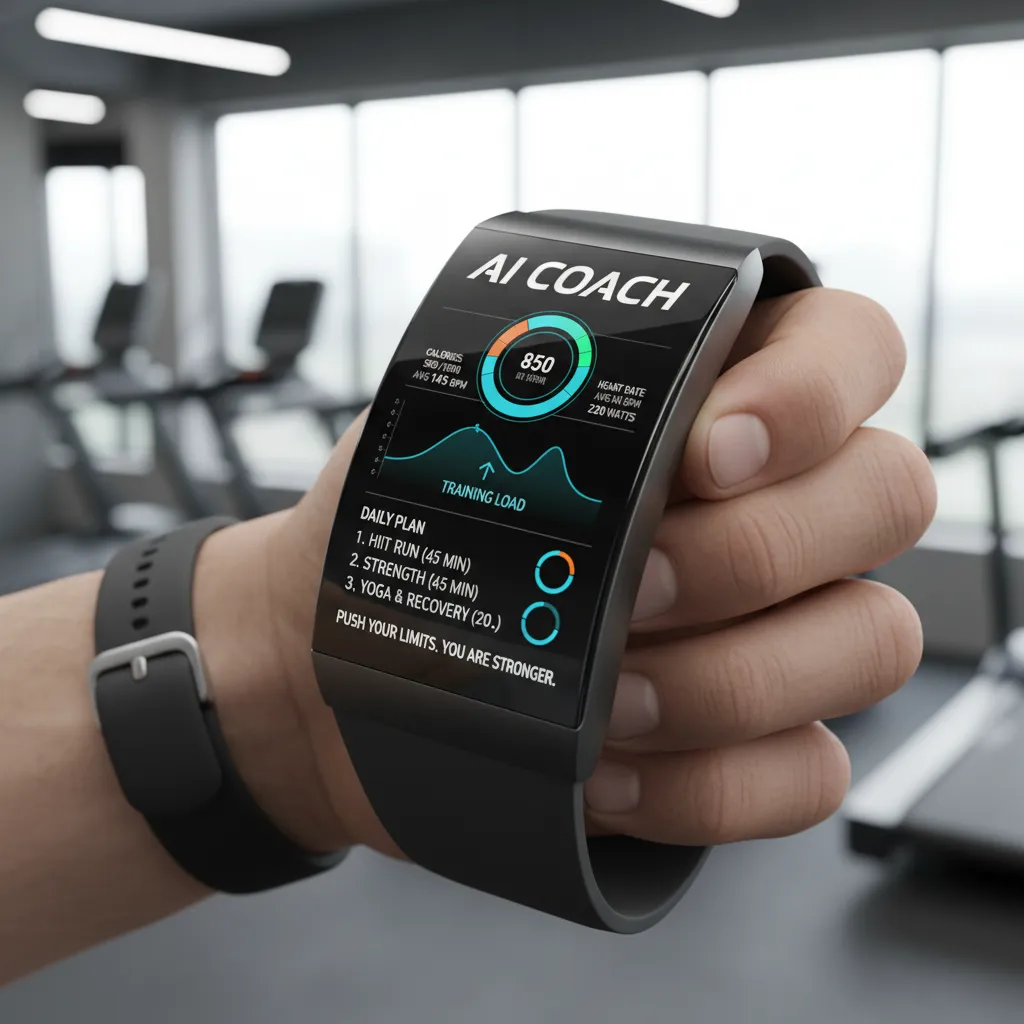
The Engine of Personalization: How AI Creates Your Perfect Workout
The magic of AI fitness lies in its ability to craft intelligent fitness plans that are as unique as your fingerprint. But how does it actually work? It’s a multi-layered process that continuously learns and refines its approach.
Data-Driven Fitness Plans
It all starts with your input. When you first use an AI personal trainer app, you’ll provide baseline information: your goals (lose weight, build muscle, improve endurance), your experience level, available equipment, and any physical limitations.
But this is just the starting point. The real personalization begins as the AI starts gathering data from your wearable AI fitness trackers. It analyzes:
- Performance Metrics: How many reps you completed, the weight you lifted, your pace during a run.
- Biometric Data: Your heart rate response during exercise, your heart rate variability (HRV) overnight, and your sleep quality.
- Subjective Feedback: Many apps ask you to rate how you felt during a workout, giving the AI crucial qualitative data.
Using predictive fitness analytics, the AI combines all these inputs to build a comprehensive picture of your current state, creating custom fitness AI programs that are perfectly suited for you on any given day.
Dynamic Adjustments and AI Workout Optimization
Perhaps the biggest advantage of AI over a static PDF plan is its ability to adapt in real time. Life happens. You might have a poor night’s sleep, a stressful day at work, or feel exceptionally energetic. An AI coach knows this and adjusts accordingly.
This is AI workout optimization in action. If your sleep data and HRV indicate you’re under-recovered, the AI might swap your planned heavy AI strength training session for a lighter mobility day or a low-intensity AI cardio workout. Conversely, if you’re consistently exceeding expectations, the AI will intelligently apply the principle of progressive overload, increasing the difficulty to ensure you keep making progress. It ensures you’re always training in the optimal zone—challenged but not over-trained.
Related: The Multimodal AI Revolution: Beyond Text and Images
Real-Time Form Correction and AI Injury Prevention
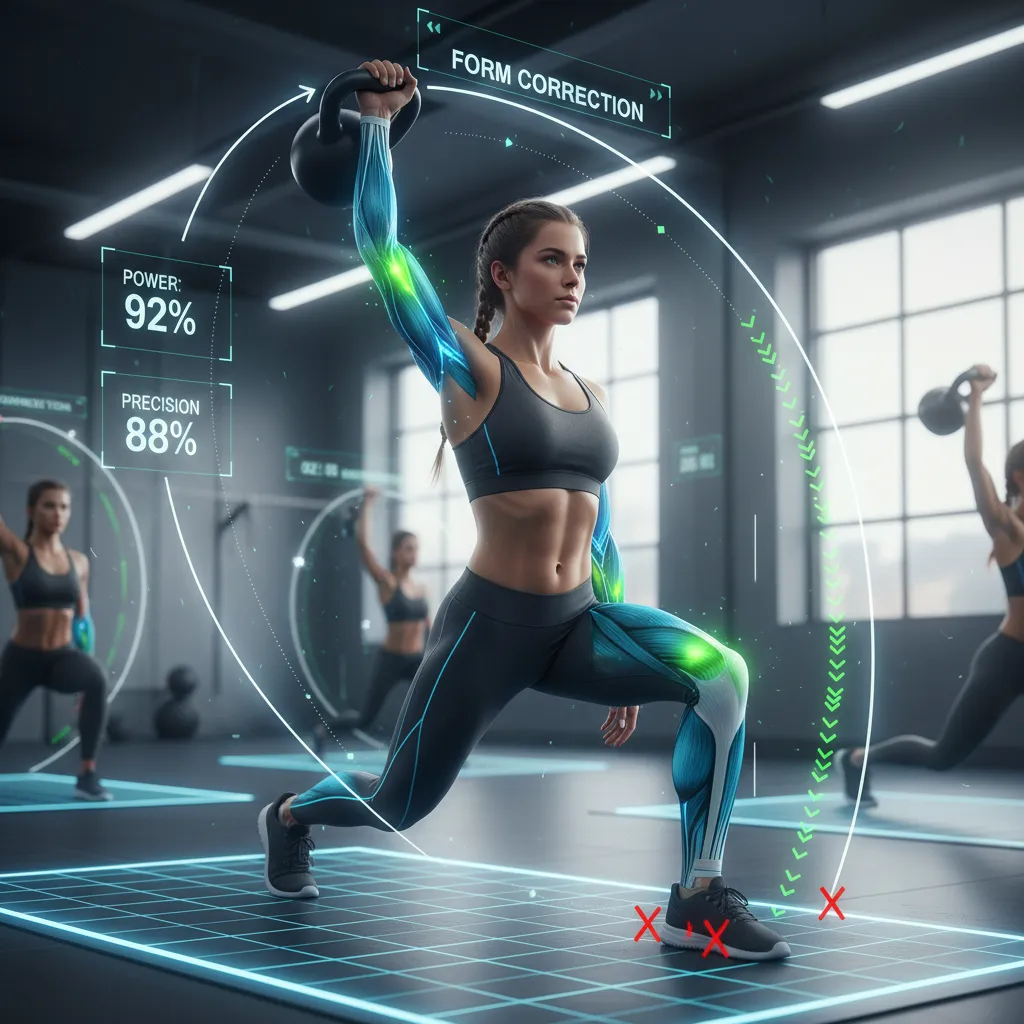
One of the most significant barriers for people working out alone is the risk of injury due to improper form. The latest next gen fitness apps are tackling this head-on using your smartphone’s camera and computer vision.
By analyzing your movements in real-time, these apps can provide audible and visual cues to correct your form, just like a human personal trainer would. It might tell you to keep your back straight during a squat or to lower the weight more slowly on a bicep curl. This isn’t just about efficiency; it’s a powerful tool for AI injury prevention. By ensuring you move safely and effectively, AI drastically reduces the risk of sidelining yourself with a preventable injury, making it a valuable tool for everything from general fitness to specialized AI physical therapy applications.
Beyond the Reps: Smart Recovery Powered by AI
Peak performance isn’t just built in the gym; it’s forged during recovery. For too long, recovery was treated as a passive activity—simply taking a day off. But the AI revolution has brought a scientific and proactive approach to smart athletic recovery.
The Science of Smart Recovery
Recovery tech AI leverages the same biometric data used for workout planning to understand your body’s recovery status. It looks at key indicators like:
- Heart Rate Variability (HRV): A measure of the variation in time between each heartbeat, which is a strong indicator of your nervous system’s readiness to handle stress (like a tough workout).
- Resting Heart Rate (RHR): An elevated RHR can signal fatigue, illness, or overtraining.
- Sleep Stages: AI analyzes how much time you spend in deep, light, and REM sleep, as each stage plays a different role in physical and mental recovery.
- Respiratory Rate: Changes in your breathing rate during sleep can also indicate recovery status.
By tracking these trends over time, AI can build a highly accurate “readiness score,” telling you how prepared your body is for strain.
From Data to Actionable Recovery Protocols
This readiness score is more than just a number; it’s a command. Based on this data, AI can prescribe specific recovery protocols. On a low-readiness day, your app might suggest:
- Active Recovery: A gentle walk, stretching, or a yoga session.
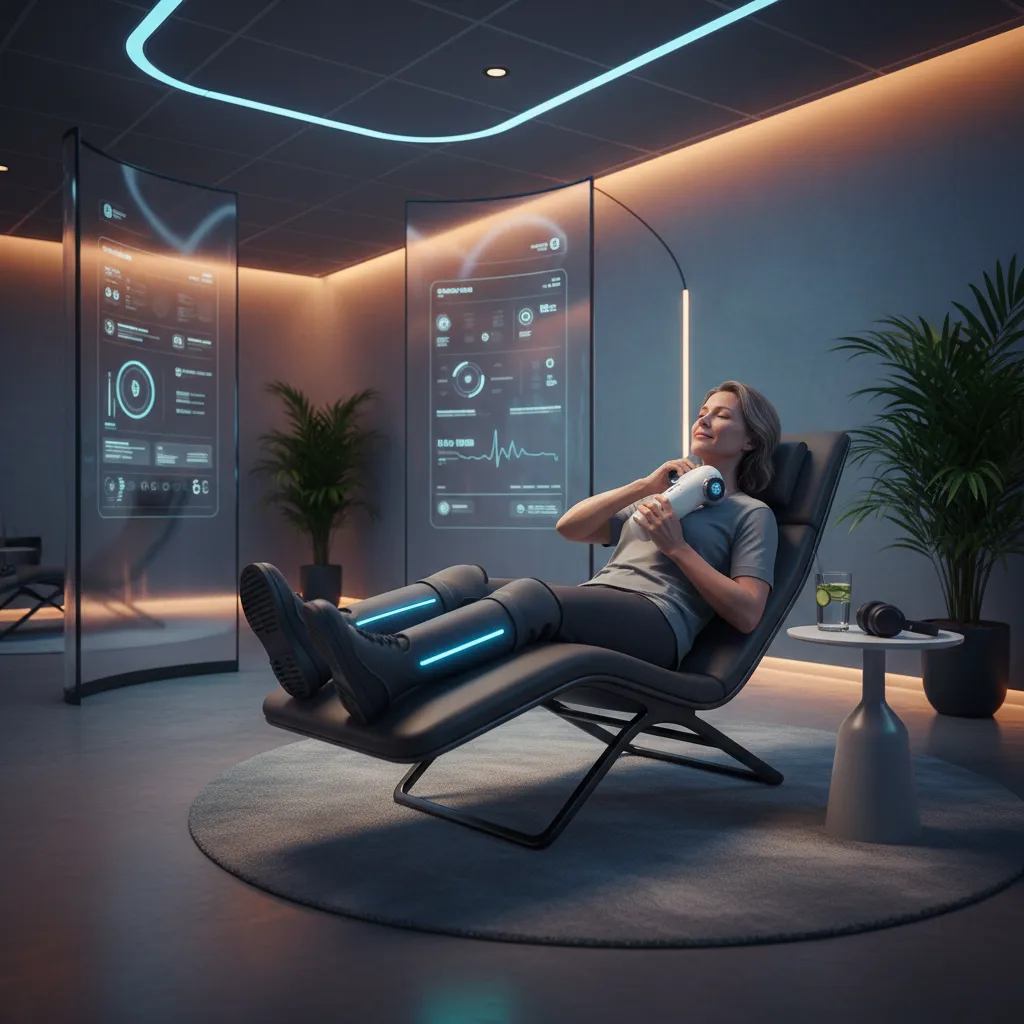
- Targeted Modalities: Recommending the use of smart recovery tools like a percussion massage gun on sore muscles or a session with pneumatic compression boots.
- Mindfulness and Stress Reduction: For athletes, mental recovery is just as important. Some platforms now integrate AI guided meditation for athletes to help lower stress and improve focus.
This proactive approach ensures that every aspect of your training is optimized, turning recovery from a guessing game into a precise science.
The AI Fitness Ecosystem: Tools of the Revolution
The AI fitness revolution is powered by a growing ecosystem of interconnected apps, hardware, and platforms. These tools work in concert to provide a holistic view of your health and performance.
The Rise of the AI Personal Trainer App
The smartphone is the command center for most users. An AI personal trainer app serves as the brain of the operation, integrating data, generating AI gym programs, and providing daily guidance. These apps vary in focus, from strength training platforms that build muscle to running apps that prepare you for a marathon. The best apps excel at creating a seamless, engaging user experience that makes sophisticated AI sports science feel simple and intuitive.
Connected Fitness Devices and Wearables
The hardware is the sensory system. The market for connected fitness devices is exploding. Smartwatches (Apple Watch, Garmin), fitness trackers (Whoop, Oura Ring), and smart scales are the most common data collection points. They provide the continuous stream of biometric data that fuels the AI algorithms. The more data points the AI has, the more nuanced and accurate its recommendations become.
Related: Copilot+ PCs: The AI Laptop Revolution with Snapdragon X Elite
The AI Nutrition Coach in Your Pocket
Fitness and nutrition are two sides of the same coin. Recognizing this, many platforms are integrating an AI nutrition coach. By scanning barcodes or logging meals, these tools can track your macronutrient and micronutrient intake. The AI can then cross-reference this with your performance and recovery data to provide recommendations, such as increasing protein intake on heavy lifting days or prioritizing carbohydrates before a long run, ensuring your fuel matches your output.
AI in Elite Sports vs. Everyday Fitness: Bridging the Gap
For years, the principles of data-driven fitness and advanced analytics were the exclusive domain of professional sports organizations. AI in elite sports is used for everything from managing athlete load to prevent injuries, to analyzing opponent weaknesses, to optimizing in-game strategy. This technology gave teams a significant competitive edge.
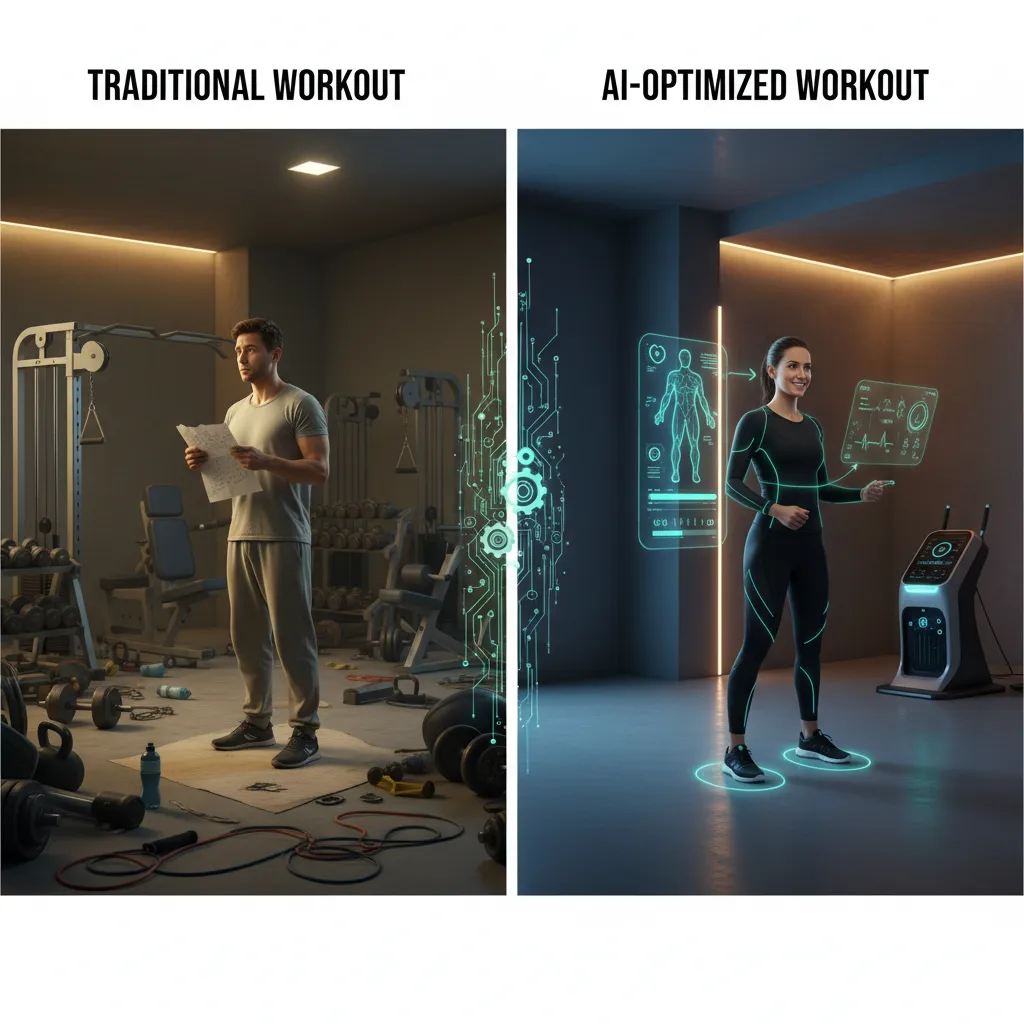
The true revolution is that this level of AI for athletic performance is no longer reserved for the pros. The same principles that help a Formula 1 driver optimize their reaction time can help you get the most out of your gym session. The consumer-facing apps and wearables have democratized high-performance science. Now, anyone with a smartphone and a fitness tracker can access powerful AI performance tracking and personalization tools that were once astronomically expensive and complex. You are now the elite athlete of your own life.
Related: Unlocking Claude 3.5 Sonnet: Real-World AI Applications & Use Cases
The Future of Fitness Tech: What’s Next on the Horizon?
The AI fitness revolution is just getting started. The future of fitness tech promises even deeper levels of personalization and integration. We’re on the cusp of several exciting advancements:
- Hyper-Personalization: Future AI will analyze not just your biometrics, but potentially your genetic predispositions and blood biomarkers (via connected health devices) to recommend exercises and nutrition plans with unprecedented precision.
- Predictive Health Insights: AI will move from reactive to predictive. Your fitness app might warn you that your movement patterns and biometric data suggest a high risk of developing a knee injury in the coming weeks, prescribing a preventative AI physical therapy routine.
- Seamless Integration: Your AI fitness coach will integrate with your smart home, perhaps suggesting a calming lighting scene and ambient sound for your post-workout meditation, or pre-heating your sauna for a recovery session.
The goal is to create a truly ambient health and wellness experience, where technology works silently in the background to guide you toward your best self.
Related: AI and VR: Crafting Immersive Travel Experiences
Conclusion
The shift from generic workout templates to dynamic, personalized AI coaching is more than just a trend; it’s the evolution of our relationship with fitness. The AI fitness revolution is empowering individuals to train smarter, recover faster, and stay healthier with a level of precision that was previously unimaginable.
By leveraging data-driven fitness, AI workout optimization, and smart recovery tools, we can finally break free from the cycle of frustration and plateaus. Whether you’re a seasoned athlete striving for a new personal best or a beginner taking your first steps on your fitness journey, AI offers a path that is safer, more effective, and uniquely yours.
The personal trainer of the future isn’t a person you meet twice a week—it’s an intelligent, ever-present companion in your pocket and on your wrist, guiding you toward peak performance 24/7. The revolution is here. Are you ready to join?
Frequently Asked Questions (FAQs)
Q1. What is an AI fitness coach?
An AI fitness coach is a digital platform or application that uses artificial intelligence to create personalized workout and recovery plans. It collects data from wearables and user feedback to dynamically adjust routines, provide real-time form correction, and optimize your overall training based on your unique goals and physiology.
Q2. How does an AI workout generator create a plan?
An AI workout generator uses a sophisticated algorithm that considers your fitness goals, experience level, available equipment, and performance history. It then cross-references this with real-time biometric data like sleep quality and heart rate variability to build a scientifically-backed, daily workout plan that is challenging yet appropriate for your current recovery status.
Q3. Are AI personal trainer apps effective?
Yes, they can be highly effective. By providing data-driven personalization, progressive overload, and real-time feedback, AI trainer apps can lead to more consistent progress and a lower risk of injury compared to static workout plans. Their effectiveness depends on the quality of the app’s algorithm and the consistency of the user.
Q4. Can AI help prevent fitness injuries?
Absolutely. This is one of AI’s biggest benefits. Many next-gen fitness apps use a smartphone’s camera to analyze exercise form in real-time, offering corrective feedback to prevent movements that could lead to injury. Furthermore, by analyzing recovery data, AI helps prevent overtraining, which is a common cause of chronic injuries.
Q5. What is smart recovery in fitness?
Smart recovery is a proactive, data-driven approach to rest and recuperation. Instead of just taking random days off, it uses AI to analyze biometric data (like sleep and HRV) to provide specific, actionable recovery advice. This might include recommending a low-intensity session, a guided meditation, or the use of smart recovery tools to accelerate muscle repair.
Q6. How does AI track athletic performance?
AI tracks performance by aggregating data from multiple sources. This includes workout data (sets, reps, weight, distance, speed), biometric data from wearables (heart rate zones, power output), and subjective user feedback. It then analyzes this data over time to identify trends, measure progress against goals, and make predictive recommendations for future training.
Q7. What’s the difference between a standard fitness app and an AI coach?
A standard fitness app is typically a static library of workouts or a simple tracker. An AI coach is a dynamic system that learns and adapts. It personalizes every aspect of your fitness journey, from daily workout selection to recovery protocols, creating a two-way dialogue that evolves as you do.
Q8. Is AI the future of personal training?
AI is set to be a dominant force in the future of personal training. While it may not completely replace the human connection of a one-on-one coach for everyone, it makes high-level, personalized coaching accessible and affordable for millions. The future will likely see a hybrid model, where human coaches use AI tools to provide even better service to their clients.