Wearable AI: The Future of Connected Living Beyond Smartwatches

For the past decade, the smartwatch has been the undisputed king of wearable technology. It brought notifications, fitness tracking, and apps to our wrists, creating a new bridge between our digital and physical lives. But what if this is just the beginning? We are standing on the precipice of a monumental shift, a new era where technology doesn’t just live on our wrists, but is woven into the very fabric of our existence. This is the dawn of wearable AI, a future of connected living that extends far beyond the familiar face of the smartwatch.
The conversation is no longer about simply counting steps or receiving texts. We’re talking about a future powered by proactive, personalized AI assistants that are seamlessly integrated into our lives through a new generation of devices. This article delves into the exciting world of next gen wearables, exploring the innovative form factors—from smart rings and augmented reality glasses to intelligent textiles—that are set to redefine connected living tech. We’ll uncover how artificial intelligence is transforming these gadgets into truly smart companions, shaping the very future of human-computer interaction.
The Evolution of Wearables: From Clunky Gadgets to Intelligent Companions
To appreciate where we’re going, we must understand where we’ve been. The journey of wearables began with clunky, single-purpose devices—think calculator watches in the 80s or the first clip-on pedometers. Then came the fitness tracker revolution, led by brands like Fitbit, which made personal data collection mainstream. Finally, the smartwatch arrived, consolidating these features into a powerful, wrist-mounted computer.
However, the smartwatch has reached a functional plateau. While iterations improve specs, the core experience has remained largely unchanged for years. The true revolution, the catalyst for the next wave of wearable tech innovations, isn’t a new screen or a faster processor—it’s artificial intelligence. The integration of sophisticated AI models, capable of running directly on these tiny devices, is unlocking capabilities we once thought were science fiction. It’s the leap from passive data collection to proactive, intelligent guidance.
Beyond the Wrist: The New Form Factors of Discreet Wearable AI
The future of smartwatches is not necessarily a better smartwatch, but a diverse ecosystem of devices that are more specialized, subtle, and integrated. The goal of this new wave is seamless tech integration—technology that disappears into the background, becoming a natural extension of ourselves.
Smart Rings: The Subtle Powerhouses of Health and Control
Perhaps the most compelling example of discreet wearable AI is the smart ring. Devices like the Oura Ring and the much-anticipated Samsung Galaxy Ring are masterpieces of miniaturization. They pack sophisticated sensors into a form factor that is stylish, comfortable, and unobtrusive.

Unlike a watch, you can wear a smart ring 24/7 without it feeling like a piece of tech. This makes it ideal for one of the most critical aspects of ai health monitoring: sleep tracking. By measuring heart rate, heart rate variability (HRV), body temperature, and respiratory rate throughout the night, these rings provide a uniquely comprehensive picture of your recovery and readiness for the day. AI algorithms analyze these trends, moving beyond raw data to offer personalized insights, such as predicting potential illness or suggesting the optimal time to work out.
The potential extends beyond health. Imagine controlling your smart home with a subtle twist of your finger or answering a call with a simple gesture. This is the promise of smart rings beyond the Galaxy Ring, where they become controllers for our digital lives. Related: AI in Finance: The Future of Automated Wealth Management explores how this level of personalized data can impact all areas of life planning.
Augmented Reality Glasses: Weaving the Digital into Reality
While early attempts at smart glasses were clunky and socially awkward, the vision for augmented reality glasses is finally becoming viable. The goal isn’t to create an immersive virtual world like a VR headset, but to subtly overlay useful digital information onto our real-world view.
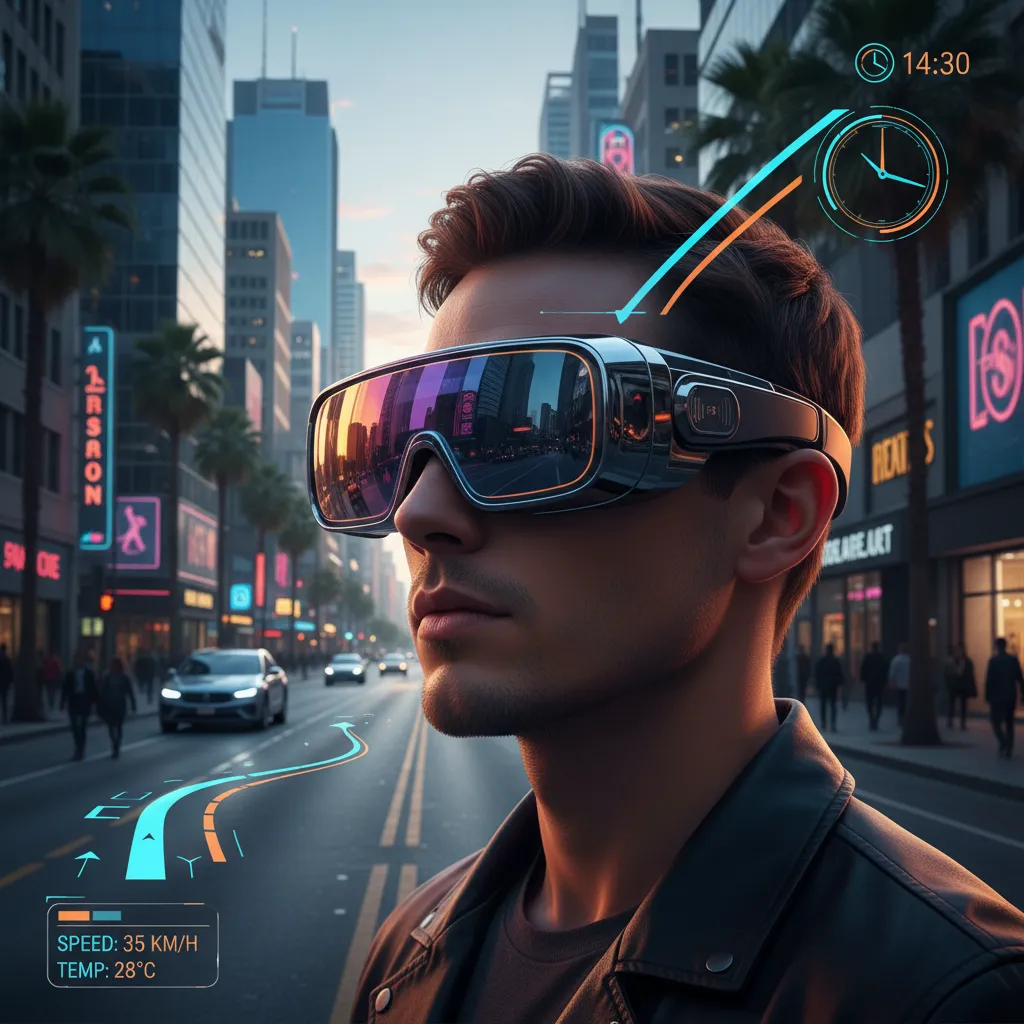
Imagine walking through a new city with navigation arrows appearing directly on the pavement in front of you. Picture yourself in a meeting, with real-time translation of a foreign language appearing as subtitles in your field of vision. This is the power of AI-driven AR. These devices will act as powerful ai assistant devices, with integrated ai voice assistants wearables allowing you to ask questions and receive information without ever pulling out your phone. The fusion of what you see with what AI knows will create a powerful, context-aware experience that enhances productivity, learning, and exploration.
AI Clothing and Intelligent Textiles: Your Second Skin is Getting Smarter
The most intimate form of wearable technology is the clothing we wear every day. AI clothing technology and intelligent textiles are embedding microscopic sensors and conductive threads directly into fabrics, transforming garments into powerful data-gathering platforms.

For athletes, this means ai powered fitness devices that go far beyond a chest strap. A smart shirt could analyze your form during a lift, providing real-time haptic feedback to prevent injury. It could track muscle activation, breathing patterns, and sweat composition to create a hyper-personalized training plan.
The applications in healthcare are even more profound. Interactive clothing could continuously monitor the vital signs of an elderly person, alerting caregivers to a potential fall or cardiac event. For infants, a smart onesie could track breathing and temperature, providing peace of mind to new parents. This is the pinnacle of remote health monitoring AI, making healthcare continuous and proactive rather than episodic and reactive. As AI becomes a core part of our creative and professional lives, explored in Related: Supercharge Your Content: Top AI Tools for Creators in 2024, the data from these wearables could even inform our work habits and creative cycles.
Smart Implants and Hearables: The Ultimate Integration
Pushing the boundaries even further, we find smart implants technology. While still largely in the realm of medical therapeutics (like advanced pacemakers and glucose monitors), the concept of elective, intelligence-enhancing implants is a recurring theme in discussions about the future of augmented humans.
More immediate and accessible are “hearables.” Today’s advanced wireless earbuds are already powerful ai in daily life gadgets. With on-board AI processing, they offer features like active noise cancellation and personalized audio. The next generation will integrate real-time language translation, act as personal AI coaches whispering encouragement during a run, and filter out background noise in a crowded room to help you focus on a single conversation.
The AI Engine: How Artificial Intelligence is Revolutionizing Wearables
The form factors are exciting, but the real magic lies in the AI that powers them. It’s the intelligence layer that transforms these devices from mere gadgets into indispensable companions.
Hyper-Personalization: An AI That Truly Knows You
The core of the wearable AI future is hyper-personalization. These devices collect vast amounts of data about your body, your habits, and your environment. AI’s role is to sift through this data to find meaningful patterns and create a feedback loop that is unique to you.
This is the essence of personalized ai wearables and personalized health tech. Your device won’t just tell you that you slept for 7 hours. It will tell you how that sleep quality will likely affect your cognitive performance today, based on your personal historical data. It might notice a correlation between your late-afternoon coffee and a drop in deep sleep, then proactively suggest you skip it. This same AI could connect to your home, a concept detailed in our Related: Energy-Efficient Smart Homes Guide, to dim the lights and lower the thermostat as you get ready for bed, all based on its understanding of your unique circadian rhythm.
Predictive Health Monitoring: From Reactive to Proactive
One of the most significant wearable AI advantages is the shift from reactive to proactive healthcare. Traditional medicine often intervenes after symptoms appear. Wearable health trackers powered by AI can detect subtle physiological changes that precede conscious symptoms.
For example, a slight but sustained increase in resting heart rate and body temperature, combined with a decrease in HRV, could be an early indicator that your body is fighting off an infection. Your AI companion could alert you to this days before you start feeling sick, advising you to rest and hydrate. This capability for early detection is a game-changer for managing chronic conditions and promoting preventative health.
The Rise of Ambient Intelligence
As we accumulate more of these specialized wearables, they will form a personal area network around our bodies. They will communicate with each other and with the smart environment around us, creating a state of ambient intelligence.

In this future, you won’t need to issue commands. Your AI, understanding your context and intent, will act on your behalf. As you leave work, your AR glasses might note heavy traffic and communicate with your car’s AI, a concept we touch on in Related: AI in Cars: The Co-Pilot Revolutionizing Your Drive, to suggest an alternate route. As you walk into your home, your smart ring, detecting elevated stress levels from your day, will signal the smart speaker to play a calming playlist and adjust the lighting. These ambient intelligence devices work in concert, making technology a helpful, invisible partner in your daily life.
Navigating the Challenges: The Ethical Landscape of Wearable AI
This utopian vision of a seamlessly connected future is not without its perils. The intimacy of this technology raises profound questions about privacy, ethics, and autonomy that we must address.
The Privacy Paradox: Who Owns Your Biometric Data?
When a device is collecting data on your heart, your sleep, your location, and even your stress levels 24/7, the question of data ownership becomes critical. The issue of privacy in wearable tech is paramount. Will this incredibly personal data be stored on the device (edge computing) or uploaded to the cloud? Who has access to it? How is it being protected from hackers? Consumers must demand transparency and control over their data, and companies must prioritize privacy-by-design principles to earn and maintain trust.
Ethical AI and Algorithmic Bias
The algorithms that interpret our health data are not infallible. It’s crucial that we build ethical ai wearables. If an AI model is trained primarily on data from one demographic, it may be less accurate for others, potentially leading to health disparities. We must ensure that these systems are fair, equitable, and rigorously tested across diverse populations to avoid perpetuating and even amplifying existing biases in healthcare.
The Risk of Over-Reliance and Digital Wellbeing
What happens when we outsource our self-awareness to a machine? While AI can provide valuable insights, there is a risk of becoming overly reliant on its recommendations, leading to a form of data-driven anxiety. If your wearable tells you that you had a “bad” night’s sleep, does that become a self-fulfilling prophecy for a non-productive day? Striking a balance between leveraging helpful data and maintaining our own intuition and autonomy is a new digital literacy we will all need to learn.
Conclusion: The Dawn of the Augmented Human
We are moving beyond the era of the smartphone as our primary digital interface. The wearable AI future is one of distribution, discretion, and intelligence. The technology is migrating from our hands and pockets to our bodies, becoming more personal and integrated than ever before. This is not just about new gadgets; it’s a fundamental shift in our relationship with technology, blurring the lines between human and computer.
The journey will see us wearing our technology as smart jewelry trends evolve, speaking to it through our clothes, and seeing the world through its lens. This ecosystem of ai in smart devices promises a future of profound convenience, hyper-personalized health, and enhanced human capability. However, realizing this potential responsibly requires us to be vigilant custodians of our privacy and demand ethical accountability from the creators of this transformative technology. The future of augmented humans is not a distant sci-fi concept; it’s being built right now, one smart ring, one intelligent fiber, one line of code at a time.
What are your thoughts on the future of wearable AI? Are you excited about smart clothing and AR glasses, or do you have concerns about privacy? Share your predictions in the comments below!
Frequently Asked Questions (FAQs)
Q1. What is wearable AI?
Wearable AI refers to electronic devices worn on the body that use artificial intelligence to analyze data, learn from user habits, and provide personalized, proactive insights and assistance. Unlike traditional wearables that just display data, AI wearables interpret it to offer guidance, predictions, and automation.
Q2. What are the advantages of wearable AI devices?
The primary advantages include hyper-personalization, proactive health monitoring, seamless integration into daily life, and enhanced convenience. They can predict potential health issues, offer real-time coaching for fitness and wellness, and automate tasks by understanding the user’s context and needs.
Q3. How is AI used in health monitoring wearables?
AI algorithms analyze continuous streams of biometric data (like heart rate, temperature, and motion) from wearable sensors. They identify patterns and anomalies that a human might miss, enabling early detection of illnesses, personalized sleep coaching, stress management, and optimized fitness recommendations.
Q4. What is the difference between a smartwatch and a wearable AI device?
A smartwatch is primarily a hub for notifications, apps, and basic activity tracking—it’s a reactive extension of your phone. A wearable AI device is a proactive companion. It focuses more on deep data analysis, learning your personal baselines, and offering predictive insights and coaching, often in more discreet form factors like rings or clothing.
Q5. What are the ethical concerns surrounding AI in wearables?
Key concerns include data privacy (who owns and controls your sensitive health data), data security against breaches, the potential for algorithmic bias leading to health inequities, and the psychological impact of over-reliance on technology for self-awareness and decision-making.
Q6. What are some examples of next-gen smart wearables?
Examples include smart rings (Oura Ring, Samsung Galaxy Ring) for advanced sleep and health tracking, augmented reality glasses (like Meta’s Ray-Ban Stories) for information overlay, and smart clothing or “intelligent textiles” with woven-in sensors for detailed fitness and biometric analysis.