Unlock Deeper Sleep: How AI Wearables Are Revolutionizing Rest

Introduction: The Silent Epidemic of Sleeplessness
In our hyper-connected, always-on world, a full night of quality sleep has become the ultimate luxury. We chase productivity, scroll through endless feeds, and often treat rest as an afterthought—a biological necessity to be minimized. The result? A silent epidemic of fatigue, brain fog, and chronic health issues. But what if the same technology that contributes to our restlessness could also be the key to unlocking our best-ever sleep?
Enter the new generation of AI health wearables. Moving far beyond simple step counting, these sophisticated gadgets are becoming deeply personal sleep coaches that live on your finger, wrist, or bed. They leverage the power of artificial intelligence to analyze your unique biology, decode the mysteries of your nightly journey, and provide actionable insights that were once exclusive to clinical sleep labs.
This article delves into the world of AI sleep tracking and wearable sleep technology. We’ll explore how these devices work, what the AI is actually doing with your data, and how you can use these AI-driven sleep solutions to achieve the kind of deep, restorative rest you’ve been dreaming of. Get ready to transform your relationship with sleep and wake up to a healthier, more energized you.
The Evolution of Sleep Tracking: From Motion to Machine Learning
Not too long ago, “sleep tracking” meant an app that used your phone’s microphone to listen for snoring or an early-generation fitness band that simply guessed your sleep duration based on when you stopped moving. These were noble first attempts, but they were notoriously inaccurate, often confusing a quiet night of reading in bed with deep sleep.
The revolution began with the integration of advanced biometric sensors. Modern wearables are now packed with technology capable of monitoring your body with incredible precision.
Here’s a breakdown of the core components:
- Photoplethysmography (PPG): This is the green (or sometimes infrared) light you see flashing on the underside of your device. It shines through your skin to detect changes in blood volume, allowing it to accurately measure your heart rate, heart rate variability (HRV), and respiratory rate.
- Temperature Sensors: Your body temperature naturally fluctuates throughout the night, dipping as you enter deep sleep. Sensitive sensors can track these subtle changes, providing crucial data about your sleep cycles and overall health.
- Accelerometers: The original sleep tracking sensor is still essential. A 3-axis accelerometer detects movement, helping the AI distinguish between restless tossing and turning and periods of peaceful stillness.
- SpO2 Sensors: These measure your blood oxygen saturation levels, a critical metric for identifying potential breathing disturbances during sleep, which can be a sign of conditions like sleep apnea.
But here’s the key: the hardware is only half the story. Collecting this flood of biometric sleep data is useless without a brain to interpret it. That’s where the “AI” in AI sleep tracking comes in, turning raw numbers into a rich, personalized narrative of your night. Related: The AI Pin and Rabbit R1: The Future of Wearable AI?
How AI Deciphers Your Night: A Look Under the Hood
When you go to sleep with a modern wearable, you’re not just wearing a collection of sensors; you’re activating a powerful analytical engine. This engine uses machine learning algorithms—trained on vast datasets from thousands of nights of sleep, often cross-referenced with clinical polysomnography (the gold standard of sleep studies)—to make sense of your personal data.
Gathering the Raw Data: The Sensors at Work
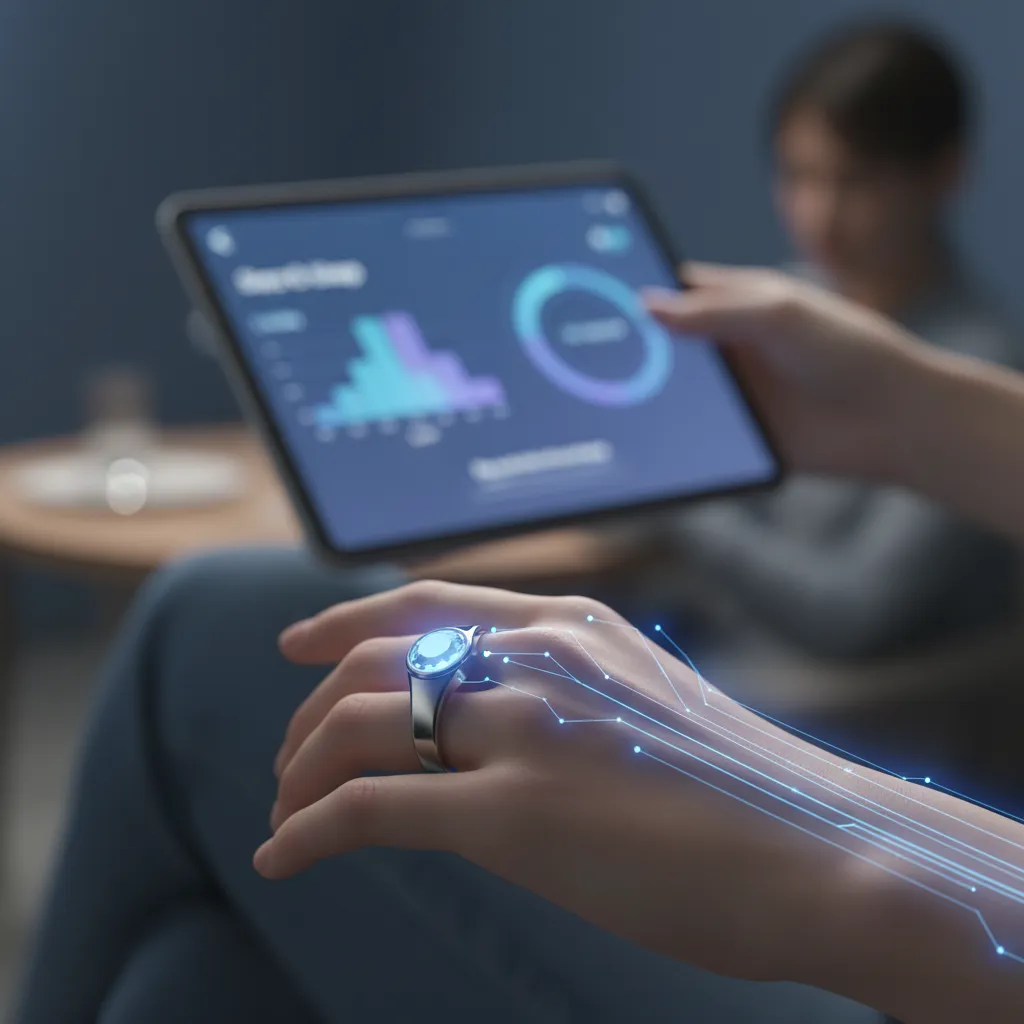
Throughout the night, your device is silently chronicling your body’s every signal. Your heart rate slows, your breathing becomes more regular, and your temperature dips. The accelerometer notes every time you shift position. The AI takes all these streams of information and begins its analysis, looking for the tell-tale patterns that define your unique sleep architecture.
The AI’s Role: From Data Points to Deep Sleep Insights
The real magic of sleep data analysis AI lies in its ability to synthesize this complex data into a coherent and actionable summary. Here are its primary jobs:
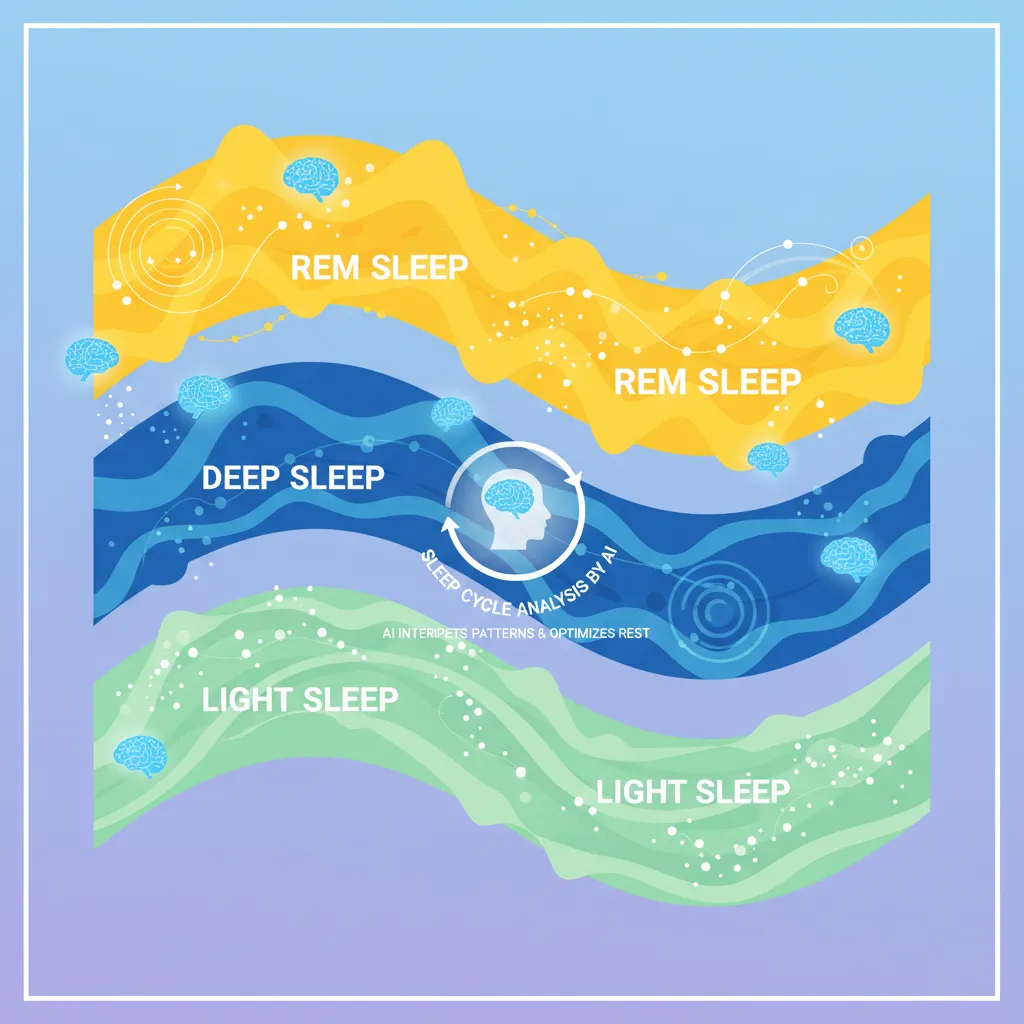
1. Accurate Sleep Staging: This is arguably the most important function. The AI analyzes the interplay between your heart rate, HRV, temperature, and movement to accurately map out your journey through the different sleep stages.
- Light Sleep: The entry point of sleep, where your body begins to relax. It plays a role in memory processing.
- Deep Sleep (Slow-Wave Sleep): The most physically restorative stage. This is when your body repairs tissues, builds bone and muscle, and strengthens the immune system. The AI identifies this by a significant drop in heart rate and breathing rate.
- REM (Rapid Eye Movement) Sleep: The stage most associated with dreaming, memory consolidation, and emotional processing. Your heart rate and breathing can become more variable, similar to when you’re awake, but your body is largely immobilized. The AI uses HRV and respiratory patterns to pinpoint these crucial periods.
2. Pattern Recognition and Correlation: A single night of data is interesting, but the true power of sleep science AI emerges over weeks and months. The AI acts as a tireless data scientist, identifying trends and correlations you might never notice on your own. It can answer questions like:
- “How does a late-evening workout affect my deep sleep percentage?”
- “Does drinking alcohol, even hours before bed, impact my REM sleep?”
- “What’s the relationship between my stress levels during the day and my restlessness at night?”
3. Personalized Baselines: The AI learns you. It establishes a baseline for all your key metrics. When it detects a significant deviation—like a consistently elevated resting heart rate or a drop in HRV—it can flag it, providing an early warning that you might be over-trained, getting sick, or experiencing high levels of stress.
The Rise of the Smart Ring: Why Form Factor Matters for Sleep
While smartwatches have dominated the wearable market, a new form factor is emerging as the gold standard for advanced sleep monitoring: the smart ring. Devices like the Oura Ring and the upcoming Samsung Galaxy Ring offer distinct advantages for tracking sleep.
The main reason is signal quality and comfort. The arteries in your finger provide a stronger and clearer heart rate signal (PPG) than your wrist. Furthermore, a comfortable, lightweight ring is far less intrusive to wear overnight than a bulky watch, leading to more natural sleep and better data compliance.
Oura Ring: The Pioneer of Personalized Sleep Insights
Oura has been a leader in the smart rings sleep category for years. Its reputation is built on the depth of its Oura Ring sleep insights and its holistic approach to wellness. Instead of just giving you raw data, Oura synthesizes it into three simple scores:
- Sleep Score: An overall measure of your night’s rest, factoring in total sleep, efficiency, timing, and stages.
- Activity Score: Measures how well you balanced activity and rest during the day.
- Readiness Score: This is Oura’s secret sauce. It analyzes your sleep data, recent activity, and key biometrics like resting heart rate, HRV, and body temperature to tell you how prepared your body is for the day’s challenges. A low score might be the nudge you need to opt for a yoga session instead of a high-intensity workout.
Samsung Galaxy Ring: The New Contender on the Horizon
Samsung is poised to shake up the market with its highly anticipated Galaxy Ring. While full details are still emerging, the expected Galaxy Ring sleep features promise deep integration with the Samsung Health ecosystem. This could mean seamless data sharing between your ring, phone, and even Samsung smart home devices, creating a truly connected wellness experience. For Android users, this represents a powerful new option for sleep optimization AI. Related: Android 15: Top Features, Release Date, and Supported Devices
Beyond the Rings: Other Notable AI Sleep Trackers
- Whoop: This wrist-based subscription service is a favorite among athletes for its intense focus on sleep recovery metrics. Its AI-powered Sleep Coach provides daily, personalized recommendations for when to go to bed and wake up to maximize performance.
- Fitbit (by Google): Leveraging Google’s vast AI capabilities, Fitbit devices offer detailed Sleep Profile analysis, assigning you a “Sleep Animal” to help you understand your long-term patterns.
- Apple Watch: With its robust sensor suite and advanced sleep stage tracking in watchOS, the Apple Watch is a powerful tool, especially when combined with third-party AI apps that can further analyze its data. Related: Apple Intelligence: A Guide to the New AI Features for iPhone, Mac, and More
Translating Data into Action: Your AI-Powered Sleep Coach
The most significant benefit of wearable tech for better sleep is its ability to transform you from a passive sleeper into an active participant in your own recovery. These devices are more than just trackers; they are personalized coaches providing AI-driven sleep solutions.
Understanding Your Sleep Score and Recovery Metrics
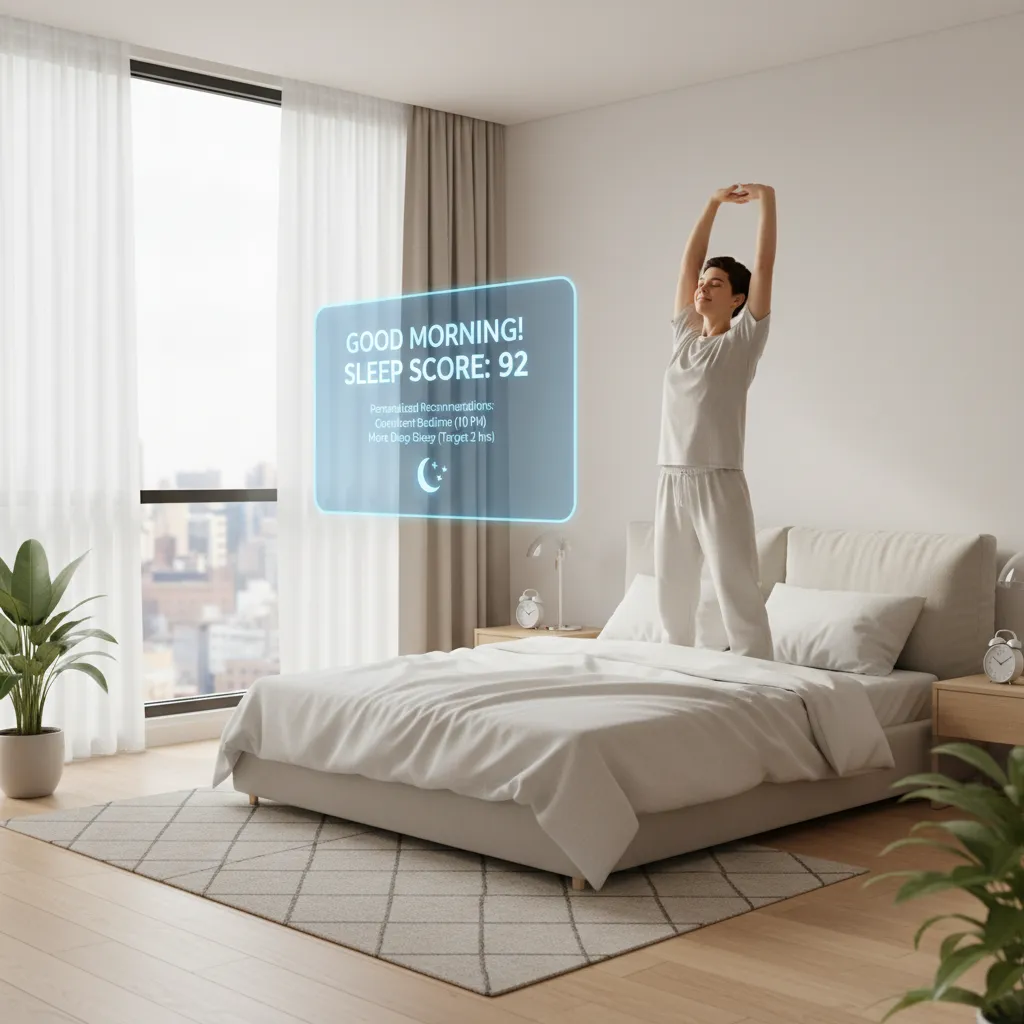
Waking up and seeing a “Sleep Score” of 85 or a “Readiness” of 90 is validating, but understanding why is what drives improvement. The companion apps for these devices break down your sleep performance metrics in detail. You can see exactly how much deep sleep and REM sleep you got, how long it took you to fall asleep (latency), and how many times you were disturbed. Over time, you learn how your daily choices directly impact these scores, empowering you to make better decisions.
AI-Driven Recommendations for Better Sleep Hygiene
This is where personalized sleep coaching truly shines. Based on your unique data, the AI can provide tailored recommendations.
- Problem: The AI notices your deep sleep is consistently low on days you eat dinner late.
- Recommendation: The app might suggest finishing your last meal at least three hours before your target bedtime.
- Problem: Your heart rate stays elevated for hours after you get into bed.
- Recommendation: The platform might recommend a guided meditation or a “wind-down” period away from screens, using this data to reinforce the importance of stress reduction sleep tech.
This level of personalization turns generic advice into a concrete, data-backed action plan. Related: AI for Mindful Living: How to Boost Your Digital Well-Being
Circadian Rhythm Optimization: Syncing with Your Body’s Clock
One of the most profound ways AI is helping is through circadian rhythm optimization. Your circadian rhythm is your body’s internal 24-hour clock that governs your sleep-wake cycle. When it’s out of sync, everything feels off.
AI wearables can help by:
- Identifying Your Chronotype: Are you a “lion” (early bird) or a “wolf” (night owl)? The AI can analyze your temperature and sleep patterns to help you understand your natural tendencies.
- Promoting Consistency: The single most important factor for a healthy circadian rhythm is a consistent sleep schedule. The AI will gently nudge you toward your ideal bedtime and wake-up time, even on weekends.
- Guiding Light Exposure: It can remind you to get sunlight in the morning to signal “wake-up time” to your brain and to dim the lights in the evening to promote melatonin production.
Advanced Applications and the Future of Sleep Tech
The field of restful sleep technology is advancing at a breakneck pace. We’re moving beyond general wellness and into a new era of proactive and even predictive health monitoring.
Early Warning Signs: From Stress to Sickness
Your sleep data can be a canary in the coal mine for your health. A sudden, unexplained drop in your Heart Rate Variability (HRV) or a spike in your nighttime body temperature and resting heart rate can be the first physiological sign that your body is fighting off an illness or is under immense stress—often before you consciously feel any symptoms. This allows you to prioritize rest and recovery when you need it most. Related: The AI Mental Health Revolution: Personalized Care and the Future of Well-being
Sleep Apnea Detection and Respiratory Monitoring
While no consumer wearable can provide a medical diagnosis, the feature for sleep apnea detection wearable tech is a game-changer. By monitoring blood oxygen (SpO2) levels and breathing disturbances, devices can flag patterns consistent with conditions like sleep apnea. An alert from your app could be the crucial prompt you need to consult a doctor for a proper clinical evaluation, potentially identifying a serious health issue that might have otherwise gone unnoticed.
The Role of Smart Alarms
The jarring blare of a traditional alarm clock can rip you out of deep sleep, leaving you groggy and disoriented for hours (a phenomenon known as sleep inertia). Smart alarm clocks AI features, integrated into many wearables, solve this problem. You set a wake-up window (e.g., 7:00-7:30 AM), and the device’s AI monitors your sleep cycles, gently vibrating to wake you during your lightest phase of sleep within that window. This simple change can have a dramatic impact on how you feel when you start your day.
The Next Frontier: What is the Future of Sleep Tech?
The future of sleep tech is incredibly exciting. We are moving towards a more integrated and automated ecosystem of health. Imagine a future where:
- Closed-Loop Systems: Your smart ring detects you’re entering deep sleep and communicates with your smart mattress to lower its temperature slightly, a condition known to prolong this restorative stage.
- Environmental Integration: Your sleep data could control your smart home, automatically dimming lights, adjusting the thermostat, and activating white noise machines to create the perfect sleep environment.
- Enhanced AI Models: Future AI will not only track but also predict. It might analyze your calendar, workout data, and stress levels to proactively suggest an earlier bedtime before you accumulate sleep debt. Related: The AI Search Revolution: A New Era of Discovery
Conclusion: Your Personal Partner in Rest and Recovery
We’ve moved beyond the era of sleep as a passive activity. The rise of AI wearables has empowered us to actively manage and improve our rest with a precision that was once unimaginable. These devices are not just gadgets for sleep; they are sophisticated partners in our overall health journey.
By providing personalized rest plans based on deep biometric sleep data, they help us understand the intricate connections between our daily habits and our nightly recovery. Whether it’s optimizing your sleep stages, syncing your circadian rhythm, or simply building better sleep hygiene, AI-driven sleep solutions offer a clear path toward sleep quality improvement.
The journey to better sleep is deeply personal, and with an AI coach on your side, you now have the data and the guidance to unlock deeper, more restorative rest and wake up ready to live your life to the fullest.
Frequently Asked Questions (FAQs)
Q1. How do AI wearables track sleep?
AI wearables use a suite of biometric sensors—like optical heart rate sensors (PPG), temperature sensors, and accelerometers—to collect data on your heart rate, HRV, body temperature, and movement. An AI algorithm then analyzes these data points to identify your sleep stages (light, deep, REM) and assess the overall quality and duration of your rest.
Q2. Are AI sleep trackers accurate?
Modern, high-quality AI sleep trackers from reputable brands have become remarkably accurate, especially for measuring total sleep time and heart rate. While the gold standard for sleep staging is still a clinical polysomnography (PSG) test, top-tier consumer wearables can now approximate sleep stages with a high degree of correlation to lab results, making them excellent tools for tracking trends and patterns over time.
Q3. What is the best wearable for sleep tracking?
The “best” wearable depends on your personal needs and ecosystem. Smart rings like the Oura Ring are often considered top-tier for their comfort and detailed readiness insights. Subscription-based bands like Whoop excel for athletes focused on recovery. Smartwatches like the Apple Watch and high-end Fitbit/Pixel watches offer a great all-in-one solution with robust sleep tracking and smart features.
Q4. Can an Oura Ring detect sleep apnea?
No, the Oura Ring and other consumer wearables are not medical devices and cannot diagnose sleep apnea. However, they can detect potential signs that may be associated with the condition, such as frequent breathing disturbances or drops in blood oxygen levels (SpO2). If the device flags these patterns, it serves as a strong recommendation to consult a healthcare professional for a proper medical diagnosis.
Q5. What is a good sleep score?
Most platforms, like Oura and Fitbit, use a scale of 0-100 for their sleep score. Generally, a score of 85 or higher is considered excellent. A score between 70-84 is considered good, while anything below 70 suggests there are significant areas for improvement in your sleep quantity, quality, or timing.
Q6. How does AI help improve REM and deep sleep?
AI helps improve these crucial stages indirectly through personalized coaching. By analyzing your data, the AI can identify lifestyle factors that are negatively impacting your REM or deep sleep (e.g., late-night caffeine, alcohol, or high stress). It then provides actionable recommendations—like suggesting an earlier bedtime, a relaxing wind-down routine, or adjusting your workout timing—to help you create the optimal conditions for your body to achieve more restorative sleep.
Q7. Are sleep tracking wearables worth it?
For individuals who are serious about improving their health, energy levels, and overall well-being, a sleep tracking wearable can be a very worthwhile investment. It provides objective data that can motivate behavior change and helps you understand your body in a new way. The key is to not just track the data but to act on the insights the AI provides.