Unleashing Creativity: Advanced AI Models Transforming Art, Music, & Video
Introduction
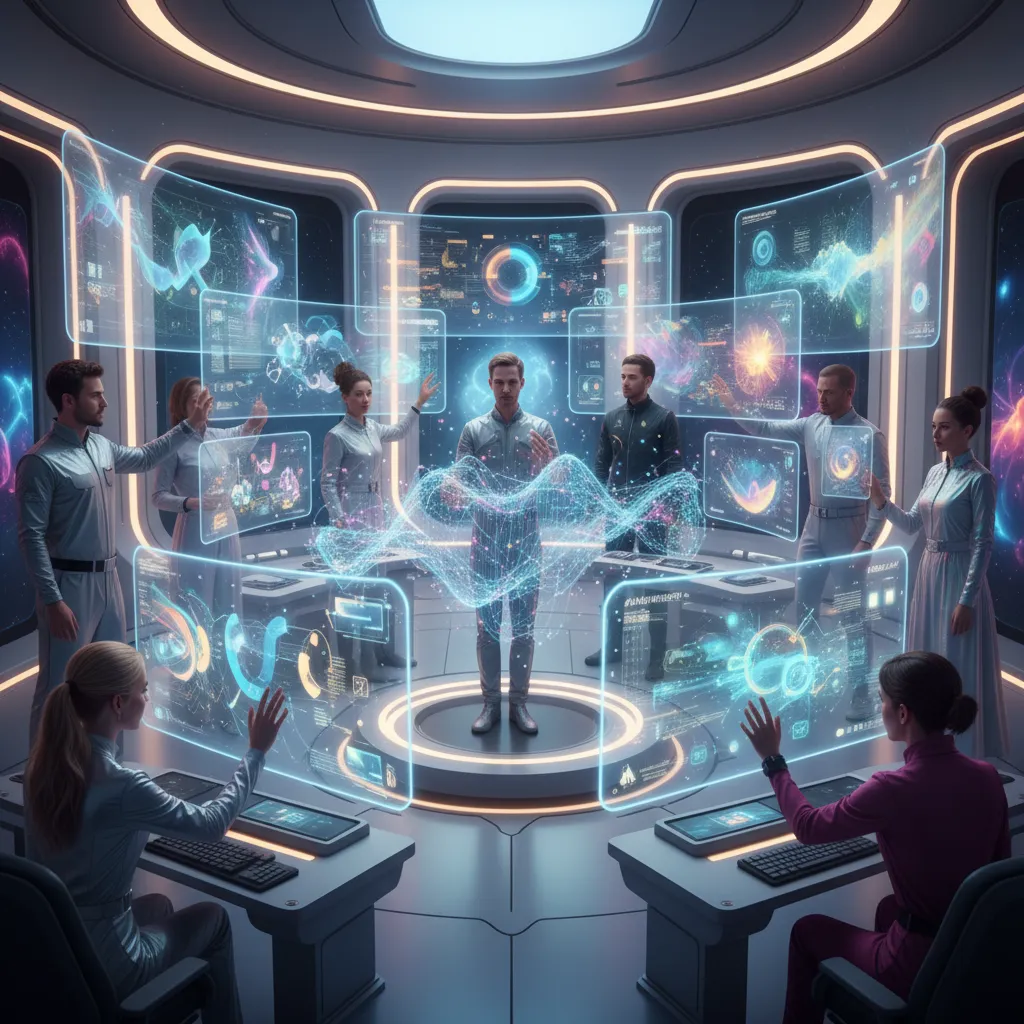
We stand at the precipice of a new Renaissance, one not powered by pigment and parchment, but by algorithms and processors. The creative landscape is undergoing a seismic shift, driven by advanced AI models that are fundamentally changing how we create, consume, and even conceive of art, music, and video. This isn’t science fiction anymore; it’s the new reality for artists, designers, musicians, and filmmakers. The era of artificial intelligence creativity has dawned, offering tools that can act as a muse, a collaborator, or an entire production studio at your fingertips.
For centuries, the act of creation was a uniquely human endeavor. But what happens when a machine can paint a masterpiece from a simple sentence, compose a symphony from a mood, or generate a cinematic scene from a script? This article dives deep into this exhilarating and complex new world. We’ll explore the groundbreaking AI creative tools that are transforming the AI in creative industries, from generative AI art and AI music generation to the jaw-dropping potential of AI video creation.
You’ll discover not only what these technologies can do but also how you can start leveraging AI for digital artists. We will also navigate the critical conversations around ethical AI creative fields, including the intricate web of AI and intellectual property. Get ready to understand the future of digital content and how this creative AI technology is reshaping our world.
The Dawn of a New Creative Era: What is Generative AI?
At the heart of this revolution is a powerful subset of artificial intelligence known as Generative AI. Unlike traditional AI that analyzes existing data to make predictions (like a spam filter), Generative AI creates something entirely new. It learns from vast datasets of text, images, sounds, and videos to understand the patterns, styles, and structures that define them.
Think of it as an apprentice who has studied every painting in the Louvre, listened to every symphony ever recorded, and watched every classic film. Using complex architectures like Generative Adversarial Networks (GANs), Transformers, and Diffusion Models, these systems can then generate original content that is stylistically consistent with what they’ve learned.
The key takeaway is that this isn’t just automation; it’s a form of machine learning content creation that can be guided by human intent. The creator’s role evolves from a hands-on maker to a director, a curator of ideas, and a prompter of digital muses. This paradigm shift is unlocking unprecedented efficiency and opening doors to forms of expression we are only just beginning to imagine.
The Visual Revolution: AI’s Impact on Art and Graphic Design
Perhaps the most visible impact of generative AI has been in the visual arts. The ability to translate a simple text description into a rich, detailed image has captured the public imagination and provided artists with an incredibly powerful new medium.
From Text Prompts to Masterpieces: AI Art Generation
Platforms like Midjourney, DALL-E 3, and Stable Diffusion have become household names, acting as digital canvases where imagination is the only limit. An artist can type “a cyberpunk city street at night, neon reflections on the wet pavement, in the style of a vintage anime film,” and within seconds, receive multiple high-quality interpretations. This process, known as “prompt engineering,” is emerging as a new artistic skill, blending linguistic precision with visual intent.
This digital artistry AI is not about replacing artists but augmenting their capabilities. It allows for rapid brainstorming, concept visualization, and the creation of complex scenes that would have previously required days of manual work or expensive photoshoots. It democratizes the ability to create high-quality visuals, empowering those without traditional drawing or painting skills to bring their ideas to life.
Beyond Generation: AI Tools for Graphic Designers
The impact of AI extends far beyond standalone image generators. It’s being woven directly into the fabric of professional design software, supercharging established AI creative workflows.
- Adobe Photoshop’s Generative Fill: This feature allows designers to select an area of an image and use a text prompt to add, remove, or replace content seamlessly. Need to extend a background or add an object that wasn’t in the original shot? AI makes it a matter of seconds.
- Canva’s Magic Studio: This suite of AI tools for graphic design automates everything from background removal and text generation to creating entire brand kits and presentations from a single prompt.
- Upscaling and Enhancement: Tools like Topaz Gigapixel AI use machine learning to intelligently enlarge images without losing quality, a task that was once a major technical hurdle.
These AI-powered design integrations handle tedious, time-consuming tasks, freeing up designers to focus on higher-level strategy, creativity, and client collaboration. Related: Supercharge Your Content: Top AI Tools for Creators in 2024 explores many of these tools in greater detail.
Composing the Future: AI Music Generation and Production
The wave of AI innovation is also washing over the music industry, offering new methods for composition, production, and personalization. From creating royalty-free background scores to assisting in complex audio engineering tasks, AI is becoming an indispensable partner in the studio.
The AI Maestro: Crafting Melodies, Harmonies, and Beats
AI music generation platforms are enabling both seasoned musicians and complete novices to create original music. These tools analyze vast libraries of musical data to understand music theory, genre conventions, and instrumentation.
- Suno & Udio: These text-to-music platforms have gone viral for their ability to generate full songs—complete with vocals, lyrics, and backing instruments—from a simple description of a genre and theme.
- Amper Music & Soundful: These are examples of AI music composition software focused on creating mood-based, royalty-free instrumental tracks for videos, podcasts, and games, solving a major pain point for content creators.
- Splice’s CoSo: This app uses AI to intelligently combine loops and samples from Splice’s massive library, helping producers find inspiration and build the foundation of a track in minutes.
These automated creativity tools can serve as a starting point for a song, generate background music on demand, or create variations on a theme to help a musician overcome writer’s block.
Intelligent Assistants in the Studio
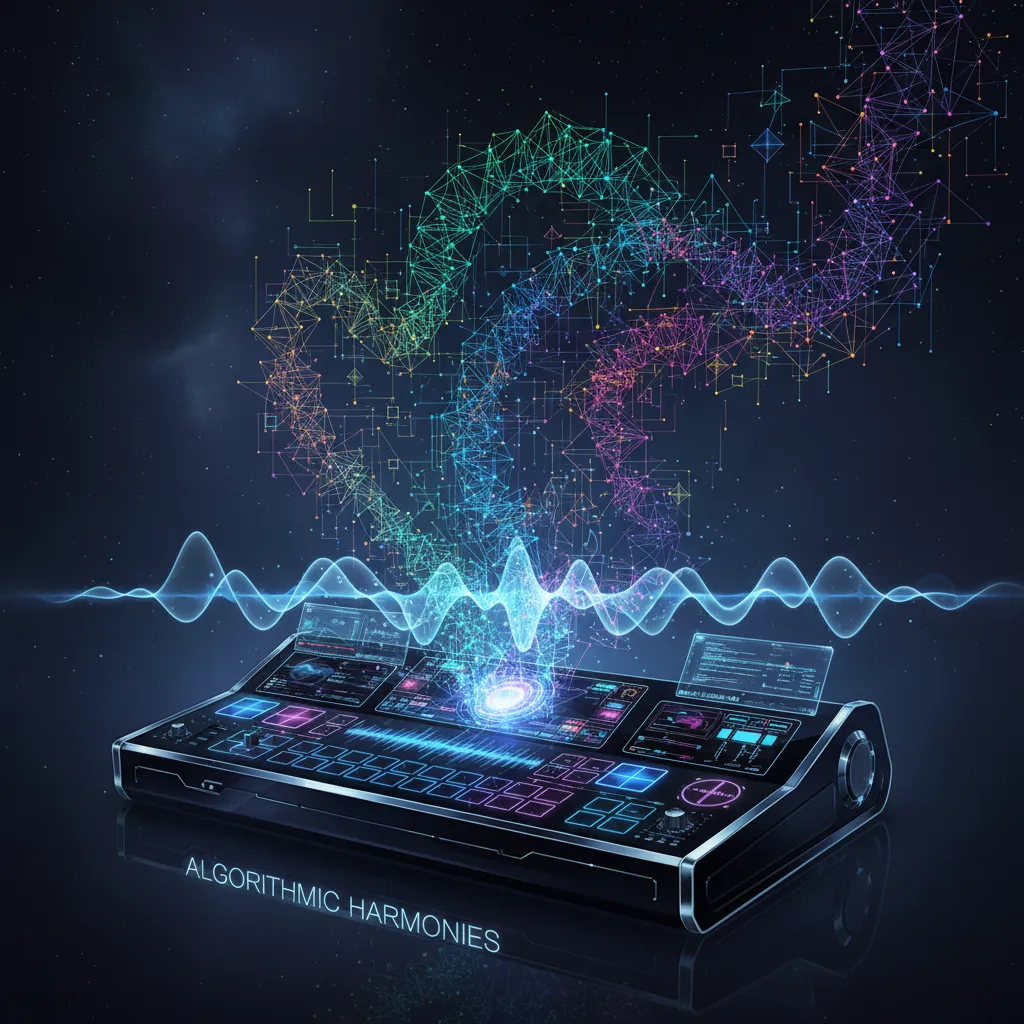
Beyond full-on composition, AI is making significant inroads as an intelligent assistant in the technical aspects of music production. AI innovations art music are most prominent in plugins and software that streamline the mixing and mastering process.
- iZotope Ozone & Neutron: These suites use AI to analyze a track and suggest settings for equalization (EQ), compression, and other effects to achieve a professional, polished sound.
- Stem Separation: Tools like Lalal.ai and Fadr can deconstruct a finished song into its individual components (vocals, drums, bass, instruments), a revolutionary capability for remixing, sampling, and karaoke track creation.
- Smart Synthesis: AI is even being used to help design new sounds, analyzing an input sound and generating new synthesizer patches that match its timbre.
This form of intelligent content generation doesn’t replace the producer’s ear but enhances it, handling complex technical adjustments and allowing for more time to be spent on the creative aspects of the production.
The Director’s New Toolkit: AI-Driven Video Creation and Storytelling
If AI in images was the spark and AI in music was the flame, then AI video creation is the inferno. The ability to generate moving images from text is arguably the most complex and potentially disruptive frontier in generative AI, promising to redefine media production from the ground up.
The Rise of Text-to-Video Platforms
The emergence of text-to-video models represents a quantum leap in creative AI technology. While still in its early stages, the progress is astonishing.
- OpenAI’s Sora: Sora stunned the world with its ability to generate high-fidelity, minute-long video clips with realistic physics, multiple camera angles, and coherent storytelling from a single text prompt.
- Luma Dream Machine: Now available to the public, this tool is one of the leading AI video platforms, allowing users to create short, high-quality video clips, demonstrating the rapid pace of innovation. Related: Luma Dream Machine: A Deep Dive into the Free AI Video Tool provides an in-depth look.
- Runway Gen-2 & Pika: These platforms were pioneers in the space and continue to offer powerful tools for generating video from text, images, or even other videos.
These AI storytelling tools have immense potential for pre-visualization, creating animated storyboards, generating b-roll footage, and even producing entire short films, commercials, and immersive content.
Smarter Production: AI in Editing, Effects, and Post-Production
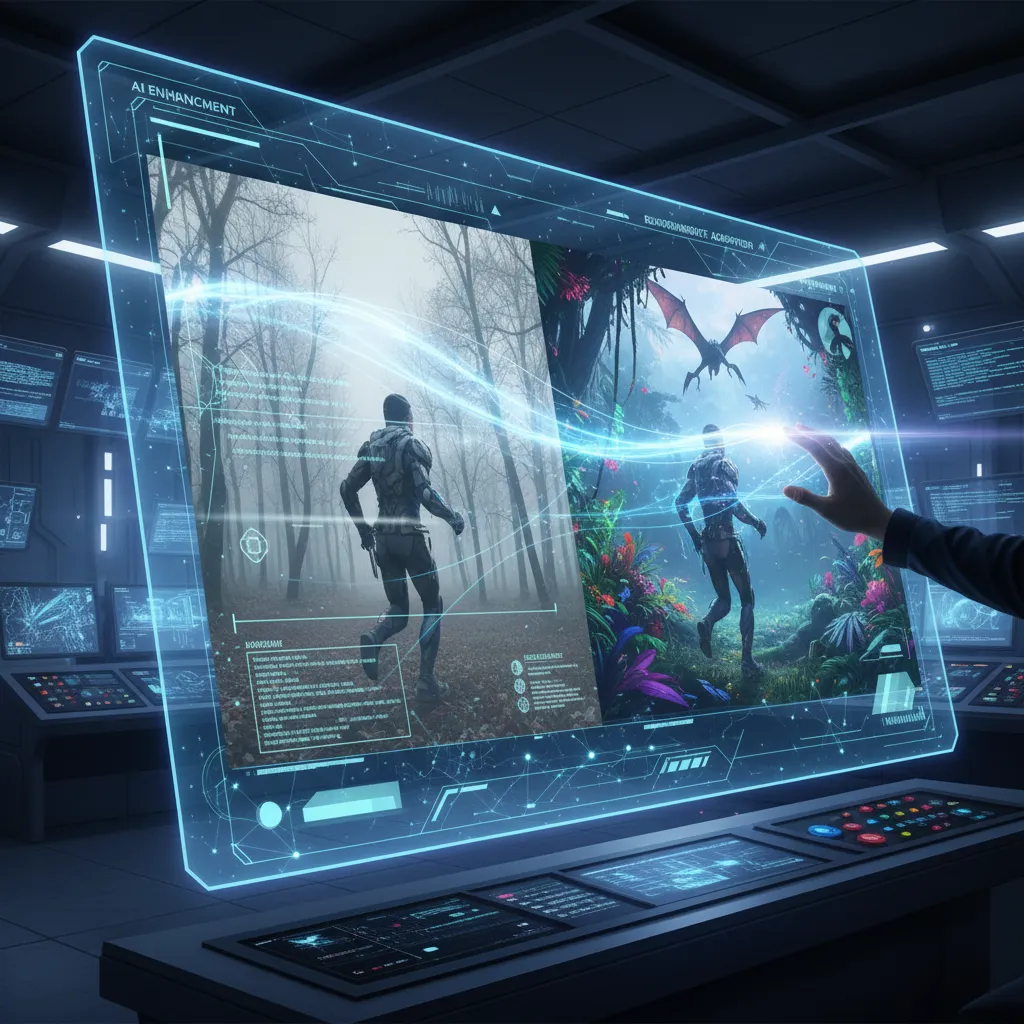
Just like in graphic design, AI is becoming a standard feature in professional video editing software, automating laborious tasks and enhancing creative possibilities.
- Adobe Premiere Pro’s Sensei AI: Features like “Auto Reframe” automatically adjust video for different aspect ratios (e.g., from 16:9 for YouTube to 9:16 for TikTok), while “Scene Edit Detection” can instantly add cuts to an already-edited video file.
- AI-Powered Rotoscoping: Tools like RunwayML’s Green Screen can remove backgrounds from video without a physical green screen, a task that once took hours of meticulous frame-by-frame work.
- Automated Content Creation: Platforms like Descript transcribe video and allow you to edit the footage simply by editing the text transcript. AI can also remove filler words (“ums” and “ahs”) automatically, dramatically speeding up the editing of talking-head videos and podcasts.
This level of automation in AI in media production allows filmmakers and video creators to operate with the efficiency of a much larger team, focusing their energy on storytelling and creative direction.
Navigating the New Frontier: Ethical Considerations and Intellectual Property
With great power comes great responsibility. The rapid advancement of generative AI has sparked urgent and necessary conversations about ethics, ownership, and the very nature of art. These are not simple issues with easy answers, but they are critical for the healthy integration of AI in creative industries.
The Copyright Conundrum
The most contentious debate revolves around AI and intellectual property.
- Training Data: AI models are trained on billions of data points (images, text, sounds) scraped from the internet. A key legal and ethical question is whether using copyrighted material for training constitutes fair use or infringement.
- Ownership of Output: Who owns a piece of generative AI art? The user who wrote the prompt? The company that created the AI model? Or can it even be copyrighted at all? Current U.S. Copyright Office guidance suggests that works created without sufficient human authorship cannot be copyrighted.
- Artist Compensation: How can artists whose work was used in training data be compensated? This has led to numerous lawsuits and calls for new legislation to protect creators.
Navigating the ethical AI creative fields requires transparency from AI companies and new legal frameworks that can accommodate this technology.
Authenticity, Bias, and the Fear of Replacement
Beyond copyright, other profound ethical challenges exist. The rise of deepfakes and misinformation powered by generative AI is a significant concern. Furthermore, AI models can inherit and amplify biases present in their training data, leading to stereotypical or non-inclusive outputs.
And, of course, there is the fear that AI will replace human artists. While some roles may evolve, the consensus is shifting towards a model of collaboration rather than replacement. AI lacks lived experience, intent, and consciousness—the very things that give human art its depth and meaning. The most compelling future is one where human creativity guides powerful AI tools.
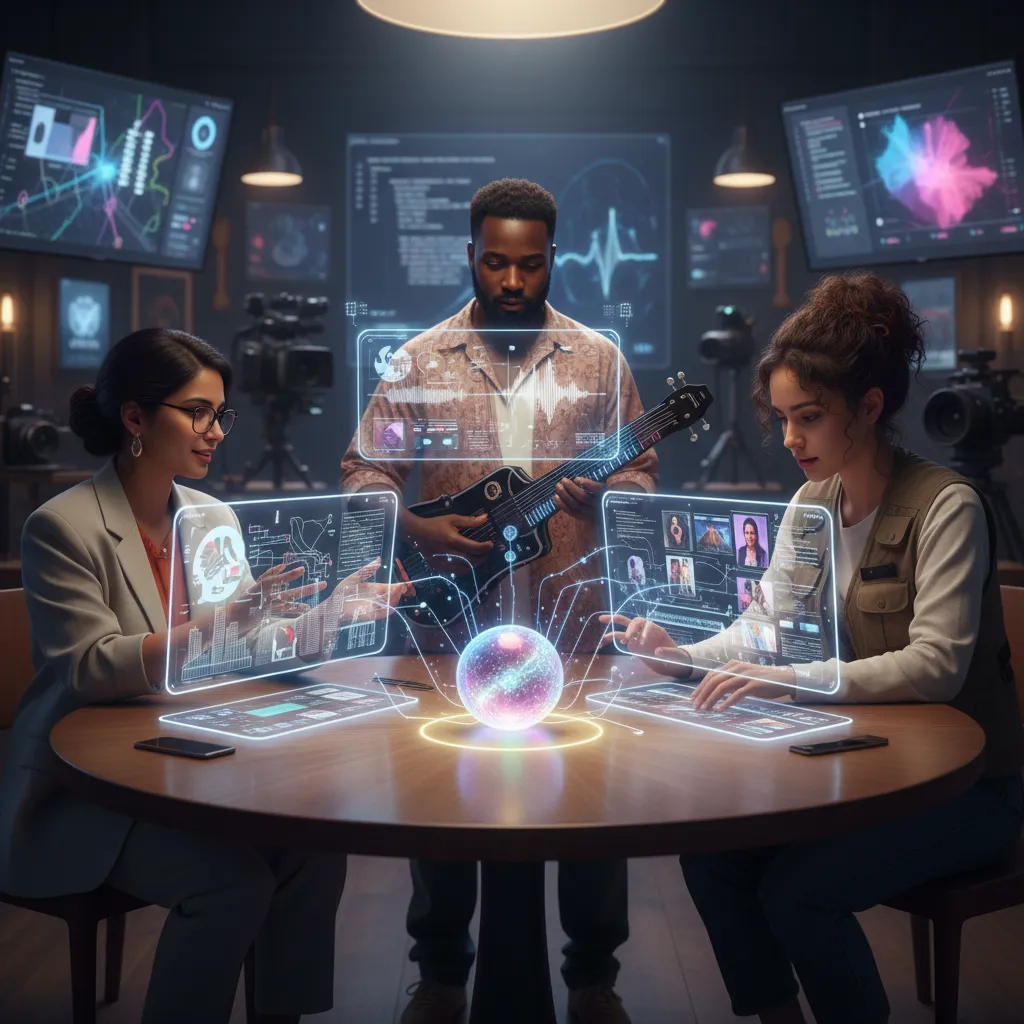
The Future is Collaborative: Leveraging AI in Creative Workflows
The ultimate promise of advanced AI models creativity lies in a new synergy between human and machine. By embracing AI as a creative co-pilot, artists can transcend previous limitations and redefine their workflows. The future of digital content is interactive, personalized, and co-created.
Here’s how AI creative workflows are evolving:
| Creative Stage | Traditional Workflow | AI-Augmented Workflow |
|---|---|---|
| Ideation | Mood boards, sketches, brainstorming sessions. | Generate hundreds of visual concepts in minutes; use AI chatbots to explore thematic ideas. |
| Prototyping | Storyboards, demos, mockups. | Create animated storyboards with AI video; generate demo tracks with AI music; build UI mockups with AI. |
| Production | Manual illustration, filming, recording. | Use Generative Fill to edit assets; create b-roll with text-to-video; separate audio stems for remixing. |
| Post-Production | Manual color grading, editing, mixing. | Use AI for automated editing, smart color correction, and intelligent audio mastering. |
| Distribution | Create marketing assets for each platform. | Use AI to auto-reframe video for all social media formats; generate ad copy and social media posts. |
This collaborative approach allows creators to work faster, experiment more freely, and focus on the strategic and emotional core of their work. Related: The Future is Now: AI Revolutionizing Personalized Learning & Education touches on how these revolutionary changes extend even beyond the creative fields.
Conclusion
The integration of artificial intelligence into the creative industries is not a fleeting trend; it is a fundamental evolution of how we create. From the solitary artist generating concepts in Midjourney to the major film studio using AI in media production, these tools are already here, and their capabilities are growing exponentially. We’ve moved beyond simple filters and effects to a world of intelligent content generation where AI can be a genuine collaborator in the artistic process.
While the ethical and legal landscapes are still being mapped, the potential for positive transformation is immense. The future of AI art, music, and video is one where technology removes tedious barriers, amplifies human imagination, and unlocks entirely new forms of expression. The human creator remains at the center of this new universe, no longer just a wielder of tools, but a conductor of creative algorithms, a storyteller in partnership with the most powerful muse humanity has ever built.
The question is no longer if AI will change creativity, but how we will guide it. How will you use these powerful new capabilities to unleash your own unique vision?
Frequently Asked Questions (FAQs)
Q1. How is AI changing the creative industries?
AI is revolutionizing creative fields by acting as a powerful tool for ideation, production, and post-production. It automates tedious tasks like background removal and audio mastering, generates novel concepts in art and music from text prompts, and enables rapid prototyping of video content, allowing creators to work faster and more efficiently.
Q2. What is an example of generative AI in art?
A prominent example is using a platform like Midjourney or DALL-E 3. An artist can type a text prompt like, “a serene underwater library filled with glowing jellyfish, digital art,” and the AI will generate a unique, high-quality image based on that description, effectively translating a linguistic idea into a visual masterpiece.
Q3. Can AI-generated art be copyrighted?
Currently, the U.S. Copyright Office holds that works created solely by AI without significant human authorship cannot be copyrighted. However, a work that incorporates AI-generated elements but is substantially modified or arranged by a human may be eligible for copyright protection, though the legal landscape is still evolving.
Q4. Will AI replace creative jobs like artists and musicians?
While AI will certainly change creative workflows, it is more likely to augment human roles than replace them entirely. It excels at handling technical and repetitive tasks, freeing up human creators to focus on high-level concepts, emotional storytelling, and strategic direction. The future points towards a human-AI collaborative model.
Q5. What are the best AI tools for creators?
The best tools depend on the medium. For visual art and design, Adobe Photoshop (with Generative Fill), Midjourney, and Canva are leaders. For music, Suno and Udio are popular for song generation, while iZotope’s plugins are excellent for production. For video, OpenAI’s Sora is a technology to watch, while Luma Dream Machine and Runway are currently accessible and powerful platforms.
Q6. What are the ethical concerns surrounding AI in art and music?
The main ethical concerns include copyright infringement (using artists’ work in training data without consent or compensation), the potential for creating deepfakes and misinformation, algorithmic bias leading to non-inclusive content, and the question of ownership and authenticity of AI-generated works.