Unleash Creativity: The Rise of AI Video Generation in Content Creation
Introduction
In an age where visual content reigns supreme, the demand for engaging and high-quality video is insatiable. From marketing campaigns to educational modules and social media storytelling, video has become the quintessential medium for capturing attention and conveying messages. Yet, the traditional video production process often involves significant time, resources, and technical expertise, posing a barrier for many creators and businesses. Enter AI video generation – a groundbreaking technological leap that is democratizing video creation and redefining what’s possible in digital content.
This isn’t just about automating mundane tasks; it’s about empowering individuals and organizations to create videos with AI that were once out of reach. We’re witnessing a paradigm shift, as AI video tools move from niche applications to mainstream adoption, promising to unleash unprecedented levels of creativity and efficiency. This comprehensive guide will delve into the exciting world of generative AI video, exploring its mechanisms, benefits, diverse applications, and the ethical considerations that come with its rapid evolution. Prepare to discover how AI content creation is not just a trend, but the future of how we tell stories and engage audiences.
What is AI Video Generation? A Deep Dive into Synthetic Media
At its core, AI video generation refers to the process of using artificial intelligence and machine learning algorithms to create, edit, or manipulate video content. This technology leverages vast datasets of existing videos, images, and text to learn patterns, styles, and behaviors, enabling it to generate new, unique video sequences from scratch or transform existing footage. It’s a fascinating intersection of computer vision, natural language processing, and advanced machine learning models.
Think of it as having an intelligent assistant that can interpret your instructions, whether they’re text-based descriptions, audio prompts, or even still images, and then conjure up a dynamic visual narrative. This capability stems from sophisticated AI models, often powered by neural networks, which can understand context, predict visual elements, and even simulate human-like expressions and movements.
The Technology Behind the Magic: How AI Video Works
The mechanics of AI video technology are complex but can be broadly categorized into several key areas:
- Text-to-Video AI: This is perhaps the most exciting and rapidly developing area. Users input a written script, a prompt, or even just keywords, and the AI generates a complete video, often with synthesized voices, characters, and scenes. Large language models (LLMs) and diffusion models play a crucial role here, translating semantic meaning into visual representations.
- Generative Adversarial Networks (GANs): GANs consist of two neural networks, a generator and a discriminator, locked in a continuous competition. The generator creates synthetic video frames, while the discriminator tries to determine if they are real or fake. This adversarial process refines the generator’s ability to produce highly realistic and convincing video content.
- Video-to-Video Translation: This involves transforming existing video footage. For instance, an AI could change the style of a video (e.g., from live-action to animation), alter backgrounds, modify facial expressions, or even adjust lighting conditions, all automatically.
- Automated Video Editing: Beyond generation, AI excels at streamlining the editing process. This includes automatic scene detection, intelligent cropping, color correction, audio enhancement, and even suggesting optimal cuts based on content analysis.
- Synthetic Media Video & Deepfakes: While often associated with ethical concerns, synthetic media is a broad term for media generated or manipulated by AI. This can range from harmless virtual assistants to realistic digital humans and, yes, deepfakes – where a person’s likeness is digitally imposed onto another.
The power of machine learning video lies in its ability to learn from vast amounts of data, identifying subtle patterns that human editors might miss and applying them to new creative endeavors. This continuous learning process allows AI video software to become increasingly sophisticated and capable.
The Transformative Benefits of AI Video Generation
The adoption of AI video generation is not merely a novelty; it offers tangible, transformative benefits across various sectors, addressing long-standing challenges in content production.
1. Unprecedented Efficiency and Speed
Traditional video production is notoriously time-consuming, requiring extensive planning, shooting, editing, and post-production. Automated video production with AI significantly compresses these timelines. What once took days or weeks can now be accomplished in hours or even minutes. This speed is invaluable for agile marketing campaigns, rapid content iterations, and timely news dissemination.
2. Cost Reduction and Accessibility
Professional video production often comes with a hefty price tag, making it inaccessible for small businesses, independent creators, or educational institutions with limited budgets. AI video tools drastically reduce these costs by minimizing the need for expensive equipment, studio rentals, actors, and extensive post-production teams. This democratization of video creation means anyone can create videos with AI without a massive financial outlay. [Related: top-ai-tools-content-creation-2024]
 A person utilizes a user-friendly AI video generator on a tablet, showcasing the growing accessibility of these powerful tools for content creators of all skill levels.
3. Boosting Creativity and Innovation
Far from stifling creativity, AI can act as a powerful co-pilot, expanding the creative horizons of artists and marketers. It handles the mundane, repetitive tasks, freeing up human creators to focus on conceptualization, storytelling, and refining the emotional impact of their work. With generative AI video, creators can rapidly prototype ideas, experiment with different visual styles, and bring imaginative concepts to life that might have been too complex or expensive to produce manually. This enables a level of experimentation previously unimaginable.
4. Personalization and Scalability
In a world craving personalized experiences, personalized video AI stands out. AI can generate thousands of unique video variations tailored to individual viewer preferences, demographics, or past interactions. Imagine a marketing campaign where each potential customer receives a video ad featuring their name, local landmarks, or products relevant to their browsing history. This level of customization is practically impossible at scale without AI. For businesses, this means highly targeted and effective communication.
5. Breaking Language Barriers
AI video technology can automatically translate spoken dialogue into multiple languages, synthesize voices in those languages, and even generate accurate lip-syncing for the new audio. This capability dramatically broadens audience reach, making global content distribution more seamless and efficient than ever before.
Diverse Applications: Where AI Video is Making an Impact
The reach of AI video generation extends far beyond mere novelty. It’s actively transforming various industries and content formats.
Marketing and Advertising: The Future of Campaigns
For marketers, AI video marketing is a game-changer.
- Automated Ad Creation: AI can generate multiple versions of video ads optimized for different platforms (e.g., Instagram Stories, YouTube pre-rolls) and target audiences, complete with varied visuals, voiceovers, and call-to-actions.
- Explainer Videos: Quickly produce engaging explainer videos for products, services, or complex concepts.
- Personalized Campaigns: Deliver hyper-personalized video messages to individual leads or customers, increasing engagement and conversion rates.
- Social Media Content: Generate a constant stream of short, impactful videos optimized for platforms like TikTok, Instagram Reels, and YouTube Shorts, keeping brands relevant amidst AI for social media video trends.
Education and Training: Engaging Learning Experiences
AI-generated videos are revolutionizing how we learn and teach.
- Interactive Learning Modules: Create dynamic educational content with AI-driven narrators, animated explanations, and interactive elements.
- Language Learning: Generate realistic conversational scenarios with AI characters for immersive language practice.
- Corporate Training: Develop consistent and engaging training videos for employees across global organizations, easily updated with new information.
Entertainment and Filmmaking: A New Era of Storytelling
While AI in filmmaking raises philosophical questions, its practical applications are undeniable.
- Pre-visualization and Storyboarding: Filmmakers can rapidly generate animated storyboards and pre-visualizations from scripts, streamlining the pre-production process.
- Special Effects and CGI: AI can assist in creating highly realistic CGI elements, animating complex scenes, and even de-aging actors with remarkable precision.
- AI Animation Maker: Artists can leverage AI to automate laborious animation processes, focusing on creative direction and character development.
- Video Storytelling AI: Experiment with narrative structures and visual styles that might be too resource-intensive for traditional methods.
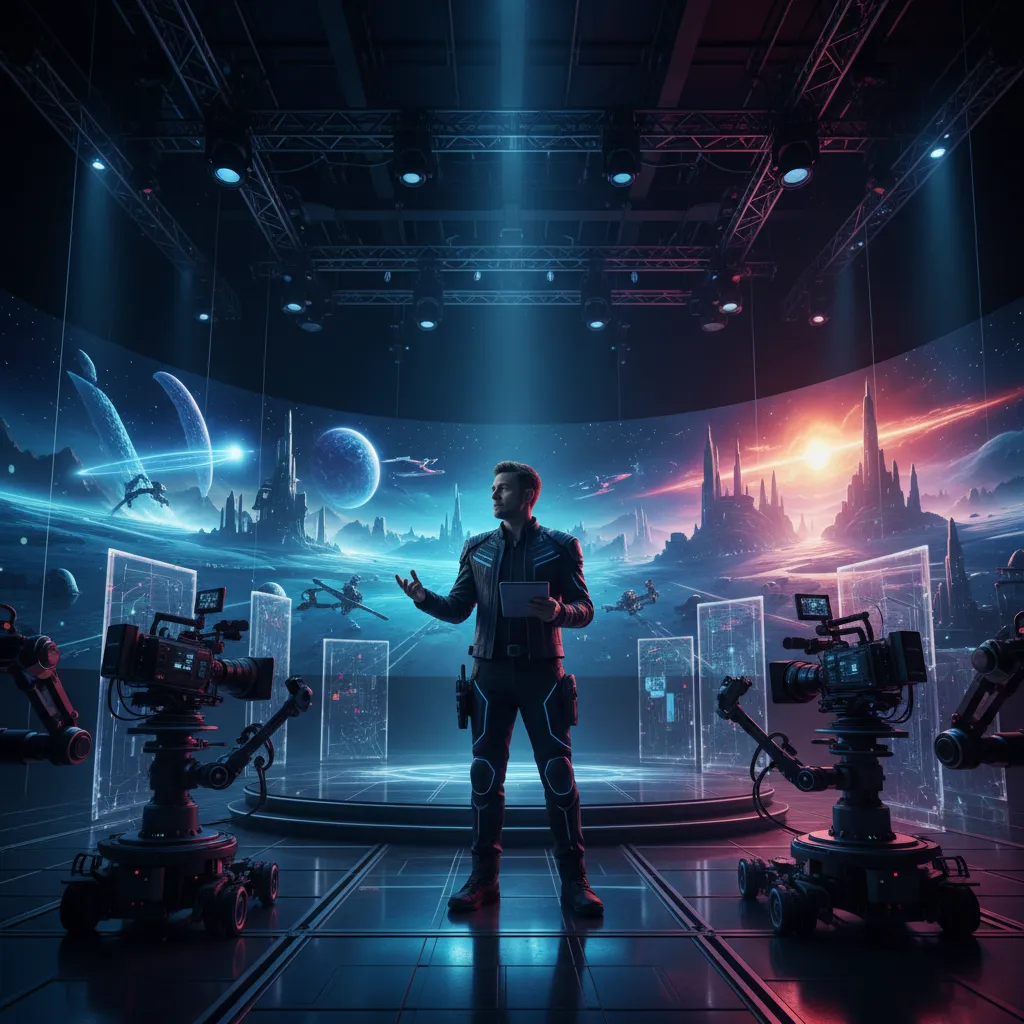 A film director observes AI-generated scenes on a futuristic production set, symbolizing the revolutionary integration of artificial intelligence into the filmmaking process and creative direction.
News and Journalism: Rapid Content Creation
In fast-paced news environments, automated video production is invaluable.
- News Summaries: AI can generate video summaries of articles or breaking news events with synthesized narrators and relevant stock footage.
- Data Visualization: Transform complex data sets into easily digestible video infographics and reports.
Navigating the Landscape of AI Video Tools and Platforms
The market for AI video tools is exploding, with new platforms emerging constantly. These tools vary widely in their capabilities, ease of use, and pricing models, offering solutions for both beginners and seasoned professionals. [Related: best-ai-video-generators-2024]
Key Features to Look For in AI Video Software:
When evaluating AI video platforms and software, consider these crucial features:
- Text-to-Video Capabilities: The ability to generate video from written prompts.
- Voice Synthesis & Lip-Syncing: Realistic AI voices and accurate synchronization with on-screen characters.
- Customizable Avatars/Characters: Options for creating or selecting virtual presenters.
- Template Library: Pre-designed templates for various video types (e.g., marketing, social media, education).
- Stock Media Integration: Access to libraries of stock footage, images, and music.
- Editing Features: Basic to advanced editing functionalities, including scene transitions, text overlays, and background removal.
- Resolution and Export Options: Support for high-definition video and various file formats.
- Ease of Use: An intuitive interface for users of all skill levels.
- Collaboration Features: For teams working on video projects.
Popular Types of AI Video Generators:
- Online AI Video Generators (e.g., Pictory, Synthesys, InVideo AI): These web-based platforms offer intuitive interfaces for quickly generating videos from text or existing content. They often come with libraries of templates, stock media, and AI voices, making them ideal for free AI video tools exploration or quick marketing videos.
- Dedicated AI Animation Makers (e.g., Adobe Animate AI features, specialized AI animation platforms): These tools focus on generating animated sequences, characters, and motion graphics, often assisting traditional animators.
- Advanced AI Video Editing Suites (e.g., DaVinci Resolve AI, Adobe Premiere Pro AI): These professional-grade editors integrate AI features to automate tasks like transcription, content aware filling, and intelligent color grading, streamlining the AI video editing workflow.
The emergence of AI-powered video solutions means that creators have more choice than ever, enabling them to select tools that best fit their specific needs and budget.
The Future of AI Video: Trends and Challenges
The trajectory of AI video technology is upward and accelerating. As models become more sophisticated and computational power increases, we can expect even more astounding advancements.
Emerging AI Video Trends:
- Hyper-realistic Generative AI Video: The line between AI-generated and real footage will continue to blur, making it increasingly difficult to distinguish between the two.
- Real-time AI Video Generation: Imagine creating complex video scenes and narratives in real-time, responding to user input or live events.
- Emotional AI in Video: AI capable of generating videos that evoke specific emotional responses, further enhancing storytelling.
- Interactive and Adaptive Video: Videos that change and evolve based on viewer interaction, creating truly personalized and dynamic experiences. This is where AI video trends are heading, offering a truly immersive future.
- AI Video Production Workflow Integration: AI tools will become seamlessly integrated into every stage of video production, from scriptwriting and concept generation to final distribution and performance analysis.
Addressing the Challenges and Ethical Considerations
With great power comes great responsibility. The rise of synthetic media video and especially deepfakes necessitates careful consideration of ethical implications.
- Deepfake Video Ethics and Misinformation: The ability to create highly realistic but entirely fabricated videos poses significant risks for misinformation, defamation, and manipulation. Developing robust detection methods and promoting media literacy are crucial.
- Copyright and Ownership: Questions arise about the ownership of AI-generated content and the datasets used to train these models. Who owns the copyright when an AI creates a video?
- Job Displacement vs. Job Transformation: While some fear job losses in traditional video production, it’s more likely that AI will transform roles, requiring new skills in prompt engineering, AI supervision, and ethical oversight.
- Bias in AI: If AI models are trained on biased datasets, they can perpetuate and amplify those biases in the generated content, leading to unfair or stereotypical representations.
- Authenticity and Trust: As AI video becomes ubiquitous, maintaining audience trust in the authenticity of visual media will be a continuous challenge.
 A symbolic image depicting a scale, with one side representing creative freedom and innovation and the other representing ethical responsibility and governance, highlighting the critical balance needed in the development and deployment of AI video technologies.
Addressing these challenges requires a multi-faceted approach involving technological safeguards, policy frameworks, industry best practices, and ongoing public discourse. For HiFi Studio And Mobile, our commitment is to explore these innovations responsibly, advocating for ethical AI development and deployment.
The AI Video Production Workflow: From Concept to Screen
Understanding how AI video production workflow integrates AI at various stages can help creators harness its full potential.
1. Concept and Script Generation
- AI for Brainstorming: Use AI language models to generate ideas, story concepts, and script outlines based on keywords or themes.
- Scriptwriting Assistance: AI can help refine dialogue, suggest scene descriptions, and even write entire scripts, especially for short-form content.
2. Asset Creation
- Text to Video AI: Input your script or prompts into an AI video generator to produce initial video drafts, complete with characters, scenes, and narration.
- Image and Scene Generation: If specific visuals are needed, AI can generate custom images, backgrounds, and even 3D models.
- Voiceover Synthesis: Select from a library of AI voices or clone a specific voice for narration.
3. Editing and Enhancement
- Automated Editing: AI can perform initial cuts, synchronize audio and video, and apply basic color correction.
- Visual Effects: AI-powered tools can add complex visual effects, motion graphics, and transitions with minimal manual input.
- Audio Mastering: AI can enhance audio quality, remove noise, and optimize sound levels.
4. Distribution and Optimization
- Automated Content Repurposing: AI can automatically reformat videos for different platforms (e.g., vertical for TikTok, horizontal for YouTube).
- Performance Analytics: AI can analyze video performance data to provide insights for future content optimization.
By integrating AI video solutions into each step, the entire production pipeline becomes more agile, efficient, and cost-effective, truly revolutionizing AI video for business.
Conclusion
The rise of AI video generation in content creation is more than just a technological advancement; it’s a creative revolution. From empowering independent creators with free AI video tools to enabling large enterprises to scale their AI video marketing efforts, the impact is profound and far-reaching. We’ve explored how AI video technology works, its myriad benefits, and its diverse applications across industries, noting its significant role in AI content creation.
While the journey of generative AI video is still unfolding, marked by exciting AI video trends and complex ethical considerations, its potential to unleash creativity and democratize visual storytelling is undeniable. The future of video is intelligent, adaptable, and accessible. As we at HiFi Studio And Mobile continue to explore the frontiers of AI and digital lifestyle, we encourage you to embrace these tools, experiment responsibly, and discover new ways to bring your visions to life. The camera is now in everyone’s hand, and the editor is powered by AI – truly, the era of unlimited creative possibility has arrived. [Related: unlock-potential-ai-tools-productivity-creativity-2024]
FAQs
Q1. What is AI video generation?
AI video generation is the use of artificial intelligence and machine learning algorithms to create, edit, or manipulate video content. This includes generating videos from text prompts, altering existing footage, or automating various stages of video production.
Q2. How does text-to-video AI work?
Text-to-video AI works by leveraging large language models and diffusion models to interpret written prompts or scripts. It then uses this understanding to generate corresponding visual elements, characters, scenes, and often synthesized voices, compiling them into a complete video.
Q3. What are the main benefits of using AI video tools?
The primary benefits include significantly increased efficiency and speed in video production, substantial cost reduction, enhanced creative possibilities through rapid prototyping and experimentation, the ability to scale personalized video content, and the breaking down of language barriers through automated translation and voice synthesis.
Q4. Can AI generate realistic human-like videos?
Yes, AI powered video technology, especially with advancements in GANs and deep learning, can generate highly realistic human-like videos, including virtual presenters, synthetic actors, and even alter existing footage to change facial expressions or appearance. This area, however, often raises deepfake video ethics concerns.
Q5. What are some common applications of AI video generation?
AI video generation is used in various fields, including marketing (personalized ads, explainer videos), education (interactive learning modules), entertainment (pre-visualization, special effects, AI animation maker), news reporting (automated summaries), and AI for social media video content creation.
Q6. Are there free AI video tools available?
Yes, many platforms offer free tiers or trials that allow users to explore basic AI video generation capabilities. These can be excellent starting points for individuals and small businesses looking to experiment with create videos with AI without initial investment. [Related: top-10-ai-productivity-tools]
Q7. What are the ethical concerns surrounding AI video?
Key ethical concerns include the potential for creating and spreading misinformation through deepfakes, issues of copyright and intellectual property for AI-generated content, potential job displacement in traditional creative industries, and biases in AI models that could lead to unfair or stereotypical representations.
Q8. How will AI impact the future of filmmaking?
AI in filmmaking is expected to transform pre-production (storyboarding, script analysis), production (virtual sets, digital doubles), and post-production (automated editing, advanced CGI). It will likely empower filmmakers with new tools for storytelling and efficiency, potentially democratizing access to high-quality production, while also posing new challenges for authenticity and creative control.