The Canvas Awakens: How AI Art Generators Are Redefining Creativity
Introduction
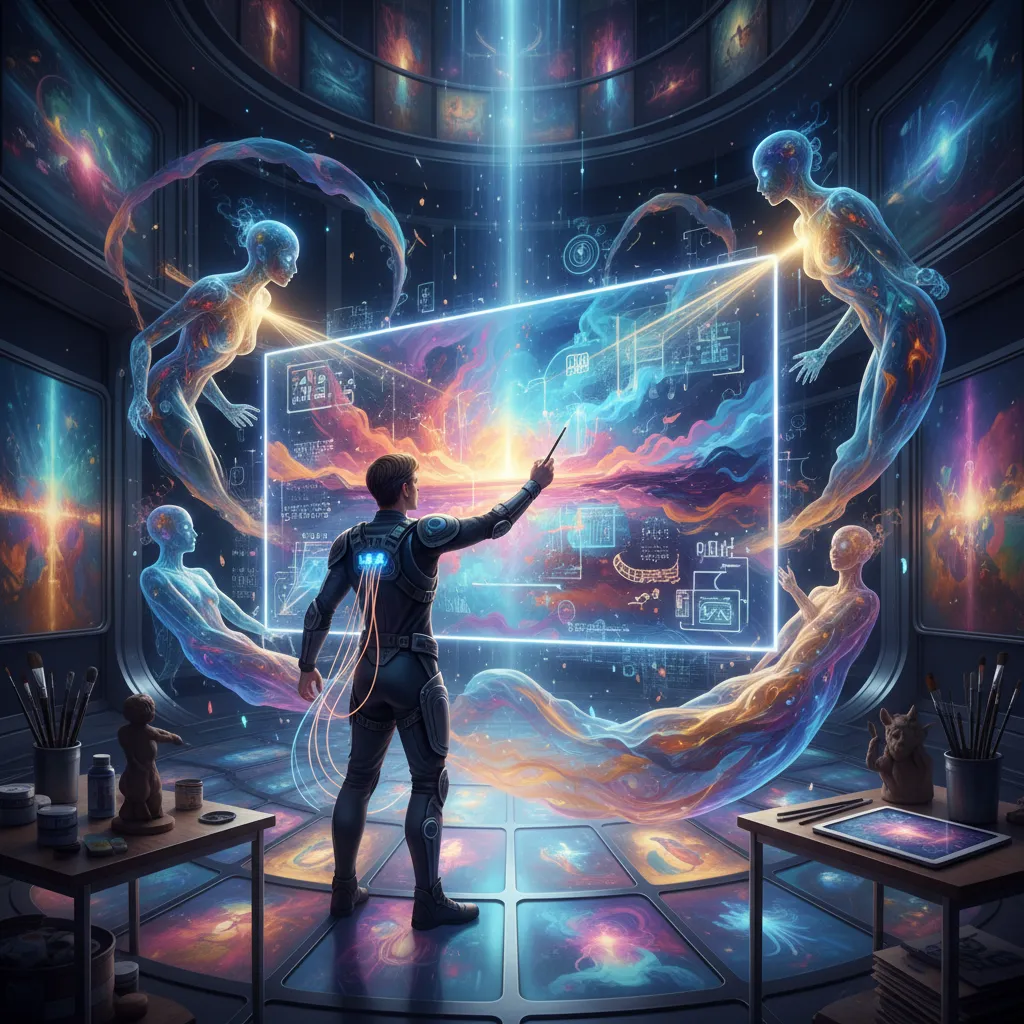
In an age where technology continuously reshapes our world, the realm of art and creativity is undergoing a profound transformation. What was once exclusively the domain of human hands and minds is now being augmented, challenged, and even redefined by AI art generators. These sophisticated AI tools for artists are not merely novelties; they represent a seismic shift in how we conceive, create, and interact with visual media. From the nascent brushstrokes of early algorithms to the breathtaking complexity of modern generative AI art, the future of art with AI is no longer a distant sci-fi fantasy but a vibrant, unfolding reality.
This article delves deep into the fascinating world of AI art generators, exploring their mechanics, their widespread impact, and the intricate ethical dilemmas they present. We will uncover how AI and creativity are intertwining, giving rise to new forms of AI artistic expression and offering unprecedented avenues for AI art inspiration. Whether you’re an established artist, an aspiring creator, a curious technophile, or simply someone captivated by the intersection of technology and culture, join us as we explore how these digital alchemists are not just changing the canvas, but awakening it to entirely new possibilities. Prepare to journey through the exciting landscape where algorithms dream and pixels paint, forever altering our understanding of what it means to create.
The Dawn of Generative AI Art: Understanding the Mechanics
At its core, generative AI art is about algorithms creating something new. Unlike traditional digital art, where a human explicitly dictates every stroke and color, AI art generators learn from vast datasets of existing images to produce original works. This process often leverages advanced machine learning techniques, fundamentally altering how AI creates art.
Neural Networks: The Brains Behind the Brush
The bedrock of most AI art software and best AI art apps lies in neural networks, particularly deep learning models. These networks are inspired by the structure and function of the human brain, designed to recognize patterns and make decisions.
Generative Adversarial Networks (GANs)
One of the most groundbreaking architectures in generative AI art is the Generative Adversarial Network (GAN). Introduced by Ian Goodfellow and his colleagues in 2014, GANs consist of two competing neural networks:
- The Generator: This network’s job is to create new data, such as images, from random noise. It tries to fool the discriminator into believing its output is real.
- The Discriminator: This network acts like a critic, evaluating images and determining whether they are real (from the training data) or fake (generated by the generator).
Through this adversarial process, both networks improve over time. The generator gets better at creating convincing fakes, and the discriminator becomes more adept at spotting them. This continuous feedback loop leads to increasingly realistic and sophisticated AI artwork examples.
Variational Autoencoders (VAEs) and Diffusion Models
While GANs were dominant for a while, other architectures have gained prominence, particularly for their ability to generate high-quality and diverse images.
- Variational Autoencoders (VAEs): VAEs learn a compressed representation of data (a “latent space”) and then use this representation to generate new, similar data. They are known for their ability to produce smooth transitions between different styles and concepts.
- Diffusion Models: These models have become the backbone of many popular text-to-image AI generators today, such as DALL-E, Midjourney, and Stable Diffusion. They work by gradually adding noise to an image and then learning to reverse this process, effectively “denoising” random noise into coherent images based on a given prompt. This iterative refinement process allows for incredible detail and nuanced understanding of prompts.
The Power of Prompt Engineering Art
The rise of text-to-image AI has brought prompt engineering art to the forefront. Prompt engineering is the art and science of crafting effective text inputs (prompts) to guide AI art generators to produce desired results. It’s akin to speaking a new language, where specific keywords, stylistic descriptors, and structural cues can dramatically alter the AI’s output.
For artists and designers, mastering prompt engineering art has become a vital skill. It allows for precise control over elements like:
- Subject Matter: “A majestic lion,” “a futuristic cityscape.”
- Artistic Style: “Oil painting,” “pixel art,” “cyberpunk aesthetic,” “impressionistic.”
- Lighting and Composition: “Golden hour,” “cinematic lighting,” “close-up shot.”
- Emotions and Mood: “Serene,” “chaotic,” “whimsical.”
The ability to articulate complex artistic visions through text makes these AI art software accessible to a broader audience, including AI art for beginners, while still offering depth for professional AI art tools users.
The Impact of AI on Artists and the Creative Landscape
The arrival of AI art generators has sent ripples through the creative industries, sparking both excitement and apprehension. The impact of AI on artists is multifaceted, presenting both exhilarating opportunities and significant challenges of AI art.
AI Tools for Artists: Augmentation, Not Replacement
Many proponents argue that AI tools for artists are not here to replace human creativity but to augment it. They act as powerful assistants, expanding the artistic toolkit in unprecedented ways.
Accelerating Ideation and Exploration
For conceptual artists, illustrators, and designers, AI art generators are invaluable for rapid prototyping and ideation. An artist can quickly generate hundreds of variations of a concept, exploring different styles, compositions, and color palettes in minutes, a process that would traditionally take hours or days. This fuels AI art inspiration and allows for a broader creative exploration before committing to a final direction.
Breaking Creative Blocks
Every artist experiences creative blocks. AI art software can provide a fresh perspective, generating unexpected images or combinations of ideas that can spark new directions. This fosters AI and creativity by providing novel inputs that a human mind might not immediately conceive.
Democratizing Art Creation
With best AI art apps available on smartphones and web browsers, individuals without formal artistic training can now create visually stunning images. This democratization of art creation lowers the barrier to entry, allowing more people to experience AI artistic expression and engage with the visual arts. This can lead to a boom in diverse AI artwork examples from a wider array of creators.
New Creative Roles: Prompt Engineers and AI Art Curators
The rise of AI art generators has also led to the emergence of new roles. Prompt engineering art is now a specialized skill, and curators are needed to sift through the vast ocean of AI-generated content to identify truly compelling pieces. This shows how AI artist collaboration can lead to entirely new creative ecosystems.
Challenges of AI Art: Ethical, Economic, and Existential
Despite the benefits, the impact of AI on artists and the broader art world is not without its controversies and challenges.
Ethical AI Art: Data, Bias, and Consent
A major concern revolves around the datasets used to train AI art generators. These datasets often comprise billions of images scraped from the internet, raising questions about copyright, consent, and fairness.
- Copyright Infringement: If an AI model is trained on copyrighted material, does its output infringe on those copyrights? This is a contentious legal area, actively being debated under AI art copyright laws.
- Bias in Datasets: If training data disproportionately features certain styles, demographics, or subjects, the AI may perpetuate or amplify those biases in its output, leading to a lack of diversity or even harmful representations. Addressing ethical AI art principles is crucial here.
- Consent: Artists whose work is used in training datasets, often without their knowledge or permission, feel exploited. This fuels debates about fair compensation and attribution.
Economic Disruptions and the Value of Human Art
The proliferation of easily accessible AI art software raises concerns about the economic viability of human artists, particularly in fields like illustration, graphic design, and concept art. If clients can generate high-quality images instantly and cheaply, what becomes of human artists who rely on these commissions? This is a significant part of the challenges of AI art that needs careful consideration.
Furthermore, it sparks philosophical debates about the intrinsic value of art. Does art created by an algorithm hold the same emotional or intellectual weight as art born from human experience, struggle, and intent? This redefines the very essence of AI and creativity.
The Blurring Lines: Authenticity and Authorship
As AI artwork examples become increasingly indistinguishable from human-made art, questions of authenticity and authorship become paramount. Who is the “artist” when an AI generates an image based on a human prompt? Is it the prompt engineer, the AI developer, or the AI itself? This is a core part of the discussion around the future of art with AI.
The Canvas Transformed: AI in Digital Art and Design
The integration of AI extends beyond mere image generation, profoundly transforming digital art and AI workflows across various creative domains. AI in design and AI for graphic design are now commonplace, offering unprecedented efficiencies and creative possibilities.
AI Painting Tools and Creative AI Solutions
Beyond standalone AI art generators, AI is being integrated into existing AI painting tools and graphic design software, enhancing traditional digital art processes.
- Smart Brushes and Filters: AI-powered brushes can adapt to an artist’s style, while intelligent filters can apply complex effects with a single click, saving time and effort.
- Content-Aware Editing: Tools that can intelligently fill in missing parts of an image, remove unwanted objects, or seamlessly extend backgrounds are revolutionizing photo editing and manipulation.
- Style Transfer: AI can apply the artistic style of one image (e.g., Van Gogh’s “Starry Night”) to another image, creating unique hybrid artworks. This is a powerful form of AI artistic expression.
- Vector Graphics Generation: AI for graphic design is increasingly capable of generating scalable vector graphics from simple sketches or text prompts, accelerating logo design, icon creation, and branding efforts.
AI in Graphic Design: Efficiency and Innovation
For graphic designers, AI tools for artists are becoming indispensable. They streamline repetitive tasks, offer design inspiration, and provide data-driven insights.
- Automated Layouts: AI can suggest optimal layouts for posters, brochures, or web pages based on content and design principles.
- Color Palette Generation: AI can analyze an image or mood and suggest harmonious color palettes, saving designers countless hours of experimentation.
- Personalized Design: AI can help create personalized marketing materials by adapting designs to individual user preferences, a significant advantage in creative AI solutions for advertising.
- Image Upscaling and Restoration: AI can intelligently upscale low-resolution images without losing quality, and even restore damaged or old photographs, a boon for both artists and archivists.
These applications highlight the benefits of AI art in enhancing productivity and pushing the boundaries of what’s possible in visual communication. The AI art industry trends indicate a clear trajectory towards more integrated and intelligent design ecosystems.
Learning AI Art: Navigating the New Frontier
For those eager to dive into this brave new world, learning AI art is an exciting journey. Whether you’re an experienced professional or an AI art for beginners enthusiast, there are abundant resources and pathways.
Getting Started with AI Art for Beginners
The barrier to entry for AI art for beginners has never been lower. Many platforms offer user-friendly interfaces and free tiers.
- Explore Popular Apps: Start with user-friendly best AI art apps like Midjourney (accessible via Discord), DALL-E (often with free credits), or Stable Diffusion (various online implementations).
- Experiment with Prompts: Don’t be afraid to experiment with different keywords, styles, and modifiers. The best way to understand prompt engineering art is through hands-on practice.
- Join Online Communities: Platforms like Reddit (e.g., r/aiart), Discord servers, and art forums are excellent places to share work, learn from others, and get AI art inspiration.
- Watch Tutorials: YouTube and various online courses offer comprehensive tutorials on specific AI art software and techniques.
Professional AI Art Tools and Advanced Techniques
For those looking to deepen their skills and integrate AI into a professional workflow, more advanced options and techniques are available.
- Local Installations: Running AI art generators like Stable Diffusion locally on a powerful computer offers greater control, privacy, and the ability to train custom models.
- Custom Models and Fine-tuning: Experienced users can fine-tune existing AI models on their own datasets (e.g., their artwork) to create highly personalized AI artistic expression in their unique style.
- Integration with Existing Software: Many professional AI art tools offer plugins or integrations with software like Photoshop, Blender, and Unreal Engine, seamlessly blending AI-generated elements with traditional digital art pipelines.
- Understanding Generative Adversarial Networks Art: Delving into the theoretical underpinnings of GANs and diffusion models can provide a deeper understanding of how AI creates art and empower more sophisticated prompt engineering.
The AI art industry trends show a continuous evolution, with new tools and techniques emerging rapidly. Staying curious and continuously learning AI art will be key to harnessing its full potential.
The Future of Creative Industries: Collaboration and Evolution
The future of art with AI is not a static destination but an evolving landscape. Rather than leading to the obsolescence of human creativity, the most probable outcome is a dynamic era of AI artist collaboration and a redefinition of the creative industries.
AI as a Collaborative Partner
Imagine an artist sketching a basic concept, and an AI instantly generates several fully rendered variations in different styles. The artist then refines these, perhaps using the AI to extrapolate intricate details or generate textures. This iterative process highlights the potential of AI artist collaboration, where the human provides vision and refinement, and the AI offers speed and expansive generative capabilities.
- Interactive Storytelling: AI can assist writers and visual artists in developing rich narratives, generating character designs, or envisioning complex worlds for games and films.
- Personalized Experiences: In fields like architecture and interior design, AI can generate custom designs based on client preferences and environmental factors, offering truly creative AI solutions.
- Performance Art: AI could analyze audience reactions and adapt live performances, or create dynamic visual backdrops in real-time, pushing the boundaries of AI artistic expression.
Redefining Authorship and Value
As AI artwork examples become more prevalent, the very definition of “art” and “artist” will be continuously debated. The focus may shift from the sole creation of an image to the intent behind the prompt, the selection process, the curation, and the human narrative that frames the AI’s output. AI and creativity will be seen as a spectrum, with various points of human-AI interaction.
The Evolution of Creative Skills
The skills required in the creative industries will evolve. Technical proficiency in traditional tools will remain valuable, but equally important will be:
- Conceptual Thinking: The ability to conceive original ideas and articulate a clear vision.
- Prompt Engineering Expertise: The skill to communicate effectively with AI text-to-image AI models.
- Curatorial Judgment: The discernment to select, refine, and contextualize AI-generated content.
- Ethical Understanding: A deep awareness of the implications of AI art regarding ethical AI art and AI art copyright.
The future of creative industries will be shaped by those who can master this new toolkit, adapting to the AI art industry trends and embracing the synergistic potential of human ingenuity and artificial intelligence.
Conclusion
The awakening of the canvas through AI art generators marks a pivotal moment in the history of creativity. From the intricate workings of generative adversarial networks art to the transformative power of text-to-image AI, these tools are undeniably reshaping digital art and AI. They offer extraordinary benefits of AI art, such as accelerating ideation, democratizing access to artistic creation, and fostering new forms of AI artistic expression.
However, this revolution is not without its complexities. The challenges of AI art—including contentious debates around ethical AI art, AI art copyright, and the profound impact of AI on artists—demand thoughtful engagement and ongoing dialogue. As we navigate the future of art with AI, it’s clear that the relationship between humans and AI will be one of intricate AI artist collaboration, pushing the boundaries of what we previously thought possible.
Whether you’re exploring AI art for beginners or leveraging professional AI art tools, the journey into this new creative frontier is both exhilarating and essential. The canvas has awakened, and with it, an invitation to redefine the very essence of human creativity in concert with our intelligent digital companions.
Unlock your creative potential with AI art generators today and discover the boundless possibilities that await.
FAQs
Q1. What are AI art generators?
AI art generators are software programs or online platforms that use artificial intelligence, typically deep learning models like GANs or diffusion models, to create original images, illustrations, and other visual art based on text prompts or existing images. They are a form of generative AI art.
Q2. How do AI art generators work?
AI art generators function by learning from vast datasets of images to recognize patterns, styles, and objects. When given a prompt (text-to-image AI), they generate new images by “denoising” random noise into a coherent picture, or by having two networks (generator and discriminator in GANs) compete to produce increasingly realistic output.
Q3. What are the main benefits of using AI art tools?
The benefits of AI art include accelerating ideation and prototyping, breaking creative blocks, democratizing art creation for AI art for beginners, and enabling new forms of AI artistic expression. They provide AI art inspiration and act as powerful AI tools for artists for various tasks.
Q4. What are the key challenges and ethical concerns with AI art?
Key challenges of AI art include AI art copyright issues stemming from training data, potential biases in generated content, the economic impact on human artists, and philosophical questions about authenticity and authorship. Adhering to ethical AI art principles is a significant concern.
Q5. Can AI art replace human artists?
While AI art generators can create impressive visuals, they are currently seen as powerful AI tools for artists rather than replacements. Human artists bring unique emotional depth, intentionality, lived experience, and critical judgment to their work. The future of art with AI is more likely to involve AI artist collaboration and augmentation of human creativity, rather than outright replacement.
Q6. What is prompt engineering in AI art?
Prompt engineering art is the skill of crafting precise and effective text descriptions (prompts) to guide AI art generators to produce specific desired images. It involves using keywords, stylistic cues, and structural elements to communicate an artistic vision to the AI.
Q7. Where can I try out AI art generation?
Many best AI art apps and platforms are available. Popular choices include Midjourney (via Discord), DALL-E, Stable Diffusion (various online interfaces and local installations), and various integrated AI painting tools within graphic design software. Many offer free trials or tiers for AI art for beginners.
Q8. How is AI impacting graphic design?
AI in design and AI for graphic design is revolutionizing workflows by automating repetitive tasks, suggesting layouts and color palettes, generating assets like vector graphics, and enabling content-aware editing. These creative AI solutions enhance efficiency, offer design inspiration, and allow designers to focus on higher-level conceptual work.