Text-to-Video AI: The Complete 2024 Guide

Introduction: The Dawn of Generative Video AI
The creative landscape is undergoing a transformation unlike any seen since the introduction of digital editing. At the heart of this revolution is Text-to-Video AI, a cutting-edge technology capable of turning simple written descriptions—or prompts—into fully realized, high-definition video sequences.
In 2024, what was once science fiction is now becoming a practical tool for professionals. The era of the AI video generator has officially arrived, promising to democratize filmmaking, accelerate content creation, and fundamentally alter how we perceive digital media. This guide cuts through the hype to provide a comprehensive look at this powerful technology, the leading tools driving it, and the practical skills you need to master it.
The ability to create video from text is not just a novelty; it is a shift in production paradigm. For content creators, marketers, and filmmakers, understanding generative video AI is no longer optional—it’s essential for staying relevant. We will explore the technical underpinnings, compare the industry titans like OpenAI’s Sora and RunwayML Gen 2, examine real-world applications, and address the critical ethical considerations shaping the future of this field.
[Related: AI Tools Revolutionizing Everyday Productivity]
Decoding the Magic: How Text-to-Video AI Works
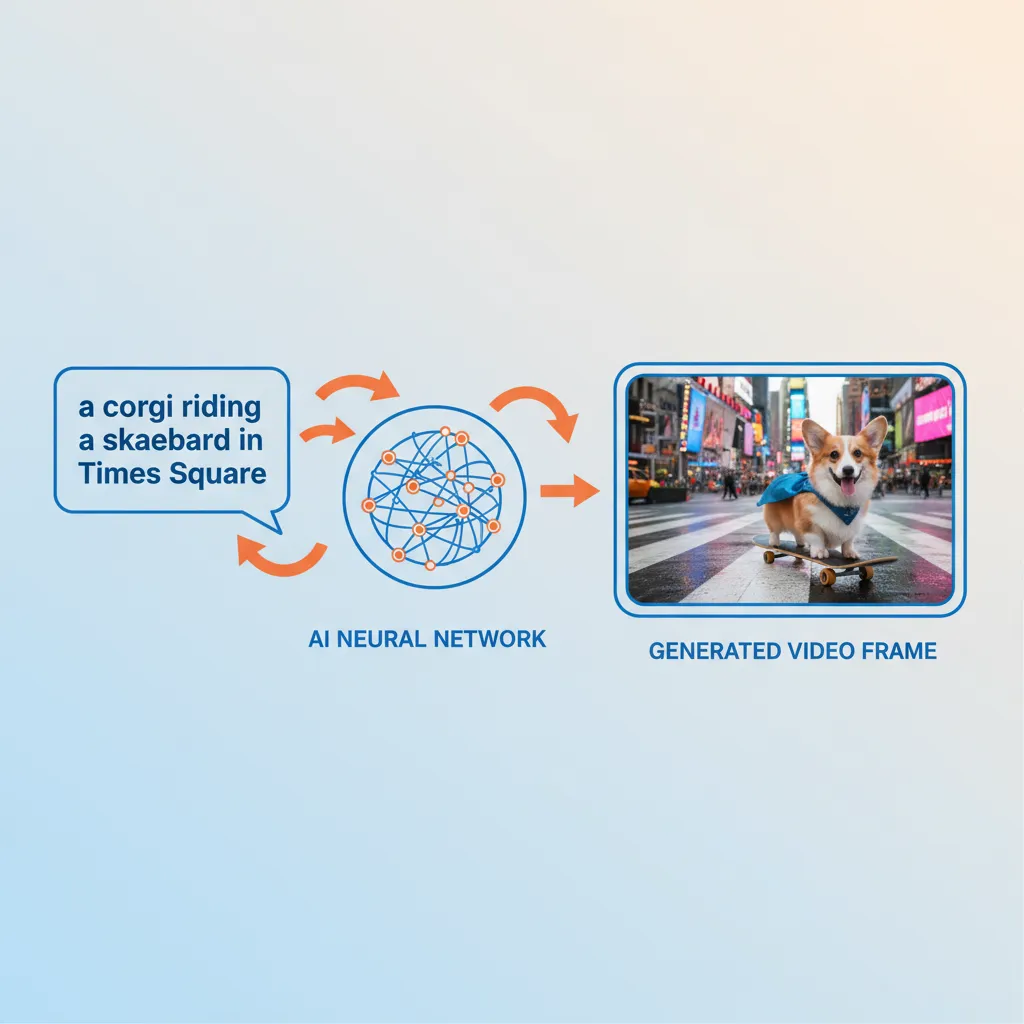
At its core, text to video ai relies on sophisticated machine learning models trained on billions of video clips and corresponding descriptive metadata. Unlike early computational methods that synthesized existing elements, modern T2V models generate entirely new, coherent video content, frame by frame, based purely on a user’s textual instruction.
The technical mechanisms behind this video synthesis from text are complex, but two primary families of text to video models dominate the current landscape: Diffusion Models and Generative Adversarial Networks (GANs).
The Role of Diffusion Models and Transformers
The breakthrough technology enabling the most realistic results today, notably seen in OpenAI Sora, is the diffusion model.
- Noise to Image: Diffusion models work by learning to reverse a process of gradual destruction. The AI starts with random noise and iteratively “denoises” it, adding back learned visual information until a coherent static image corresponding to the prompt is formed.
- Temporal Consistency: For video generation, the process is extended using Transformer architectures (similar to those used in large language models like GPT). These transformers ensure temporal consistency—meaning the generated images don’t just look realistic, they flow logically from one frame to the next, maintaining object permanence, camera motion, and physics.
- Prompt Understanding (Prompt-to-Video): The text prompt is encoded into a latent space (a compressed representation) that guides the entire denoising and sequencing process. This means the quality of the output is heavily dependent on the precision of the
prompt to videoinput.
Understanding Generative Adversarial Networks (GANs) Video
While diffusion models are currently the high-fidelity champions, earlier or supplementary systems often utilized Generative Adversarial Networks (GANs) video.
A GAN consists of two neural networks battling each other:
- The Generator: Tries to create a convincing, synthetic video frame based on the text prompt.
- The Discriminator: Tries to determine if the frame created by the Generator is real or fake.
Through this constant competition, the Generator rapidly improves its ability to create hyper-realistic, high-quality synthetic video generation. Though diffusion models offer greater control and realism for long clips, GANs remain relevant in certain aspects of faster or constrained ai video creation.
Pro Tip: Think of the diffusion model as a sculptor refining a block of marble (noise) guided by a blueprint (the text prompt), ensuring the final sculpture (the video) is physically and logically sound.
/image-topic.webp
The Titans of Generative Video AI: Key Tools of 2024
The competitive race to dominate the generative video ai market is intense. Several companies have emerged as leaders, each offering a unique approach and set of features. When choosing the best ai video tools, consider factors like clip length, rendering speed, control features (like camera movement and seed locking), and, crucially, cost.
OpenAI Sora: The New Benchmark in Cinematic Fidelity
When Sora AI was unveiled by OpenAI, it reset expectations for what T2V technology could achieve. It is widely considered the current benchmark for realism and temporal consistency.
OpenAI Sora distinguishes itself through its ability to:
- Generate long, complex scenes (up to a minute) with remarkable visual fidelity.
- Maintain complex character and object consistency across the entire clip.
- Understand and execute complex physics and spatial relationships (e.g., reflections, shadows, movement).
- Create intricate scenes based on highly detailed prompts, demonstrating a deep understanding of language context.
While access remains limited, Sora’s capabilities signal the direction of the entire industry: moving beyond short, simple clips toward true ai filmmaking.
RunwayML Gen 2: The Filmmaker’s Choice
Long before Sora dominated headlines, RunwayML established itself as the pioneer in accessible AI video creation. Its flagship tool, RunwayML Gen 2, is a favorite among professional content creators and experimental filmmakers.
RunwayML’s strength lies in its diverse creative suite, offering:
- Text-to-Video: Generating clips purely from text.
- Image-to-Video: Animating static images.
- Video-to-Video: Modifying existing footage with style transfers or scene adjustments using a text prompt.
Runway provides robust features, including motion brush, camera control, and advanced seed generation, making it a highly practical ai video generator for daily production needs. It is often the first stop for anyone asking how to use text to video ai professionally.
[Related: Unleash Creativity: The Rise of AI Video Generation in Content Creation]
Pika Labs and Viggle AI: Innovation and Accessibility
Not all leading T2V tools require a multi-million-dollar research budget. Pika Labs gained rapid popularity through its user-friendly interface, primarily operating through Discord commands, making it incredibly accessible for independent creators and hobbyists. Pika specializes in generating stylized clips and ai animation generator outputs quickly.
More recently, Viggle AI has garnered attention for its unique capability: motion transfer. While not strictly T2V, Viggle allows users to animate a still character image based on a video of a person performing an action, bridging the gap between animation and realistic character movement. These tools are driving rapid innovation in the mid-tier market.
Exploring Text to Video Generator Free Options
The good news for burgeoning creators is that high-quality tools are becoming increasingly available through text to video generator free tiers or open-source models.
- Trial Tiers: Most major players (like RunwayML and Pika Labs) offer limited free credits or watermarked outputs, allowing users to test the waters before committing to a paid plan. This is often the best route for finding a free ai video maker that matches your quality standards.
- Open-Source Models: Projects based on Stable Diffusion, while often requiring local processing power, provide completely free avenues for video synthesis from text. These models require more technical expertise but offer maximum customization.
/image-topic.webp
Practical Applications: Where AI Video Creation Shines
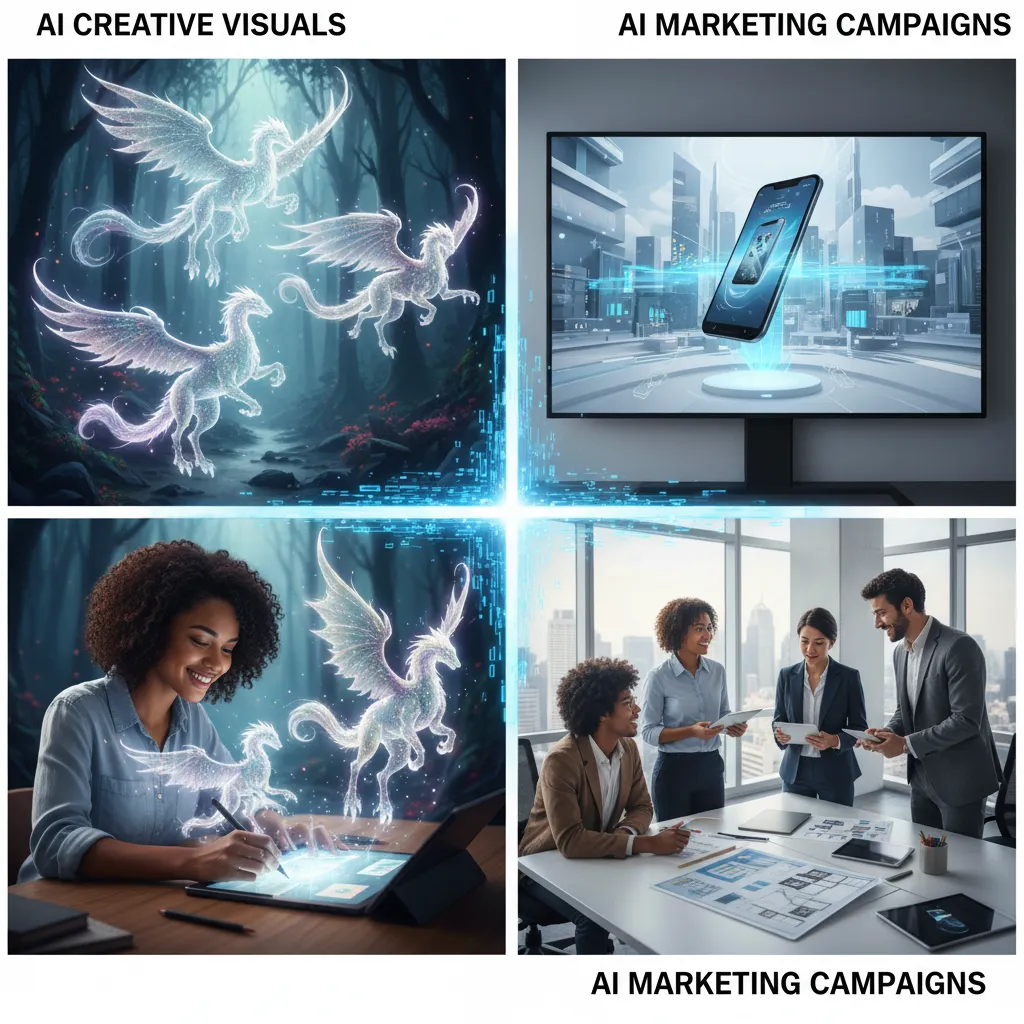
The impact of generative video ai extends far beyond simple novelty clips. It is being integrated into professional workflows across multiple industries, proving itself as a powerful accelerator for both creative and commercial endeavors.
Revolutionizing Film Production and Animation
The independent film industry, in particular, stands to gain massively from the advancements in ai filmmaking.
1. Pre-Visualization and Storyboarding
Filmmakers can use T2V tools to rapidly generate detailed animatics or pre-visualization shots. Instead of costly 3D modeling or lengthy drawing processes, a director can input “A knight stands atop a misty ridge at sunset” and instantly receive a video that sets the mood, composition, and lighting, greatly speeding up pre-production. This capability fundamentally changes ai in film production.
2. AI Animation Generation
Creating traditional animation is notoriously labor-intensive. T2V and associated models can handle complex, continuous motion graphics ai sequences, backgrounds, and character movements based on simple inputs, democratizing access to high-quality visual effects and ai animation generator capabilities for smaller studios.
3. Rapid Iteration and Concept Testing
Need to test 50 different costume concepts or set designs? AI video generator tools can quickly render short clips demonstrating each concept, allowing creative teams to iterate and refine their vision in hours instead of weeks.
[Related: The Rise of Smart Rings: Your Next Wearable Tech Obsession]
Driving AI Video Marketing and Commercials
The commercial sector is where T2V AI currently provides the clearest ROI. The speed and scale of ai video marketing are unprecedented.
1. Dynamic Ad Creation and A/B Testing
Marketing campaigns require massive volumes of content tailored for different platforms and audiences. An AI can take a single product image and generate dozens of short, unique ai generated commercials by simply altering the prompt (e.g., different settings, models, or demographic focuses). This allows for instant A/B testing of visual creatives on platforms like YouTube, Facebook, and TikTok.
2. Localized and Personalized Content
Imagine creating a local commercial for every city you advertise in, instantly swapping out landmarks or local weather conditions. AI video creation makes hyper-localization affordable and scalable, ensuring marketing materials resonate deeply with specific local audiences.
3. Explainer Videos and Training Modules
For corporate trainers or educators, T2V provides a fast, cost-effective way to produce complex explainer videos or training modules. Need a video demonstrating a specific software process or a historical event? Type the script, and the text to video ai generates the visuals.
Enhancing Motion Graphics and Video Editing
Even established post-production professionals are utilizing AI to enhance their workflow, signaling a major shift in the future of video editing.
The technology can act as an ai video editing software assistant, generating complex background plates, environmental effects, or stylistic elements that would traditionally require hours of rendering time and specialized software. Need a time-lapse of traffic in a specific city, but don’t have the footage? A simple prompt handles it. This integration enhances creative possibilities while drastically reducing production overhead.
/image-topic.webp
The Workflow: How to Use Text-to-Video AI Effectively
Mastering text to video ai is less about coding and more about language—specifically, mastering the art of the prompt. Effective T2V usage relies on precision, context, and iterative refinement. If you want to create video from text successfully, focus on these steps.
Mastering the Prompt: The Art of Command
The quality of the output video is directly correlated with the quality of the prompt to video input. Generic or vague prompts result in generic, confusing videos.
1. Specificity is King
Avoid broad strokes. Instead of: “A futuristic city,” try: “A high-angle, cinematic drone shot of a neon-drenched futuristic city street at midnight, bustling with flying vehicles and rainy sidewalks. 8K quality, ultra-detailed.”
Key Prompt Elements:
- Subject: Who or what is the main focus? (e.g., A golden retriever, a rusty spaceship, a historical figure).
- Action: What is the subject doing? (e.g., running through tall grass, taking off, giving a speech).
- Setting: Where and when is it happening? (e.g., on a Martian colony, inside a baroque library, during a foggy autumn morning).
- Style & Aesthetics: Define the visual language. (e.g., hyper-realistic, watercolor painting, stop-motion animation, 1980s VHS grain).
- Technical Details: Specify cinematic parameters. (e.g., dolly zoom, 35mm lens, film noir lighting, shallow depth of field, 4K resolution).
2. Leveraging Negative Prompts
Many ai video generator tools allow for negative prompts—telling the AI what not to include. This is crucial for fixing common artifacts or avoiding undesirable outcomes (e.g., Negative Prompt: blurry, deformed hands, low resolution, artifacts, out of focus).
[Related: Top AI Tools for Content Creation 2024]
Iteration and Control: Techniques for Better Outputs
Even with the best prompts, the first output often requires tuning. Learning how to iterate is crucial for professional use.
- Seed Control: Most T2V models generate a “seed” number for each successful clip. If you generate a clip you mostly like, saving the seed allows you to regenerate the exact same clip while making minor modifications to the text prompt (e.g., keeping the scene identical but changing the subject’s color).
- In-Painting/Out-Painting: Tools like RunwayML offer features to mask specific areas of the video and regenerate only that area, or extend the canvas beyond the original frame. This is a powerful form of ai video editing software built directly into the generation process.
- Video-to-Video Refinement: Start with a low-fidelity draft, then use that draft as the input for a second prompt iteration. This guides the AI toward better coherence and realism, building complexity step by step.
These techniques turn the text to video ai from a magic box into a predictable creative partner, allowing you to harness its immense power for polished, high-quality deliverables.
The Future of Video Editing and Synthetic Generation
The evolution of text to video models is accelerating exponentially. Looking ahead, the implications for content creation and filmmaking are profound, ushering in the next generation of visual media.
Hyper-Realism and Next-Generation Text-to-Video Models
Current models are already highly realistic, but the next phase of synthetic video generation focuses on achieving absolute, indistinguishable fidelity, particularly in complex areas like simulating realistic human emotion, fluid movement in water, or dynamic environmental changes (like realistic destruction or weather).
Future ai video generators will offer unprecedented levels of control, likely allowing users to:
- Define a virtual 3D camera path within the generated scene.
- Manipulate lighting and color grading after generation.
- Instantly swap actors or objects within a generated scene using a single command.
- Generate full, feature-length scenes that maintain narrative continuity and character arcs.
This means the role of the traditional video editor will shift from assembling footage to directing AI, curating outputs, and managing the AI’s creative parameters.
[Related: Metaverse Economy: Web3 Gaming and Digital Riches]
Integrating AI into Traditional Post-Production Workflows
The most significant immediate future impact will be integration. Rather than replacing traditional ai video editing software (like Adobe Premiere or DaVinci Resolve), T2V models will become integrated plugins, serving as powerful tools for filling content gaps.
For example, if an editor needs a five-second transition shot of “a futuristic skyscraper exploding,” they won’t need stock footage or dedicated VFX artists; they will generate it within their editing suite. This integration will make ai for content creators seamless, transforming the post-production pipeline and defining the future of video editing.
Ethical Implications and the Deepfake Challenge
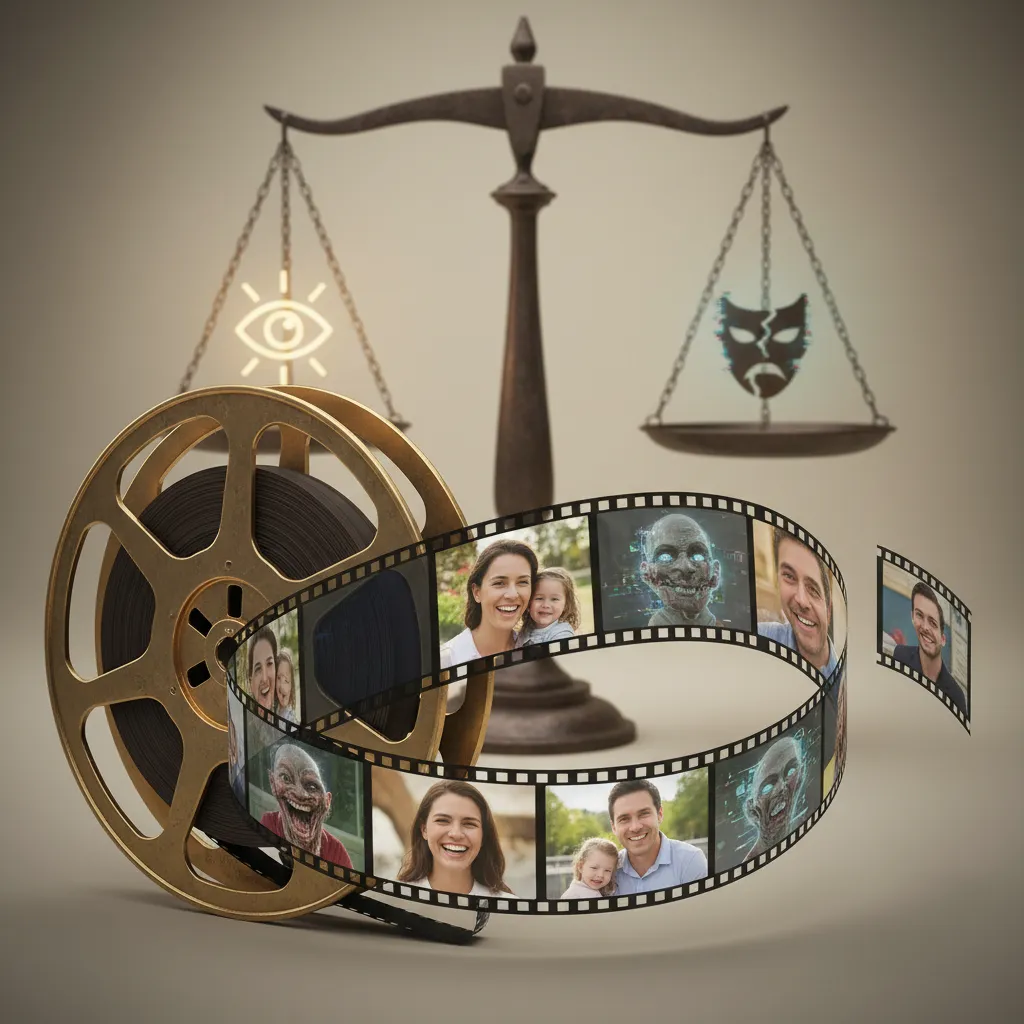
As text to video ai becomes photorealistic, the conversation must pivot to the societal and ethical risks inherent in such powerful technology. The core concern revolves around the malicious application of deepfake technology and the resulting erosion of trust in digital media.
Mitigating Misinformation and Deepfake Technology Risks
The ease with which highly convincing, synthetic video can be generated creates an enormous challenge for journalism, politics, and legal systems. Convincing deepfakes, generated through advanced generative adversarial networks video or diffusion models, can spread misinformation rapidly and credibly.
Industry Responses and Safety Measures:
- Watermarking and Provenance: Leading AI developers are researching and implementing digital watermarking technologies (often invisible to the human eye) that certify whether a video was AI-generated. Tools like OpenAI’s Content Provenance initiative are vital for tracking the origin of digital media.
- Policy and Access Control: Companies are proactively setting strict usage policies that prohibit the creation of pornographic, hateful, or politically manipulative content, particularly targeting identifiable individuals. This responsibility falls on the providers of the text to video models.
- Detection Tools: Simultaneously, researchers are developing better detection tools that can identify subtle, systematic errors or artifacts unique to AI generation, helping platforms flag and remove malicious content.
For professionals and responsible creators, acknowledging and mitigating these risks is paramount. The ethical use of ai video creation ensures the longevity and trust of the medium.
/image-topic.webp
Conclusion: Directing the Future of Content
The emergence of Text-to-Video AI marks a seismic shift in the creative economy. Tools like OpenAI Sora, RunwayML Gen 2, and Pika Labs are not just incremental updates; they represent entirely new production capabilities. They empower the independent creator while challenging established studios to rethink their workflows, proving that high-quality visual storytelling is now accessible through a few lines of text.
Whether you are seeking a free ai video maker to experiment with or looking to fully integrate ai filmmaking into a professional studio, the time to understand and adopt this technology is now. Mastering the prompt, understanding the nuances of the best ai video tools, and approaching the technology ethically will define the successful content creators of the next decade.
The generative video ai revolution is here. Are you ready to type your vision into existence?
FAQs: Text-to-Video AI
Q1. What is the difference between an AI video generator and traditional video editing software?
Traditional video editing software (like Premiere Pro) requires existing footage and allows users to cut, arrange, and modify those pre-recorded clips. An AI video generator (like Runway or Sora) creates entirely new, synthetic footage from scratch based solely on a text description (prompt to video), without needing any pre-existing visual inputs.
Q2. Is Text-to-Video AI free to use?
Some versions of Text-to-Video AI offer free access. Tools like Pika Labs, and some open-source models, provide free tiers or limited credits, making them effective options if you are looking for a text to video generator free service or a free ai video maker. However, professional-grade, high-resolution outputs often require paid subscription plans (e.g., RunwayML Gen 2).
Q3. How long can a text-to-video AI generate a clip for?
The maximum length depends heavily on the model. While early generative video ai tools were limited to a few seconds (3–5 seconds), cutting-edge models like OpenAI Sora have demonstrated the capability to generate cohesive, continuous clips up to 60 seconds long, dramatically increasing the potential for using ai in film production.
Q4. What is ‘deepfake technology’ and how is it related to text-to-video AI?
Deepfake technology refers to highly realistic media (video or audio) generated or manipulated by AI, often to depict real individuals saying or doing things they never did. T2V AI is related because it provides the underlying technology (synthetic video generation using advanced neural networks) that makes creating such highly convincing, though often malicious, content possible. Responsible developers restrict the ability to generate specific likenesses without explicit permission.
Q5. Which tool is currently considered the best Sora AI alternative?
The leading Sora AI alternative currently available to the public is generally considered to be RunwayML Gen 2. Runway offers advanced cinematic controls, a wider range of input options (text, image, video), and continuous updates that maintain its position as a powerhouse in professional ai video creation.
Q6. Can AI video generators create complex motion graphics?
Yes. Tools equipped with strong motion graphics ai capabilities can handle dynamic visual elements, abstract shapes, and stylistic movements based on descriptive text prompts. While traditional motion graphics software still offers granular control, T2V tools can generate complex, stylized motion backgrounds and short graphic sequences rapidly, benefiting ai video marketing efforts.
Q7. Do I need coding knowledge for AI video creation?
No. Modern text to video ai tools are designed to be user-friendly, relying primarily on natural language prompts (the user interface is typically a simple text box). The skill required is prompt engineering—the ability to write clear, detailed, and creative instructions—not coding.
Q8. What is the role of ‘generative adversarial networks video’ in modern T2V?
While diffusion models currently lead the way for high-fidelity outputs, generative adversarial networks video (GANs) were foundational in proving the concept of AI-generated media. GANs use two competing networks to create increasingly realistic outputs. They are still sometimes used in specific applications, such as improving the realism of generated details or in some commercial ai video generator systems focused on speed.