Sustainable Investing: ESG Strategies for a Greener Portfolio

Introduction
In an era defined by increasing awareness of climate change, social inequality, and corporate accountability, the way we invest our money is undergoing a profound transformation. Gone are the days when financial returns were the sole determinant of investment decisions. Today, a growing number of individuals and institutions are turning to sustainable investing, a powerful approach that seeks to generate competitive financial returns while also creating a positive impact on society and the environment. This isn’t just a fleeting trend; it’s a fundamental shift towards conscious capital, where your investments reflect your values.
At the heart of sustainable investing lies the framework of ESG strategies, which stands for Environmental, Social, and Governance. These criteria provide a structured way to evaluate companies based on their performance in areas traditionally overlooked by conventional financial analysis. From a company’s carbon footprint to its labor practices and boardroom diversity, ESG factors offer a holistic view of its sustainability and ethical standing.
This comprehensive guide will demystify sustainable investing and ESG strategies, empowering you to build a green portfolio that not only aligns with your principles but also aims for long-term financial growth. We’ll explore the core concepts, delve into the nuances of E, S, and G, examine various responsible investment strategies, and provide practical steps to help you integrate these principles into your personal finance journey. Whether you’re a seasoned investor or just starting, understanding ESG investing is crucial for navigating the future of ESG investing and contributing to a more sustainable world.
What is Sustainable Investing? Beyond Just Returns
Sustainable investing is an overarching term for investment approaches that consider environmental, social, and corporate governance (ESG) factors alongside financial analysis in the investment decision-making process. It’s about recognizing that a company’s long-term success is intrinsically linked to its impact on the planet and its people. This philosophy moves beyond merely avoiding “bad” companies; it actively seeks out “good” companies that demonstrate strong sustainability practices and ethical operations.
The appeal of sustainable investing stems from a dual objective: generating long-term sustainable investing returns and fostering positive societal and environmental change. It acknowledges that ESG issues can pose significant ESG risks and opportunities for businesses. For example, a company with poor environmental practices might face regulatory fines, reputational damage, or increased operational costs due to resource scarcity. Conversely, a company leading in renewable energy innovation might capitalize on growing market demand and government incentives.
Several related terms often overlap with sustainable investing, each emphasizing a slightly different facet:
- Ethical Investing: Primarily focuses on moral and religious beliefs, often involving negative screening (excluding industries like tobacco, alcohol, or firearms).
- Socially Responsible Investing (SRI): A broader term that often encompasses ethical investing, but also includes positive screening (investing in companies with strong social impact) and shareholder advocacy. SRI aims to align investment decisions with social values.
- Green Finance: Specifically refers to financial products and services designed to support environmental projects and sustainable economic development. This includes green bonds, sustainable mortgages, and environmental impact funds.
- Impact Investing: The most proactive form of sustainable investing, impact investing specifically targets investments that aim to generate measurable, beneficial social or environmental impact alongside a financial return. This is often seen in private markets but is expanding.
- Conscious Investing: A more modern, overarching term that captures the sentiment of making investment decisions with full awareness of their broader implications, blending financial goals with personal values and a desire for positive change.
All these approaches contribute to shifting capital towards a more sustainable and equitable global economy, promoting sustainable development goals (SDGs) investing by funding companies actively working towards these UN-defined objectives.
Decoding ESG: Environmental, Social, and Governance Criteria
The ESG framework provides a structured lens through which investors can evaluate the non-financial performance of companies. It offers a comprehensive way to assess a company’s operations, risks, and opportunities beyond traditional balance sheet analysis. Understanding these three pillars is fundamental to ESG investing.
Environmental (E): Stewarding Our Planet
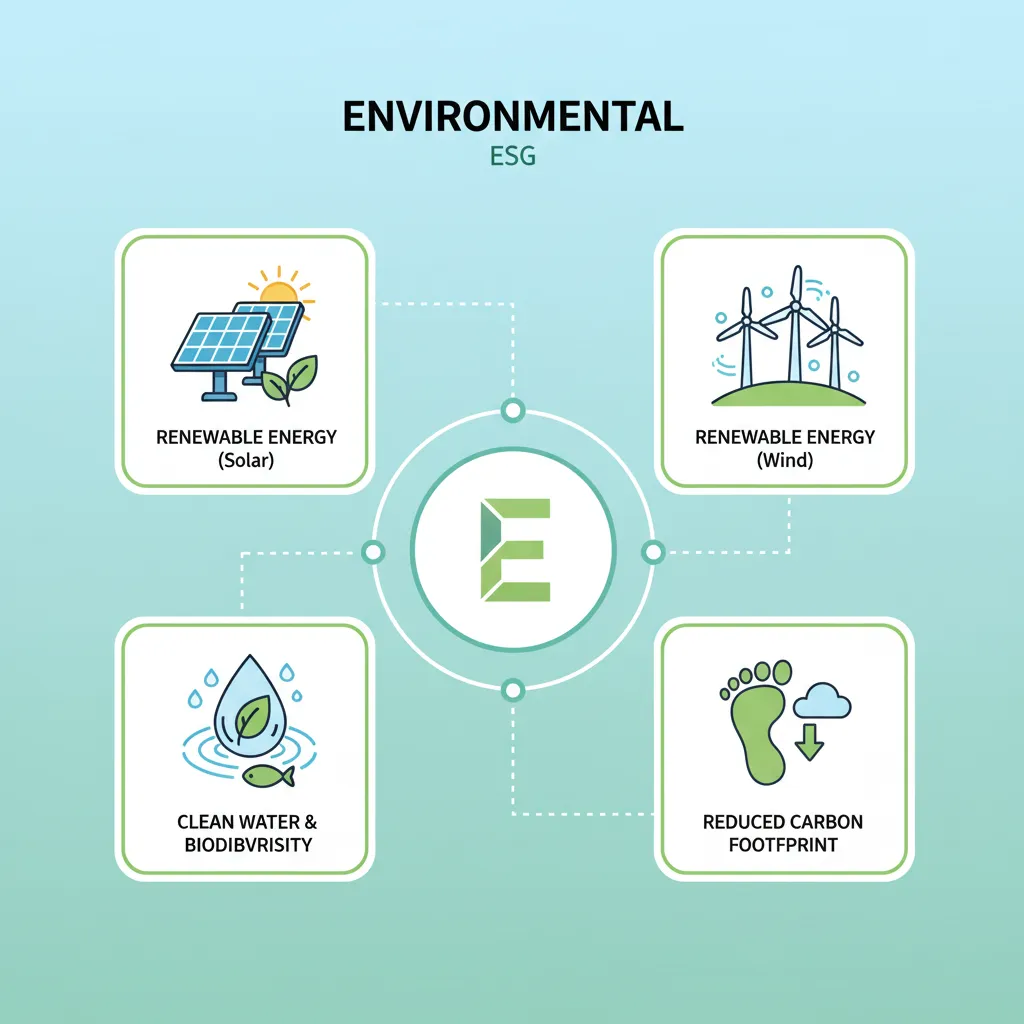
The “E” in ESG focuses on a company’s performance as a steward of the natural environment. This criterion examines a company’s impact on climate change, resource depletion, waste, pollution, and biodiversity. Companies with strong environmental practices are often more resilient, innovative, and prepared for a low-carbon future.
Key considerations under the Environmental pillar include:
- Climate Change: A company’s carbon emissions, energy efficiency, use of renewable energy investments, and strategies for adapting to or mitigating climate change. This also covers disclosure of climate-related financial risks.
- Pollution & Waste: Management of air and water pollution, toxic waste, electronic waste, and efforts to promote circular economy principles (reduce, reuse, recycle).
- Resource Depletion: Sustainable sourcing of raw materials, water usage efficiency, and conservation efforts.
- Biodiversity & Land Use: Impact on ecosystems, deforestation policies, and conservation initiatives.
- Environmental Reporting: Transparency in disclosing environmental data and adherence to environmental regulations.
Environmental investing means supporting companies that are actively working to minimize their ecological footprint and contribute to a healthier planet. This could involve anything from investing in solar power companies to agricultural firms adopting sustainable farming practices.
Social (S): Investing in People and Communities
The “S” in ESG pertains to a company’s relationships with its employees, customers, suppliers, and the communities in which it operates. This pillar assesses how a company manages its human capital and its broader societal impact. A strong social performance often translates to higher employee morale, better customer loyalty, and a more stable operating environment.
Key aspects of the Social pillar include:
- Labor Practices: Employee health and safety, fair wages, benefits, labor relations, diversity and inclusion policies, and opposition to child labor or forced labor.
- Human Rights: Adherence to international human rights standards throughout the supply chain and direct operations.
- Product Safety & Quality: Ensuring products and services are safe, of high quality, and responsibly marketed.
- Customer Satisfaction: Data privacy, ethical marketing practices, and responsiveness to customer needs.
- Community Engagement: Philanthropy, local employment initiatives, and positive contributions to community development.
- Supply Chain Standards: Ensuring suppliers adhere to ethical and sustainable practices.
Social investing prioritizes companies that treat their stakeholders fairly, promote inclusivity, and positively impact society. This could involve investing in companies known for excellent employee benefits, innovative healthcare solutions, or robust community programs.

Governance (G): Upholding Ethical Leadership
The “G” in ESG focuses on a company’s leadership, internal controls, audits, and shareholder rights. It assesses the integrity and effectiveness of a company’s management and board of directors, and how transparent and accountable they are to their shareholders and other stakeholders. Good governance is crucial for ensuring a company operates ethically, efficiently, and in the best long-term interests of all parties.
Key elements of the Governance pillar include:
- Board Structure: Diversity (gender, ethnic, skill set) of the board of directors, independence of board members, and frequency of meetings.
- Executive Compensation: Alignment of executive pay with company performance and long-term sustainability goals, and transparency of compensation practices.
- Shareholder Rights: Equal voting rights for all shareholders, responsiveness to shareholder proposals, and protection of minority shareholder interests.
- Business Ethics: Anti-corruption policies, bribery prevention, transparency in financial reporting, and ethical lobbying practices.
- Audit & Internal Controls: Robust financial controls, independent auditing processes, and risk management systems.
Governance investing supports companies with strong ethical frameworks, transparent operations, and accountable leadership. It’s about recognizing that sound governance mitigates risks, fosters trust, and contributes to sustainable value creation.

The Many Shades of Sustainable Investing: Strategies Explained
The landscape of sustainable investing is diverse, offering various approaches that cater to different investor preferences and impact objectives. These responsible investment strategies allow investors to tailor their portfolios to their specific values and financial goals.
Socially Responsible Investing (SRI)
SRI is one of the earliest forms of sustainable investing. It typically involves screening investments based on ethical and moral criteria. This often means negative screening, where certain industries or companies are excluded from a portfolio due to their involvement in controversial activities (e.g., tobacco, firearms, gambling, fossil fuels). Conversely, positive screening involves actively seeking out companies that demonstrate strong social and environmental performance. Many ethical funds operate using these screening methods.
Impact Investing
Impact investing is a more targeted approach, focusing on investments that specifically aim to generate measurable social or environmental impact alongside a financial return. Unlike broader SRI, impact investments are made with the explicit intention of positive impact, often in specific sectors like affordable housing, clean energy, or sustainable agriculture. These investments can take many forms, including private equity, venture capital, and sometimes publicly traded securities. The emphasis is on tracking and reporting the actual impact achieved.
ESG Integration
ESG integration is perhaps the most widely adopted strategy today, especially among institutional investors. It involves systematically incorporating ESG factors into traditional financial analysis and investment decisions across all asset classes. Rather than simply screening out “bad” companies, ESG integration seeks to understand how ESG performance can affect a company’s financial health, risks, and valuation. This holistic view recognizes ESG factors as material to long-term financial performance. For instance, an analyst might consider a company’s water management practices when evaluating its operational costs or its board diversity when assessing governance risks.
Divestment Strategies
Divestment is the opposite of investment – it involves selling off assets (stocks, bonds, etc.) that are deemed unethical or harmful. Historically, divestment campaigns have targeted industries like apartheid-era South Africa and tobacco. More recently, divestment strategies have gained traction against fossil fuel companies, with universities, pension funds, and philanthropic organizations pulling their investments to reduce their exposure to carbon-intensive industries and pressure companies to transition to cleaner energy. While the direct financial impact can be debated, divestment serves as a powerful symbolic and political tool.
The Role of Green Bonds and Ethical Funds
- Green Bonds: These are fixed-income instruments specifically designed to fund projects that have positive environmental or climate benefits. Examples include renewable energy projects, sustainable waste management, and energy-efficient buildings. Investing in green bonds allows investors to directly finance environmental initiatives while earning a return.
- Sustainable Funds (Ethical Funds): These are professionally managed investment vehicles (mutual funds, ETFs) that invest in companies meeting specific ESG criteria. They offer diversified exposure to sustainable stock market investments, making it easier for individual investors to build a sustainable portfolio without extensive personal research. These funds can range from broad ESG-integrated funds to highly thematic funds focusing on areas like clean water or gender equality.
Why Invest Sustainably? Benefits Beyond Financial Returns
The rationale for sustainable investing extends far beyond altruism. While making a positive impact is a primary driver for many, a growing body of evidence suggests that incorporating ESG factors can also lead to compelling financial advantages and better risk management.
Mitigating ESG Risks
Companies with poor environmental, social, or governance practices face a myriad of risks that can impact their bottom line. Environmental risks include regulatory fines for pollution, physical risks from extreme weather events, and transition risks from policy changes towards a low-carbon economy. Social risks can manifest as labor disputes, consumer boycotts, or supply chain disruptions. Governance risks include fraud, corruption, and mismanagement, which can erode shareholder value. By identifying and avoiding companies with significant ESG risks, investors can potentially safeguard their portfolios from future liabilities and reputational damage.
Long-Term Performance Potential
There’s a persistent misconception that ethical funds performance lags behind conventional investments. However, numerous studies have shown that companies with strong ESG profiles often demonstrate greater operational efficiency, better innovation, and enhanced resilience, which can translate into superior long-term financial performance. These companies tend to be better managed, more forward-thinking, and better prepared for future challenges and opportunities. Investing in companies that are future-proofed against evolving environmental and social challenges positions investors for long-term sustainable investing growth.
Aligning Values with Investments
For many investors, the most compelling reason to embrace conscious investing is the ability to align their financial decisions with their personal values. Knowing that your money is supporting companies working towards solutions for climate change, promoting human rights, or fostering ethical leadership can provide a profound sense of purpose and satisfaction. This personal connection to investments goes beyond financial statements, creating a deeper, more meaningful engagement with your portfolio.
Driving Positive Change
Your investment dollars have power. By directing capital towards companies with strong ESG performance, you are effectively signaling to the market that sustainability matters. This can encourage more companies to adopt responsible practices, innovate cleaner technologies, and improve their social impact, thereby accelerating the transition to a more sustainable global economy. It’s a tangible way to contribute to a greener, more equitable future.

Building Your Greener Portfolio: A Practical Guide
Embarking on your journey to build a green portfolio might seem daunting, but by following a structured approach, you can effectively integrate sustainable practices into your investment strategy.
Define Your Values and Goals
The first step is introspection. What environmental and social issues are most important to you? Are you passionate about climate change investing, renewable energy investments, or perhaps social justice and fair labor practices? Your values will help you prioritize which ESG criteria matter most and guide your investment choices. Also, consider your financial goals: are you investing for retirement, a down payment, or long-term growth? Your time horizon and risk tolerance will influence the types of sustainable assets you choose.
Researching ESG Ratings and Metrics
Once you’ve defined your values, the next step is to research. Many organizations provide ESG ratings for companies, assessing their performance across environmental, social, and governance factors. Reputable sources include MSCI, Sustainalytics, S&P Global, and CDP (for environmental data). These ratings help you identify companies that align with your sustainability preferences. Look beyond just the overall score and delve into the specific criteria to understand a company’s strengths and weaknesses.
Choosing Sustainable Investment Vehicles (Funds, ETFs, Stocks)
You have several options for integrating sustainable investing into your portfolio:
- Sustainable Funds & ETFs: For most individual investors, sustainable funds (mutual funds and Exchange-Traded Funds) are the easiest way to gain diversified exposure. These funds are managed by professionals who select companies based on specific ESG criteria. You can find funds focused on broad ESG integration, specific themes (e.g., clean energy, water), or impact objectives.
- Individual Stocks: If you prefer to pick individual companies, you can research their ESG performance directly using company reports, sustainability reports, and third-party ratings. This allows for highly personalized control but requires more in-depth research.
- Green Bonds: As mentioned, green bonds are an excellent way to directly finance environmentally beneficial projects.
- Robo-Advisors: Many robo-advisors now offer ESG-focused portfolios, simplifying the process by automatically allocating your investments into diversified sustainable funds based on your risk profile.
Active vs. Passive Sustainable Investing
Just like conventional investing, you can choose between active and passive approaches in the sustainable space:
- Active Sustainable Investing: This involves fund managers actively selecting securities based on their ESG research and financial analysis. The aim is to outperform a benchmark by making informed, ESG-driven choices.
- Passive Sustainable Investing: This typically involves investing in an ESG index fund or ETF that tracks a sustainable index. These indexes are constructed to include companies with strong ESG profiles or exclude those with poor ones. Passive investing often has lower fees and can provide broad market exposure while maintaining ESG alignment.
The choice depends on your preference for active management vs. lower costs and market-tracking performance.
Monitoring and Rebalancing
Sustainable investing is not a “set it and forget it” strategy. Companies’ ESG performance can change, and new sustainability issues may emerge. Regularly monitor your investments to ensure they still align with your values and financial goals. Rebalance your portfolio periodically to maintain your desired asset allocation and adapt to any shifts in the sustainable investing landscape.
[Related: Sustainable Travel: Ultimate Guide Eco-Friendly Adventures 2024]
The Landscape of Sustainable Investing: Trends and Future Outlook
The field of sustainable investing is dynamic, continually evolving in response to global challenges, technological advancements, and shifting investor demands. Understanding current sustainable investment trends and the future of ESG investing is key to staying ahead.
Growing Mainstream Adoption
What was once a niche market is rapidly becoming mainstream. Major financial institutions, pension funds, and sovereign wealth funds are increasingly integrating ESG factors into their investment processes. This surge in institutional interest validates the materiality of ESG issues and drives innovation in sustainable financial products. Individual investors are also demanding more sustainable options, prompting brokerage firms and fund providers to expand their offerings.
Regulatory Developments and Standardization
Governments and regulatory bodies worldwide are recognizing the importance of sustainable finance. We are seeing a proliferation of new regulations aimed at improving ESG disclosure, preventing greenwashing, and encouraging sustainable practices. Frameworks like the EU’s Sustainable Finance Disclosure Regulation (SFDR) and taxonomies for sustainable activities are pushing for greater transparency and standardization in how “green” or “sustainable” investments are defined and reported. This regulatory push will continue to shape the market, providing clearer guidelines for investors and companies alike.
Focus on the Sustainable Development Goals (SDGs)
The United Nations’ 17 Sustainable Development Goals (SDGs) provide a universal framework for addressing global challenges such as poverty, hunger, inequality, and climate change. Many investors are now aligning their portfolios with these goals, focusing on companies and funds that actively contribute to specific SDGs. This approach to sustainable development goals (SDGs) investing offers a measurable way to link investment capital directly to global impact objectives.
Technological Advancements and Data Analytics
Technology, particularly artificial intelligence and big data analytics, is revolutionizing how ESG data is collected, analyzed, and integrated. AI can process vast amounts of unstructured data – from news articles and social media to company reports – to provide more nuanced and real-time insights into a company’s ESG performance. This enhances the accuracy of ESG ratings and allows for more sophisticated ESG risks and opportunities analysis, making sustainable investing more data-driven and efficient.
Blurring Lines Between Sustainable and Traditional Investing
As ESG factors become increasingly material to financial performance, the distinction between “sustainable” and “traditional” investing is starting to blur. What were once considered non-financial factors are now understood as critical drivers of long-term value. This integration suggests that in the future, all investing may inherently incorporate ESG considerations as standard practice, moving away from it being a separate category. The emphasis will shift towards how well companies manage these factors rather than if they consider them at all.
Conclusion
Sustainable investing, powered by robust ESG strategies, represents more than just an investment trend; it’s a fundamental paradigm shift towards a more responsible and resilient financial future. By integrating Environmental, Social, and Governance factors into your investment decisions, you gain the power to build a green portfolio that not only seeks competitive financial returns but also actively contributes to a healthier planet and a more equitable society.
From understanding the core principles of ESG investing and deciphering ESG criteria to exploring various responsible investment strategies like impact investing and green bonds, you now have the knowledge to navigate this evolving landscape. We’ve seen how considering ESG risks and opportunities can lead to stronger long-term sustainable investing performance and how aligning your investments with your values through conscious investing brings profound personal satisfaction.
As the future of ESG investing continues to unfold with growing mainstream adoption, clearer regulations, and technological advancements, the opportunity to make a difference with your money has never been greater. Take the first step today: define your values, research companies, and start building a sustainable portfolio that reflects the world you wish to see. Your investments can be a powerful force for good, proving that purpose and profit can indeed go hand-in-hand.
FAQs
Q1. What is sustainable investing?
Sustainable investing is an investment approach that considers environmental, social, and corporate governance (ESG) factors alongside traditional financial analysis to generate competitive returns and create a positive societal and environmental impact. It’s about aligning your investments with your values.
Q2. How do ESG criteria influence investment decisions?
ESG criteria provide a framework to evaluate a company’s sustainability and ethical impact. Investors use these factors to identify companies with strong environmental management, positive social practices, and ethical governance. This helps assess long-term risks and opportunities that traditional financial analysis might overlook, informing decisions on which companies to include or exclude from a sustainable portfolio.
Q3. Is sustainable investing profitable?
Yes, numerous studies suggest that companies with strong ESG performance often demonstrate better operational efficiency, lower risk, and greater innovation, which can lead to competitive or even superior financial returns over the long term. While ethical funds performance can vary, the overall trend points towards the financial materiality of ESG factors.
Q4. What is the difference between SRI, ESG, and Impact Investing?
SRI (Socially Responsible Investing) typically involves screening investments based on ethical values, often excluding certain industries. ESG (Environmental, Social, Governance) investing systematically integrates ESG factors into financial analysis to identify risks and opportunities. Impact Investing is the most proactive, specifically targeting investments that aim for measurable social or environmental impact alongside financial returns.
Q5. How can I start building a green portfolio?
To build a green portfolio, begin by defining your personal values and financial goals. Then, research ESG ratings for companies and funds that align with those values. Consider using sustainable funds (mutual funds or ETFs) for diversified exposure, or choose individual stocks if you prefer direct investment. Many robo-advisors also offer ESG-focused portfolios.
Q6. What are green bonds?
Green bonds are fixed-income securities issued to finance projects that have positive environmental or climate benefits. Examples include projects related to renewable energy, energy efficiency, sustainable waste management, and conservation. They allow investors to directly support environmental initiatives while earning a return.
Q7. Do ESG investments help combat climate change?
Yes, climate change investing through ESG strategies plays a crucial role. By directing capital towards companies that are actively reducing carbon emissions, investing in renewable energy investments, and developing sustainable solutions, investors can contribute to mitigating climate change and supporting the transition to a low-carbon economy. Divestment from fossil fuel companies is another strategy some employ.
Q8. What are the Sustainable Development Goals (SDGs) and how do they relate to investing?
The Sustainable Development Goals (SDGs) are 17 global goals set by the United Nations for 2030, covering areas like poverty, hunger, health, education, clean energy, and climate action. Many investors are now engaging in sustainable development goals (SDGs) investing by choosing companies and funds whose activities directly contribute to achieving these global targets, providing a framework for measurable impact.