Spatial Computing Unveiled: The Next Frontier of Immersive Technology

Introduction
Imagine a world where the digital realm seamlessly merges with our physical environment, where data and interactive experiences aren’t confined to screens but float around us, responsive to our gestures and movements. This isn’t a scene from a sci-fi movie; it’s the burgeoning reality of spatial computing. As we stand on the precipice of a new technological era, immersive technology is no longer a niche concept but a powerful force poised to redefine how we interact with information, each other, and the world itself.
Spatial computing represents a paradigm shift in next-gen computing, moving beyond flat-screen interfaces to create dynamic, three-dimensional digital environments that understand and respond to the real world. It’s the underlying framework for experiences powered by augmented reality (AR), virtual reality (VR), and mixed reality (MR) – collectively known as extended reality (XR technology). From transforming enterprise operations and revolutionizing entertainment to enabling new forms of social interaction, the spatial computing future promises a profound impact on nearly every facet of our lives.
In this comprehensive guide, we’ll unveil the intricacies of spatial computing, exploring its core components, diverse applications, and the incredible benefits it offers. We’ll delve into the nuances of AR, VR, and MR, examine compelling spatial computing use cases in various industries, and peek into the exciting trends shaping this immersive tech frontier. Prepare to embark on a journey that reveals how real-world spatial computing is not just a concept, but a tangible revolution in the making.
What Exactly is Spatial Computing?
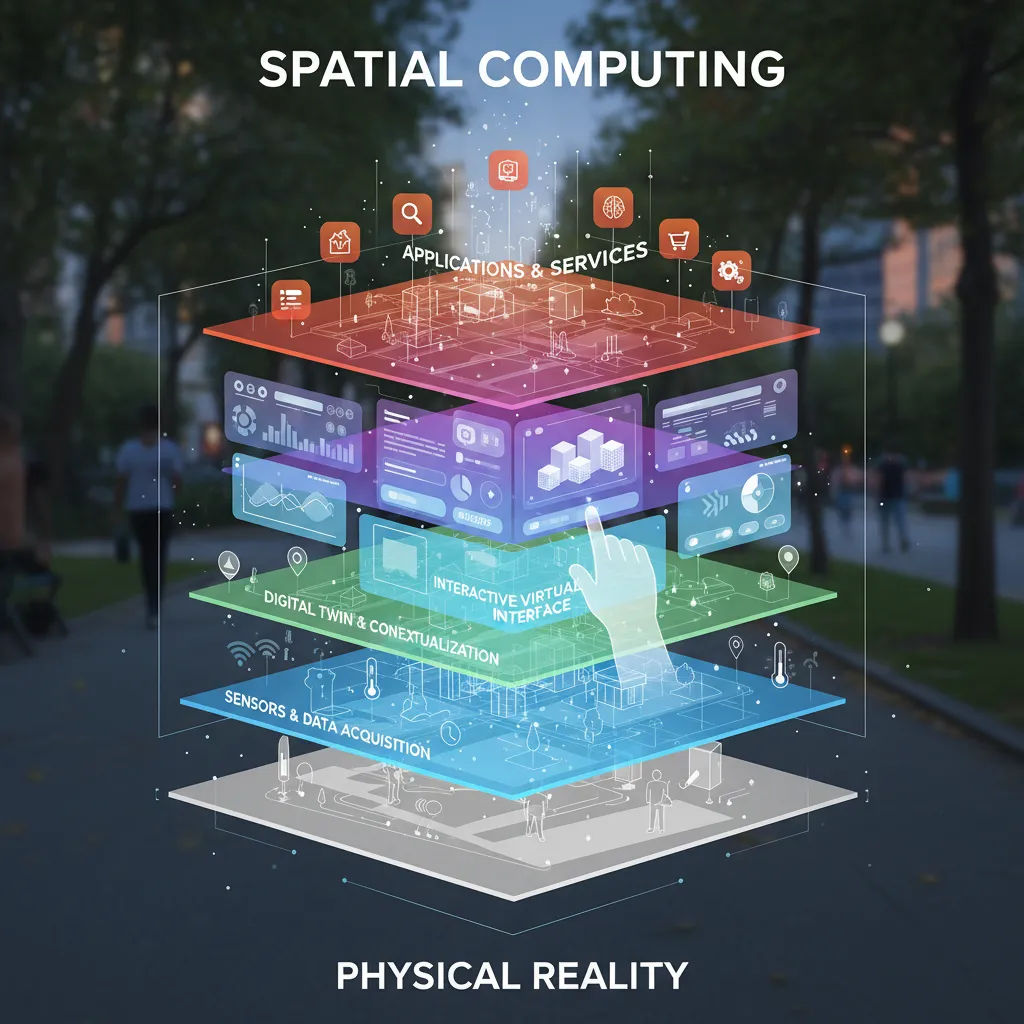
At its heart, spatial computing is a multidisciplinary field that empowers computers to understand and interact with the physical world in three dimensions. Unlike traditional computing, which often treats information as distinct from our physical surroundings, spatial computing aims to integrate digital content directly into our environment. It involves a sophisticated interplay of hardware, software, and artificial intelligence to perceive, comprehend, and augment physical spaces.
Think of it as granting computers spatial awareness – the ability to map, track, and understand the geometry, semantics, and context of real-world objects and environments. This understanding allows digital information to be anchored and manipulated within that physical space, creating truly interactive and immersive experiences. It’s the foundation upon which the industrial metaverse and sophisticated digital twins are built.
Key elements of spatial computing include:
- Sensing and Perception: Devices equipped with cameras, depth sensors, and other inputs gather data about the environment, including 3D geometry, light, and object recognition.
- Spatial Mapping: This data is processed to create a detailed, real-time 3D map of the surroundings, enabling the system to understand where it is and where objects are located.
- Contextual Awareness: Beyond just geometry, spatial computing systems strive to understand the meaning of objects and spaces, inferring user intent and environmental context.
- Interaction and Manipulation: Users can interact with digital content seamlessly integrated into the physical world, often through gestures, gaze, or voice commands.
This advanced understanding allows for the creation of truly contextual and personalized immersive experiences, bridging the gap between our physical reality and the digital one.
The Pillars of Immersive Technology: AR, VR, and MR
To truly grasp spatial computing, it’s essential to understand its foundational technologies: Augmented Reality (AR), Virtual Reality (VR), and Mixed Reality (MR). While often grouped under the umbrella of extended reality (XR technology), each offers a distinct level of immersion and interaction.
Augmented Reality (AR): Enhancing Our World
Augmented reality (AR) overlays digital information onto the real world. Unlike VR, AR doesn’t transport you to an entirely different environment; instead, it enhances your current view with computer-generated elements. This could be anything from displaying directions on your car’s windshield to seeing virtual furniture in your living room before you buy it.
AR experiences are typically delivered through smartphones, tablets, or specialized augmented reality glasses. The key characteristic of AR is that the user remains present in their physical environment while digital content is anchored and interacts with real-world objects.
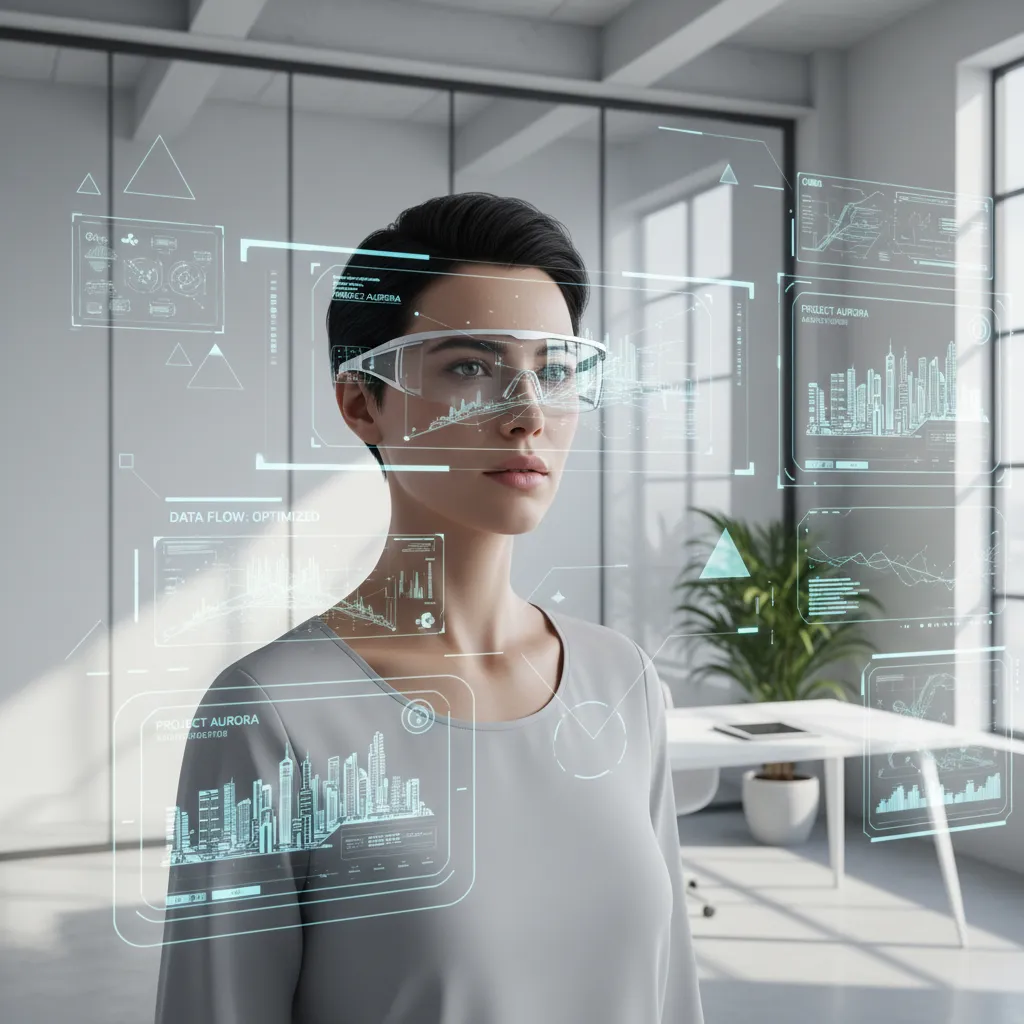
AR VR applications in this space are rapidly expanding, particularly in consumer markets with apps like Pokémon GO or IKEA Place. For businesses, enterprise AR VR solutions are transforming field service, remote assistance, and architectural visualization. AR provides practical, on-the-spot information without isolating the user from their surroundings.
Virtual Reality (VR): A Fully Immersive Digital Realm
Virtual reality (VR), in contrast, completely immerses users in a simulated digital environment. When you put on a virtual reality headset, your senses are largely cut off from the physical world, transporting you to a completely different, computer-generated space. This can range from fantastical gaming worlds to realistic training simulations.
VR creates a profound sense of presence, making users feel as if they are truly “there.” The level of immersion depends on the headset’s display quality, field of view, and tracking capabilities. Modern VR training platforms leverage this immersion to offer realistic and safe learning environments, such as surgical simulations or flight training.
While VR has been a staple in gaming for years, its potential extends far beyond entertainment. It’s revolutionizing education, therapy, and design, offering unparalleled opportunities for exploration and hands-on experience without physical constraints.
Mixed Reality (MR): The Best of Both Worlds
Mixed reality (MR) represents a more advanced form of immersive technology that seamlessly blends physical and digital worlds, allowing for real-time interaction between real and virtual objects. Unlike AR, where digital content is simply overlaid, MR allows digital objects to “understand” and react to the physical environment, and vice-versa.
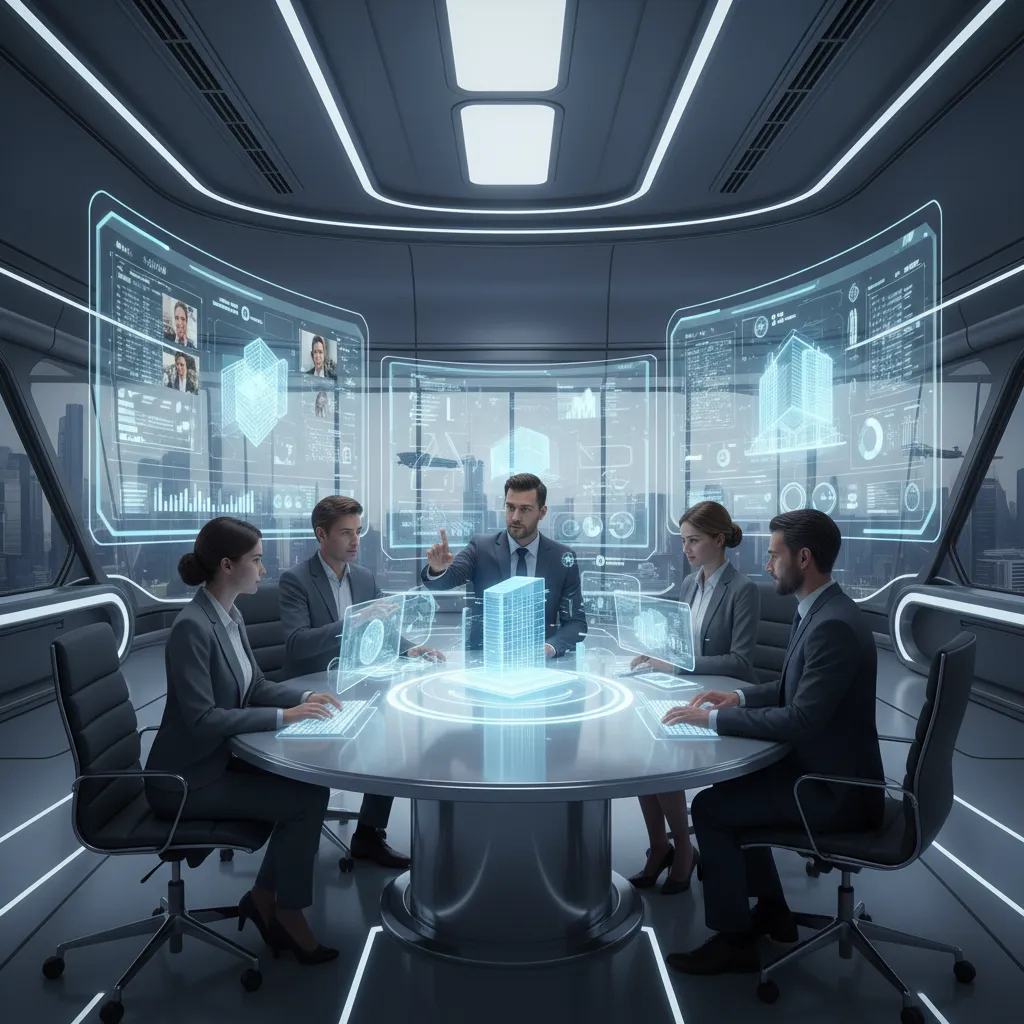
Imagine a virtual blueprint laid out on a real conference table, which multiple users can manipulate and discuss as if it were physically present. Or a digital avatar that can walk behind a real chair in your room. This level of interaction requires sophisticated spatial mapping and object recognition, making mixed reality applications incredibly powerful for collaboration, design, and complex problem-solving.
Devices like Microsoft HoloLens are pioneers in the MR space, demonstrating how digital content can persist in a physical environment and be interacted with through natural gestures. MR is a true manifestation of metaverse spatial computing, where digital and physical realities intermingle dynamically.
Spatial Computing Use Cases: Transforming Industries
The transformative power of spatial computing is evident across a multitude of industries, driving innovation and unlocking unprecedented efficiencies. Here’s a glimpse into some compelling spatial computing use cases:
1. Enterprise & Industrial Applications
Enterprise AR VR solutions are reshaping how businesses operate, from manufacturing floors to design studios.
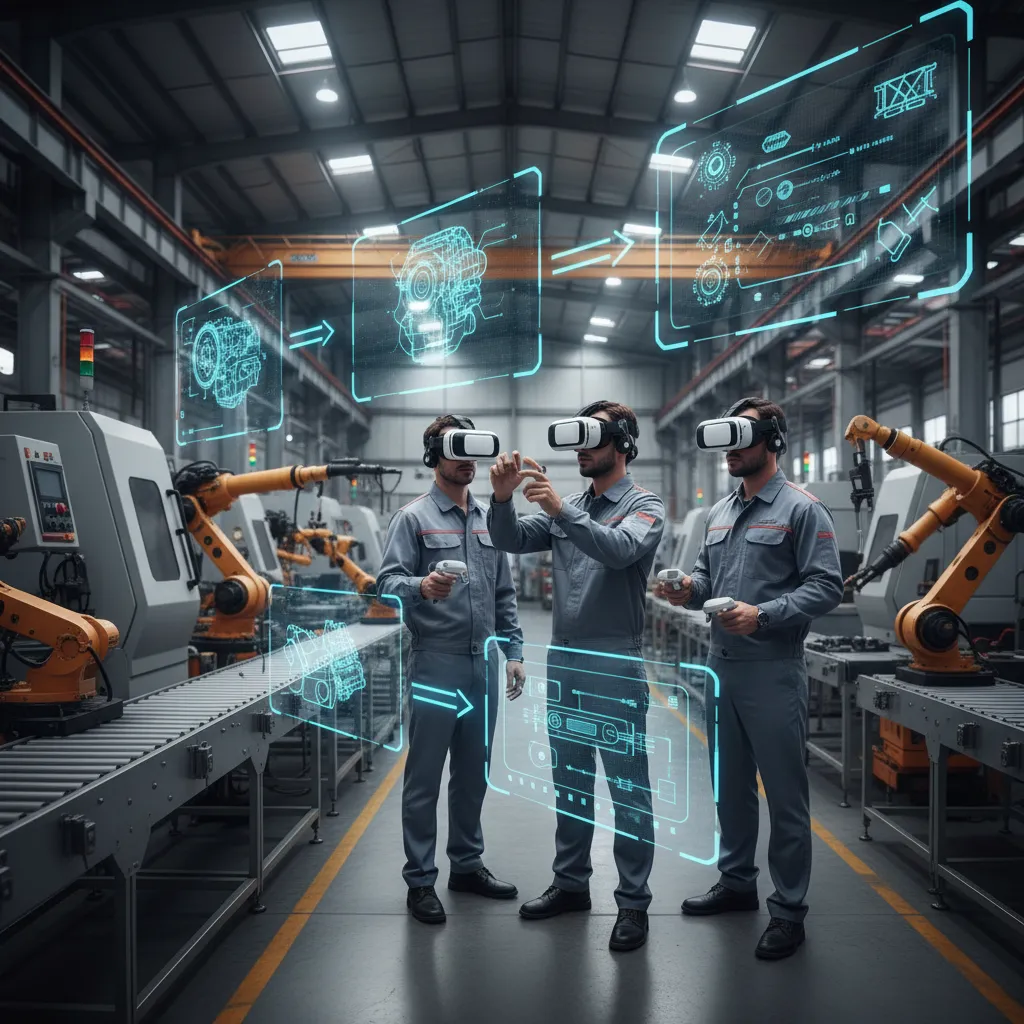
- Manufacturing & Maintenance: Technicians can use AR glasses to overlay digital instructions onto machinery, facilitating complex repairs and maintenance. This reduces errors, improves efficiency, and minimizes downtime. Industrial metaverse concepts leverage spatial computing to create digital twins of entire factories, enabling simulations and predictive maintenance.
- Design & Prototyping: Architects and engineers use AR/VR to visualize designs in 3D, collaborate on models, and iterate faster. This accelerates product development cycles and reduces the need for expensive physical prototypes.
- Logistics & Warehousing: AR can guide warehouse workers to the exact location of items, optimize picking routes, and display real-time inventory data, dramatically improving operational efficiency.
2. Training & Education
VR training is proving to be a highly effective method for skill development, offering immersive and safe learning environments.
- Medical Training: Surgeons can practice complex procedures in a risk-free VR environment, improving proficiency and reducing patient risk.
- Vocational Skills: From operating heavy machinery to emergency response simulations, VR provides realistic hands-on experience without the need for expensive equipment or dangerous real-world scenarios.
- Higher Education: Students can explore historical sites, dissect virtual organs, or conduct experiments in a virtual lab, enhancing engagement and comprehension.
[Related: The Future is Now: AI Revolutionizing Personalized Learning & Education]
3. Healthcare
The healthcare sector is seeing significant advancements through immersive tech.
- Surgery Planning: Surgeons use AR/MR to superimpose patient scans onto their bodies during operations, providing a “x-ray vision” that enhances precision.
- Rehabilitation: VR-based therapies can help patients recover from injuries or strokes by engaging them in interactive exercises in motivating virtual environments.
- Telemedicine: Remote consultations can be enhanced with AR, allowing doctors to guide patients through self-examinations or procedures with visual overlays.
[Related: AI Revolutionizing Healthcare: Innovations & Future Trends]
4. Retail & E-commerce
Consumer spatial computing is transforming the shopping experience.
- Virtual Try-on: AR apps allow customers to virtually try on clothes, glasses, or makeup, reducing returns and enhancing confidence in online purchases.
- Product Visualization: Customers can place virtual furniture or appliances in their homes to see how they fit and look before buying.
- Enhanced Shopping Experiences: AR can provide interactive product information in physical stores, guiding shoppers and offering personalized recommendations.
5. Entertainment & Gaming
While perhaps the most recognized application, AR gaming and VR entertainment continue to push boundaries.
- Immersive Games: VR offers unparalleled immersion in gaming, transporting players into rich, interactive worlds.
- Location-Based Experiences: AR games that blend digital content with real-world locations provide unique and engaging experiences.
- Virtual Concerts & Events: Spatial computing enables fully immersive virtual events where participants can interact with each other and the performers.
6. Collaboration & Communication
The ability to create shared virtual workspaces is a game-changer for remote teams and global collaboration.
- Virtual Meetings: Instead of flat video calls, colleagues can meet as avatars in 3D mixed reality applications, interacting with virtual whiteboards, models, and presentations as if they were in the same room.
- Remote Assistance: Experts can guide on-site personnel through complex tasks by annotating the real world with AR overlays, providing clear instructions and visual aids.
- Design Reviews: Teams can collaboratively review 3D designs in a shared virtual space, making real-time adjustments and discussions possible regardless of physical location.
The Future of Spatial Computing: Trends and Outlook
The journey of spatial computing is just beginning, and the spatial computing future is brimming with exciting possibilities and evolving trends. This next-gen computing paradigm is set to become an integral part of our daily lives, influencing everything from how we work to how we socialize.
1. Hardware Advancements: Lighter, More Powerful, and Seamless
The evolution of spatial computing hardware is critical. We can expect:
- Lighter and More Stylish AR Glasses: Current AR headsets are often bulky. Future designs will be sleek, discreet, and resemble regular eyeglasses, making augmented reality glasses a common accessory.
- More Affordable and Accessible VR Headsets: As manufacturing processes improve and competition increases, virtual reality headsets will become more affordable, broadening their appeal to consumer spatial computing.
- Integrated Sensors and AI: Devices will feature more sophisticated sensors for environmental understanding and powerful onboard AI for real-time processing, reducing reliance on tethered devices.
- Haptic Feedback and Full-Body Tracking: Enhanced haptic feedback will provide more realistic tactile sensations, while full-body tracking will enable more natural and expressive interactions within immersive experiences.
2. Software Innovations: Smarter, More Intuitive, and Interconnected
The spatial computing software ecosystem will continue to mature, focusing on:
- Ubiquitous Spatial Mapping: Continuous scanning and mapping of environments will create persistent digital layers, allowing virtual objects to remain anchored and interactive over time and across devices.
- AI-Powered Contextual Understanding: AI will play an even larger role in interpreting user intent, anticipating needs, and dynamically adjusting experiences based on environmental cues. This will make real-world spatial computing truly intelligent.
- Interoperable Platforms and Standards: The development of open standards will enable seamless transitions of digital assets and experiences across different devices and platforms, fostering a more connected metaverse spatial computing ecosystem.
- No-Code/Low-Code Development Tools: Making spatial computing accessible to a wider range of creators will accelerate innovation, allowing more individuals and businesses to build mixed reality applications.
3. The Rise of the Industrial Metaverse and Digital Twins
The concept of the industrial metaverse will move from theoretical to practical implementation. This involves creating persistent, interconnected virtual environments that mirror physical industrial spaces, facilitating:
- Advanced Simulation: Companies can simulate complex processes, test new layouts, and predict maintenance needs with unprecedented accuracy.
- Remote Operations: Workers can operate machinery or manage facilities from remote locations using digital twins and immersive interfaces.
- Data Visualization: Real-time data from physical assets can be overlaid onto their digital twins, providing a comprehensive and intuitive overview of operations.
[Related: Unlock Peak Productivity: 10 AI Tools Revolutionizing Your Workday]
4. Enhanced Human-Computer Interaction
The way we interact with computers will undergo a fundamental shift.
- Natural User Interfaces (NUIs): Gesture control, voice commands, and eye tracking will become the primary modes of interaction, replacing traditional keyboards and mice for many applications.
- Emotional AI: Systems will become more adept at understanding human emotions and responding accordingly, leading to more empathetic and personalized immersive experiences.
- Brain-Computer Interfaces (BCIs): While nascent, BCIs hold the long-term potential to allow direct thought-based interaction with spatial computing environments, blurring the lines between mind and machine.
5. Ethical Considerations and Societal Impact
As spatial computing becomes more pervasive, crucial discussions around privacy, data security, digital ownership, and the potential for digital divides will intensify. Ensuring equitable access and responsible development will be paramount to realizing the full positive potential of this future of computing.
Benefits of Embracing Spatial Computing
The widespread adoption of spatial computing for business and consumers alike is driven by a compelling array of benefits:
1. Enhanced Productivity and Efficiency
By bringing digital information directly into the physical workspace, spatial computing minimizes context switching, reduces errors, and streamlines workflows. Workers can access relevant data, visualize complex models, and receive real-time guidance without needing to look away from their tasks. This directly translates to increased productivity and operational efficiency across industries.
2. Improved Decision-Making
Immersive experiences allow for better data visualization and analysis in 3D. Architects can walk through virtual buildings, engineers can interact with complex prototypes, and doctors can view patient data in a spatially organized manner. This enhanced understanding leads to more informed and accurate decision-making.
3. Richer Learning and Training Experiences
The immersive nature of VR and AR provides highly effective learning environments. Trainees can gain hands-on experience in simulated scenarios that would be too dangerous, expensive, or impractical in the real world. This leads to faster skill acquisition, higher retention rates, and reduced training costs, especially for VR training programs.
4. Unprecedented Collaboration
Virtual workspaces and mixed reality applications foster unparalleled collaboration among geographically dispersed teams. Colleagues can interact with shared digital content as if they were in the same room, fostering better communication, shared understanding, and accelerated project timelines.
5. New Business Models and Revenue Streams
Spatial computing opens up entirely new avenues for innovation and economic growth. From AR gaming and virtual tourism to digital twin services and metaverse spatial computing platforms, businesses can create novel products, services, and experiences that were previously impossible.
6. Elevated Customer Engagement
For consumers, spatial computing offers more engaging and personalized experiences. From virtual try-ons in retail to interactive museum exhibits powered by augmented reality glasses, businesses can connect with their customers in novel and memorable ways, enhancing satisfaction and loyalty.
Challenges and Considerations
While the promise of spatial computing is vast, its widespread adoption also comes with challenges that need to be addressed:
1. Hardware Limitations and Cost
Current spatial computing hardware, especially high-end AR/MR devices, can be expensive and somewhat bulky. For mass consumer spatial computing adoption, devices need to become more affordable, lighter, and aesthetically pleasing. Battery life and processing power also remain key areas for improvement.
2. Content Creation and Development
Creating compelling immersive experiences and mixed reality applications requires specialized skills and tools. The development ecosystem is still maturing, and the cost and complexity of producing high-quality spatial content can be a barrier for many organizations. This is where advancements in spatial computing software and developer tools become crucial.
3. Data Privacy and Security
As spatial computing systems continuously map and understand our physical environments and track our interactions, concerns around data privacy and security intensify. Robust frameworks and ethical guidelines are essential to ensure user trust and protect sensitive information captured by real-world spatial computing devices.
4. User Comfort and Adoption
Prolonged use of some VR headsets can lead to motion sickness or discomfort for some users. Ensuring comfort, intuitiveness, and ease of use is vital for widespread adoption, particularly in enterprise AR VR scenarios where continuous use is expected. Educating users on the benefits and proper use of the technology is also critical.
5. Interoperability and Standards
The lack of universal standards for spatial data, content formats, and platform interoperability can hinder seamless experiences across different devices and ecosystems. Establishing open standards will be key to fostering a truly interconnected and expansive spatial computing future.
6. Digital Divide and Accessibility
There’s a risk that the benefits of spatial computing could exacerbate the digital divide if access to the technology, skills, and infrastructure is not equitably distributed. Ensuring accessibility for diverse user groups, including those with disabilities, must be a priority in the development of next-gen computing.
Addressing these challenges through continued innovation, collaborative development, and thoughtful regulation will be essential for spatial computing to fully realize its potential and become a truly transformative force in society.
Conclusion
Spatial computing is not merely an incremental technological advancement; it represents a fundamental shift in how humans and computers will interact. By seamlessly merging digital information with our physical world, this immersive tech is unlocking unprecedented possibilities across industries, from revolutionizing enterprise AR VR and VR training to transforming consumer spatial computing experiences.
We’ve explored how augmented reality glasses, virtual reality headsets, and advanced mixed reality applications are the conduits through which these immersive experiences are delivered. From creating sophisticated digital twins in the industrial metaverse to enabling virtual workspaces and thrilling AR gaming, the spatial computing use cases are as diverse as they are impactful.
The spatial computing future promises a world where information is always contextually relevant, interactions are intuitive, and our digital and physical realities are inextricably linked. While challenges related to spatial computing hardware, spatial computing software, privacy, and user adoption remain, the rapid pace of innovation suggests that these hurdles will be overcome.
As we move further into this era of next-gen computing, understanding and embracing spatial computing will be crucial for businesses and individuals alike. It’s time to look beyond the screen and step into a world where information truly exists all around us, waiting to be unveiled. The future of computing is spatial, and it’s more immersive than we could have ever imagined.
FAQs
Q1. What is spatial computing?
Spatial computing is a multidisciplinary field that enables computers to understand, interact with, and augment the physical world in three dimensions. It integrates digital content into our physical environment, allowing users to interact with virtual objects and data as if they were physically present, forming the backbone for AR, VR, and MR experiences.
Q2. How does spatial computing differ from traditional computing?
Traditional computing primarily interacts with data on 2D screens. Spatial computing, in contrast, understands the 3D geometry and context of the real world, allowing digital information to be anchored within physical space. This creates interactive and immersive experiences that blend the digital and physical realms, moving beyond mouse-and-keyboard interactions to gestures, gaze, and voice.
Q3. What are the key technologies that make up spatial computing?
Spatial computing encompasses several key immersive technologies, primarily Augmented Reality (AR), Virtual Reality (VR), and Mixed Reality (MR), collectively known as Extended Reality (XR). AR overlays digital content onto the real world, VR fully immerses users in a digital environment, and MR seamlessly blends digital and physical worlds, allowing for real-time interaction between them.
Q4. What are some real-world applications of spatial computing?
Spatial computing has diverse applications across many sectors. In enterprise, it’s used for industrial training (VR training), remote assistance (AR), and design visualization. For consumers, it powers AR gaming, virtual try-on experiences, and immersive entertainment. Healthcare utilizes it for surgical planning and rehabilitation, while education benefits from interactive virtual labs.
Q5. What is the “industrial metaverse” in relation to spatial computing?
The industrial metaverse refers to a persistent, interconnected virtual environment that mirrors physical industrial spaces and operations through spatial computing. It uses digital twins, AR, and VR to enable advanced simulations, remote operations, predictive maintenance, and collaborative design within manufacturing, logistics, and other industrial sectors, optimizing efficiency and innovation.
Q6. Will spatial computing replace traditional screens and devices?
While spatial computing aims to integrate digital information directly into our environment, it’s more likely to augment and complement traditional screens and devices rather than entirely replace them in the near future. For many tasks, a flat screen will remain the most practical interface. However, for immersive experiences, collaboration, and contextual data access, spatial computing offers superior alternatives that will become increasingly prevalent.
Q7. What hardware is used for spatial computing?
Spatial computing relies on a range of hardware, including specialized augmented reality glasses, virtual reality headsets, and mixed reality devices (like the Microsoft HoloLens). These devices incorporate various sensors (cameras, depth sensors, IMUs) to perceive the environment, powerful processors for real-time rendering, and display technologies to present digital content.
Q8. What are the main benefits of spatial computing for businesses?
For businesses, spatial computing offers significant benefits, including enhanced productivity and efficiency through guided workflows and remote assistance, improved decision-making with 3D data visualization, richer training experiences, unprecedented collaboration opportunities for remote teams, and the creation of new business models and revenue streams through innovative products and services.