Smart Rings: The Future of Wearable Tech for Health & Productivity
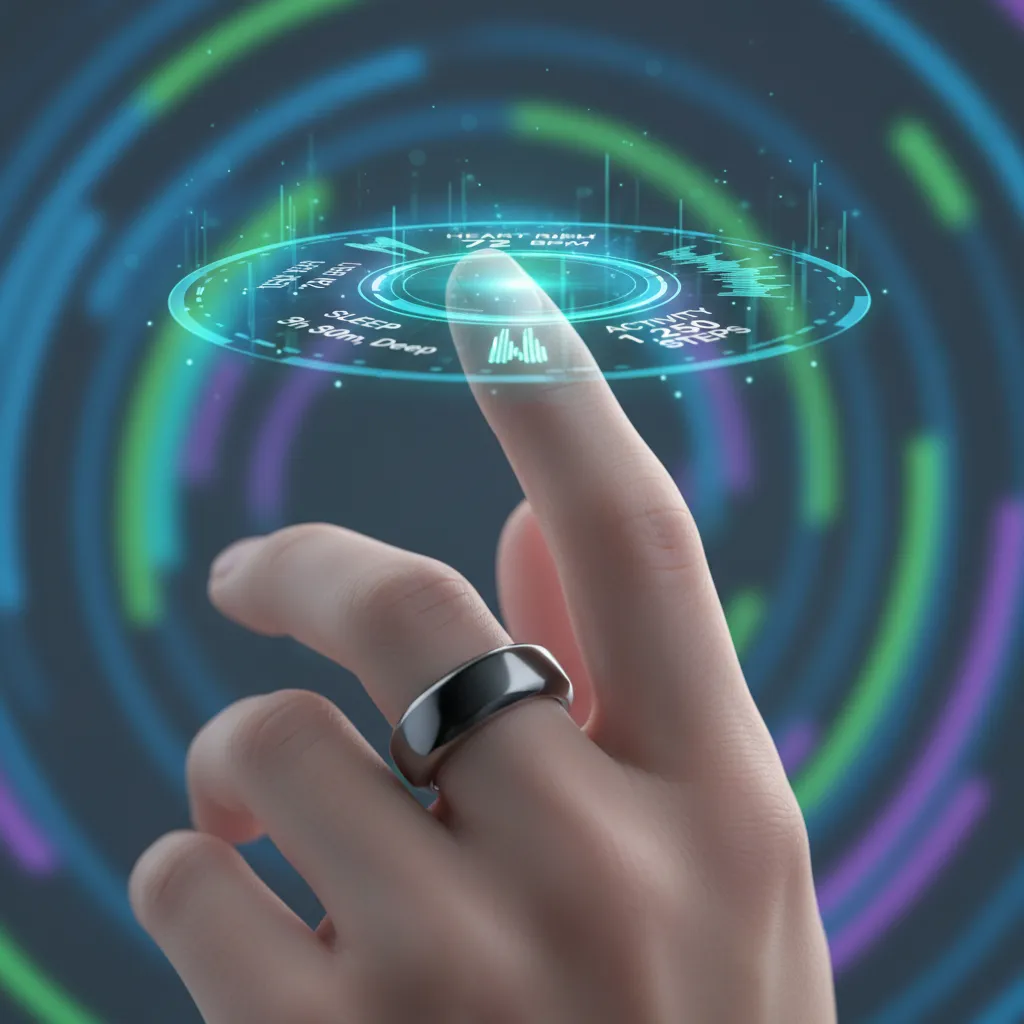
For the past decade, the smartwatch has reigned supreme on our wrists, a constant companion buzzing with notifications and tracking our every step. But what if the next leap in personal technology wasn’t another screen, but something far more discreet, intuitive, and seamlessly integrated into our lives? Enter the smart ring.
This emerging category of wearable tech future is rapidly moving from niche gadget to mainstream marvel. A smart ring packs sophisticated sensors into a simple, elegant band, promising a deeper, less intrusive way to monitor our well-being and even boost our efficiency. It represents a fundamental shift in our relationship with technology—from active interaction to passive, insightful observation.
In this comprehensive guide, we’ll explore the world of smart ring technology. You’ll learn how these tiny devices provide powerful smart ring health tracking, discover the surprising ways they can enhance smart ring productivity, and get a clear breakdown of the smart ring vs smartwatch debate. We’ll also provide a practical smart ring purchase guide to help you navigate the exciting smart ring market trends and find the perfect device for your lifestyle.
What Exactly is a Smart Ring? More Than Just Jewelry
At first glance, a smart ring might be mistaken for a stylish piece of jewelry. But beneath its sleek exterior of titanium or ceramic lies a powerhouse of miniaturized technology. Unlike a simple NFC ring used for payments, a true smart ring is an active health monitoring ring, a class of biometric smart rings designed for continuous data collection.
At its core, a ring wearable technology is a convergence of form and function. It leverages its constant skin contact to gather highly accurate biometric data 24/7. This data is then wirelessly synced to a smartphone app, where powerful algorithms translate raw numbers into actionable insights about your health, sleep, and activity levels.
The appeal of this smart jewelry tracking is its subtlety. For those seeking the benefits of a wearable without the constant glow and distraction of a screen, the smart ring offers a compelling alternative. It champions a screen-free smart ring lifestyle, allowing you to stay connected to your body’s signals without being tethered to a stream of notifications.
How Smart Ring Technology Works: The Science on Your Finger
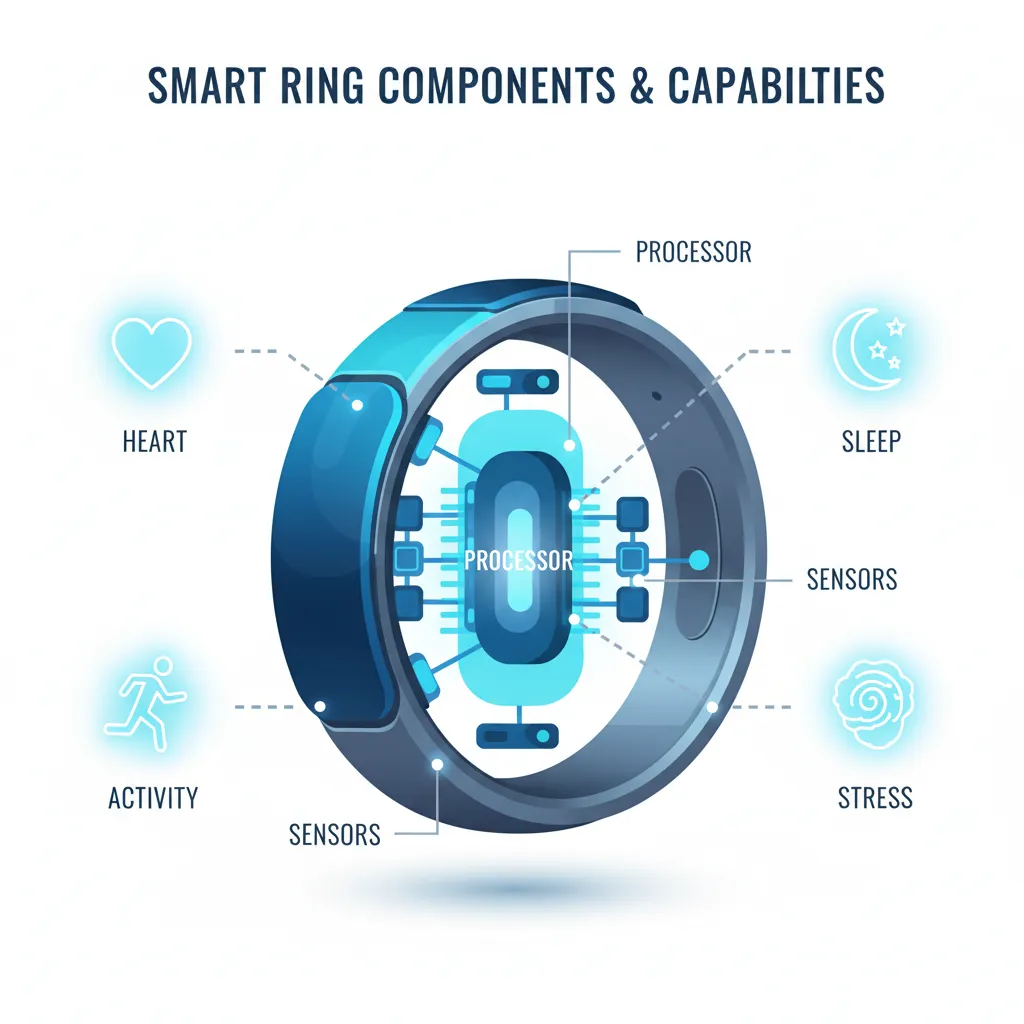
The magic of a smart ring lies in its dense array of innovative wearable sensors. The finger is an ideal location for biometric tracking because its arteries are closer to the skin’s surface than those in the wrist, allowing for clearer and more accurate readings.
The Power of the Pulse: PPG Sensors Explained
The heart of most smart rings is the photoplethysmography (PPG) sensor. This is the same technology that makes your smartwatch glow green or red against your skin.
- How it Works: Tiny LEDs shine light into the skin of your finger. A sensor then measures how much light is reflected back. As blood pulses through your arteries, the amount of reflected light changes.
- What it Measures: By analyzing these changes, the PPG sensor can accurately calculate several key metrics:
- Heart Rate: Your beats per minute (BPM) at rest and during activity.
- Heart Rate Variability (HRV): The tiny variations in time between heartbeats. HRV is a powerful indicator of your body’s recovery status and nervous system balance, making it a cornerstone of smart ring for stress management.
- Blood Oxygen (SpO2): Measures the oxygen saturation in your blood, which can be an important metric for sleep quality and respiratory health.
Tracking Movement and Temperature
Beyond the pulse, other critical sensors build a holistic picture of your health:
- 3D Accelerometer: This sensor tracks movement in every direction, allowing the ring to count steps, detect different types of activity, and monitor tossing and turning during sleep.
- Gyroscope: Works with the accelerometer to understand orientation and rotation, adding more context to your movements.
- Body Temperature Sensor: By measuring minute changes in your skin temperature throughout the night, smart rings can provide insights into sleep cycles, potential illness, and female health cycle prediction.
Data Synthesis: From Raw Metrics to Actionable Insights
A smart ring doesn’t just throw numbers at you. This is where the companion app and its underlying AI come in. Raw data from the sensors is synthesized to create simple, intuitive scores—like a “Readiness” or “Sleep” score. This is the essence of personalized health tech; it transforms complex biodata into clear, daily guidance on whether you should push hard in a workout or prioritize rest and recovery. Related: AI for Mental Wellness: A Personalized Path to a Healthier Mind
The Core Benefits: Why Choose a Smart Ring?
While the technology is impressive, the real value lies in the practical benefits that enhance your daily life. These connected health devices offer a unique combination of features that set them apart.

Unparalleled Health & Fitness Tracking
This is the primary reason most people invest in a smart ring. It acts as a comprehensive fitness ring tracker that goes beyond simple step counting.
- Advanced Sleep Tracking: This is where smart rings truly excel. Because they are comfortable and worn all night, they provide best-in-class smart ring sleep tracking. They analyze your sleep stages (Light, Deep, REM), latency (how long it takes to fall asleep), and nightly HRV to give you a detailed picture of your restorative quality.
- Holistic Activity Monitoring: Instead of just focusing on closing activity circles, smart rings balance your activity with your recovery. The app might suggest a lighter day if your Readiness score is low, helping prevent overtraining and burnout.
- Proactive Stress Management: By continuously monitoring HRV and resting heart rate, the ring can identify periods of physiological stress. Many apps offer guided breathing exercises or meditation prompts when they detect stress signals, empowering you to manage it in real-time.
- Women’s Health: Leveraging the highly sensitive temperature sensors, leading smart rings offer sophisticated menstrual cycle prediction, a feature many users find invaluable.
Discreet Design & Unobtrusive Comfort
Smart rings are designed to be worn 24/7. They are lightweight, durable (often made from titanium), and water-resistant. Their screen-free, minimalist design means they blend in with any attire, from workout gear to business suits, without creating a distracting focal point.
Exceptional Battery Life
One of the most significant smart ring benefits is battery longevity. While most smartwatches need to be charged daily, a typical smart ring boasts a smart ring battery life of 4 to 7 days on a single charge. This “wear it and forget it” convenience is a massive advantage for consistent, long-term data tracking.
Smart Ring vs. Smartwatch: Which Wearable is Right for You?
The choice between a smart ring and a smartwatch isn’t about which is “better,” but which is better for you. They serve different purposes and can even be used as complementary devices.
| Feature | Smart Ring | Smartwatch |
|---|---|---|
| Primary Function | Passive Health & Sleep Data Collection | Active Interaction, Notifications & Apps |
| Display | None | Full-color touchscreen |
| Notifications | None (or very limited haptics) | Full text, call, and app alerts |
| Battery Life | 4-7 days | 1-2 days |
| Comfort | High (lightweight, worn 24/7) | Medium (can be bulky, especially for sleep) |
| Data Focus | Holistic trends (Readiness, Sleep Scores) | Real-time stats (Pace, Heart Rate Zone) |
| Best For | Data-driven health optimizers, digital minimalists | Athletes, connected professionals, app users |
Essentially, if you want a device that acts as an extension of your phone—for checking messages, making payments, and using apps—a smartwatch is the clear choice. If you want the deepest possible insights into your body’s signals with minimal distraction, a smart ring is the superior tool.
Beyond Health: Unlocking Smart Ring Productivity Features
While health is the main event, the smart ring applications are expanding into the realm of productivity and convenience, making them even more versatile.

Contactless Payments & Access
Many new smart rings are equipped with NFC (Near Field Communication) technology. This allows you to make secure contactless payments at checkout counters or use the ring as a key for public transit and compatible smart locks, all without reaching for your phone or wallet.
Silent Alarms & Haptic Feedback
Imagine waking up to a gentle vibration on your finger instead of a jarring alarm clock. Smart rings can use subtle haptic feedback for silent alarms, timers, or discreet notifications, allowing you to stay on schedule without disturbing your partner or colleagues.
Gesture Control & Remote Functions
The future of fitness tech includes intuitive controls. Some rings are experimenting with gesture controls, allowing you to change a music track, scroll through a presentation, or trigger your phone’s camera with a simple, defined movement of your hand. This opens up a new frontier for seamless device interaction.
Focus and Recovery for Peak Performance
True smart ring productivity isn’t about doing more; it’s about doing your best work when you’re most capable. By paying attention to your Readiness score, you can align your most demanding tasks with days when your body and mind are fully recovered. This data-driven approach to work-life balance can help you avoid burnout and maximize your cognitive output. Related: Boost Your Productivity: 10 Essential AI Tools for Work and Life
The Smart Ring Market 2024: A Review of Top Contenders
The market for these next generation wearables is heating up, with established leaders and exciting newcomers vying for your finger. Here’s a look at the key players.
Oura Ring Gen3: The Market Leader
Oura is the brand that brought smart rings into the mainstream. The Oura Ring features a mature ecosystem and is widely considered the gold standard in sleep tracking.
- Key Strengths: Highly accurate sleep and recovery data, sensitive temperature tracking for illness detection and cycle prediction, a robust and intuitive app.
- Considerations: Requires a monthly subscription to unlock most of its features and detailed insights.
Samsung Galaxy Ring: The Highly Anticipated Newcomer
Announced to great fanfare, the Samsung Galaxy Ring is poised to shake up the market. A full Samsung Galaxy Ring review is pending its release, but the excitement is palpable.
- Key Strengths: Expected deep integration with the Samsung Health ecosystem and Galaxy devices, leveraging Samsung’s massive user base. Likely to be a strong contender with no initial subscription fee announced.
- Considerations: Its full feature set and compatibility with non-Samsung devices remain to be seen.
RingConn, Ultrahuman, and Other Key Players
The competition is fierce and growing, which is great news for consumers.
- RingConn Smart Ring: A popular choice for those seeking a subscription-free alternative to Oura. It offers robust health tracking and a lifetime of free access to its features.
- Ultrahuman Ring AIR: Touts itself as the lightest and most comfortable smart ring. It focuses on a “Metabolic Score” and integrates with continuous glucose monitors (CGMs) for advanced health insights.
A Practical Smart Ring Purchase Guide
Ready to make the leap? Here are the key factors to consider before you buy.
- Core Features & Accuracy: What do you want to track most? If it’s sleep, Oura is a top choice. If it’s overall metabolic health, Ultrahuman might be a better fit. Look for reviews that validate the accuracy of the sensors.
- Subscription Costs: This is a major dividing line. Are you comfortable with a monthly fee (like Oura’s) for premium features, or do you prefer a one-time purchase (like RingConn)? Factor this into the total cost of ownership.
- Sizing, Fit, and Comfort: Unlike a watch, a ring’s fit is crucial for sensor accuracy. Reputable brands will send you a free sizing kit before you order to ensure a perfect, comfortable fit. Don’t skip this step!
- App Ecosystem & Compatibility: Ensure the ring’s app is compatible with your smartphone (iOS/Android). Check if it integrates with other health platforms you use, like Apple Health or Google Fit, to consolidate your data.
- Data Privacy & Security: This is paramount. You are trusting these devices with your most intimate health data. Before buying, read the company’s privacy policy. Understand how your data is stored, if it’s anonymized, and what control you have over it.
The Future of Wearable Tech: What’s Next for Smart Rings?
The current generation of smart rings is just the beginning. The wearable tech future is incredibly bright, with several key advancements on the horizon.

Advanced Biometric Sensors
Researchers are working tirelessly to pack even more powerful sensors into the ring form factor. In the coming years, we can expect to see:
- Non-invasive Glucose Monitoring: A game-changer for millions with diabetes.
- Blood Pressure Tracking: Continuous, cuff-less blood pressure monitoring.
- Hydration and Alcohol Level Detection: Providing real-time insights into your body’s fluid balance.
AI Integration and Predictive Health
As these devices collect more data, the AI analyzing it will become more powerful. This will shift the focus from reactive tracking to predictive health. Your ring might one day be able to alert you to the early signs of an impending illness before you even feel symptoms, offering the ultimate in personalized health tech. Related: AI PCs: A Buyer’s Guide to the Next Generation of Laptops
Conclusion: A New Era of Personal Insight
Smart rings represent a significant evolution in our journey with technology. They are more than just a smart ring fitness tracker; they are discreet, intelligent companions that provide a continuous, insightful dialogue with our bodies. By moving technology away from distracting screens and into a seamless, elegant form factor, they allow us to harness the power of data without the digital noise.
Whether you’re looking to optimize your sleep, manage stress, or simply understand your body better, the smart ring benefits are clear and compelling. As the technology continues to advance, these tiny devices are set to become an indispensable tool in our pursuit of a healthier, more productive, and more mindful life.
Are you ready to embrace the subtle power of the next generation wearables? The future is on your finger.
Frequently Asked Questions (FAQs)
Q1. What do smart rings actually do?
A smart ring is a wearable electronic device packed with sensors to track your body’s biometric data. Its primary functions include comprehensive smart ring sleep tracking (sleep stages, quality), 24/7 heart rate and HRV monitoring, activity and step counting, body temperature measurement, and stress level detection. This data is then synced to a smartphone app to provide you with personalized health insights.
Q2. Is a smart ring better than a smartwatch?
Neither is inherently “better”; they serve different purposes. A smart ring excels at passive, highly accurate, and comfortable 24/7 health tracking with long battery life and no screen distractions. A smartwatch is better for active use, offering notifications, apps, GPS for workouts, and direct interaction. The best choice depends on your personal priorities.
Q3. Do you have to pay a monthly fee for a smart ring?
It depends on the brand. The market leader, Oura, requires a monthly subscription (~$5.99) to access most of its detailed analytics and features. However, several strong competitors like RingConn and Ultrahuman are built on a subscription-free model, where you get lifetime access to all features after the initial purchase of the ring.
Q4. Can a smart ring detect stress?
Yes, a smart ring is an excellent tool for stress detection and management. It doesn’t measure your emotional state directly but tracks the physiological signs of stress on your body. By monitoring your Heart Rate Variability (HRV), resting heart rate, and body temperature, it can identify when your nervous system is under strain and provide insights to help you manage it.
Q5. How accurate is smart ring sleep tracking?
Smart ring sleep tracking is generally considered to be among the most accurate available in a consumer wearable. Because of their comfortable, snug fit and the prime location on the finger for reading arterial pulse, they can gather high-quality data throughout the night. Independent studies have shown that leading brands like Oura perform very well against research-grade sleep-tracking equipment.
Q6. What is the main disadvantage of a smart ring?
The main disadvantage of a smart ring is its lack of a screen and interactive features. You cannot use it to check notifications, answer calls, or use apps like you can with a smartwatch. All data must be viewed on your smartphone. For some, this is a benefit (a “digital detox”), but for those who want an all-in-one device, it’s a significant limitation.