Samsung Galaxy Ring: The Future of Wearables?

Introduction: The Tectonic Shift in Wearable Tech
For years, the wearable technology market has been dominated by two form factors: the smartwatch and the wrist-worn fitness band. While effective, these devices often suffer from bulk, frequent charging requirements, and the constant barrage of notifications that can distract more than they help.
Enter the smart ring.
The introduction of the Samsung Galaxy Ring is not just another product launch; it signals a definitive turning point for wearable tech. Samsung, a titan in consumer electronics, is throwing its considerable weight behind the discreet, powerful, and data-rich form factor of the ring. This move instantly validates the entire category and positions the Galaxy Ring as a potential disrupter to wrist-based trackers and the existing smart ring leader, Oura.
The Samsung smart ring promises to be a compact, non-intrusive health monitoring wearable that captures crucial biometric data with unprecedented accuracy, leveraging the proximity of the finger’s arteries. If the rumors and initial reveals are accurate, the Galaxy Ring will deliver advanced sleep tracking ring capabilities and sophisticated readiness scores, all while boasting a multi-day Galaxy Ring battery life.
This article dives deep into the known and speculated details surrounding the Galaxy Ring. We will analyze the Galaxy Ring features, discuss its place in the Samsung wearable ecosystem, compare it directly to competitors in the best smart ring 2024 category, and explore whether this truly is the future of health tech.
What is the Samsung Galaxy Ring and Why Does it Matter?
The Galaxy Ring was first officially teased at Samsung Unpacked 2024, marking the company’s formal entry into the ring-based segment. It is designed to be the ultimate companion for continuous, passive health tracking, offering an alternative to those who find smartwatches too intrusive or uncomfortable for 24/7 wear, especially during sleep.
The Philosophy Behind the Smart Ring Design
The core appeal of a smart ring for women and smart ring for men lies in its minimalism. Unlike a smartwatch that serves as a secondary screen for your phone, the Galaxy Ring focuses purely on data collection. This dedicated focus allows it to optimize battery life and sensor placement, aiming for medical-grade accuracy in a piece of everyday smart jewelry.
Samsung’s goal is clear: to provide a highly accurate, long-lasting device that feeds seamless, actionable data into the powerful Samsung Health platform. By prioritizing comfort and discretion, the device targets a broader audience, including those who prefer traditional analog watches or simply wish to monitor their health without external digital distractions.
The Role of Passive Monitoring
In the world of fitness tracker ring devices, compliance is key. A bulky device you take off every night defeats the purpose of comprehensive health tracking. The Galaxy Ring’s lightweight, continuous-wear design ensures maximum compliance. This means better data consistency across:
- Sleep Quality: Deep, consistent insights into sleep stages (REM, deep, light).
- Heart Rate Variability (HRV): A critical marker of recovery and stress levels.
- Resting Heart Rate (RHR): A foundational measure of cardiovascular health.
- Activity Tracking: Discreet step counting and movement logging throughout the day.
Galaxy Ring Features: A Deep Dive into Health Monitoring
The true measure of any new wearable is its feature set. Based on patent filings, industry leaks, and official announcements, the Galaxy Ring features are focused heavily on superior biometric data collection and integration.
Core Biometric Sensors
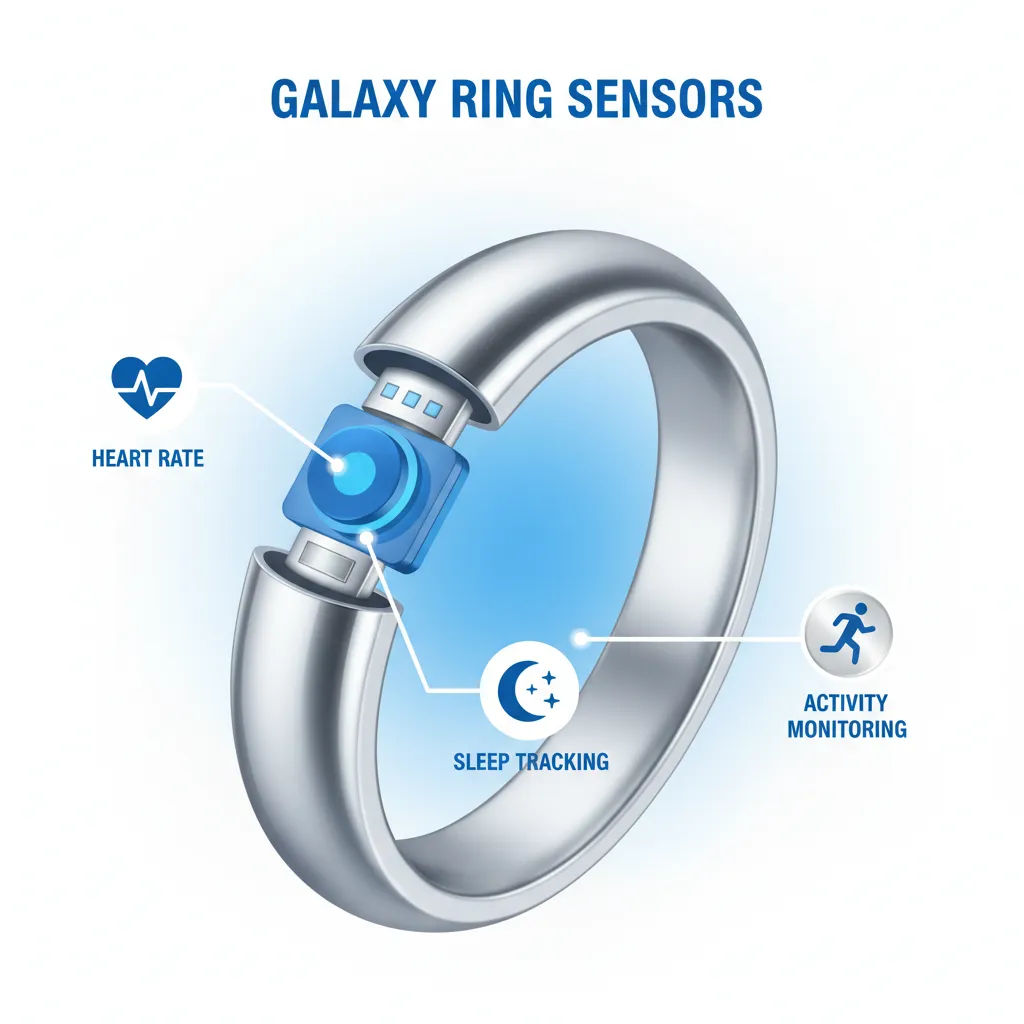
The ring is expected to house several sophisticated biometric sensors packed into its small form factor. These sensors leverage photoplethysmography (PPG) technology, similar to what is found in high-end smartwatches, but potentially enhanced by the tight, consistent fit on the finger.
Key confirmed and highly anticipated sensors include:
- PPG Heart Rate Sensor: For continuous heart rate monitoring.
- SpO2 Sensor: To measure blood oxygen saturation, crucial for detecting breathing disturbances during sleep.
- Temperature Sensor: Baseline body temperature tracking, vital for cycle tracking (for women) and early illness detection.
- Accelerometer and Gyroscope: For movement tracking, activity logging, and recognizing specific gestures.
/image-topic.webp (Placeholder for image placement)
Focus on Sleep and Readiness
Where the Galaxy Ring aims to truly excel is in its sleep tracking ring capabilities. Since rings are less likely to be removed at night compared to watches, the data gathered is superior.
The ring will reportedly synthesize this data into a comprehensive “Readiness Score” or “Vitality Score,” similar to what competing rings offer. This score, calculated through proprietary Samsung Health algorithms, will tell the user how recovered they are from the previous day’s stress and activity, guiding them on whether to push for a hard workout or focus on rest.
Integration with the Samsung Health Ecosystem
This is perhaps the most significant competitive advantage for the Samsung smart ring. It won’t operate in a vacuum. It is designed to integrate seamlessly with the entire Galaxy ecosystem:
- Galaxy Watch Synergy: The ring can fill data gaps left by the watch (especially comfort/accuracy during deep sleep) and the two devices can work together to provide redundant, highly accurate data.
- Smartphone Interface: All data will be visualized, analyzed, and delivered through the Samsung Health application, which already boasts a massive user base and infrastructure.
- AI Personalization: Leveraging the powerful AI features being rolled out across Samsung’s devices (Galaxy AI), the ring’s data can be used to generate truly personalized health coaching, rather than generic advice.
[Related: AI and Mental Health: Revolutionizing Personalized Care and the Future of Wellbeing]
Design, Comfort, and Technical Specifications
A wearable must be wearable—that is, comfortable and aesthetically pleasing—to succeed. Samsung understands this, positioning the Galaxy Ring as high-end smart jewelry.
The Aesthetic and Fit
Initial glimpses suggest a sleek, minimalist design, likely featuring premium materials like ceramic, composite, or high-grade metal alloys. The ring will need to be durable, lightweight, and water-resistant (essential for a device meant to be worn 24/7).
Samsung is expected to offer the ring in a wide range of sizes (potentially up to nine different sizes, S through XXL) and several color options (such as ceramic black, platinum silver, and gold) to appeal to both smart ring for women and smart ring for men. The internal cavity that houses the sensors must maintain consistent skin contact without being overly bulky.
Galaxy Ring Specs and Battery Life
While official, finalized Galaxy Ring specs are still pending, the major talking point remains the battery. Smartwatches typically require daily or bi-daily charging. A ring, by necessity, must last longer to fulfill its role as a continuous monitor.
- Expected Battery Life: Industry analysts project a Galaxy Ring battery life of between 5 and 9 days. This extended duration is achievable because the ring lacks a power-hungry display and uses low-power Bluetooth for sporadic data syncs.
- Charging: Charging is anticipated to occur via a small, proprietary contact or wireless charging dock, similar to existing smart rings.
- Weight: It must be remarkably lightweight—under 5 grams—to avoid being distracting during sleep or daily activities.
/image-topic.webp (Placeholder for image placement)

Beyond Health: Potential for Contactless Payments
One major area of speculation is the inclusion of an NFC chip for contactless payments ring functionality (like Samsung Wallet). While highly desired by consumers, incorporating NFC into such a tiny space alongside complex biometric sensors and battery presents engineering challenges.
If Samsung successfully integrates this feature, it would instantly elevate the Galaxy Ring from a mere fitness tracker ring to a multi-functional piece of new wearable devices technology, making it even more compelling as an all-in-one replacement for both a watch and a wallet in specific, quick-use scenarios.
[Related: The Ultimate Guide to a Digital Detox: Reclaim Your Focus]
Oura Ring vs Galaxy Ring: The Wearable Tech Showdown
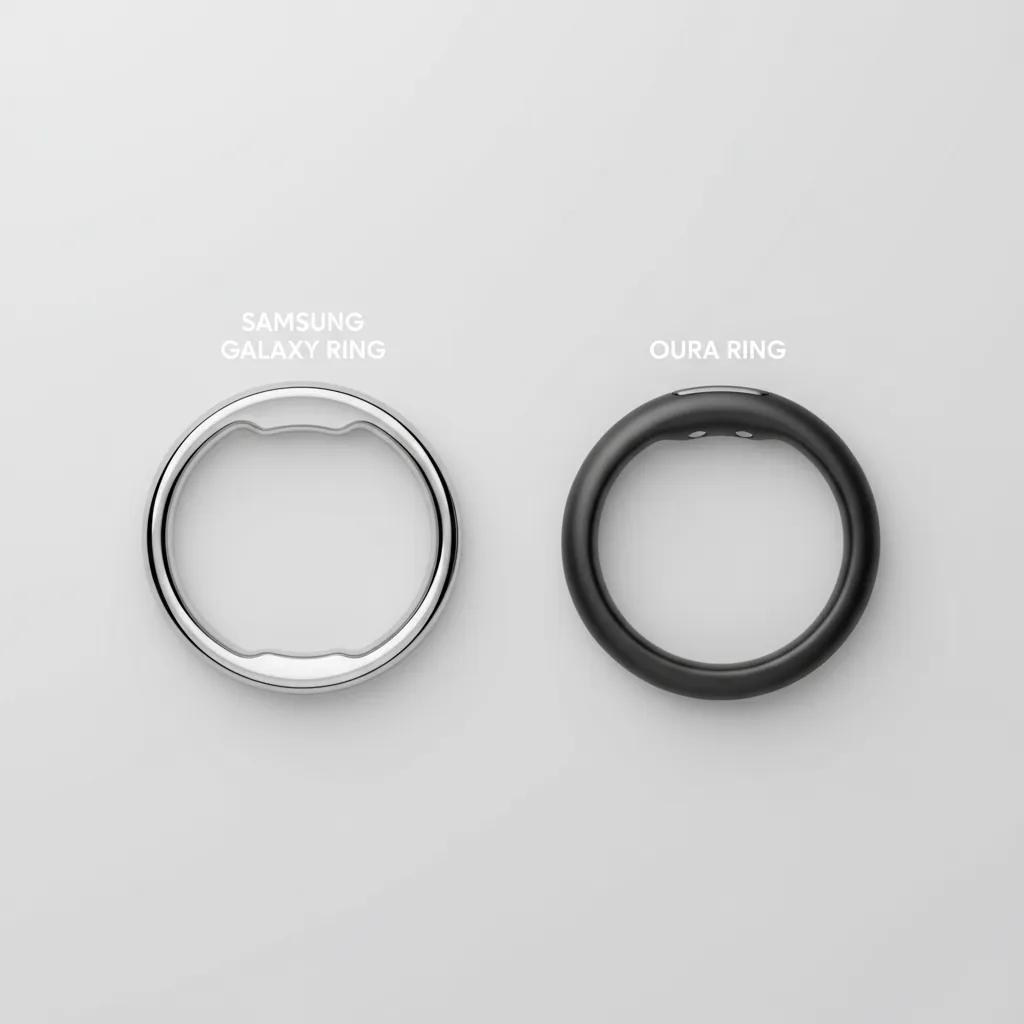
For nearly a decade, Oura has defined the smart ring category, establishing the benchmark for sleep tracking and readiness scores. The entry of Samsung with the Galaxy Ring fundamentally changes the competitive landscape. This is the moment the Oura Ring vs Galaxy Ring comparison becomes the most crucial debate in wearable technology.
Comparison Table: Oura Ring Gen 3 vs. Expected Galaxy Ring
| Feature | Oura Ring Generation 3 | Samsung Galaxy Ring (Expected) | Advantage |
|---|---|---|---|
| Ecosystem | Standalone app; limited integration. | Deep integration with Samsung Health and Galaxy devices. | Galaxy Ring |
| Subscription Model | Requires monthly subscription for full data access. | Unconfirmed, but analysts expect a similar model or inclusion in Samsung Premium tier. | TBD |
| Core Function | Exceptional sleep tracking ring and recovery data. | Comprehensive sleep, activity, and potentially advanced medical features (e.g., atrial fibrillation screening). | Galaxy Ring (Potential) |
| Battery Life | 4–7 days. | Projected 5–9 days. | Tie/Slight Galaxy Ring lead |
| Form Factor | Well-established, comfortable design. | New, sleek design; focus on wide sizing availability. | Tie (Oura has market experience) |
| Price | Starts around $299–$449 + subscription. | Expected to be competitively priced, likely in the $300–$400 range. | TBD |
/image-topic.webp (Placeholder for image placement)
The Ecosystem vs. The Pioneer
The Oura Ring is a highly accurate tool, but it operates as a silo. The Samsung Galaxy Ring, however, benefits from the massive infrastructure of the Samsung universe. If you own a Galaxy phone, Galaxy Buds, or a Galaxy Watch, the integration of the ring’s data becomes exponentially more valuable.
This seamless data flow, combined with the scale of Samsung’s manufacturing, positions the Galaxy Ring as the ultimate Oura Ring alternative for Android users and potentially the superior device overall, especially if the company can deliver on its promises of advanced, medically-relevant health monitoring wearable capabilities. This competition is great for consumers, driving innovation across the entire segment toward superior data quality and user experience.
The Broader Implications: AI in Wearables and the Future
Beyond basic heart rate and step counting, the real promise of new wearable devices like the Galaxy Ring lies in their ability to leverage AI in wearables. A small, powerful device generating continuous, high-fidelity physiological data is the perfect input source for sophisticated machine learning models.
Predictive Health and Personalized Coaching
Imagine an AI model that receives 24/7 data—heart rate variability, sleep quality, and body temperature fluctuations—from your Samsung smart ring.
This continuous input allows the AI to move from descriptive insights (e.g., “You slept poorly last night”) to predictive and prescriptive advice (e.g., “Based on your temperature spike and 15% drop in HRV compared to your baseline, you may be coming down with an illness. Prioritize rest and hydration today.”).
The convergence of the Galaxy Ring, the Samsung Health platform, and the company’s significant investment in Galaxy AI creates a potent mix that defines the future of health tech. The focus shifts from general fitness tracking to highly personalized, preventative healthcare guidance.
Expanding Accessibility and Medical Validation
Smart rings inherently democratize health tracking. They are easier to wear, require less maintenance, and are significantly less disruptive than other forms of wearable tech.
If Samsung pursues FDA clearance or CE marking for specific features (such as irregular heart rhythm detection or advanced sleep apnea indicators), the Galaxy Ring could cross the chasm from consumer gadget to a recognized, valuable medical-grade monitoring tool. This level of validation would cement its status as the best smart ring 2024 and beyond.
[Related: The Future is Now: AI Revolutionizing Personalized Learning and Education]
/image-topic.webp (Placeholder for image placement)

Expected Galaxy Ring Release Date and Pricing
As of the date of this analysis, Samsung has provided a clear intention to launch the device but has not finalized the precise Galaxy Ring release date or Galaxy Ring price. However, strong industry chatter and typical Samsung product cycles allow for grounded speculation.
When Can We Expect the Ring?
Following the teaser at Samsung Unpacked 2024, analysts predict a full commercial launch within the year, potentially coinciding with a later Unpacked event focused on wearables or foldable phones, positioning the device firmly as one of the most anticipated new wearable devices.
- Initial Launch Window: Late 2024 or Early Q1 2025.
- Availability: Likely rolled out in major markets (US, Europe, South Korea) first, followed by a global distribution push soon after.
How Much Will the Galaxy Ring Price Be?
The Galaxy Ring price must strike a careful balance between undercutting the competition (Oura) and reflecting the advanced technology packed inside.
- Low-End Estimate: $299. This would be highly aggressive, aiming to steal significant market share immediately.
- High-End Estimate: $399–$449. This price point reflects the advanced sensor array, high-quality materials, and premium brand status. Most market consensus leans towards this range, placing it directly competitive with the latest high-end smart rings.
The Subscription Question
One critical factor influencing the total cost of ownership is the software model. If Samsung opts for a subscription similar to Oura’s (which unlocks advanced metrics and deep historical data), the overall cost over three years could be significantly higher.
Samsung may choose to integrate the ring’s core functionality into the standard Samsung Health app at no extra charge for current Galaxy device owners, or perhaps offer a bundled subscription (like Samsung Care+ or a Galaxy AI premium tier) that includes the advanced ring data. This approach would significantly enhance the value proposition for the existing Samsung wearable ecosystem user.
Conclusion: Redefining the Standard
The Samsung Galaxy Ring is poised to be more than just a passing trend; it is set to redefine the expectations for personal wearable tech. By combining sophisticated biometric sensors with the unparalleled integration of the Samsung Health platform and powerful AI in wearables, the ring transforms passive data collection into actionable, predictive health guidance.
Whether you are seeking a superior sleep tracking ring, a less obtrusive fitness tracker ring, or simply a sleek piece of smart jewelry, the Samsung smart ring offers a powerful alternative to traditional smartwatches. The inevitable Oura Ring vs Galaxy Ring showdown will ultimately benefit consumers, pushing the entire category toward greater accuracy, longer battery life, and deeper insights.
The future of compact, intelligent health monitoring is clearly taking shape, and the Samsung Galaxy Ring is ready to lead the charge into the next generation of the future of health tech. Keep a close eye on the official Galaxy Ring release date and Galaxy Ring price—this device is set to be a game-changer.
FAQs (People Also Ask)
Q1. What is the Samsung Galaxy Ring primarily used for?
The Galaxy Ring is primarily a highly advanced health monitoring wearable focused on continuous, passive data collection. Its main uses include superior sleep tracking ring capabilities (tracking stages, duration, and movements), measuring resting heart rate, and monitoring heart rate variability (HRV) and skin temperature to determine the user’s overall physical readiness and recovery levels.
Q2. Will the Galaxy Ring require a subscription service like the Oura Ring?
While Samsung has not confirmed the final pricing model, it is highly anticipated that the Samsung Galaxy Ring will include a monthly or annual subscription fee to access the most advanced features, historical trend data, and personalized health coaching, following the industry standard set by competitors like the Oura Ring. However, basic tracking data is expected to remain free.
Q3. Can the Samsung Galaxy Ring track blood pressure or glucose levels?
Currently, there is no reliable public confirmation that the initial Galaxy Ring model will feature non-invasive blood pressure monitoring or glucose tracking. While future iterations of wearable technology may incorporate these advanced biometric sensors, the first generation will focus on established metrics like SpO2, heart rate, and temperature, pending FDA and regulatory clearances.
Q4. Does the Galaxy Ring only work with Samsung Galaxy phones?
While the Galaxy Ring is optimized for the Samsung wearable ecosystem and the Samsung Health app, which works best on Galaxy devices, it is expected to have compatibility with most modern Android smartphones. However, certain advanced features relying on cross-device synergy (like deep Galaxy AI integration) may be restricted or enhanced when paired with a flagship Samsung phone.
Q5. Is the Galaxy Ring waterproof, and can I wear it swimming?
Yes, the Samsung smart ring is designed as a new wearable device intended for 24/7 wear. It is expected to meet industry standards for water resistance, likely IP68, making it safe for handwashing, showering, and swimming. This level of durability is essential for a high-end fitness tracker ring.
Q6. How does the Galaxy Ring compare to the Galaxy Watch in terms of data accuracy?
Due to the finger’s consistent blood flow and the tight, stable fit provided by the ring form factor, the Galaxy Ring is generally expected to provide more accurate and stable measurements for passive metrics like RHR and sleep staging compared to a wrist-worn watch, especially during periods of light movement or high activity. The ideal scenario is using both devices together for a comprehensive picture.
Q7. Will the Galaxy Ring support contactless payments?
The possibility of the contactless payments ring feature (NFC) is a major area of speculation, but it has not been officially confirmed. The integration of an NFC chip would significantly add to the Galaxy Ring features and appeal, making it a powerful piece of smart jewelry, but the tight space constraints pose a considerable engineering challenge.
Q8. What sizes and colors will the smart ring be available in?
The Galaxy Ring is expected to be available in a wide array of sizes (rumored to be up to 9 sizes, ranging from S to XXL) to ensure an accurate, comfortable fit for all users. Initial color options are anticipated to include classic, sleek metallic finishes such as platinum silver, gold, and ceramic black, appealing to both smart ring for men and smart ring for women.