Personal AI Agents: Your Next-Gen Digital Co-pilot for Ultimate Productivity

Introduction
Remember the last time you felt overwhelmed by the sheer volume of digital noise? The endless emails, the conflicting calendar invites, the project management notifications, the personal to-do lists—it’s a relentless flood. For years, we’ve relied on digital assistants like Siri and Alexa to answer questions or set timers, but they’ve been more like glorified voice-activated search engines than true helpers. They wait for our commands, responding to one-off queries without understanding the broader context of our lives.
Now, imagine a different reality. Picture a digital co-pilot that doesn’t just wait for you to ask a question but anticipates your needs. An intelligent entity that understands your goals, manages complex tasks across multiple applications, and actively works to simplify your life and amplify your professional output. This isn’t science fiction; it’s the dawn of personal AI agents.
These next-gen AI systems are a monumental leap beyond the simple assistants we know. They are designed for smart automation, acting as proactive, autonomous partners in both our personal and professional worlds. In this comprehensive guide, we’ll explore what defines these intelligent agents, how they’re set to revolutionize AI-powered productivity, and why this shift towards human-AI collaboration represents the true future of work and personal technology. Get ready to meet the new OS for your life.
Beyond “Hey Siri”: The Evolution from AI Assistants to Autonomous Agents
To truly grasp the significance of personal AI agents, we must first understand their lineage. For the past decade, our interaction with AI has been largely transactional and reactive.
-
You ask: “What’s the weather today?”
-
It answers: “It’s 72 degrees and sunny.”
-
You command: “Set a timer for 15 minutes.”
-
It complies: “Okay, 15 minutes, starting now.”
These interactions, powered by what we can call virtual assistant 1.0, are useful but fundamentally limited. They lack memory, context, and agency. They are tools we operate. A personal AI agent, or virtual assistant 2.0, operates on a completely different paradigm. It’s not a tool; it’s a partner.
The key differences can be broken down into three core evolutionary leaps:
-
From Reactive to Proactive: An AI assistant waits for your command. An AI agent sees a flight confirmation email land in your inbox, checks your calendar for meetings on that day, analyzes traffic patterns, and proactively suggests the best time to leave for the airport and even offers to book a rideshare for you. This is the essence of proactive AI.
-
From Single-Step to Multi-Step Tasks: An assistant can add “Buy milk” to your shopping list. An agent can be tasked with “Plan a healthy menu for the week, generate a shopping list based on what I already have in my smart fridge, find the best prices at local stores, and schedule a grocery delivery for Friday afternoon.” This is true AI task automation.
-
From Application-Specific to Cross-Platform Integration: Your current assistant lives within its own ecosystem. An autonomous personal AI is designed to be the connective tissue for your entire digital life. It can access your email, calendar, project management software (like Asana or Trello), communication tools (like Slack or Teams), and even your smart home devices, orchestrating complex workflows without you needing to switch between a dozen tabs.
Think of it like the difference between a simple calculator and a seasoned financial advisor. One executes commands, while the other understands your goals, analyzes the landscape, and takes initiative to help you succeed. This is the new era of intelligent personal assistants.
The Core Anatomy of a Personal AI Agent: What Makes Them Tick?
So, what’s under the hood of these powerful new co-pilots? Their intelligence is not magic; it’s a sophisticated synergy of advanced technologies designed to understand, reason, and act on your behalf.
Deep Personalization: An AI That Truly Knows You
The “personal” in personal AI agents is their most defining feature. Unlike generic models, these agents build a secure, private understanding of you. They learn from your communications, your schedule, your habits, and your preferences to build a contextual model of your world.
This personalized AI understands that “my usual coffee spot” is the independent cafe on the corner, not the big chain. It knows which colleagues you collaborate with most frequently, what your key projects are this quarter, and that you prefer morning workouts. This deep, continuous learning allows the agent to provide hyper-relevant assistance that feels intuitive. The key, however, is ensuring this is done with an unwavering focus on security. Related: Apple Intelligence: A Deep Dive into its Privacy-Focused AI.
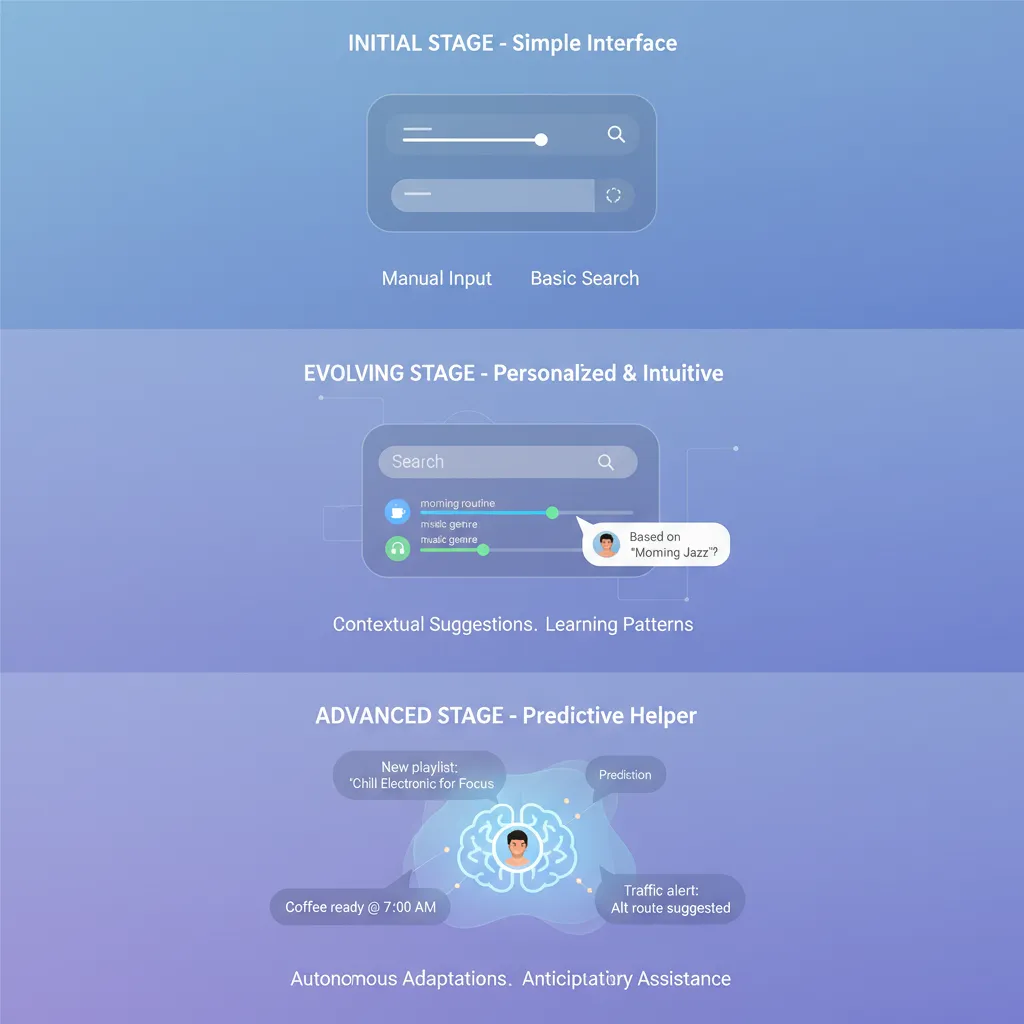
Proactive Intelligence: Anticipating Your Needs
Proactive intelligence is the agent’s ability to connect dots you haven’t even considered yet. By analyzing data streams from your digital life, it identifies opportunities and potential conflicts before they arise.
- Example: Your agent notices a team member just uploaded a final report to your shared drive. It cross-references this with your calendar and sees you have a presentation on that topic tomorrow. It then proactively messages you: “The Q3 report from Sarah is ready. Would you like me to summarize the key findings and generate a draft slide deck for your 10 AM presentation?”
This moves the agent from a passive tool to an active participant in your success, a true hallmark of advanced AI assistants.
Autonomous Action: From Suggesting to Doing
This is where agents truly shine. After receiving your permission (or based on pre-set rules), an agent can execute complex, multi-step tasks independently. This is the core of AI workflow optimization.
Imagine planning a trip. Instead of you spending hours juggling websites, your agent can handle it.
- Your Goal: “Find a weekend getaway for my anniversary next month. We like hiking, good food, and need it to be dog-friendly. Budget is $800.”
- The Agent’s Actions:
- Searches for destinations within a 3-hour drive.
- Filters for locations with highly-rated hiking trails and restaurants.
- Cross-references accommodation options (like Airbnb or VRBO) filtering for “pet-friendly” and your budget.
- Checks reviews and availability.
- Presents you with a curated list of 3 top options, complete with itineraries and booking links.
- Once you approve, it books the accommodation, adds it to your shared calendar, and even pulls up a packing list based on the weather forecast.
This is a world away from a simple web search. It’s a comprehensive, goal-oriented service. Related: AI Unleashed: Crafting the Perfect Personalized Travel Experience.
Unleashing Peak Productivity: Real-World Applications of Your Digital Co-pilot
The theoretical power of AI software agents is impressive, but their real value lies in practical, everyday AI applications that save time, reduce cognitive load, and unlock new capabilities.
For the Busy Professional: Reclaiming Your Workday
In the professional realm, a digital co-pilot acts as the ultimate efficiency engine. It tackles the administrative overhead that consumes valuable time, allowing you to focus on high-impact strategic work.
- Inbox Zero on Autopilot: The agent can sort, prioritize, and summarize your emails. It can draft replies to common queries, flag urgent messages that require your personal attention, and archive the rest, transforming your inbox from a source of stress into a streamlined communication hub.
- Smarter Meetings: Your agent can automatically generate pre-meeting briefings with attendee bios and relevant documents. During the meeting, it can transcribe the conversation, and afterward, it can deliver a concise summary with action items assigned to the correct people. This is AI decision support in real-time.
- Dynamic Workflow Management: It can integrate with tools like Salesforce, automatically updating customer records after a call, or move tasks along in Asana when a dependency is completed in a shared document, ensuring projects never stall because of manual oversight. Related: Boost Your Productivity: 10 Essential AI Tools for Work and Life.

In Your Personal Life: An OS for Simpler Living
The impact of AI in personal life is just as profound, creating a seamless and responsive environment tailored to your needs.
- The Ultimate Life Administrator: From scheduling doctor’s appointments and managing family calendars to tracking bills and planning weekly meals, the agent handles the tedious logistics of modern life. It ensures nothing falls through the cracks, giving you back precious time and mental energy.
- A Truly Smart Home: Your agent can unify your disparate smart devices (lights, thermostat, security, entertainment). It learns your routines and creates ambient experiences. For instance, it can initiate a “welcome home” scene that adjusts the lights, sets your preferred temperature, and plays your favorite relaxing playlist the moment you walk in the door. Related: AI for Mindful Living: How to Boost Your Digital Well-being.
- Financial Co-pilot: By securely connecting to your financial accounts, an agent can categorize spending, identify savings opportunities, and alert you to upcoming bills, acting as a proactive partner in your financial health. Related: The AI Finance App Revolution: Managing Your Personal Wealth in 2024 and Beyond.

For Lifelong Learners and Creatives
Beyond task management, personal AI agents can become powerful catalysts for growth and creativity.
- Personalized Learning Paths: Tell your agent you want to learn Python programming, and it can curate a custom curriculum of articles, videos, and coding exercises tailored to your learning style and pace.
- The Research Super-Assistant: For writers, students, or strategists, the agent can scour the internet for information on any topic, synthesize findings from dozens of sources, identify key themes, and present a structured summary with citations, reducing research time from days to minutes.
- A Creative Sounding Board: Stuck on a creative project? Use your agent as a brainstorming partner. It can generate ideas, offer different perspectives, and help you overcome creative blocks by providing novel connections and inspiration.

The Dawn of a New Era: The Future of Work and Human-AI Collaboration
The rise of intelligent agents naturally leads to questions about the future of work. The narrative of “AI taking jobs” is simplistic and misses the point. History shows that transformative technologies don’t just eliminate roles; they redefine them. The personal AI agent is not a replacement for human intellect but an augmentation of it.
This is the essence of human-AI collaboration. The agent excels at tasks that are structured, data-intensive, and repetitive. This frees up human professionals to double down on what we do best:
- Strategic Thinking: Devising long-term business strategy and vision.
- Creativity and Innovation: Inventing new products, services, and ideas.
- Empathy and Relationship-Building: Leading teams, negotiating complex deals, and providing genuine customer care.
- Complex Problem-Solving: Tackling ambiguous challenges that require intuition and ethical judgment.
The future professional will be a “centaur”—part human, part AI—leveraging their digital co-pilot to achieve levels of AI efficiency and effectiveness previously unimaginable. We will see the rise of custom AI agents built for specific professions—an agent for lawyers that automates discovery, an agent for doctors that helps with diagnostics, and an agent for software developers that writes and debugs code. Related: The AI Cybersecurity Revolution: Reshaping Defense and Threat Detection.
Navigating the Challenges: Privacy, Security, and Trust
For a personal AI agent to become the central hub of our digital lives, it must earn our absolute trust. This presents significant but solvable challenges.
- Privacy: The level of personalization agents require necessitates access to our most sensitive data. The industry is moving towards on-device processing and federated learning, where the AI’s “brain” is updated without raw personal data ever leaving your device. Companies like Apple are making this a core part of their strategy. Related: Apple’s New ‘Private Cloud Compute’ is a Big Step for AI Privacy.
- Security: If an agent can book flights and access your bank, it becomes a high-value target for bad actors. Robust security measures, including multi-factor authentication for critical actions and continuous threat monitoring, will be non-negotiable.
- Bias and Alignment: We must ensure these agents act in our best interests and that their underlying models are free from harmful biases. Transparency and user control will be paramount, giving users the ability to inspect, override, and customize their agent’s decision-making processes.
Building this trust is the most critical hurdle to mass adoption. The companies that succeed will be those who prioritize user privacy and security above all else.
Conclusion
We stand at a major inflection point in our relationship with technology. The move from passive digital assistants to proactive personal AI agents is as significant as the shift from the command line to the graphical user interface. These digital co-pilots are not just another app or a minor upgrade; they represent a fundamental rethinking of how we manage information, execute tasks, and structure our lives.
By handling the complexity of our digital world, these intelligent agents promise to unlock unprecedented levels of AI-powered productivity and personal well-being. They will streamline our work, simplify our homes, and empower us to focus on what truly matters.
The journey is just beginning, and the technology will continue to evolve. But one thing is clear: the future isn’t about being replaced by AI. It’s about being amplified by it. The era of the autonomous personal AI is here. Are you ready to meet your co-pilot?
Frequently Asked Questions (FAQs)
Q1. What exactly is a personal AI agent?
A personal AI agent is an advanced type of AI software that acts as a proactive and autonomous digital assistant. Unlike traditional assistants (like Siri or Alexa) that only react to commands, an agent can understand your goals, make decisions, and perform complex, multi-step tasks across different applications on your behalf, such as planning a trip, managing your schedule, or summarizing your emails without constant prompting.
Q2. What’s the main difference between an AI assistant and an AI agent?
The primary difference is agency and proactivity. An AI assistant is a reactive tool that performs simple, single-step commands you give it (e.g., “What time is it?”). An AI agent is a proactive partner that understands context, anticipates your needs, and can autonomously execute complex workflows to achieve a goal (e.g., “Organize my business trip to New York next week.”).
Q3. Can you give an example of a personal AI agent in action?
Imagine you receive an email invitation for a dinner party. A personal AI agent would see it, check your calendar for conflicts, automatically RSVP “Yes” if you’re free, add the event to your calendar (including the address), check traffic for that time and location, and set a reminder telling you when you need to leave to arrive on time. It connects multiple data points and takes several actions without any specific command from you.
Q4. Are personal AI agents available to use now?
Yes, the first generation of true personal AI agents is beginning to emerge. Major tech companies are integrating agent-like capabilities into their operating systems, such as with Apple Intelligence and Microsoft’s Co-pilot. Additionally, several startups and platforms like Zapier, Adept AI, and MultiOn are building powerful agents that can automate tasks across web browsers and applications.
Q5. How do personal AI agents handle privacy and security?
This is a top concern and priority. Leading approaches focus on on-device processing, meaning your personal data is analyzed on your phone or computer and doesn’t need to be sent to the cloud. For cloud-based tasks, techniques like “Private Cloud Compute” are used to create secure servers that don’t store your data. Users will also have granular control over what data and apps their agents can access.
Q6. Will AI agents replace human jobs?
While AI agents will automate many repetitive and administrative tasks, they are more likely to transform jobs than eliminate them entirely. This is the core of human-AI collaboration. By offloading tedious work, agents will free up human professionals to focus on higher-value activities that require creativity, strategic thinking, emotional intelligence, and complex problem-solving—skills that AI cannot replicate.
Q7. How can I create my own custom AI agent?
Creating a sophisticated AI agent from scratch requires technical expertise. However, a new wave of no-code and low-code platforms is making it easier for anyone to build custom AI agents. Tools like OpenAI’s GPTs, Zapier Central, and other emerging platforms allow you to define a specific goal, give the AI instructions in plain English, and connect it to the apps you use to automate personal or business workflows.