Paris Olympics 2024: AI’s Role in Athlete Performance & Fan Experience

As the world turns its eyes to Paris for the 2024 Olympic Games, the athletes won’t be the only ones performing at peak levels. Behind the scenes, an invisible powerhouse is set to redefine the limits of human achievement and reshape how we experience the pinnacle of sport: Artificial Intelligence. The Paris Olympics 2024 AI integration is not just a technological showcase; it’s a fundamental shift in how athletes train, competitions are judged, and fans engage with the spectacle.
From hyper-personalized training regimens powered by sports analytics AI to immersive viewing experiences driven by augmented reality, AI is the silent partner of every Olympian and every spectator. This year, the games are as much about algorithms as they are about athleticism. We’ll explore how this olympic innovation AI is revolutionizing every facet of the games, creating a smarter, safer, and more spectacular event than ever before. Get ready to witness the true future of sports tech unfold.
The AI-Powered Athlete: Pushing the Limits of Human Potential
For decades, Olympic success was a formula of raw talent, relentless hard work, and brilliant coaching. Today, a new variable has entered the equation: data. AI is transforming athletes from supreme physical specimens into finely tuned, data-driven machines, optimizing every micro-movement and decision for gold.
Precision Training and Performance Optimization
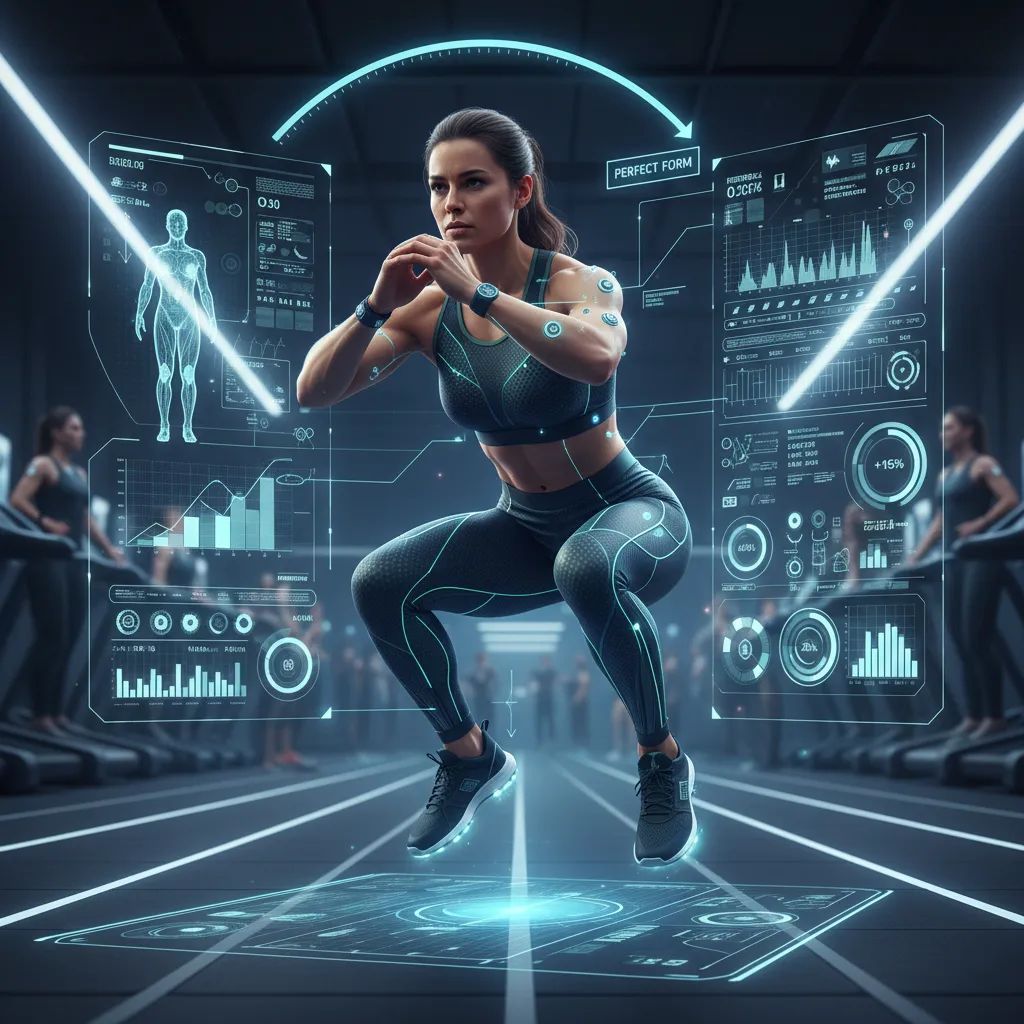
The era of one-size-fits-all training is over. Athlete training AI is ushering in an age of hyper-personalization. Elite athletes are now equipped with sophisticated sensors and wearable tech olympics-approved devices that capture thousands of data points per second. These devices monitor everything from heart rate variability and muscle oxygenation to sleep quality and biomechanical efficiency.
This deluge of data is then fed into AI models that provide actionable insights. For example, an AI system can analyze a swimmer’s stroke and pinpoint a fractional change in elbow angle that could shave milliseconds off their time. Similarly, a runner’s gait can be analyzed to optimize foot strike and energy expenditure, crucial for endurance events. This granular level of AI performance tracking allows athletes and coaches to identify marginal gains that make the difference between fourth place and a podium finish.
The End of Guesswork: AI in Sports Coaching
AI sports coaching acts as a force multiplier for human expertise. Coaches can now leverage AI platforms to process complex performance data and create dynamic training plans. Instead of relying solely on intuition and past experience, they can use predictive athlete analytics to forecast performance peaks and strategically plan rest days.
Imagine a coach being able to simulate an entire race against a specific opponent, using AI to model different strategies and predict outcomes. This allows for the development of adaptive race plans that can be modified in real-time based on an opponent’s behavior. AI also helps democratize elite coaching, providing developing athletes with access to analytical tools previously reserved for the top tier.
Related: AI’s Lifesaving Leap: Revolutionizing Early Disease Detection with Smart Tech
Preventing the Unthinkable: AI for Sports Injury Prevention
An athlete’s greatest opponent is often their own body. An injury at the wrong time can derail years of preparation. This is where sports injury prevention AI is becoming a game-changer. By analyzing an athlete’s workload, movement patterns, and physiological data, AI algorithms can identify early warning signs of fatigue and stress that are invisible to the human eye.
If the system detects an asymmetrical movement pattern in a javelin thrower’s shoulder, it can flag a high risk of a rotator cuff injury, prompting a modification in their training load. Furthermore, enhanced athlete recovery AI customizes recovery protocols, suggesting specific nutrition, sleep schedules, and therapies to accelerate healing and reduce downtime. This focus on preventative care ensures more athletes arrive at the starting line in peak condition.
Reimagining the Spectacle: The AI-Enhanced Fan Experience
The Paris 2024 tech revolution extends far beyond the track and field. The way we, the fans, watch and interact with the Games is undergoing a radical transformation, thanks to olympics fan experience technology powered by AI. The goal is to create a more engaging, immersive, and personalized fan experience for the billions watching worldwide.
A Personalized Journey for Every Fan
Gone are the days of a single, generic broadcast feed. Fan engagement AI is tailoring the Olympic experience to each individual viewer. Official Olympic apps and broadcast partners will use AI to learn your preferences—your favorite sports, athletes, and home country.
Your feed could automatically curate a playlist of must-see events, deliver real-time highlights of your favorite athletes, and push notifications when a new national record is broken in a sport you follow. This level of personalization ensures you never miss the moments that matter most to you, transforming passive viewing into an active, curated journey. AI in sports marketing also leverages this data to provide relevant content and offers, deepening the connection between fans and sponsors.
Immersive Viewing: VR, AR, and the Future of Broadcasting
AI is breaking down the barriers between the stadium and your living room. Virtual reality olympics experiences will allow fans with VR headsets to feel like they’re sitting in the best seat in the house, whether it’s poolside for the 100m freestyle final or court-side at the volleyball championship.
Augmented reality sports will overlay real-time data onto your view, whether you’re watching on a tablet or at the venue itself. Point your phone at a marathon runner and instantly see their current speed, heart rate, and position in the race. This technology provides a layer of digital information that enriches the viewing experience, offering insights previously only available to commentators.
The broadcast itself is becoming smarter. AI sports broadcasting can automate camera work to perfectly track the action, while AI driven sports commentary can provide instant translations and generate commentary for niche events in multiple languages, making the Games more accessible to a global audience.

Smart Stadiums, Seamless Experience
For those lucky enough to be in Paris, smart stadiums AI will orchestrate a seamless on-site experience. AI-powered systems will manage crowd flow, predict congestion hotspots, and optimize public transport schedules. From intelligent ticketing systems that reduce wait times to AI-powered chatbots that answer visitor questions in any language, technology will be working silently in the background to ensure a safe and enjoyable experience for millions of visitors.
Related: AI and VR: Crafting the Next Generation of Immersive Travel Experiences
Behind the Scenes: The Unseen AI Powering the Games
Some of the most critical applications of AI at the Paris Olympics will be completely invisible to the average viewer. These systems are the backbone of the event, ensuring fairness, security, and operational efficiency on an unprecedented scale.
Ensuring Fairness: AI Refereeing and Judging Systems
In sports where scores are decided by fractions of a point, accuracy is everything. AI refereeing systems, primarily using advanced computer vision, are being introduced to support human judges. In sports like diving and gymnastics, AI can analyze an athlete’s form, angles, and execution with a level of precision and objectivity that is impossible for the human eye.
This doesn’t mean human judges are being replaced. Rather, AI provides them with a powerful tool to review plays and confirm decisions, reducing the potential for human error and controversy. In sports like tennis and football (VAR), AI-powered tracking is already a staple for line calls and offside decisions. The Olympics will see this technology applied more broadly, reinforcing the integrity of the competition.
Fortifying the Fortress: AI for Event Security
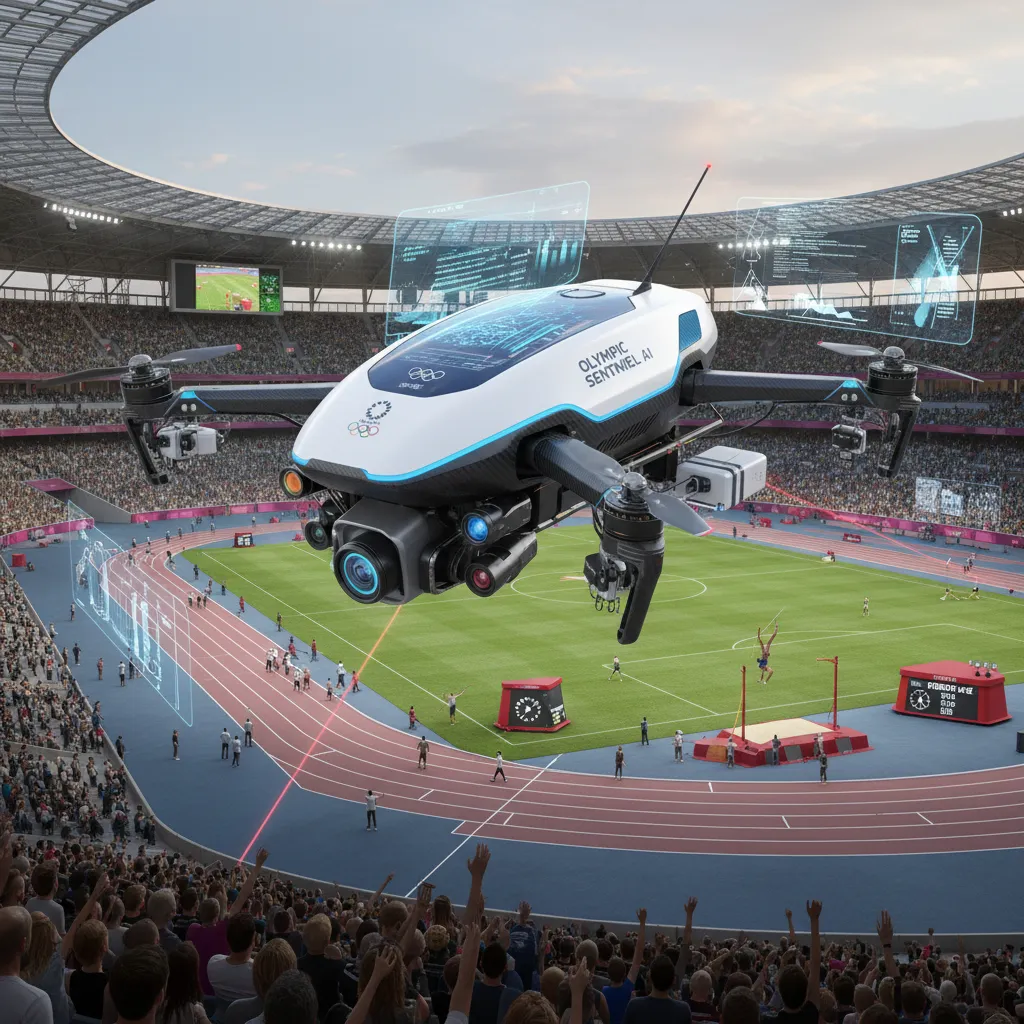
The security of an event the size of the Olympic Games is a monumental task. AI for event security is a critical component of the Paris 2024 strategy. Thousands of smart cameras will use AI-powered video analytics to monitor venues and public spaces. These systems can detect anomalous behavior, identify unattended baggage, and manage crowd density to prevent dangerous situations.
AI algorithms can analyze security feeds in real-time, identifying potential threats far faster than human operators. This proactive approach to security allows law enforcement to respond to incidents before they escalate, ensuring a safe environment for athletes, officials, and spectators.
The Data Revolution: Olympic Data Analytics at Scale
Organizing the Olympics is a logistical masterpiece. Olympic data analytics powered by AI helps manage everything from athlete transportation schedules to volunteer deployment and waste management. Predictive models can forecast demand for resources, helping organizers allocate them efficiently and sustainably.
This data-driven approach not only improves operational efficiency but also supports the Games’ sustainability goals. By optimizing energy consumption in venues and streamlining supply chains, AI is helping make Paris 2024 one of the greenest games in history.
Related: The Future is Now: Hyper-Personalized AI and the Dawn of Tailored Intelligent Systems
The Broader Impact: How AI is Shaping the Future of Sports
The olympics technology trends showcased in Paris are not just for a single event; they are a glimpse into the sports AI future. The innovations in athlete performance, fan engagement, and event management will cascade down to professional leagues and amateur sports around the world.
AI is fundamentally changing the economics and accessibility of sports. AI in sports marketing allows for more effective fan engagement and sponsorship activation. Automated broadcasting technologies make it possible to cover a wider range of sports, giving more athletes a platform.
However, this technological leap is not without its challenges. Questions around data privacy for athletes, algorithmic bias in judging systems, and the potential for a “digital divide” between well-funded and developing nations must be addressed. The key will be to harness the power of AI to enhance the human element of sport—the passion, the drama, and the incredible stories of dedication—without overshadowing it.
Conclusion
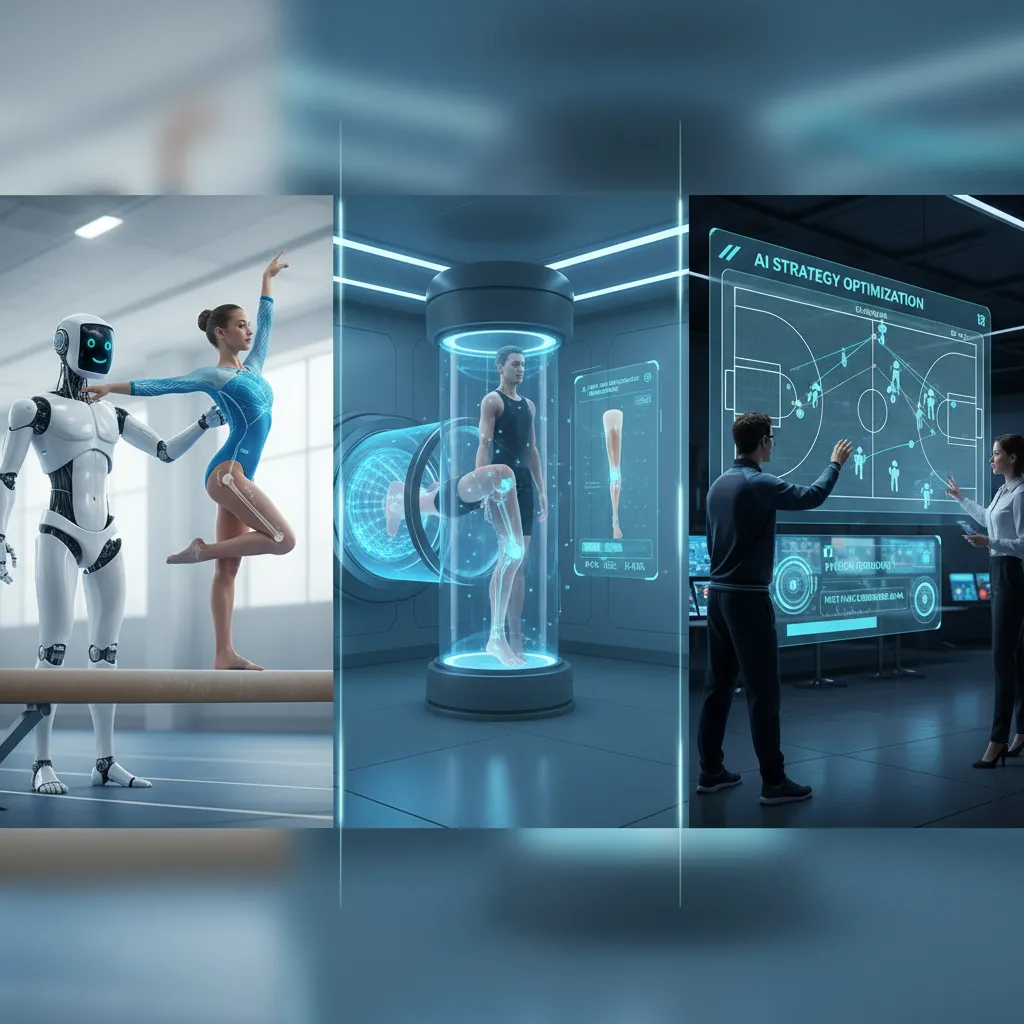
The Paris 2024 Olympic Games are poised to be a watershed moment for the intersection of sports and technology. Artificial Intelligence is no longer a futuristic concept but a present-day reality that is actively shaping outcomes and experiences. From the AI for olympic athletes that helps them break records to the fan engagement AI that brings us closer to the action, this is a new era.
We are witnessing a powerful synergy where human potential is amplified by machine intelligence. The result is a more competitive, engaging, and secure Olympic Games that sets a new benchmark for all future global events. As you tune in to watch the world’s best compete, remember the invisible engine of AI working behind the scenes, powering every moment of triumph and every shared cheer across the globe.
What AI application at the Paris Olympics are you most excited about? Share your thoughts in the comments below!
Frequently Asked Questions (FAQs)
How will AI be used in the Paris 2024 Olympics?
AI will be used extensively at the Paris 2024 Olympics across three main areas. For athletes, it will power AI performance tracking, injury prevention AI, and personalized coaching. For fans, it will enhance the experience through augmented reality sports overlays, personalized content feeds, and smart stadium services. Operationally, AI will be used for security, crowd management, and judging assistance.
How does AI help athletes improve performance?
AI helps athletes by analyzing vast amounts of data from wearable sensors to identify marginal gains. Sports analytics AI can optimize biomechanics, create personalized nutrition and recovery plans, and predict fatigue to prevent injuries. This data-driven approach allows athletes and their coaches to make more informed decisions, pushing the boundaries of human performance.
What is AI sports coaching?
AI sports coaching involves using artificial intelligence platforms to analyze an athlete’s performance data and generate strategic insights. It doesn’t replace human coaches but acts as a powerful assistant, helping them to design hyper-personalized training programs, simulate game-day scenarios, and identify subtle weaknesses in an athlete’s technique that the human eye might miss.
Will AI replace referees in sports?
It’s unlikely that AI will completely replace human referees in the near future. Instead, AI refereeing systems are being implemented as support tools to enhance accuracy and reduce human error. Technologies like computer vision for line calls or performance scoring provide objective data that helps officials make more confident and correct decisions, thereby increasing the fairness of the competition.
How is technology changing the fan experience at sporting events?
Technology, especially AI, is making the fan experience more immersive and personal. Olympics fan experience technology includes virtual and augmented reality to bring fans closer to the action, AI-driven apps that deliver personalized highlights and stats, and smart stadium features that simplify navigation and reduce wait times. The goal is to create a seamless, engaging, and customized journey for every fan, whether at the venue or at home.
What are the benefits of using AI in sports analytics?
The primary benefits of AI in sports analytics are speed, depth, and predictive power. AI can process millions of data points in real-time to uncover complex patterns in player performance and team strategy. This leads to more effective game plans, smarter player recruitment, and a deeper understanding of what leads to victory.
Is wearable technology allowed in the Olympics?
Yes, many forms of wearable tech are allowed in the Olympics, particularly for training and recovery. Devices that monitor biometrics like heart rate, sleep patterns, and muscle strain are crucial for modern athlete training AI. However, rules may restrict the use of devices that provide real-time data or coaching feedback during the actual competition to ensure fair play.
What is the role of AI in sports medicine at the Olympics?
AI in sports medicine plays a crucial preventative role. By analyzing an athlete’s training load and biomechanical data, AI can predict the likelihood of an injury before it occurs. It also helps in creating enhanced athlete recovery AI programs, tailoring rehabilitation protocols to an individual’s specific needs to get them back to competition faster and safer.