Neuromorphic Computing: The Brain-Inspired Hardware Revolution for AI

Introduction
In the relentless pursuit of artificial intelligence that rivals human cognition, we’ve built staggering digital brains. Massive data centers hum with the power of thousands of GPUs, training AI models that can write poetry, generate photorealistic images, and even drive cars. But this power comes at a cost—an insatiable appetite for energy. The very architecture that powers our digital world, the von Neumann architecture, is beginning to show its age, creating a bottleneck that separates processing from memory and wastes immense energy just shuffling data back and forth.
What if there was a better way? What if, instead of just teaching machines to think like us, we built them to work like our brains? This is the core premise of neuromorphic computing, a radical paradigm shift in AI hardware that doesn’t just run neural networks in software but builds them directly into the silicon. It’s a revolution that promises low-power AI computing capable of human-like efficiency, learning, and adaptation.
This deep dive will explore the fascinating world of brain-inspired computing. We’ll unravel how neuromorphic chips work, why they represent the future of AI hardware, and explore the groundbreaking applications already taking shape. From autonomous drones to advanced robotics, the impact of neuromorphic computing on AI is poised to be transformative.
What is Neuromorphic Computing? Breaking Down the Brain-Inspired Model
At its heart, neuromorphic computing is an engineering discipline focused on creating microchips and systems that mimic the neuro-biological structures of the human brain. For over 70 years, computers have followed the blueprint laid out by John von Neumann: a central processing unit (CPU) and a separate memory unit (RAM). The CPU fetches instructions and data from memory, performs a calculation, and writes the result back. This constant back-and-forth creates a traffic jam known as the “von Neumann bottleneck,” consuming up to 90% of a chip’s energy.
The human brain, on the other hand, is a masterpiece of efficiency. It performs trillions of operations per second while running on just 20 watts of power—less than a standard lightbulb. How? By fundamentally integrating memory and processing. In the brain, a neuron (the processor) and its synapses (the memory) are physically intertwined.
Neuromorphic systems replicate this structure. They are built on a distributed network of artificial “neurons” and “synapses” that process information in a massively parallel and event-driven manner. This brain-inspired computing approach dismantles the von Neumann bottleneck, leading to dramatic gains in energy efficiency neuromorphic computing.
Key principles that define this revolutionary approach include:
- Co-location of Memory and Processing: Synapses store information (memory) right where the neurons process it, eliminating data shuttling.
- Event-Driven Processing: Unlike traditional chips that operate on a constant clock cycle, neuromorphic chips are asynchronous. They only activate neurons when they receive an incoming signal, or “spike,” saving enormous amounts of power.
- Massive Parallelism: Just like the brain’s 86 billion neurons, these chips can perform countless operations simultaneously, making them ideal for processing complex, real-world sensory data.
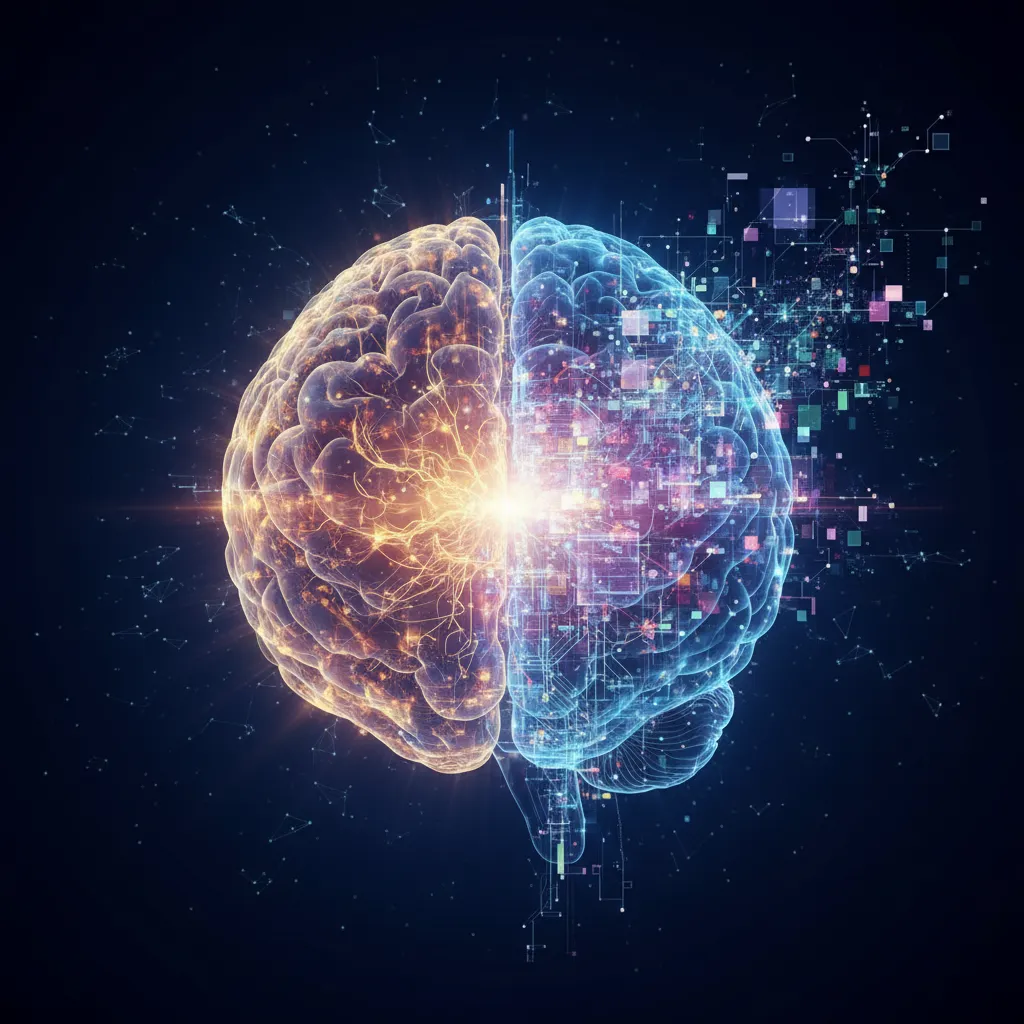
This approach represents a fundamental rethinking of what a computer is. It’s a move from brute-force calculation to elegant, efficient, and adaptive information processing. This is why why is neuromorphic computing important is a critical question for the next decade of technological progress.
The Core Engine: How Do Neuromorphic Chips Work?
To understand the magic behind neuromorphic hardware, we need to look at its software equivalent: Spiking Neural Networks (SNNs). While traditional AI models use Artificial Neural Networks (ANNs) that process continuous numerical values in discrete layers, SNNs operate on a more biologically plausible principle: spikes.
An SNN processes information as a series of discrete events or spikes that occur over time. A neuron “fires” only when it has accumulated enough input signal from other neurons to cross a certain threshold. The timing of these spikes carries crucial information, allowing the network to process temporal data with incredible precision. This is much closer to how our own brains process sensory input from our eyes and ears.
Here’s a breakdown of the components in a neuromorphic chip design:
- Artificial Neurons: These are the core processing units. Each neuron is a small circuit that integrates incoming electrical spikes from other neurons. When its internal “membrane potential” reaches a threshold, it fires its own spike to connected neurons.
- Artificial Synapses: These are the connections between neurons. Crucially, these synapses have “weight,” which determines the strength of the connection. In advanced neuromorphic systems, these weights can change over time based on the activity of the neurons, a process called synaptic plasticity. This is the foundation of on-chip learning.
- Asynchronous Fabric: This is the communication network that allows spikes to travel between neurons. It’s event-driven, meaning it only consumes power when and where a spike is actually occurring.
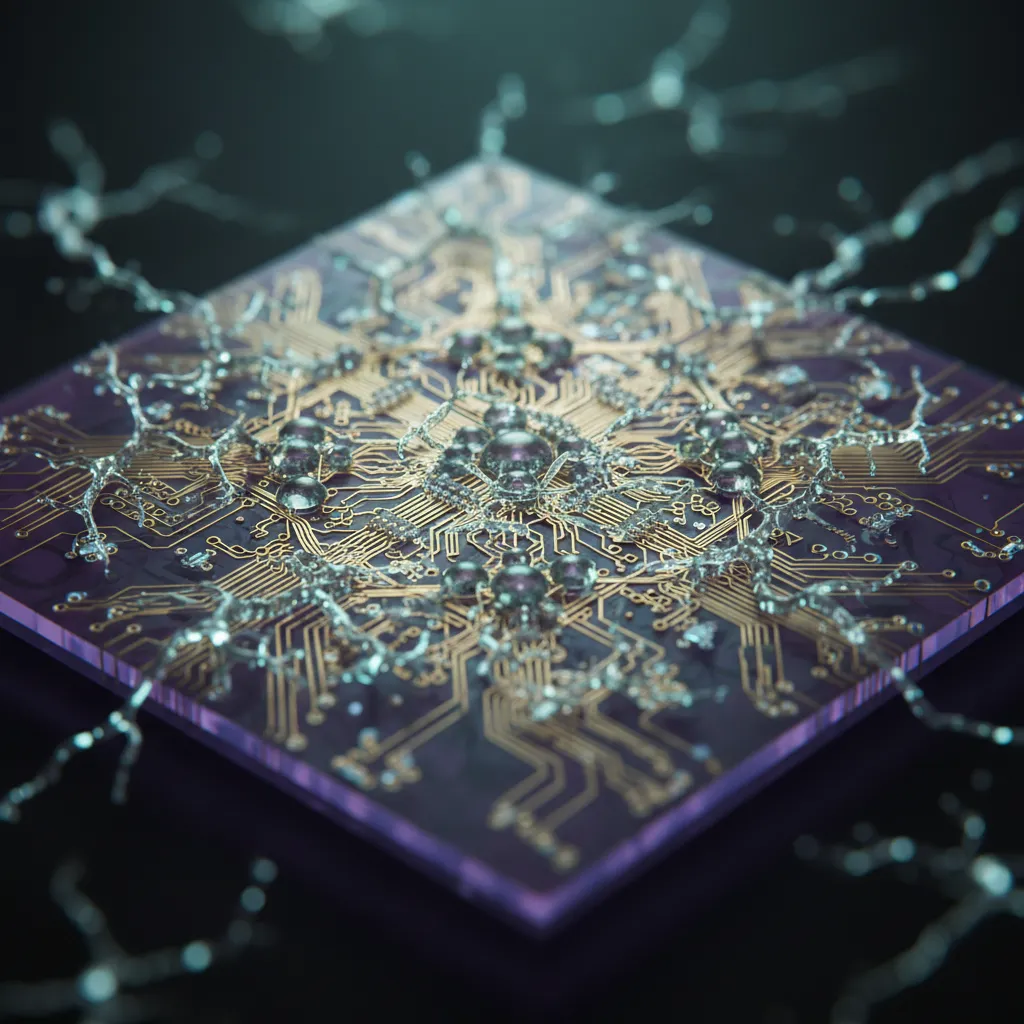
A breakthrough in neuromorphic technology lies in its ability to learn on the fly. While a traditional machine learning model is trained for weeks in a data center and then deployed as a static model, a neuromorphic chip can potentially continue learning after deployment. This continuous, low-power learning is a game-changer for creating truly intelligent and adaptive systems.
A Tale of Two Architectures: Neuromorphic vs. Traditional AI
The difference between traditional and neuromorphic AI is not just an incremental improvement; it’s a fundamental divergence in philosophy and architecture. Understanding this distinction is key to grasping the potential of brain-inspired hardware.
Let’s compare them side-by-side:
| Feature | Traditional Computing (Von Neumann) | Neuromorphic Computing (Brain-Inspired) |
|---|---|---|
| Architecture | Separated CPU/GPU and Memory | Integrated Memory and Processing |
| Data Processing | Synchronous (driven by a central clock) | Asynchronous (event-driven spikes) |
| Energy Consumption | Very High | Extremely Low (orders of magnitude lower) |
| Core Strengths | High-precision mathematical calculations, logic | Real-time pattern recognition, sensory data processing, adaptation |
| Learning | Typically offline, energy-intensive training | Potential for real-time, on-chip, continuous learning |
| Data Type | Processes static data frames (e.g., an entire image) | Processes temporal streams of data (e.g., changes in light) |
The raw computational power of a GPU is undeniable for training massive AI models. However, for deploying AI in the real world—on a drone, in a car, or within a smart sensor—the energy cost of traditional hardware is a major limiting factor. This is where neuromorphic computing shines. It’s not about replacing GPUs in the data center, but about enabling a new class of intelligent devices at the edge that can operate for months or years on a single battery charge. This shift is a critical component of the future of AI hardware.
The Pioneers and Their Breakthroughs: Key Players in Neuromorphic Computing
The journey from concept to silicon has been driven by dedicated neuromorphic computing research and pioneering companies. These organizations are building the hardware that will power the next AI revolution.
Intel and the Loihi Processor
Perhaps the most well-known name in the space is Intel. Their Intel Loihi neuromorphic processor (and its successor, Loihi 2) is a research chip designed to be a workhorse for the neuromorphic community.
- Loihi 2 boasts up to one million artificial neurons and integrates processing and memory on-chip.
- It utilizes asynchronous design and supports a wide range of SNN models.
- Intel has made Loihi systems available to researchers worldwide through the Intel Neuromorphic Research Community (INRC), fostering a vibrant ecosystem for developing new algorithms and applications.
IBM’s Brain-Inspired Computing
IBM has been a foundational player with its TrueNorth chip, one of the earliest large-scale neuromorphic processors. While their focus has evolved, their contributions to IBM brain-inspired computing laid essential groundwork. Their research continues to explore new materials and architectures for creating ultra-dense and efficient synaptic devices.
Other Innovators and Companies
The field is rapidly expanding beyond the giants. A growing number of neuromorphic computing companies and academic labs are making significant strides:
- BrainChip: Producer of the Akida neuromorphic processor, focusing on commercial applications for edge AI.
- SynSense: A startup developing ultra-low-power neuromorphic processors for vision and audio sensing.
- Stanford University & The Neurogrid/Brainoware Projects: Pioneering research platforms that have pushed the boundaries of brain simulation and hybrid bio-silicon computing.

This collaborative and competitive landscape is accelerating innovation, moving neuromorphic technology from the research lab toward real-world deployment.
Real-World Revolution: Applications of Neuromorphic Computing
The true measure of any technology is its impact. The applications of neuromorphic computing are vast and set to redefine industries by enabling intelligence in places where it was previously impossible due to power or latency constraints.
Neuromorphic Computing for Edge AI and IoT
This is arguably the most immediate and impactful application area. The Internet of Things (IoT) involves billions of sensors collecting data. Sending all this data to the cloud for processing is inefficient and slow.
- Smart Sensors: Imagine a security camera that doesn’t stream video but only sends an alert when it recognizes a specific event, using milliwatts of power.
- Industrial Monitoring: Neuromorphic sensors on factory equipment can detect subtle changes in vibration or sound that predict machine failure, operating for years without a battery change.
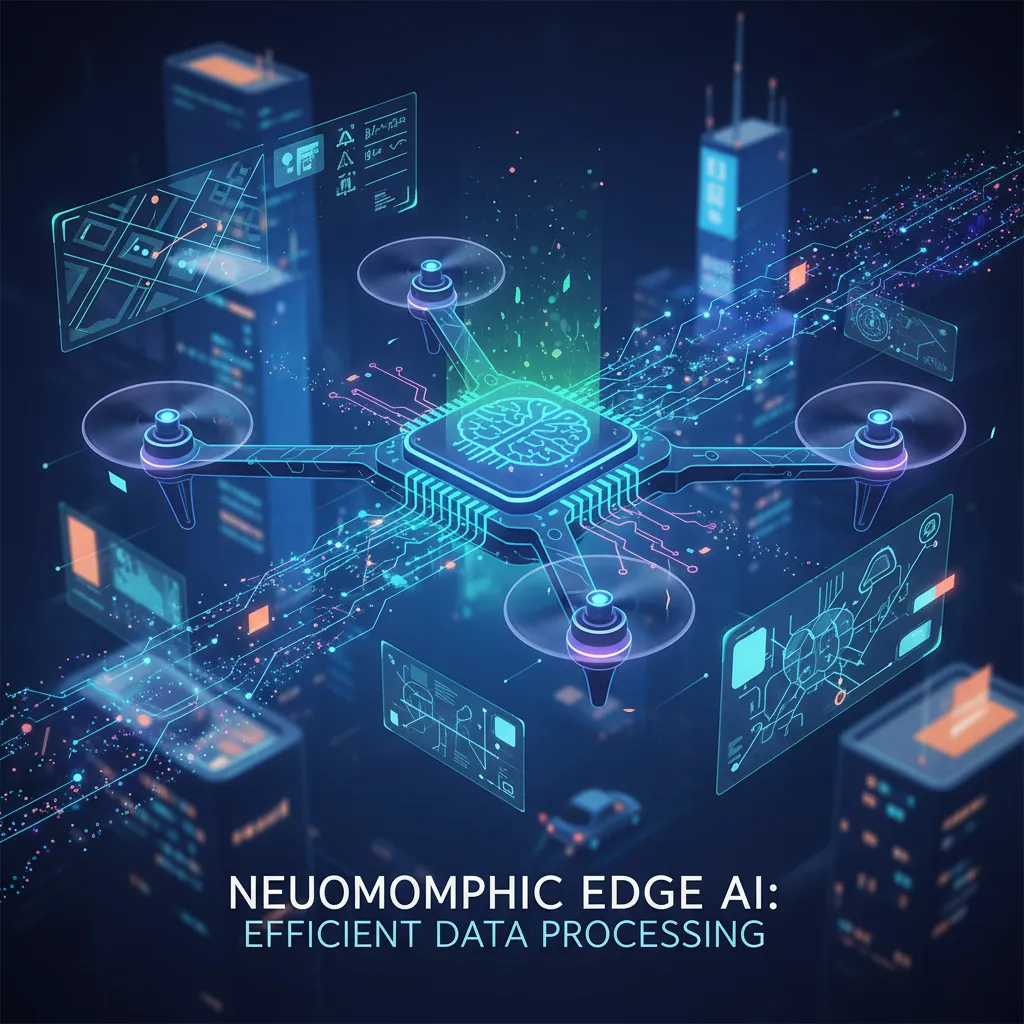
- Autonomous Drones: Drones can use neuromorphic vision to navigate complex environments in real-time, reacting instantly to obstacles without relying on a connection to a base station. The energy efficiency neuromorphic computing provides is critical for extending flight times. Related: Eco-Tech Revolution: Sustainable Gadgets for a Greener Tomorrow
Neuromorphic Computing in Robotics
Robots need to perceive and react to their environment instantly. The parallel, low-latency processing of neuromorphic chips is a perfect match.
- Prosthetics: Brain-inspired chips can interpret neural signals to control prosthetic limbs with more natural and intuitive movement.
- Haptic Feedback: Robots can develop a sense of touch, processing complex tactile information to handle delicate objects.
- Adaptive Control: A robot can learn and adapt its movements in real-time as its environment or tasks change, much like a human does.
Healthcare and Scientific Discovery
The pattern-recognition capabilities of neuromorphic systems are being applied to some of the most complex problems in science and medicine.
- Medical Diagnostics: Analyzing real-time data streams from EEG or ECG sensors to detect anomalies like seizures or heart arrhythmias instantly.
- Drug Discovery: Simulating the complex interactions of molecules in a more energy-efficient way.
- Brain Simulation: Building large-scale models of the brain to better understand neurological diseases and cognitive processes.
The Next Frontier: Neuromorphic vs. Quantum Computing
As we look to the future, two technologies often mentioned as successors to classical computing are neuromorphic and quantum. However, neuromorphic vs quantum computing is not a direct rivalry; they are specialized tools designed for entirely different jobs.
- Neuromorphic Computing: Excels at cognitive tasks that mimic brain function. It’s about processing noisy, real-world sensory data with extreme energy efficiency. Its strength is in pattern recognition, real-time learning, and control systems.
- Quantum Computing: Derives its power from the principles of quantum mechanics (superposition and entanglement). It is designed to solve problems that are computationally intractable for any classical computer, such as complex optimization problems, materials science simulation, and breaking modern cryptography.
Think of it this way: you would use a neuromorphic chip to help a robot identify a cat in a cluttered room. You would use a quantum computer to design a revolutionary new battery material at the molecular level. Both are part of the future of AI hardware, but they operate in complementary, not competitive, domains. Related: Quantum Leap: Decoding the Latest Quantum Computing Breakthroughs
Hurdles on the Horizon: Neuromorphic Engineering Challenges
Despite the immense promise, the path to widespread adoption of neuromorphic computing is not without obstacles. These are the key neuromorphic engineering challenges that researchers and engineers are actively working to solve:
- Algorithm Development: Spiking Neural Networks require a completely new way of thinking. We need new algorithms and learning rules specifically designed for event-based, temporal processing.
- Software and Tools: The developer ecosystem is still in its infancy. Creating easy-to-use programming frameworks, compilers, and debugging tools is essential for broad adoption.
- Scalability and Manufacturing: While we can mimic small parts of the brain, scaling these designs up to billions of neurons while maintaining efficiency is a monumental manufacturing challenge.
- Benchmarking: How do we fairly measure the performance of a neuromorphic system against a traditional one? Simple metrics like “operations per second” don’t apply. New benchmarks based on “energy per inference” or “time to solution” are needed.
The Human Element: Ethical Implications of Neuromorphic AI
As we create machines that not only compute but perceive and learn in a more biological way, we must consider the ethical implications of neuromorphic AI. The efficiency of these systems could lead to pervasive, always-on surveillance sensors. Truly autonomous systems that learn and adapt in the wild raise new questions about control, accountability, and decision-making.
Engaging in these conversations early is crucial. We must develop frameworks for responsible innovation that ensure this powerful technology is used to benefit humanity. This involves a deep understanding of the human-AI relationship and its potential impact on our well-being and society. Related: AI-Powered Mindfulness: The Future of Stress Relief & Mental Well-Being
Conclusion
Neuromorphic computing is more than just another incremental step in processing power. It is a fundamental reinvention of hardware, inspired by the most sophisticated and efficient computer we know: the human brain. By abandoning the 70-year-old von Neumann architecture in favor of a distributed, event-driven model, these brain-inspired chips are poised to solve the single greatest challenge facing AI today: energy consumption.
The advantages of neuromorphic systems—unprecedented energy efficiency, real-time processing, and the capacity for continuous learning—will unlock a new era of pervasive, intelligent technology. From smarter robots and longer-lasting drones to revolutionary medical devices, the real-world neuromorphic applications are just beginning to be explored. While significant challenges remain, the progress made by pioneers like Intel and a growing ecosystem of innovators shows that the future of AI hardware is not just faster, but smarter, more efficient, and profoundly more like us.
FAQs
Q1. What is neuromorphic computing in simple terms?
In simple terms, neuromorphic computing is the practice of building computer chips that are structured like the human brain. Instead of a separate processor and memory, they use a network of artificial neurons and synapses that process information and store memory in the same place, making them incredibly energy-efficient.
Q2. What is the main advantage of neuromorphic computing?
The main advantage is its extreme energy efficiency. By mimicking the brain’s event-driven, parallel architecture, neuromorphic systems can perform complex AI tasks, especially those involving sensory data, using thousands of times less power than traditional GPU-based hardware. This makes it ideal for battery-powered devices.
Q3. Is neuromorphic computing better than quantum computing?
Neither is “better”; they are designed for completely different tasks. Neuromorphic computing excels at cognitive, brain-like tasks like pattern recognition and real-time learning with low power. Quantum computing is designed to solve massive, complex calculations like molecular simulation or code-breaking that are impossible for any other type of computer.
Q4. Which companies are leading in neuromorphic computing?
Intel is a major leader with its Loihi research processors. IBM has also done foundational work. Other key players include commercial companies like BrainChip and SynSense, as well as numerous top-tier university research labs around the world.
Q5. What are spiking neural networks (SNNs)?
Spiking Neural Networks are a type of artificial neural network that more closely models biological brains. Unlike traditional networks that process continuous numbers, SNNs communicate using discrete “spikes” or pulses, similar to how real neurons fire. This event-based processing is a key reason for the efficiency of neuromorphic hardware.
Q6. Can neuromorphic chips learn?
Yes, one of the most exciting capabilities of advanced neuromorphic chips is their potential for on-chip learning. Because the “synapses” can change their strength based on activity (a concept called synaptic plasticity), the chip can adapt and learn from new data in real-time without needing to be retrained in a data center.
Q7. What is an example of a neuromorphic application?
A great example is an industrial monitoring sensor placed on a factory motor. Using neuromorphic computing, it could “listen” to the motor’s vibrations continuously for years on a tiny battery. It would only use significant power and send an alert when it recognizes the specific vibration pattern that signals an impending failure.