Hyper-Personalized AI: Your Future, Tailored by Intelligent Systems

Imagine waking up to a daily briefing that not only lists your appointments but also suggests the optimal time to leave for work based on real-time traffic, your personal stress levels, and even the weather. Your morning coffee is brewed to the perfect temperature just as you enter the kitchen, and your news feed is a curated masterpiece of articles and videos that genuinely spark your curiosity and support your long-term learning goals. This isn’t science fiction; it’s the near-future promise of hyper-personalized AI.
We’ve grown accustomed to basic personalization—Netflix suggesting a movie you might like or Amazon recommending a product based on past purchases. But hyper-personalization is a quantum leap forward. It’s the difference between an assistant who remembers your coffee order and a chief of staff who anticipates your needs before you even realize them. These intelligent systems are designed to be predictive, adaptive, and deeply contextual.
This article explores the transformative world of AI-driven personalization. We’ll journey beyond the surface-level recommendations and delve into how adaptive AI is poised to reshape every facet of our lives—from our health and finances to our education and entertainment. We will uncover how this technology works, examine its profound benefits, and confront the critical ethical questions we must navigate. The future of AI isn’t just about smarter devices; it’s about creating a world uniquely tailored to you.
From Personalization to Hyper-Personalization: The Quantum Leap
To truly grasp the significance of hyper-personalization, we must first understand its origins. The digital experiences we have today are the result of a decades-long evolution in creating more relevant, user-centric interactions.
What We Call “Personalization” Today
For the last decade, “personalization” has been the gold standard. When you log into Spotify, it greets you with a “Discover Weekly” playlist. When you browse YouTube, its algorithm serves up videos similar to what you’ve watched before. This form of personalized AI operates primarily on historical data.
- It’s Reactive: It analyzes your past behavior (clicks, views, purchases) to make educated guesses about your future preferences.
- It’s Segment-Based: Often, you are grouped with thousands of other users who have similar tastes. The recommendations are for the “segment,” not just for you as an individual.
- It’s Channel-Specific: Your Amazon experience is largely separate from your Netflix experience, creating disjointed digital identities.
While incredibly useful, this model is fundamentally limited. It knows who you were yesterday, but it doesn’t truly understand who you are right now or who you want to become tomorrow.
The Hyper-Personalization Difference: Predictive and Proactive
Hyper-personalized AI shatters these limitations. It doesn’t just react; it anticipates. It leverages a much richer, real-time tapestry of data to create experiences that are predictive, proactive, and profoundly individual.
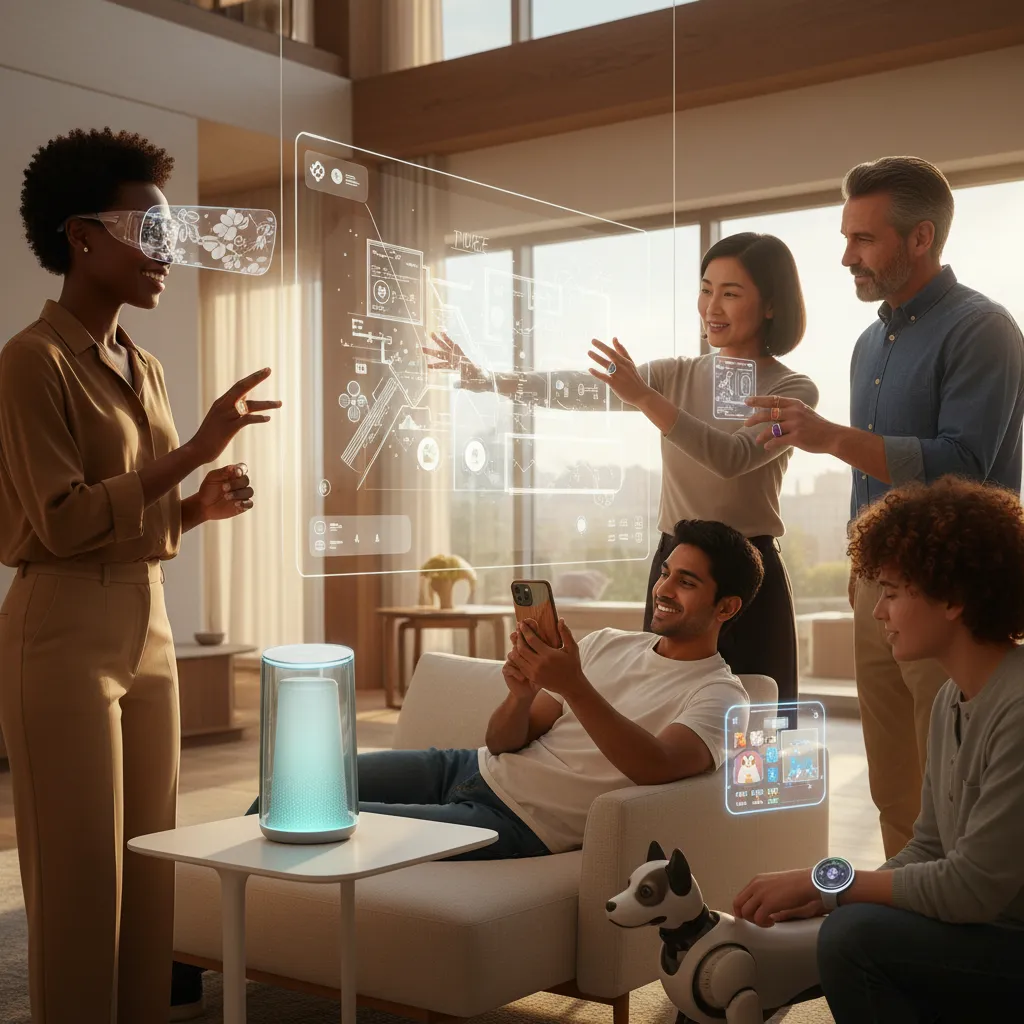
This next-generation approach is defined by its ability to understand context. It knows not just what you like, but why, when, and in what situation. A hyper-personalized system knows that on a stressful Tuesday, you might prefer a calming ambient playlist, whereas on a Friday evening, you’re looking for upbeat electronic music.
The core difference lies in its dynamic nature. It’s an ongoing conversation between you and the technology, where the AI tailored experiences evolve with every interaction, creating a truly symbiotic relationship. This is the essence of AI for individuals, moving from mass customization to a market of one.
The Engine Room: How AI Tailors Experiences in Real-Time
Creating these deeply personal experiences requires a sophisticated technological engine running behind the scenes. It’s a continuous cycle of data collection, intelligent processing, and adaptive output that makes the magic happen.
The Data Fuel: Weaving a Digital Tapestry
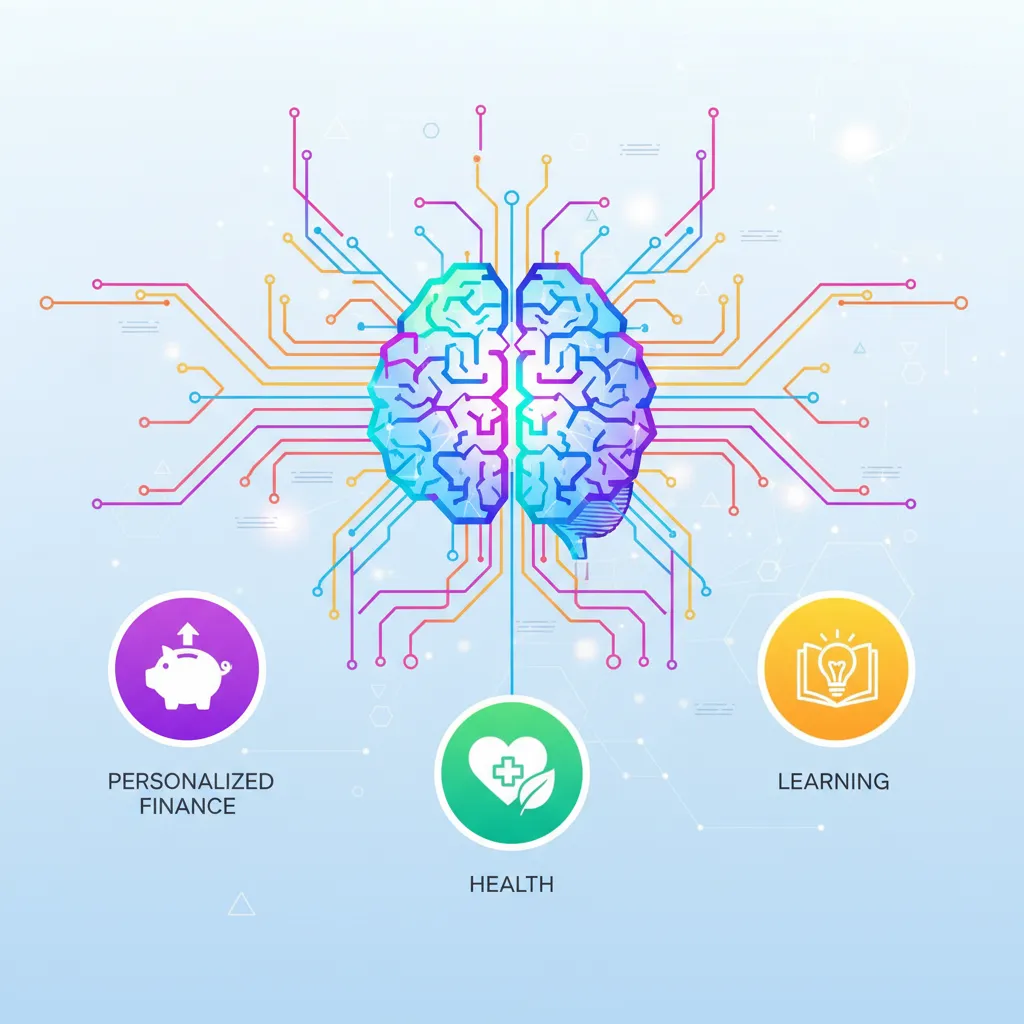
Data is the lifeblood of hyper-personalization. These advanced systems draw from a wide array of sources to build a holistic, multi-dimensional profile of an individual.
- Explicit Data: This is information you provide willingly, such as user preferences, survey answers, or a “thumbs up” on a song.
- Implicit Data: This is behavioral data gathered from your actions, including browsing history, click-through rates, time spent on a page, and purchase history.
- Contextual Data: This is real-time environmental data that adds a crucial layer of understanding. It includes your geographic location, the time of day, the device you’re using, and even external factors like weather or current events.
It’s the masterful synthesis of these data streams that allows an AI to understand the full context of your needs.
The Role of Machine Learning and Adaptive AI
Once the data is collected, powerful machine learning algorithms get to work. Unlike the static models of traditional personalization, adaptive AI systems are designed to learn and evolve continuously.
Techniques like reinforcement learning allow the AI to experiment with different recommendations and learn from the outcomes—much like a human learns through trial and error. Predictive analytics models forecast future behaviors and needs with startling accuracy. These smart AI systems don’t just follow a script; they rewrite it with every new piece of information, ensuring the experience remains relevant and dynamic. This is a core component of how AI tailors experiences.
Related: GPT-4o: The Future of AI is Here (And It’s Free)
The Output: A Uniquely Curated Reality
The final step is translating these complex calculations into a seamless user experience. This isn’t just about showing the right ad. It’s about fundamentally reshaping the digital and physical environment around the user.
- Dynamic User Interfaces: A website or app’s layout could change based on your goals for that session.
- Proactive Notifications: A wellness app might send a reminder to stretch based on your calendar and wearable data, just before a long meeting.
- Tailored Content Delivery: An educational platform could adjust the difficulty and format of a lesson in real-time based on a student’s comprehension.
This is the manifestation of the personalized web, where the internet starts to feel less like a static library and more like a personal concierge.
Hyper-Personalized AI in Daily Life: A Glimpse into the Near Future
The impact of hyper-personalization will be felt across every industry, transforming mundane tasks into frictionless, intelligent experiences. Here’s a look at how these next-gen AI systems are set to revolutionize our world.
Reinventing Retail and E-commerce
The retail sector is one of the earliest adopters. Forget simple “customers who bought this also bought…” suggestions. The future of retail is about a 1:1 shopping journey.
Imagine a fashion website that acts as your personal stylist. It knows your size, style preferences, and budget. But it also knows about the upcoming wedding on your calendar and the weather at the destination, suggesting the perfect outfit and accessories. In-store, smart mirrors could show you how an outfit looks without you trying it on, while dynamic pricing adjusts offers in real-time based on your loyalty and purchase intent. This is the pinnacle of AI in retail personalization and AI driven recommendations.
Related: Revolutionize Your Marketing with AI Automation
The Personalized Streaming and Entertainment Universe
The entertainment industry is on the cusp of a major shift. AI in entertainment will move from passive recommendations to active co-creation.
- Dynamic Content: Movie trailers could be generated on the fly, emphasizing the actors or genres you love most. Video game difficulty could adapt in real-time to your skill level, keeping you perfectly challenged.
- Mood-Based Curation: Your music streaming service could connect to your biometric data, curating a playlist that calms you down when your heart rate is high or energizes you for a workout.
- Interactive Narratives: Storytelling could become a collaborative process, where your choices genuinely shape a unique plotline that no one else experiences in the same way.
A New Era of Education and Personal Growth
AI in education personalization promises to solve the “one size fits all” problem that has plagued classrooms for centuries. Adaptive learning platforms can identify a student’s individual strengths and weaknesses, tailoring the curriculum to their specific needs and learning pace.
Beyond the classroom, personal AI coaches will become common tools for lifelong learning and AI for personal growth. Want to learn a new language? Your AI coach will create a personalized lesson plan based on your progress, schedule, and learning style. Aspiring to a new career? Your AI mentor can analyze your skills, identify gaps, and recommend the most efficient path to get there with custom AI solutions.
Related: AI in Education: Transforming the Learning of the Future
Proactive Wellness and Healthcare
The AI impact on individuals will perhaps be most profound in health and wellness. Hyper-personalization will shift the focus from reactive treatment to proactive, preventative care.
Your AI in wellness coach could analyze data from your smartphone, wearable devices, and even smart home appliances to provide holistic health advice. It might suggest a specific recipe for dinner based on your micronutrient deficiencies, recommend a walk when it notices you’ve been sedentary too long, or guide you through a meditation session when it detects signs of stress. This creates a deeply personalized path to well-being.
Related: AI in Healthcare: Revolutionizing Personalized Medicine Related: The Role of AI in Preventative Healthcare: A Personalized Path to Wellness
Intelligent Finance for Everyone
AI in finance personalization is democratizing access to sophisticated financial advice. Smart budgeting apps can already categorize your spending, but the next generation of financial assistants will be far more capable. They will act as your personal CFO, offering predictive insights into your cash flow, providing personalized investment strategies based on your risk tolerance and life goals, and automatically negotiating better rates on your bills.
The Benefits and the Big Questions: Navigating the New Frontier
While the potential of hyper-personalization is immense, its implementation brings a host of complex challenges and ethical considerations to the forefront. A balanced perspective is essential.
The Upside: A World of Unprecedented Convenience and Efficiency
The benefits of personalized AI are clear and compelling. By filtering out the noise and anticipating our needs, these systems promise a future of unparalleled convenience.
- Reduced Cognitive Load: We’ll spend less time searching for information and making trivial decisions, freeing up mental energy for more important tasks.
- Enhanced Discovery: By understanding our deeper interests, AI can introduce us to new hobbies, ideas, and products we would have never found on our own.
- Improved Outcomes: In fields like health and education, personalization can lead to quantifiably better results, from improved patient health to more effective learning.
- Increased Engagement: Experiences that feel truly relevant and personal are inherently more engaging and enjoyable.
Related: The Top AI Productivity Tools for 2024
The Ethical Tightrope: Data Privacy and Algorithmic Bias
This level of personalization requires an enormous amount of personal data, raising critical questions about AI and data privacy. How is this data being stored and protected? Who has access to it? The potential for misuse, from manipulative advertising to social scoring, is significant.
This brings us to ethical AI personalization. The algorithms themselves can perpetuate and even amplify existing societal biases. If an AI is trained on biased data, it may make discriminatory recommendations, creating digital echo chambers and limiting opportunities for certain individuals. Transparency and accountability in how these systems are designed and governed are paramount.

Related: AI Ethics: The Guide to Responsible Development for the Future
The Human Element: Augmentation vs. Replacement
Finally, we must consider the nature of AI and human interaction. Is there a risk of over-reliance on AI, leading to a decline in our own decision-making skills and serendipitous discovery? The goal should be to create AI that augments human intelligence, not replaces it. We must design these systems to empower us with better information and choices, while always keeping human autonomy and agency at the center.
The Future of AI is You: What’s Next for Hyper-Personalization?
The technology is still in its early stages, but the trajectory is clear. The future is moving toward even more integrated, seamless, and autonomous forms of personalization.
The Rise of Personal AI Agents
The AI assistants future lies in the evolution from today’s reactive voice assistants to proactive personal agents. These personalized digital assistants will function as our digital doubles, capable of managing complex schedules, negotiating purchases on our behalf, and learning our long-term aspirations to help us stay on track. This will be the ultimate form of AI for individuals.
Towards Ambient, Invisible Intelligence
Hyper-personalization will eventually break free from our screens and become an ambient layer of our environment. Your smart home will adjust the lighting and temperature based on your mood and circadian rhythm. Your car will pre-configure its settings and suggest the most scenic or efficient route based on your current goal. This invisible, integrated intelligence will make technology feel less like a tool we use and more like an extension of our own intentions.
Related: AI Smart Home Automation: The Future of Connected Living
The Democratization of Custom AI
Looking further ahead, we may see the rise of tools that allow individuals to train their own custom AI solutions. Instead of relying on a single model from a large tech company, you could cultivate a personal AI that is trained exclusively on your data, aligned perfectly with your values, and exists solely to serve your interests.
Conclusion
Hyper-personalized AI represents a paradigm shift in our relationship with technology. We are moving from a world where we must learn to navigate complex systems to a world where those systems learn to navigate us. By understanding our context, anticipating our needs, and adapting in real-time, these intelligent systems promise to make our lives more efficient, engaging, and fulfilling.
The journey ahead is both exciting and challenging. Realizing the full potential of this technology while safeguarding our privacy and autonomy will require careful design, thoughtful regulation, and a public that is both educated and engaged. The future isn’t just about what AI can do, but about what it can help you become. It’s a future tailored, curated, and created just for you. Are you ready to co-create it?
FAQs
Q1. What is the difference between personalization and hyper-personalization?
Personalization typically uses past data (like purchase history) to make reactive recommendations for broad user segments. Hyper-personalization uses real-time, contextual, and behavioral data to predict future needs and deliver proactive, one-to-one experiences for a specific individual.
Q2. How does hyper-personalized AI work?
It works through a continuous cycle: it collects diverse data (behavioral, transactional, contextual), uses advanced machine learning and adaptive AI to analyze this data in real-time to understand intent, and then delivers a tailored experience, content, or recommendation across various touchpoints.
Q3. What are some real-world examples of hyper-personalization?
Examples include streaming services that create movie trailers based on your favorite actors, adaptive learning platforms that adjust course material to a student’s pace, and financial apps that provide predictive budgeting advice based on your real-time spending habits and upcoming bills.
Q4. What are the main benefits of AI-driven personalization?
The primary benefits include greatly enhanced customer experiences, increased user engagement and loyalty, improved efficiency by reducing search time and decision fatigue, and better outcomes in areas like healthcare, education, and finance through tailored guidance.
Q5. What are the ethical risks associated with hyper-personalized AI?
The main risks involve data privacy and security, as these systems require vast amounts of personal information. Other concerns include the potential for algorithmic bias leading to discrimination, the creation of filter bubbles that limit exposure to diverse viewpoints, and the possibility of manipulative marketing.
Q6. Is my data safe with personalized AI systems?
Data safety depends entirely on the company implementing the AI. Reputable organizations use encryption, anonymization, and strict data governance policies to protect user data. However, consumers should always be aware of the data they are sharing and review privacy policies to understand how their information is being used and protected.