The Rise of Hyper-Personalized AI Assistants: Boost Your Daily Productivity

Introduction
Remember the days when the peak of digital assistance was asking your phone for the weather? We’ve come a long way. The simple, reactive voice commands of early Voice AI assistants like Siri and Alexa were just the opening act. Now, the main event is here: the era of the hyper-personalized AI assistant.
Imagine a digital companion that doesn’t just wait for your commands but anticipates your needs. It knows you prefer your meetings in the afternoon, reminds you to call your mom on her birthday without being told, and drafts an email response in your exact tone of voice. This isn’t science fiction anymore; it’s the tangible reality of Hyper-personalized AI.
These intelligent assistants are evolving into true partners, designed to understand your unique rhythms, preferences, and goals. They are the ultimate AI productivity tools, built to help you navigate the complexities of modern life, both professionally and personally.
In this deep dive, we’ll explore the transformative power of these AI personal assistants. You’ll learn how they are fundamentally different from their predecessors, how they can revolutionize your daily routine, and what the exciting future of AI assistants holds. Get ready to streamline your life and unlock a new level of efficiency.
Beyond “Hey Siri”: The Evolution into Hyper-Personalized AI
For years, our interaction with AI has been a simple call-and-response. We ask a question, we get an answer. We give a command, it’s executed. While useful, this model lacks the one thing that defines a truly great assistant: context. The revolution we’re witnessing is the shift from a reactive tool to a proactive, context-aware partner.
From Reactive Commands to Proactive Partnership
The first generation of smart personal assistants operated on a narrow set of predefined rules. They could set a timer or play a song because they were explicitly programmed to do so. They couldn’t, however, understand the why behind your request.
Hyper-personalization changes the game entirely. By leveraging advanced machine learning algorithms, these new assistants analyze your behavior over time to build a dynamic understanding of who you are.
- They learn your schedule: They notice you’re always swamped on Mondays and proactively suggest blocking off focus time.
- They understand your communication style: They analyze your sent emails to learn your tone, common phrases, and even your emoji usage for drafting replies.
- They recognize your priorities: They learn which contacts, projects, and tasks are most important to you and prioritize notifications and reminders accordingly.
This shift creates a truly personalized AI experience, turning your device from a simple tool into a genuine personal AI companion that actively works to make your life easier.
What Makes an AI “Hyper-Personalized”?
The magic behind this evolution lies in a powerful combination of technologies that allow an AI to learn, adapt, and predict.
- Contextual Awareness: It’s about understanding the full picture—your location, the time of day, your recent activities, and the people you’re interacting with. A hyper-personalized AI knows that “remind me to follow up on the proposal” means the one you were just discussing in a meeting, not one from three weeks ago.
- Deep Data Integration: These systems securely connect to your digital ecosystem—your calendar, emails, project management tools, and even your smart home devices. This allows for a holistic view of your life, enabling seamless
AI powered personal management. - Predictive Analytics: By analyzing past patterns, the AI can make highly accurate predictions about future needs. It can suggest a flight for your annual conference before you even start searching or recommend a recipe for dinner based on the ingredients it knows are in your smart fridge.
- Natural Language Understanding (NLU): Modern AIs go beyond recognizing keywords. They understand nuance, sentiment, and complex, multi-part requests, allowing for more natural and fluid conversations.
This intelligent synthesis of data and learning is what enables an AI to offer the right support at the right time, often without you even having to ask.
The Core Pillars of AI-Driven Productivity
So, how does this advanced technology translate into tangible benefits for your daily life? The impact of daily productivity AI can be broken down into three core pillars that work together to give you back your most valuable resource: time.
Intelligent Task Automation: Your Digital Autopilot
Every day is filled with small, repetitive tasks that drain your mental energy and consume your time. Think about sorting through an overflowing inbox, scheduling meetings, or creating expense reports. AI task automation takes these mundane chores off your plate completely.
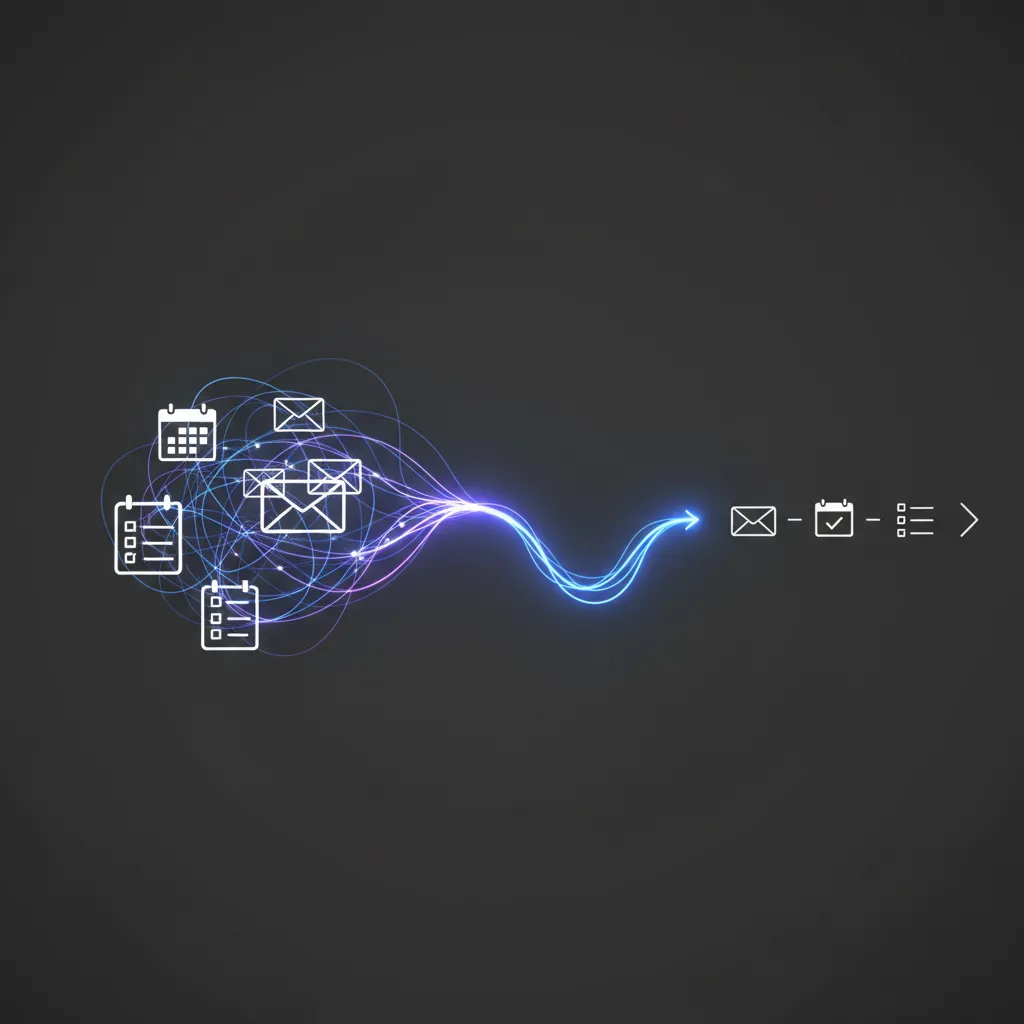
An intelligent assistant can:
- Triage Your Inbox: Automatically sort emails into categories like “Urgent,” “To-Do,” and “Read Later.” It can even draft replies to common inquiries.
- Manage Your Subscriptions: Identify and help you cancel unused subscriptions, saving you money effortlessly.
- Automate Workflows: Create rules that trigger multi-step actions. For example, when a client signs a contract via DocuSign, the AI can automatically create a project in Asana, a folder in Google Drive, and a welcome email to the client.
These AI productivity hacks free up cognitive space, allowing you to focus on the strategic, creative, and high-impact work that truly matters.
Proactive Time Management and AI-Driven Scheduling
Managing your calendar can feel like a full-time job. The constant back-and-forth of scheduling meetings, blocking out focus time, and juggling conflicting appointments is a major productivity killer. AI time management transforms your calendar from a static grid into a dynamic, intelligent system.
AI driven scheduling tools can:
- Negotiate for You: Instead of you sending endless emails to find a meeting time, your AI assistant can be given permission to access your calendar and negotiate a time with other attendees’ assistants on your behalf.
- Find Optimal Times: By analyzing your personal energy patterns (when you’re most productive) and the priorities of your tasks, the AI can build a daily schedule optimized for peak performance.
- Protect Your Focus: It can automatically block off “deep work” sessions and decline or suggest new times for meeting requests that threaten to derail your focus.
This level of AI personal organizer capability ensures your day is structured around your goals, not someone else’s agenda.
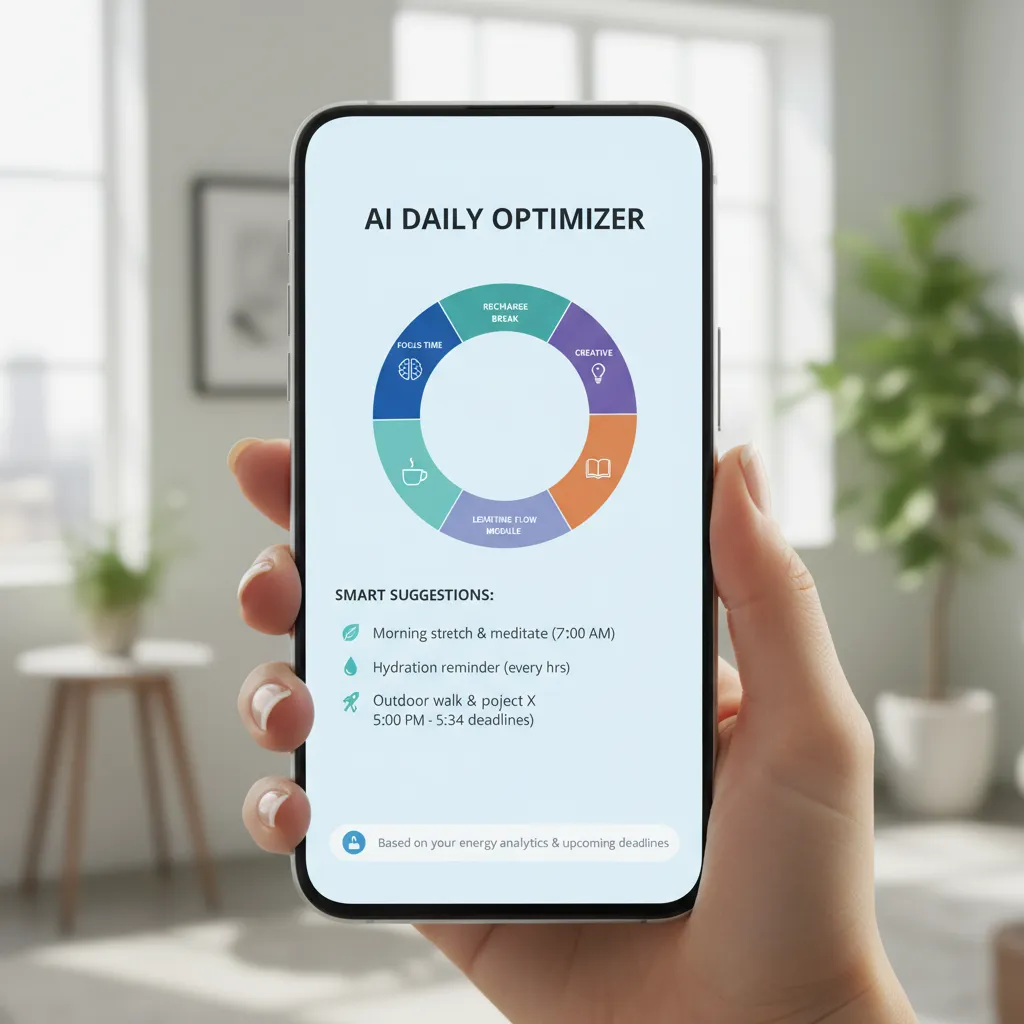
For anyone looking to take back control of their day, exploring the best AI personal assistants for productivity is a crucial first step. [Related: Best AI Personal Assistants for Productivity]
Seamless Smart Home Integration and Routine Streamlining
The power of AI in everyday life extends far beyond your screen. Smart home AI integration creates an environment that adapts to your needs in real time, helping to streamline daily routine AI in a powerful way.
Imagine this:
- Morning Routine: Your AI assistant knows you wake up at 6:30 AM. At 6:25 AM, it slowly raises the blinds, starts brewing your coffee, and sets the thermostat to your preferred temperature. When you walk into your office, it briefs you on your day’s schedule and top priorities.
- Work Mode: When your calendar shows a “Focus Work” block, your assistant can automatically put your phone on “Do Not Disturb,” play your focus playlist, and dim the lights in your office.
- Evening Wind-Down: An hour before your scheduled bedtime, the AI can dim the lights throughout the house, turn off distracting screens, and play calming ambient sounds, helping you disconnect and prepare for a restful night’s sleep.
This is the ultimate application of AI technology for home—creating a living space that actively supports your well-being and productivity goals.

Real-World Applications: Putting Hyper-Personalized AI to Work
The theory is impressive, but the practical application of these AI assistant apps is where the real transformation happens. Let’s look at how this technology is being used by different people to solve real-world problems.
For the Busy Professional: Reclaiming Your Workday
For AI for busy professionals, the goal is to minimize administrative overhead and maximize strategic impact. These are AI solutions for work that deliver a clear ROI in terms of time saved and output increased.
- Meeting Preparation: Before a big meeting, your AI can automatically gather all relevant documents, recent email chains with attendees, and public news about their company, presenting you with a concise, actionable briefing.
- Action Item Tracking: During a virtual meeting, the AI can transcribe the conversation and identify key decisions and action items, assigning them to the right people in your project management tool afterward.
- Communication Assistance: It can help you clear your email backlog by summarizing long threads and suggesting prioritized responses, ensuring you never miss a critical message.
This level of support allows professionals to operate at a higher strategic level. For a deeper look at how new hardware is enabling these capabilities, see our guide on [Related: Copilot+ PCs: A New Era of Creative Productivity].
In Everyday Life: From Meal Planning to Travel Itineraries
AI tools for personal use are designed to reduce the friction of daily life. They handle the mental load of planning and organization so you can be more present and enjoy your time.
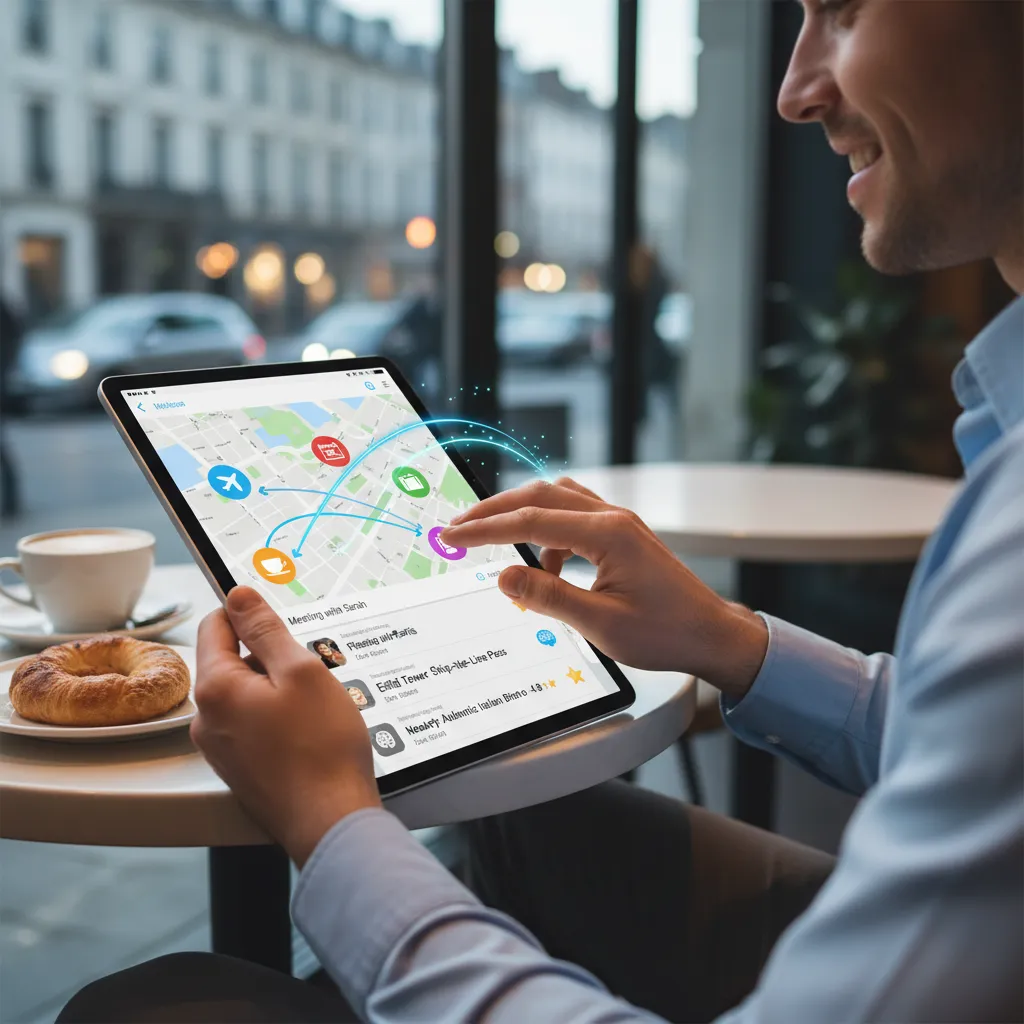
- Smarter Travel: Planning a trip? Your AI can act as a personalized travel agent. Tell it your budget, interests, and dates, and it can research and present options for flights, hotels, and activities, all tailored to your known preferences (e.g., “I prefer aisle seats and hotels with a gym”).
- Health & Fitness: Your assistant can connect with your health apps to track your fitness goals, suggest workouts based on your schedule, and even create a weekly meal plan complete with a grocery list.
- Financial Management: By integrating with financial apps, your AI can help you track spending, categorize expenses automatically, and notify you of upcoming bills, making personal finance management seamless. To learn more, check out our review of the [Related: Top AI Finance Apps to Revolutionize Your Personal Wealth in 2024].
Custom AI Assistants: Building Your Perfect Digital Companion
The frontier of this technology is the ability to create Custom AI assistants. Platforms are emerging that allow AI for individual users to build their own AI agents tailored to specific, niche workflows. A researcher could build an AI to scour academic papers for specific data, while a musician could create one to manage booking inquiries and organize their tour schedule. This represents the ultimate form of a personalized AI experience, where the tool is molded perfectly to the user’s unique needs.
Choosing the Right AI Assistant App: What to Look For
With a growing market of AI assistant apps, selecting the right one can be daunting. Here are the key factors to consider to ensure you choose an effective and trustworthy personal AI companion:
- Personalization & Learning: The most critical feature. Look for reviews and descriptions that emphasize the AI’s ability to learn from your behavior and adapt over time. A static, rule-based system won’t deliver the hyper-personalized benefits you’re looking for.
- Integration Capabilities: An assistant is only as powerful as the tools it can connect to. Ensure it integrates seamlessly with your core ecosystem—be it Google Workspace, Microsoft 365, Slack, Notion, or other apps you use daily.
- Privacy & Data Security: You’re trusting this tool with a significant amount of personal data. Scrutinize the company’s privacy policy. Look for commitments to data encryption, user control over data, and transparency about how your information is used. On-device processing is a huge plus.
- User Interface (UI) & Experience (UX): The best technology is useless if it’s difficult to use. The app should be intuitive, with a clean interface that makes it easy to delegate tasks, set preferences, and view your automated workflows.
- Platform Availability: Choose an assistant that works where you work. It should have a presence across your devices—smartphone, desktop, and web—for seamless access and continuity.
The Future of AI Assistants: What’s Next?
The rapid evolution of AI personal assistants is just beginning. The trajectory is moving from “assistants” that help with tasks to autonomous “agents” that can manage entire projects. The future work productivity landscape will be shaped by these advancements.
Here’s a glimpse of what’s on the horizon:
- Emotional Intelligence: Future AIs will be better at understanding human emotion and sentiment, allowing for more empathetic and effective communication, especially in customer service and personal coaching applications.
- Proactive Goal Achievement: Instead of just managing your tasks, your AI will help you achieve your long-term goals. If you tell it you want to learn Spanish, it will schedule lessons, find practice partners, recommend media, and track your progress proactively.
- On-Device and Edge Computing: To address privacy concerns, more processing will happen directly on your devices rather than in the cloud. This trend is already being pushed by major players, as seen in the latest announcements. For more insight into this, explore our breakdown of [Related: Apple Intelligence: The Ultimate Guide to Apple’s New AI].
- Augmented Reality Integration: Imagine your AI assistant displaying information as an overlay in your AR glasses, guiding you through a new city, or providing real-time data during a business negotiation.
These advancements will further blur the lines between the digital and physical worlds, making intelligent assistants an even more indispensable part of our lives.
Conclusion
We stand at a pivotal moment in the history of personal computing. The shift from generic, command-based tools to deeply intuitive, hyper-personalized AI assistants is not just an incremental update; it’s a paradigm shift. These tools are redefining what it means to be productive, organized, and in control of our digital lives.
By embracing AI task automation, AI driven scheduling, and seamless smart home AI integration, you can offload the mental clutter of modern life and reclaim your focus for what truly matters. Whether you’re a busy professional aiming to optimize your workflow or an individual looking to streamline your daily routine, a personal AI companion is poised to become your most valuable ally.
The journey has just begun. The future promises even more powerful and intuitive AI efficiency tools. The question is no longer if AI will manage our lives, but how we can best leverage it to build a more efficient, intentional, and productive future.
Ready to build your own productivity powerhouse? Start exploring one of the AI assistant apps today and watch your daily efficiency transform.
Frequently Asked Questions (FAQs)
Q1. What is a hyper-personalized AI assistant?
A hyper-personalized AI assistant is an advanced digital tool that goes beyond simple voice commands. It uses machine learning to understand an individual user’s unique habits, preferences, and context to proactively anticipate needs, automate complex tasks, and offer tailored recommendations to boost daily productivity.
Q2. How does AI improve daily productivity?
AI improves daily productivity by automating repetitive tasks (like sorting emails), managing schedules intelligently (by finding optimal meeting times), summarizing long documents, and streamlining routines. This frees up a user’s time and mental energy to focus on more strategic and creative work.
Q3. What’s the difference between a standard AI assistant and a personalized one?
A standard assistant (like early versions of Siri or Alexa) is reactive; it responds to specific commands. A personalized assistant is proactive; it learns from your behavior to anticipate your needs, understand context, and manage tasks without explicit, step-by-step instructions.
Q4. Can AI really organize my entire life?
While no single AI can manage everything, a well-integrated AI personal organizer can come very close. By connecting to your calendar, email, project tools, and smart home devices, it can manage your schedule, automate tasks, handle communications, and streamline your daily routines at home and work, creating a highly organized ecosystem.
Q5. What are the privacy concerns with personalized AI?
The main concern is data security. These AIs require access to personal data like emails and calendars to be effective. It is crucial to choose providers with strong privacy policies, end-to-end encryption, and clear user controls over data. The industry trend towards on-device processing is helping to mitigate some of these risks.
Q6. What is the most intelligent personal AI assistant available now?
The “most intelligent” assistant is subjective and depends on the user’s ecosystem and needs. Leading contenders include Google Assistant for its deep integration with Google services, custom GPTs built on platforms like OpenAI, and specialized productivity assistants like Motion or Reclaim.ai that focus heavily on AI driven scheduling.
Q7. How do I get started with an AI productivity tool?
Start by identifying your biggest time-wasting tasks. Then, research AI assistant apps that specialize in solving those problems (e.g., email management, scheduling, or task automation). Begin with a free trial to test its integration with your existing tools and see if its workflow fits your personal style before committing.