Google’s AI Search: The End of SEO as We Know It?

Introduction: The Ground is Shaking Under the SERP
For decades, the foundation of digital marketing has been the Google search engine results page (SERP). We built empires on the promise of the blue link, striving for that coveted number one spot. But the landscape is undergoing its most profound transformation since the mobile revolution: the integration of generative AI in search.
Google’s introduction of the Search Generative Experience (SGE), powered by sophisticated Large Language Models (LLMs), has shifted the SERP from a directory of links to a canvas of immediate answers. Instead of directing users to a website, Google now attempts to answer complex queries on the SERP itself, synthesizing information from multiple sources.
This has sparked an existential question among content creators and marketers: Is Google’s AI search truly the end of SEO as we know it?
The short answer is no—but the SEO professional who refuses to adapt is certainly facing obsolescence. The era of simple keyword matching is over. We are entering an era of semantic mastery, entity-based SEO, and radical transparency. This article will dissect the shift, detail the threats posed by zero-click searches, and—most importantly—lay out the definitive, multi-pillar strategy for future-proof SEO in the AI-dominated landscape.
We’re not witnessing the death of search engine optimization; we’re witnessing its evolution into something more nuanced, more demanding, and infinitely more valuable.
Understanding the Seismic Shift: What is Google AI Search (SGE)?
To grasp how AI changes SEO, we must first understand the mechanism of the revolution. SGE is not merely a feature update; it’s a philosophical pivot for Google.
Traditionally, Google used algorithms like PageRank and BERT to find the most relevant link for a set of keywords. Now, with AI-powered search, Google uses generative AI (like LaMDA or Bard/Gemini) to create an original, synthesized answer summary directly at the top of the results page—often above the traditional ten blue links.
From Links to Answers: The Mechanism of Generative AI in Search
The SGE interface typically includes:
- The AI Snapshot: A paragraph or two summarizing the answer, generated by the LLM.
- Source Links: A carousel or list of 3 to 5 source URLs that the AI used to generate its response. This is the new “Holy Grail” of ranking.
- Follow-Up Questions: Prompts for the user to continue the conversational search thread.
The shift is profound: success is no longer defined purely by clicks from the organic results (Position 1–10). Success is now defined by becoming one of the cited entity-based SEO sources used in that initial AI Snapshot, often earning visibility without a direct click.
The Rise of Zero-Click Searches
The most immediate and concerning impact of the Google SGE update is the acceleration of zero-click searches. A zero-click search is any query that is fully answered on the SERP without the user needing to navigate to an external website.
Before SGE, featured snippets already drove high zero-click rates, especially for quick facts, weather, and definitions. Now, SGE can handle complex, multi-faceted queries (e.g., “What are the pros and cons of an electric truck for a small business owner in Texas?”). When the AI provides a comprehensive, well-cited answer, the user’s information need is satisfied.
The Reality Check: While SGE often links back to sources, the volume of traffic reaching the site is expected to decrease for informational content, forcing publishers to justify the click with superior, deeper content or a clear transactional path.
The Core Threat: How AI Erosion Changes Traffic Dynamics
The transformation driven by AI in search engines poses two primary threats to traditional SEO models: keyword cannibalization by the SERP and the re-evaluation of content value.
1. Keyword Cannibalization by the SERP
In the past, if a website ranked #1 for a specific long-tail keyword, it generally captured a significant percentage of the clicks. Today, the SGE feature is effectively cannibalizing the traffic for broad, informational, and definitional keywords.
If your core strategy relies on ranking for queries like “what is [topic]” or “how to [simple task],” those keywords are now prime targets for AI summarization. The traffic you relied on for the top-of-funnel engagement is being rerouted or absorbed by Google itself. This demands a strategic pivot toward commercial intent and complex problem-solving.
2. The Semantic Search Imperative
The core technology behind SGE—Large Language Models—doesn’t just look for keyword matches; it understands concepts, relationships, and entities. This pushes SEO firmly into the domain of semantic search.
- Old SEO: Matching a specific phrase (
best running shoes 2024). - New SEO: Proving expertise on the entity (
running shoes), understanding related entities (foot mechanics,marathon training,carbon plates), and answering complex, implicit user intent AI queries (e.g., “I have flat feet and need a durable shoe for long runs, but hate paying over $150”).
Content must move from being a collection of keywords to a comprehensive, interconnected resource that establishes topical authority on a subject.
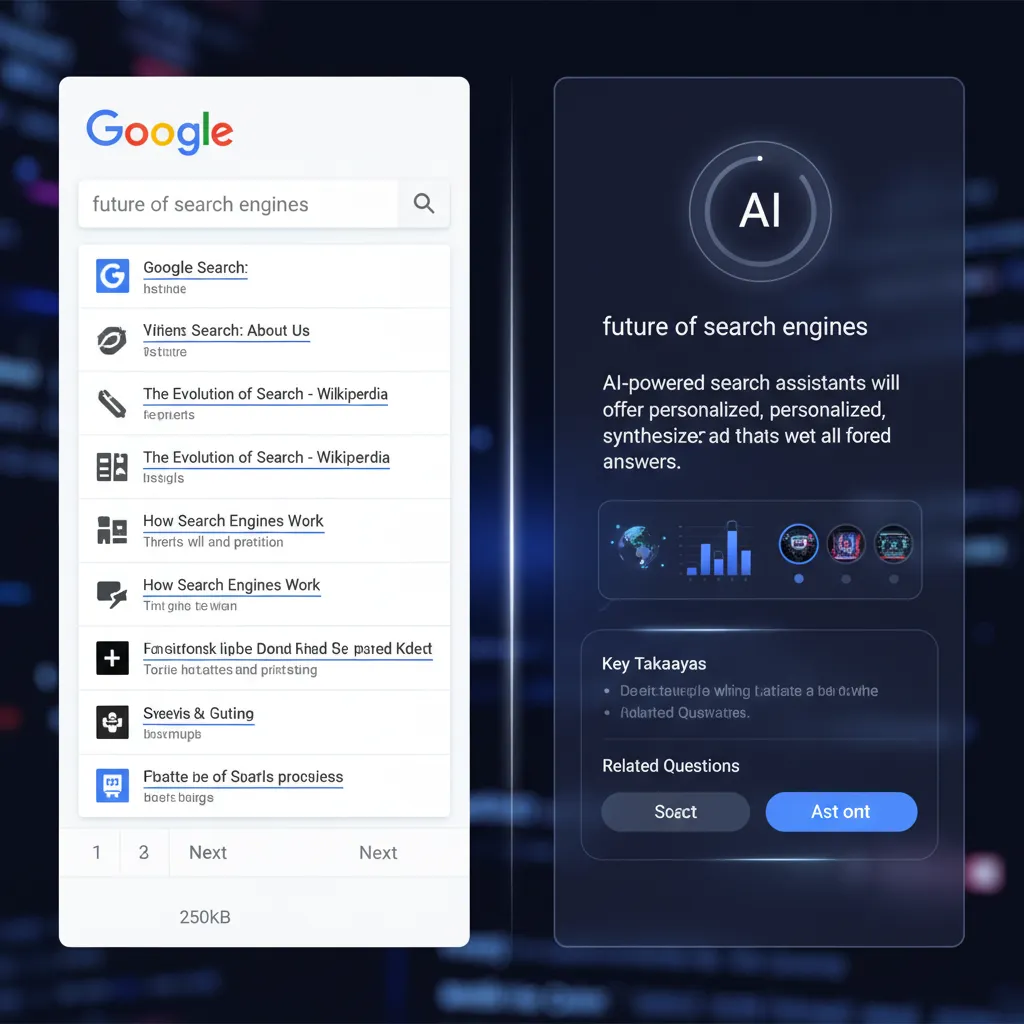 Side-by-side comparison of traditional Google search results and the new AI-powered search interface, highlighting the prominence of the generative AI snapshot.
Future-Proofing SEO: The Essential 5-Pillar Strategy
The emergence of Google’s new search engine architecture does not eliminate the need for optimization; it refines it. The goal is no longer to game the algorithm, but to become an indispensable source of truth that the AI must cite.
This AI-driven SEO requires a shift from tactical maneuvers to strategic, foundational excellence.
Pillar 1: Reinvesting in E-E-A-T and Topical Authority
If Google’s LLM is generating answers that millions rely on, the quality and trustworthiness of its source material are paramount. This is where E-E-A-T and AI intersect powerfully. E-E-A-T (Experience, Expertise, Authority, Trust) is no longer a soft metric; it is the gatekeeper for AI visibility.
- Experience: Demonstrate first-hand knowledge. If you are reviewing a product, show you used it. If you are giving financial advice, mention your certification or portfolio history.
- Authority: Ensure your content is cited by other highly authoritative sites. Focus on high-quality external linking and building a genuine brand reputation.
- Topical Authority: Instead of writing one blog post on a topic, write 20 interconnected posts that cover every facet of the subject. This signals to both the traditional algorithm and the AI that you are the definitive source.
If Google’s AI doesn’t trust your site, it simply won’t use it as a source, regardless of how perfectly you placed your keywords.
Pillar 2: Mastering Conversational Search and Entity-Based SEO
Conversational search mimics how humans speak. The queries are longer, more complex, and often contain implicit context.
Actionable Shift: From Keywords to Entities
Instead of targeting best CRM software, target the specific questions an LLM might be asked: What is the best CRM software for a real estate agent with a team of 5? or Compare HubSpot vs. Salesforce features for SMB lead tracking.
Entity-based SEO means recognizing that Google’s understanding of your content relies on its ability to identify and categorize the key ‘things’ (entities) you discuss.
- Linking and Context: When mentioning an entity (e.g., “iPhone 16 Pro Max”), ensure it is consistently capitalized and linked or referenced in a way that confirms its identity, helping Google’s Knowledge Graph map your content correctly.
- Comparison Content: AI excels at synthesizing comparative data. High-quality comparison articles, structured as clear pros/cons or feature matrices, are excellent source material for SGE snapshots.
Pillar 3: Optimizing for Multimodal Search and Structured Data
The future of search is not just text. Multimodal search incorporates voice, images, and video. As AI capabilities expand, users will interact with search engines using various input types.
Structured Data for AI
Structured data for AI (Schema markup) is the instruction manual you give to the machine. AI loves structured data because it presents information in a clean, predictable format.
- Key Schemas: Optimize for
HowTo,FAQPage,Review,Product, and especiallyQ&A. These schemas tell Google precisely which pieces of content can satisfy specific queries. - Speakable Content: For voice search and AI, ensure that content segments are short, clear, and designed to be read aloud (e.g., succinct, defined answers).
[Related: boosting-productivity-top-ai-tools-revolutionizing-workflows-creativity/]
Pillar 4: The Content Quality Renaissance (Depth over Volume)
The days of churning out 50 low-quality articles to hit every potential keyword variation are over. AI is a fantastic quality filter. Thin, repurposed content will never be cited by SGE.
AI content optimization means:
- Original Research: Publish proprietary data, case studies, or unique surveys. AI can scrape general knowledge everywhere, but it can only get your original data from you. This makes your site an invaluable source.
- Depth and Nuance: Focus on ‘Why’ and ‘How’ over ‘What.’ Provide sophisticated analysis that requires human interpretation, context, and domain expertise.
- Visual Support: Use the designated images wisely. High-quality visuals, diagrams, and custom infographics not only improve user experience but are crucial for multimodal search.
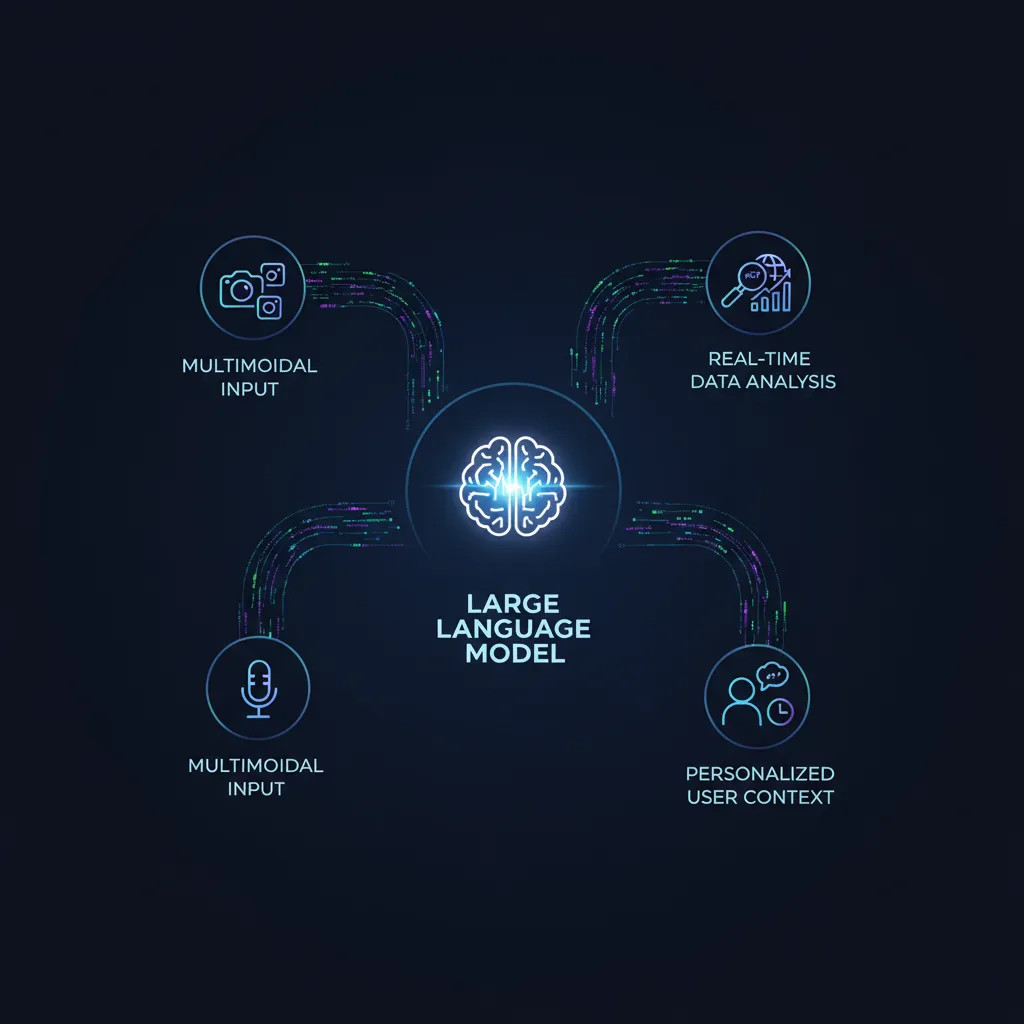 Infographic showing the core components of Google’s new AI search engine, like LLMs and multimodal search, emphasizing the role of entity recognition and E-E-A-T.
Pillar 5: Diversifying Beyond Organic Traffic
Relying solely on Google’s organic blue links is now a severe business risk. The AI impact on keyword research and organic visibility necessitates diversification.
- Email & Newsletter: Build a direct relationship with your audience that Google cannot intermediate.
- Niche Platforms: Invest in communities, specific social platforms (e.g., LinkedIn for B2B, TikTok for visual content), and specialized forums where your expertise is sought directly.
- Paid Search Strategy: Use paid channels to capture transactional intent keywords that AI may struggle to summarize, or use ads to reinforce brand visibility when SGE is active.
Adapting Your SEO Strategy: Tactical Steps for 2024 and Beyond
The strategic pillars must translate into concrete tactical actions for your day-to-day SEO workflows. This is the SEO strategies 2024 checklist for the AI era.
1. Rethinking Keyword Research: Intent over Volume
Forget chasing generic, high-volume keywords. Focus on highly specific, long-tail queries that indicate high commercial or complex informational intent.
| Old Keyword Focus | AI-Optimized Query Focus | Why It Works in AI Search |
|---|---|---|
| Best marketing software | HubSpot vs. Marketo for B2B lead nurturing and pricing comparison | AI can summarize features, but specific comparisons and nuanced pricing often lead users to the source for detail. |
| What is green energy | How does solar panel efficiency compare to wind turbine cost of ownership in high-density urban areas? | Complex, conditional queries require deep synthesis that often needs source verification or further human interaction. |
| Cheap flights to London | When is the cheapest time to book a flight from Chicago to London for a week-long trip in November 2025? | High commercial intent; AI answers serve as a guide, but the user must click through to book. |
The Goal: Optimize for the click-justifying detail—the specific price, the nuanced case study, the proprietary tool, or the unique perspective.
[Related: master-money-abroad-digital-nomad-finance-guide/]
2. Prioritizing Internal Linking and Information Architecture
In an entity-based SEO world, the architecture of your site helps Google connect the dots. A robust internal linking structure demonstrates your topical authority by showing the relationship between all your related pieces of content.
Use internal links not just for navigation, but for semantic context. Link specific terms to dedicated glossary or definition pages. This reinforces to the AI that you are a comprehensive information hub on the subject.
3. Integrating Multimodal and Visual Content
As AI becomes more visually and aurally intelligent, optimizing images and video is essential.
- Image Optimization: Use descriptive filenames and rich Alt Text that explains the image’s content and its relevance to the surrounding text. The required alt texts in this document (e.g., Infographic showing the core components of Google’s new AI search engine…) are designed to be extremely descriptive and contextually useful for both AI and accessibility.
- Video Snippets: Provide transcripts and comprehensive structured data (
VideoObject) for all video content. AI can synthesize information from video, but it needs text markers to do so effectively.
4. Leveraging the ‘Cite’ Feature: The New Backlink
When SGE generates an answer, it cites sources. Getting cited means your content is deemed authoritative enough to contribute to the collective knowledge base.
To maximize your chances of being cited:
- Concise Summaries: Ensure key facts and definitions are stated clearly and concisely, ideally in a single sentence or bullet point, making them easy for the AI to extract.
- Unique Insights: Provide novel analyses that aren’t available everywhere else, forcing the LLM to reference your domain specifically.
- Clarity over Style: While human-like writing is essential, clarity, factual accuracy, and verifiable claims must take precedence in the sections you expect SGE to pull from.
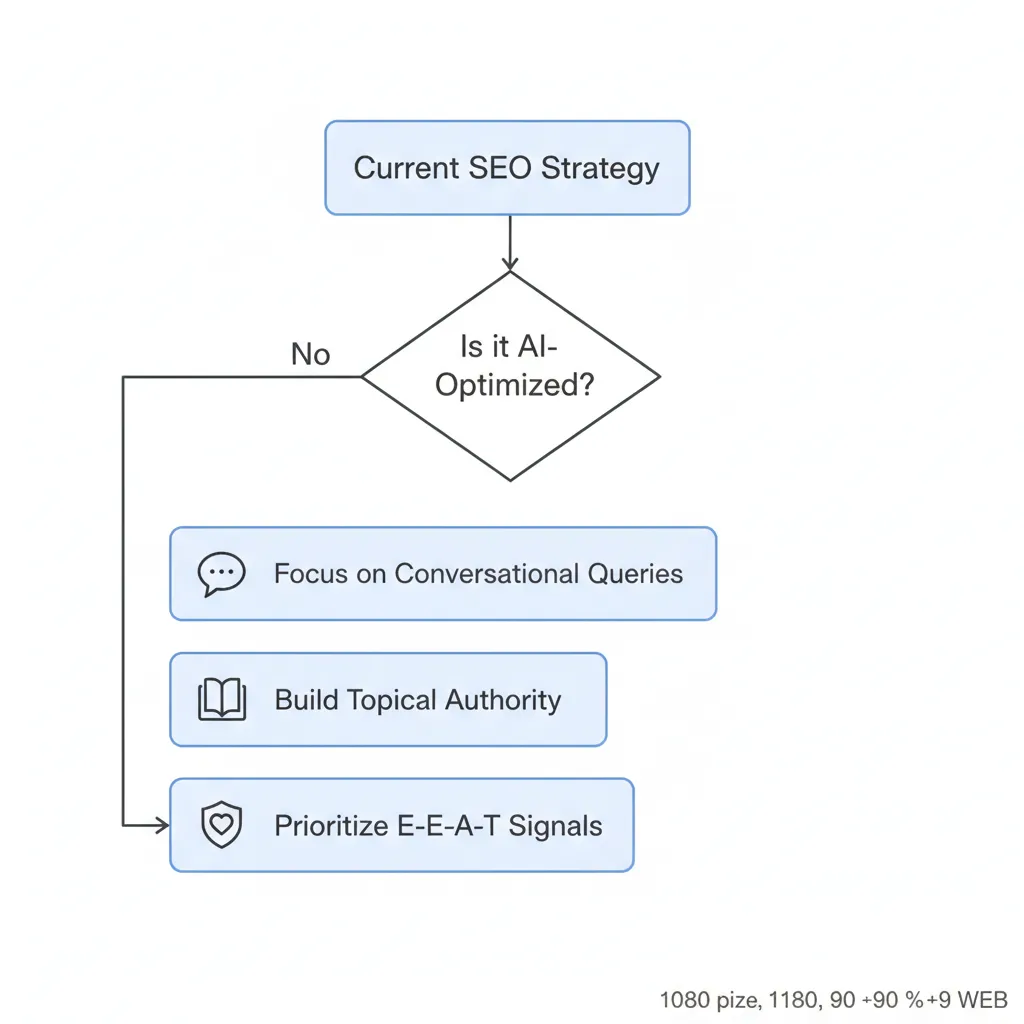 A simplified flowchart showing how to adapt an SEO strategy for AI search, focusing on conversational keywords, E-E-A-T, and structured data implementation.
The Convergence: SEO vs AI – A Partnership, Not a Rivalry
It is tempting to view the relationship as SEO vs AI, a battle for the SERP. But this perspective is counterproductive. AI is an accelerator, not an assassin, for high-quality content. It simply raises the bar significantly.
The most successful digital strategies in the coming decade will treat generative AI in search as an advanced indexer and gatekeeper. AI’s core goal is to understand human intent and provide the most trustworthy answer possible.
This forces SEO professionals to focus on the human aspects of content: genuine helpfulness, original insight, and verifiable credibility. The new optimization is not just for Googlebot, but for the sophisticated LLM feeding the answer engine.
The Role of Google Algorithm Updates and AI
The continuous stream of Google algorithm update AI adjustments confirms this direction. Updates are increasingly focused on E-E-A-T, helpfulness, and combatting mass-produced, low-value content. Tools that rely on mass scraping and spinning will fail under the weight of AI scrutiny.
The Future of Search
The ultimate direction of the future of SEO involves becoming an architect of knowledge, not just a marketer of links. This means embracing:
- AI Search Engine Optimization: Using AI tools for competitive analysis, content mapping, and schema generation, but applying human expertise for synthesis and tone.
- Topical Depth: Building content hubs that satisfy every potential query cluster around a core topic.
- Human Trust: Prioritizing author bios, external validation, and transparency to solidify E-E-A-T.
The end of old SEO is merely the beginning of sophisticated AI optimization.
[Related: ai-cybersecurity-revolutionizing-defense-threat-detection/]
 A depiction of an SEO professional adapting to AI search, symbolizing the challenge and necessity of pivoting strategies away from purely keyword-driven metrics.
Conclusion: Mastering the New Era of Search
The question, “Is Google’s AI Search the end of SEO?” has been definitively answered: No. It is the end of lazy SEO.
The Google AI search revolution is a clarity update. It forces marketers to stop chasing algorithmic loopholes and start focusing on the fundamental utility of their content. If your website is genuinely the best resource on a specific topic—original, trustworthy, deeply experienced—the AI will find you and cite you. You will become a foundational entity in the LLM’s knowledge base.
Success in the age of search generative experience is built on these foundational shifts:
- Focus on the Entity: Build a brand and content around concrete entities and complex relationships, not fleeting keywords.
- Prioritize E-E-A-T: Ensure every piece of content screams authority, experience, and trust.
- Optimize for the Answer: Structure content using schemas and conversational language so AI can easily extract the perfect summary.
The shift is massive, but the opportunity is equally large. Those who master adapting to AI search now will secure the high ground for the next decade of digital visibility. The future is bright, provided you are ready to put in the work that only humans—with genuine expertise—can perform.
FAQs: Ranking in the AI Search Era
Q1. What is the Search Generative Experience (SGE)?
SGE, or Search Generative Experience, is Google’s implementation of generative AI directly into the search results page. It uses Large Language Models (LLMs) to synthesize information from various web sources and present a comprehensive, summarized “AI Snapshot” answer at the top of the SERP, aiming to satisfy the user’s information need immediately.
Q2. How will zero-click searches affect my website traffic?
Zero-click searches will likely reduce traffic for high-level, informational, and definitional content (top-of-funnel). Since the Google SGE update provides the answer directly, users don’t need to click through. To counteract this, SEO professionals must focus on content with high commercial intent, unique data, or deep analysis that requires a click to be fully utilized.
Q3. How should I update my SEO strategy for E-E-A-T and AI?
To align with E-E-A-T and AI expectations, focus on demonstrating genuine Experience, Expertise, Authority, and Trust. This involves clearly identifying authors with verifiable credentials, publishing original research or case studies, getting external validation (high-quality backlinks), and building comprehensive topical authority around specific subjects.
Q4. What is the difference between traditional keyword optimization and conversational search?
Traditional keyword optimization targets specific phrases with the goal of matching those words exactly. Conversational search optimization targets the underlying user intent AI and the complex, long-tail questions users ask naturally (e.g., questions beginning with “why,” “how,” or “should I”). It shifts the focus from simple term density to understanding and answering comprehensive queries.
Q5. Is AI content optimization required for all my pages?
Yes, AI content optimization (meaning optimizing for readability, structured data, and entity recognition) should be applied across the board. However, prioritize your core revenue-driving content and informational pillars. Ensure key facts, definitions, and unique insights are clearly structured so Google’s LLM can easily identify and cite them, crucial for ranking in AI search.
Q6. Should I use Schema Markup for AI search?
Absolutely. Structured data for AI (Schema Markup) is essential. It provides a standardized data format that LLMs can easily parse and understand. Focus on FAQPage, HowTo, Product, and Q&A schemas to increase the chances of your content being utilized as a source for the SGE snapshot or other enriched results.
Q7. How does multimodal search change SEO?
Multimodal search integrates voice, image, and video inputs and outputs. It requires SEO practitioners to go beyond text optimization by: optimizing image file names and alt text thoroughly, providing transcripts and robust structured data for videos, and optimizing content for succinct, read-aloud answers crucial for voice search and AI.
Q8. Will SEO become obsolete?
No. The fundamental goal of SEO—connecting users to the most relevant, high-quality, and trustworthy information—remains the same. Google’s AI is a sophisticated filter. The role of the SEO professional is evolving from technical tactical optimization to high-level strategic content architecture, brand building, and establishing definitive topical authority.