Generative AI in Education: Revolutionizing Personalized Learning for Students
Introduction
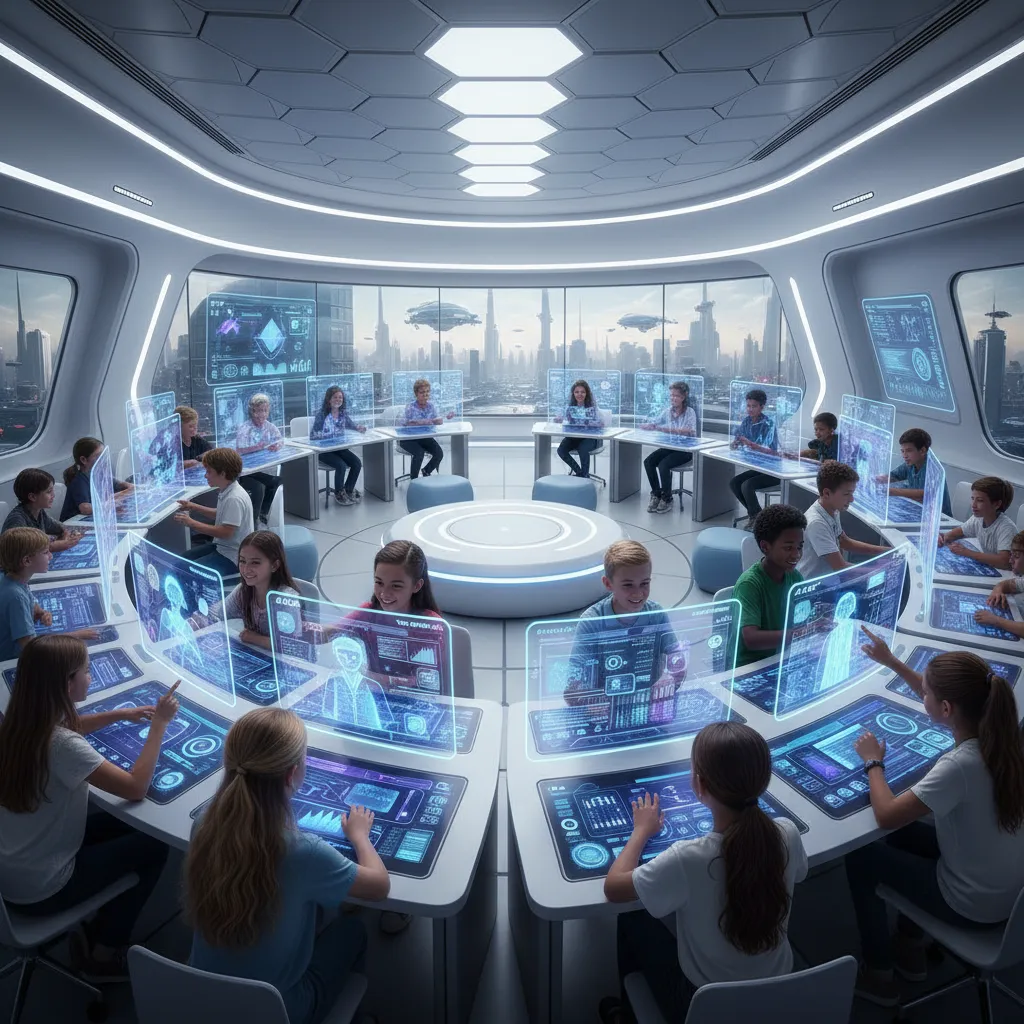
For centuries, the classroom has largely operated on a “one-size-fits-all” model. A single teacher stands before dozens of students, each with unique learning styles, paces, and interests, trying to deliver a standardized curriculum. While educators have worked tirelessly to differentiate instruction, the logistical challenge has always been immense. What if we could fundamentally reshape this paradigm? What if every student could have a learning experience tailored specifically to them?
This is no longer a futuristic dream; it’s the reality being ushered in by generative AI in education. This powerful technology is moving beyond simple automation to become a creative partner in the learning process. It’s not just about digital textbooks or online quizzes; it’s about creating a dynamic, responsive, and deeply personalized learning AI ecosystem.
In this comprehensive guide, we’ll explore the profound ways generative AI is revolutionizing education. You’ll learn how it’s creating customized learning paths, empowering both students and teachers, and what the future of education AI holds. We’ll unpack the core benefits, navigate the critical challenges, and show you why this educational technology innovation is the most significant shift in learning since the internet.
The Dawn of a New Era: What is Generative AI in Education?
Before we dive into the applications, it’s essential to understand what makes generative AI so different. Unlike traditional AI, which is often designed to analyze data and make predictions (discriminative AI), generative AI creates something entirely new. Think of ChatGPT, Midjourney, or Google’s Gemini—they generate original text, images, and code based on prompts.
In an educational context, this creative capability is a game-changer. Generative AI can produce:
- Unique practice problems tailored to a student’s specific mistake.
- Personalized reading materials that match a student’s comprehension level and interests.
- Drafts of lesson plans, grading rubrics, and parent communications for teachers.
- Interactive simulations and role-playing scenarios to explain complex concepts.
This ability to generate endless, bespoke ai educational content is the engine driving the shift towards truly individualized learning experiences.
The Core Revolution: AI-Powered Personalized Learning Experiences
The central promise of AI in education is personalization at a scale never before possible. Instead of a single path, AI creates millions of individual journeys, each adapting in real-time to the learner’s needs.
Creating Customized Learning Paths
Imagine a math student who excels at algebra but struggles with geometry. In a traditional setting, they move along with the class, potentially becoming bored during algebra units and falling behind in geometry.
With an adaptive learning AI platform, the system identifies this disparity from the student’s inputs and performance. It then generates a customized learning path: offering more challenging algebraic problems to keep them engaged while providing foundational geometry exercises, video tutorials, and interactive models to bridge the gap. The curriculum is no longer a fixed track but a fluid, responsive map that guides each student toward mastery. This dynamic approach leads to better ai and student outcomes by ensuring no one is left behind or held back.
The Rise of Intelligent Tutoring Systems (ITS)
One of the most powerful applications of generative ai education is the development of sophisticated AI tutors. These intelligent tutoring systems provide students with 24/7 one-on-one academic support, something previously accessible only to those who could afford private tutors.
These AI-powered mentors can:
- Answer questions instantly: Students can ask for clarification on a historical event or a scientific concept and receive an immediate, easy-to-understand explanation.
- Provide step-by-step guidance: Instead of just giving the right answer, an AI tutor can walk a student through a problem, offering hints and asking Socratic questions to help them arrive at the solution themselves.
- Deliver personalized feedback: AI can analyze a student’s essay draft and offer suggestions on grammar, structure, and clarity, or review a line of code and point out the error. This instant personalized feedback AI loop accelerates learning dramatically.
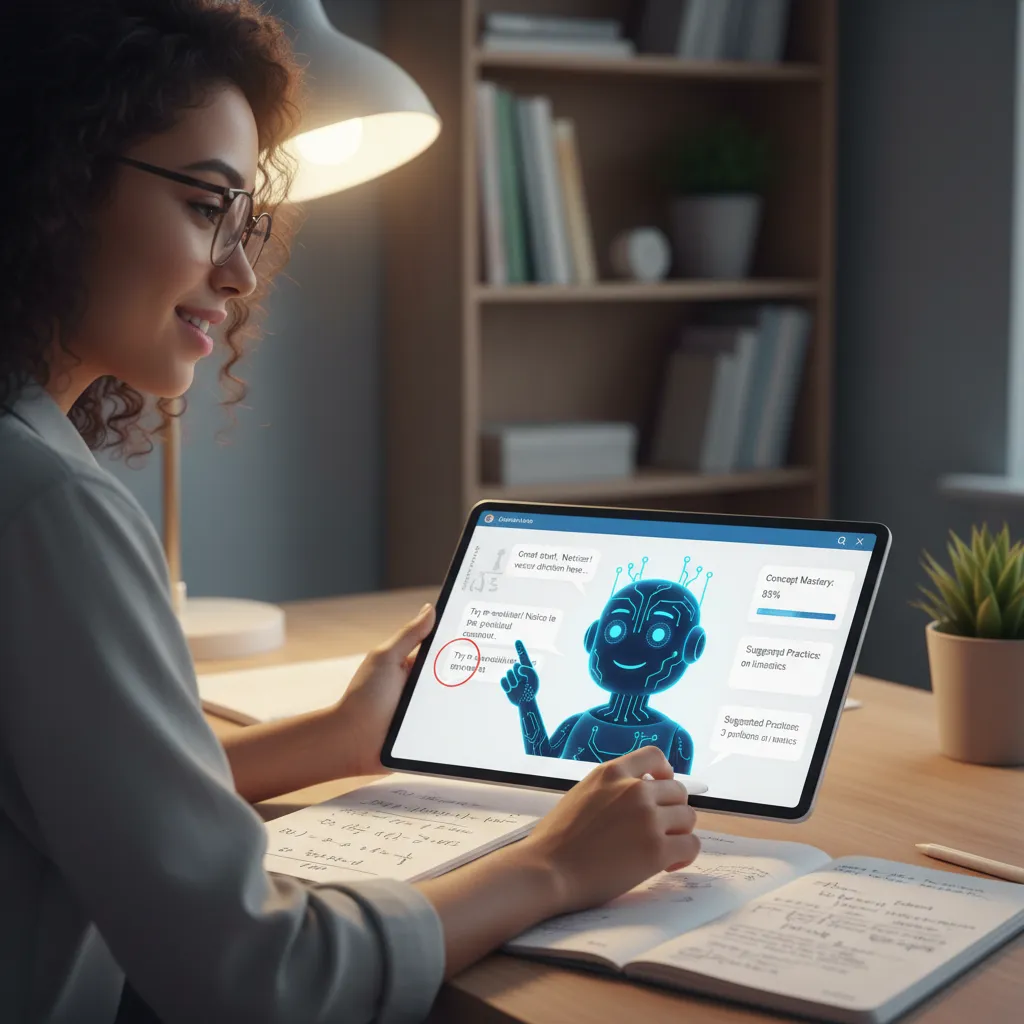
This technology democratizes access to high-quality support, ensuring every student has the help they need, exactly when they need it. Related: AI Tutors: Unlocking Student Potential with Adaptive Learning Paths
Dynamic and AI-Driven Curriculum
Textbooks become outdated. A static curriculum can’t keep pace with a rapidly changing world. Generative AI offers a solution with the ai-driven curriculum. Educators can use ai educational tools to generate learning materials that are current, relevant, and culturally responsive.
For example, a history lesson on recent global events can be updated in real-time with the latest information. A science module on climate change can incorporate the newest research papers and data models. This ensures that students are learning with the most relevant and engaging content available, making education a living, breathing process rather than a study of static facts.
Empowering Educators: How AI is Changing the Role of the Teacher
A common fear is that AI will replace human teachers. However, the reality is far more optimistic. The ai impact on teachers is less about replacement and more about augmentation. AI acts as a powerful assistant, freeing educators from administrative drudgery to focus on what they do best: mentoring, inspiring, and connecting with students on a human level.
Automating the Administrative Burden
Educators are often buried under a mountain of administrative tasks: grading papers, planning lessons, creating worksheets, and communicating with parents. This is where ai in teaching provides immense value. Generative AI can:
- Draft detailed lesson plans based on curriculum standards and specific learning objectives.
- Generate diverse sets of quiz questions and practice assignments.
- Provide first-pass grading for assignments, highlighting areas for the teacher to review.
- Compose draft emails to parents about student progress or upcoming events.
By offloading these time-consuming tasks, AI allows teachers to reinvest their time into direct student interaction, small group instruction, and professional development.
Designing Differentiated Instruction with Ease
Meeting the needs of a diverse classroom is one of the biggest challenges for educators. AI and educators can work together to make differentiation seamless. A teacher can use a generative AI tool to instantly adapt a single piece of text for multiple reading levels, translate materials into different languages, or create visual aids for students who are visual learners.

This allows a single teacher to provide truly individualized resources for every student in their class, from those with learning disabilities to those who are gifted and talented, without spending countless hours on manual preparation.
Gaining Deeper Student Insights
Modern ai learning platforms are equipped with powerful analytics dashboards. These tools process thousands of data points on student performance to reveal patterns that would be invisible to the naked eye. A teacher can quickly see which concepts the entire class is struggling with, identify individual students who are beginning to fall behind, and understand which teaching methods are most effective. This data-driven approach enables proactive, targeted interventions before small struggles become major learning gaps.
Enhancing Student Engagement in the AI-Powered Classroom
Beyond personalization, AI is making learning more interactive, engaging, and fun. It transforms students from passive recipients of information into active creators and explorers of knowledge.
Interactive and Gamified Learning
Forget boring worksheets. Generative AI can create immersive ai-powered learning experiences that capture students’ imaginations. Imagine:
- A history student engaging in a conversation with an AI-powered simulation of Abraham Lincoln.
- A biology student navigating a virtual cell to understand its organelles.
- A language learner practicing conversations with an AI chatbot that adapts to their skill level.
By incorporating elements of gamification—points, badges, leaderboards—these student engagement ai tools can motivate students and foster a genuine love of learning.
Inquiry-Based Learning and Exploration
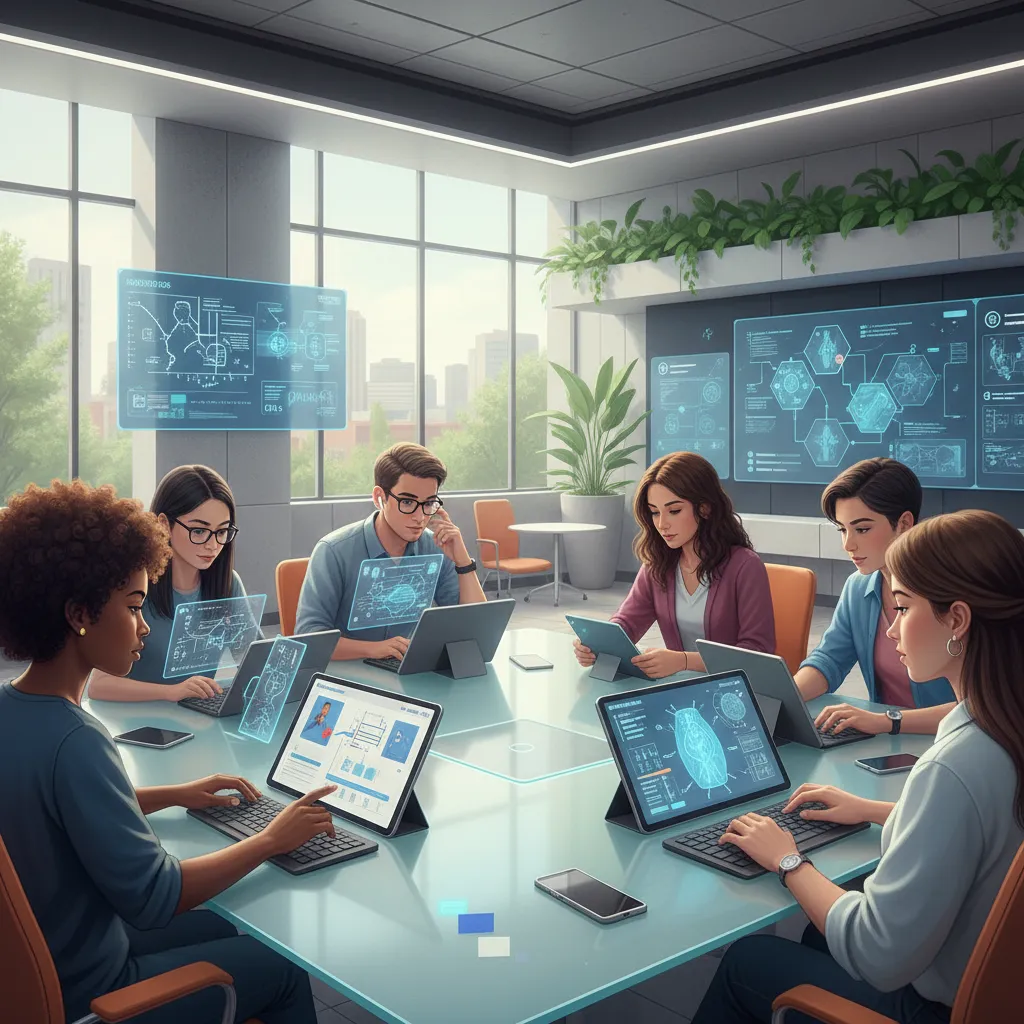
Curiosity is the engine of learning. Generative AI provides a safe and boundless space for students to explore their questions. They can ask “what if” scenarios, dive deep into niche topics, and follow their curiosity without fear of asking a “silly” question. This fosters independent thinking and research skills, encouraging students to become lifelong learners.
Content Creation as a Learning Tool
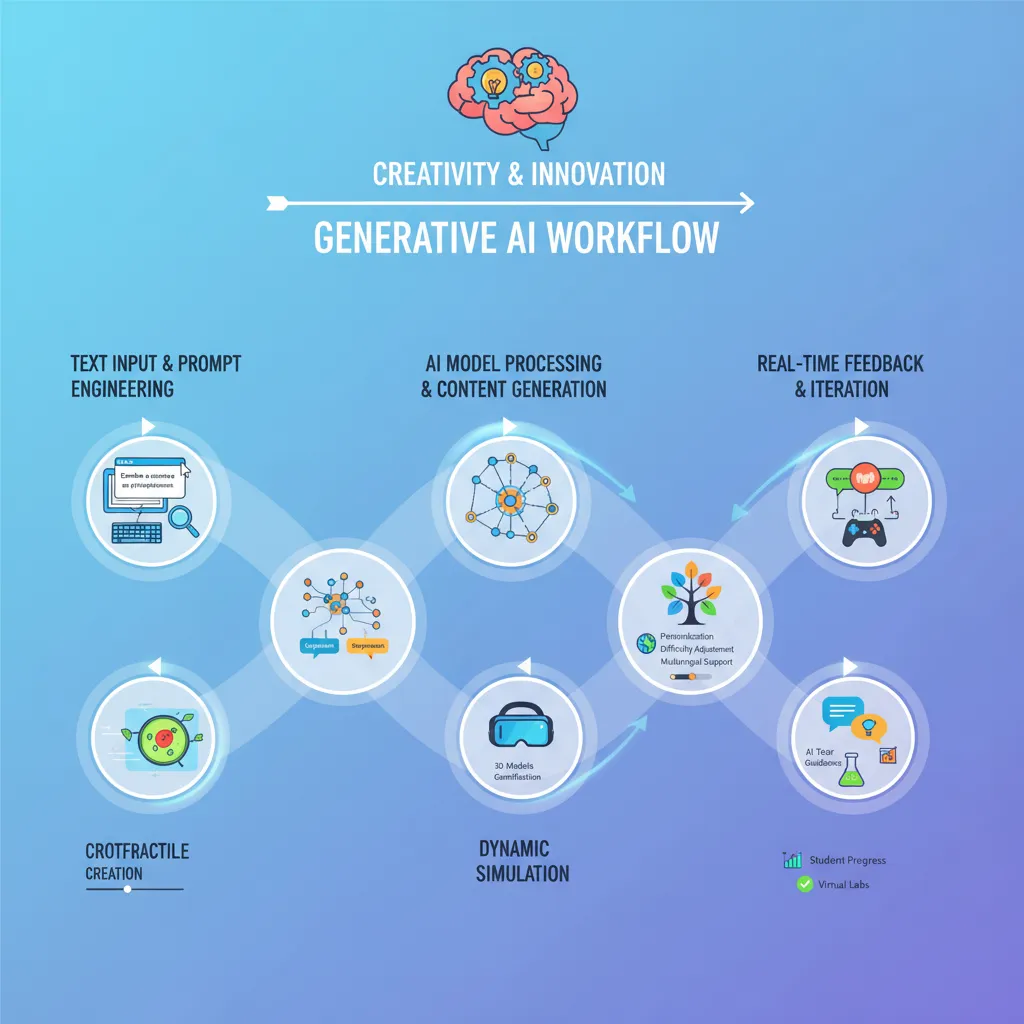
One of the most exciting shifts is using generative ai for students not just to consume information, but to create it. A teacher might challenge students to:
- Use an AI image generator to create a visual representation of a poem.
- Collaborate with an AI writing assistant to co-author a short story.
- Use AI tools to generate a soundtrack for a historical presentation.
This approach teaches students how to use these powerful tools responsibly and creatively, equipping them with the future skills ai education must provide to prepare them for the modern workforce.
The Broader Impact: From K-12 to Lifelong Learning
The influence of generative AI isn’t confined to a single age group; it spans the entire educational spectrum.
- In K-12 AI Learning: AI can provide early interventions for reading and math difficulties, create playful learning apps for foundational skills, and help young students grasp abstract concepts through visual and interactive media.
- In AI in Higher Education: University students can use AI as a sophisticated research assistant, a tool for analyzing complex datasets, a debate partner to test arguments, and a career coach to prepare for interviews.
- In Democratizing Education AI: For remote and underserved communities, AI can deliver high-quality educational content and tutoring, helping to bridge geographical and economic divides. It supports the mission of ai for lifelong learning, allowing adults to upskill and reskill in a constantly evolving job market. Related: AI in Healthcare: Revolutionizing Patient Care and Medical Innovation
Navigating the Hurdles: Challenges and Ethical AI in Learning
While the potential is immense, embracing AI in education requires a thoughtful and critical approach. The challenges of ai in education are significant and must be addressed responsibly.
- Bias and Inaccuracy: AI models are trained on vast datasets from the internet, which can contain biases and misinformation. It’s crucial that ethical ai in learning frameworks are established to audit these tools and teach students media literacy and critical thinking to evaluate AI-generated content.
- Data Privacy and Security: AI learning platforms collect significant amounts of student data. Schools and developers must implement robust security measures to protect this sensitive information from breaches and misuse. Related: AI in Cybersecurity: Threat Detection and Defense
- The Digital Divide: There’s a risk that AI could widen the gap between well-funded schools and those with limited resources. Ensuring equitable access to the necessary devices, internet connectivity, and high-quality AI tools is paramount to democratizing education ai.
- Over-reliance and Critical Thinking: The goal is to use AI as a co-pilot, not an autopilot. Educators must design assignments that prevent students from simply offloading their thinking to an AI. The focus must remain on developing students’ core critical thinking, problem-solving, and creative skills.
The Road Ahead: Future-Proof Education and EdTech Trends 2024
We are at the beginning of this transformation. The future of education ai is bright and full of possibilities. Key edtech trends 2024 and beyond include hyper-personalization, where AI not only adapts to a student’s academic needs but also their emotional state and motivational levels. We’ll see deeper integration with immersive technologies like augmented and virtual reality, creating truly interactive learning worlds.
This new landscape demands a new set of competencies. A future-proof education will prioritize skills like AI literacy, prompt engineering, digital ethics, and collaborative problem-solving alongside AI partners. The focus will shift from what students know (which can be easily looked up) to what they can do with their knowledge.
Conclusion
Generative AI is not just another tech trend; it is a fundamental catalyst for reimagining education. By championing personalized learning AI, we can move away from the industrial-age model of standardization and toward a future where every student’s unique potential is unlocked. It empowers educators to be mentors rather than lecturers, and it transforms students into active, engaged creators.
The journey requires careful navigation of the ethical and practical challenges, but the destination is a more equitable, effective, and inspiring learning experience for all. The revolution is here. The future of learning is a collaborative partnership between human insight and artificial intelligence, and it’s time to embrace the incredible possibilities.
Frequently Asked Questions (FAQs)
Q1. How is generative AI changing education?
Generative AI is fundamentally changing education by enabling personalization at scale. It moves beyond traditional educational software by creating original content like customized lesson plans, unique practice problems, and interactive learning scenarios. This allows for the creation of adaptive learning paths that cater to each student’s individual pace, style, and needs, making learning more efficient and engaging.
Q2. What are the benefits of using generative AI for students?
For students, the primary benefits of generative ai education include access to 24/7 personalized tutoring, instant feedback on their work, and highly engaging, interactive learning content. It fosters curiosity by providing a safe space to ask unlimited questions and helps build confidence by offering support tailored to their specific knowledge gaps.
Q3. What are the main challenges of implementing AI in education?
The main challenges include ensuring data privacy and security, mitigating algorithmic bias that could perpetuate stereotypes, and addressing the digital divide to ensure equitable access for all students. There is also the pedagogical challenge of teaching students to use AI as a tool for critical thinking rather than a crutch to avoid it.
Q4. Will AI tutors replace human teachers?
No, AI is not expected to replace human teachers. Instead, AI tutors and tools are designed to augment and support educators. AI can handle administrative tasks and provide personalized instruction, freeing up teachers to focus on higher-level activities like mentoring, fostering social-emotional skills, and inspiring students—roles that require human connection and empathy.
Q5. What is an example of generative AI in a classroom?
A great example is a history teacher using an AI tool to create an interactive simulation where students can “interview” a historical figure. The AI, playing the role of that figure, can answer questions and engage in dialogue based on historical data. Another example is an English teacher using AI to generate unique writing prompts tailored to each student’s interests to spark creativity.
Q6. How can educators ethically use AI in their teaching?
Educators can use AI ethically by being transparent with students about when and how AI is being used. They should prioritize tools that have strong data privacy policies, actively check AI-generated content for accuracy and bias, and focus on teaching students digital literacy and critical thinking skills to evaluate the information they receive from AI systems. The goal is to model responsible AI use.