Edge AI Explained: How Local Intelligence is Transforming Our Smart World

Introduction
In a world increasingly saturated with smart devices, from our phones and smart speakers to industrial sensors and self-driving cars, the demand for instant, intelligent responses is skyrocketing. For years, the prevailing model for Artificial Intelligence (AI) has been centered around powerful cloud data centers, where vast amounts of data are sent for processing before insights are returned to the device. This “cloud-first” approach has fueled incredible advancements, but it’s not without its limitations, particularly when it comes to speed, privacy, and connectivity.
Enter Edge AI – a paradigm shift that’s bringing the brain of AI much closer to the source of data. Imagine your smart doorbell instantly recognizing a familiar face without sending footage to a distant server, or a factory robot detecting a malfunction in milliseconds without relying on an internet connection. This is the promise of local AI processing, where artificial intelligence algorithms run directly on smart edge devices, reducing latency, enhancing privacy, and enabling truly real-time AI.
This comprehensive guide will demystify Edge AI, exploring its core principles, comparing it to traditional cloud AI, and uncovering the transformative impact it’s having across various sectors. We’ll delve into the myriad Edge AI applications, from the convenience of AI in smart homes to the safety of AI in autonomous vehicles and the efficiency of AI in manufacturing. We’ll also tackle critical considerations like Edge AI security and Edge AI privacy, before peering into the future of Edge AI and its role in shaping our intelligent world. Get ready to understand how AI at the edge is not just a technological advancement, but a fundamental shift in how we interact with and benefit from pervasive intelligence.
Understanding Edge AI: Bringing Intelligence Closer
At its heart, Edge AI is about performing AI computations at or near the source of data, rather than relying solely on remote cloud servers. This concept is deeply intertwined with edge computing, which focuses on moving computation and data storage closer to the data generators. While edge computing provides the infrastructure, Edge AI leverages this infrastructure specifically for AI workloads.
Think of it this way: traditional cloud AI is like sending all your mail to a central post office in a distant city to be sorted before it comes back to you. Edge AI, on the other hand, is like having a smaller, local post office in your neighborhood that can handle most of your mail quickly and efficiently.
What is Edge AI? The Core Principles
Edge AI involves deploying trained machine learning models directly onto “edge devices.” These devices can range from tiny sensors and microcontrollers to more powerful embedded systems and industrial gateways. The key characteristic is that the AI inference – the process of using a trained model to make predictions or decisions – happens on-device AI, minimizing or even eliminating the need to send data to the cloud.
The primary principles underpinning Edge AI include:
- Local AI Processing: The most defining feature. Data is analyzed where it’s generated, whether that’s a camera, a microphone, or a temperature sensor.
- Low Latency AI: Because data doesn’t have to travel to a distant data center and back, decisions can be made almost instantaneously. This is crucial for applications requiring immediate responses, like autonomous driving or predictive maintenance.
- Reduced Bandwidth Usage: Sending raw data streams to the cloud can consume massive amounts of bandwidth. Edge AI processes data locally, often sending only relevant insights or aggregated data, significantly reducing network traffic and associated costs.
- Enhanced Reliability: Edge AI systems can function even when internet connectivity is intermittent or unavailable. This makes them ideal for remote locations or mission-critical applications where constant cloud access isn’t guaranteed.
- Decentralized AI: It promotes a distributed intelligence model, where multiple edge devices can collaborate and share insights without a single central point of failure or processing bottleneck.
Edge AI vs. Cloud AI: A Fundamental Comparison
While seemingly distinct, Edge AI vs Cloud AI are not mutually exclusive; they often work in tandem, forming a hybrid intelligent ecosystem. Understanding their differences is crucial for appreciating the unique value of each.
| Feature | Edge AI | Cloud AI |
|---|---|---|
| Processing Location | On-device, near the data source | Remote data centers |
| Latency | Very low, near real-time | Higher, dependent on network speed and distance |
| Bandwidth Usage | Low, only insights or aggregated data sent | High, raw data streams sent for processing |
| Connectivity | Can function offline or with intermittent net | Requires constant, reliable internet connection |
| Data Privacy | Enhanced, data often stays local | Data typically sent to third-party servers |
| Computational Power | Limited, optimized for efficiency | Virtually limitless, scalable |
| Cost | High initial hardware cost, lower operational | Lower initial, higher operational (data transfer) |
| Use Cases | Real-time actions, mission-critical, privacy-sens | Complex training, big data analytics, global scale |
Edge AI excels in scenarios where speed, reliability, and privacy are paramount. Cloud AI remains indispensable for training complex models, performing large-scale data analytics, and providing services that don’t require instant, local decisions. The optimal solution often involves a blend: models are trained in the cloud with vast datasets, and then deployed to the edge for inference. This concept is often referred to as distributed intelligence.
The Transformative Benefits of Edge AI
The shift towards AI at the edge isn’t just a technical novelty; it brings a host of tangible advantages that are revolutionizing industries and personal experiences. These Edge AI benefits are driving its rapid adoption across diverse sectors.
Unlocking Real-Time Responsiveness
One of the most compelling advantages of Edge AI is its ability to enable low latency AI. When data is processed locally, the time taken for a device to sense, analyze, and react to its environment is drastically reduced. This is critical for applications where even a few milliseconds can make a significant difference:
- Autonomous Vehicles: Self-driving cars need to make split-second decisions based on sensor data. Waiting for cloud processing is simply not an option for safety. [Related: Autonomous AI Agents: The Next Revolution in Smart Automation]
- Industrial Automation: In factories, robots and machinery can detect anomalies or prevent accidents in real-time, minimizing downtime and improving safety.
- Medical Devices: Wearable health monitors can alert users or caregivers to critical changes instantly, potentially saving lives. [Related: AI-Powered Wearables: Enhanced Living with Future Tech]
This real-time AI capability transforms passive devices into proactive, intelligent agents.
Enhancing Data Privacy and Security
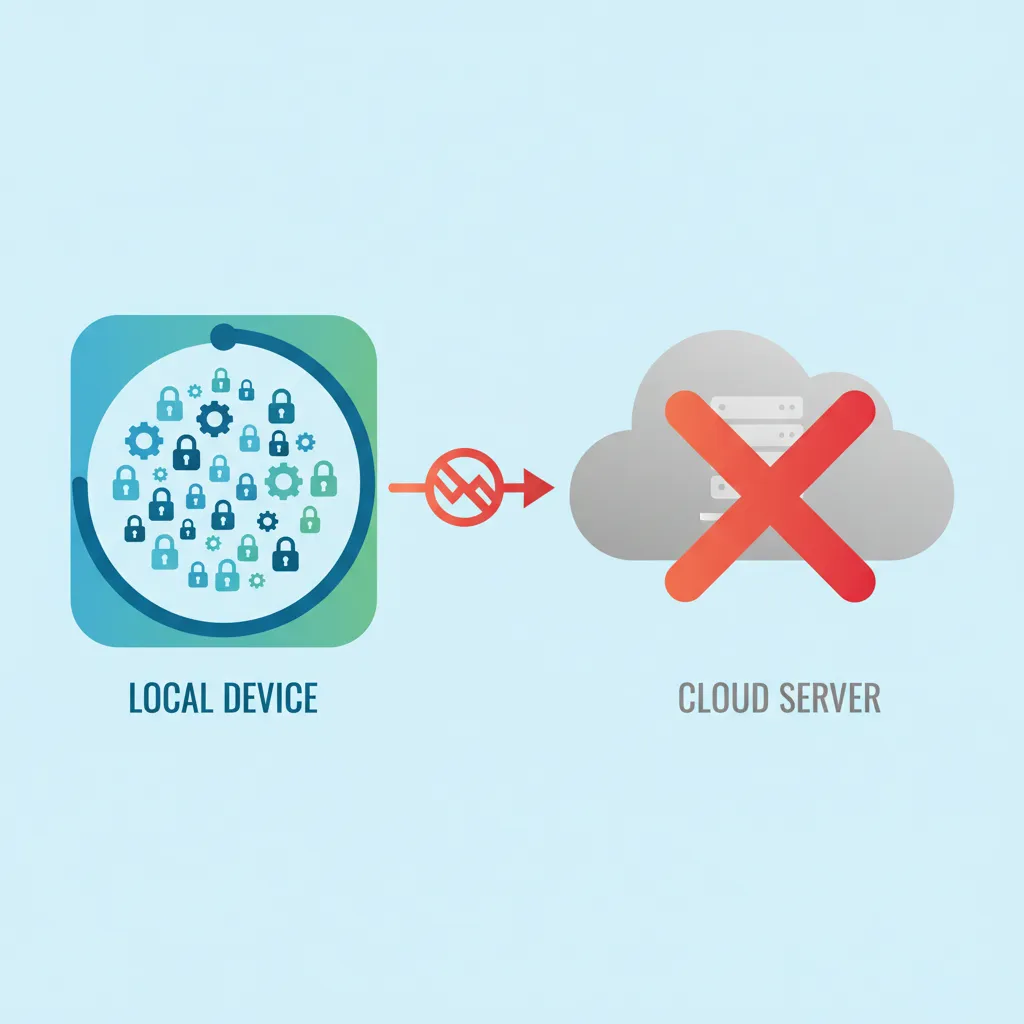
In an era of increasing concerns over data breaches and privacy, Edge AI privacy offers a compelling solution. When sensitive data like facial recognition scans, voice commands, or personal health metrics are processed on the device itself, they don’t need to be transmitted to potentially vulnerable cloud servers. This significantly reduces the risk of data exposure.
Similarly, Edge AI security is bolstered. By keeping data localized, the attack surface for cyber threats is reduced. While edge devices still need robust security measures, the overall risk profile can be lower compared to systems that continuously transmit sensitive information across public networks. This aspect is vital for AI data governance, ensuring compliance with regulations like GDPR and CCPA.
Boosting Efficiency and Reducing Costs
By performing computations locally, Edge AI dramatically reduces the amount of data that needs to be sent to the cloud. This translates into several efficiency gains:
- Reduced Bandwidth Costs: Less data transfer means lower operational expenses for network usage.
- Lower Cloud Computing Costs: Fewer requests to cloud servers for processing mean reduced fees for compute resources.
- Optimized Power Consumption: For battery-powered devices, intelligent local processing can reduce the need for constant, power-intensive network communication. This leads to more efficient AI systems.
These efficiencies are particularly impactful for large-scale deployments of AI for IoT, where thousands or millions of devices might otherwise flood cloud infrastructure with data.
Improving Reliability and Robustness
Many critical applications operate in environments with unreliable or non-existent internet connectivity. From remote agricultural sensors to offshore oil rigs, consistent cloud access simply isn’t feasible. AI without cloud capabilities provided by Edge AI ensure that these systems can continue to operate intelligently, regardless of network conditions. This inherent robustness makes Edge AI ideal for mission-critical tasks where downtime is unacceptable.
A World Transformed: Key Edge AI Applications and Examples
The versatility of Edge AI means its applications are incredibly diverse, touching almost every facet of our lives. From making our homes smarter to revolutionizing industries, Edge AI examples are growing rapidly.
Smart Homes and Personal Devices
Our homes are becoming epicenters of AI in smart homes, and Edge AI is playing a crucial role in making them more responsive and private.
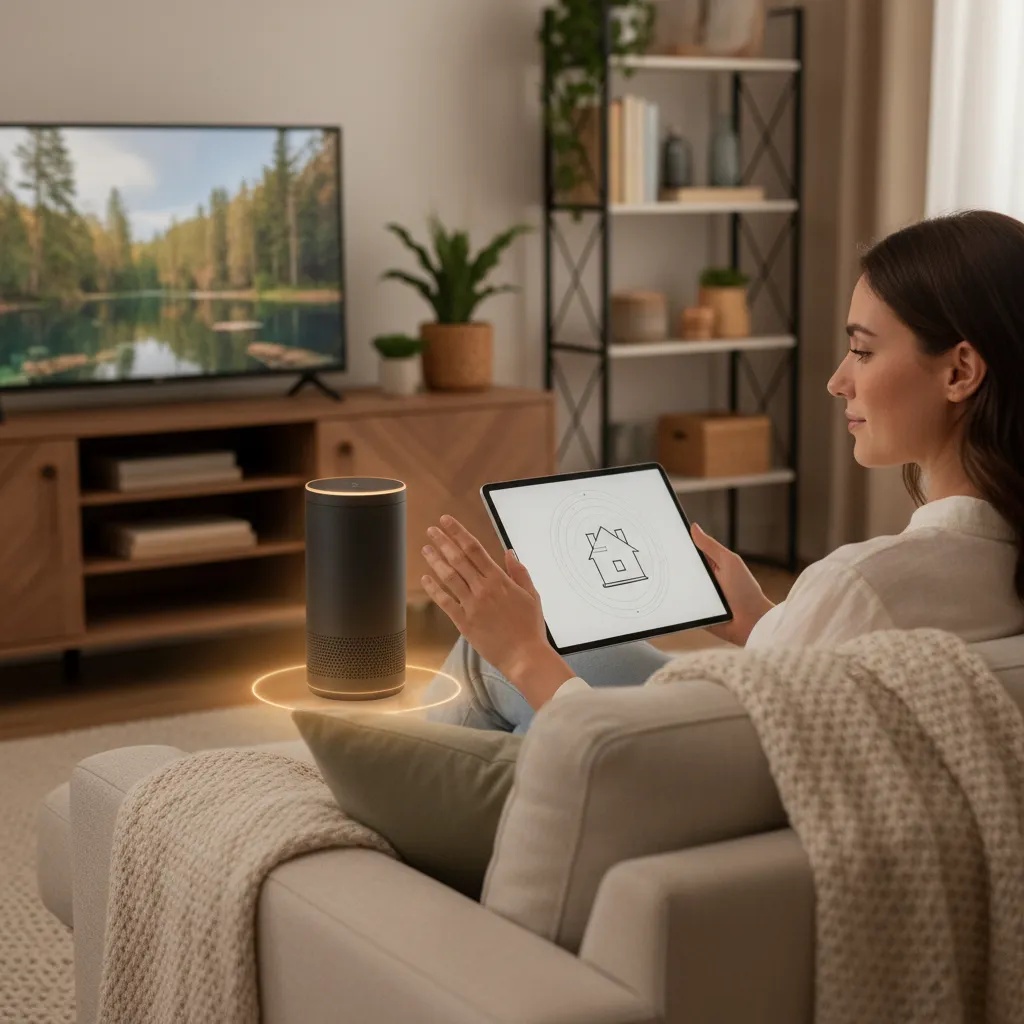
- Smart Speakers and Assistants: Instead of sending every voice command to the cloud, many modern smart speakers process basic commands and keyword detection locally. This improves response time and reduces the amount of personal audio data leaving your home.
- Smart Doorbells and Security Cameras: Edge AI enables these devices to perform real-time person detection, facial recognition, and package detection directly on the device. This means faster alerts, fewer false alarms, and improved privacy as sensitive video streams don’t need to be constantly uploaded.
- Wearable Devices: Smartwatches and fitness trackers use on-device AI to analyze health metrics like heart rate variability, sleep patterns, and activity levels, providing instant feedback without constant cloud synchronization. [Related: AI-Powered Wearables: Enhanced Living with Future Tech]
Autonomous Vehicles and Transportation
Perhaps one of the most high-stakes applications, AI in autonomous vehicles critically relies on Edge AI.
- Real-Time Obstacle Detection: Self-driving cars use a multitude of sensors (cameras, LiDAR, radar) to detect pedestrians, other vehicles, traffic signs, and road conditions. Edge AI processes this massive influx of data instantly to make navigation and safety decisions in milliseconds.
- Predictive Maintenance: On-board systems can monitor engine performance, tire pressure, and other vehicle health indicators, using embedded AI to predict potential failures before they occur, scheduling maintenance proactively.
- Traffic Management: Smart intersections equipped with Edge AI can analyze real-time traffic flow to optimize signal timing, reducing congestion and improving safety without sending constant video feeds to a central server.

Industrial IoT and Manufacturing
The Industrial Internet of Things (IIoT) is a prime beneficiary of Edge AI in manufacturing.
- Predictive Maintenance: Machinery equipped with Edge machine learning models can analyze sensor data (vibration, temperature, acoustics) to detect subtle anomalies that indicate impending equipment failure. This allows for proactive maintenance, preventing costly downtime and improving operational efficiency.
- Quality Control: AI-powered cameras on assembly lines can inspect products for defects in real-time, identifying flaws much faster and more consistently than human inspectors.
- Robot Coordination and Safety: Industrial robots use near-device intelligence to navigate complex environments, interact with human workers safely, and adapt to changing production demands without relying on continuous cloud connectivity.

- Energy Management: Edge devices can monitor and optimize energy consumption across a factory floor, adjusting operations based on real-time demand and cost fluctuations.
Healthcare and Medical Devices
Edge AI is revolutionizing healthcare by enabling faster diagnostics, personalized care, and enhanced patient monitoring. [Related: The AI Revolution in Healthcare: Diagnostics & Patient Care]
- Portable Diagnostic Devices: Handheld ultrasound devices or retinal scanners can use on-device AI to analyze images and provide preliminary diagnoses in remote areas or emergency situations, where immediate access to specialists or cloud infrastructure is limited.
- Patient Monitoring: Wearable sensors can continuously monitor vital signs, activity levels, and other health metrics. Embedded AI can detect critical events (e.g., falls, irregular heartbeats) and alert caregivers instantly, providing AI for real-time analytics at the point of care.
- Smart Hospitals: Edge AI can optimize hospital operations, from tracking equipment and managing patient flow to ensuring the efficient use of resources, all while enhancing data privacy.
Retail and Smart Cities
From optimizing shopping experiences to managing urban infrastructure, Edge AI is making our public spaces smarter.
- Personalized Retail Experiences: Edge AI in smart cameras can analyze customer traffic patterns, dwell times, and product interactions within a store, allowing retailers to optimize layouts, personalize promotions, and manage inventory in real-time without sending sensitive video to the cloud.
- Smart City Infrastructure: Traffic lights, environmental sensors, and public safety cameras can leverage Edge AI for real-time traffic optimization, pollution monitoring, and anomaly detection, improving urban living.
- Inventory Management: In warehouses and retail stores, drones or robots equipped with Edge AI can autonomously scan shelves, count inventory, and identify misplaced items, significantly reducing manual effort.
Navigating the Road Ahead: Challenges and the Future of Edge AI
While the benefits of Edge AI are compelling, its widespread adoption also comes with a unique set of challenges. Understanding these hurdles and the ongoing innovations to overcome them is key to appreciating the future of Edge AI.
Addressing Edge AI Development Challenges
Developing and deploying efficient AI systems at the edge presents specific technical obstacles:
- Resource Constraints: Edge devices often have limited computational power, memory, and energy. Edge AI development requires highly optimized AI models that can perform complex tasks within these tight constraints. This often involves techniques like model quantization, pruning, and knowledge distillation to create “tiny AI” models.
- Model Training and Updates: While inference happens at the edge, models are typically trained in the cloud. Managing the deployment, versioning, and continuous updating of these models across a vast network of diverse edge devices can be complex.
- Hardware and Software Heterogeneity: The edge landscape is incredibly fragmented, with a wide variety of hardware architectures (CPUs, GPUs, NPUs, ASICs) and operating systems. Developing AI solutions that are compatible and optimized across this diverse ecosystem is a significant challenge.
- Data Labeling and Annotation: Even with local AI processing, initial model training still requires large, labeled datasets, which can be time-consuming and expensive to acquire.
Innovations in specialized hardware (e.g., AI accelerators designed for the edge), optimized software frameworks, and automated machine learning (AutoML) are actively addressing these development complexities, making Edge machine learning more accessible.
Security and Privacy at the Edge
While Edge AI inherently offers privacy advantages by keeping data local, it also introduces new security considerations for Edge AI security and Edge AI privacy:
- Physical Tampering: Edge devices are often deployed in physically accessible locations, making them susceptible to physical theft or tampering. Securing the device itself and the embedded AI models is crucial.
- Vulnerability of Endpoints: Each edge device represents a potential entry point for attackers. Ensuring robust authentication, encryption, and regular security updates across all devices is paramount.
- Model Inversion Attacks: Even if raw data isn’t exposed, sophisticated attackers might attempt to reconstruct sensitive training data or infer private attributes from the model’s output.
- Supply Chain Security: Ensuring the integrity of AI models and software from development to deployment on edge devices is critical to prevent malicious code injection.
Mitigation strategies include hardware-level security (secure enclaves, trusted platform modules), robust encryption for data in transit and at rest, secure boot processes, and continuous monitoring for anomalies. AI data governance frameworks must extend to the edge, defining clear policies for data handling and security.
The Pervasive Future of Edge AI
The trajectory of Edge AI points towards an increasingly pervasive AI landscape. We can expect:
- Smarter Devices, More Autonomous Systems: As chipmakers continue to embed more powerful AI capabilities directly into hardware, virtually every device will become capable of significant on-device AI processing. This will lead to truly autonomous systems that operate independently and intelligently.
- Hybrid Cloud-Edge Architectures: The future is not one or the other, but a seamless integration. Cloud AI will continue to be the hub for model training, big data analytics, and global coordination, while Edge AI will handle immediate, localized tasks. This collaborative distributed intelligence will unlock unprecedented capabilities.
- Federated Learning and Swarm Intelligence: Edge devices will not only process data individually but also collaboratively learn from each other without exchanging raw data. Federated learning allows models to be trained on local datasets across many devices, with only model updates (weights) being shared. This will significantly enhance both privacy and collective intelligence.
- New AI Paradigms: As the edge becomes more capable, we might see the emergence of entirely new AI paradigms tailored specifically for resource-constrained environments, pushing the boundaries of what’s possible with AI without cloud.
- Ethical AI at the Edge: As AI becomes more embedded in our physical world, the ethical implications, including bias in models, accountability, and user control, become even more critical. Transparent and responsible Edge AI development will be paramount.
The rise of Edge AI signifies a fundamental shift in how we approach intelligence, moving from centralized behemoths to a network of smart, responsive, and privacy-aware local agents. Its impact will continue to redefine our interactions with technology, ushering in an era of truly intelligent environments and devices.
Conclusion
We’ve journeyed through the fascinating world of Edge AI, uncovering how local intelligence is not merely an incremental improvement but a transformative force reshaping our digital and physical realities. From its foundational principles of on-device AI and low latency AI to its profound Edge AI benefits in speed, privacy, and efficiency, it’s clear that AI at the edge is a cornerstone of modern technological advancement.
The examples across AI in smart homes, AI in autonomous vehicles, and AI in manufacturing vividly illustrate how Edge AI is delivering tangible value, making our lives safer, more convenient, and more productive. While challenges in Edge AI development and security remain, ongoing innovations are rapidly paving the way for a future where intelligent devices operate with unprecedented autonomy and responsiveness.
As we look ahead, the future of Edge AI promises an even more integrated and intelligent world, characterized by pervasive AI, hybrid cloud-edge architectures, and collaborative distributed intelligence. For businesses and individuals alike, understanding and embracing Edge AI is no longer optional – it’s essential for navigating the evolving landscape of technology. This isn’t just about faster processing; it’s about a more responsible, resilient, and truly intelligent world where insights are generated and acted upon precisely where they are needed most.
What local intelligence will you empower next?
FAQs
Q1. What is Edge AI in simple terms?
Edge AI refers to artificial intelligence that operates directly on a device or “at the edge” of a network, rather than relying on a centralized cloud server. This means data processing and AI decisions happen locally, closer to where the data is generated, like on a smart camera, a factory robot, or an autonomous car.
Q2. What are the main benefits of using Edge AI?
The main benefits of Edge AI include significantly reduced latency (faster responses), enhanced data privacy and security (data stays local), lower bandwidth usage (less data sent to the cloud), improved reliability (operates offline), and reduced operational costs.
Q3. How does Edge AI differ from Cloud AI?
Cloud AI processes data in remote, centralized data centers, offering massive computational power and scalability. Edge AI, conversely, processes data directly on the device or local network. While Cloud AI is great for training complex models and big data analytics, Edge AI excels in real-time applications, privacy-sensitive scenarios, and environments with limited connectivity. They often work together in hybrid systems.
Q4. Can Edge AI operate without an internet connection?
Yes, a significant advantage of Edge AI is its ability to perform local AI processing and make decisions even without an active internet connection. This makes it highly reliable for mission-critical applications in remote areas or where network connectivity is intermittent.
Q5. What are some common examples of Edge AI in everyday life?
Common examples include smart doorbells recognizing faces locally, smart speakers processing basic voice commands on-device, fitness trackers analyzing health data, and autonomous vehicles making real-time driving decisions based on on-board sensor data.
Q6. Is Edge AI more secure for personal data?
Generally, yes. By processing sensitive personal data (like facial recognition or voice commands) directly on the device, Edge AI reduces the need to send this data to third-party cloud servers. This significantly enhances privacy and reduces the risk of data breaches during transit or at rest in external data centers.
Q7. What are the challenges in developing Edge AI solutions?
Key challenges include the resource constraints of edge devices (limited power, memory, and processing), the complexity of optimizing AI models for these constraints, managing model deployment and updates across diverse hardware, and ensuring robust security against physical tampering and cyber threats on distributed endpoints.
Q8. What is the role of Edge AI in the Internet of Things (IoT)?
Edge AI is crucial for the Internet of Things (IoT) because it allows vast numbers of IoT devices to process and analyze their data locally. This enables real-time decision-making, reduces the strain on network bandwidth, and improves the scalability and reliability of large-scale IoT deployments, transforming raw sensor data into immediate, actionable insights.