The Rise of Domestic AI Robots: Beyond Smart Assistants

For years, the “robot in the home” was either a sci-fi dream or a disembodied voice answering from a smart speaker. We’ve grown accustomed to asking Alexa for the weather or telling Google to play a song. But a quiet revolution is happening in our living rooms, kitchens, and backyards. The abstract intelligence of AI home assistants is finally taking physical form, evolving into a new generation of domestic AI robots that can see, move, and interact with our world.
These aren’t just single-task gadgets anymore. We’re moving beyond the automated disc of a first-generation robovac into an era of autonomous home robots designed for complex tasks, companionship, and creating truly smart living solutions. This evolution represents one of the most exciting household automation trends, promising to redefine our relationship with technology and reshape the very concept of a modern home.
In this deep dive, we’ll explore the incredible landscape of AI in household applications. We’ll look at the intelligent machines already cleaning our floors and cooking our meals, the compassionate bots providing robotic personal care, and the exciting future home tech that’s just around the corner. Get ready to meet the real-life droids that are moving AI beyond the cloud and into our daily lives.
From Novelty to Necessity: The Evolution of Home Automation Robots
The journey to the modern smart home robot didn’t happen overnight. It began decades ago with clunky, conceptual machines. The real catalyst for consumer adoption was the Roomba, which introduced millions to the idea that a robot could perform a useful household chore. While revolutionary, these early devices were simple, often bumping around randomly until the job was done.
The true inflection point came with the convergence of three key areas:
- Advanced AI and Machine Learning: Algorithms became sophisticated enough to enable real-time decision-making, object recognition, and environmental learning.
- Affordable Sensor Technology: The mass production of LiDAR, 3D cameras, and complex sensor arrays for smartphones and self-driving cars made them cheap enough for consumer electronics.
- Smart Home Ecosystems: The proliferation of interconnected intelligent home devices (IoT) created a network that home automation robots could plug into, allowing for more integrated and complex behaviors.
This technological trifecta has fueled explosive growth in the domestic robotics market. Today’s robots aren’t just bumping around; they are mapping, learning, and adapting. They are the physical agents of the AI integrated home, transforming abstract commands into tangible actions.
The Current Generation: What Can Domestic AI Robots Do Today?
While a general-purpose humanoid robot that can fold your laundry is still in development, the specialized robots available today are already remarkably capable. They are mastering specific domains within the home, proving their value one task at a time.
Intelligent Cleaning Robots: The Foundation of Home Robotics
The most mature category in domestic robotics is cleaning. Robot vacuum cleaners AI have become astonishingly sophisticated. Flagship models from brands like Roborock and iRobot have moved far beyond simple suction.
These intelligent cleaning robots now feature:
- LiDAR and vSLAM Navigation: They create precise, interactive maps of your home, planning the most efficient cleaning paths.
- AI-Powered Object Recognition: Using built-in cameras, they can identify and avoid obstacles like shoes, cables, and pet waste—a common failure point for older models.
- Self-Sustaining Docks: The latest systems not only self-empty their dustbins but also wash and dry their own mopping pads, making them truly hands-off robotic home cleaners.
- Voice and App Integration: They seamlessly connect with Alexa and Google Assistant, allowing you to say, “Clean the kitchen,” and the robot knows exactly where to go.
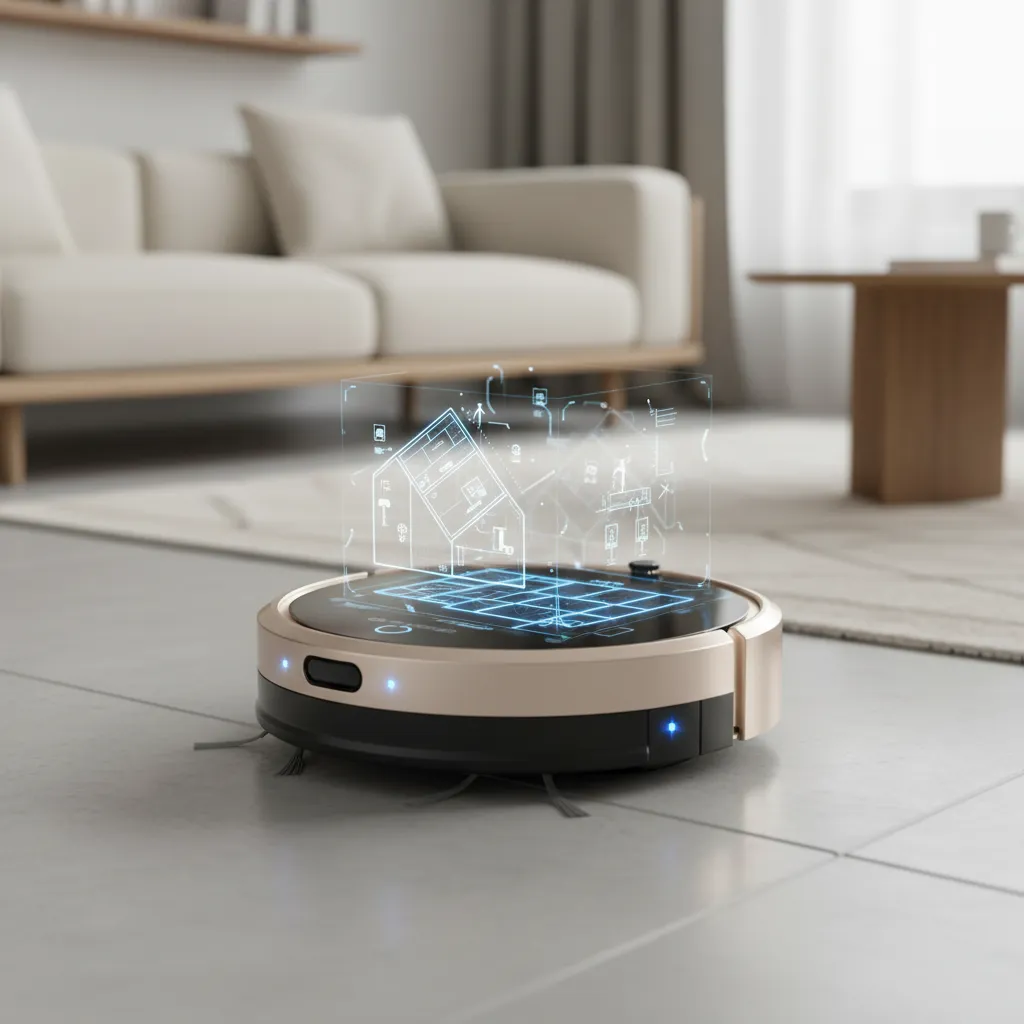
This level of intelligence is the bedrock upon which more complex cleaning robots AI are being built, including dedicated window washers and pool cleaners. Related: Pack Smart & Travel Green: Your Guide to Eco-Friendly Gear
The Rise of Robotic Cooking Assistants
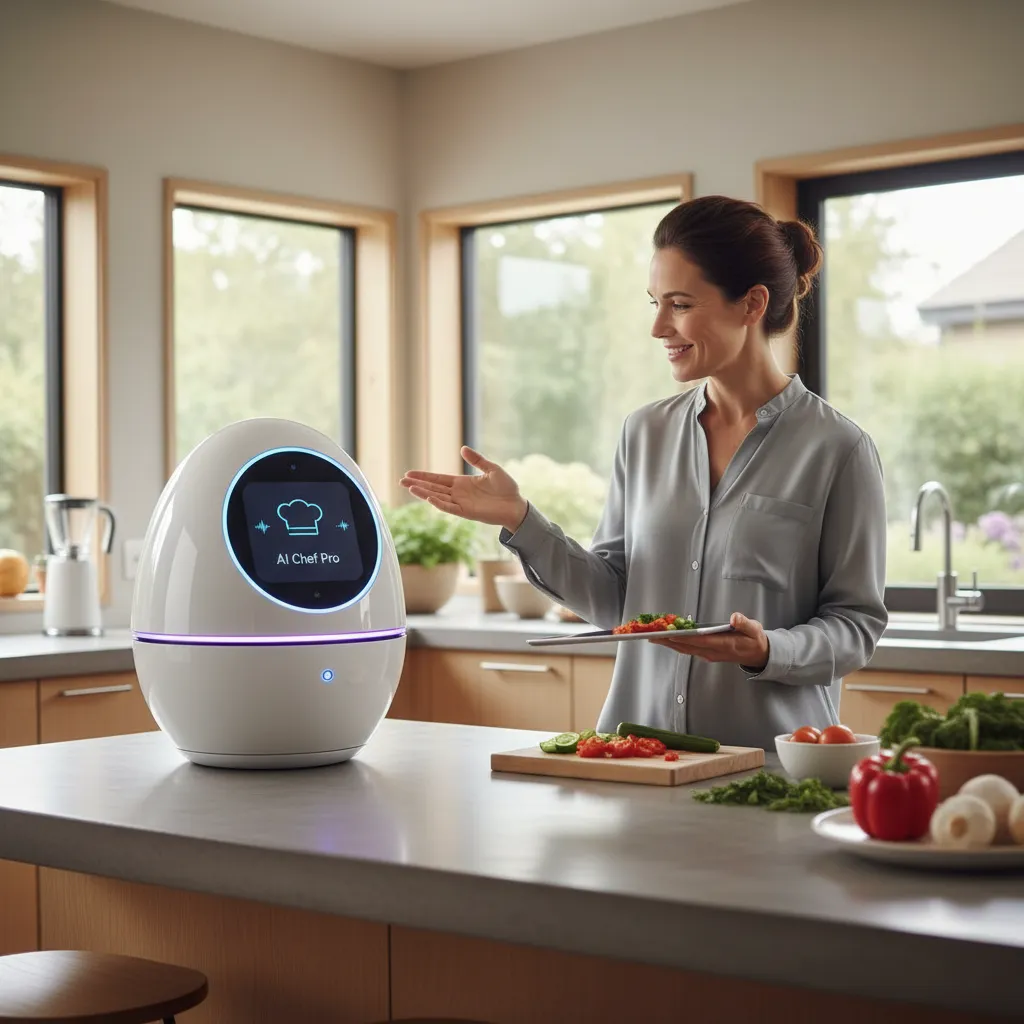
The kitchen is the next frontier for automation. While fully automated chefs are still a luxury item, robotic cooking assistants are emerging to handle repetitive and precise tasks. These AI powered appliances range from smart ovens that recognize food and cook it perfectly to robotic arms that can assist with meal prep.
For example, systems like the Moley Robotic Kitchen use a sophisticated pair of arms to replicate the movements of a master chef, capable of cooking thousands of recipes from scratch. On a more accessible level, devices like the Thermomix combine dozens of cooking functions with guided, AI-driven recipes, automating everything from chopping and stirring to sous-vide cooking. These devices are paving the way for a future where your kitchen AI can not only suggest a recipe but also help you cook it.
Automated Yard Care: Smart Robotic Lawn Mowers
The same AI that navigates your living room is now tending to your lawn. Old robotic mowers required users to bury a physical boundary wire, a tedious and inflexible process. The new generation of smart robotic lawn mowers is completely wireless.
Using a combination of GPS, RTK (Real-Time Kinematic) positioning, and computer vision, these mowers can map your yard with centimeter-level accuracy. You can set no-go zones, define different cutting heights for various areas, and even have the mower create patterns in your lawn—all from a smartphone app. It’s a perfect example of how AI robot technology is solving practical, everyday problems.
Home Security Robots: Your Autonomous Watchdogs
Security robots home automation is moving from static cameras to mobile, autonomous agents. These devices offer a proactive approach to home monitoring. Instead of just recording an event, they can actively investigate disturbances.
Products like the Ring Always Home Cam, an autonomous indoor drone, can fly to pre-set locations in your home when a sensor is triggered, giving you a clear view of what’s happening. Ground-based home security robots can patrol your property’s perimeter, using thermal imaging and motion sensors to detect intruders and alert you before they even reach your door. Related: The AI Search Revolution: A New Era of Discovery
Beyond Chores: Robots as Companions and Caregivers
Perhaps the most profound shift in domestic robotics is the move beyond mere utility. The next-gen home robots are being designed to interact with us on a social and emotional level, serving as assistants, companions, and caregivers.
Personal Assistant Robots: The Embodied Smart Assistant
What if your Amazon Echo could follow you around the house, carry your drink, and act as a mobile video-calling station? That’s the premise behind personal assistant robots like Amazon’s Astro. These devices represent the physical embodiment of a virtual assistant.
They combine the familiar voice-controlled AI with mobility and a “personality,” allowing them to perform more dynamic tasks. A personal AI robot for home use can patrol the house when you’re away, find a specific family member for a video call, or even help with simple fetch-and-carry tasks. This is where the line between a smart gadget and a true home helper robot begins to blur.
AI for Elderly Care at Home: A Revolution in Independent Living
One of the most impactful applications for domestic AI is in elder care. As global populations age, technology that enables seniors to live independently and safely at home is becoming critical. AI for elderly care home robots are being developed to provide a crucial support system.
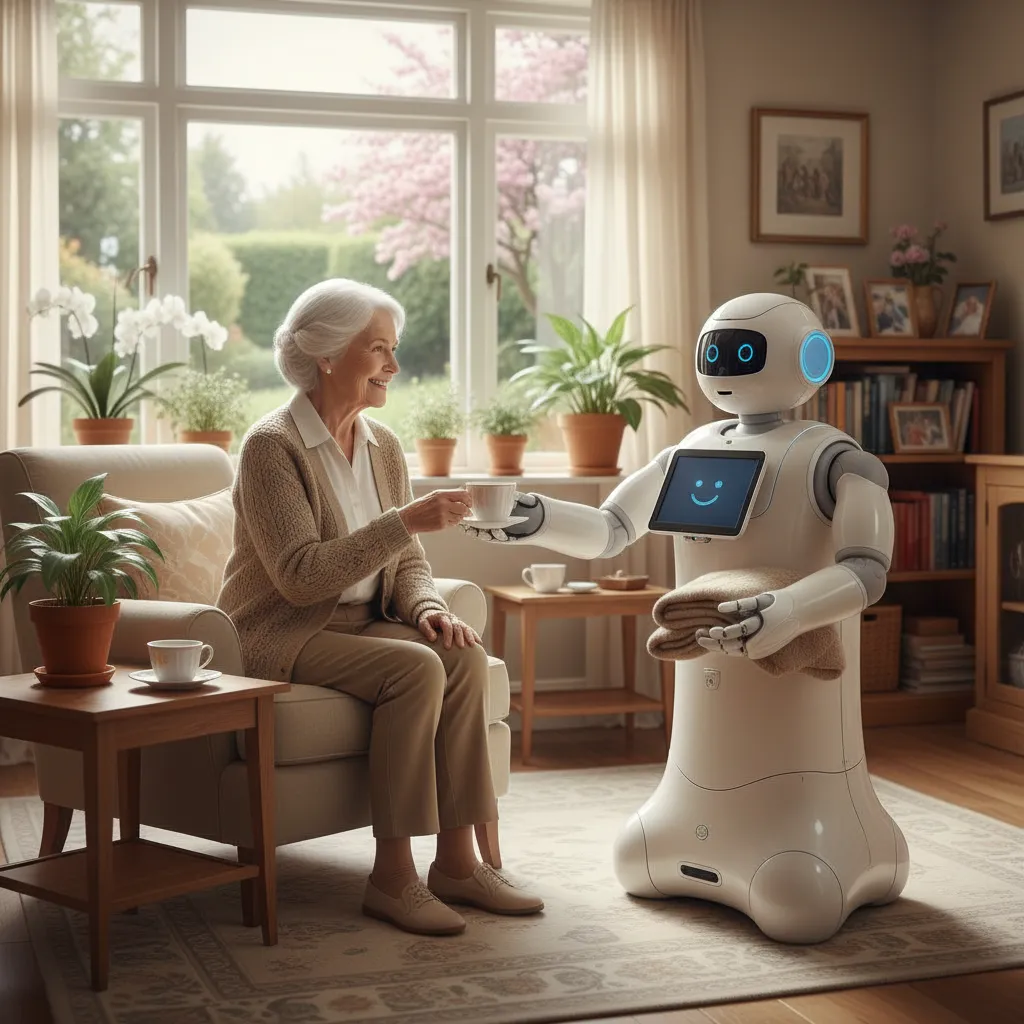
These compassionate machines can:
- Provide Medication Reminders: They can verbally remind and visually confirm that medication has been taken.
- Detect Falls and Emergencies: Using sensors and computer vision, they can detect a fall and automatically alert family members or emergency services.
- Facilitate Communication: They offer simple, voice-activated video calling to combat loneliness and keep families connected.
- Offer Companionship: Social robots like ElliQ and Paro are designed specifically to interact with seniors, providing conversation and mental stimulation.
This field of robotic personal care is not about replacing human caregivers but augmenting their abilities and providing a constant, reassuring presence. Related: The AI Revolution in Healthcare: Transforming Patient Care & Medical Innovation
Robot Companions for the Whole Family
The concept of robot companions home isn’t limited to the elderly. Robots are being designed for education, entertainment, and companionship for all ages. From coding robots that teach children STEM skills to pet-like robots that offer interaction without the mess, these devices are exploring the human-robot social dynamic. They learn our preferences, recognize our faces, and develop unique personalities over time, becoming another member of the connected family.
The Technology Driving the Revolution: What’s Under the Hood?
The magic of these autonomous home robots isn’t magic at all; it’s a symphony of sophisticated hardware and software working in concert. Understanding the core AI robot technology helps appreciate just how far we’ve come.
The Brains: AI, Machine Learning, and Computer Vision
At the heart of every smart robot is a powerful processing unit running advanced AI models. Key software components include:
- SLAM (Simultaneous Localization and Mapping): This is the algorithm that allows a robot to build a map of an unknown environment while simultaneously keeping track of its own location within that map. It’s the reason your robot vacuum doesn’t fall down the stairs.
- Computer Vision: Using cameras and machine learning, robots can identify objects, people, pets, and obstacles. This is what allows them to differentiate between a sock and a solid wall or recognize a specific person to deliver a message.
- Natural Language Processing (NLP): This allows robots to understand and respond to spoken commands, moving beyond simple trigger words to comprehend more complex, conversational requests.
The Senses: Advanced Sensors and IoT Integration
A robot’s AI brain is useless without data from the physical world. This is gathered by a dense suite of sensors:
- LiDAR (Light Detection and Ranging): By bouncing lasers off surfaces, LiDAR creates a highly accurate 3D map of a room, enabling precise navigation.
- Time-of-Flight (ToF) Sensors: These measure depth and distance, helping the robot perceive its environment in three dimensions.
- Inertial Measurement Units (IMUs): An accelerometer and gyroscope tell the robot how it’s moving, turning, and tilting.
- Microphone Arrays: These allow the robot to hear commands from across a room and determine the direction of the speaker.
Crucially, these intelligent home devices don’t operate in a vacuum. They connect to your Wi-Fi and integrate with the broader AI integrated home ecosystem, allowing them to be controlled by your phone, your voice, or even other smart devices. Related: Next-Gen AI Assistants: Towards a Seamlessly Smart Life
The Future of Domestic Robotics: What’s Next?
The current generation of domestic robots is impressive, but it’s just the beginning. The future of domestic robotics points toward more generalized, capable, and integrated machines.
The Era of the Multi-Task, Humanoid Robot
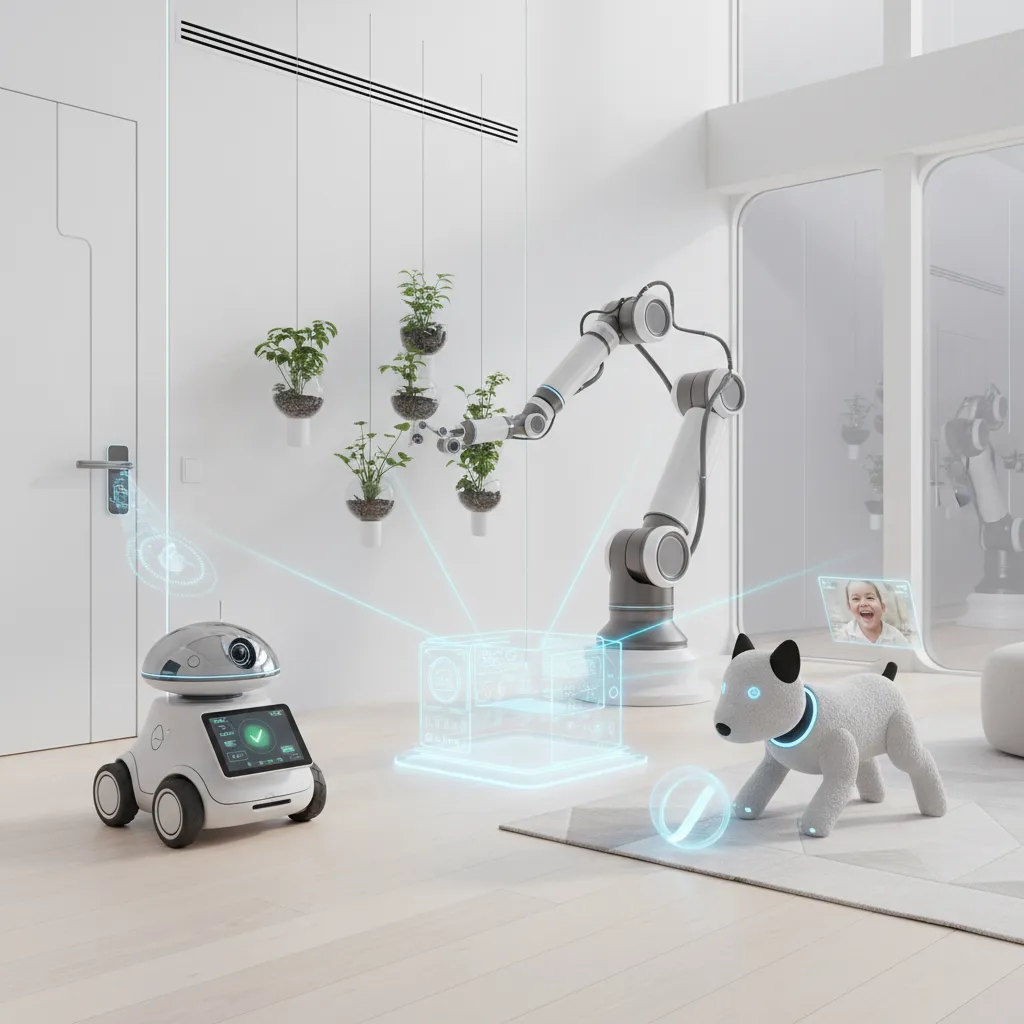
The ultimate goal for many in the industry is a single, general-purpose robot that can perform a wide variety of tasks, much like the droids of science fiction. Companies like Tesla (with Optimus) and Figure AI are making massive strides in creating humanoid robots capable of learning and performing complex physical labor. While their initial focus is on industrial applications, the technology will inevitably trickle down to the consumer level. The future home tech may involve a single robot that can unload the dishwasher, fold the laundry, and prepare a simple meal.
Overcoming the Hurdles: Challenges on the Road to Mass Adoption
The path to a robot in every home still has significant obstacles:
- Cost: Many advanced personal assistant robots are still prohibitively expensive for the average consumer.
- Privacy and Security: A mobile robot with cameras and microphones collecting data in your home presents significant privacy questions that need to be addressed with robust security and transparent policies.
- Physical Dexterity: The “last mile” of robotics is manipulation. Creating hands that can handle objects of varying shapes, sizes, and fragility with human-like dexterity is incredibly challenging.
- Social Acceptance: For many, the idea of a robot in their personal space is still unsettling. Designing robots that are not just useful but also socially and aesthetically acceptable will be key to adoption.
Conclusion
We are standing at the dawn of a new era in home living. The leap from voice-activated smart assistants to physically capable domestic AI robots is as significant as the jump from the landline to the smartphone. These machines are evolving from single-purpose tools into integral members of our smart living solutions, taking on the dull, dangerous, and difficult tasks that consume our time.
From the meticulous cleaning of an intelligent cleaning robot to the compassionate companionship of an AI for elderly care device, these home automation robots are fundamentally changing our definition of home. The journey is far from over, but one thing is clear: the future is not just automated; it’s embodied. The robots are finally here, and they’re ready to help.
What chore would you be most excited to hand over to a domestic robot? Share your thoughts in the comments below!
Frequently Asked Questions (FAQs)
Q1. What are domestic AI robots?
A domestic AI robot, also known as a home robot, is an autonomous machine designed to perform tasks and provide assistance within a household. Unlike simple automated devices, they use artificial intelligence, machine learning, and advanced sensors to navigate complex environments, interact with people, and perform a variety of chores like cleaning, security monitoring, and personal assistance.
Q2. How do AI robot vacuums work?
AI robot vacuums use a combination of sensors like LiDAR and cameras to create a detailed map of your home. They employ an AI algorithm called SLAM (Simultaneous Localization and Mapping) to navigate efficiently. Onboard cameras with computer vision allow them to recognize and avoid specific obstacles like cables, shoes, or pet waste, ensuring a more reliable and thorough cleaning cycle.
Q3. What is the most advanced personal robot for home use?
While the field is rapidly evolving, one of the most well-known advanced personal robots is Amazon’s Astro. It integrates Alexa’s voice AI with mobility, allowing it to patrol the home, act as a mobile communication device, and perform simple tasks. Other advanced robots focus on specialized areas like senior care (e.g., ElliQ) or cooking.
Q4. Are home security robots effective?
Home security robots add a dynamic layer to traditional security systems. Instead of static cameras, they can autonomously patrol an area, investigate motion or sound alerts, and provide a live video feed from the point of disturbance. This proactive approach can be more effective at deterring intruders and providing a comprehensive view of a security event.
Q5. Will robots replace household chores completely?
While the ultimate goal of future home tech is to automate all household chores, we are not there yet. Current robots excel at specific, structured tasks like floor cleaning and lawn mowing. Complex, fine-motor tasks like folding laundry or tidying a cluttered room remain significant challenges for robotics. In the near future, robots will be powerful assistants rather than complete replacements for human effort.
Q6. What are the privacy concerns with home robots?
Privacy is a major concern as these robots are equipped with cameras, microphones, and sensors that collect vast amounts of data about your home and lifestyle. Key concerns include who has access to this data, how securely it is stored, and the potential for unauthorized access or surveillance. Reputable manufacturers are addressing this with on-device processing, strong encryption, and clear data privacy policies.
Q7. How much do AI home robots cost?
The cost varies widely depending on capability. High-end robot vacuum cleaners AI can range from $800 to $1,500. More advanced personal assistant robots like Amazon’s Astro have an initial price point around $1,600. Specialized or highly advanced systems, like robotic cooking assistants, can cost tens of thousands of dollars, making them a luxury item for now.