Quantum Leap: Decoding the Latest Quantum Computing Breakthroughs

Introduction
For decades, quantum computing has felt like a concept perpetually locked in the realm of science fiction—a fascinating but distant promise of unimaginable computational power. But the hum of theoretical physics is rapidly turning into the roar of tangible, world-changing technology. We are no longer just talking about what quantum computers could do; we are witnessing the first monumental steps of what they are doing. This isn’t a gradual evolution; it’s a quantum leap.
From tech giants like IBM and Google publishing groundbreaking research to a thriving ecosystem of quantum computing startups pushing the boundaries of what’s possible, the pace of quantum innovation is staggering. These aren’t just incremental improvements. We’re seeing quantum processors with hundreds of qubits, novel quantum algorithms that can solve real-world problems, and the first whispers of a secure quantum internet.
If you’ve ever wondered what all the buzz is about, you’ve come to the right place. In this deep dive, we’ll demystify the core concepts behind this revolutionary technology. We’ll explore the latest quantum computing breakthroughs, understand the immense challenges that remain, and look at the practical quantum applications that are set to redefine industries from medicine to finance. Prepare to have your understanding of computing fundamentally challenged.
What is Quantum Computing (And Why Should You Care)?
Before we dive into the latest advancements, let’s establish a clear understanding of what makes quantum computing so different from the classical computers we use every day. Your laptop, smartphone, and even the most powerful supercomputers all operate on the same fundamental principle: bits. A bit is a simple binary switch, representing either a 0 or a 1. All the complex software and vibrant digital worlds we interact with are built upon this simple, two-state system.
Quantum computing, however, operates on a completely different set of rules—the strange and wonderful laws of quantum physics.
Beyond Bits and Bytes: The Magic of Qubits
Instead of bits, quantum computers use qubits. A qubit can be a 0, a 1, or—crucially—both at the same time. This mind-bending property is called superposition. Think of it like this: a classical bit is a light switch that is either on or off. A qubit is like a dimmer switch that can be on, off, or any shade of brightness in between, all simultaneously.
But the magic doesn’t stop there. Qubits can also be linked together in a phenomenon called quantum entanglement. When two qubits are entangled, their fates are intertwined, regardless of the distance separating them. If you measure the state of one qubit, you instantly know the state of the other, as if they are communicating faster than the speed of light. Albert Einstein famously called this “spooky action at a distance.”
The Power of Quantum Parallelism
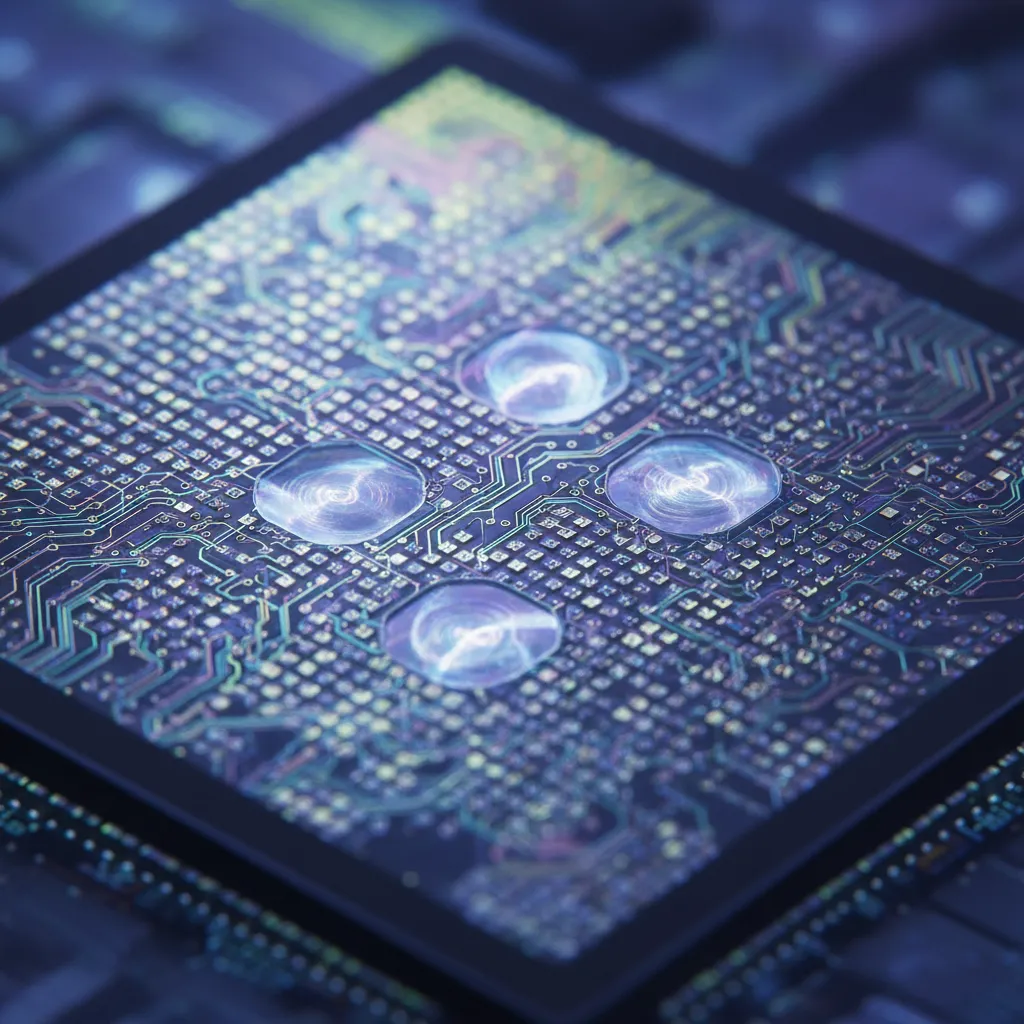
This combination of superposition and entanglement gives quantum computers their power. A computer with just a few hundred entangled qubits can explore a problem space larger than the number of atoms in the known universe. While a classical computer must check every possibility one by one, a quantum computer can explore all possibilities simultaneously. This is the essence of quantum parallelism.
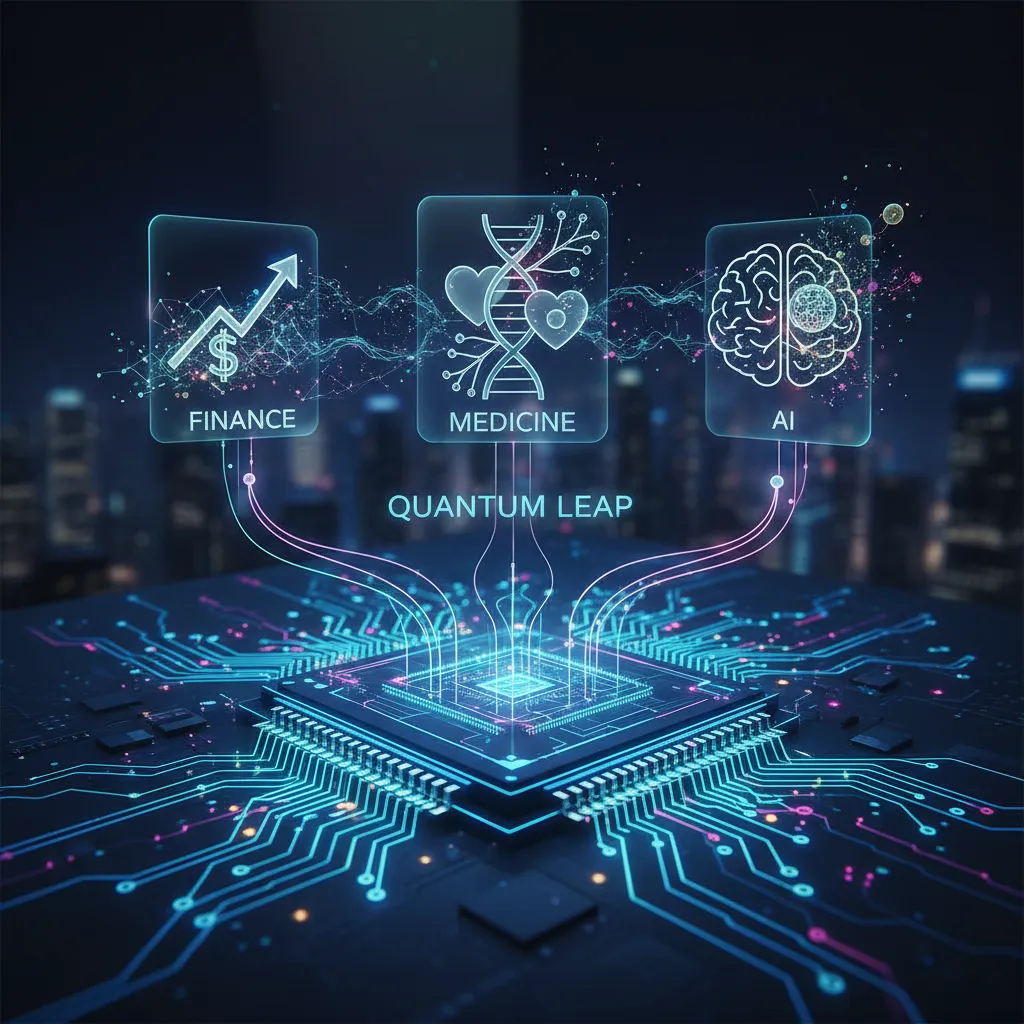
This capability is why the future of quantum tech is so exciting. It’s not about making faster gaming PCs or spreadsheets that load instantly. It’s about tackling problems so complex they are considered “unsolvable” for any classical computer, now or ever. We’re talking about designing new life-saving drugs, creating novel materials, revolutionizing financial markets, and building far more powerful AI. Related: Boost Your Day: Top 10 AI Productivity Tools for Peak Performance.
The Bleeding Edge: Recent Quantum Computing Breakthroughs
The last few years have been a whirlwind of quantum computing advancements. The field is rapidly moving from small-scale experiments to building systems that can tackle meaningful problems. Here are some of the most significant recent breakthroughs.
The Race for More Stable Qubits: Conquering Decoherence
One of the biggest quantum computing challenges is a phenomenon called “decoherence.” Qubits are incredibly fragile. The slightest vibration, temperature fluctuation, or stray magnetic field can cause them to lose their quantum state (their superposition) and “decohere” into a simple 0 or 1, destroying the computation.
Recent Breakthroughs:
- Improved Error Correction: Researchers at Google and other institutions have demonstrated quantum error correction codes that can detect and fix errors without destroying the underlying quantum information. This is a monumental step toward building “fault-tolerant” quantum computers.
- Longer Coherence Times: Companies like IBM Quantum and various university labs are designing new quantum hardware and materials that shield qubits from environmental noise, allowing them to maintain their quantum state for significantly longer periods—from nanoseconds to now milliseconds in some cases.
- Novel Qubit Architectures: Beyond the mainstream superconducting qubits used by Google and IBM, startups are making progress with other types, like trapped-ion and photonic qubits, which are inherently more stable and less prone to decoherence.
Scaling Up: The Dawn of the 1,000+ Qubit Era
For years, the number of qubits in a quantum processor was the headline metric. While quality is more important than quantity, scale is still essential. We are now firmly in the era of large-scale processors.
Recent Breakthroughs:
- IBM’s Roadmap: IBM has been consistently hitting milestones on its public roadmap. They’ve moved from the 127-qubit Eagle processor to the 433-qubit Osprey and the 1,121-qubit Condor processor. This scaling allows for the exploration of more complex quantum algorithms.
- Google’s Sycamore and Beyond: Google famously used its 53-qubit Sycamore processor to demonstrate “quantum supremacy” in 2019, performing a specific calculation in 200 seconds that would take the world’s most powerful supercomputer 10,000 years. They continue to build larger and more powerful processors.
- Neutral Atom Processors: Companies like QuEra Computing have built 256-qubit special-purpose quantum computers using neutral atoms, showcasing another viable path to massive scalability.

Quantum Software and Algorithm Innovation
A powerful quantum computer is useless without the software to run on it. The development of new quantum algorithms is a critical area of quantum computing research and is just as important as the hardware.
Recent Breakthroughs:
- Quantum Machine Learning (QML): Researchers are developing QML algorithms that could revolutionize artificial intelligence by speeding up training processes, improving optimization problems, and creating more sophisticated models. This could supercharge everything from drug discovery to financial modeling. Related: AI is Revolutionizing Personal Finance.
- Beyond Shor’s and Grover’s: While the most famous quantum algorithms are for factoring (Shor’s) and searching (Grover’s), new algorithms are emerging for chemical simulation, materials science, and complex optimization problems that have immediate commercial applications.
- Cloud Access and Development Kits: The rise of quantum cloud platforms from IBM, Google, Amazon, and Microsoft allows developers and researchers worldwide to experiment with real quantum hardware. This democratization of access is fueling rapid quantum innovation in software.
The Titans of Tech: Who is Leading the Quantum Race?
The quest for a universal, fault-tolerant quantum computer is a global race, with academic institutions, governments, nimble startups, and tech behemoths all vying for a leadership position.
IBM Quantum: The Strategic Roadmapper
IBM has taken a uniquely transparent approach, publishing a detailed public roadmap that outlines its hardware and software goals for years to come. Their focus is on building a full-stack quantum ecosystem, from the quantum processor itself to the cloud software and developer tools needed to use it. They are heavily invested in making quantum computing for business a reality.
Google Quantum AI: The Supremacy Claim
Google’s Quantum AI lab is driven by a singular focus on building a fault-tolerant quantum computer. Their 2019 quantum supremacy experiment was a landmark moment for the industry, proving that quantum computers could, even in a limited capacity, outperform the best classical machines. Their research continues to be at the absolute cutting edge of error correction and qubit design.

The Rise of Quantum Computing Startups
The field isn’t just a two-horse race. A vibrant ecosystem of quantum computing startups is attracting billions in venture capital and exploring diverse technological paths.
- IonQ: Focuses on trapped-ion quantum computers, which boast higher qubit fidelity and connectivity compared to many superconducting systems.
- Rigetti Computing: A full-stack company building its own superconducting quantum processors and offering cloud access.
- PsiQuantum: A well-funded but secretive startup working on photonic quantum computing, which uses photons (particles of light) as qubits. Their goal is to leapfrog directly to a million-qubit, fault-tolerant system.
From Lab to Life: Real-World Quantum Applications on the Horizon
So, what is the ultimate quantum computing impact? How will this technology change our lives? While we’re still in the early days, the potential applications are transformative.
Revolutionizing Medicine and Materials Science
One of the most promising near-term applications is in simulating molecules and materials at the quantum level—something classical computers struggle with.
- Drug Discovery: Pharmaceutical companies can simulate how a potential drug molecule will interact with proteins in the human body, drastically speeding up the development of new medicines and reducing the need for costly lab experiments.
- New Materials: Scientists can design novel materials with desired properties from the ground up. Imagine creating a room-temperature superconductor for lossless energy transmission or a hyper-efficient catalyst for carbon capture. Related: Circular Living: Embrace Sustainable Consumption for a Better Future.
Optimizing Finance and Logistics
Many problems in finance and logistics are fundamentally complex optimization problems, which are a perfect fit for quantum computers.
- Financial Modeling: Quantum algorithms can perform complex risk analysis and portfolio optimization far more effectively than classical models, potentially leading to more stable and efficient markets.
- Supply Chain & Logistics: Companies like FedEx or Amazon could use quantum computers to solve the “Traveling Salesperson Problem” on a global scale, optimizing delivery routes to save billions in fuel costs and reduce emissions.
Supercharging Artificial Intelligence
Quantum Machine Learning is perhaps the most exciting frontier. By processing information in a fundamentally new way, quantum computers could unlock new levels of AI capability.
- Enhanced Model Training: Quantum algorithms could dramatically accelerate the training time for complex machine learning models.
- New AI Architectures: QML could enable entirely new types of neural networks and learning models that are better suited for pattern recognition in extremely large and noisy datasets. The synergy between AI and Quantum is one of the most powerful quantum technology trends. Related: Apple Intelligence: Your Complete Guide to Apple’s New AI Features.
The Path Forward: The Quantum Internet and Beyond
The quantum computing future isn’t just about single, powerful computers. It’s about a connected ecosystem.
The Quantum Internet is a network that uses the principles of quantum entanglement to transmit quantum information. This would enable several game-changing technologies:
- Unhackable Communication: Quantum cryptography, specifically Quantum Key Distribution (QKD), allows for the creation of communication channels that are provably secure. Any attempt to eavesdrop would instantly disturb the quantum state and be detected.
- Distributed Quantum Computing: Linking smaller, less powerful quantum computers together to create a single, more powerful quantum machine.
- Advanced Quantum Sensing: Creating networks of hyper-sensitive sensors that can detect minute gravitational shifts (for earthquake prediction) or faint biomagnetic fields (for advanced medical diagnostics).
Conclusion
We are standing at the dawn of a new computational era. The journey from today’s noisy, intermediate-scale quantum (NISQ) devices to a fully fault-tolerant universal quantum computer is still long and fraught with immense quantum engineering challenges. However, the recent torrent of quantum breakthroughs shows that the momentum is undeniable.
The abstract concepts of superposition and entanglement are now being harnessed in sophisticated quantum processors accessible via the cloud. The impact of this quantum tech news is no longer confined to physics labs; it’s being discussed in boardrooms. Quantum computing for business is becoming a strategic imperative for forward-thinking organizations.
The quantum leap is happening now. It’s complex, it’s challenging, but its potential to reshape science, industry, and society is unparalleled. The key is to stay curious, stay informed, and prepare for a future that will be computed in a fundamentally new way.
Frequently Asked Questions (FAQs)
Q1. What is the latest breakthrough in quantum computing?
The latest breakthroughs revolve around achieving “quantum advantage” in useful scientific problems beyond simple proof-of-concept demonstrations, significant improvements in quantum error correction, and the scaling of quantum processors to over 1,000 qubits by companies like IBM.
Q2. What is quantum computing explained simply?
Quantum computing is a revolutionary type of computing that uses the principles of quantum mechanics to solve problems too complex for classical computers. Instead of bits (0s and 1s), it uses qubits, which can be a 0, a 1, or both simultaneously, allowing it to process massive amounts of information in parallel.
Q3. Will quantum computers replace normal computers?
No, not for everyday tasks. Quantum computers are specialized machines designed for specific, complex problems like molecular simulation, optimization, and breaking encryption. Your laptop or smartphone will continue to be the best tool for email, web browsing, and gaming. They will work alongside classical computers, not replace them. Related: AI PCs: Your Guide to the Next Generation of Laptops.
Q4. What is quantum supremacy?
Quantum supremacy (or quantum advantage) is the milestone reached when a quantum computer successfully performs a mathematical task that is practically impossible for even the most powerful classical supercomputer to solve in a reasonable amount of time. Google claimed to have achieved this in 2019.
Q5. How far away is a powerful quantum computer?
We already have powerful quantum computers, but they are “noisy” and prone to errors. The timeline for a large-scale, fault-tolerant quantum computer that can solve any relevant problem is likely 5 to 10 years away, but useful applications in chemistry and materials science are emerging now on current hardware.
Q6. What is the biggest challenge in quantum computing?
The single biggest challenge is qubit stability, or “decoherence.” Qubits are extremely fragile and lose their quantum properties due to interference from their environment. Overcoming this through better hardware and sophisticated quantum error correction is the primary focus of quantum computing research.
Q7. Can quantum computers break today’s encryption?
In theory, yes. A sufficiently large and fault-tolerant quantum computer running Shor’s algorithm could break most of the public-key cryptography that secures the internet today. This threat is a major driver behind the development of quantum cryptography and new “post-quantum” encryption standards.