Crafting Infinite Realms: AI’s Procedural Content Generation in Gaming
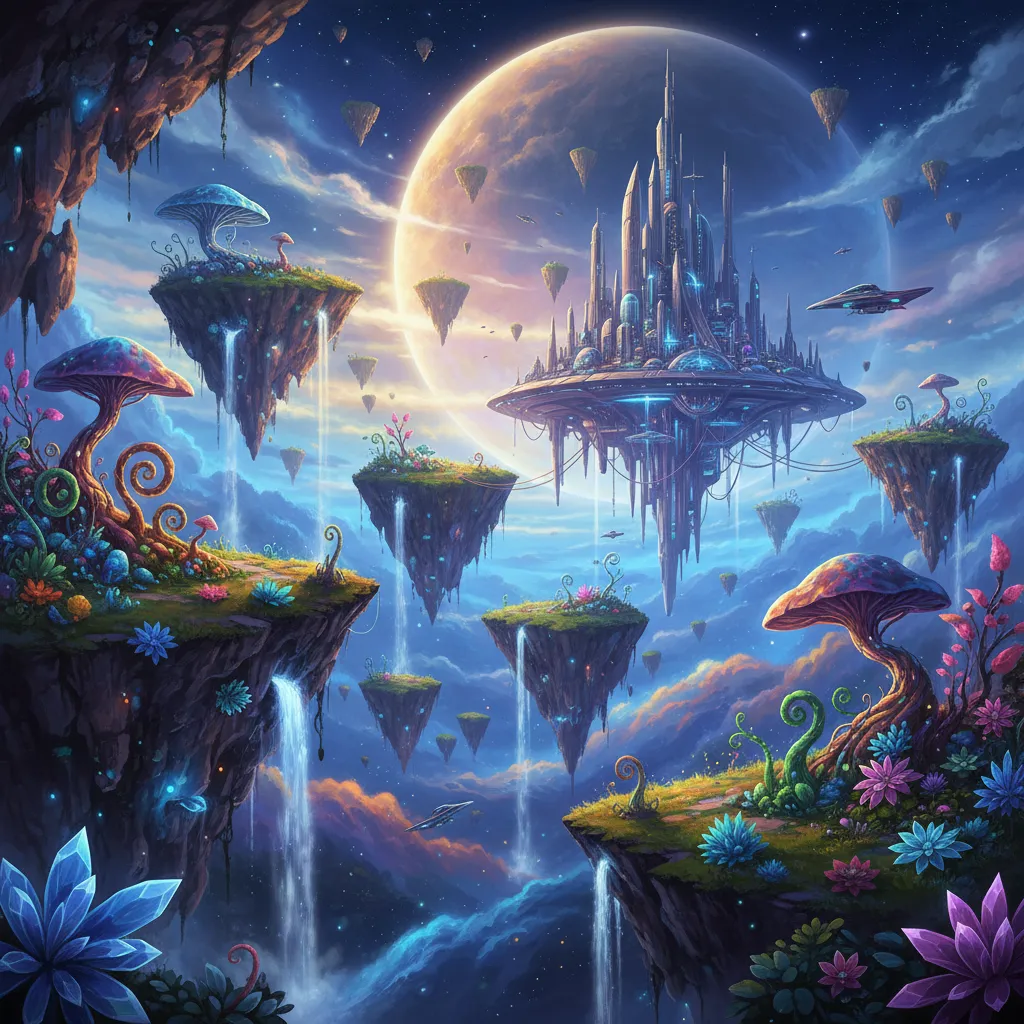
Ever wondered how a game like No Man’s Sky can contain over 18 quintillion unique planets? Or how the dungeons in Hades feel fresh and challenging every single time you attempt an escape? The magic behind these seemingly endless experiences isn’t a colossal team of designers hand-crafting every pixel. It’s a powerful technique called Procedural Content Generation (PCG), and it’s being supercharged by Artificial Intelligence.
This isn’t just about creating random maps anymore. We’re entering an era of AI-powered game design where virtual worlds can learn, adapt, and generate content with a level of complexity and responsiveness we’ve only dreamed of. This fusion of algorithms and artificial intelligence is fundamentally changing the landscape of game development, paving the way for truly infinite worlds and experiences that are unique to every single player.
In this deep dive, we’ll explore the revolutionary world of AI-driven PCG. You’ll learn what it is, how modern AI is elevating it beyond its traditional limits, the incredible benefits it offers developers and players, and what the future of gaming worlds holds in this exciting new frontier.
What is Procedural Content Generation (PCG)? The Blueprint of Endless Worlds
At its core, Procedural Content Generation is the art of creating game data algorithmically rather than manually. Think of it like this: instead of a level designer painstakingly placing every tree, rock, and enemy in a forest, they instead create a set of rules—a “procedure”—that tells the computer how to build a forest.
These rules might include:
- “Trees should grow on grassy terrain, but not on steep slopes.”
- “Enemy camps appear in clearings, at least 500 meters apart.”
- “Rivers should always flow from higher to lower elevations.”
By running these algorithms with a random starting point (a “seed”), the game can generate a unique, coherent, and playable forest every time. This is the foundational concept behind the blocky landscapes of Minecraft and the treacherous, ever-changing caverns of Spelunky. Classic PCG is a powerful tool for creating vast amounts of content, but it’s fundamentally based on predefined, human-written rules.
The AI Infusion: When Procedural Generation Gets a Brain
This is where things get truly exciting. The new wave of PCG isn’t just following rules; it’s learning from them. By infusing PCG with machine learning (ML) and other advanced AI game algorithms, developers are creating systems that can generate content with intent, style, and an understanding of what makes a game fun.
This is the key difference:
- Classic PCG: Follows a strict, pre-programmed recipe.
- AI-Powered PCG: Acts like a creative chef, learning from existing recipes (data) to invent new, interesting dishes that still taste good (are playable and fun).
Modern game AI techniques like Generative Adversarial Networks (GANs) and Reinforcement Learning (RL) are at the forefront of this revolution. GANs can be trained on thousands of images of, say, fantasy swords, and then learn to generate entirely new, stylistically consistent sword designs. Reinforcement Learning agents can play through a generated level thousands of times, learning what combinations of platforms, enemies, and traps lead to an engaging difficulty curve, and then use that knowledge for AI for level design.

This shift from rigid rules to intelligent systems is what allows for the creation of truly dynamic game environments that feel less like a random jumble and more like a thoughtfully designed, living world.
The Tangible Benefits: Why Developers are Embracing AI-Powered PCG
The move towards AI-driven virtual world creation isn’t just a technological novelty; it provides concrete advantages that are reshaping the industry. The benefits of pcg in games are massive, especially when amplified by AI.
Unlocking Infinite Replayability and Endless Exploration
The most obvious benefit for players is near-infinite content. Games built on AI PCG offer unique experiences with every playthrough. This makes endless exploration games a reality, where there’s always a new continent to discover, a new dungeon to delve into, or a new star system to chart. This radically increases a game’s lifespan and value, keeping players engaged for hundreds, or even thousands, of hours.
Empowering Small Teams and Indie Developers
AAA game development costs have skyrocketed, partly due to the immense amount of content required to fill massive open worlds. AI-powered PCG acts as a force multiplier. For AI in indie games, this is a game-changer. A small team can now create a world with the scale and variety that would have previously required a studio of hundreds of artists and designers. This democratization of game design innovation allows for more creative risks and diverse voices in the industry. Related: The EU AI Act Explained: Your Guide to Regulations and Ethical AI
Creating Dynamic and Adaptive Game Environments
This is where the true potential of AI gaming shines. Imagine a world that doesn’t just exist but reacts. With adaptive game environments, a forest could become scarred and desolate after a great battle, new towns could spring up along player-created trade routes, or dungeons could intelligently reconfigure their defenses based on your most-used strategies. This creates a sense of a living, breathing world where player actions have meaningful and persistent consequences, fostering true player driven content.
Scaling Content Creation Beyond Human Limits
The sheer scale of modern games is staggering. An AI can generate thousands of variations of a tree, a rock, or a piece of armor in the time it takes a human artist to create one. This doesn’t replace the artist; it empowers them. The AI handles the voluminous, foundational work, freeing human designers to focus on the heroic, unique assets and to act as creative directors, guiding the AI’s output to ensure quality and coherence.
Beyond the Landscape: AI’s Role in Populating Virtual Worlds
AI’s influence on PCG extends far beyond just terrain and levels. It’s now being used to create the very inhabitants and elements that bring these worlds to life.
NPC Generation AI: Crafting Believable Characters at Scale
Instead of a town full of generic NPCs who repeat the same two lines of dialogue, NPC generation AI can create characters with unique appearances, backstories, personalities, and even schedules. Powered by Large Language Models (LLMs), these NPCs can engage in unscripted, dynamic conversations, remember past interactions, and give players quests that are generated on the fly. This is the leap from a world populated by puppets to one inhabited by believable digital beings.

Generative Art and Asset Creation
The world of generative art gaming is exploding. AI tools can now produce high-quality textures, concept art, character models, and sound effects that align with a game’s established art style. This process of machine learning game design accelerates development pipelines significantly. A human artist can guide an AI to produce dozens of conceptual variations for a new creature, then select the best one to refine and perfect. It’s a powerful collaborative workflow.

Emergent Narratives and Storytelling AI
Perhaps the most ambitious frontier is storytelling AI games. These are systems designed to create dynamic narratives that emerge from the player’s actions. Instead of a linear, pre-written plot, the game’s story engine generates events, quests, and character arcs based on your unique journey. Did you spare a bandit leader? Maybe they return later to offer you a crucial alliance. This moves storytelling from a static script to a dynamic simulation, the ultimate form of role-playing.
The Architect’s Toolkit: AI Tools and Techniques in Modern Game Development
Developers aren’t just building these AI systems from scratch. A growing ecosystem of ai tools for game developers is making this new gaming technology more accessible.
Engines like Unity and Unreal are increasingly integrating AI and machine learning features. Specialized middleware like Houdini excels at complex procedural modeling, allowing artists to create intricate systems for generating cities, forests, and more. Furthermore, new platforms are emerging that are dedicated to specific AI tasks, such as generating character dialogue or creating adaptive audio soundtracks.

The process is often a feedback loop: an AI generates a level, a human designer provides feedback or makes adjustments, and the AI model is updated to learn from those human refinements. This human-in-the-loop approach ensures that the generated content maintains a high standard of quality and creative direction, combining the scale of machine generation with the nuance of human artistry.
The Challenges and Ethical Considerations of AI Game Design
Despite the immense potential, the path to fully AI-generated worlds is not without its obstacles.
- The Quality Control Problem: How do you playtest and debug a game with a near-infinite number of possible states? Ensuring that no procedurally generated level is unfair, broken, or boring is a massive technical challenge.
- The ‘Soulless’ Factor: A common criticism of PCG is that it can produce worlds that feel vast but empty, or content that feels generic and repetitive. The key is to develop AI that understands the principles of good design—pacing, tension, reveal, and aesthetics—which is an incredibly complex task.
- The Role of the Human Designer: There’s a persistent fear that AI will replace human developers. However, the more likely scenario is a shift in their role. Developers will become more like conductors of an AI orchestra, guiding and curating the generated content rather than creating every note by hand. The need for human creativity, taste, and vision will become more critical than ever. Related: The AI Revolution in Personalized and Predictive Healthcare
The Future of Gaming Worlds: A Glimpse into Tomorrow
We are standing at the dawn of a new era in interactive entertainment. The convergence of AI, PCG, and cloud computing points towards a future of next gen game creation that will be radically different from today.
Imagine persistent online worlds that are not static but constantly evolving, with AI generating new continents, new storylines, and new challenges in real-time, shaped by the collective actions of all players. Think of games that can analyze your playstyle and generate personalized content, challenges, and even narratives tailored specifically to you. This is the promise of truly can ai create infinite game worlds—not just in size, but in depth, dynamism, and personal relevance.
The journey from hand-crafted dungeons to AI-sculpted galaxies is one of the most exciting stories in technology today. It’s a story of how we’re teaching machines not just to build worlds, but to imagine them.
Conclusion
Procedural Content Generation, powered by the cognitive horsepower of Artificial Intelligence, is no longer a niche tool for indie developers. It is a foundational pillar of modern game development that is fundamentally rewriting the rules of what’s possible. From creating infinite worlds that promise endless discovery to populating them with intelligent inhabitants and adaptive stories, AI is the key to unlocking the next generation of immersive, dynamic, and deeply personal gaming experiences.
This is more than just how AI creates games; it’s about a new partnership between human creativity and machine intelligence. By embracing AI tools for game developers, we’re not just building bigger games—we’re building smarter, more responsive, and ultimately, more magical worlds than ever before.
What are your favorite games that use procedural generation? Do you believe AI is the future of game design? Share your thoughts in the comments below!
Frequently Asked Questions
Q1. What is procedural content generation (PCG) in simple terms?
In simple terms, procedural content generation is a method for creating game content like levels, items, or characters using algorithms and rules, instead of a designer creating every element by hand. It’s like giving the computer a recipe to bake a unique cake every time, rather than always giving it the same pre-made cake.
Q2. Is procedural generation a form of AI?
Traditional procedural generation is not strictly AI; it’s based on human-defined algorithms and rules. However, modern PCG increasingly uses real AI and machine learning techniques. In these systems, the AI learns from data to generate new content, making it a true form of AI-powered game design.
Q3. What are the main benefits of using PCG in games?
The primary procedural content generation benefits include creating massive amounts of content with a small team, providing high replayability since the game is different each time, enabling endless exploration games, and allowing for the creation of dynamic game environments that can change and react to the player.
Q4. Can AI create a whole game by itself?
Currently, no. While AI can generate many assets for a game—levels, art, text, and even code snippets—it cannot yet handle the high-level conceptual work. It lacks the understanding of core gameplay loops, player psychology, and the creative vision required to tie all the elements together into a cohesive, fun experience. It’s a powerful tool, not a replacement for a development team.
Q5. What’s a famous example of a game using procedural generation?
Minecraft is one of the most famous examples. Its entire world is procedurally generated using a seed number, creating unique and vast landscapes for every player. Other popular examples include No Man’s Sky for its planets, Spelunky for its daily challenge levels, and Hades for its dungeon layouts.
Q6. How does AI help in creating game levels?
AI can help design levels by learning what makes a level fun and challenging. For example, an AI can be trained on thousands of well-designed levels created by humans. It can then use that knowledge for AI for level design, generating new layouts that follow good design principles, ensuring proper pacing, difficulty curves, and player flow.
Q7. Will AI replace game developers?
It is highly unlikely that AI will replace game developers. Instead, it will change their roles and augment their capabilities. AI will handle many of the repetitive and time-consuming tasks, freeing up developers to focus on creativity, vision, and high-level design. It will become an essential collaborative tool, an assistant that empowers human creators to build bigger and more complex worlds. Related: How Ambient AI is Creating the Future of Intuitive Smart Environments