Circular Living: Embrace Sustainable Consumption for a Better Future

Introduction: Shifting from Take-Make-Waste to a Regenerative Lifestyle
In an era defined by rapid climate change, diminishing natural resources, and escalating waste crises, the way we produce, consume, and dispose of goods has come under intense scrutiny. For decades, humanity has largely operated within a “linear economy” model: take resources, make products, use them, and then dispose of them. This extractive, single-use approach has pushed our planet to its limits, leading to overflowing landfills, polluted oceans, and a shrinking supply of vital materials.
But what if there was a better way? What if we could design systems and lifestyles that keep resources in use for as long as possible, extract the maximum value from them while in use, and then recover and regenerate products and materials at the end of each service life? This is the core promise of circular living and sustainable consumption. It’s a profound paradigm shift that moves beyond mere recycling, inviting us to rethink our relationship with everything we buy, use, and discard.
At HiFi Studio And Mobile, we believe in empowering you with insights that not only enhance your digital lifestyle but also contribute to a better, more sustainable world. This comprehensive guide will deep dive into the circular economy lifestyle, unraveling its principles, offering practical steps for eco-friendly living, and showing how you can embrace responsible consumption to create a more resilient and planet-friendly future. From zero waste lifestyle hacks to understanding circular business models, prepare to transform your perspective on consumption and become a true agent of change.
Understanding the Circular Economy: Beyond Linear Thinking
Before we delve into the practicalities of circular living, it’s crucial to grasp the fundamental concepts that underpin it. The traditional linear economy is characterized by a one-way flow of materials, often summarized as “take-make-dispose.” Raw materials are extracted, converted into products, sold, used, and then discarded as waste. This model assumes an endless supply of cheap resources and an infinite capacity for waste assimilation – assumptions that are demonstrably false in a finite world.
The circular economy principles, by contrast, are inspired by nature itself, where nothing is truly wasted, and every output becomes an input for another process. It’s a system designed to eliminate waste and pollution, circulate products and materials (at their highest value), and regenerate nature. It’s about creating closed loop systems where materials flow continuously, much like in an ecosystem.
Linear vs. Circular: A Visual Contrast
The difference between these two economic models is stark. Imagine a tree: in a linear system, we cut it down, use the wood for a product, and then burn or landfill it when it’s no longer useful. In a circular system, that tree’s wood might be used for furniture, then repaired if broken, eventually repurposed, and finally, if it must be returned to the earth, composted to nourish new growth.
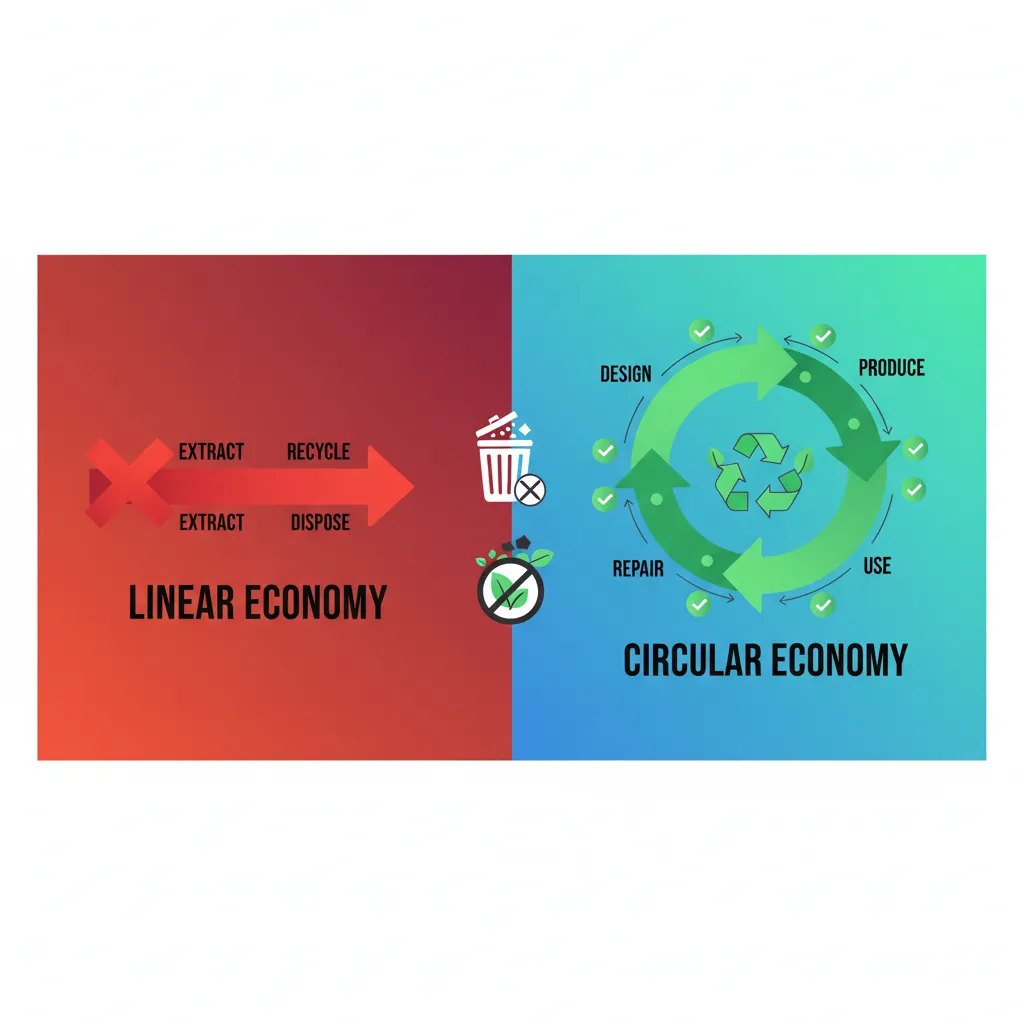 Infographic comparing linear economy (extract-dispose) with circular economy (closed loop).
This infographic illustrates the fundamental shift required: from depletion and disposal to regeneration and circulation. It’s a holistic approach that impacts design, production, use, and end-of-life management for all goods.
The Pillars of Sustainable Consumption: More Than Just Recycling
While “reduce, reuse, recycle” has been our mantra for environmental responsibility for decades, circular economy lifestyle takes these ideas further, adding layers of intention and innovation. It’s about moving from simply managing waste to preventing it at the source, and seeing waste as a design flaw, not an inevitable outcome.
1. Reduce: The Foundation of Eco-Minimalism
The most impactful step in eco-friendly living is to reduce our consumption. This isn’t about deprivation, but about intentionality and eco-minimalism. It asks us to question whether we truly need an item before acquiring it.
- Minimize Waste: This involves simple yet powerful habits like unsubscribing from junk mail, choosing digital over physical, and opting for experiences instead of possessions. It’s also about being mindful of packaging when shopping.
- Conscious Consumer Guide: Before buying, ask: Do I already own something similar? Can I borrow it? Can I make it? How long will this last? Is it truly necessary for my well-being?
- Green Living Tips: Adopt habits like meal planning to avoid food waste, using reusable bags and containers, and choosing quality over quantity.
2. Reuse: Extending Product Life and Embracing the Sharing Economy
Once we acquire an item, the goal is to keep it in use for as long as possible. This is where the repair and reuse culture truly shines.
- Product Life Extension: This means investing in durable goods, taking care of what we own, and opting for repairs when things break rather than immediate replacement.
- Sharing Economy Benefits: Platforms that facilitate sharing, renting, or lending tools, clothing, or even cars (like car-sharing services) are excellent examples of reuse on a larger scale. Why own a drill you’ll use twice a year when you can borrow one from a neighbor or a tool library?
- Upcycling Ideas: Give new life to old items by transforming them into something new and functional. An old ladder can become a bookshelf, glass jars can become storage, and worn-out jeans can become a stylish bag.
3. Recycle: The Last Resort, But Still Vital
When an item truly cannot be reduced, reused, or repaired, recycling becomes the next best option. However, it’s crucial to understand that not all recycling is created equal, and it’s energy-intensive.
- Closed Loop Systems: True circular recycling aims for closed loops, where materials are recycled back into similar products, maintaining their value. For example, plastic bottles recycled into new plastic bottles, or glass bottles into new glass bottles.
- Resource Efficiency: Proper sorting and local recycling infrastructure are key to making this process efficient. Understanding your local recycling guidelines is paramount.
- Sustainable Products: Look for products made from recycled content and that are themselves easily recyclable, supporting the entire closed loop system.
4. Refuse, Rethink, Rot: Expanding the Circular Mindset
Many proponents of the circular economy add further ‘R’s to the traditional three:
- Refuse: Saying no to single-use plastics, excessive packaging, and fast-fashion trends. This is about being proactive in preventing waste.
- Rethink: Challenging our ingrained consumer habits and the very design of products. Can this product be designed to last longer? Can it be easily repaired or disassembled? Can its materials be safely returned to nature or industry?
- Rot: Composting organic waste (food scraps, yard waste) to return nutrients to the soil, thus closing the loop on organic materials and creating sustainable food systems.
Bringing Circularity Home: Practical Steps for Eco-Friendly Living
The concepts of circular economy at home might seem daunting, but countless everyday actions contribute to a more sustainable consumption pattern. Here’s how you can integrate green living tips into your daily routine.
1. Sustainable Shopping & Ethical Consumerism
Your purchasing power is immense. Every dollar you spend is a vote for the kind of world you want to live in.
- Choose Sustainable Products: Look for items designed for durability, repairability, and recyclability. Research brands committed to circular business models, transparency, and ethical labor practices.
- Ethical Consumerism: Support companies that use regenerative practices, fair trade ingredients, and minimize their environmental footprint. Avoid fast fashion, disposable electronics, and excessively packaged goods.
- Sustainable Shopping: Prioritize local and seasonal produce, bulk buying to reduce packaging, and bringing your own reusable bags, containers, and coffee cups.
 Hands refilling a glass bottle with bulk soap at a zero-waste store, illustrating bulk buying and reuse.
2. Mastering the Zero Waste Lifestyle
A zero waste lifestyle isn’t about reaching absolute zero, but about constantly striving to minimize waste sent to landfills. It’s a journey, not a destination.
- Kitchen & Food: Plan meals to avoid spoilage. Compost food scraps. Buy in bulk. Use reusable food wraps instead of plastic cling film. Store leftovers smartly.
- Bathroom & Personal Care: Switch to solid shampoo and conditioner bars, reusable safety razors, bamboo toothbrushes, and refillable soap dispensers. Many brands now offer sustainable products in this category.
- Cleaning: Make your own cleaning solutions with vinegar and baking soda, or opt for concentrated refills. Use reusable cloths instead of paper towels.
3. Sustainable Fashion: A Wardrobe for the Planet
The fashion industry is a major polluter. Embracing sustainable fashion means making eco-conscious choices about your clothes.
- Buy Less, Choose Well: Invest in high-quality, durable pieces that you love and that will last.
- Repair and Reuse Culture for Clothes: Learn basic mending skills (sewing on a button, patching a tear) or support local tailors. Organize clothing swaps with friends.
- Secondhand & Vintage: Embrace thrift stores, consignment shops, and online marketplaces for pre-loved clothing. This extends the life of garments and reduces demand for new production.
- Care for Your Clothes: Wash clothes less frequently, use cold water, and air dry to extend their lifespan and reduce energy consumption.
4. Sustainable Home Decor & Upcycling Ideas
Your living space can also reflect your commitment to circularity.
- Sustainable Home Decor: Opt for furniture made from reclaimed, recycled, or sustainably sourced materials. Choose natural fibers for textiles.
- Upcycling Ideas: Repurpose old furniture with a fresh coat of paint or new hardware. Turn old fabrics into cushion covers or tote bags. Get creative with items that would otherwise be discarded.
- [Related: sustainable-smart-homes-eco-friendly-tech]
- Product Life Extension for Home Goods: Before buying new, consider if an existing item can be repaired, reupholstered, or given a new function.
5. Embracing a Repair and Reuse Culture
This principle is so vital it deserves its own emphasis. From appliances to electronics, a repair and reuse culture challenges the planned obsolescence built into many modern products.
- Learn Basic Repairs: Simple repairs can save money and extend product life. Many communities offer repair cafés where volunteers help fix items.
- Support Repair Services: Choose businesses that offer repair services for electronics, shoes, clothes, and appliances.
- Advocate for Right to Repair: Support movements and legislation that compel manufacturers to make spare parts, tools, and repair manuals available to consumers and independent repair shops. This is crucial for extending product lifespan, especially for complex items like smartphones or laptops.
Beyond the Individual: Circular Business Models & Regenerative Practices
While individual actions are powerful, true systemic change requires broader adoption of circular business models. Forward-thinking companies are redesigning products and services to eliminate waste and pollution, circulate materials, and regenerate natural systems.
- Product-as-a-Service: Instead of buying a product, you pay for its use. For example, renting carpets, leasing industrial machinery, or subscription models for clothes. This incentivizes companies to design for durability and repair, as they retain ownership of the product.
- Reverse Logistics: Companies take back used products to repair, remanufacture, or recycle them, closing the material loop.
- Industrial Symbiosis: One industry’s waste becomes another’s resource, like a power plant’s waste heat used by a nearby greenhouse.
- Regenerative Practices: In agriculture, this means farming methods that improve soil health, increase biodiversity, and capture carbon, moving beyond merely sustaining current levels to actively restoring ecosystems.
These innovations highlight how the circular economy is not just an environmental concept but also an economic opportunity, fostering new industries and job creation while reducing reliance on virgin resources.
Navigating Sustainable Living Challenges
Adopting a circular economy lifestyle isn’t without its challenges. It often requires a shift in mindset, planning, and sometimes, a bit more effort upfront.
- Convenience Culture: Our society is built on convenience, often at the expense of sustainability. Opting for reusable items or seeking out bulk stores can take more time initially.
- Availability & Cost: Sustainable options aren’t always readily available or might seem more expensive upfront, although they often save money in the long run.
- Information Overload: Knowing what’s truly sustainable versus greenwashing can be confusing. Research and reliable sources are key.
- Social Norms: Going against the grain of consumerism can feel isolating at times.
However, these sustainable living challenges are surmountable. The growing awareness and demand for eco-conscious choices are driving innovation, making sustainable products more accessible and affordable. Community initiatives, repair cafés, and educational resources are also helping to overcome these hurdles, making green living tips easier to implement for everyone.
The Future is Circular: Why Your Choices Matter
Every choice we make, from the coffee cup we use to the clothes we wear, has an impact. Embracing circular living is more than just a trend; it’s a critical path towards a resilient and equitable future. It moves us away from a system of constant depletion and pollution towards one of regeneration and abundance.
By adopting planet-friendly habits, advocating for resource efficiency, and supporting circular business models, you become part of a powerful movement. You contribute to reducing your environmental footprint, fostering economic innovation, and building communities that value longevity, sharing, and thoughtful stewardship of resources. The ripple effect of individual actions, multiplied by millions, can drive the systemic change our planet urgently needs.
Conclusion: Your Role in a Regenerative World
We’ve explored the profound shift from a linear “take-make-dispose” economy to a regenerative circular economy lifestyle. We’ve delved into the core principles of reduce, reuse, recycle, and beyond, offering practical green living tips to integrate sustainable consumption into every facet of your life – from your shopping basket to your wardrobe and your home.
Embracing eco-friendly living isn’t just about preserving the environment; it’s about creating a better quality of life for ourselves and future generations. It’s about being a conscious consumer guide, making intentional decisions, and recognizing the true value of resources.
The journey toward circular living is continuous, filled with learning and adaptation. But by taking small, consistent steps, by challenging conventional consumerism, and by championing a repair and reuse culture, you are actively contributing to a more balanced, resilient, and thriving world. Let’s embrace this future together, one sustainable choice at a time. [Related: eco-travelers-guide-10-ways-explore-world-sustainably/]
FAQs
Q1. What is circular living?
Circular living is a lifestyle based on the principles of the circular economy, which aims to keep resources in use for as long as possible, extract the maximum value from them while in use, and then recover and regenerate products and materials at the end of their service life. It’s about designing out waste and pollution, circulating products and materials, and regenerating nature.
Q2. How is a circular economy different from a linear economy?
A linear economy follows a “take-make-dispose” model, where raw materials are extracted, made into products, used, and then discarded as waste. A circular economy, in contrast, aims to close these loops, ensuring that materials are reused, repaired, refurbished, and recycled back into the system, minimizing waste and resource depletion.
Q3. What are some practical steps to start a zero waste lifestyle?
To begin a zero waste lifestyle, focus on the “reduce, reuse, recycle” hierarchy. Start with reusable bags, water bottles, and coffee cups. Buy in bulk to avoid packaging, compost food scraps, and repair items instead of replacing them. Gradually, you can extend these practices to other areas like sustainable fashion and eco-friendly cleaning products.
Q4. What are the benefits of adopting sustainable consumption habits?
Adopting sustainable consumption habits offers numerous benefits, including reducing your environmental footprint, conserving natural resources, minimizing waste sent to landfills, and often saving money in the long run. It also supports ethical businesses, encourages innovation in sustainable product design, and contributes to a healthier planet and more resilient communities.
Q5. How can I identify truly sustainable products?
Look for products with certifications from reputable third-party organizations (e.g., Fair Trade, USDA Organic, B Corp). Research brands for transparency in their supply chain, commitment to ethical labor practices, and use of recycled, recyclable, or sustainably sourced materials. Prioritize durability, repairability, and products designed for an extended product lifespan.
Q6. What role do businesses play in the circular economy?
Businesses are crucial for the circular economy. They can adopt circular business models by designing products for durability, repair, and recycling; offering product-as-a-service models; implementing reverse logistics for material recovery; and engaging in regenerative practices throughout their operations. This systemic shift creates value from waste and reduces reliance on virgin resources.
Q7. Is circular living more expensive?
While some sustainable products might have a higher upfront cost, circular living often leads to long-term savings. Repairing items, buying secondhand, reducing overall consumption, and making durable investments typically cost less over time than constantly replacing cheap, disposable goods. It’s about shifting from quantity to quality and maximizing resource value.