Bio-Integrated AI: Revolutionizing Personalized Health & Longevity

Introduction
For generations, our approach to health has been fundamentally reactive. We wait for symptoms to appear, schedule a doctor’s visit, and receive a diagnosis—a snapshot in time based on limited data. Your annual physical provides a glimpse, but what happens in the 364 days in between? This fragmented view is about to become a relic of the past, thanks to a groundbreaking convergence of biology, technology, and artificial intelligence: Bio-integrated AI.
Imagine a future where your body and an intelligent system are in constant dialogue. A world where potential health issues are flagged months or even years before they manifest, where treatments are tailored to your unique genetic code, and where your daily lifestyle choices are guided by real-time biological feedback. This isn’t science fiction; it’s the dawn of the human-AI health symbiosis.
In this deep dive, we’ll explore the revolutionary world of Bio-integrated AI. You’ll learn how this next-gen health technology is moving beyond wrist-based trackers into a new era of seamless integration, creating a future of health monitoring that is proactive, predictive, and profoundly personal. From wearable biosensors to your very own digital twin for health, we will uncover the pillars of this transformation and what it means for the future of human longevity.
What Exactly is Bio-Integrated AI? The Dawn of Human-AI Health Symbiosis
Bio-integrated AI is more than just an advanced fitness tracker. It represents the deep, seamless fusion of biological systems with powerful artificial intelligence platforms. While current wearables collect data from the body’s surface, bio-integrated systems aim to work with the body, often from within, creating a continuous, closed-loop feedback system.
This isn’t just about collecting more data; it’s about collecting the right data, in real-time, and translating it into actionable intelligence. This human-AI health symbiosis turns your body into a living data stream, allowing an AI to understand its subtle patterns, predict its future states, and help you navigate the path to optimal wellness.
The Core Components of the Ecosystem
This revolutionary approach is built on a sophisticated ecosystem where each part plays a critical role.
1. Advanced Biosensors: The Data Collectors
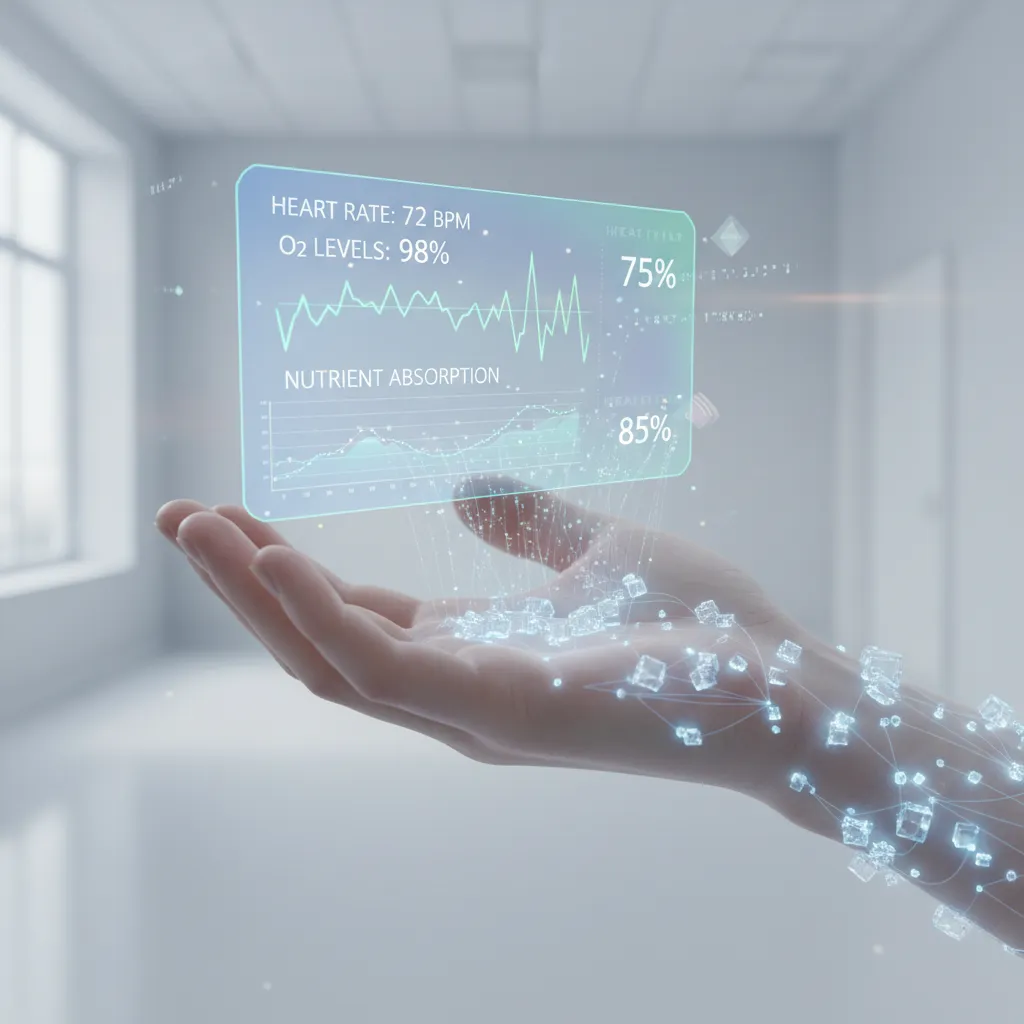
The foundation of bio-integrated AI is the ability to capture high-fidelity biological data continuously. This goes far beyond step counts and heart rate. We’re talking about a new generation of advanced health wearables and smart health implants.
- Wearable Biosensors: These are becoming smaller, more flexible, and more powerful. Think skin-like patches that monitor glucose, cortisol (stress), and hydration levels 24/7.
- Smart Health Implants: Microscopic sensors injected just under the skin or integrated into dental implants could one day monitor blood chemistry, immune responses, and the presence of cancer markers in real-time.
- Smart Contact Lenses: Prototypes are already in development to measure blood sugar levels through tears, offering a non-invasive solution for diabetes management.
These devices form a network of data points, providing an unprecedented, panoramic view of your internal biological environment.
2. The AI Brain: Predictive Health Analytics
All this raw data would be useless without an engine to make sense of it. This is where AI comes in. Using machine learning algorithms, the AI brain processes the torrent of information from your biosensors to achieve several key objectives:
- Pattern Recognition: It learns your unique biological baseline—your “normal.”
- Anomaly Detection: It instantly flags deviations from this baseline, which could be the earliest signs of an infection, a metabolic issue, or chronic disease.
- Predictive Health Analytics: By analyzing trends over time, the AI can forecast future health risks, enabling true AI for disease prevention.
This is the core of AI-powered diagnostics: moving from identifying sickness to predicting and preventing it. Related: AI’s Lifesaving Leap: Revolutionizing Early Disease Detection with Smart Tech
3. The Personal Health Dashboard: Your Intelligent Guide
The final piece is the user interface—how you interact with these profound insights. This won’t be a complex spreadsheet of medical data. Instead, it will be an intuitive personal health dashboard or an intelligent health assistant.
Imagine an app on your phone that says, “Your inflammation markers are slightly elevated. Let’s prioritize anti-inflammatory foods like turmeric and salmon today, and maybe a 20-minute walk instead of a high-intensity workout.” This is proactive wellness tech in action, delivering real-time health insights that are easy to understand and act upon. These AI-driven wellness platforms become your personal health strategist, guiding you toward better daily decisions.
The Revolution in Action: Key Applications Transforming Healthcare
Bio-integrated AI is not just a theoretical concept; its applications are beginning to reshape every facet of medicine and personal wellness.
From Reactive to Proactive: The Power of AI in Preventative Care
The holy grail of medicine is prevention, not just cure. AI in preventative care is where bio-integrated systems will make their most significant impact. By establishing a continuous dialogue with your body, these systems can catch the silent whispers of disease long before they become a roar.
For example, subtle changes in heart rate variability, body temperature, and respiratory rate, when analyzed together, can predict the onset of an infection like the flu up to 48 hours before you feel the first symptom. For more serious conditions like heart disease, the system could detect gradual changes in arterial pressure or cholesterol markers, prompting a consultation with a cardiologist years before a critical event might have occurred.
Creating Your Digital Twin for Health
One of the most exciting frontiers in this field is the concept of a digital twin for health. This is a dynamic, virtual replica of your body, continuously updated with data from your bio-integrated sensors.
What can you do with a digital twin?
- Simulate Interventions: Before you take a new medication, your doctor could test it on your digital twin to predict its effectiveness and potential side effects based on your unique biology.
- Forecast Disease Progression: For someone with a chronic condition, a digital twin could model how the disease is likely to progress, allowing for more effective management strategies.
- Test Lifestyle Scenarios: Curious about the long-term impact of a ketogenic diet versus a vegan one on your specific body? You could run the simulation on your digital twin to see the likely outcomes on everything from your cholesterol to your cognitive function.
Hyper-Personalized Medicine and Genomic AI
We are all unique, yet traditional medicine often treats us with a one-size-fits-all approach. Bio-integrated AI shatters this paradigm. By combining real-time biological data with your genetic information, personalized medicine AI can deliver truly bespoke healthcare.
Genomic AI health platforms can analyze your DNA to identify predispositions and then use real-time data to see how your environment and lifestyle are activating or suppressing those genes. This could lead to hyper-personalized recommendations:
- Nutrition: “Your genes suggest a lower tolerance for saturated fats. Your recent blood work confirms this. Let’s adjust your diet.”
- Fitness: “Based on your muscle fiber composition and real-time lactate levels, interval training will be far more effective for you than steady-state cardio.”
- Pharmacology: Prescribing the exact right dose of the most effective drug, based on how your body metabolizes it.
AI for Chronic Disease Management
For the millions living with chronic conditions like diabetes, hypertension, or asthma, continuous health tracking powered by bio-integrated AI is a game-changer. An artificial pancreas system, for example, uses a continuous glucose monitor (a biosensor) and an AI algorithm to automatically adjust insulin delivery via a pump. This closes the loop, removing human error and dramatically improving quality of life. This is a prime example of effective AI for chronic disease management.
Extending Not Just Lifespan, but Healthspan: The Role of AI Longevity Solutions
The ultimate goal isn’t just to live longer but to live healthier for longer. This is the difference between lifespan (total years lived) and healthspan (total years lived in good health). AI longevity solutions are focused squarely on extending our healthspan.
AI Lifestyle Optimization: Your Intelligent Health Assistant
Many factors that influence aging are within our control: diet, exercise, sleep, and stress management. Bio-integrated AI acts as the ultimate coach for AI lifestyle optimization. It provides objective feedback on how your choices impact you at a cellular level.

For instance, you might feel fine after only five hours of sleep, but your intelligent health assistant could show you a spike in cortisol and inflammatory markers, providing concrete evidence that you need more rest. It can guide you through a meditation session and show you the real-time impact on your heart rate variability, reinforcing healthy habits. Related: The Best AI Tools for Personal Productivity in Daily Life
The Cellular Level: AI for Rejuvenation and Repair
Beyond lifestyle, health span extension AI is accelerating research at the microscopic level. The deep integration of biotech AI integration allows scientists to analyze the incredibly complex processes of cellular aging. AI can identify key biomarkers of aging and screen millions of potential compounds for drugs that could slow or even reverse some of these processes. This is where AI moves from being a wellness tool to a core component of fundamental longevity science.
The Human Element: Navigating the Ethics and Challenges
With great power comes great responsibility. The move towards a bio-integrated future is not without significant ethical hurdles that we must navigate carefully.
The Data Dilemma: AI Ethical Health Data and Privacy
The data generated by these systems is the most personal and sensitive information imaginable. Key questions arise:
- Who owns your biological data stream? You, the tech company, or your insurance provider?
- How can we ensure this data is secure from hackers?
- Could this data be used to discriminate against individuals for insurance, employment, or loans?
Establishing robust regulations and transparent policies around AI ethical health data is not just important; it’s essential for building public trust. Related: Explainable AI: Building Trust and Transparency for the Future
Accessibility and Equity in Next-Gen Health Technology
Will this revolutionary next-gen health technology create a new health divide? If bio-integrated AI is only available to the wealthy, it could exacerbate existing social inequalities, creating a world where the rich can optimize their healthspan while others are left behind. Ensuring equitable access must be a priority for developers and policymakers.
The Question of Human Augmentation
Finally, we must confront the philosophical line between treatment and enhancement. Where does optimizing wellness end and AI and human augmentation begin? While using AI to prevent disease is widely accepted, using it to augment cognitive function or physical capabilities beyond the human norm opens up a complex ethical debate about what it means to be human.
The Future is Now: Building Smart Health Ecosystems
The future of bio-integrated AI is not just about individual devices but about creating interconnected smart health ecosystems. Imagine a world where your wearable biosensor communicates with your smart refrigerator, which then suggests a grocery list based on your micronutrient deficiencies. Your doctor’s office receives a real-time alert about a worrying trend in your vitals, and your smart home adjusts the lighting and ambient temperature to optimize your circadian rhythm for better sleep.
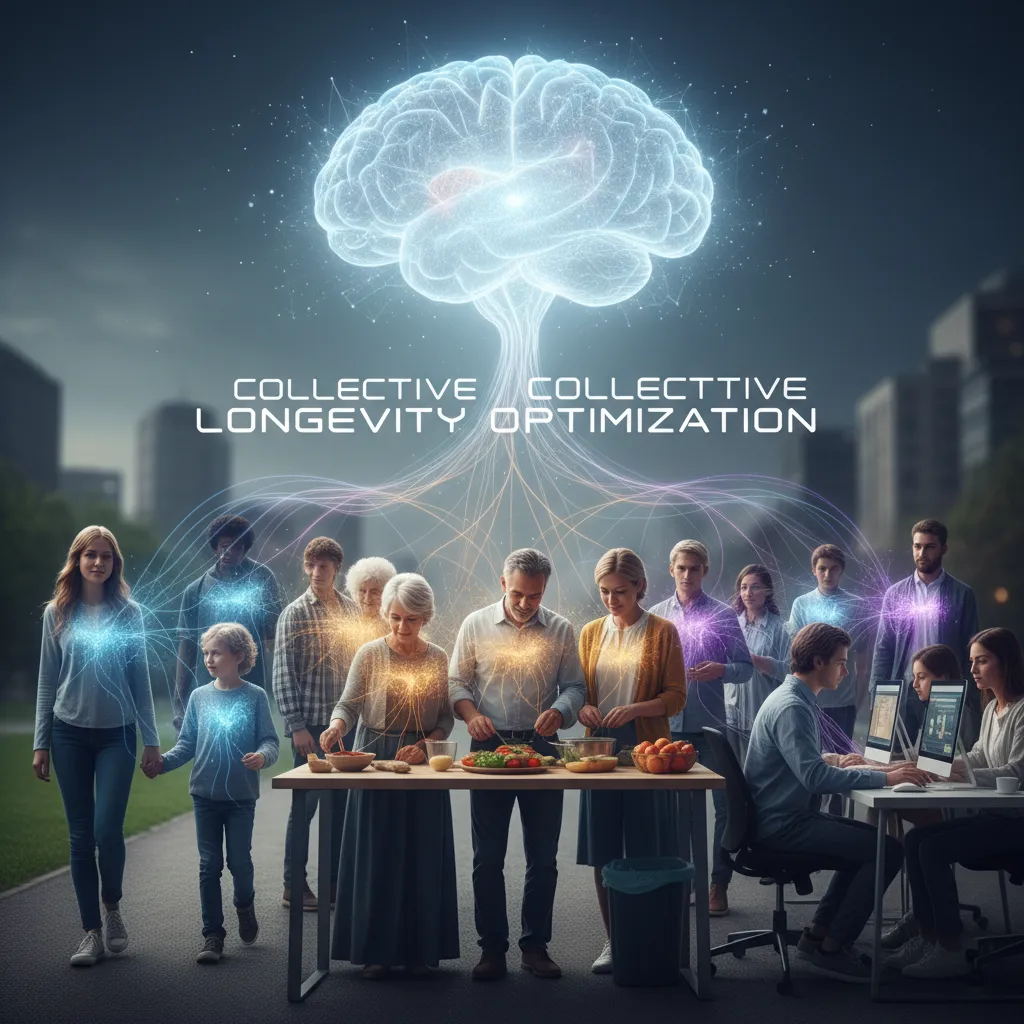
This seamless integration between our bodies, our devices, and our environment represents the ultimate vision of a future medical AI. Companies are already laying the groundwork, with devices like the Oura Ring and continuous glucose monitors representing the first steps in this direction. Related: Galaxy Ring vs. Oura: The Ultimate Smart Ring Showdown
Conclusion: Embracing the Human-AI Health Symbiosis
Bio-integrated AI marks a pivotal moment in human history—the point where we move from being passive observers of our health to active, data-informed participants. By merging our biology with intelligent systems, we are unlocking the potential for a future free from the shadow of unexpected illness, where chronic conditions are managed with precision, and where a long, healthy life is the norm, not the exception.
The journey ahead is complex, filled with both immense promise and significant ethical challenges. But the trajectory is clear. The era of reactive medicine is ending, and the age of proactive, personalized, and predictive wellness is just beginning. The human-AI health symbiosis is not just about technology; it’s about empowering each of us with a deeper understanding of the one thing we truly own: our own bodies.
What part of this bio-integrated future are you most excited or concerned about? Share your thoughts in the comments below!
Frequently Asked Questions (FAQs)
Q1. What is Bio-integrated AI?
Bio-integrated AI refers to the seamless fusion of biological systems with artificial intelligence. It uses advanced wearable biosensors or implants to continuously collect real-time health data, which is then analyzed by AI algorithms to provide predictive insights, personalized recommendations, and proactive health management.
Q2. How is AI used for longevity?
AI is used for longevity by extending “healthspan”—the years of healthy life. AI longevity solutions accomplish this by providing AI lifestyle optimization (for diet, sleep, stress), enabling AI in preventative care to catch diseases early, and accelerating research into the cellular mechanisms of aging through biotech AI integration.
Q3. What are examples of wearable biosensors?
Examples of wearable biosensors range from common devices like smartwatches that track heart rate and blood oxygen to more advanced tech. These include skin-like patches that monitor glucose and hydration, smart rings that track sleep stages and body temperature, and future concepts like smart contact lenses that can measure biomarkers in tears.
Q4. What is a digital twin in healthcare?
A digital twin for health is a dynamic, virtual model of an individual’s body that is continuously updated with real-time data from biosensors. It can be used to simulate the effects of treatments before they are administered, predict how a disease might progress, and test the impact of different lifestyle choices in a risk-free virtual environment.
Q5. Are there ethical concerns with AI in healthcare?
Yes, there are significant ethical concerns. The main issues revolve around AI ethical health data, including data privacy, security, and ownership. There are also concerns about algorithmic bias, the potential for discrimination based on health data, and ensuring equitable access to these advanced technologies to avoid widening social inequality.
Q6. Can AI predict future health problems?
Yes, one of the core strengths of bio-integrated AI is its ability to perform predictive health analytics. By analyzing continuous data streams and identifying subtle deviations from a person’s baseline, AI can forecast an increased risk for various conditions—such as infections, metabolic disorders, or cardiovascular events—long before clinical symptoms appear, enabling early intervention.