Autonomous AI Agents: The Next Revolution in Smart Automation

Introduction
The digital landscape is constantly evolving, and at its forefront stands artificial intelligence, pushing boundaries and redefining what’s possible. We’ve moved beyond simple chatbots and basic algorithms; the conversation has shifted to autonomous AI agents. These sophisticated AI systems are not just tools that execute commands; they are intelligent entities capable of independent decision-making, learning, and adapting to dynamic environments without constant human intervention. They represent a significant leap forward in smart automation, promising to fundamentally reshape industries, workflows, and even our daily lives.
The concept of AI agents has captivated technologists and visionaries for decades, evolving from theoretical constructs to tangible, powerful applications. This article delves deep into the world of autonomous AI agents, exploring their core mechanics, the diverse types emerging, and their profound impact of AI agents across various sectors. We’ll uncover how these intelligent agents are driving an AI revolution, enhancing AI productivity, and ushering in an autonomous systems future where machines work not just smarter, but independently. Join us as we explore the exciting possibilities and crucial considerations surrounding this next frontier in AI technology trends and AI innovation.
What Exactly Are Autonomous AI Agents?
At its core, an autonomous AI agent is a piece of software or a physical robot designed to perceive its environment, make decisions, and take actions to achieve specific goals, all without explicit, real-time human instruction for each step. Unlike traditional software that follows a rigid set of pre-programmed rules, AI agents possess a degree of autonomy that allows them to adapt, learn, and problem-solve independently.
Think of it this way: a traditional automation script might be programmed to send an email every Monday morning. An autonomous AI agent, however, might analyze market trends, draft a personalized email campaign, A/B test different subject lines, and send the optimal version at the best time, all while learning from the results to improve future campaigns. This capacity for AI decision making and continuous learning is what sets them apart.
Key Characteristics of Autonomous AI Agents:
- Autonomy: The ability to operate independently, making decisions and executing actions without constant human oversight.
- Perception: They can gather and interpret information from their environment through various sensors or data inputs.
- Reasoning: They possess logical capabilities to process information, understand context, and derive conclusions.
- Learning: Through machine learning agents and deep learning AI, they can learn from experience, adapt their behavior, and improve performance over time.
- Goal-Oriented: They are designed with specific objectives and work to achieve those goals efficiently.
- Proactivity: They don’t just react to stimuli; they can anticipate needs and initiate actions.
This sophisticated combination of traits enables them to handle complex, dynamic tasks that were once exclusively in the human domain, driving new levels of AI driven efficiency and AI enhanced workflow.
The Evolution of AI: From Simple Automation to Autonomous Agents
The journey to autonomous AI agents has been a gradual yet accelerating process, building on decades of AI research and development.
Initially, AI focused on symbolic reasoning and expert systems, where human knowledge was encoded into rules. These systems could perform specific tasks but lacked true adaptability. The rise of machine learning agents marked a turning point, allowing AI to learn from data without explicit programming. Algorithms like neural networks, the foundation of deep learning AI, further propelled this evolution, enabling AI to identify complex patterns and make predictions with unprecedented accuracy.
More recently, generative AI agents have emerged, capable of creating new content – from text and images to code and music. This creative capacity, combined with advanced reasoning and learning abilities, has paved the way for truly intelligent agents that can not only understand but also act and create autonomously. The integration of large language models (LLMs) has been a pivotal development, allowing these agents to understand and generate human-like language, facilitating more complex interactions and decision-making processes.
This historical trajectory underscores a fundamental shift: AI is no longer just about replicating human intelligence but augmenting and, in some cases, surpassing it in specific, autonomous tasks. The AI revolution is here, and autonomous AI agents are at its cutting edge.
Types of Autonomous AI Agents and Their Applications
The versatility of autonomous AI agents means they are being developed for a vast array of applications, categorised broadly into personal and enterprise use.
Personal AI Agents
Imagine a digital assistant that doesn’t just respond to commands but anticipates your needs, manages your schedule, optimizes your finances, and even handles mundane tasks without you lifting a finger. That’s the promise of personal AI agents.
- Smart Home Management: Controlling lighting, temperature, security, and even ordering groceries based on your habits and preferences.
- Personalized Learning & Development: Creating tailored learning paths, recommending courses, and providing real-time feedback.
- Financial Advisors: Monitoring spending, identifying savings opportunities, and even executing trades based on your financial goals and risk tolerance. [Related: The AI Revolution in Your Wallet: How AI is Reshaping Personal Finance]
- Health & Wellness Coaches: Tracking health metrics, suggesting personalized exercise routines, and even managing medication schedules.
These personal AI agents are designed to streamline daily life, freeing up time and cognitive load for more meaningful activities, showcasing significant AI productivity enhancements.
Enterprise AI Agents
In the business world, enterprise AI agents are transforming operations, enhancing efficiency, and unlocking new revenue streams. They are the backbone of AI in business, driving significant advancements in intelligent automation.

- Customer Service & Support: Advanced chatbots and virtual assistants that can resolve complex queries, provide personalized support, and even proactively reach out to customers.
- Supply Chain Optimization: Monitoring logistics, predicting demand fluctuations, managing inventory, and optimizing delivery routes in real-time.
- Data Analysis & Reporting: Sifting through vast datasets, identifying trends, generating insights, and creating comprehensive reports for strategic decision-making. This is where the power of deep learning AI truly shines.
- Cybersecurity: Continuously monitoring networks for threats, detecting anomalies, and autonomously responding to mitigate attacks.
- Healthcare: Assisting with diagnostics, drug discovery, personalized treatment plans, and even automating administrative tasks. [Related: AI Revolutionizing Healthcare: Innovations & Future Trends]
- Manufacturing: Controlling robotic systems, optimizing production lines, performing quality checks, and predictive maintenance.
These applications demonstrate how AI automation tools are not just replacing manual labor but are creating entirely new paradigms for advanced AI solutions and AI for enterprises, leading to unprecedented levels of AI driven efficiency.
The Technology Underpinnings: How Autonomous AI Agents Work
Behind every autonomous AI agent lies a sophisticated architecture built upon several cutting-edge AI systems and methodologies.
Machine Learning and Deep Learning
At the heart of many autonomous AI agents are machine learning agents and deep learning AI models. These enable agents to learn from vast amounts of data, recognize patterns, and make informed decisions.
- Supervised Learning: Agents learn from labeled datasets to perform tasks like classification or regression (e.g., predicting customer churn).
- Unsupervised Learning: Agents discover hidden patterns and structures in unlabeled data (e.g., segmenting customer groups).
- Reinforcement Learning: Agents learn through trial and error, receiving rewards or penalties for their actions, which allows them to optimize their behavior towards a specific goal. This is particularly crucial for developing robust AI decision making capabilities in dynamic environments.
Natural Language Processing (NLP)
For agents to interact effectively with humans and understand complex instructions, Natural Language Processing (NLP) is essential. This field of AI allows agents to process, understand, and generate human language. Modern NLP, powered by generative AI agents based on large language models (LLMs), allows agents to:
- Understand natural language queries and commands.
- Extract key information from unstructured text.
- Generate human-like responses and content.
- Translate languages.
Computer Vision
For agents that interact with the physical world, computer vision allows them to “see” and interpret visual information. This is vital for applications like autonomous vehicles, robotics, and quality control in manufacturing.
Robotics and Actuators
In the context of physical autonomous agents, robotics and actuators provide the means for the AI to interact with and manipulate its environment. This can range from robotic arms in factories to sophisticated humanoid robots.
The synergy of these technologies allows autonomous AI agents to perceive, process, decide, and act in increasingly complex ways, truly embodying the vision of intelligent automation.
The Benefits of Embracing Autonomous AI Agents
The adoption of autonomous AI agents is not just a technological trend; it’s a strategic move offering substantial benefits across various domains.
Enhanced Efficiency and Productivity
One of the most immediate and tangible benefits is the drastic increase in AI driven efficiency and AI productivity. Agents can perform repetitive tasks at a speed and scale impossible for humans, reducing operational costs and freeing up human talent for more creative and strategic work. For example, in customer service, AI agents can handle a significantly higher volume of inquiries simultaneously, reducing wait times and improving customer satisfaction. [Related: Unlock Peak Productivity: 10 AI Tools Revolutionizing Your Workday]
Improved Accuracy and Consistency
Human error is inevitable. Autonomous AI agents, however, operate with precision and consistency. Once trained, they can perform tasks with near-perfect accuracy, ensuring consistent quality in output, whether it’s data entry, financial analysis, or manufacturing processes. This reliability is a cornerstone of advanced AI solutions.
Scalability and Adaptability
Unlike human teams, AI agents can be scaled up or down rapidly to meet fluctuating demands. They can also be quickly reprogrammed or retrained to adapt to new requirements or environmental changes, offering unparalleled flexibility in business operations and demonstrating their pivotal role in the future of AI.
Data-Driven Decision Making
With their ability to process and analyze vast datasets, AI agents provide insights that empower superior AI decision making. They can identify patterns and correlations that might be invisible to the human eye, leading to more informed strategies and better outcomes. This is particularly valuable in fields like market analysis, scientific research, and financial trading.
Innovation and New Possibilities
Perhaps the most exciting benefit is the potential for AI innovation. By automating routine tasks and providing deeper insights, autonomous AI agents enable organizations and individuals to explore new ideas, develop groundbreaking products, and solve complex problems previously deemed intractable. They are a catalyst for the AI revolution, pushing the boundaries of what’s achievable with AI technology trends.
Navigating the Challenges and Ethical Considerations
While the promise of autonomous AI agents is immense, their widespread adoption also brings forth a unique set of challenges and profound ethical considerations that must be addressed carefully for responsible AI development.
Ethical AI and Governance
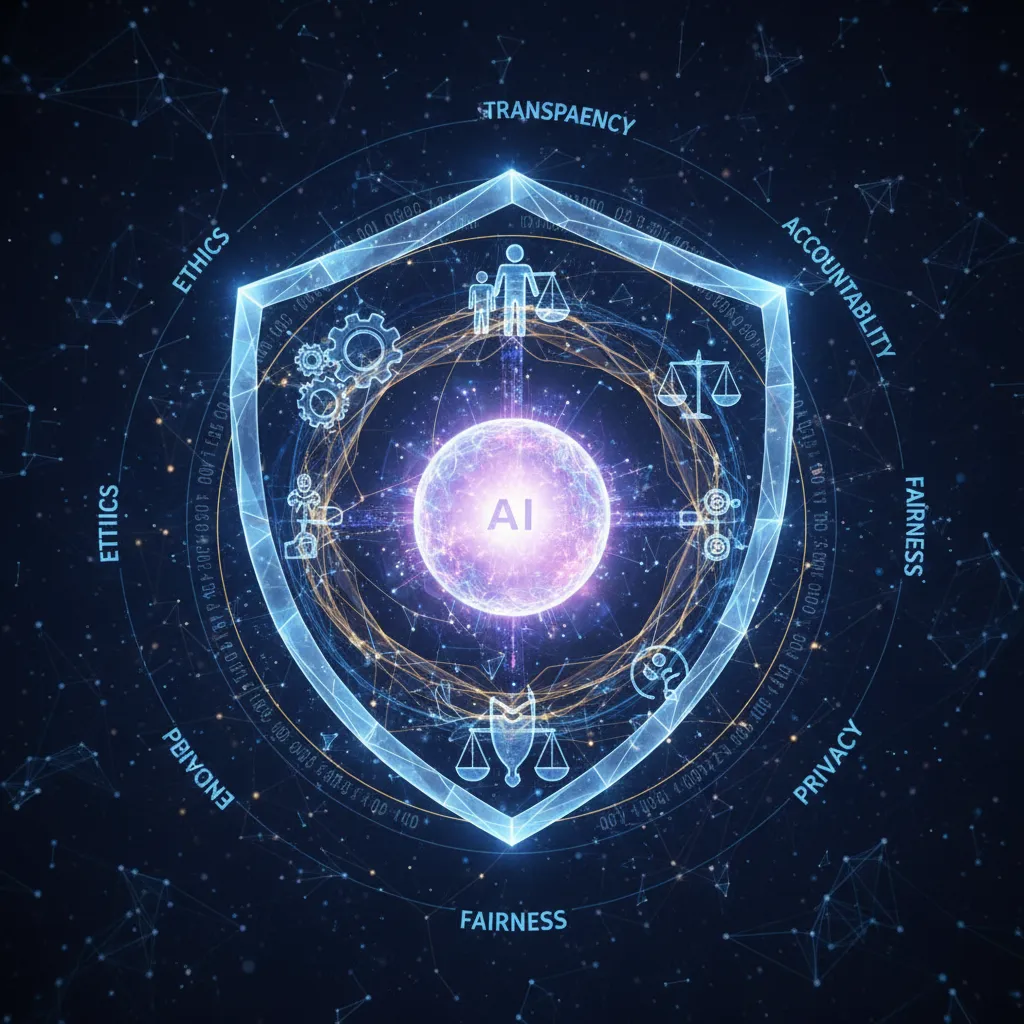
The ability of agents to make independent decisions raises critical questions about responsibility, accountability, and fairness. Who is responsible if an AI agent makes an error leading to harm? How do we ensure these agents operate without bias, especially when making decisions that impact individuals or groups? The development of robust frameworks for ethical AI agents and AI governance is paramount. This includes:
- Transparency: Ensuring the decision-making processes of AI agents are understandable and auditable.
- Accountability: Establishing clear lines of responsibility for AI agent actions.
- Fairness: Designing agents to avoid and mitigate algorithmic bias.
- Privacy: Protecting sensitive data processed by AI agents.
Job Displacement and Workforce Transformation
The fear of AI automation tools displacing human jobs is a common concern. While certain routine tasks will undoubtedly be automated, the focus should be on workforce transformation. This means reskilling and upskilling programs to enable humans to work alongside AI systems, focusing on tasks that require creativity, emotional intelligence, and complex problem-solving. The goal is to create an AI enhanced workflow where humans and agents complement each other’s strengths.
Security Risks
Autonomous systems, by their nature, present new security vulnerabilities. Malicious actors could potentially exploit weaknesses in AI agent platforms to gain unauthorized access, manipulate data, or cause disruption. Robust cybersecurity measures, secure AI development practices, and continuous monitoring are essential to protect against such threats.
Complexity and Debugging
The intricate nature of deep learning AI and the autonomous decision-making processes of agents can make them difficult to understand, debug, and troubleshoot when things go wrong. Developing tools and methodologies for interpreting AI behavior (explainable AI) is crucial for ensuring their reliability and trustworthiness.
Over-reliance and Loss of Human Skills
An over-reliance on AI agents could potentially lead to a degradation of certain human skills. Striking the right balance between automation and human involvement is vital to ensure that critical thinking, problem-solving, and interpersonal skills remain sharp.
Addressing these challenges requires a multi-faceted approach involving technologists, policymakers, ethicists, and society at large to ensure that the autonomous systems future is one that benefits everyone.
The Future Landscape: Autonomous AI Agents in Action
Looking ahead, the integration of autonomous AI agents promises to create an even more interconnected and intelligent world.
Hyper-Personalization
Imagine services that are not just personalized but hyper-personalized, adapting dynamically to your evolving preferences, needs, and even emotional state. Personal AI agents could become truly indispensable companions, anticipating your desires before you even articulate them.
Intelligent Cities and Infrastructure
AI agents will play a critical role in managing smart cities, optimizing traffic flow, managing energy grids, predicting and preventing infrastructure failures, and enhancing public safety. This level of intelligent automation will lead to more sustainable and livable urban environments.
Scientific Discovery and Research
In scientific domains, AI agents are already accelerating research by analyzing complex data, simulating experiments, and even formulating hypotheses. The future will see these agents autonomously designing experiments, conducting research, and uncovering breakthroughs in fields from medicine to astrophysics. [Related: AI Cosmic Leap: Revolutionizing Space Exploration & Humanity]
Collaborative AI Environments
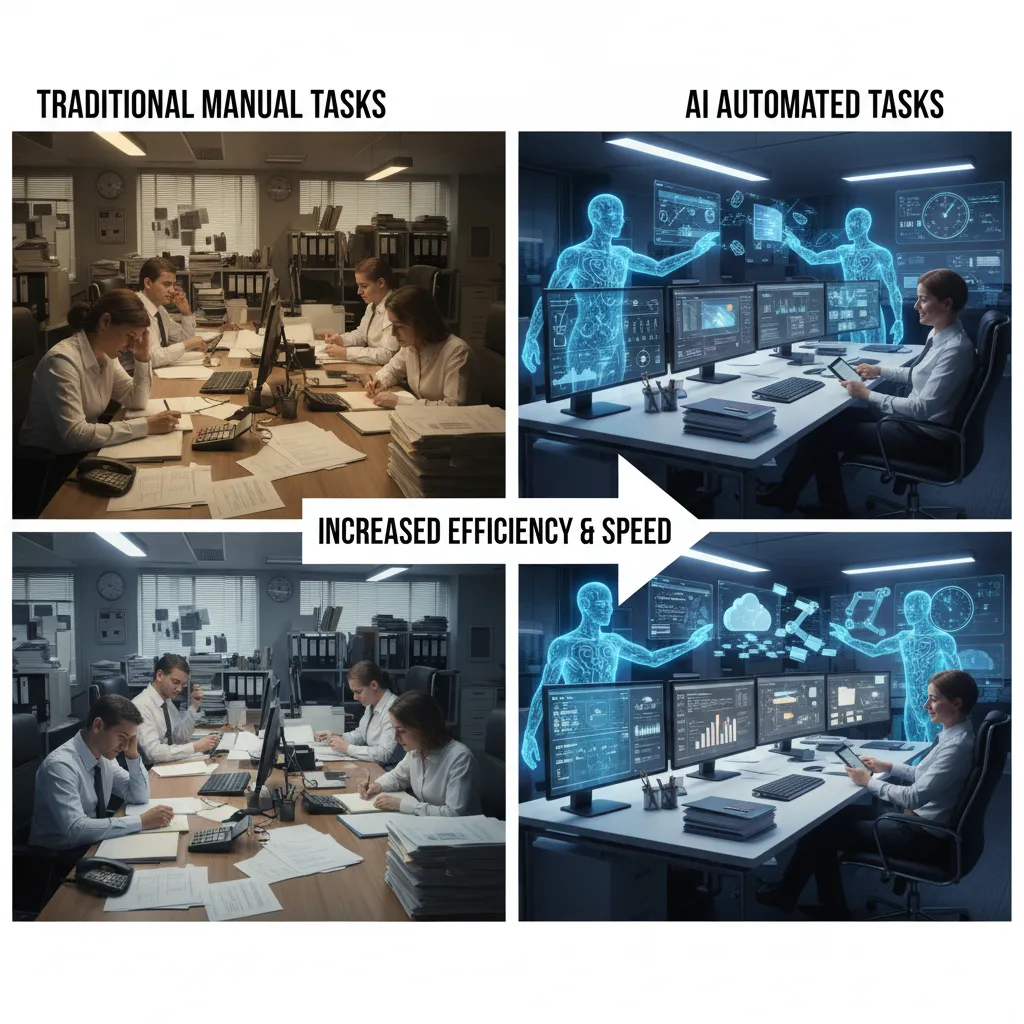
The future of work will likely involve seamless collaboration between human teams and enterprise AI agents. These agents will act as intelligent co-pilots, assisting with everything from brainstorming to project management, creating highly efficient and innovative AI enhanced workflow systems.
Democratic Access to Advanced Capabilities
As AI agent platforms become more sophisticated and accessible, they have the potential to democratize access to advanced capabilities, empowering individuals and small businesses with tools previously available only to large corporations. This could foster unprecedented levels of AI innovation and entrepreneurial activity.
The trajectory is clear: autonomous AI agents are not just a passing fad but a foundational technology that will redefine our interactions with the digital world and beyond. The future of AI is autonomous, intelligent, and deeply integrated into the fabric of our existence.
Conclusion
We stand at the precipice of a new era, one defined by the incredible capabilities of autonomous AI agents. These intelligent agents are more than just advanced algorithms; they represent a paradigm shift in smart automation, offering unparalleled AI driven efficiency, AI productivity, and the potential for profound AI innovation. From transforming how businesses operate to personalizing our daily experiences, their impact of AI agents will be felt across every sector.
While the journey ahead presents significant challenges, particularly concerning ethical AI agents, AI governance, and workforce adaptation, the benefits of embracing this AI revolution are too compelling to ignore. By fostering responsible AI development, investing in education and reskilling, and ensuring robust security measures, we can harness the power of autonomous AI agents to build a future that is more efficient, innovative, and ultimately, more human-centric.
The autonomous systems future is not a distant dream; it’s unfolding now. By understanding, adapting to, and actively shaping this exciting technological frontier, we can unlock the full potential of advanced AI solutions and usher in an era of unprecedented progress. Embrace the change, for the next revolution in smart automation is already here.
FAQs
Q1. What are the main differences between traditional AI and autonomous AI agents?
Traditional AI often operates based on predefined rules or human-guided learning. Autonomous AI agents, however, possess the ability to perceive their environment, make independent decisions, and take actions to achieve goals without constant human intervention, continuously learning and adapting.
Q2. How do autonomous AI agents learn and adapt?
Autonomous AI agents primarily learn and adapt through machine learning agents and deep learning AI techniques, especially reinforcement learning. They process vast datasets, identify patterns, and adjust their behavior based on outcomes, receiving rewards for successful actions and penalties for errors.
Q3. What are some real-world applications of enterprise AI agents?
Enterprise AI agents are used in various sectors for intelligent automation, including optimizing supply chains, enhancing customer service through advanced chatbots, automating data analysis for strategic insights, and performing predictive maintenance in manufacturing.
Q4. What ethical considerations are crucial for the development of autonomous AI agents?
Key ethical considerations include ensuring ethical AI agents operate without bias, establishing clear accountability for their actions, maintaining transparency in their decision-making, and safeguarding data privacy. AI governance frameworks are essential to address these concerns responsibly.
Q5. Will autonomous AI agents replace human jobs?
While AI automation tools will undoubtedly automate many routine tasks, the broader trend points towards workforce transformation rather than mass replacement. Autonomous AI agents are expected to create an AI enhanced workflow, allowing humans to focus on higher-level, creative, and strategic tasks, necessitating reskilling and upskilling initiatives.
Q6. How do autonomous AI agents contribute to smart automation?
Autonomous AI agents are at the forefront of smart automation by going beyond simple task execution. They introduce intelligence, learning, and independent decision-making into automated processes, enabling systems to handle complex, dynamic situations and optimize operations in real-time, leading to significant AI driven efficiency.
Q7. What is the role of generative AI in autonomous agents?
Generative AI agents, particularly those based on large language models, empower autonomous agents to understand and generate human-like language. This capability is crucial for natural interaction with users, creating content, summarizing information, and facilitating more complex reasoning and communication tasks within the agent’s autonomous operations.