The Rise of AR Glasses: Beyond Smartphones, The Future of Interaction

Introduction
For the better part of two decades, the smartphone has been our undisputed digital window to the world. It’s our navigator, our communicator, our source of entertainment, and our primary tool for accessing information. But what if that window could dissolve, leaving only the information itself, seamlessly woven into the fabric of our reality? This isn’t science fiction; it’s the promise of AR glasses.
We’re standing at the precipice of a monumental shift in personal technology. Augmented reality glasses, or smart eyewear, are quietly evolving from bulky prototypes into sleek, everyday wearables. They represent the next logical step in our relationship with technology—a move away from heads-down, screen-centric interaction to a heads-up, present-moment experience. This is the dawn of hands-free computing, where digital content is no longer confined to a glowing rectangle in our pocket.
This deep dive will explore the rise of augmented reality glasses, demystifying the technology that powers them and examining the real-world applications that are already changing industries. We’ll analyze the key players battling to define this new platform, the significant hurdles they face, and the exciting augmented reality trends shaping the future of personal tech. Get ready to look up and see the world beyond the smartphone.
What Are AR Glasses, Really? Demystifying the Digital Overlay
Before we get to the future, let’s clarify the present. At its core, an AR device uses digital overlay technology to superimpose computer-generated images, text, and graphics onto your real-world view. Unlike Virtual Reality (VR), which completely immerses you in a digital environment, Augmented Reality (AR) enhances the one you’re already in.
Beyond the Hype: How AR Glasses Work
Making digital light blend with natural light in a tiny, wearable form factor is a monumental engineering challenge. Here’s a simplified breakdown of the core components that make the magic happen:
- Display Technology: Miniature, power-efficient projectors (using technologies like Micro-OLED, LCoS, or Laser Beam Scanning) create the image. These aren’t tiny screens you look at; they’re light engines.
- Optics & Waveguides: This is the secret sauce. A waveguide is a piece of transparent material (like the lens of the glasses) that “guides” the light from the projector to your eye. Sophisticated microscopic structures etched into the lens redirect the projected image into your field of view, making it appear as if it’s floating in the world in front of you. This is crucial for creating lightweight AR glasses that look and feel normal.
- Processors & Sensors: A powerful, compact System-on-a-Chip (SoC), like Qualcomm’s Snapdragon AR series, acts as the brain. It processes data from a suite of sensors—cameras, accelerometers, gyroscopes, and depth sensors—to understand where you are and what you’re looking at. This process, called SLAM (Simultaneous Localization and Mapping), is what allows digital objects to be “pinned” to a specific point in real space.
- Input Methods: Interaction goes beyond touchscreens. The future of interaction with smart glasses relies on a combination of voice commands, subtle hand gestures tracked by onboard cameras, touchpad controls on the frame, and even eye-tracking.
AR vs. VR vs. MR: Clearing Up the “Reality” Confusion
The terms are often used interchangeably, but they describe distinct experiences. Understanding the difference is key to grasping the unique potential of AR.
| Technology | Definition | Goal | Example Devices |
|---|---|---|---|
| Augmented Reality (AR) | Overlays digital information onto the real world. You remain fully aware of your surroundings. | To enhance reality with contextual data. | XREAL Air 2, Ray-Ban Meta Glasses (in a limited sense) |
| Virtual Reality (VR) | Completely replaces your real-world environment with a fully digital one. | To immerse the user in a simulated world. | Meta Quest 3, PlayStation VR2 |
| Mixed Reality (MR) | A more advanced form of AR where digital objects are not just overlaid but can also interact with the real world in real-time. | To blend the digital and physical worlds seamlessly. | Apple Vision Pro, Microsoft HoloLens 2 |
While Apple calls its Vision Pro a spatial computing device, it functions primarily as a powerful MR headset. True AR glasses aim for a much lighter, all-day wearable form factor, making them a fundamentally different proposition for the future of interaction.
The Tipping Point: Why Now is the Moment for Smart Eyewear
The idea of smart glasses isn’t new—Google Glass brought the concept to the public consciousness nearly a decade ago. So why is the buzz returning with such force in wearable technology 2024? A convergence of key technologies is finally making the dream viable.
Miniaturization and Power Efficiency
Early prototypes were bulky and had abysmal battery life. Today, advancements in semiconductor manufacturing have produced processors that are not only incredibly powerful but also hyper-efficient. This allows for the complex calculations needed for spatial computing to happen in a device that doesn’t burn through its battery in an hour or require a clunky, oversized frame.
The Rise of Spatial Computing
This is the software side of the revolution. Spatial computing is the concept of a machine understanding the 3D space around it and allowing users to interact with digital content within that space. It’s the operating system for reality. As these platforms mature, developers can create more sophisticated and useful AR applications that feel intuitive and seamlessly integrated into the user’s environment.
AI and 5G: The Catalysts for Real-Time AR
Artificial intelligence is the brain that makes sense of the world seen through the glasses’ cameras. It can identify objects, translate text in real-time, and provide contextual information on the fly. Related: GPT-4o: The Future of AI is Here and It’s Free.
Meanwhile, 5G connectivity provides the ultra-fast, low-latency data pipeline needed to offload heavy processing to the cloud. This means the glasses themselves can stay lighter and more efficient, letting a powerful server do the heavy lifting and stream the results back to your eyewear in an instant. This combination is essential for creating the kind of responsive immersive tech experiences users expect.
From Niche Gadget to Mainstream Tool: Real-World AR Glasses Applications
The true test of any new technology is its utility. AR glasses applications are already moving beyond simple notifications and into transformative roles across both enterprise and consumer sectors.
The Enterprise Revolution: Hands-Free Computing at Work
The most significant adoption of AR headsets to date has been in the professional world. For industries where workers need their hands free but also require access to complex digital information, the benefits are immediate and profound.
- Manufacturing & Maintenance: A technician repairing a jet engine can see digital schematics and step-by-step instructions overlaid directly onto the machinery. This reduces errors, speeds up repairs, and improves safety.
- Healthcare: A surgeon can view a patient’s vital signs or 3D medical scans in their peripheral vision without ever looking away from the operating table. Paramedics can stream live video to an ER doctor, receiving real-time guidance.
- Logistics & Warehousing: Warehouse pickers can be guided by digital arrows to the exact location of an item, with order details displayed in their view, dramatically increasing efficiency and accuracy.
- Remote Collaboration: Teams from around the world can collaborate on a single 3D digital model, appearing as avatars in a shared mixed-reality space. It’s the next evolution of the video conference.

Reimagining Daily Life: Consumer AR on the Horizon
While enterprise AR glasses have led the charge, the vision for consumer AR glasses is what truly captures the imagination. This is where AR will fundamentally change our daily routines.
- Intuitive Navigation: Imagine walking through an unfamiliar city with subtle, glowing arrows appearing on the pavement in front of you, guiding you to your destination. Points of interest, restaurant ratings, and subway times could appear as you look at them.

- Enhanced Shopping and Home Life: See how a new sofa would look in your living room, in perfect scale, before you buy it. Follow a holographic chef as they guide you through a recipe, with instructions and timers floating above your pots and pans.

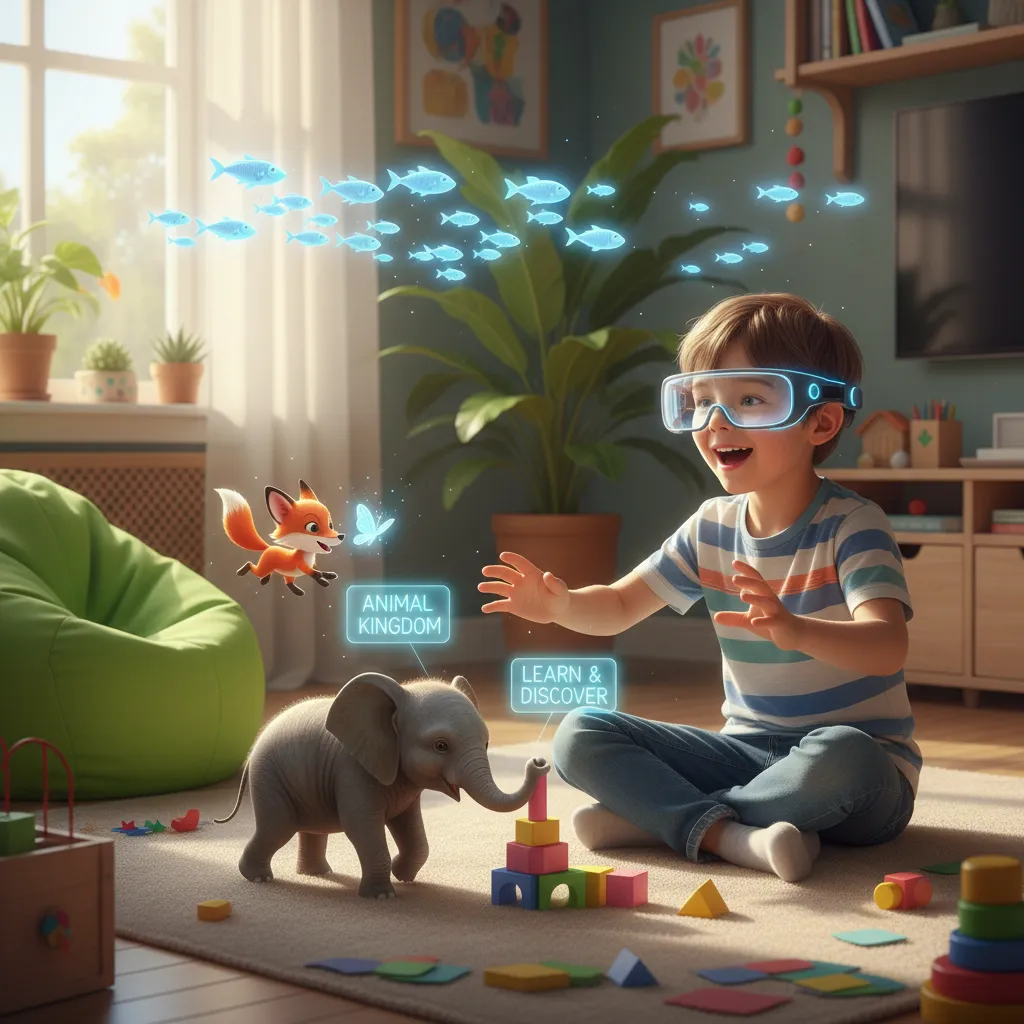
- Education and Entertainment: History class could mean a life-sized T-Rex walking through the classroom. A visit to Rome could involve seeing the Colosseum restored to its former glory through your lenses. Interactive games could spill out from the screen into your living room. The potential for AR in daily life is limitless.
- Communication Without Barriers: Live translation could appear as subtitles in your vision as you converse with someone in another language. You could have more natural video calls where the other person appears as a more realistic hologram in the seat across from you. This move towards more natural interaction is a core theme of Hyper-Personalized AI: The Future of Tailored Intelligent Systems.
The Major Players: Who is Building the Future of Interaction?
The race to build the first mainstream, successful pair of AR glasses is one of the most intense and high-stakes competitions in technology today. The winner won’t just own a new product category; they’ll own the next major computing platform.
Meta (Ray-Ban Meta Smart Glasses)
Meta’s current strategy focuses on acclimating the public to wearing tech on their faces. The Ray-Ban Meta glasses are “smart,” not fully “AR.” They have a camera, open-ear audio, and an AI assistant, but no visual display. They are a crucial stepping stone, gathering data on usage patterns and social acceptance while Meta works on true display technology in the background.
Apple (Vision Pro and the Future)
Apple’s Vision Pro is a technological marvel—a high-end MR device that has set a new bar for what’s possible in display quality and user interface design. It is not, however, the everyday AR glasses of the future. At $3,500 and with a separate battery pack, it’s a developer kit and enthusiast device. But the core technologies and the visionOS platform are the foundation upon which a lighter, sleeker pair of “Apple Glasses” will almost certainly be built.
Google (Project Astra and Past Lessons)
Google learned hard lessons from the public reception of Google Glass. Their new approach is far more cautious and AI-centric. Project Astra is their vision for a next-generation AI assistant that can see what you see and understand the context of your world. This software, likely to be integrated into future hardware, could be the “killer app” for AR. It’s less about the hardware and more about creating an AI that can intelligently assist you in a hands-free way, a concept that mirrors the changes we’re seeing in search with Google AI Overviews: The Future of Search.
Emerging Contenders and Specialists
Beyond the tech giants, a host of innovative companies are pushing the boundaries:
- XREAL (formerly Nreal): A leader in the consumer smart display glasses space, creating lightweight glasses that act as a virtual monitor for phones and computers.
- Vuzix: A long-time player focused on enterprise solutions, creating ruggedized smart glasses for logistics and field service.
- Magic Leap: After an initial pivot, this well-funded startup is focusing on the enterprise market with its powerful and sophisticated AR headset.
The Hurdles to Overcome: Challenges on the Path to Mass Adoption
For all the exciting potential, significant roadblocks still stand between the current generation of AR headsets and a future where they are as common as smartphones.
The Technology Gauntlet: Battery, Heat, and Field of View
The laws of physics are unforgiving. Packing a powerful processor, multiple sensors, and a bright projector into a tiny frame generates heat that needs to be dissipated. Doing all that while providing all-day battery life is the single greatest engineering challenge. Furthermore, the field of view (FoV) on most current AR glasses is quite narrow, like looking at a small screen floating in front of you rather than having your entire vision augmented. Widening that FoV without increasing bulk is a major focus of R&D.
The “Glasshole” Factor: Social Acceptance and Privacy
Google Glass provided a stark lesson in social dynamics. People are wary of being recorded without their knowledge. The constant presence of a camera raises profound privacy questions. Future devices must address this head-on with clear indicators (like a recording light), strict privacy policies, and designs that are socially acceptable. The goal is invisible tech—so stylish and discreet that it doesn’t draw unwanted attention.
The Content Conundrum: The Killer App Problem
A new platform needs a “killer app”—that one indispensable application that makes the hardware a must-buy. For PCs, it was the spreadsheet. For smartphones, it was the app store and mobile internet. AR is still searching for its killer app. While navigation and notifications are useful, they may not be enough to convince millions to spend over $1,000 on a new device category.
Cost and Accessibility
Currently, the most capable mixed reality devices cost thousands of dollars, and even consumer-focused models are several hundred. For AR glasses to replace the smartphone, they need to approach a similar price point and offer a clear value proposition that justifies the cost.
The Next Five Years: Augmented Reality Trends and Predictions
Looking ahead, the path to our AR future is becoming clearer. The next generation of wearables will be defined by a few key trends.
The Rise of “Invisible Tech”
The design will trend towards complete subtlety. The goal is to create lightweight AR glasses that are indistinguishable from standard prescription eyewear. The technology will disappear into the frame, making the experience feel natural and socially seamless. This ties into a broader trend towards more Sustainable Tech Innovations: Greener Gadgets for Eco-Smart Living.
AI-Powered “See and Ask” Functionality
This is the game-changer. The fusion of advanced on-device AI with the glasses’ camera will allow you to interact with the world in a completely new way. Imagine looking at a landmark and asking, “What’s the history of this building?” or pointing your glasses at a plate of food and getting an instant calorie estimate. This is the promise of multimodal AI like GPT-4o.
The Smartphone as the “Brain”
In the medium term, expect a hybrid model. To keep the glasses light and cool, much of the processing and connectivity will be handled by your smartphone, which will act as the central “brain,” wirelessly streaming the AR experience to your eyewear. This “distributed computing” model is a practical stepping stone to fully standalone devices.
Conclusion
The transition from the smartphone to AR glasses won’t happen overnight. It will be a gradual evolution, much like the shift from feature phones to the first true smartphones. But the trajectory is clear. We are moving towards a future of computing that is more integrated, more intuitive, and more human. A future where technology doesn’t demand our constant attention by pulling us into a screen, but rather enhances our perception of the world around us.
AR glasses represent the pinnacle of personal augmented reality—a paradigm shift that will eventually feel as natural as reaching for your phone does today. The challenges are significant, but the brightest minds in technology are dedicated to solving them. The question is no longer if we will interact with a digitally augmented world through a pair of glasses, but when and whose vision of that future we will ultimately adopt. The era of tech beyond smartphones is about to begin.
Frequently Asked Questions (FAQs)
Q1. What is the main purpose of AR glasses?
The main purpose of AR glasses is to overlay contextual digital information—such as notifications, navigation directions, translations, and 3D models—onto your real-world view. This allows for hands-free access to data, enhancing your interaction with the environment without requiring you to look down at a screen.
Q2. Will AR glasses replace smartphones?
Many tech experts believe that AR glasses will eventually replace smartphones as the primary personal computing device, but this transition will likely take a decade or more. In the near term, AR glasses will work in tandem with smartphones, acting as a display and interface while the phone handles the heavy processing.
Q3. What is the difference between AR and VR glasses?
The key difference is that Augmented Reality (AR) glasses add to your existing reality, overlaying information while you remain fully aware of your physical surroundings. Virtual Reality (VR) glasses completely block out the real world and immerse you in a fully digital, simulated environment.
Q4. Are there any good consumer AR glasses available now?
Yes, though the market is still developing. Devices like the XREAL Air 2 and Rokid Max are popular “smart display glasses” that act as a wearable virtual monitor for gaming and media. The Ray-Ban Meta Smart Glasses offer camera and AI features but lack a visual display. The market for true, all-day AR glasses is still in its early stages.
Q5. How much do augmented reality glasses cost?
The cost varies widely. Consumer-focused “smart display” glasses typically range from $300 to $500. More advanced, enterprise-focused AR headsets can cost anywhere from $1,000 to over $5,000. It’s expected that prices will decrease as the technology matures and scales.
Q6. What are the disadvantages of AR glasses today?
Current disadvantages include a limited field of view (the digital display doesn’t cover your entire vision), short battery life, high cost, and social acceptance challenges. There are also significant privacy concerns related to the always-on cameras and data collection.