AI & Wearable Tech: Revolutionizing Your Health & Wellness Journey

Introduction
In an age where technology is seamlessly integrated into every facet of our lives, it’s no surprise that the realm of health and wellness is experiencing its own profound transformation. Gone are the days of passive health tracking; we’re now entering a dynamic era powered by AI wearables. Imagine a future where your daily activities, sleep patterns, heart rate, and even stress levels are not just recorded, but intelligently analyzed to provide deeply personalized, actionable insights. This isn’t science fiction; it’s the present and future of smart health.
From sleek fitness trackers to advanced wearable sensors embedded in smart rings and clothing, these intelligent gadgets are becoming indispensable companions on our personal health journeys. They leverage cutting-edge Artificial Intelligence to move beyond mere data collection, offering sophisticated AI health analytics that can predict potential issues, recommend tailored interventions, and empower us to take proactive control of our well-being. This article will delve into how the convergence of AI and wearable technology is not just changing how we monitor our health, but fundamentally revolutionizing the way we approach personalized health, digital wellness, and ultimately, a more vibrant life. Get ready to explore the exciting frontier where your body’s data meets intelligent analysis, crafting a future of unprecedented health and wellness empowerment.
The Evolution of Wearable Tech: From Basic Trackers to AI-Powered Sentinels
The journey of wearable technology began modestly, with pedometers counting steps and basic heart rate monitors providing rudimentary data. These early iterations, while revolutionary at the time, offered limited context. Users had to interpret raw numbers, often without understanding their broader implications for their health. Fast forward to today, and the landscape is vastly different. The integration of Artificial Intelligence has transformed simple wellness gadgets into powerful, intelligent health sentinels.
Modern health tech transcends basic tracking. These devices are equipped with an array of sophisticated wearable sensors that capture a wide spectrum of biometric data: heart rate variability, skin temperature, blood oxygen saturation, sleep stages, activity levels, and even continuous glucose monitoring. But the true magic happens when AI steps in. AI algorithms process this massive influx of data, identifying subtle patterns and correlations that are invisible to the human eye. This allows for nuanced biometric data analysis, leading to insights that were previously only available through clinical-grade equipment.
For example, an early fitness tracker might tell you you walked 10,000 steps. An AI-powered fitness tracker will not only log those steps but also analyze your gait, recommend optimal stride length for injury prevention, suggest recovery periods based on your exertion, and even detect early signs of fatigue or illness by correlating multiple data points. This evolution signifies a shift from passive data logging to active, intelligent guidance, making personalized wellness plans with AI a tangible reality for millions.
Key Areas Where AI Wearables are Making an Impact
The applications of AI wearables are incredibly diverse, touching upon almost every aspect of health and wellness. Let’s explore some of the most impactful areas.
Optimizing Fitness and Performance with AI Coaching
For fitness enthusiasts and casual exercisers alike, fitness AI is a game-changer. Traditional fitness tracking often left individuals to interpret their own data, sometimes leading to overtraining, under-training, or ineffective workouts. AI has introduced a new paradigm: personalized, dynamic coaching right on your wrist or finger.
AI-powered fitness trackers go beyond counting calories or steps. They learn your body’s unique responses to different activities, adapting workout recommendations in real-time. Imagine a smartwatch that suggests you take an active recovery day because your heart rate variability is low, or pushes you for an extra set because your performance metrics indicate readiness. This is how AI improves fitness.
Many devices now offer AI coaching for wellness, providing guided workouts, form correction, and even mental preparation strategies. These AI coaches analyze your historical data, current performance, and even external factors like weather to optimize your training regimen. They can help you set realistic goals, prevent injuries, and accelerate progress, making expert-level fitness guidance accessible to everyone.
 A smart ring offers discrete yet powerful insights into fitness metrics, empowering users to optimize their workouts and track progress effortlessly.
Revolutionizing Sleep Tracking and Recovery
Sleep is a cornerstone of health, yet often overlooked. Smart rings for sleep tracking and advanced smartwatches are leading the charge in understanding and improving our nocturnal habits. These devices don’t just tell you when you fall asleep and wake up; they meticulously track sleep stages (REM, light, deep), measure heart rate variability during sleep, monitor blood oxygen, and detect disturbances.
The real power lies in AI-driven health insights. AI algorithms analyze these complex sleep patterns to identify potential issues like sleep apnea, restless leg syndrome, or chronic sleep deprivation. They can correlate poor sleep quality with daytime fatigue, stress levels, or even dietary habits, offering holistic recommendations. For instance, an AI might suggest adjusting your evening routine, optimizing your bedroom environment, or incorporating mindfulness practices to enhance sleep quality. This contributes directly to personalized wellness plans with AI, offering tailored advice for better rest and recovery.
Enhancing Mental Wellness and Stress Management
Mental health is gaining the recognition it deserves, and AI wearables are emerging as powerful allies. Stress, anxiety, and burnout are pervasive issues, but intelligent devices are helping us understand and manage them proactively.
Stress detection smartwatches use sophisticated algorithms to analyze physiological markers such as heart rate variability, skin conductance, and respiration patterns. When they detect signs of elevated stress, they can prompt users to engage in mindfulness exercises, deep breathing, or short guided meditations through mental wellness apps with AI. This biofeedback tech provides immediate, actionable feedback, empowering individuals to intervene before stress escalates.
Beyond reactive measures, AI in wearables can identify long-term stress patterns, helping users understand triggers and develop more sustainable coping mechanisms. By offering real-time insights and gentle nudges, these devices are fostering greater self-awareness and promoting a more balanced mental state.
 Advanced smart patches leverage AI to detect and help manage stress in real-time, promoting mental well-being through biofeedback.
[Related: Master Your Day: 10 AI Tools to Skyrocket Your Personal Productivity]
Advanced smart patches leverage AI to detect and help manage stress in real-time, promoting mental well-being through biofeedback.
[Related: Master Your Day: 10 AI Tools to Skyrocket Your Personal Productivity]
Managing Chronic Conditions and Fostering Preventative Health
Perhaps one of the most profound impacts of AI wearables is in the management of chronic conditions and the advancement of preventative health tech. For individuals living with conditions like diabetes, heart disease, or hypertension, continuous monitoring is crucial.
Wearable tech for chronic conditions includes devices like continuous glucose monitoring wearables for diabetics, smart patches that track vital signs for heart patients, and smart blood pressure cuffs. AI plays a critical role by analyzing this constant stream of data, detecting anomalies, and alerting users or healthcare providers to potential emergencies or deviations from healthy ranges. This can significantly reduce hospital visits and improve quality of life.
Furthermore, these technologies are pivotal for predictive health analytics. By identifying subtle changes in biometric data over time, AI can forecast the onset of certain conditions even before symptoms appear. This capability transforms healthcare from reactive to proactive, enabling early interventions that can save lives and prevent the progression of diseases. This represents a significant leap forward in intelligent health monitoring. [Related: AI in Healthcare: Revolutionizing Personalized Medicine]
Personalized Nutrition and Dietary Guidance
What we eat directly impacts our health and energy levels. While tracking food intake can be tedious, AI nutrition smartwatches and apps are making it smarter and more personalized. These devices, often paired with companion apps, can help you track macronutrients, micronutrients, and hydration.
But AI takes it further. By integrating with your activity data, sleep patterns, and even stress levels, an AI-powered system can offer truly personalized wellness plans with AI that include dietary recommendations. If your activity levels are high, it might suggest increased protein intake. If your sleep is poor, it could recommend avoiding certain foods before bed. Some advanced systems can even analyze your eating habits over time to identify patterns and suggest healthier alternatives, transforming the concept of digital wellness into a holistic lifestyle approach.
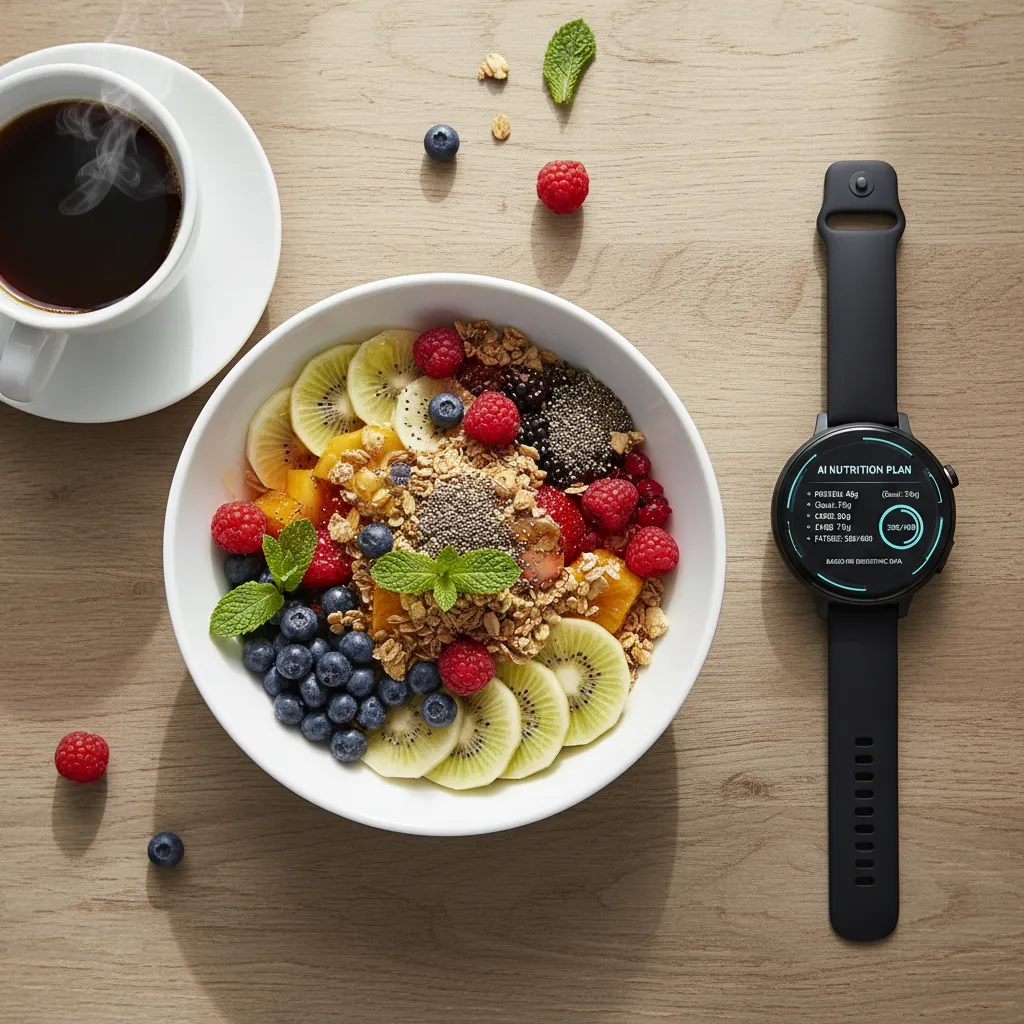 A smartwatch presents an AI-generated nutrition plan, offering personalized dietary guidance directly on the wrist for informed health choices.
The Power of Biometric Data Analysis and the Quantified Self
At the heart of every effective AI-powered wearable lies sophisticated biometric data analysis. These devices are constantly collecting information about your body, from your heart rate and skin temperature to your movement patterns and blood oxygen levels. This deluge of data, when processed by powerful AI algorithms, unlocks a world of insights that were previously unimaginable.
The concept of the “quantified self” has been around for a while, referring to the practice of tracking various aspects of one’s life to gain self-knowledge. With quantified self with AI, this concept reaches its zenith. AI doesn’t just present raw data; it contextualizes it. It can correlate your sleep quality with your energy levels the next day, link your activity intensity to your recovery time, or even highlight how stress impacts your digestive health.
This level of integrated analysis empowers individuals with an unprecedented understanding of their own bodies. It allows for the creation of truly personalized wellness plans with AI, moving beyond generic advice to recommendations that are uniquely tailored to your physiological responses and lifestyle. This deep dive into personal data helps you make informed decisions about everything from your workout routine to your diet, leading to more effective and sustainable health outcomes.
Ethical AI and Data Privacy in Health Wearables
As with any powerful technology, the rise of AI wearables brings significant ethical considerations, particularly concerning data privacy in health wearables. Our health data is arguably the most sensitive personal information we possess, and the thought of it being collected, analyzed, and potentially shared raises legitimate concerns.
Key questions arise: Who owns this data? How is it stored and secured? What are the potential risks of data breaches? For ethical AI in health wearables to thrive, transparency and robust security measures are paramount. Companies developing these devices have a responsibility to clearly articulate their data policies, obtain explicit user consent, and implement state-of-the-art encryption to protect sensitive information. Users, in turn, must be vigilant about understanding these policies and choosing devices from reputable manufacturers.
Furthermore, the predictive capabilities of AI raise questions about potential biases in algorithms and how health recommendations might be influenced. It’s crucial that AI models are trained on diverse and representative datasets to avoid perpetuating health disparities. The goal is to use AI to augment human capabilities, not to replace informed medical advice or compromise individual autonomy. Striking the right balance between innovative functionality and stringent privacy protection will be critical for the continued adoption and trust in AI health solutions. [Related: AI Ethics: Responsible Development & Future]
The Future of Wearable Health Tech: Beyond the Wrist
The journey of AI wearables is far from over; in many ways, it’s just beginning. The future promises even more sophisticated integration and capabilities, moving beyond traditional form factors to encompass a broader concept of augmented health.
We’re already seeing glimpses of smart clothing health – garments embedded with sensors that can monitor everything from posture and muscle activity to body temperature and even hydration levels. Imagine a running shirt that analyzes your form in real-time, providing haptic feedback to correct imbalances and prevent injuries. Or pajamas that track your sleep quality with unparalleled accuracy, offering insights seamlessly integrated into your morning routine.
The development of miniature, less intrusive sensors will also pave the way for more subtle and continuous monitoring. Think about contact lenses that monitor glucose levels or tiny patches that track biomarkers related to stress and disease. The goal is to make intelligent health monitoring so seamless that it becomes an invisible part of our daily lives, providing insights without requiring conscious effort.
This continuous innovation in future of wearable health tech will empower individuals with an even deeper and more holistic understanding of their well-being, driving a new era of preventative health tech and truly personalized, proactive healthcare. The synergy between human biology and advanced AI is set to redefine what it means to be healthy in the digital age.
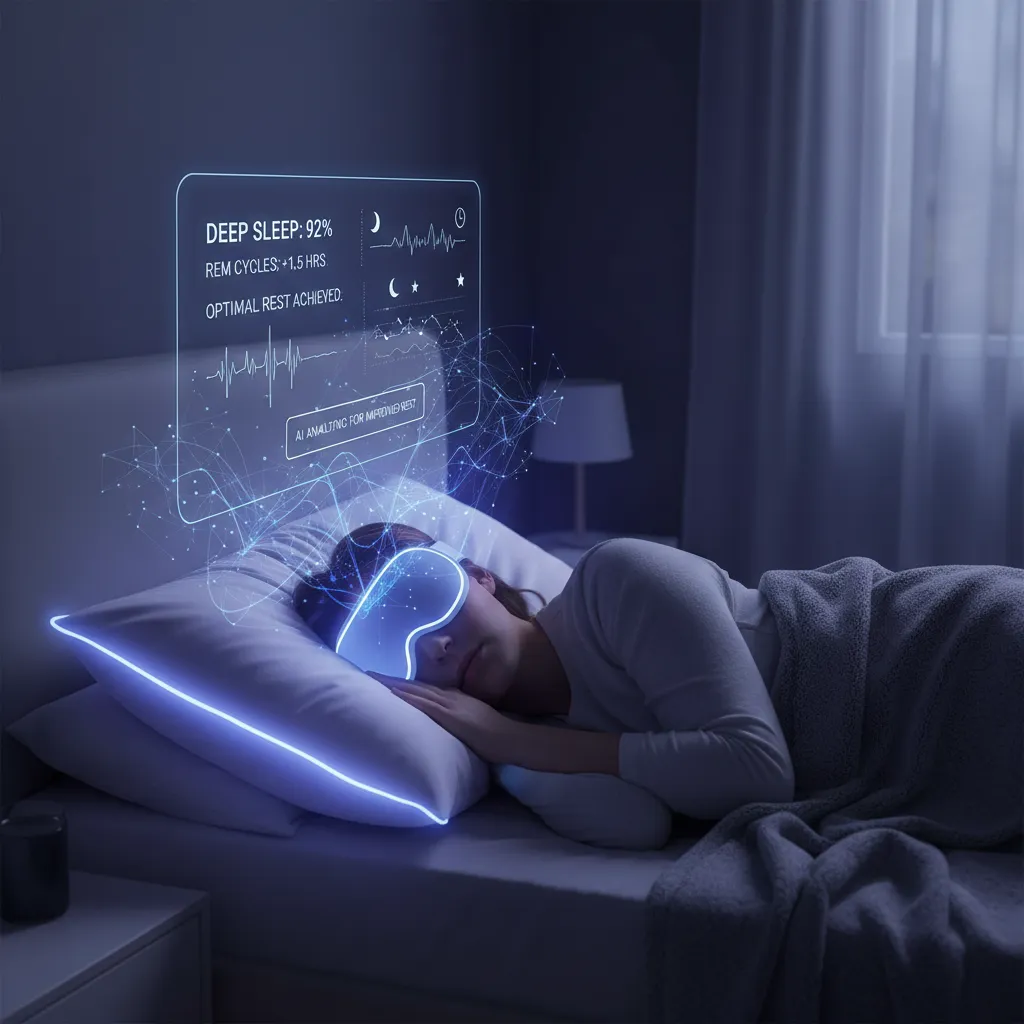 A smart sleep tracker with AI analysis provides deep insights into sleep quality, aiding in better rest and recovery strategies.
[Related: The AI Revolution in Healthcare: Transforming Patient Care & Medical Innovation]
A smart sleep tracker with AI analysis provides deep insights into sleep quality, aiding in better rest and recovery strategies.
[Related: The AI Revolution in Healthcare: Transforming Patient Care & Medical Innovation]
Conclusion
The intersection of Artificial Intelligence and wearable technology is undeniably revolutionizing our approach to health and wellness. From providing deeply personalized health insights to offering real-time AI coaching for wellness, these intelligent devices are empowering individuals like never before. We’ve explored how AI wearables are enhancing fitness, optimizing sleep, managing stress, and even playing a crucial role in the proactive management of chronic conditions. The era of quantified self with AI means we’re no longer just passively recording data; we’re actively engaging with our own biometrics to foster a deeper understanding of our bodies and minds.
As we look ahead, the future of wearable health tech promises even more seamless integration, advanced predictive capabilities, and a continued focus on ethical AI in health wearables and robust data privacy. These innovations are not just about adding a gadget to your life; they’re about equipping you with a powerful tool to take charge of your health journey, make informed decisions, and cultivate a truly vibrant and fulfilling life. So, whether you’re aiming to improve your fitness, get better sleep, manage stress, or simply understand your body more intimately, the intelligent companionship of AI-powered wearables is here to guide you every step of the way. Embrace this technological revolution and step into a healthier, more informed future.
FAQs
Q1. What are AI wearables?
AI wearables are smart electronic devices worn on the body (like smartwatches, fitness trackers, or smart rings) that integrate Artificial Intelligence to collect, analyze, and interpret biometric data. They go beyond basic tracking to provide personalized insights, predictions, and recommendations for health and wellness.
Q2. How do AI wearables improve fitness and wellness?
AI wearables enhance fitness and wellness by offering AI-driven health insights and personalized guidance. They analyze data from wearable sensors (heart rate, activity, sleep) to provide tailored workout plans, recovery recommendations, stress management techniques, and even dietary suggestions. This AI coaching for wellness helps optimize performance, prevent injuries, and foster holistic well-being.
Q3. Can AI wearables help manage chronic conditions?
Yes, wearable tech for chronic conditions is a rapidly growing field. Devices like continuous glucose monitoring wearables for diabetes or smart patches for heart health use AI to continuously monitor vital signs, detect anomalies, and alert users or healthcare providers to potential issues. This enables proactive management and contributes to preventative health tech.
Q4. What about data privacy in health wearables?
Data privacy in health wearables is a critical concern. Reputable manufacturers employ robust encryption and transparent data policies to protect sensitive personal health information. Users should always review privacy policies and choose devices that prioritize security and user control over their data to ensure ethical AI in health wearables.
Q5. What is the role of AI in personalized wellness plans?
AI plays a central role in creating personalized wellness plans with AI by analyzing a vast array of individual biometric data. It identifies unique patterns, strengths, and weaknesses, allowing it to generate recommendations for diet, exercise, sleep, and stress management that are uniquely tailored to an individual’s physiology and lifestyle, rather than generic advice.
Q6. How does AI help with sleep tracking beyond basic monitoring?
AI significantly enhances sleep tracking by analyzing complex sleep stages, heart rate variability, blood oxygen, and disturbances during the night. It correlates this data to provide AI-driven health insights into sleep quality, identify potential issues like sleep apnea, and offer personalized recommendations to improve rest and recovery, moving beyond simple “time asleep” metrics.
Q7. What are some examples of biofeedback tech in wearables?
Biofeedback tech in wearables typically involves devices that measure physiological responses like heart rate, skin conductance, or respiration. When an AI wearable detects signs of stress, for example, it might prompt the user to engage in a guided breathing exercise or meditation through a companion app, providing immediate feedback on how these practices influence their physiological state.
Q8. What does “augmented health” mean in the context of wearables?
Augmented health refers to the future where technology, particularly AI and wearables, enhances human health and capabilities in a seamless, often invisible, manner. It goes beyond simple monitoring to proactively guide, assist, and even predict health needs, making intelligent health monitoring an integrated part of daily life, leading to better decision-making and improved well-being.