Beyond the Brochure: AI & VR for Truly Immersive Travel Experiences

Remember the days of flipping through glossy travel brochures, where every beach was pristine and every city square was bathed in perpetual golden-hour light? Or spending hours trawling through countless blogs and review sites, trying to stitch together a perfect itinerary? That era of static, one-size-fits-all travel planning is rapidly fading in the rearview mirror. Today, we stand at the precipice of a new age, powered by experiential travel tech that promises not just to show you the world, but to let you feel it, interact with it, and personalize it in ways we once only dreamed of.
The driving forces behind this revolution are Artificial Intelligence (AI) and Virtual Reality (VR), two transformative technologies that are converging to redefine the very essence of tourism. This isn’t just about booking flights faster or seeing a 360-degree photo of a hotel room. We’re talking about immersive travel technology that crafts journeys unique to your soul, allows you to “try before you fly,” and layers the real world with rich, interactive digital information.
In this deep dive, we’ll explore how the synergy of AI travel planning and VR travel experiences is moving us beyond the flat pages of the brochure and into a world of dynamic, intuitive, and truly unforgettable adventures. Get ready to discover the future of travel.
The AI Architect: Crafting Your Perfect Journey with Hyper-Personalization
The biggest challenge in travel has always been wading through the sheer volume of information to find what truly resonates with you. Traditional search engines and booking platforms offer filters, but they lack genuine understanding. This is where the future of travel AI makes its grand entrance.
Beyond Search Bars: The Power of Generative AI for Travel
Modern AI, especially generative AI for travel, functions less like a search engine and more like a seasoned, intuitive travel agent. Instead of you feeding it keywords, it engages in a conversation to understand your unique “travel DNA.”
Imagine an AI travel assistant that knows you prefer quiet, historic pubs over loud nightclubs, that you’re a vegetarian who loves street art, and that you have a budget of $150 per day. This AI doesn’t just list options; it curates experiences. It can generate customized travel itineraries AI-style that are fluid and intelligent. For example, it might suggest:
- Morning: A self-guided street art tour in Lisbon’s Alfama district, with routes optimized to avoid crowds and catch the best morning light for photos.
- Lunch: A reservation at a highly-rated vegetarian restaurant nearby that you didn’t even know existed.
- Afternoon: Because it starts to rain (which the AI knows from real-time weather data), it proactively suggests a visit to the nearby National Tile Museum, a perfect indoor activity aligned with your interest in art and history.
This level of detail is the hallmark of travel personalization technology. It weaves together your preferences, real-time data, and deep contextual knowledge to build a trip that feels like it was handcrafted just for you.

The AI-Powered Travel Guide: A Local Expert in Your Pocket
Once you’re on the ground, the AI’s role evolves. An AI powered travel guide becomes your indispensable companion. Through a simple app on your phone, it can:
- Break Language Barriers: Provide real-time voice and text translation, so you can haggle at a market in Marrakech or ask for directions in Tokyo with confidence.
- Offer Cultural Context: As you approach a historic landmark, it can provide interesting facts, stories, and cultural etiquette tips, enriching your understanding far beyond a simple plaque.
- Make Spontaneous Recommendations: Feeling hungry? The AI can suggest the best gelato shop just around the corner, based on your location and taste profile.
This proactive, context-aware assistance is a core component of smart tourism solutions, making travel safer, more accessible, and profoundly more insightful. The impact of AI in hospitality also extends to your accommodation, where hotels can use AI to personalize room temperature, lighting, and even suggest in-house services based on your preferences. Related: Humane AI Pin Review: Fad or Future of Phones?
Virtual Reality (VR): Previewing Worlds and Creating New Ones
While AI perfects the plan, Virtual Reality (VR) is revolutionizing how we explore and experience destinations before, during, and even after a trip. It’s the ultimate tool for visualization and a powerful experience medium in its own right.
The Ultimate Preview: Exploring Destinations with Virtual Reality Tourism
One of the biggest anxieties in travel planning is the fear of the unknown. Will the hotel room live up to the photos? Is the beach really that beautiful? Virtual reality tourism eliminates this guesswork by offering immersive previews.
Using VR travel apps and a headset, you can:
- Walk Through Your Hotel: Teleport into different rooms, check the view from the balcony, and get a true sense of the space and ambiance.
- Experience an Excursion: Wondering if that jungle trek is too strenuous? Take a virtual sightseeing tour of the trail. Curious about a scuba diving spot? Dive in virtually to see the marine life.
- Get a Feel for a City: Stand in the middle of Times Square, wander through the Grand Bazaar in Istanbul, or experience the tranquility of a Kyoto temple.
These virtual tours travel experiences aren’t just 360-degree videos; they are often interactive virtual travel simulations that give you a genuine sense of presence and scale. This powerful tool helps manage expectations, build excitement, and ultimately leads to more confident and satisfying travel decisions.
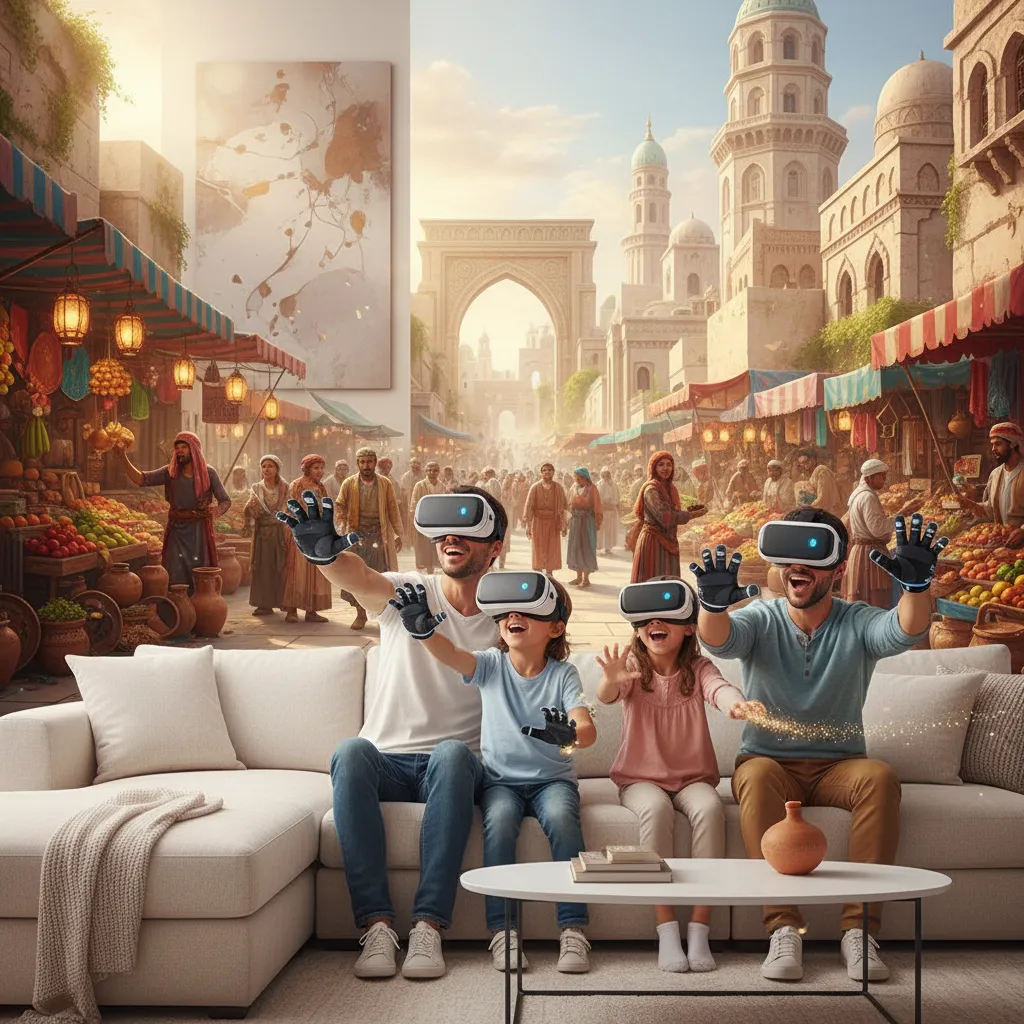
Beyond the Preview: VR Exploration Tourism as an Experience Itself
The most exciting frontier for VR travel experiences is its emergence as a valid form of tourism. VR exploration tourism offers experiences that are either impossible, inaccessible, or historically lost.
This next-gen travel tech allows for:
- Time Travel: Imagine walking through the Roman Forum at the height of the empire, guided by a virtual historian, or witnessing the construction of the pyramids.
- Impossible Adventures: Explore the wreck of the Titanic on the ocean floor, climb Mount Everest without the risk of frostbite, or even walk on the surface of Mars.
- Radical Accessibility: For individuals with mobility limitations, health concerns, or financial constraints, VR opens up the entire world. It’s a democratizing force that allows everyone to experience the wonder of travel.
These digital travel experiences are not meant to replace physical travel but to augment our reality and expand the very definition of what it means to explore. Related: Spatial Computing Unveiled: The Next Frontier in Immersive Technology
Augmented Reality (AR): Weaving a Digital Layer Over the Real World
If AI is the planner and VR is the previewer, Augmented Reality (AR) is the on-the-ground enhancer. Augmented reality travel doesn’t transport you to a different place; it enriches the one you’re in by overlaying digital information onto your real-world view through your smartphone or smart glasses.
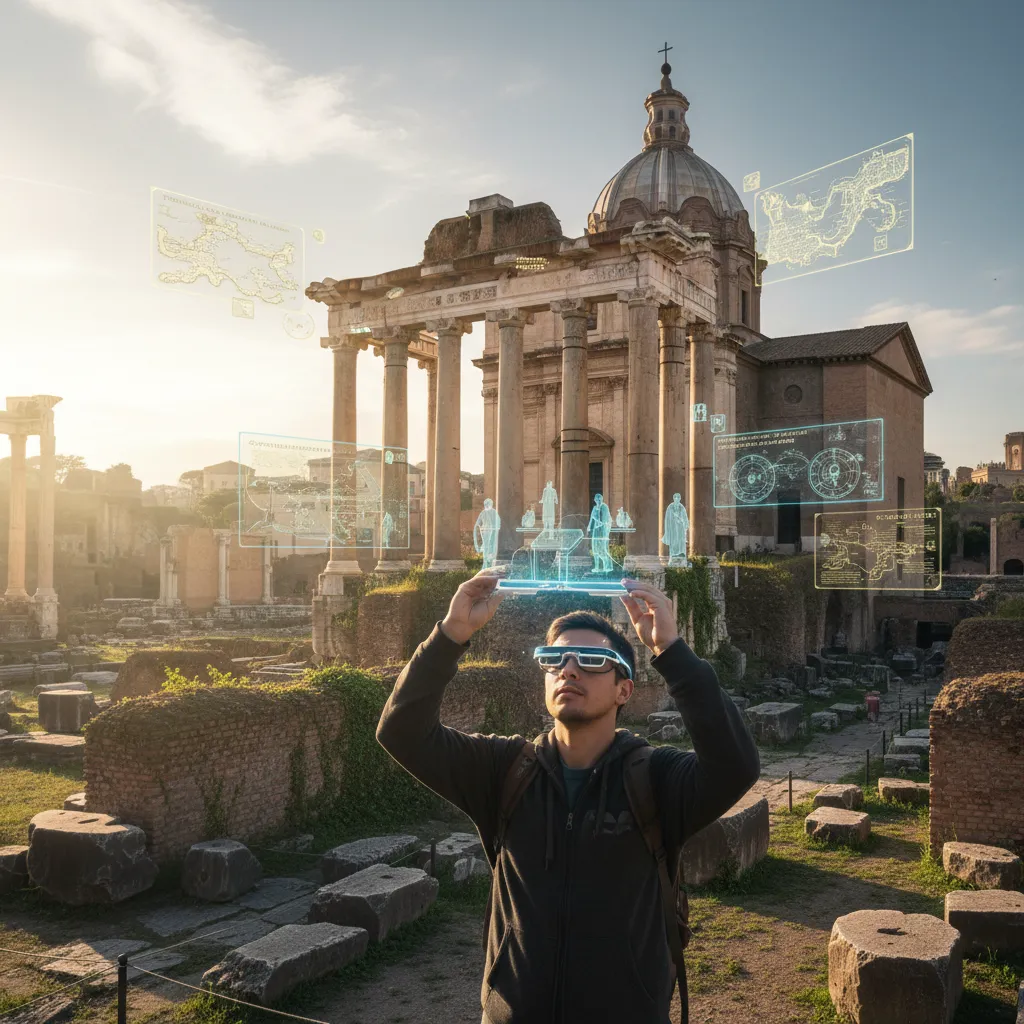
Interactive History and Seamless Navigation
AR is one of the most practical and magical travel tech innovations. Point your phone’s camera at a historical ruin, and an AR app can reconstruct it before your eyes, showing you what it looked like in its full glory. This transforms a static historical site into a dynamic, interactive travel tech lesson.
Other key applications include:
- AR Navigation: See directional arrows projected directly onto the streets in front of you, making it impossible to get lost in a new city.
- Interactive Museum Exhibits: Point your device at a painting or sculpture to see additional information, artist interviews, or animations that bring the piece to life.
- Live Translation: Look at a menu or sign in a foreign language, and see the translated text appear instantly on your screen.
The Synergy: When AI, VR, and AR Create the Ultimate Trip
The true magic happens when these technologies converge. This is the zenith of immersive tourism trends and gives us a glimpse into the future travel experiences.
Consider this workflow:
- Planning (AI): You tell your AI travel assistant you want a two-week cultural trip to Japan focused on food and ancient temples. The AI generates a hyper-personalized itinerary.
- Previewing (VR): Before booking, you take a VR travel tour of the proposed ryokans (traditional inns) and even experience a virtual tea ceremony to see if it resonates with you.
- Experiencing (AR): Once in Japan, you use an augmented reality travel app. As you walk through Kyoto, your AI guide points out hidden temples. You point your phone at a menu, and it’s instantly translated. You look at the Kinkaku-ji (Golden Pavilion), and an AR overlay shows you how it was rebuilt throughout history.
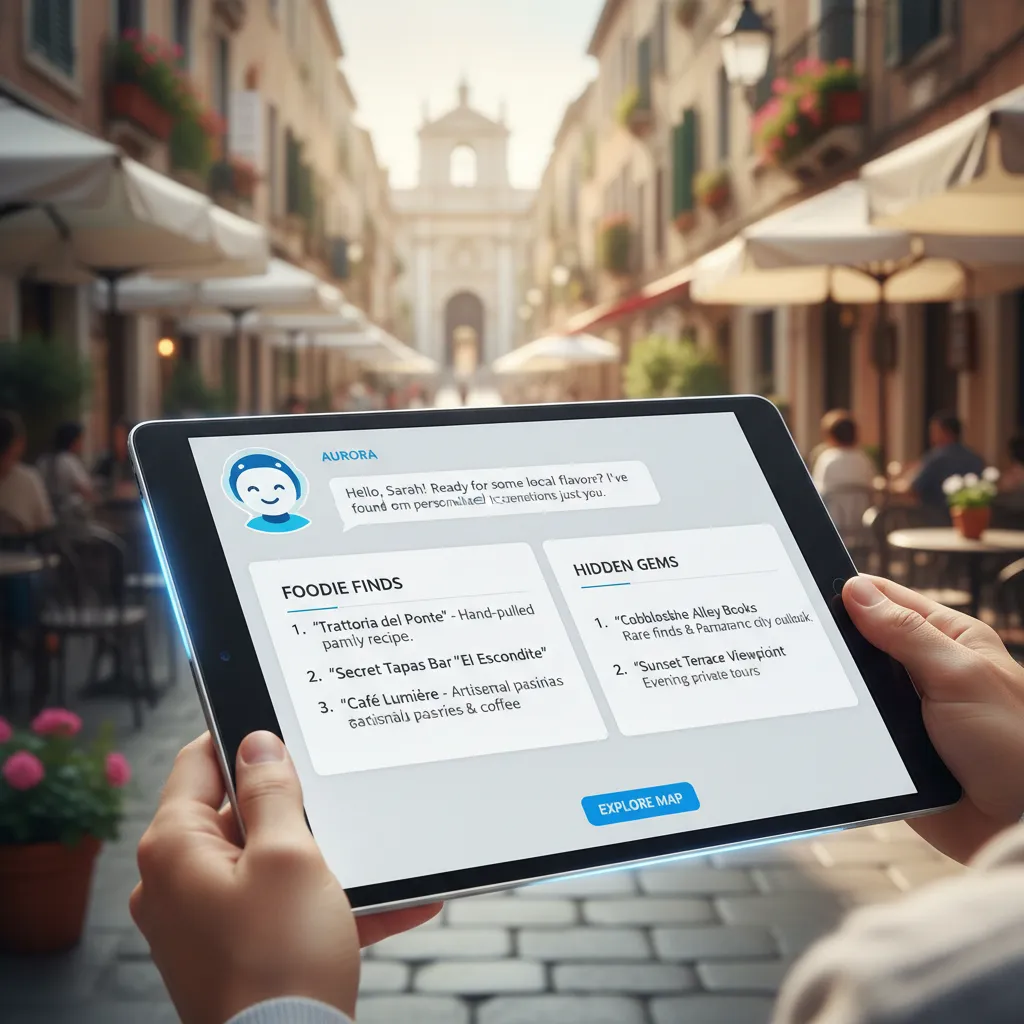
This seamless integration of planning, previewing, and enhancing is how AI changes travel from a series of disjointed steps into one fluid, intelligent, and deeply personal journey. Related: Google AI Overviews: A Guide to the New SEO Landscape (SGE)
Challenges and the Road Ahead
Of course, this technological utopia isn’t without its challenges. Data privacy is a major concern for personalized travel AI, as it requires access to significant personal information. There’s also the risk of the “digital bubble,” where an over-reliance on technology might insulate us from the spontaneous, serendipitous moments that make travel so special.
Furthermore, the question of authenticity remains. Can a virtual travel simulation truly capture the feeling of the sun on your skin or the taste of a new dish? The consensus is no, but that’s not the goal. The goal is to enhance, enable, and expand our ability to connect with the world, not to replace the real thing.
Conclusion: Your Next Adventure, Reimagined
We have moved far beyond the static brochure. The future of travel is not about being a passive observer but an active participant in a story co-authored by you and intelligent technology. The convergence of AI, VR, and AR is the most significant of all current travel technology trends, creating a new paradigm of AI enhanced trips.
AI acts as your personal master planner, VR as your portal to preview and dream, and AR as your interactive guide to the real world. Together, they form a powerful ecosystem of experiential travel tech designed to make every journey more immersive, insightful, and individually meaningful.
The next time you start planning an adventure, don’t just think about where you want to go. Think about how you want to experience it. The tools to build a truly bespoke journey are no longer science fiction; they are in your hands, ready to design your next great story.
Frequently Asked Questions (FAQs)
How is AI changing the travel industry?
AI is revolutionizing travel by enabling hyper-personalization at scale. It powers intelligent chatbots for 24/7 customer service, analyzes vast amounts of data to offer customized travel itineraries, and optimizes everything from flight pricing to hotel operations. For travelers, this means more relevant recommendations, smoother planning, and more enriching on-the-ground experiences.
What is the concept of VR tourism?
Virtual reality tourism is the use of VR technology to allow users to experience a destination or activity without physically being there. This can range from 360-degree virtual tours travel of hotels and landmarks to fully interactive virtual travel simulations of experiences like hiking, diving, or even exploring historical recreations. It’s used for pre-trip planning, entertainment, and as an accessibility tool.
Can virtual reality ever truly replace physical travel?
While VR offers incredibly immersive and realistic experiences, it is unlikely to ever fully replace physical travel. The goal of VR travel experiences is not replacement but augmentation and accessibility. It cannot replicate the multi-sensory experience of travel—the taste of local food, the feel of a sea breeze, or spontaneous human interactions. Instead, it serves to enhance planning, open up travel to those who cannot physically go, and provide entirely new forms of digital exploration.
How does augmented reality (AR) enhance a travel experience?
Augmented reality enhances travel by overlaying useful digital information onto the real world. Using a smartphone or smart glasses, a traveler can access real-time language translation on menus, see historical reconstructions of ancient ruins, get interactive information about museum exhibits, or follow navigational arrows projected onto the sidewalk, making exploration more seamless and informative.
What are the main benefits of AI in travel planning?
The main benefits of AI travel planning are deep personalization, efficiency, and data-driven recommendations. AI can process a traveler’s preferences, budget, and style to create bespoke itineraries in minutes. It saves hours of research time, uncovers hidden gems that might be missed, and can dynamically adjust plans based on real-time factors like weather or closures.
What is an example of smart tourism technology?
An excellent example of smart tourism solutions is a city-wide integrated mobile app. This app could use AI to provide personalized sightseeing recommendations, AR for navigation and interactive landmark information, and IoT (Internet of Things) data to show real-time queue lengths at attractions or public transport schedules, creating a seamless and intelligent visitor experience.