AI Unleashed: Revolutionizing Personalized Medicine & Drug Discovery

Introduction
For centuries, medicine has largely operated on a “one-size-fits-all” model. A diagnosis led to a standard treatment, a proven protocol applied to millions of people with the hope that it would work for the individual. While this approach has saved countless lives, it’s an inherently blunt instrument. We’ve all seen it: a drug that works wonders for one person has little effect on another. But what if we could move beyond this paradigm? What if medicine could be tailored specifically to you—to your unique genetic makeup, your lifestyle, and your environment?
This is the promise of personalized medicine, and the engine driving this revolution is Artificial Intelligence (AI). We are standing at the threshold of a new medical era where the future of medicine AI is not a distant sci-fi concept but a present-day reality. AI is transforming healthcare from a reactive system to a proactive, predictive, and personalized one.
In this deep dive, we’ll explore the incredible AI impact on medicine, unpacking how it’s supercharging everything from early diagnostics and individualized treatment plans to the very way we discover life-saving drugs. This isn’t just about making healthcare more efficient; it’s about making it fundamentally more effective and human-centric.
The Dawn of a New Era: From Generic Pills to Personalized Plans
The traditional healthcare model is built on averages. Clinical trials test drugs on broad populations to see if they work for the “average” patient. But in reality, there is no average patient. We are all complex biological systems, a unique combination of genetics, environmental factors, and personal history.
This is where Precision medicine AI comes into play. It’s an approach that considers individual variability in genes, environment, and lifestyle for each person. The challenge? The sheer volume of data is staggering. A single human genome contains about 3 billion base pairs. Combine that with electronic health records (EHRs), wearable device data, and medical imaging, and you have a dataset too vast for any human to comprehend.
AI, particularly machine learning, thrives on this complexity. It can sift through petabytes of data to identify subtle patterns, correlations, and causal links that would be invisible to human researchers. This capability is the cornerstone of AI driven patient care, moving us from generalized treatments to hyper-personalized interventions. It’s the difference between using a map of the city and using a real-time GPS that understands your destination, traffic patterns, and personal preferences.
AI in Action: Powering Personalized Medicine Today
The application of AI in personalized medicine isn’t just theoretical; it’s already delivering remarkable results across various domains. From seeing diseases before they manifest to tailoring therapies at a molecular level, AI is becoming an indispensable partner for clinicians.
AI-Driven Diagnostics: Seeing the Unseen
One of the most significant AI medical breakthroughs is happening in diagnostics. The earlier a disease is detected, the more effective the treatment is likely to be. AI algorithms, particularly those based on deep learning, are becoming exceptionally skilled at this.
- Medical Imaging: In radiology, AI medical imaging models can analyze X-rays, CT scans, and MRIs with superhuman accuracy. They can detect cancerous nodules in lung scans, identify signs of diabetic retinopathy in eye exams, or spot the earliest indicators of Alzheimer’s disease in brain scans—often long before a human radiologist could.
- Predictive Analytics: Beyond imaging, predictive analytics healthcare models can analyze a patient’s health records and lifestyle data to calculate their risk of developing conditions like heart disease, diabetes, or stroke. This allows for proactive AI for disease prevention, enabling doctors to recommend lifestyle changes or preventative treatments before the disease even takes hold.

These smart healthcare solutions empower doctors to make faster, more informed decisions, ultimately leading to better patient outcomes.
The Genomic Revolution: AI and Our DNA
Our genome is the blueprint of our body, holding critical clues about our health. However, reading and interpreting this blueprint is a monumental task. The field of AI in genomics is dedicated to this challenge.
AI algorithms can rapidly analyze an individual’s genetic sequence to:
- Predict Drug Response: Identify genetic markers that indicate whether a person will respond well to a particular drug or if they are likely to experience adverse side effects. This is a game-changer for personalized therapeutics.
- Tailor Cancer Treatment: In AI in oncology, genomic analysis of a tumor can reveal its specific mutations. This allows oncologists to select targeted therapies that attack the cancer cells directly while sparing healthy tissue, a far more effective approach than traditional chemotherapy.
- Identify Disease Susceptibility: Pinpoint genetic predispositions to a wide range of inherited diseases, providing crucial information for family planning and preventative care.
By translating complex genetic data into actionable clinical insights, AI is making genomics a practical and powerful tool in everyday medicine. Related: AI Revolutionizing Healthcare: Innovations and Future Trends
Tailoring Treatments for Rare Diseases
Approximately 300 million people worldwide live with a rare disease. For them, the diagnostic journey is often long and arduous, and effective treatments are scarce. AI for rare diseases offers a new beacon of hope. By analyzing data from patients across the globe, AI can identify common patterns and potential therapeutic targets that would be impossible to find in small, isolated patient populations. It can connect the dots between seemingly unrelated symptoms and genetic markers, dramatically shortening the path to a correct diagnosis and treatment.
Accelerating Miracles: AI’s Grand Role in Drug Discovery
The process of bringing a new drug to market is notoriously slow, expensive, and prone to failure. It can take over a decade and cost billions of dollars, with more than 90% of drugs that enter clinical trials never making it to approval. AI drug discovery is set to completely overhaul this inefficient pipeline.
By leveraging immense computational power, machine learning drug development is compressing timelines and improving success rates at every stage of the process.
Target Identification and Validation
The first step in creating a new drug is identifying a “target”—usually a protein or gene that plays a key role in a disease. Traditionally, this is a painstaking process of biological research. AI accelerates this by analyzing vast biological and chemical databases to predict the most promising targets, allowing AI medical research to focus its efforts where they are most likely to pay off.
Designing Drugs from Scratch with Generative AI
This is where the revolutionizing healthcare with AI narrative becomes truly futuristic. Using deep learning drug discovery techniques, generative AI models can now design entirely new drug molecules from the ground up. Scientists provide the desired properties—such as the ability to bind to a specific disease target without causing side effects—and the AI generates blueprints for novel chemical compounds that have never existed before. This dramatically expands the universe of potential medicines.
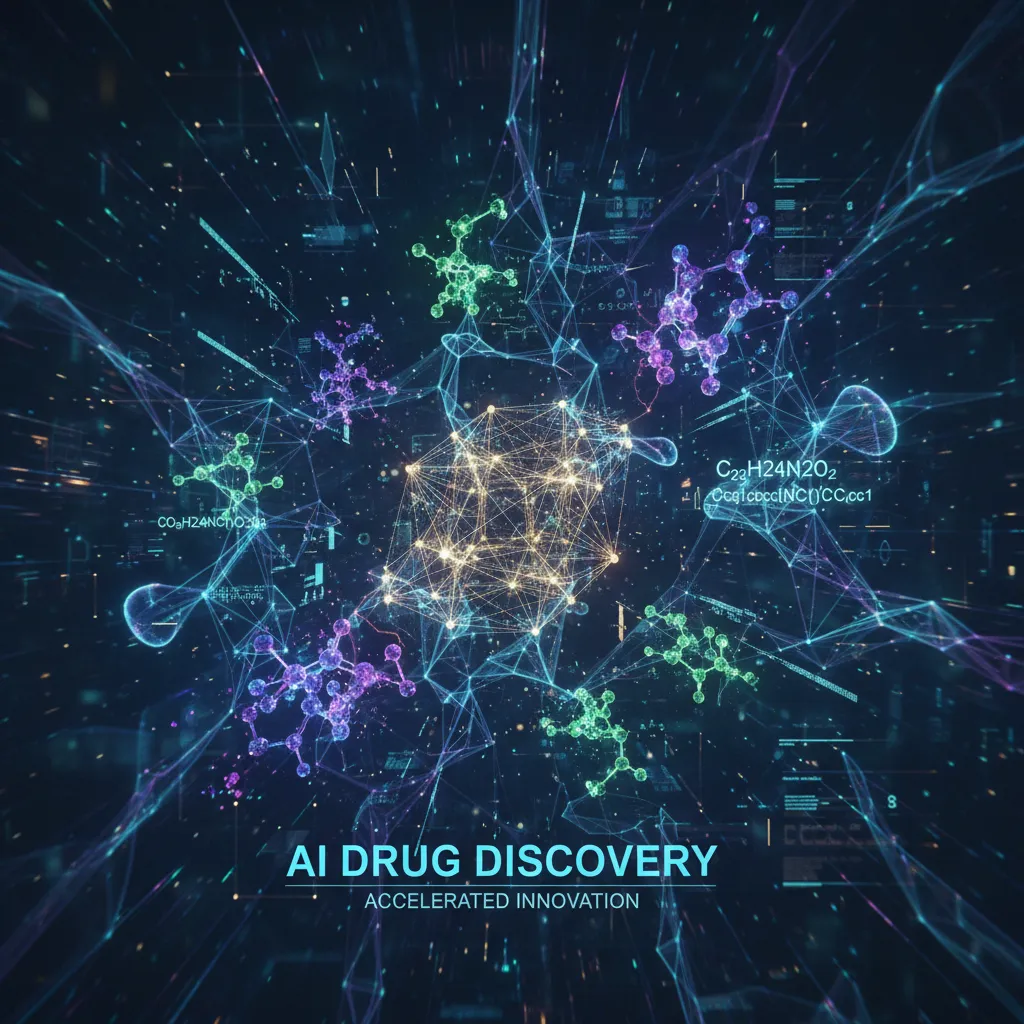
This AI-driven approach represents a monumental leap in AI pharmaceutical innovation, promising a future where drugs are designed with surgical precision.
Breathing New Life into Old Drugs: AI-Powered Repurposing
What if a drug approved for treating high blood pressure could also combat Alzheimer’s disease? Drug repurposing AI is focused on answering questions just like this. AI algorithms scan through data on thousands of existing drugs, analyzing their molecular structures and biological effects to identify new potential uses. Because these drugs have already been proven safe in humans, this strategy can fast-track the development of new treatments for a fraction of the time and cost.
Reimagining Clinical Trials
Even with a promising drug candidate, clinical trials are a major bottleneck. AI clinical trials are making this phase smarter and more efficient. AI can help by:
- Optimizing Patient Recruitment: Analyzing patient data to find the ideal candidates for a trial, ensuring the right people are enrolled.
- Predicting Outcomes: Building models to predict which patients are most likely to respond to a treatment, helping to design more successful trials.
- Remote Monitoring: Using data from wearables and apps to monitor patient progress in real-time, reducing the need for frequent clinic visits.
The power needed for these complex simulations is immense, highlighting the synergy between software and hardware advancements. Related: The AI Hardware Race: How Next-Gen Gadgets are Changing Everything
The Ecosystem of Innovation: Collaboration and Challenges
The successful integration of AI into healthcare is not just a technological challenge; it’s a human and ethical one. It requires a new kind of partnership between machines and people, as well as careful navigation of complex societal questions.
The Human-AI Partnership
It is crucial to understand that AI is not here to replace doctors, but to augment them. AI can handle the monumental task of data analysis, freeing up clinicians to do what they do best: apply their experience, intuition, and empathy to patient care. The future of medicine is collaborative, with AI providing deep, data-driven insights and doctors providing the crucial human touch. This synergy is where the true AI healthcare benefits are realized.

Navigating the Hurdles: AI Healthcare Challenges
Despite the immense promise, the road to full-scale AI adoption is not without obstacles. The primary AI healthcare challenges include:
- Data Privacy and Security: Medical data is incredibly sensitive. Ensuring its privacy and protecting it from cyber threats is paramount.
- Algorithmic Bias: If the data used to train an AI model is not diverse and representative of the entire population, the model can perpetuate and even amplify existing health disparities. This is a major focus of ethical AI healthcare.
- Regulatory Approval: How do regulatory bodies like the FDA approve a “living” algorithm that is constantly learning and changing? New frameworks are needed to ensure safety and efficacy.
- Integration and Interoperability: Healthcare systems are notoriously fragmented. Getting different systems to “talk” to each other and share data seamlessly is a significant technical hurdle.
Addressing these challenges requires a concerted effort from technologists, clinicians, ethicists, and policymakers. Related: Apple Intelligence: Your Ultimate Guide to iOS 18’s New AI Features
The Future is Now: What’s Next for AI in Medicine?
The pace of innovation is staggering. Current AI biotech trends point towards an even more integrated and intelligent healthcare future. We can expect to see:
- Digital Twins: AI-powered virtual models of individual patients that can be used to simulate the effects of different treatments and lifestyle changes before they are applied in the real world.
- Continuous Health Monitoring: Smart watches and other wearables will become sophisticated health monitors, with AI algorithms providing real-time feedback and early warnings of potential health issues.
- Democratized Expertise: AI-powered tools could bring the knowledge of world-class specialists to underserved communities and remote areas, helping to close the healthcare gap.
The ultimate vision is a system of smart healthcare solutions that is truly predictive, personalized, preventative, and participatory.
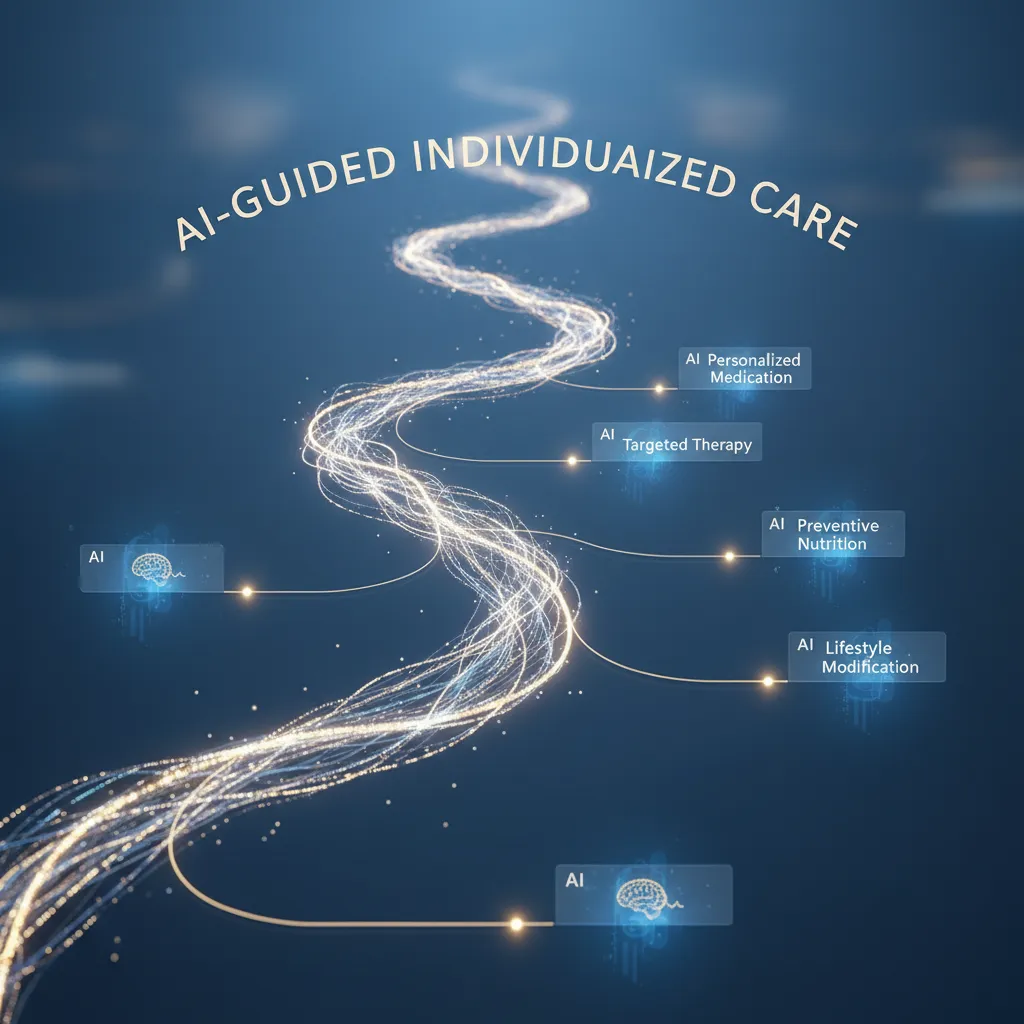
The tools powering this future are becoming more accessible and powerful every day, from large language models to specialized AI platforms. Related: ChatGPT-4o: The Ultimate Guide to OpenAI’s Revolutionary New AI
Conclusion
We are witnessing a fundamental transformation in medicine, a shift from a generalized art to a data-driven science. Artificial intelligence healthcare is no longer a fringe concept; it is the central force revolutionizing healthcare with AI. By unlocking the secrets hidden in our biology and our data, AI is paving the way for a future where diseases are caught earlier, treatments are tailored to the individual, and life-saving drugs are developed at an unprecedented speed.
The journey is complex, filled with both immense opportunity and significant ethical responsibilities. But one thing is clear: the fusion of human intellect and artificial intelligence is unleashing a new era of medical discovery. It’s a future where healthcare is more precise, more effective, and profoundly more personal for every one of us.
FAQs
Q1. How is AI used in personalized medicine?
AI is used in personalized medicine by analyzing massive datasets, including a patient’s genetic information, lifestyle, and clinical records. This allows algorithms to identify patterns that help predict disease risk, diagnose conditions earlier and more accurately, and recommend personalized treatment plans AI that are most likely to be effective for that specific individual.
Q2. What is an example of AI in drug discovery?
A key example of AI drug discovery is the use of generative AI to design novel drug molecules. Researchers can specify the desired properties of a drug, such as its target and desired effects, and an AI model can generate new chemical structures that fit these criteria. This dramatically accelerates the initial phase of drug development.
Q3. What are the main challenges of using AI in healthcare?
The main AI healthcare challenges include ensuring patient data privacy and security, overcoming algorithmic bias to prevent health disparities, establishing clear regulatory pathways for approving AI-driven tools, and integrating new AI systems with existing, often fragmented, healthcare IT infrastructure.
Q4. Can AI predict patient outcomes?
Yes, predictive analytics healthcare is a major application of AI. By analyzing historical patient data, treatment responses, and biomarkers, AI models can predict a patient’s likely outcome with a certain treatment, their risk of disease progression, or their probability of hospital readmission, helping clinicians make more proactive care decisions.
Q5. How does AI analyze genomic data?
AI in genomics involves using complex machine learning algorithms to sift through the billions of data points in a person’s genome. These algorithms can identify specific genes or mutations linked to diseases, predict how a person will respond to certain drugs (pharmacogenomics), and uncover complex genetic interactions that influence health.
Q6. What is the role of machine learning in drug development?
Machine learning drug development plays a crucial role at every stage. It helps identify promising biological targets for new drugs, predicts the properties and toxicity of potential drug compounds, optimizes the design of clinical trials, and identifies new uses for existing drugs through drug repurposing AI.