AI Smart Home Automation: The Future of Connected Living

Introduction
Imagine a home that doesn’t just respond to your commands, but anticipates your needs. A living space that learns your routines, optimizes your energy consumption without you lifting a finger, and enhances your security by understanding the difference between a guest and a threat. This isn’t a scene from a sci-fi movie; this is the reality of AI smart home automation, the next evolutionary leap in connected living.
For years, “smart homes” have been about remote control and simple “if-this-then-that” commands. You can turn on your lights from your phone, or your coffee maker can start when your alarm goes off. While convenient, this is merely automation. The introduction of Artificial Intelligence (AI) elevates this concept from a connected home to an intelligent one. This is the future of smart living, where your home becomes a proactive, learning partner in your daily life.
In this comprehensive guide, we’ll explore the profound impact of AI in residential technology. We will dissect how intelligent home systems work, uncover the tangible benefits they offer—from hyper-personalization to radical energy savings—and look ahead at the most exciting home automation trends 2024 has to offer. Get ready to discover how automating your home with AI is shaping the future of comfort, convenience, and security.
The Evolution: From “Smart” to Truly “Intelligent” Homes
The term “smart home” has been part of our lexicon for over a decade, but its meaning is undergoing a dramatic transformation. To appreciate the revolution AI brings, we must first understand the distinction between a standard automated home and a truly intelligent one.
Traditional Home Automation: This is a system based on pre-programmed rules. For example:
- IF the sun sets, THEN turn on the porch lights.
- IF my phone’s GPS detects I’m home, THEN unlock the front door.
- IF I say “Goodnight,” THEN turn off all lights and lock the doors.
These systems are reactive. They execute specific tasks based on specific triggers that you, the user, have defined. They are powerful and convenient, but they don’t learn or adapt. If your schedule changes, you have to manually update the rules.
AI-Powered Smart Home Automation: This is where the magic happens. An AI smart home uses technologies like Machine Learning (ML) and Natural Language Processing (NLP) to move beyond fixed rules into a realm of learning, predicting, and adapting. Instead of just following commands, it understands patterns and context.
- Learning: The AI analyzes data from various sensors—motion, temperature, light, sound, and your device usage. It learns your family’s daily, weekly, and even seasonal rhythms.
- Predicting: Based on these learned patterns, it begins to anticipate your needs. It might notice you always lower the thermostat around 10 PM and starts doing it for you. It might detect you’re on your way home from work and adjust the climate to your preferred temperature before you arrive. This is the essence of predictive home automation.
- Adapting: An intelligent home system adapts to changes without needing reprogramming. If you start working from home on Fridays, the AI will adjust its energy-saving “away” mode, learning your new routine within a week or two.
This shift from a reactive to a proactive environment is the core of the artificial intelligence home. It’s the difference between having a set of remote controls and having a digital butler who knows your preferences better than you do. Related: The Rise of AI Agents: Your 2024 Automation Guide
The Core of the Connected Home: How AI Creates a Seamless Ecosystem
An AI-powered home isn’t just a collection of smart gadgets; it’s a fully integrated smart home AI ecosystem. The true power of AI is unlocked when devices stop acting as isolated tools and start communicating, sharing data, and working in concert under the direction of a central intelligence.
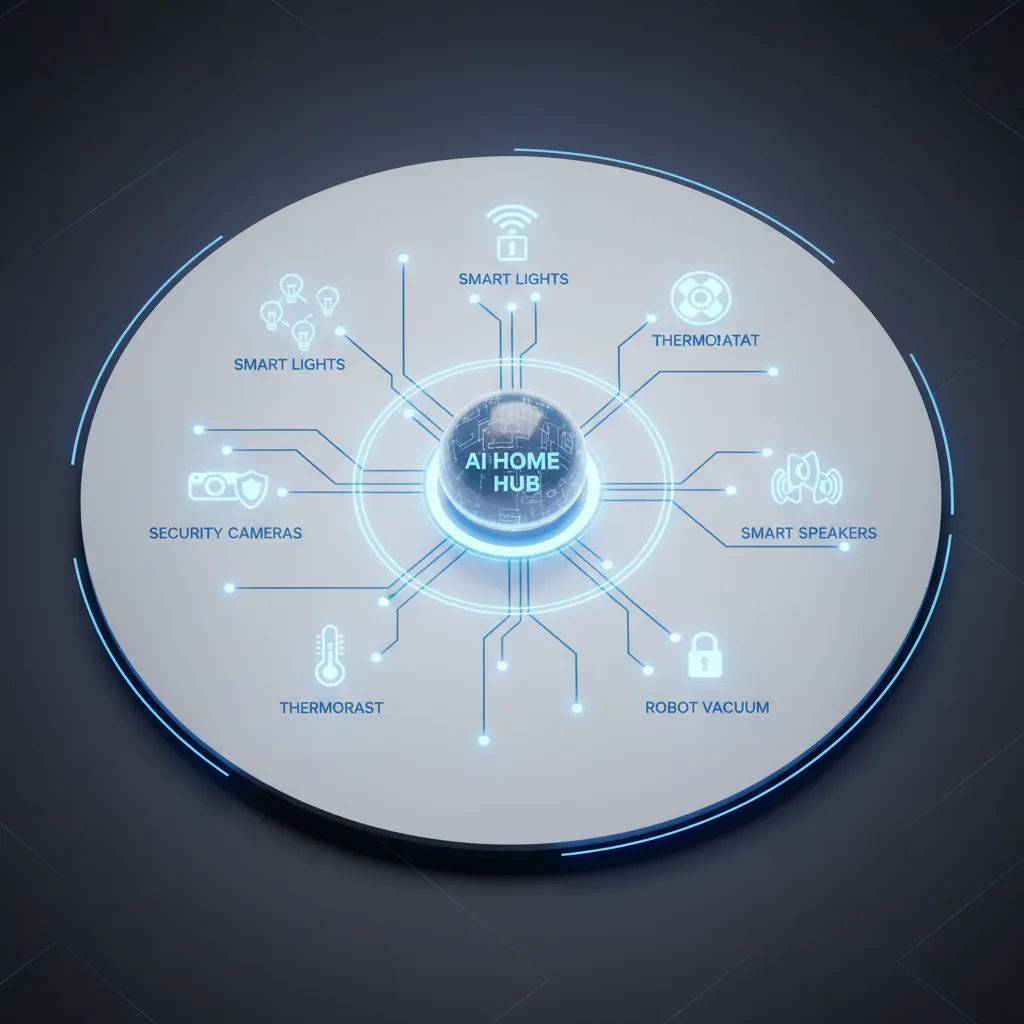
At the heart of this system is a central hub or a powerful smart home AI assistant. This could be a dedicated hardware device or sophisticated software running on a local server or in the cloud. This AI brain constantly gathers data from every connected device in your home:
- Sensors: Motion detectors, door/window sensors, temperature and humidity sensors, light sensors.
- User Interfaces: Voice commands given to smart speakers, interactions with apps, and even data from your wearables like smartwatches.
- Devices: Smart thermostats, smart lighting, security cameras, smart locks, and AI-powered appliances.
- External Data: Weather forecasts, time of day, and even real-time energy pricing from your utility provider.
The AI processes this torrent of information to build a holistic understanding of what’s happening in the home. This allows it to make intelligent, cross-system decisions. For example, on a hot, sunny afternoon, the AI might close the smart blinds on the west-facing windows to block solar heat, easing the load on the air conditioner and saving energy—a level of coordination impossible with non-integrated devices.
The Tangible Benefits of an AI-Powered Home
Why upgrade from a standard smart home to an intelligent one? The benefits are transformative, touching every aspect of daily life.
Unmatched Convenience and Personalization
This is perhaps the most immediate and noticeable benefit. A personalized smart home molds itself to your lifestyle, creating an environment of ultimate convenience.
- Adaptive Routines: Instead of a rigid “Morning” scene, the AI learns your actual wake-up times (including when you sleep in on weekends) and adjusts the lighting, thermostat, and morning news briefing accordingly.
- Context-Aware Control: Advanced voice control smart home systems with NLP understand more than just commands; they understand context. Saying “I’m cold” might prompt the AI to not only raise the thermostat but also check if any windows are open.
- Personalized Ambiance: The AI can create unique “scenes” for different activities. A “Movie Night” scene might dim the lights, close the blinds, and set the surround sound system to the correct input, all from a single voice command. For individuals, it can even recognize who is in the room and adjust settings to their specific preferences. Related: Unlock Peak Productivity with These 10 AI Tools
Next-Generation AI Home Security and Safety
AI takes home security from a reactive alarm system to a proactive guardianship network. It offers a level of awareness that provides true peace of mind.
- Intelligent Alerts: AI home security cameras can differentiate between people, animals, and vehicles, drastically reducing false alarms. They can learn the faces of residents and frequent visitors, alerting you only when an unfamiliar person is detected.
- Proactive Threat Detection: Advanced AI systems can analyze sound patterns. They can recognize the sound of breaking glass or a smoke alarm (even from a “dumb” detector) and immediately send an alert to your phone and the authorities.
- **Enhanced Smart Home Safety AI: AI can monitor for anomalies beyond security threats. It could detect a water leak from a smart sensor and automatically shut off the main water valve. For elderly residents, it can learn patterns of activity and send an alert to a family member if there’s an unusual period of inactivity. Related: AI in Cybersecurity: The Future of Threat Detection and Defense
Radical AI Energy Management and Efficiency
An AI-powered home is an efficient home. By optimizing how and when your home uses energy, these systems can lead to significant savings on utility bills and a smaller environmental footprint.
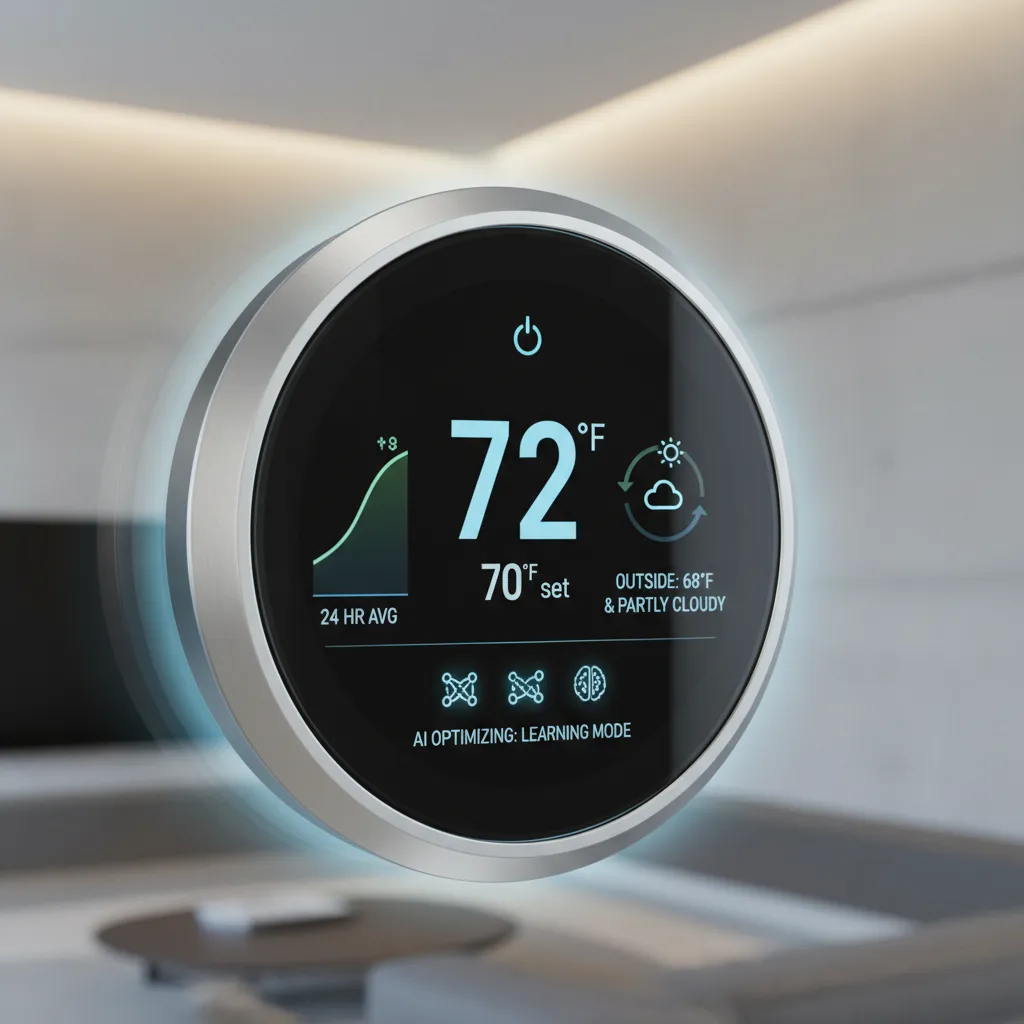
- Learning Thermostats: Smart thermostats AI go far beyond simple scheduling. They learn your occupancy patterns, use geofencing to know when no one is home, and analyze weather data to pre-heat or pre-cool your home in the most efficient way possible.
- Optimized Energy Consumption: AI energy management systems can connect to your utility’s smart grid. They can then choose to run high-consumption appliances like dishwashers or EV chargers during off-peak hours when electricity is cheapest.
- Natural Resource Management: The system can automate blinds and curtains, opening them in the winter to capture solar heat and closing them in the summer to keep the house cool, naturally reducing the load on your HVAC system. Related: AI’s Green Revolution: Sustainable Tech for a Smarter Planet
AI in Action: Real-World Applications Transforming Our Living Spaces
Let’s move from the theoretical to the practical. Where can you see this future home technology making a difference today?
Intelligent Climate Control with Smart Thermostats AI
Devices like the Nest Learning Thermostat are prime examples. They don’t just follow a schedule; they build one around your life. They learn how long your home takes to heat up and cool down, factoring in the weather to reach your desired temperature at the right time using the least amount of energy. This is smart home comfort AI in its purest form.
Dynamic and Adaptive Smart Lighting AI
Smart lighting AI creates the perfect atmosphere for any situation. Systems can automatically adjust the color temperature and brightness of your lights throughout the day to mimic natural sunlight, which can improve focus and sleep patterns (a concept known as circadian rhythm lighting). When you start a movie, the lights can dim automatically. When you get up for a midnight snack, they can illuminate a path at a very low brightness to avoid waking the house.
The AI-Powered Kitchen: The Rise of Smart Appliances
The kitchen is becoming a hub of AI innovation. AI powered appliances are making cooking and meal management smarter and more intuitive.

- Smart Refrigerators: Can use internal cameras to identify your food items, track expiration dates, and suggest recipes based on the ingredients you have on hand.
- Smart Ovens: Can identify the food you place inside (via camera) and automatically set the optimal cooking mode, temperature, and time.
- Connected Ecosystems: Your smart fridge adds milk to the shopping list, you approve it on your phone, and your smart oven preheats for the lasagna recipe it suggested—a seamless flow of information.
Conversational Voice Control and Smart Home AI Assistants
The primary way we interact with our intelligent homes is through voice. AI assistants like Amazon Alexa, Google Assistant, and Apple’s new Apple Intelligence are becoming increasingly sophisticated. Thanks to advancements in NLP, you can speak more naturally. Instead of “Hey Google, set the living room thermostat to 72 degrees,” you might soon be able to say, “Hey Google, it feels a bit stuffy in here,” and the AI will understand the intent—perhaps lowering the temperature by a degree and turning on a ceiling fan. Related: Apple Intelligence: A Complete Guide to Apple’s New AI Features
The Future is Predictive: Next-Gen Home Automation Trends
If today is about adaptation, tomorrow is about prediction. The most exciting home automation trends 2024 and beyond revolve around predictive home automation, where the home acts before you even realize you need something.

- Hyper-Personalization: The home will not just have one set of preferences, but will recognize individual family members by their voice, face, or smartphone and adjust the lighting, music, and even information displayed on smart screens specifically for them.
- Proactive Wellness: AI will monitor air quality and automatically activate purifiers. It might track sleep patterns via under-mattress sensors and suggest adjustments to lighting and temperature to improve sleep quality.
- Ambient Computing: The technology will fade into the background. You won’t think about “controlling the home.” It will just happen around you, seamlessly integrated into walls, furniture, and fixtures. This is the ultimate goal of connected living.
- Generative AI Integration: Imagine telling your home, “I’m having a few friends over for a relaxed dinner party tonight,” and the AI generates a custom lighting scene, creates a suitable music playlist, and suggests a few recipes your smart oven knows how to cook perfectly.
Building Your Intelligent Home: DIY vs. Integrated Solutions
Ready to embrace the future of smart living? There are two primary paths you can take.
The DIY Smart Home AI Approach
For the tech-savvy and budget-conscious, a DIY smart home AI setup is an excellent option. This involves combining off-the-shelf devices from various brands (like Philips Hue, Nest, Ring, and Ecobee) and using a central software platform like Home Assistant or Hubitat to make them work together.
- Pros: Highly customizable, lower upfront cost, freedom to choose the best AI smart home tech from any brand.
- Cons: Requires technical knowledge, can be time-consuming to set up and maintain, and compatibility can sometimes be a challenge.
Professional Integrated Smart Home AI Systems
For a truly seamless and powerful experience, professionally installed advanced home automation systems from brands like Crestron, Savant, or Control4 are the gold standard. These are comprehensive smart home AI solutions where all components are designed to work together perfectly from the start.
- Pros: Extremely reliable, powerful, and seamless user experience. A single point of contact for support.
- Cons: Significantly more expensive, less flexible for user-modification, and locks you into a specific brand’s ecosystem.
Addressing the Challenges: Privacy, Security, and AI Ethics
No discussion of AI smart homes is complete without addressing the challenges. A home that knows this much about you requires robust security and a strong ethical framework.
- Data Privacy: Where is your data stored? Who has access to it? It’s crucial to choose companies with transparent privacy policies and strong data encryption.
- Cybersecurity: An integrated smart home can have a single point of failure. Protecting your home network with a strong password, two-factor authentication, and regular software updates is non-negotiable.
- Ethical Considerations: As homes become more predictive, questions arise about autonomy and control. It’s important that users always have the final say and the ability to easily override the AI’s decisions. Related: AI Ethics: Responsible Development for the Future
Conclusion
AI smart home automation is no longer a distant dream. It’s a rapidly advancing technology that is fundamentally changing our relationship with our living spaces. We are moving beyond simple remote control into an era of proactive, predictive, and deeply personalized environments. The intelligent home system is a learning entity that enhances convenience, bolsters security, and optimizes efficiency in ways we’re only beginning to appreciate.
From the smart thermostats AI that learn our comfort preferences to the AI home security systems that proactively guard our families, the benefits are clear. The journey from a connected house to an intelligent home is the very definition of the future of connected living. Whether you start small with a DIY project or invest in a fully integrated system, embracing AI is the key to unlocking the next generation of home comfort and convenience.
What AI-powered feature are you most excited to see in your home? Share your thoughts in the comments below!
FAQs
Q1. What is an example of AI in a smart home?
A great example is a smart thermostat like the Google Nest. It doesn’t just follow a set schedule; it uses machine learning to learn your family’s routine and temperature preferences. It also uses sensors and your phone’s location to know when you’re away, automatically adjusting to an energy-saving mode. This predictive and adaptive behavior is a core function of AI.
Q2. What is the difference between home automation and an AI smart home?
Traditional home automation is based on pre-set rules (e.g., “if it’s 7 PM, turn on the lights”). An AI smart home is predictive and adaptive. It learns your habits and makes decisions on its own, like lowering the blinds on a hot afternoon to help the AC, even if you never created a specific rule for it. AI adds a layer of intelligence on top of automation.
Q3. How does AI make a home smart?
AI makes a home smart by collecting data from various sensors and devices, learning patterns from that data, and then making intelligent decisions. It uses machine learning to understand your habits, natural language processing to understand your voice commands contextually, and computer vision in cameras to differentiate between people and pets.
Q4. What are the main benefits of an AI-powered smart home?
The three primary benefits are:
- Enhanced Convenience: The home anticipates your needs, automating daily routines and personalizing your environment.
- Increased Security: AI can proactively detect threats, differentiate between real alerts and false alarms, and provide smarter monitoring.
- Improved Energy Efficiency: By learning your habits and analyzing data, AI optimizes heating, cooling, and lighting to significantly reduce energy waste and lower utility bills.
Q5. Is Alexa or Google Home considered AI?
Yes, absolutely. Alexa and Google Assistant are prime examples of AI, specifically smart home AI assistants. They use sophisticated Artificial Intelligence, including Natural Language Processing (NLP) to understand what you say and Machine Learning (ML) to learn your preferences, answer questions, and control your connected devices.
Q6. Can AI control my entire house?
Yes, with a properly integrated system, AI can control nearly every aspect of your house. This includes lighting, climate (heating and cooling), security systems (cameras, locks, sensors), entertainment systems, and even kitchen appliances. The goal of an integrated smart home AI is to create a single, cohesive system that manages the entire home ecosystem.
Q7. What is the future of smart home technology?
The future is predictive, personalized, and ambient. Homes will increasingly anticipate our needs before we express them (predictive automation). They will tailor experiences to individual family members (hyper-personalization), and the technology itself will become more invisible, seamlessly integrated into the home’s architecture (ambient computing).