AI for Smart Grids: Powering a Sustainable Energy Future
Introduction
We stand at a critical juncture in history. Our insatiable demand for energy powers our modern lives, yet the very systems that sustain us are straining under the pressure of an aging infrastructure and the urgent call for a cleaner, more sustainable planet. For decades, our power grids have been a one-way street: power flows from a central plant, through a web of wires, to your home. This rigid, century-old model is inefficient, vulnerable, and ill-equipped to handle the dynamic energy landscape of the 21st century.
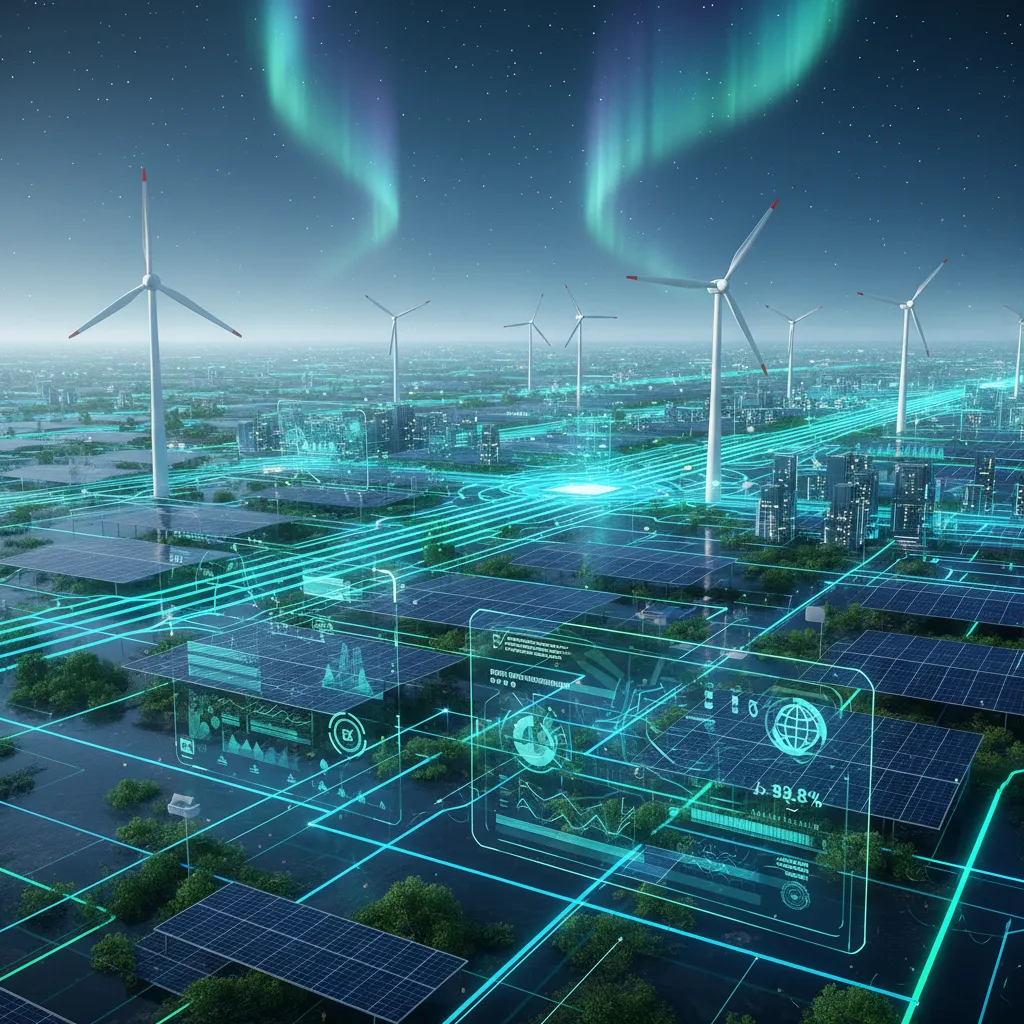
Enter the synergy of two transformative technologies: the smart grid and Artificial Intelligence. This isn’t just an incremental upgrade; it’s a complete reimagining of our energy ecosystem. The smart utility grid provides the digital nervous system, while AI delivers the intelligence to make it think, adapt, and learn.
This article delves into the heart of this revolution. We’ll explore how AI for smart grids is tackling the biggest challenges in energy today—from integrating volatile renewable sources to preventing blackouts and enhancing cybersecurity. You will learn how AI’s role in clean energy is not just a concept but a practical reality, driving the digital energy transformation and paving the way for a resilient and sustainable energy future.
The Dawn of a New Era: From Traditional Grids to Intelligent Energy Networks
Before we can appreciate the genius of AI, we must first understand the limitations of the system it’s transforming. Our traditional power grids were marvels of 20th-century engineering, but they are fundamentally reactive, not proactive.
What is a Smart Grid, Really?
Think of the traditional grid as a monologue and a smart grid as a conversation. A smart grid is an electricity network that uses grid modernization technology to create a two-way flow of both electricity and information. It’s an intricate web of sensors, smart meters, automated controls, and advanced communication systems.
Key characteristics of a smart grid include:
- Two-Way Communication: Unlike the old one-way system, smart grids allow for constant communication between the utility provider and the end-user.
- Real-Time Data: Millions of data points are collected every second, providing an unprecedented, high-resolution view of the grid’s health and performance.
- Automation & Control: It can automatically detect and respond to issues, rerouting power to prevent outages and optimize flow.
- Consumer Empowerment: It gives consumers detailed information about their energy usage, enabling them to make smarter choices and even sell excess energy (e.g., from rooftop solar panels) back to the grid.
This foundation of data and connectivity is precisely what AI needs to thrive, turning a merely connected grid into one of the most powerful intelligent energy networks.
Why We Urgently Need Grid Modernization Technology
The push for a digital energy transformation isn’t just about technological novelty; it’s born of necessity. Several converging factors make our old grid obsolete:
- The Rise of Renewables: Solar and wind power are crucial for a sustainable future, but they are intermittent. The sun doesn’t always shine, and the wind doesn’t always blow. A traditional grid can’t cope with these fluctuations, leading to instability.
- The EV Revolution: The mass adoption of electric vehicles introduces massive, concentrated new loads on the grid, especially during peak evening charging hours.
- Increasing Extreme Weather: Climate change is leading to more frequent and severe weather events that can devastate centralized power systems, causing widespread and prolonged outages.
- Aging Infrastructure: Much of our grid infrastructure is decades old, inefficient, and prone to failure, resulting in significant energy loss during transmission.
AI’s Transformative Role in the Smart Grid Revolution
If the smart grid is the body, AI is the brain. It’s the engine that processes the deluge of data from sensors and smart meters, transforming it into actionable intelligence. By applying machine learning algorithms, AI can identify patterns, make predictions, and automate decisions at a speed and scale impossible for humans. This is where the true power of AI smart grids is unlocked.
Machine Learning Energy Forecasting: Predicting the Unpredictable
One of the most significant applications of AI is machine learning energy forecasting. Sophisticated algorithms analyze vast datasets—including historical consumption patterns, weather forecasts, economic activity, and even social events—to predict energy demand and renewable energy supply with stunning accuracy.
By knowing precisely how much power will be needed and how much will be generated, utilities can:
- Optimize Power Generation: Avoid firing up expensive and polluting “peaker” plants unnecessarily.
- Reduce Waste: Prevent the overproduction of energy that cannot be stored.
- Enhance Stability: Prepare for sharp peaks and dips in supply or demand, ensuring a stable flow of electricity.
This predictive power is a cornerstone of modern energy management AI and provides critical AI grid stability solutions. [Related: Unlocking Claude 3.5 Sonnet: Real-World AI Applications and Use Cases]
Real-Time Energy Optimization and Load Balancing
A smart grid is a dynamic, constantly shifting system. AI acts as the ultimate traffic controller, ensuring electricity flows efficiently and reliably.

Using real-time data, AI algorithms can instantly detect congestion on power lines and reroute electricity through less-crowded pathways, much like a GPS navigation app finds the fastest route to avoid traffic jams. This real-time energy optimization minimizes energy loss during transmission—a major source of inefficiency in traditional grids—and prevents overloading equipment. This process of AI power optimization is continuous, making millions of micro-adjustments every minute.
Predictive Maintenance for Resilient Energy Grids
Traditional grid maintenance is often reactive; a component fails, and a team is sent to fix it, often after a blackout has already occurred. Predictive maintenance smart grids flip this model on its head.
AI systems continuously monitor the health of critical grid components like transformers, circuit breakers, and power lines. By analyzing data on temperature, vibration, and electrical load, these algorithms can detect subtle anomalies that signal an impending failure. This allows utilities to perform targeted maintenance before a breakdown occurs, leading to:
- Drastically Reduced Outages: Issues are fixed proactively, enhancing grid reliability.
- Lower Maintenance Costs: Repairs are scheduled efficiently, avoiding expensive emergency call-outs.
- Increased Asset Lifespan: Equipment is better maintained, extending its operational life.
This capability is fundamental to building resilient energy grids AI that can withstand stress and recover quickly from disruptions.
Championing Sustainability: Integrating Renewables with AI
Perhaps the most crucial application of sustainable energy AI is solving the renewable energy puzzle. The intermittency of wind and solar has long been the primary obstacle to their widespread adoption. AI provides the key to unlocking their full potential.
Solving the Intermittency Puzzle
Renewable energy integration AI directly addresses the unpredictable nature of green energy sources. Here’s how:
- Hyper-Accurate Forecasting: AI models can predict solar and wind output with high precision, allowing grid operators to plan and balance the energy mix accordingly.
- Energy Storage Optimization: AI manages large-scale battery storage systems, charging them when renewable energy is abundant and cheap, and discharging them during peak demand or when renewable generation is low. This is a core function of energy storage optimization AI.
- Smart Curtailment: Instead of simply shutting down wind turbines when there’s too much supply (curtailment), AI can find productive uses for the excess energy, such as charging EV fleets or producing green hydrogen.

AI-Driven Demand Response: Shaping Consumption for a Greener Grid
AI-driven demand response programs create a flexible, interactive relationship between the utility and the consumer. These programs use AI to send price signals or control requests to smart devices in homes and businesses, encouraging them to shift energy consumption.
For example, an AI platform could automatically:
- Slightly adjust your smart thermostat’s temperature during a city-wide peak demand event.
- Schedule your electric vehicle to charge overnight when wind power is plentiful and electricity is cheap.
- Pause a factory’s energy-intensive process for a few minutes to help stabilize the grid.
This creates a more balanced and efficient system, reducing the need for fossil-fuel power plants and making better use of available clean energy. [Related: The AI Pin and Rabbit R1: Charting the Future of Wearable AI]
The Rise of Virtual Power Plants (VPPs) and Microgrids
AI is enabling the growth of decentralized energy systems.
- Virtual Power Plants (VPPs): A virtual power plants AI platform aggregates thousands of distributed energy resources—like residential solar panels, home batteries, and EV chargers—into a single, coordinated entity. This “virtual” plant can then provide power and services to the main grid, offering immense flexibility.
- Microgrids: Microgrids AI applications are helping to create self-sufficient energy islands for critical facilities like hospitals, data centers, or entire communities. These microgrids can operate connected to the main grid or disconnect and run autonomously during an outage, significantly boosting local resilience.
The Pillars of a Modern Grid: Efficiency, Security, and Management
Beyond sustainability, AI reinforces the fundamental operations of a modern power grid, making it more efficient, secure, and manageable.
Enhancing Energy Efficiency from Generation to Consumption
AI for energy efficiency works across the entire energy value chain. By identifying and eliminating waste at every step—from optimizing power plant operations to helping consumers reduce their usage with smart home technology—AI creates a leaner, more efficient system. This not only saves money but also reduces the overall carbon footprint. [Related: Your Ultimate Guide to Energy-Efficient Smart Homes]
Cybersecurity in the Age of Intelligent Energy Networks
A connected grid is a powerful grid, but it also presents a larger attack surface for cyber threats. Cybersecurity smart grids AI is an essential line of defense. Machine learning algorithms are trained to recognize the signature of normal grid operations. They can detect anomalous behavior in real-time—whether from a malicious actor or an equipment malfunction—and can automatically isolate affected parts of the network to prevent cascading failures.

Advanced Energy Management AI Platforms
Behind the scenes, utility operators rely on sophisticated energy AI platforms and grid intelligence solutions. These platforms serve as a central command center, using AI to visualize the entire grid, run simulations, and provide operators with the data-driven insights needed to make critical decisions. This collaborative environment between human experts and AI is central to the success of smart grid technology advancements.
Overcoming the Hurdles: Challenges of AI in Smart Grids
The path to a fully AI-driven grid is not without its obstacles. The challenges AI in smart grids are significant and require careful consideration.
- Data Quality and Integration: AI is only as good as the data it’s trained on. Integrating and standardizing data from millions of disparate devices from different manufacturers is a massive technical challenge.
- High Initial Investment: The upfront cost of deploying the necessary sensors, communication networks, and AI software can be substantial for utility companies.
- Regulatory Frameworks: Policy and regulations often move slower than technology. New frameworks are needed to address data privacy, market rules for decentralized energy, and liability.
- The “Black Box” Problem: Some advanced AI models can be so complex that their decision-making processes are not easily understood by humans. Building trust and ensuring transparency in these systems is crucial for regulators and the public.
- Workforce Transition: A new generation of skilled workers—data scientists, AI specialists, and cybersecurity experts—is needed to build, operate, and maintain these intelligent systems.
The Future is Now: What’s Next for AI-Powered Energy?
We are only at the beginning of this transformation. The future of sustainable power will see an even deeper integration of AI with other emerging technologies like the Internet of Things (IoT) and blockchain. Imagine a future where every appliance, EV, and building is an intelligent agent, constantly negotiating with the grid to buy, sell, or store energy in the most efficient way possible.
This vision of hyper-decentralized, autonomous, and resilient energy systems is the ultimate goal of clean energy innovation. It’s a future where blackouts are a relic of the past, and clean, affordable energy is accessible to all.

This AI-powered grid won’t just power our homes; it will power a sustainable civilization. [Related: Apple Intelligence Explained: Your Guide to iOS 18’s New AI Features]
Conclusion
The transition from a fragile, aging electrical grid to a robust, intelligent, and sustainable energy network is one of the most critical undertakings of our time. Artificial Intelligence is no longer a futuristic concept in this domain; it is the central, indispensable tool making it happen.
From machine learning energy forecasting that tames the unpredictability of renewables to predictive maintenance that builds resilient infrastructure, AI smart grids are fundamentally changing our relationship with energy. They are creating a system that is not only more efficient and reliable but also inherently greener and more democratic.
The road ahead has its challenges, but the destination is clear: a future powered by clean, intelligent, and abundant energy. The digital energy transformation, driven by AI, isn’t just about keeping the lights on—it’s about ensuring a brighter, more sustainable future for generations to come.
FAQs
Q1. What is the primary role of AI in smart grids?
The primary role of AI in smart grids is to act as the “brain” of the network. It analyzes massive amounts of real-time data from sensors and smart meters to optimize energy flow, predict demand and supply, automate maintenance, and integrate renewable energy sources seamlessly, making the grid more efficient, reliable, and sustainable.
Q2. How does AI improve energy efficiency?
AI improves energy efficiency by identifying and minimizing waste at every stage. It optimizes power generation to match real-time demand, reduces energy loss during transmission by intelligently routing power, and enables demand-response programs that encourage consumers to shift their usage to off-peak hours.
Q3. What are the main challenges in implementing AI for grid modernization?
The main challenges include the high upfront cost of deploying smart infrastructure, ensuring the quality and standardization of data from millions of devices, updating regulatory policies to keep pace with technology, addressing cybersecurity vulnerabilities, and overcoming the “black box” problem to ensure AI decision-making is transparent and trustworthy.
Q4. Can AI help prevent power outages?
Yes, absolutely. AI is a powerful tool for preventing power outages. Through predictive maintenance, AI can identify equipment likely to fail before it breaks down. It also provides advanced AI grid stability solutions by automatically balancing load and rerouting power around faults to prevent localized issues from causing cascading blackouts.
Q5. What is an example of an AI-powered smart grid application?
A great example is AI-driven demand response. An AI platform can predict a surge in energy demand due to a heatwave. It then automatically communicates with smart thermostats in thousands of homes, asking to pre-cool them slightly before the peak and then raising the temperature by one or two degrees during the peak, collectively reducing grid strain without impacting comfort.
Q6. How does AI contribute to integrating renewable energy sources?
AI is crucial for integrating renewables with AI. It uses advanced forecasting to predict the variable output of wind and solar power. This allows grid operators to balance the energy mix effectively. AI also optimizes energy storage systems, charging batteries when renewable generation is high and discharging them when it’s low, ensuring a stable and continuous power supply.
Q7. Is AI in smart grids secure from cyberattacks?
While no system is 100% immune, cybersecurity smart grids AI significantly enhances security. AI-based security systems constantly monitor network traffic for anomalies and patterns that indicate a potential cyberattack. They can detect threats faster than human operators and can automatically initiate defensive measures to isolate and neutralize threats in real-time.