AI’s Role in Preventative Healthcare: A Personalized Path to Wellness

For generations, our approach to health has been fundamentally reactive. We wait for symptoms to appear—a persistent cough, an unusual pain, a sudden decline in energy—before we seek medical help. This model, centered on treating sickness rather than cultivating wellness, has saved countless lives. But what if we could shift the paradigm? What if we could move from a world of treatment to one of prevention, identifying health risks long before they become life-altering conditions?
This is not a far-off science fiction dream; it’s the reality being built today, powered by Artificial Intelligence. AI preventative healthcare is ushering in an era of proactive health management, transforming our relationship with our own bodies. By leveraging vast amounts of data, from our genetic code to our daily habits, AI is creating a deeply personalized path to wellness.
In this guide, we’ll explore the revolutionary impact of AI on preventative medicine. You’ll learn how predictive health analytics can forecast disease risk, how AI early disease detection is spotting conditions like cancer with superhuman accuracy, and how personalized wellness AI is crafting bespoke fitness and nutrition plans just for you. This is the future, and it’s more personal than ever.
The Paradigm Shift: From Reactive Treatment to Proactive Prevention
The traditional healthcare model is a bit like being a firefighter. It’s incredibly effective at putting out fires (treating diseases) but does little to prevent them from starting in the first place. This reactive approach often means intervention occurs only after a condition has progressed, leading to more complex treatments and poorer outcomes.
The preventative model, supercharged by AI, is like having a sophisticated, 24/7 fire prevention system installed in your body. It’s about understanding the subtle conditions—the environmental factors, genetic predispositions, and lifestyle choices—that could lead to a “fire” and mitigating them proactively.
So, why is this happening now? The catalyst is a perfect storm of three factors:
- Data Explosion: We generate more health data than ever before, from electronic health records (EHRs) and genomic sequencing to real-time stats from smart health monitoring devices.
- Computational Power: Modern AI algorithms, particularly machine learning and deep learning, can process and find patterns in this data at a scale and speed impossible for humans.
- Connectivity: The Internet of Things (IoT) allows devices like your smartwatch to seamlessly communicate with AI-powered health apps, creating a constant feedback loop of health information.
This convergence enables predictive health analytics, the core engine of preventative care. AI systems can analyze thousands of variables to calculate an individual’s risk for various conditions, paving the way for targeted, early interventions.
AI-Powered Early Disease Detection: Seeing Trouble Before It Starts
One of the most profound benefits of AI in prevention is its ability to detect diseases at their earliest, most treatable stages. AI algorithms, trained on millions of data points, can identify microscopic patterns and anomalies that are often invisible to the human eye.
Revolutionizing Cancer Screening
AI cancer screening is a prime example of this new frontier. In radiology, AI models are proving to be invaluable co-pilots for doctors.
- Breast Cancer: Deep learning algorithms can analyze mammograms and identify suspicious lesions with a level of accuracy that matches or even exceeds that of experienced radiologists, reducing false positives and unnecessary biopsies.
- Lung Cancer: AI can scrutinize CT scans to detect tiny, early-stage lung nodules that might otherwise be missed, significantly improving survival rates for one of the deadliest cancers.
- Skin Cancer: Smartphone apps powered by AI can analyze photos of skin moles and lesions, assessing their risk for melanoma and advising users to seek professional medical advice. This empowers individuals to take a more active role in their health monitoring.
[Related: AI’s Cosmic Leap: Revolutionizing Space Exploration for Humanity]
Proactive Cardiovascular Health
Heart disease remains a leading cause of death globally, but preventative cardiology AI is working to change that. AI tools are being deployed to conduct comprehensive health risk assessment AI analysis, creating a more complete picture of a person’s cardiovascular future.
By analyzing data from ECGs, blood tests, cholesterol levels, blood pressure readings, and even lifestyle factors from a patient’s EHR, AI can predict the 5- or 10-year risk of a heart attack or stroke with remarkable precision. This allows doctors to recommend proactive measures, such as dietary changes, exercise regimens, or preventative medication, long before a catastrophic event occurs.
Preventing Chronic Diseases
The same principles apply to a wide range of lifestyle-related illnesses. Understanding how AI prevents chronic diseases like Type 2 diabetes is key. AI models can identify at-risk individuals by analyzing patterns in their weight, activity levels, and blood sugar trends (often from continuous glucose monitors). Instead of a generic warning, the AI can deliver personalized alerts and actionable advice, such as suggesting a walk after a meal to stabilize glucose levels. This granular, real-time guidance is a game-changer for managing AI for lifestyle diseases.
The Rise of Hyper-Personalization: Your Unique Path to Wellness
The era of one-size-fits-all health advice is over. Your unique genetic makeup, metabolism, microbiome, and lifestyle demand a tailored approach. Personalized medicine AI is making this possible by crafting health plans that are as unique as your fingerprint.
AI-Driven Wellness Plans Tailored to You
Imagine a wellness plan that evolves with you. AI-driven wellness plans move beyond static recommendations. They create a dynamic strategy by continuously integrating data from various sources.

At the heart of this is personalized nutrition AI. These systems can analyze your blood work, genetic markers for nutrient metabolism, and gut health to recommend the optimal diet for you. An app might suggest you eat more iron-rich foods based on your latest blood test or recommend specific probiotics to improve your digestion. It’s not just about what to eat, but when and why, all tailored to your body’s real-time needs.
[Related: The Future of Fitness: How AI is Personalizing Your Health Journey]
The AI Fitness Coach in Your Pocket
Exercise is medicine, but the wrong “dose” or “type” can be ineffective or even cause injury. This is where AI fitness coaching prevention comes in.

Modern AI-powered health apps use your phone’s camera or sensors in wearables to analyze your exercise form, providing real-time feedback to prevent injury. They can track your performance, monitor your heart rate recovery, and even assess your sleep quality to adjust the intensity of your next workout. This ensures you’re always training in the sweet spot—challenging yourself enough to progress without over-training and risking burnout or harm.
The Connected You: Wearables and Smart Health Monitoring
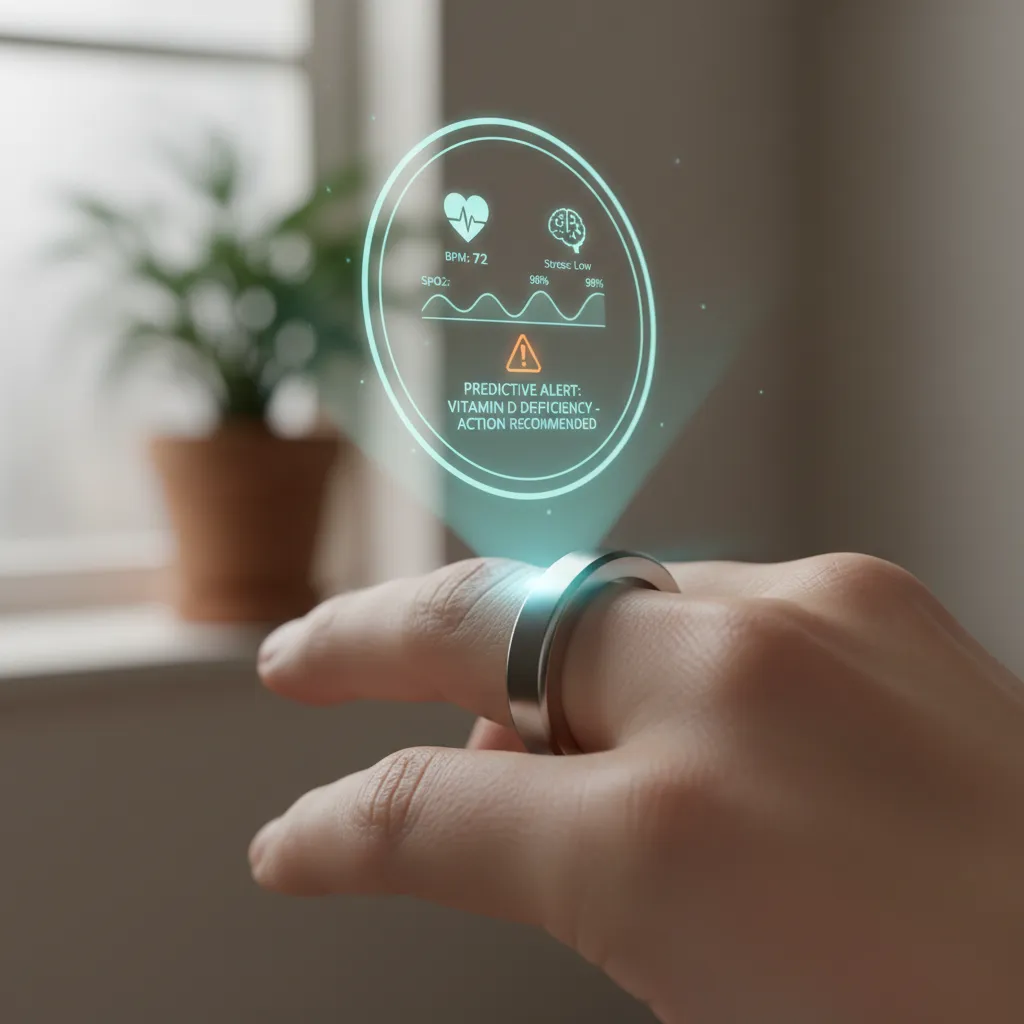
The engine of preventative AI runs on data, and the primary fuel source is the constant stream of information from our bodies. Wearable tech for health prevention has transformed from simple step counters into sophisticated health monitoring hubs.
Beyond Step Counting: The Power of Wearable Tech
Devices like the Apple Watch, Oura Ring, and Whoop strap are now packed with medical-grade sensors that track:
- Heart Rate & Rhythm: Detecting signs of atrial fibrillation (AFib).
- Blood Oxygen (SpO2): Monitoring respiratory health.
- Sleep Stages: Assessing sleep quality and its impact on recovery.
- Body Temperature: Identifying early signs of illness.
- ECG: Providing on-demand heart rhythm analysis.
This continuous data stream is a goldmine for predictive health analytics. An AI system can spot a subtle, downward trend in your sleep quality or a gradual increase in your resting heart rate over weeks—patterns that might signal underlying stress or the onset of an illness long before you feel any symptoms.
[Related: AI Wearables in 2025: The Next Generation of Smart Tech]
Remote Patient Monitoring AI: The Doctor is Always In
For individuals managing chronic conditions or focusing on AI and healthy aging, remote patient monitoring AI is a lifeline. It allows healthcare providers to monitor patients’ vital signs and health status from a distance.
An AI platform can alert a medical team if a patient with congestive heart failure shows a sudden weight gain (a sign of fluid retention) or if a diabetic patient’s blood sugar levels become dangerously unstable. This allows for immediate telehealth consultations and adjustments to treatment plans, preventing costly and dangerous emergency room visits and empowering people to manage their health confidently from home.
Expanding the Frontier: AI in Mental and Public Health
The scope of AI in preventative health extends far beyond the purely physical. It’s making significant inroads into mental wellness and large-scale public health management.
A Proactive Approach to Mental Wellness
AI mental health prevention is a rapidly emerging field. While not a replacement for human therapists, AI offers accessible, scalable tools for early detection and support.
- Sentiment Analysis: AI can analyze text messages, journal entries, or even speech patterns to detect linguistic markers associated with depression, anxiety, or suicidal ideation.
- Chatbot Support: AI-powered chatbots provide 24/7 support, offering evidence-based techniques from Cognitive Behavioral Therapy (CBT) to help users manage stress and anxiety.
- Behavioral Pattern Recognition: Your digital footprint can provide clues. A sudden drop in social engagement or a change in sleep patterns detected by a wearable can trigger a gentle nudge from a wellness app, prompting a self-check-in.
[Related: Deep Work Mastery: How to Unlock Focus and Boost Productivity in a Distracted World]
Improving Population Health on a Global Scale
The impact of AI on public health is monumental. By analyzing anonymized health data from millions of people, AI can identify trends and hotspots for specific diseases.

During a pandemic, AI models can predict how a virus might spread, helping officials allocate resources like vaccines and hospital beds more effectively. On a local level, digital health AI solutions can identify a neighborhood with a high incidence of asthma and correlate it with environmental data like air quality, prompting targeted public health interventions. This macro view is essential for creating healthier communities for everyone.
Navigating the Challenges: Ethics, Privacy, and Trust
The incredible potential of AI in healthcare comes with significant responsibilities. As we integrate these technologies into our lives, we must address the critical issues of ethics, privacy, and bias.
The Ethical Tightrope of AI in Healthcare
The core challenge of ethical AI in healthcare is algorithmic bias. If an AI model is trained primarily on data from one demographic, its predictions and recommendations may be less accurate for people of other ethnicities, genders, or socioeconomic backgrounds. Ensuring fairness, accountability, and transparency in how these algorithms are built and deployed is paramount to prevent them from perpetuating existing health disparities. The question of who is liable when an AI makes a mistake is a complex legal and ethical field that is still being defined.
Your Health Data: The Privacy Conundrum
Perhaps the biggest concern for users is data privacy in health AI. Your health information is profoundly personal. Who has access to it? How is it being used? How is it protected from breaches?
Leading tech companies are increasingly focused on on-device processing to protect privacy. [Related: Apple Intelligence in iOS 18: All the New AI Features Revealed] demonstrates this trend, where sensitive computations happen directly on your device rather than in the cloud. Robust regulations like HIPAA (Health Insurance Portability and Accountability Act) in the US and GDPR in Europe provide a legal framework, but transparency from companies providing AI tools for health and wellness is crucial for building user trust.
The Road Ahead: The Future of Preventative Medicine
The journey of AI healthcare innovation is just beginning. The future of preventative medicine points towards an even more integrated and predictive model. We are seeing major advancements that will soon become mainstream.
One of the most exciting AI in healthcare trends is the concept of a “digital twin”—a dynamic, virtual model of an individual created from their unique health data. Doctors could test the effects of different medications or lifestyle changes on your digital twin before ever applying them to you, finding the most effective and safest intervention with zero risk.
The future of personalized health is one where healthcare is a continuous, collaborative process between you, your doctor, and your personalized AI assistant. It’s a future where your health plan adapts in real-time to your life, guiding you toward optimal wellness every single day.
Conclusion: Empowering Your Health Journey
Artificial intelligence is not merely an incremental improvement; it is a fundamental transformation of healthcare’s core philosophy. By shifting the focus from reaction to proaction, AI preventative healthcare empowers us to become active participants in our own well-being. From deciphering the complex language of our genes to translating the subtle whispers of our daily biometrics, AI provides the insights we need to build a healthier future.
The path forward involves embracing the immense benefits of AI in prevention—the early warnings, the personalized guidance, and the democratized access to health insights—while remaining vigilant about the ethical and privacy challenges. The ultimate goal is a world where chronic diseases are managed before they take hold, where aging is a healthier and more vibrant process, and where everyone has access to a personalized roadmap for a longer, better life. The future of health isn’t just about living longer; it’s about living better, and AI is the key to unlocking that potential for all of us.
Frequently Asked Questions (FAQs)
Q1. What is AI’s role in preventative healthcare?
AI’s primary role in preventative healthcare is to shift the medical paradigm from reactive treatment to proactive wellness. It achieves this by analyzing vast datasets (from medical records, wearables, and genomics) to predict health risks, enable early disease detection, and deliver personalized recommendations for diet, exercise, and lifestyle changes.
Q2. How does AI help in early disease detection?
AI, particularly machine learning and deep learning algorithms, excels at pattern recognition. In healthcare, it can analyze medical images like X-rays and MRIs to spot subtle signs of diseases like cancer at stages that may be missed by the human eye. It also identifies trends in health data over time to flag potential issues before symptoms appear.
Q3. What are some examples of AI-powered health apps?
Examples include personalized nutrition apps that create meal plans based on your health data, AI fitness coaching apps that analyze your form and create adaptive workouts, mental wellness chatbots that offer CBT techniques, and apps that sync with wearables to provide insights on sleep, stress, and cardiovascular health.
Q4. What are the ethical concerns surrounding AI in healthcare?
Key ethical concerns include algorithmic bias, where AI models may be less accurate for certain demographics, leading to health disparities. Other issues are data privacy and security, the “black box” problem (not knowing how an AI made a decision), and establishing accountability when an AI makes a diagnostic error.
Q5. Can AI replace doctors in preventative care?
No, AI is designed to augment, not replace, doctors. It acts as a powerful tool to help healthcare professionals analyze complex data and make more informed decisions. The human element of empathy, complex clinical judgment, and the patient-doctor relationship remains irreplaceable in providing holistic care.
Q6. How is wearable technology used in AI preventative health?
Wearable devices like smartwatches and fitness trackers are crucial data-gathering tools. They continuously collect real-time biometric data such as heart rate, sleep patterns, and activity levels. This data is then fed into AI algorithms to monitor trends, assess health risks, and provide users with actionable, personalized health insights.
Q7. What is predictive health analytics?
Predictive health analytics is the process of using historical and real-time data, combined with AI and statistical algorithms, to forecast future health outcomes. It helps identify individuals at high risk for specific conditions (like a heart attack or diabetes), allowing healthcare providers to intervene with preventative measures proactively.