AI Robotics Unleashed: Beyond Factories, Into Our Lives
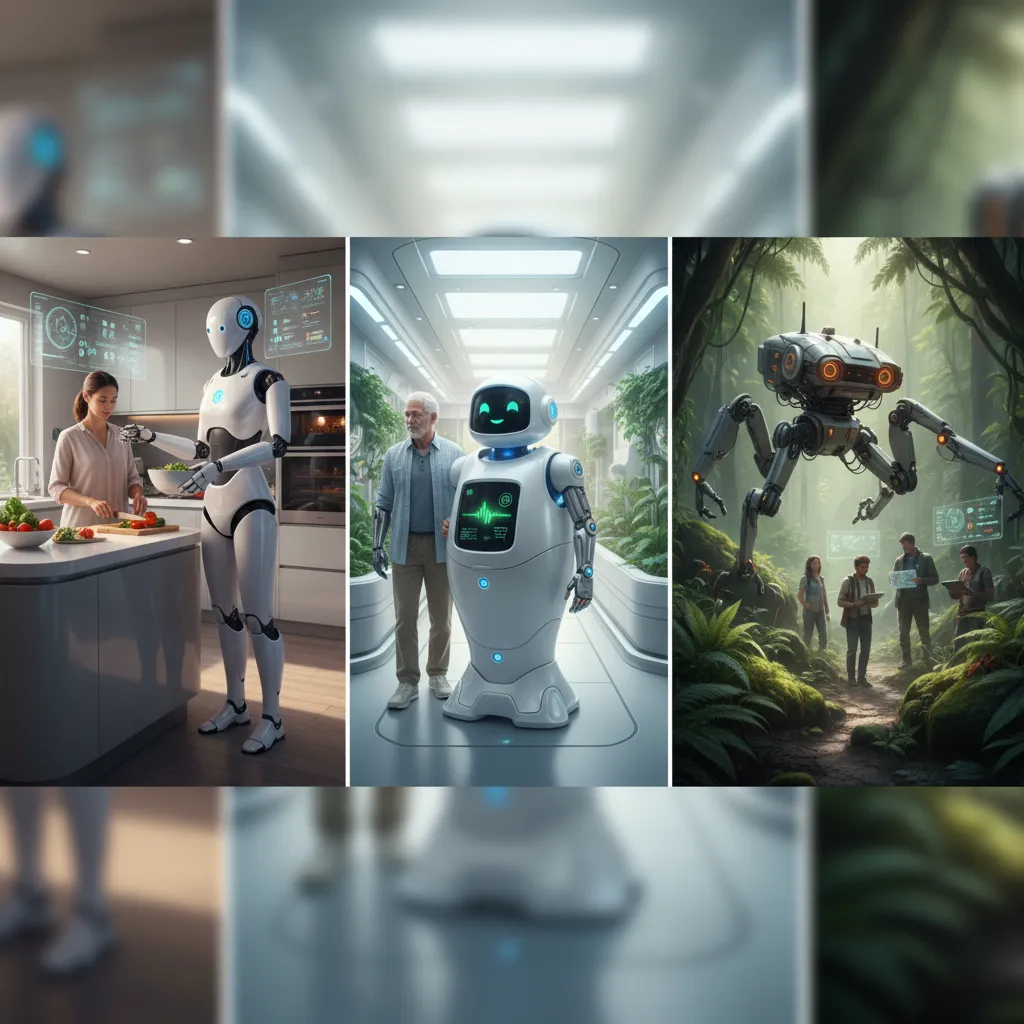
For decades, the word “robot” conjured images of giant, mechanical arms on an assembly line, performing repetitive tasks with brute precision. They were powerful but mindless, confined to the structured cages of factories. But a profound transformation is underway. The fusion of artificial intelligence and robotics is shattering those cages, unleashing a new generation of smart machines that can see, learn, and interact with the world in ways we once only dreamed of. This is the era of AI robotics, and it’s moving beyond the factory floor and directly into our lives.
The convergence of robotics and artificial intelligence is more than just an upgrade; it represents a fundamental shift in what machines can be. AI provides the “brain”—the ability to perceive, reason, and adapt—while robotics provides the “body” to physically act upon those decisions. This powerful synergy is driving an unprecedented wave of robotics innovation AI, creating machines that are not just automated but truly autonomous.
In this deep dive, we’ll explore the incredible landscape of the AI and robotics evolution. We’ll journey from the intelligent operating rooms of modern hospitals to the streets of our future smart cities, and even into the final frontiers of space. We will examine the cutting-edge technology, the tangible applications changing our world today, and the profound ethical questions we must navigate as we step into this new age.
The Great Convergence: How AI Gave Robots a Brain
To truly appreciate the current revolution, we must understand the difference between automation and autonomy. For years, industrial robots have been masters of automation. Give one a precise, repetitive task—like welding a car door—and it will execute it flawlessly a million times. However, if you move the car door by a few inches, the robot is lost. It lacks the intelligence to perceive the change and adapt.
This is where the robot AI integration changes everything. By infusing robots with AI disciplines like machine learning, computer vision, and natural language processing, we are creating machines capable of intelligent autonomy.
- Computer Vision: This gives robots the ability to “see” and interpret their surroundings. An AI-powered robot can identify objects, navigate complex and cluttered spaces, and even recognize human gestures and expressions.
- Machine Learning (ML): Instead of being explicitly programmed for every possible scenario, robot learning AI allows machines to learn from data and experience. Through trial and error (a process called reinforcement learning), a robot can teach itself to walk, grasp unfamiliar objects, or optimize a delivery route. [Related: The NVIDIA Blackwell AI Chip Is Changing Everything]
- Natural Language Processing (NLP): This allows us to communicate with robots using our own language. It’s the technology that enables you to ask a service robot for directions or instruct a home assistant to help with a recipe.
This transition from pre-programmed machines to learning-based systems is the core of intelligent automation robotics. It’s the key that unlocks the potential for robots to operate in the messy, unpredictable environments of human society.

Beyond the Assembly Line: AI Robotics in Action Today
The impact of AI on robotics is no longer theoretical. Autonomous robots applications are rapidly expanding across virtually every industry, fundamentally reshaping services, care, and exploration. Let’s look at some of the most transformative domains.
Revolutionizing Healthcare: Precision, Care, and Companionship
The medical field is one of the most exciting frontiers for AI robots in healthcare. These are not science fiction droids replacing doctors but sophisticated tools augmenting human expertise to deliver a new standard of care.
- Surgical Assistants: Platforms like the Da Vinci surgical system allow surgeons to perform complex, minimally invasive procedures with greater precision and control than humanly possible. AI enhances these systems by providing real-time data analysis and instrument tracking.
- Diagnostics and Lab Automation: AI-powered robots can analyze medical images like X-rays and MRIs to detect anomalies, often with superhuman accuracy. In labs, they automate the tedious process of sample handling and analysis, accelerating research and diagnostics. [Related: AI’s Lifesaving Leap: Revolutionizing Early Disease Detection with Smart Tech]
- Elderly Care and Companionship: As global populations age, the need for compassionate care is skyrocketing. Personal AI robots and future robot companions are being developed to assist the elderly with daily tasks, medication reminders, and mobility support. More importantly, they can provide social interaction to combat loneliness.

The Smart City and Service Robotics
Our cities are becoming complex ecosystems of data and connectivity. AI in service robotics is essential for making these urban environments more efficient, sustainable, and livable.
We’re already seeing the early stages of this with autonomous delivery drones, robotic cleaning crews that sanitize public spaces, and AI-managed traffic control systems. In the near future, fleets of autonomous taxis will reshape public transport, while robotic systems will manage waste collection and infrastructure maintenance with unparalleled efficiency. The smart robots technology behind these systems will be the invisible engine of the city of tomorrow.

At Home with AI: The Rise of Domestic Robots
The vision of the “robot butler” is slowly becoming a reality. While we’re not quite at The Jetsons level, domestic robots AI are evolving far beyond the robot vacuum. The next generation of home robots will be multi-functional platforms that can help with cooking, cleaning, home security, and managing smart home devices.
Companies are investing heavily in creating robots that can safely navigate home environments and manipulate a wide range of objects. The ultimate goal is a truly helpful personal AI robot that can handle chores, freeing up human time for more creative and meaningful pursuits.
Pushing the Final Frontier: Exploration and Environmental Monitoring
Some environments are simply too dangerous or inaccessible for humans. This is where exploration robots AI shine. The Mars rovers, like Perseverance and Curiosity, are quintessential examples of autonomous robots using AI to navigate alien landscapes, conduct experiments, and make scientific decisions light-years from home.
Closer to home, autonomous underwater vehicles (AUVs) are mapping the ocean floor and studying marine life in the crushing pressures of the deep sea. On the surface, AI-powered drones and ground robots are monitoring deforestation, tracking endangered species, and collecting critical data on climate change. These robots are our indispensable partners in understanding and protecting our planet.

The Next Generation: Peeking into the Future of Robotics AI
If today’s applications are impressive, the future of robotics AI is truly mind-bending. Several advanced robotics trends are converging to create the next generation robots that will redefine human-machine interaction.
The Humanoid Wave: Why 2024 is a Tipping Point
For years, humanoid robots were clumsy, slow, and confined to research labs. But humanoid robots 2024 are a different breed entirely. Companies like Tesla (with Optimus), Figure AI, and Sanctuary AI are making rapid progress, showcasing bots that can walk, climb stairs, and perform complex manual tasks.
Why the sudden leap?
- Advanced AI Models: The same large language and vision models powering tools like ChatGPT are giving these robots a new level of environmental understanding and reasoning. [Related: GPT-5: Release Date Rumors and Leaked Features]
- Improved Actuators: New motor and actuator technology allows for more fluid, efficient, and human-like movement.
- Simulation: AI-driven simulations allow companies to train their robots for millions of hours in a virtual world before deploying them in the real one.
The reason for the humanoid form is simple: we have built the world for humans. A robot shaped like a person can use our tools, navigate our spaces, and work alongside us without requiring a complete redesign of our environment.
From Single Bots to Swarm Intelligence
Inspired by flocks of birds and colonies of ants, swarm robotics involves deploying large numbers of simpler, cheaper robots that work together to accomplish a complex goal. No single robot is in charge; they communicate and coordinate to exhibit collective intelligence. This approach is incredibly robust—if a few robots fail, the swarm can adapt and continue its mission. Potential applications include large-scale search and rescue operations, precision agriculture, and even complex construction projects.
Soft Robotics: A Gentler Touch
Traditional robots are made of hard, rigid materials. Soft robotics takes a different approach, using flexible, compliant materials inspired by biological organisms like octopuses. This cutting edge robotics technology is perfect for tasks requiring a delicate touch, such as handling fragile goods, performing complex surgery, or safely interacting with humans.
The Big Questions: Navigating the Challenges and Ethics of AI Robotics
As this powerful technology becomes more integrated into our society, we must confront the significant challenges of AI robotics and their ethical implications. The conversation around the societal impact of AI robots is not just for scientists and philosophers; it affects us all.
The Future of Work in an Automated World
The most immediate concern for many is job displacement. The future of work robotics AI will undoubtedly involve the automation of many tasks currently performed by humans, from trucking and manufacturing to data entry and customer service.
However, history shows that technology tends to create more jobs than it destroys, albeit different kinds of jobs. The challenge lies in managing this transition. It will require a massive societal investment in education and retraining to equip the workforce with the skills needed for the new economy—roles that emphasize creativity, critical thinking, and emotional intelligence. [Related: Top AI Tools for Creativity and Productivity in 2024]
Building Trust: Safety, Security, and Robot Ethics
For us to live and work alongside autonomous machines, we must be able to trust them. This raises several critical issues in robot ethics artificial intelligence:
- Bias: If an AI model is trained on biased data, the robot will exhibit biased behavior. This is a major concern in areas like law enforcement and hiring.
- Accountability: If an autonomous robot causes an accident, who is responsible? The owner? The manufacturer? The programmer? We lack clear legal and ethical frameworks to address this.
- Security: Like any connected device, AI robots are vulnerable to being hacked. The prospect of a malicious actor taking control of a powerful physical machine is a serious security threat. [Related: AI Fraud Detection: How It’s Securing Digital Payments]
- The “Black Box” Problem: The decisions of complex AI models can be opaque, making it difficult to understand why a robot made a particular choice. This lack of transparency can be a major barrier to trust.
Navigating these ethical considerations AI robots requires a proactive, collaborative effort between technologists, policymakers, and the public to build guidelines that ensure these systems are developed and deployed safely and fairly. [Related: Ethical AI for Financial Wellness: Smart Money Habits for a Secure Future]
The Uneniable Synergy: Advantages of AI in Robotics
Despite the challenges, the reasons for pursuing this technology are compelling. The core advantages of AI in robotics promise to solve some of humanity’s biggest problems.
- Enhanced Precision and Quality: AI-powered robots can perform tasks with a level of consistency and accuracy that is impossible for humans, leading to better products and medical outcomes.
- Adaptability and Learning: Unlike single-task machines, AI powered robots can be retrained for new tasks, making them a flexible and future-proof investment.
- Safety and Hazard Removal: Robots can take on dangerous jobs—working in disaster zones, handling hazardous materials, or maintaining infrastructure in extreme environments—saving human lives.
- 24/7 Productivity: Machines don’t get tired, need breaks, or go on vacation. This allows for continuous operation in critical sectors like manufacturing and logistics.
- Data-Driven Insights: Autonomous robots are mobile data-gathering platforms. The information they collect can be analyzed by AI to optimize processes, predict failures, and generate valuable new insights.
Conclusion: Embracing Our Robotic Future, Responsibly
The AI robotics future is no longer a distant sci-fi fantasy. It is the tangible reality being built in labs and deployed in our world right now. The fusion of intelligent software with capable hardware is creating one of the most powerful technological forces in human history. From assisting surgeons and caring for our elders to exploring new worlds and managing our cities, the potential for positive impact is immense.
But this power comes with great responsibility. The path forward requires us to be as focused on the ethical, social, and economic challenges as we are on the technological breakthroughs. We must build safeguards, foster public trust, and ensure that the benefits of this revolution are shared broadly.
The age of intelligent robots is here. They are moving beyond the factories and into our lives, our homes, and our society. The question is no longer if they are coming, but how we will choose to build this future together.
Frequently Asked Questions
Q1. What is the main goal of AI in robotics?
The main goal of combining AI with robotics is to create autonomous machines that can perceive their environment, make intelligent decisions, and perform complex tasks without direct human control. This moves robots from simple, repetitive automation to flexible, adaptive autonomy, allowing them to work in unstructured and dynamic real-world settings.
Q2. What are some real-world examples of AI powered robots?
Real-world examples are increasingly common and include: autonomous surgical robots (like the Da Vinci system) that assist surgeons, warehouse robots (from companies like Amazon Robotics) that sort and move packages, autonomous vehicles and delivery drones, humanoid robots in development for general-purpose tasks (like Tesla’s Optimus), and exploration rovers on Mars.
Q3. What is the difference between AI and robotics?
Think of it as the brain versus the body. Robotics is the field of engineering focused on designing, building, and operating physical robots (the body). Artificial Intelligence (AI) is the field of computer science focused on creating software that can simulate intelligent behavior, such as learning, reasoning, and problem-solving (the brain). AI Robotics is the intersection where AI software controls a physical robot, giving it the ability to act intelligently in the physical world.
Q4. What are the biggest challenges facing AI robotics today?
The biggest challenges include: developing robust AI that can handle unpredictable “edge cases” in the real world, ensuring the safety and reliability of autonomous systems, overcoming hardware limitations (especially in battery life and power efficiency), the high cost of development, and addressing the profound ethical and societal issues like job displacement, algorithmic bias, and accountability.
Q5. Will AI robots replace humans?
AI robots will likely replace humans in many specific tasks, especially those that are repetitive, dangerous, or require superhuman precision. However, they are unlikely to replace humans entirely. The future of work will likely involve human-robot collaboration, where robots handle the tedious or physically demanding aspects of a job, freeing up humans to focus on tasks requiring creativity, strategic thinking, and emotional intelligence.
Q6. How is robot learning AI different from traditional programming?
In traditional programming, a robot’s every action must be explicitly coded by a human for a specific, known scenario. In robot learning AI, the robot learns from data or experience. Through methods like reinforcement learning, it can figure out the best way to achieve a goal through trial and error in a simulated or real environment, allowing it to adapt to new situations the programmer never foresaw.