Red Planet Reinvention: How AI & Robotics Are Fueling Martian Colonization

The dream of humanity becoming a multi-planetary species—of seeing footprints on the rusty soil of Mars—is steadily transitioning from the realm of science fiction into a tangible, engineering-led reality. For decades, the sheer scale of the challenge has been daunting. But today, a powerful partnership is emerging that promises to be the cornerstone of our next great leap: the fusion of artificial intelligence and advanced robotics. This isn’t just about sending smarter rovers; it’s about deploying an entire ecosystem of intelligent machines that will lay the groundwork for a permanent Red Planet settlement.
Martian colonization is no longer a question of if, but how. The answer lies in overcoming immense hurdles, from the perilous journey to the hostile environment where humans cannot easily survive, let alone thrive. This is where AI and robotics step in, not merely as tools, but as pioneers. They are the cartographers, the builders, the farmers, and the guardians of our future Martian frontier.
In this deep dive, we’ll explore the revolutionary space technology advancements that are making this possible. We’ll see how AI in space exploration is redefining our understanding of the planet, how robotics for Mars missions are set to construct the first off-world habitats, and how these intelligent systems will create and manage the very life support that sustains the first human explorers. Get ready to witness the blueprint for our off-world future, a future built by silicon and steel long before the first human colonists call Mars home.
The Pioneers Before the People: Autonomous Exploration and Mapping
Before the first human-Mars missions can even begin, we need an unprecedented understanding of the Martian landscape. The planet’s surface is vast, and its secrets are buried under layers of red dust. Sending humans to perform this initial reconnaissance is risky and inefficient. Instead, we send our robotic emissaries, increasingly powered by sophisticated AI that grants them a level of autonomy previously unimaginable.
The Evolution of AI-Powered Martian Rovers
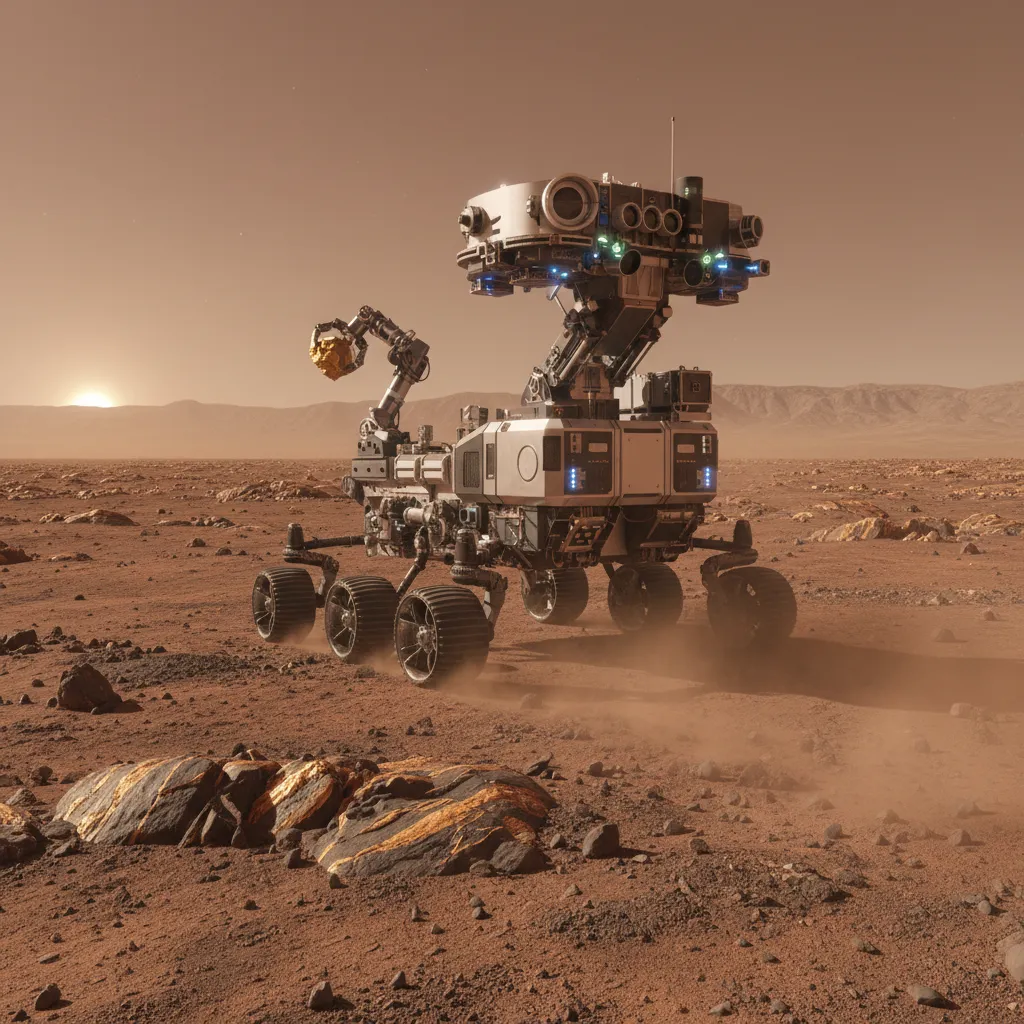
We’ve come a long way from the early, remote-controlled rovers. The lineage from Sojourner to Spirit and Opportunity, and now to Curiosity and Perseverance, marks a dramatic evolution in robotic intelligence. NASA’s Perseverance rover is a prime example of AI-powered Martian rovers in action. It’s equipped with an advanced navigation system, AutoNav, which allows it to autonomously map its path, avoid hazards, and drive faster and farther than any of its predecessors.
This autonomy is crucial. With a communication delay of up to 22 minutes each way between Earth and Mars, human operators can’t “joystick” a rover in real-time. The rover must make its own decisions. Perseverance also uses the AEGIS (Autonomous Exploration for Gathering Increased Science) system, an AI software that analyzes images from its camera to identify scientifically interesting rock formations and autonomously fire its laser to analyze their composition. This is AI in planetary science at its finest—accelerating discovery by empowering the robot to be a true field geologist.
AI-Driven Data Analysis: Uncovering Mars’s Secrets
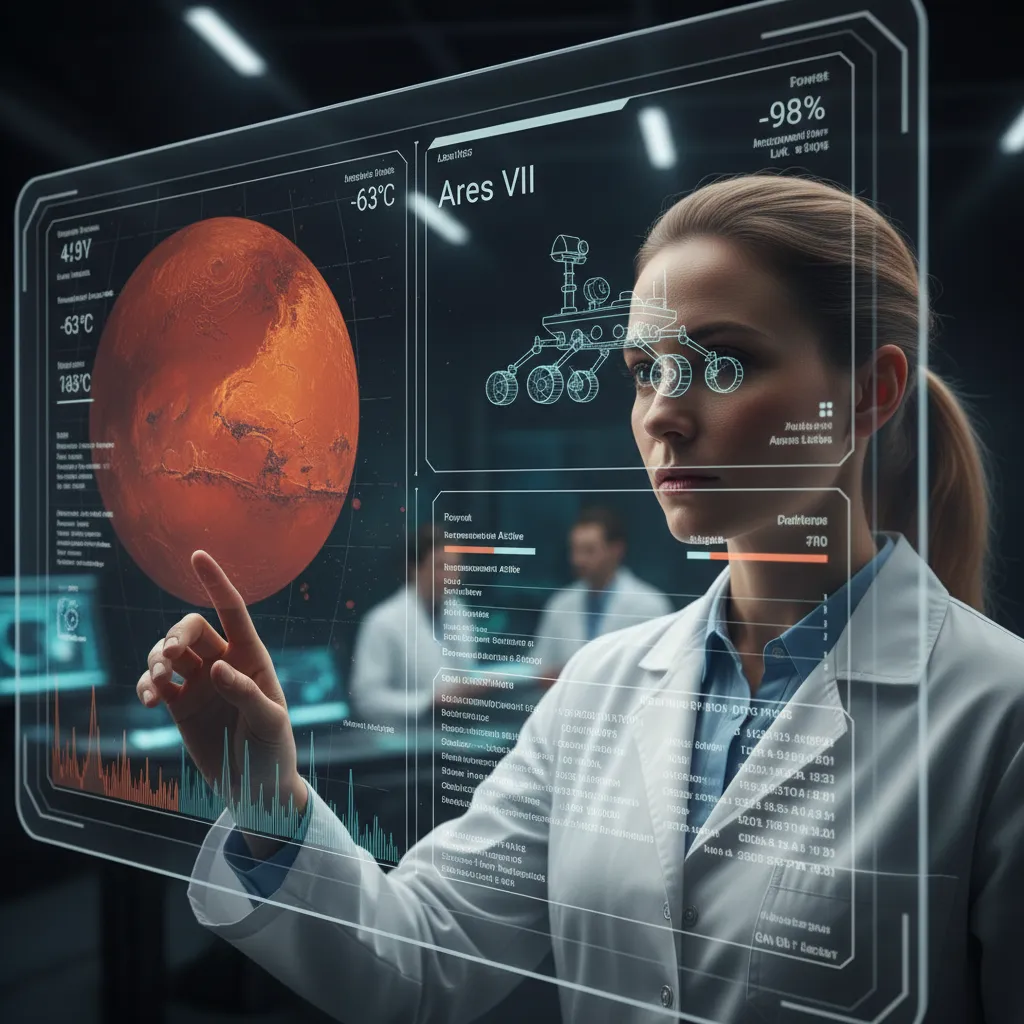
The exploration doesn’t stop at the surface. Orbiters constantly circle Mars, gathering petabytes of high-resolution imagery and data. Sifting through this deluge of information to find landing sites, identify resource deposits like water ice, or detect geological changes would be an insurmountable task for human analysts alone.
This is where machine learning algorithms excel. AI models are trained to recognize patterns in the Martian terrain, flagging potential scientific targets and resource caches that warrant a closer look. This intelligent data processing is a cornerstone of Mars mission planning AI, allowing mission scientists to make informed decisions and optimize the allocation of precious resources. By identifying the most promising locations for water extraction and shelter, AI is quite literally drawing the map for our future Mars base development.
Building a New World: Robotics and AI in Martian Construction
Once we’ve mapped the terrain and located resources, the next monumental task begins: building the future space infrastructure. Constructing habitats, power plants, and life-support facilities in an environment with extreme temperatures, thin atmosphere, and intense radiation is too dangerous for human crews. This is a job for autonomous space robots.
Swarms of Self-Building Robots
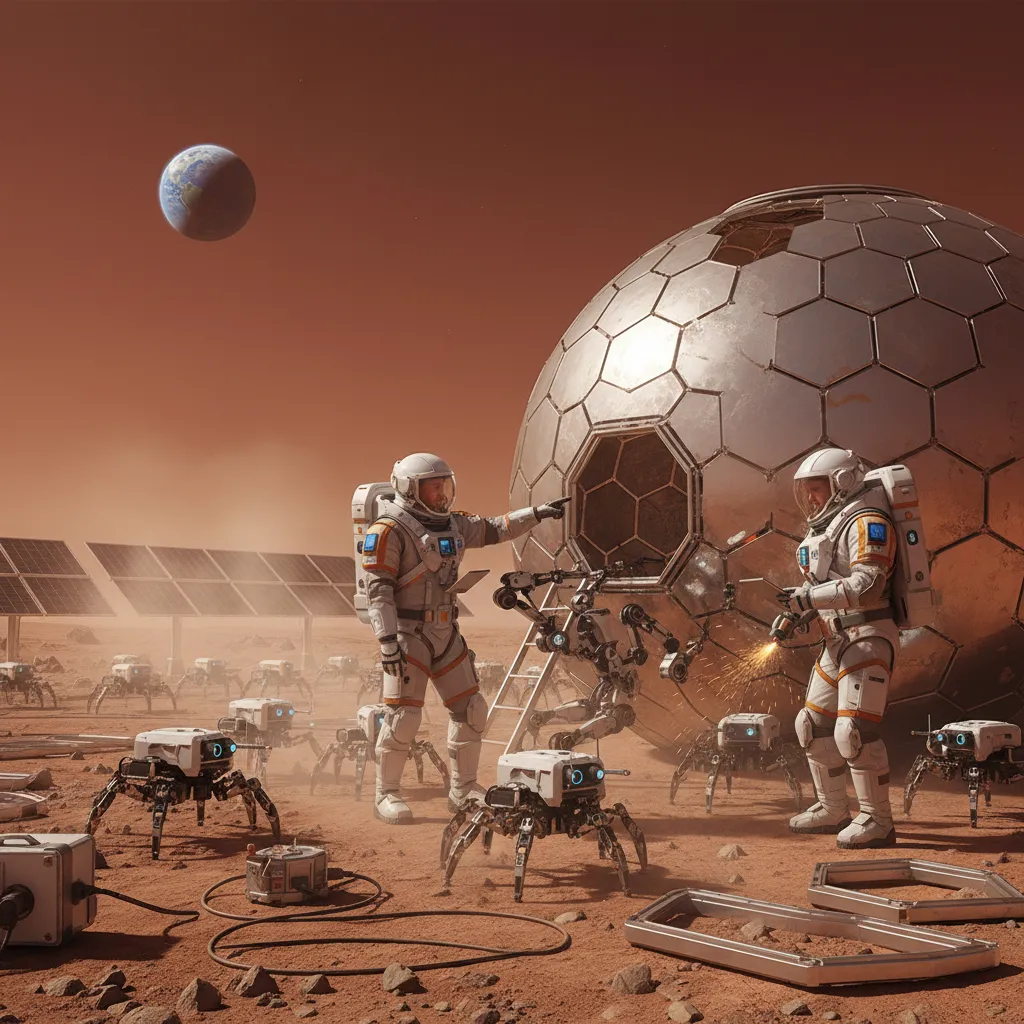
The vision for robotics for space construction often involves not single, large machines, but coordinated swarms of smaller, specialized robots. Imagine a fleet of 3D-printing rovers grinding up the iron-rich Martian regolith (soil), mixing it with a binding polymer, and additively manufacturing habitats, layer by layer.
AI would act as the conductor of this robotic orchestra. A central AI system would manage the entire construction project, assigning tasks to individual robots, optimizing their paths, managing energy consumption, and adapting the construction plan in real-time if a robot malfunctions or an unexpected obstacle is encountered. This level of advanced robotics space technology is essential for creating robust and radiation-shielded structures before humans arrive. Related: Boosting Productivity: Top AI Tools Revolutionizing Workflows & Creativity
In-Situ Resource Utilization (ISRU): Living Off the Land
The key to a sustainable Mars colony is the ability to “live off the land,” a concept known as In-Situ Resource Utilization (ISRU). Launching every kilogram of material from Earth is prohibitively expensive. Therefore, the first colonists must be able to harvest and process local resources.
This is where robotics in space mining becomes critical. AI-guided robots will be tasked with:
- Excavating Water Ice: Locating and digging for subsurface water ice, a critical source of drinking water, breathable oxygen (through electrolysis), and hydrogen for rocket fuel.
- Mineral Extraction: Identifying and mining silicon for solar panels, iron for construction materials, and other valuable minerals.
- Atmospheric Processing: Operating devices like MOXIE (Mars Oxygen In-Situ Resource Utilization Experiment) on the Perseverance rover, which has already successfully demonstrated the ability to convert Mars’s thin, carbon-dioxide-rich atmosphere into pure oxygen.
AI algorithms will optimize these extraction and processing workflows, ensuring maximum efficiency and yield, forming the backbone of a self-reliant Martian economy and paving the way for self-sustaining space habitats.
Sustaining Life 34 Million Miles from Home: AI-Managed Habitats
Once the habitats are built and humans arrive, the focus shifts to the complex challenge of keeping them alive and healthy. On Earth, we take our robust, self-regulating biosphere for granted. On Mars, every breath of air, every drop of water, and every calorie of food must be meticulously managed within a closed-loop system. This is an impossible task for humans to manage 24/7 without the tireless oversight of AI.
The AI Core: Smart Life Support Systems
The future Mars habitat will be a smart habitat, with an AI core acting as its central nervous system. These AI-driven life support systems will constantly monitor thousands of variables:
- Atmospheric Control: Regulating oxygen and nitrogen levels, scrubbing carbon dioxide, and filtering out harmful particulates.
- Water Reclamation: Purifying and recycling every drop of water from wastewater, humidity, and urine.
- Power Management: Optimizing energy distribution from solar arrays and other power sources, and predicting energy needs based on crew activity.
- Radiation Shielding: Monitoring solar flares and cosmic radiation levels, potentially adjusting active shielding systems or alerting the crew to take shelter.
The AI won’t just monitor; it will perform predictive maintenance, identifying potential equipment failures before they become catastrophic and allowing for robotic or human intervention. Related: GPT-4o: The Future of AI is Here (and it’s Free!)
The Robotic Farmer: AI in Space Agriculture
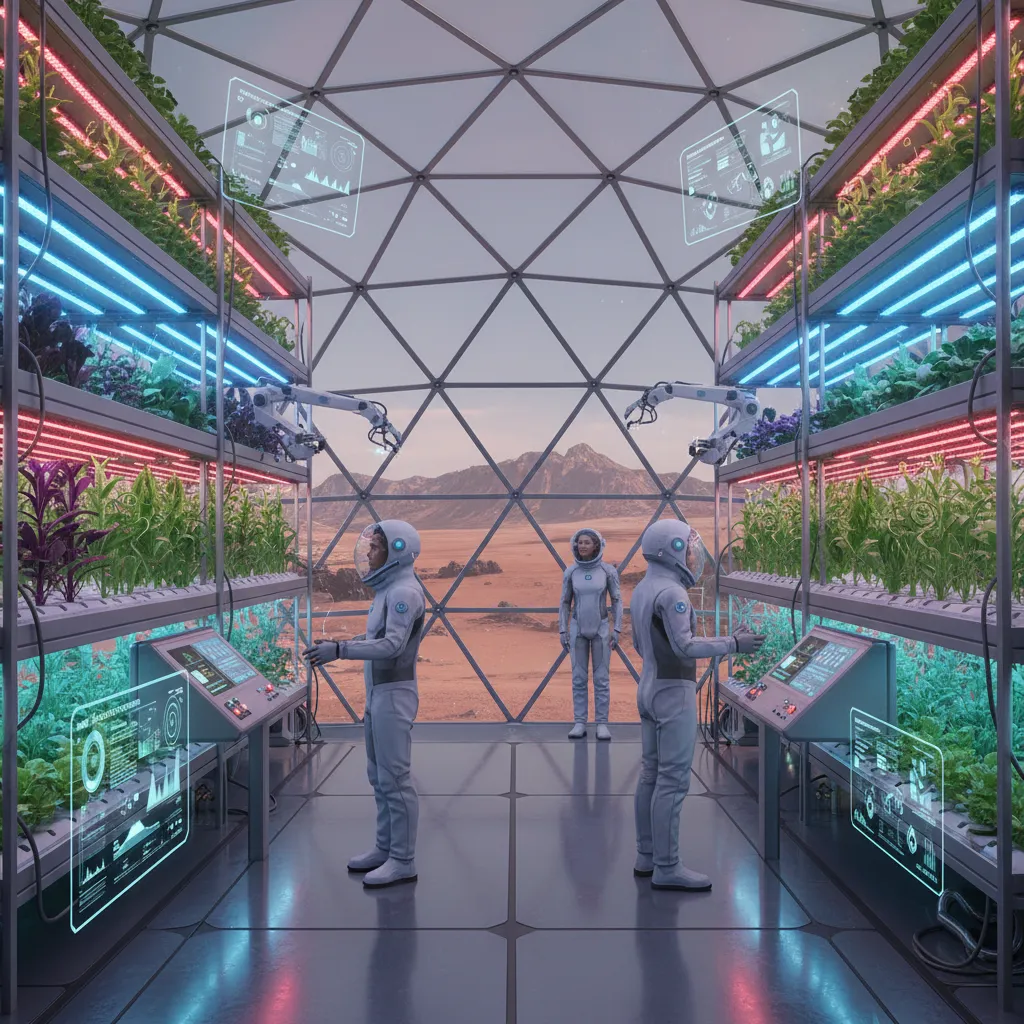
Shipping food from Earth is not a long-term solution. A sustainable colony must grow its own. Space agriculture AI will be essential for managing Martian greenhouses. In hydroponic and aeroponic farms, AI systems, paired with robotic arms and sensors, will:
- Deliver precise amounts of water and nutrients to each plant.
- Adjust multi-spectral LED lighting to optimize for different growth stages.
- Monitor plant health using hyperspectral imaging to detect signs of stress or disease early.
- Deploy robots to handle planting, pollination, and harvesting.
This level of precision agriculture will be necessary to maximize crop yields in a resource-scarce environment, ensuring the colonists have a stable and nutritious food supply.
Your Martian Medical Bay: AI for Astronaut Health
With a limited crew and no immediate access to a full terrestrial hospital, astronaut health is paramount. AI for astronaut health will serve as a digital physician. Wearable sensors will continuously monitor vital signs, and AI algorithms will analyze this data to detect early signs of illness or the negative effects of low gravity and radiation.
AI-powered diagnostic tools can analyze medical scans (like ultrasounds) and help diagnose conditions with an accuracy rivaling human experts. It can also provide guidance for medical procedures, offer mental health support through conversational agents, and personalize diet and exercise regimes to counteract muscle atrophy and bone density loss. Related: Galaxy Ring vs. Oura: The Ultimate Smart Ring Showdown
Overcoming the Great Martian Filter: Challenges and AI-Driven Solutions
The path to colonizing Mars is littered with immense challenges—what some call the “Great Filter” for an interstellar species. AI and robotics are our primary tools for navigating these obstacles.
The Tyranny of Distance: Communication Delays and AI Autonomy
The significant communication lag between Earth and Mars makes direct control of operations impossible. Every critical system, from rovers to habitat life support, must have a high degree of autonomy. This is the ultimate test for AI in extraterrestrial environments. Robots must be able to diagnose their own problems, adapt to unforeseen environmental conditions (like a sudden dust storm), and execute complex, multi-step tasks without a single command from Houston. AI for space logistics will be key, managing supply chains and resource allocation on-planet without waiting for Earth’s approval.
The Harsh Environment: Radiation, Dust Storms, and Extreme Cold
Mars is unforgiving. It lacks a global magnetic field and has a thin atmosphere, offering little protection from galactic cosmic rays and solar radiation. Global dust storms can blot out the sun for weeks, crippling solar-powered systems. AI-driven predictive models will analyze data from orbital and surface sensors to forecast these weather events, giving robots and human crews time to prepare—powering down non-essential systems, securing equipment, and taking shelter. Furthermore, next-gen space robotics will be designed to withstand these conditions, performing dangerous exterior maintenance and repairs so humans don’t have to.
The Terraforming Debate: A Long-Term Vision or a Sci-Fi Dream?
The ultimate ambition for some is Terraforming Mars—transforming the entire planet into an Earth-like world. This would involve thickening the atmosphere, warming the planet, and introducing liquid water to the surface. While this remains firmly in the realm of speculative science for the foreseeable future, AI would be indispensable in such a project. AI models could simulate the incredibly complex climatic and ecological feedback loops involved, helping scientists understand the potential consequences and feasibility of various terraforming strategies.
The Ethical Frontier: AI, Autonomy, and the Future of Off-World Living
As we delegate more critical functions to intelligent machines, we must confront the AI ethical considerations space exploration brings. When an autonomous construction robot makes a mistake that compromises habitat integrity, who is responsible? How do we program AI systems to make ethical choices in life-or-death situations?
The governance of a highly automated Martian colony, where AI manages resources and life support, raises profound questions about human agency and control. Establishing clear ethical guidelines, robust testing protocols, and ensuring “human-in-the-loop” oversight for the most critical decisions will be just as important as engineering the hardware itself. Related: The Neurotech Revolution: Unlocking the Future of Brain-Computer Interfaces
Conclusion: Our Silicon Partners on the Red Planet
The journey to Mars represents one of the most ambitious undertakings in human history. It is a challenge that tests the limits of our technology, our resilience, and our vision for the future. As we’ve seen, this monumental goal is inextricably linked to the rapid advancements in artificial intelligence and robotics.
From the first autonomous rovers charting the alien landscape to the construction swarms that will build our first homes, from the AI-driven farms that will feed us to the intelligent systems that will manage our very air and water, machines will be our essential partners. They are the enablers of off-world living, the solution to the Mars colonization challenges, and the foundation upon which a sustainable Mars colony will be built.
The reinvention of the Red Planet is underway. It is a quiet, methodical revolution led by our silicon-based emissaries, who are patiently and intelligently preparing a new world for humanity. The first human to step on Mars will not be taking a solitary step for mankind, but rather, the final step in a long, collaborative journey with the intelligent machines that went before them.
FAQs
Q1. How will AI help colonize Mars?
AI is fundamental to Martian colonization by enabling autonomy in robotics, which is crucial due to the communication delay with Earth. AI will manage robotic exploration, construction of habitats using local materials, control life support systems, optimize agriculture in controlled environments, and assist with astronaut health monitoring and diagnostics.
Q2. What are the biggest challenges of living on Mars?
The primary challenges include high levels of solar and cosmic radiation, an extremely thin atmosphere composed mostly of CO2, extreme temperature fluctuations (-125°C to 20°C), global dust storms, and the psychological and physiological effects of isolation and low gravity on the human body.
Q3. Can robots build a base on Mars before humans arrive?
Yes, this is a leading strategy for Mars base development. Sending swarms of AI-coordinated construction robots to build habitats, power grids, and landing pads using 3D printing and local Martian soil (regolith) before humans arrive significantly reduces the risk to the first astronauts and ensures a safe, operational base is ready upon their arrival.
Q4. What is ISRU and why is it important for Mars?
ISRU stands for In-Situ Resource Utilization. It’s the concept of “living off the land” by harvesting and processing local resources. For Mars, this means extracting water ice for drinking water and rocket fuel, mining minerals for construction, and generating oxygen from the atmosphere. ISRU is critical for creating a sustainable and self-sufficient colony, as it drastically reduces the mass and cost of supplies that must be launched from Earth.
Q5. How will we grow food on Mars?
Food on Mars will be grown in enclosed, climate-controlled environments like hydroponic or aeroponic farms. Space agriculture AI will manage these systems, using sensors and robots to provide plants with precise amounts of light, water, and nutrients, while also monitoring for disease. This method is water-efficient and allows for high-yield food production in a small footprint.
Q6. What are AI-powered Martian rovers?
AI-powered Martian rovers, like NASA’s Perseverance, are robotic explorers equipped with advanced AI software that allows them to make decisions independently. This includes navigating complex terrain autonomously (AutoNav), identifying scientifically interesting targets for analysis without human command (AEGIS), and managing their own operational health. This autonomy is vital for efficient exploration given the long communication delays between Mars and Earth.