AI’s Green Revolution: Regenerative Agriculture & Sustainable Farming
Introduction
We stand at a critical crossroads. The global food system, while a marvel of modern productivity, is straining under the weight of a booming population, climate change, and decades of soil degradation. Traditional farming methods have often prioritized yield at the expense of ecological health, leading to depleted soils, loss of biodiversity, and a heavy carbon footprint. But what if we could farm with nature instead of against it, using the most advanced technology to restore our planet’s health?
This is not a far-off dream; it’s the heart of a powerful movement where two revolutionary concepts converge: regenerative agriculture and Artificial Intelligence (AI). Regenerative agriculture offers a philosophy rooted in ecological restoration, aiming to rebuild soil, capture carbon, and enhance biodiversity. AI provides the digital intelligence—the precision, predictive power, and analytical insight—to make these practices not just viable but scalable and highly efficient.
In this deep dive, we’ll explore how this synergy is sparking a green revolution. You’ll learn how AI farming technology is moving beyond simple automation to become a critical partner in creating truly sustainable food systems. From smart sensors that listen to the soil’s heartbeat to drones that act as guardians of biodiversity, we are witnessing the dawn of climate-smart agriculture. This is the story of how data is becoming our most valuable crop, nurturing the future of agriculture one intelligent decision at a time.
Beyond Sustainability: What is Regenerative Agriculture?
Before we plug in the technology, it’s crucial to understand the philosophy it serves. For years, “sustainability” has been the buzzword. Sustainable farming practices aim to maintain the status quo—to farm in a way that doesn’t further deplete resources. It’s a noble and necessary goal.
However, regenerative agriculture argues that maintaining a degraded system isn’t enough. We need to actively heal and improve it. It’s a holistic approach that views the farm as an entire ecosystem, focusing on rebuilding what’s been lost.
The core principles of regenerative agriculture often revolve around these key practices:
- Minimize Soil Disturbance: Reducing or eliminating tilling (no-till farming) keeps the soil structure intact, preventing erosion and protecting the complex web of microbial life within it.
- Maximize Crop Diversity: Moving away from monocultures, regenerative farms use crop rotation, cover crops, and intercropping to mimic natural ecosystems. This practice, known as biodiversity farming, naturally breaks pest cycles and enriches the soil.
- Keep the Soil Covered: Bare soil is vulnerable soil. Planting cover crops between cash crop seasons protects against erosion, suppresses weeds, and adds organic matter back into the ground.
- Maintain Living Roots: A constant presence of living roots in the soil feeds the essential microorganisms that create healthy, nutrient-rich topsoil.
- Integrate Livestock: When managed properly, grazing animals can stimulate plant growth, cycle nutrients through manure, and improve soil structure, creating a closed-loop system.
The ultimate goals are profound: create resilient farms that can withstand droughts and floods, drastically improve ai for soil health, and turn agricultural land from a carbon source into a massive carbon sink through carbon sequestration farming.
The Digital Seed: How AI is Powering the Regenerative Shift
If regenerative agriculture is the ecological blueprint, then AI is the master architect making it possible on a global scale. The challenge with regenerative farming has always been its complexity. Managing a diverse ecosystem requires immense knowledge, constant observation, and adaptive decision-making. This is where machine learning in farming and farm data analytics change the game.
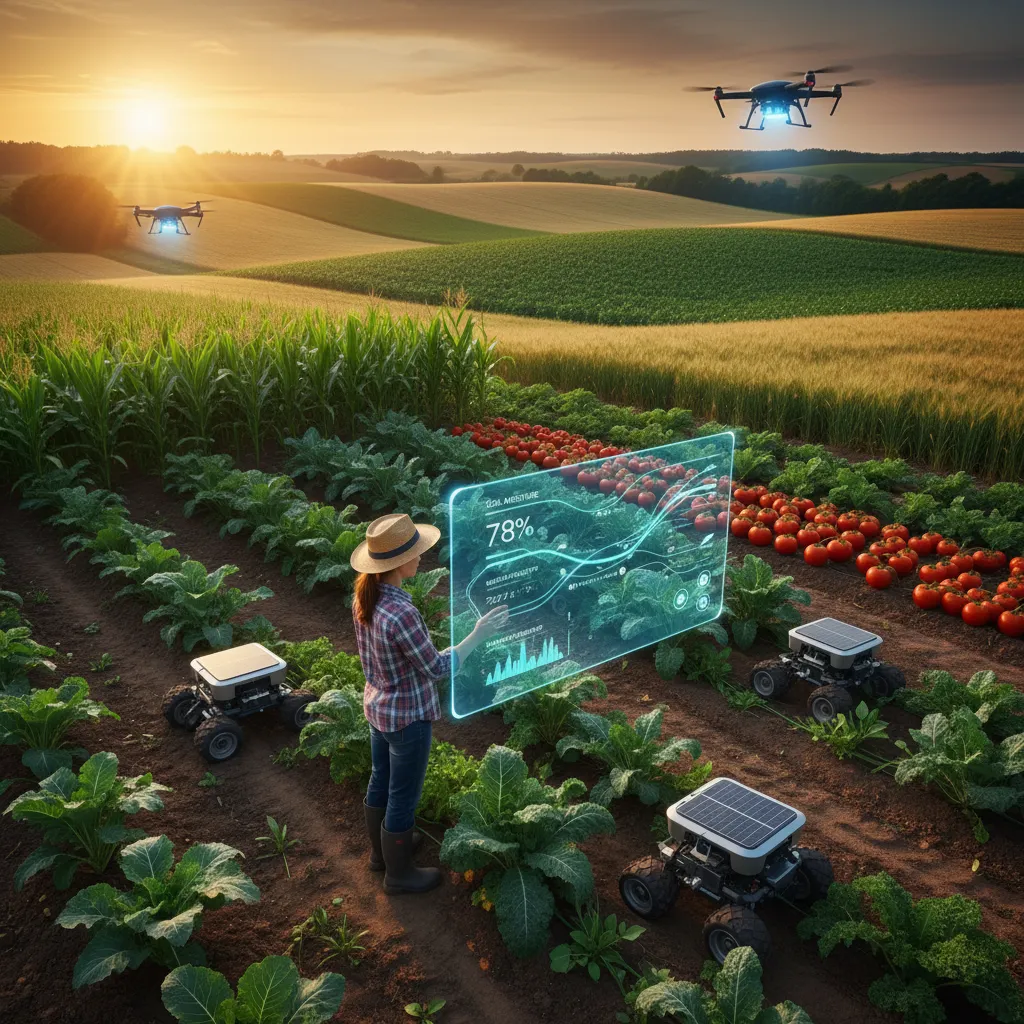
AI acts as a central nervous system for the farm, processing vast amounts of data from countless sources—sensors in the soil, cameras on drones, weather satellites, and historical yield maps. This creates a dynamic, living model of the farm, enabling farmers to make hyper-informed decisions that align perfectly with regenerative goals. It’s the ultimate fusion of ancient wisdom and futuristic tech.
Related: AI’s Green Revolution: Sustainable Tech for a Smarter Planet
Rebuilding the Foundation: AI for Soil Health and Carbon Sequestration
The foundation of all life on land is soil. Regenerative agriculture’s primary focus is on rebuilding this vital, living ecosystem. AI provides the microscopic and macroscopic vision needed to manage it with unprecedented precision.
Historically, soil analysis was a slow, manual process. A farmer would take a few samples, send them to a lab, and get a report weeks later. Today, smart farming solutions offer a real-time pulse. In-ground sensors powered by AI can continuously monitor key metrics like moisture levels, temperature, nutrient composition, and even microbial activity. Machine learning algorithms analyze this stream of data to provide a complete picture of the soil’s condition.

This technology directly supports regenerative organic farming by:
- Optimizing Cover Crops: AI models can recommend the best cover crop mixes based on soil conditions and the needs of the upcoming cash crop, maximizing nutrient cycling.
- Guiding No-Till Practices: By understanding soil compaction levels through sensor data, AI can help farmers fine-tune their no-till equipment for optimal seed placement without disturbing the soil structure.
- Measuring Carbon Sequestration: This is a game-changer. AI platforms can analyze soil data and satellite imagery to accurately model and measure the amount of carbon being stored in the soil. This not only verifies the environmental benefits but also opens the door for farmers to earn income from carbon credits.
Precision Agriculture AI: Giving Plants Exactly What They Need, Nothing More
Precision agriculture AI is the art of micro-managing a farm. It’s about moving from broad, uniform applications of water, fertilizer, and pest control to a targeted, prescriptive approach. This perfectly aligns with the regenerative goal of minimizing external inputs and reducing environmental impact.
- AI Water Management Agriculture: Water is a precious resource. Precision irrigation AI systems use predictive analytics, combining real-time soil moisture data with AI-driven weather forecasts. The system knows exactly when a specific part of a field needs water and delivers the precise amount, preventing waste and ensuring crops are never stressed.
- Smart Pest Control Farming: Instead of blanketing fields with pesticides, which harms beneficial insects and soil life, AI enables a “see and spray” approach. Drones or tractor-mounted cameras with computer vision can identify specific weeds or insect infestations in real-time. This triggers a micro-sprayer to apply a targeted dose of an organic-approved treatment only where it’s needed, leaving the surrounding ecosystem untouched.
- Variable Rate Fertilization: AI algorithms create detailed “nutrient maps” of a field. This data guides smart spreaders to apply more organic compost or nutrients in areas that are deficient and less in areas that are already rich, ensuring optimal plant health without the runoff pollution associated with over-fertilizing.
Related: The Rise of AI Robots: How Intelligent Machines are Reshaping Our World
The View from Above: Drone Farming Technology and Crop Monitoring AI
Drone farming technology offers a perspective that was once impossible. Equipped with multispectral, hyperspectral, and thermal cameras, these autonomous flying scouts patrol fields, collecting incredibly detailed imagery. But the real magic happens when crop monitoring AI analyzes these images.
The AI can detect subtle changes in the color and temperature of plant leaves that are invisible to the human eye. This allows for the early detection of:
- Nutrient Deficiencies: Is a patch of corn lacking nitrogen? The AI will spot it weeks before it becomes a visible problem.
- Water Stress: The system can identify areas of the field that are beginning to dehydrate, allowing for preemptive irrigation.
- Disease and Pests: AI can recognize the unique visual signatures of different blights, fungi, or pest infestations, enabling rapid and targeted intervention.
This level of agricultural innovation is crucial for managing the complex, diverse planting schemes of biodiversity farming. An AI can simultaneously monitor the health of a dozen different species in the same field, a task that would be overwhelming for a human.

The Automated Harvest: The Robotic Farming Future
While AI provides the brains, robotics provides the brawn. The robotic farming future isn’t about replacing farmers; it’s about equipping them with tools to perform regenerative tasks with superhuman precision and endurance. This wave of automated agriculture is making difficult practices more feasible.
- Robotic Weeding: Small, autonomous robots can roam fields 24/7, using computer vision to identify weeds and eliminate them mechanically or with a targeted micro-dose of herbicide. This is a revolutionary tool for organic farmers and a massive step towards eliminating broadcast herbicides.
- Precision Planting and Seeding: Robots can plant seeds at the perfect depth and spacing, a critical factor in no-till systems. They can also multi-seed, planting cash crops and cover crops simultaneously with an efficiency that is simply not possible manually.
- Data-Driven Harvesting: AI-powered harvesters can assess the ripeness of individual fruits or vegetables, ensuring that each one is picked at its peak. This reduces food waste and improves the quality of produce reaching the consumer.
This shift also has implications for ethical agriculture. By automating the most physically demanding and repetitive tasks, farming can become a safer and more appealing profession, focusing human talent on ecosystem management, data analysis, and strategic planning.

Related: The Future is Now: AI Revolutionizing Personalized Learning & Education
Beyond the Field: AI’s Role in the Broader Sustainable Food System
The impact of ai in food production extends far beyond the farm gate. AI is helping to build more resilient, efficient, and transparent sustainable food systems from seed to shelf.
- Vertical Farming AI: In urban centers, vertical farms are growing produce year-round in stacked layers, drastically reducing land use and “food miles.” AI is the central operating system for these facilities, meticulously controlling LED lighting, nutrient delivery, and climate to optimize growth for hundreds of different crops.
- Supply Chain Optimization: One of the biggest problems in our food system is waste. AI algorithms analyze everything from weather patterns and historical yield data to consumer purchasing trends and shipping logistics. This allows them to predict demand with incredible accuracy, helping farmers grow what’s needed and ensuring produce moves from the farm to the store with minimal spoilage.
- Enhanced Food Traceability: Using blockchain and AI, consumers can scan a QR code on a product and see its entire journey—from the specific field it was grown in to the regenerative practices used by the farmer. This transparency builds consumer trust and empowers them to support eco-friendly farming.
These digital agriculture trends are creating a globally connected, locally responsive food network where resources are used more intelligently than ever before.

Overcoming the Hurdles: Challenges on the Road to Future Farms AI
The vision of AI-powered regenerative agriculture is compelling, but the path isn’t without obstacles. The widespread adoption of these agritech solutions faces several key challenges:
- High Initial Cost: The capital investment for drones, robots, and advanced sensor networks can be prohibitive, especially for small and medium-sized farms.
- Data Connectivity: Many rural farming areas lack the reliable, high-speed internet required to upload and process the massive datasets generated by AI systems.
- The Skills Gap: Operating these advanced systems requires a new set of skills. There’s a growing need for training programs to equip farmers and agronomists with expertise in data science, robotics, and AI management.
- Data Ownership and Security: Who owns the vast amounts of data generated on a farm? Ensuring data is secure and that farmers retain control over their information is a critical ethical and legal issue.
Addressing these challenges is paramount. A growing ecosystem of agricultural AI startups is working to develop more affordable and user-friendly technologies. Simultaneously, governments and private organizations are investing in rural broadband infrastructure and educational initiatives to ensure this green revolution is accessible to all.
Related: AI in Finance Apps: Revolutionizing Personal Wealth in 2024
Conclusion
The fusion of regenerative agriculture and artificial intelligence is more than just an agricultural innovation; it’s a fundamental reimagining of our relationship with the land. We are moving away from an industrial model of extraction and toward an ecological model of stewardship, empowered by intelligent technology.
AI is the catalyst that makes the principles of regenerative farming—soil health, biodiversity, carbon capture—not just idealistic goals but practical, profitable realities. It provides the insight to work in harmony with nature’s complexity, optimizing for both yield and ecological restoration. This is the future of agriculture: a system that is resilient, productive, and deeply connected to the health of our planet.
The seeds of this revolution are already being sown in fields around the world. As these technologies become more accessible, we are set to witness a transformation that will feed our growing population, heal our soils, and build a truly sustainable future for generations to come.
Frequently Asked Questions (FAQs)
Q1. What is the main goal of regenerative agriculture?
The main goal of regenerative agriculture is to go beyond simply sustaining resources and to actively improve and restore the health of the entire farm ecosystem. This includes rebuilding soil organic matter, increasing biodiversity, improving the water cycle, and sequestering carbon from the atmosphere back into the soil.
Q2. How does AI help in farming?
AI helps in farming by providing data-driven insights and automation. It analyzes data from sensors, drones, and satellites to help farmers make precise decisions about irrigation, fertilization, and pest control. AI also powers robots for tasks like planting and weeding, increasing efficiency and reducing the need for chemical inputs.
Q3. What is the difference between precision agriculture and regenerative agriculture?
Precision agriculture is a methodology that uses technology (like GPS, sensors, and AI) to manage variations within a field to optimize inputs and increase efficiency. Regenerative agriculture is a holistic philosophy focused on improving ecosystem health. The two are highly compatible; precision agriculture AI is a powerful tool used to effectively implement the principles of regenerative farming.
Q4. Can AI help reduce the environmental impact of farming?
Absolutely. AI significantly reduces farming’s environmental impact by enabling precision. AI water management agriculture cuts water waste, smart pest control farming minimizes pesticide use, and AI-guided fertilization prevents chemical runoff into waterways. Furthermore, AI helps manage practices that lead to carbon sequestration, actively fighting climate change.
Q5. What are some examples of AI farming technology?
Examples include:
- Computer Vision Systems on drones and robots that identify weeds, pests, and plant diseases.
- Predictive Analytics that forecast crop yields, disease outbreaks, and irrigation needs based on weather and soil data.
- Machine Learning Algorithms that analyze soil sensor data to recommend specific nutrient and cover crop strategies.
- Autonomous Robots for precise seeding, weeding, and harvesting.
Q6. What are the challenges of implementing AI in agriculture?
The primary challenges include the high initial cost of technology, the lack of reliable internet connectivity in many rural areas, a skills gap requiring new training for farmers, and concerns over data privacy and ownership.
Q7. Is AI making farming more sustainable?
Yes, AI is a key driver in making farming more sustainable and even regenerative. By optimizing the use of resources like water and fertilizer, minimizing the need for harmful chemicals, and providing the data needed to improve soil health, AI farming technology is essential for building the eco-friendly farming systems of the future.