AI-Powered Smart Homes: Your Guide to Sustainable Living

Introduction
Imagine a home that doesn’t just respond to your commands, but anticipates your needs. A home that learns your routine, optimizes its own energy consumption, and actively works to reduce your environmental footprint without you lifting a finger. This isn’t a scene from a sci-fi movie; it’s the reality of the AI smart home, a revolutionary step towards a more sustainable future.
The conversation around smart homes has evolved far beyond the novelty of voice-activated light bulbs. Today, it’s about creating a truly intelligent home system—a dynamic, connected ecosystem that leverages the power of Artificial Intelligence to make our living spaces not only more convenient but also fundamentally more eco-friendly. This guide will explore how integrating AI into our homes is becoming one of the most powerful tools in the pursuit of sustainable living tech, transforming our houses into efficient, eco-conscious havens.
We’ll dive deep into how AI home management works, from slashing energy bills with predictive automation to conserving water and even minimizing household waste. You’ll discover the tangible benefits, the key technologies driving this change, and how you can start building your own eco-friendly smart home.
The Convergence of Intelligence and Sustainability: What is an AI-Powered Green Home?
At its core, a sustainable AI smart home is more than just a collection of connected gadgets. It’s a cohesive connected home ecosystem where devices communicate not only with you but with each other, all orchestrated by a central AI brain.
Unlike traditional home automation, which relies on pre-programmed “if-this-then-that” rules, AI introduces learning and adaptation. An AI smart home uses machine learning algorithms to analyze vast amounts of data—your daily habits, real-time weather forecasts, local energy grid demand, and sensor readings from around the house.
This allows the system to move from being reactive to proactive, or even predictive. It doesn’t just turn the heat down when you leave; it learns your schedule and starts adjusting the temperature before you walk out the door. It doesn’t just water the lawn on a timer; it checks the weather forecast and soil moisture to prevent unnecessary water use. This is the essence of smart home sustainability: using intelligence to eliminate inefficiency and waste.
The Brains Behind the Green: How AI Revolutionizes Home Efficiency
So, how exactly does AI achieve this? The magic lies in its ability to process patterns and make optimized decisions, a process we can break down into three key functions:
- Learning and Pattern Recognition: Your home’s AI continuously gathers data from smart thermostats, light sensors, motion detectors, and smart appliances. It learns when you wake up, when you leave for work, which rooms you use most often, and even your temperature preferences. This creates a dynamic profile of your household’s unique rhythm.
- Predictive Automation: Armed with this data, the AI transitions to predictive home automation. It anticipates needs rather than just reacting to them. For example, it can predict a heatwave and pre-cool your home during off-peak energy hours when electricity is cheaper and greener. This is a core principle of AI home energy optimization.
- Real-Time Optimization: The system is constantly making micro-adjustments. It might dim the lights in an empty room, alert you that you’ve left a window open while the AC is running, or adjust the washing machine’s cycle to use less water and energy. This relentless pursuit of efficiency is what delivers significant reductions in resource consumption and drives AI enhanced home efficiency.
Core Pillars of a Sustainable Smart Home
An eco-conscious smart home focuses its intelligence on several key areas where the potential for resource savings is greatest. These pillars form the foundation of modern green home technology.
Intelligent Energy Management: Slashing Your Carbon Footprint
Energy consumption is the largest contributor to a home’s carbon footprint. AI powered energy management tackles this head-on, creating truly energy efficient homes.
The most prominent player here is the AI-powered smart thermostat. Devices like the Nest Learning Thermostat or the Ecobee SmartThermostat go far beyond simple scheduling. They learn your preferences within a week and then build a dynamic schedule that balances comfort and efficiency. They use geofencing to detect when you’ve left home and automatically switch to an “Away” mode. Furthermore, they can pull data from local utilities to cool or heat your home when energy is cheapest and cleanest.
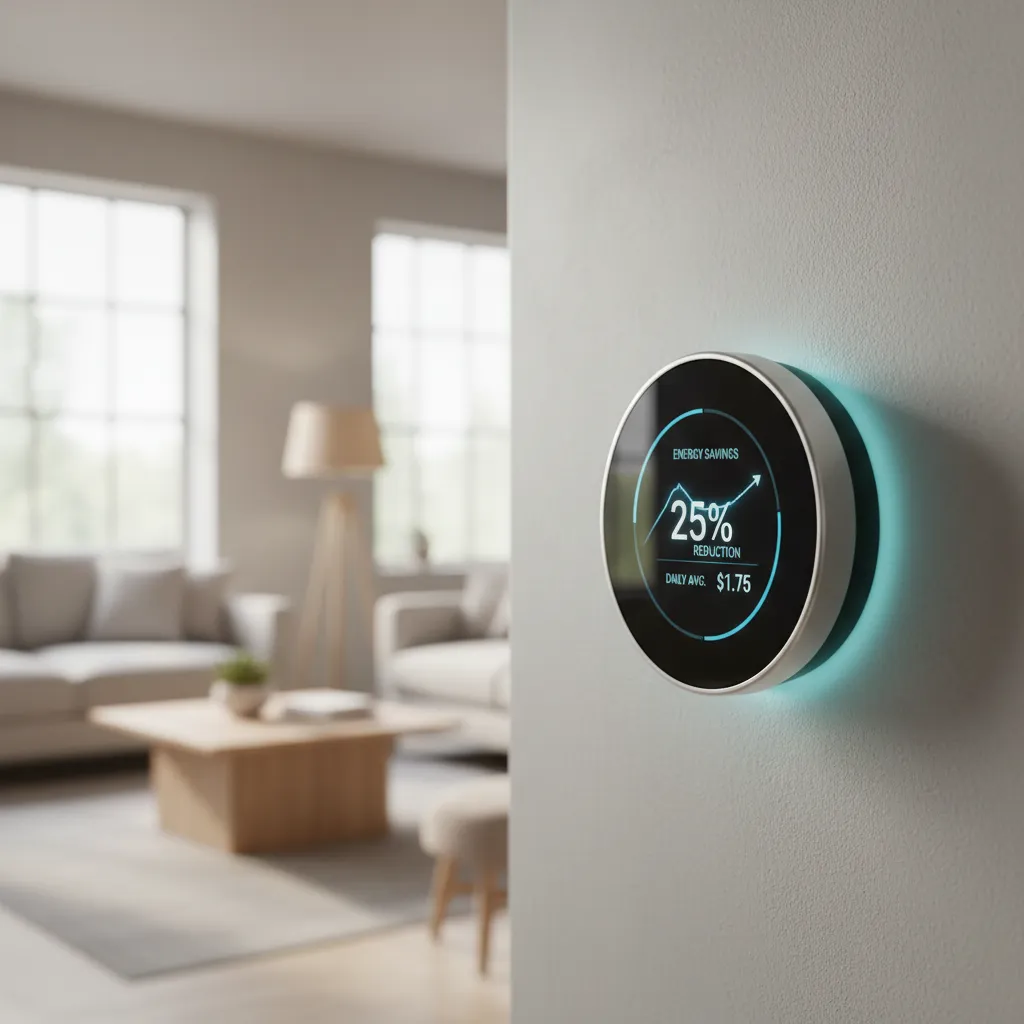
Smart lighting sustainability is another crucial component. AI systems can use motion sensors and natural light sensors to ensure lights are only on when and where they’re needed, and at the appropriate brightness. The system learns which rooms are used at what times, automating the entire process and eliminating the energy wasted by forgotten lights.
Beyond climate and lighting, AI can optimize the use of major appliances. A smart home energy management system can schedule high-consumption tasks like running the dishwasher or charging an electric vehicle for off-peak hours, reducing strain on the grid and lowering your bills. When integrated with a home’s solar panels, the AI can prioritize running appliances when you’re generating free, clean energy, a cornerstone of any renewable energy smart home.
Related: A Complete Guide to Energy-Efficient Smart Homes
Smart Water Conservation: Every Drop Counts
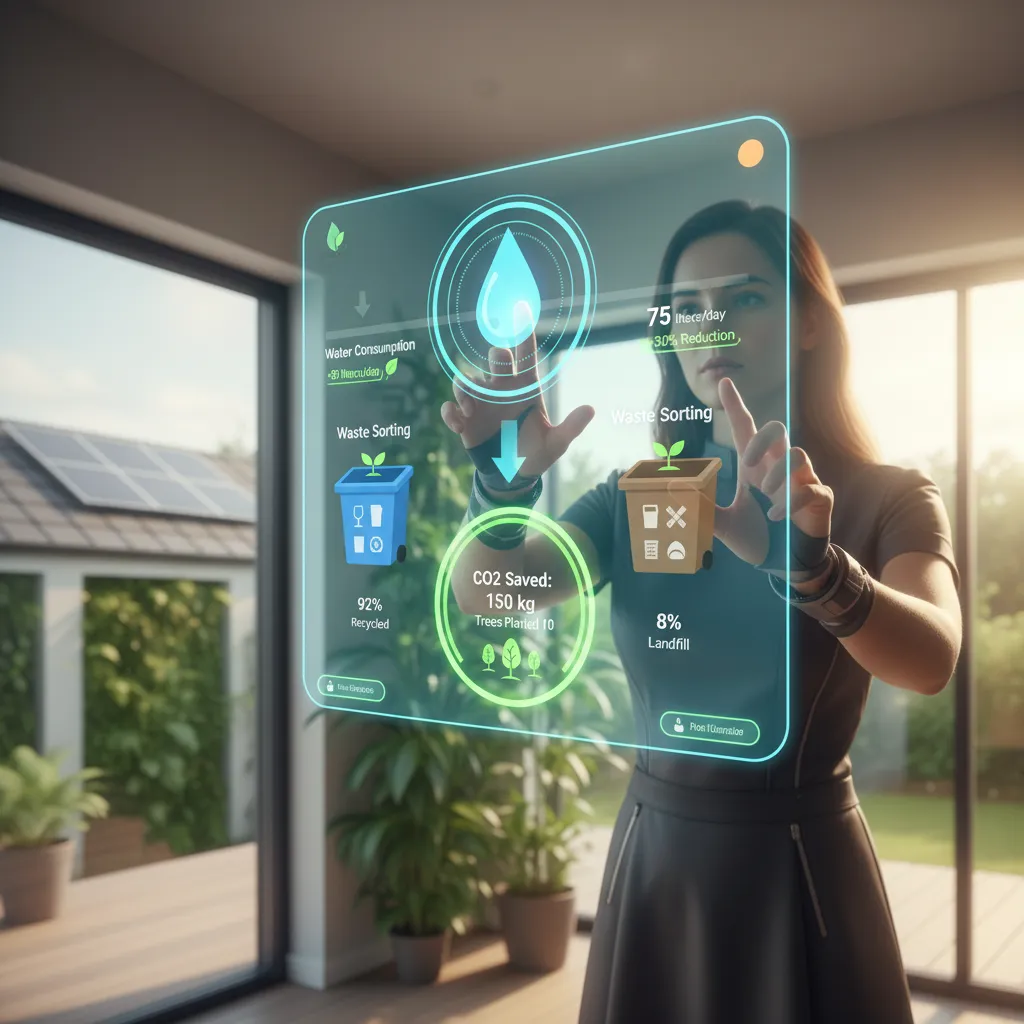
Water is a precious resource, and AI for energy saving principles extend to H2O as well. Water conservation smart home technology uses AI to dramatically reduce waste both indoors and outdoors.
- Intelligent Irrigation: Smart sprinkler controllers like those from Rachio or Wyze use AI to create dynamic watering schedules. They pull data on local weather—factoring in past and future rainfall, wind, and humidity—to deliver the precise amount of water your lawn needs, and not a drop more. This can reduce outdoor water usage by up to 50%.
- Leak Detection and Prevention: AI-powered water monitors can be attached to your home’s main water line. They learn your home’s typical water flow patterns and can instantly detect abnormalities, such as a burst pipe or a running toilet. The system can then alert your phone and, in some cases, automatically shut off the water main to prevent catastrophic damage and waste.
- Usage Insights: These systems provide granular data on your water consumption, allowing you to see exactly where it’s going. This insight helps identify behaviors and fixtures that are wasting water, empowering you to make targeted changes.
Towards a Zero-Waste Household: AI in Waste Management
The concept of a zero waste smart home is an exciting frontier in sustainable living, and AI is playing a pivotal role. The goal is to minimize what goes to the landfill through smarter consumption and disposal.
AI can help by analyzing your purchasing habits to reduce food waste. Smart refrigerators can track expiration dates and suggest recipes to use up ingredients before they spoil. Some systems can even help generate a shopping list based on what you actually consume, preventing over-buying.
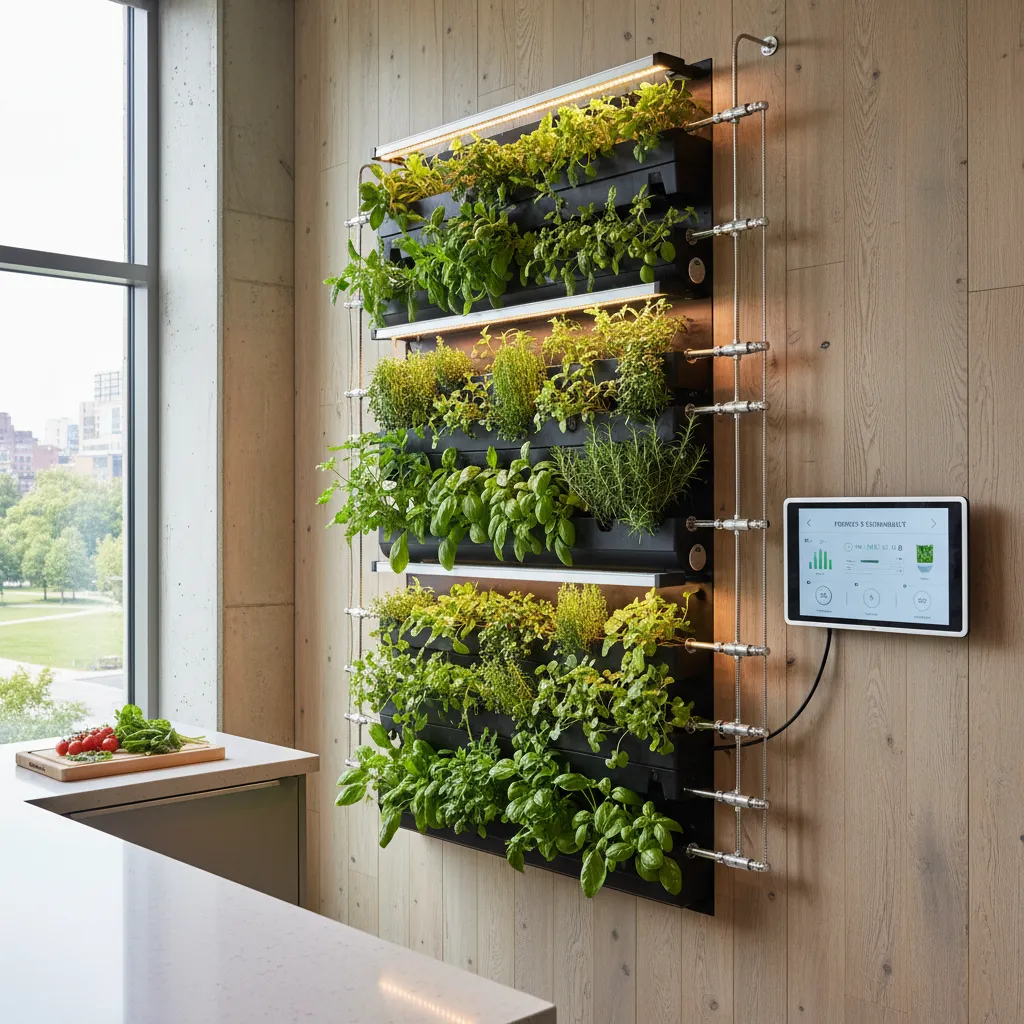
Another fascinating application is in urban gardening. AI-powered indoor vertical gardens can automate lighting, watering, and nutrient delivery, making it effortless to grow your own herbs and produce year-round. This not only reduces food miles to zero but also cuts down on packaging waste from store-bought goods.
Creating a Healthier Indoor Environment
Sustainability isn’t just about the planet; it’s also about our personal well-being. AI contributes here by managing indoor air quality. Smart air purifiers can monitor for pollutants, dust, and allergens, automatically activating when needed. AI-controlled blinds can optimize the amount of natural light entering your home, reducing the need for artificial lighting while also helping to regulate indoor temperature. A healthy home environment is a key, and often overlooked, benefit of an intelligent ecosystem.
Related: AI Tools for Personal Wellness and Mental Health
The Benefits: Why an Eco-Conscious Smart Home is a Smart Investment
Adopting smart home automation for sustainability offers a compelling range of advantages that benefit your wallet, the planet, and your lifestyle.
- Significant Cost Savings: This is often the most immediate and tangible benefit. Optimized energy and water usage directly translates to lower monthly utility bills. The savings from an AI thermostat alone can often pay for the device within a couple of years.
- Reduced Environmental Impact: By consuming less energy and water, you directly lower your household’s smart home carbon footprint. This contributes to reduced greenhouse gas emissions and less strain on natural resources.
- Unmatched Convenience and Comfort: A home that adapts to you is the pinnacle of comfort. Imagine your house warming up just as you’re heading home from work, or your blinds slowly opening to wake you with natural light. This is the effortless lifestyle that smart living solutions provide.
- Enhanced Home Value: As awareness of climate change and energy costs grows, homes equipped with future proof home tech are becoming more desirable. Energy-efficient and sustainable features are a strong selling point that can increase property value.
- Actionable Insights: AI home systems provide you with data. You can see exactly how much energy you’re using and where you can improve. This empowers you to make smarter, more conscious decisions about your consumption habits.
Building Your Sustainable Smart Home: Getting Started
The idea of transforming your entire home can feel daunting, but integrating AI for eco living is a journey, not a destination. You can start small and build your ecosystem over time.
- Start with a Hub: The first step is to choose a central ecosystem, like Amazon Alexa, Google Home, or Apple HomeKit. This hub will act as the command center for all your sustainable smart devices.
- Focus on High-Impact Areas: Begin with the technology that offers the biggest return on investment for sustainability. A smart thermostats AI is the undisputed champion here. Smart LED lighting and smart plugs to control “vampire power” from electronics are also excellent starting points.
- Choose Devices Wisely: Look for products with strong energy-saving certifications like ENERGY STAR. Research their compatibility with your chosen hub to ensure seamless integration.
- Expand Your Ecosystem: Once you’re comfortable, you can expand to other areas. Consider smart water monitors, automated blinds, or smart appliances. The key is to build a system where devices can communicate and work together for maximum efficiency.

The Horizon: The Future of Smart, Sustainable Living
The future of smart homes is incredibly exciting. We are moving towards next gen smart homes that are not just automated but truly autonomous and regenerative.
Expect to see even deeper hyper-personalization, where your home not only knows your schedule but also understands your mood and well-being, adjusting the ambiance accordingly. We will see tighter integration with the larger smart grid, allowing homes to not only draw energy but also sell excess power from solar panels or electric vehicle batteries back to the grid during peak demand.
AI will also manage home robotics for maintenance and efficiency, and materials science will deliver new “smart” building materials that can adapt to environmental conditions. The ultimate goal is a home that functions like a living organism, intelligently and sustainably managing its own resources.
Related: Supercharge Your Content with the Top AI Tools for Creators in 2024
Conclusion
The AI-powered smart home represents a paradigm shift in how we think about our living spaces. It transforms the home from a passive consumer of resources into an active participant in the quest for a sustainable future. By embracing AI home management, we can create environments that are not only more comfortable and convenient but also significantly lighter on the planet.
The journey towards an eco-friendly smart home is one of the most practical and impactful ways an individual can contribute to a greener world. The technology is here, it’s becoming more accessible every day, and its potential to redefine sustainable living tech is immense. The intelligent, efficient, and eco-conscious home is no longer a distant dream—it’s the new standard for modern living.
What AI-powered feature are you most excited to add to your home? Share your thoughts in the comments below!
FAQs
Q1. How does an AI smart home contribute to sustainability?
An AI smart home promotes sustainability by using machine learning to learn your habits and automate resource management. It optimizes heating and cooling with smart thermostats, reduces electricity waste with smart lighting, conserves water with intelligent irrigation systems, and minimizes food waste with smart appliances, all of which significantly lower your home’s carbon footprint.
Q2. What are the best smart devices for saving energy?
The most impactful smart device for energy saving is an AI-powered smart thermostat, which can reduce heating and cooling costs by 10-20%. Other essential devices include smart LED lighting, smart plugs to cut power to idle electronics, and energy-monitoring systems that provide real-time data on your electricity consumption.
Q3. Can smart homes actually increase my electricity consumption?
While a house full of connected devices does use some power, the energy saved by AI-driven optimization far outweighs the consumption of the devices themselves. An intelligent system’s primary function is to eliminate waste from major sources like HVAC, lighting, and water heating, leading to a significant net reduction in overall energy use.
Q4. Is it expensive to set up a sustainable smart home?
The initial investment can vary. You can start affordably with a single smart thermostat or a few smart plugs for under $200. Building a comprehensive, fully integrated system will cost more, but the long-term savings on utility bills mean that many smart, eco-friendly devices pay for themselves over time.
Q5. What is the difference between home automation and an AI smart home?
Traditional home automation relies on fixed, user-defined rules (e.g., “turn on lights at 6 PM”). An AI smart home is dynamic and intelligent. It learns patterns, analyzes data from multiple sources (like weather and occupancy), and makes predictive decisions to optimize for comfort and efficiency without needing constant manual input.
Q6. How does AI help with water conservation in a smart home?
AI helps conserve water primarily through smart irrigation systems that analyze weather forecasts and soil moisture to water plants only when necessary. It also uses smart leak detectors that learn your home’s water usage patterns and can instantly alert you to and even shut off leaks, preventing waste.