AI Pin & Rabbit R1: What’s Next for Wearable AI?
Introduction: The Dawn of the Post-Smartphone Era
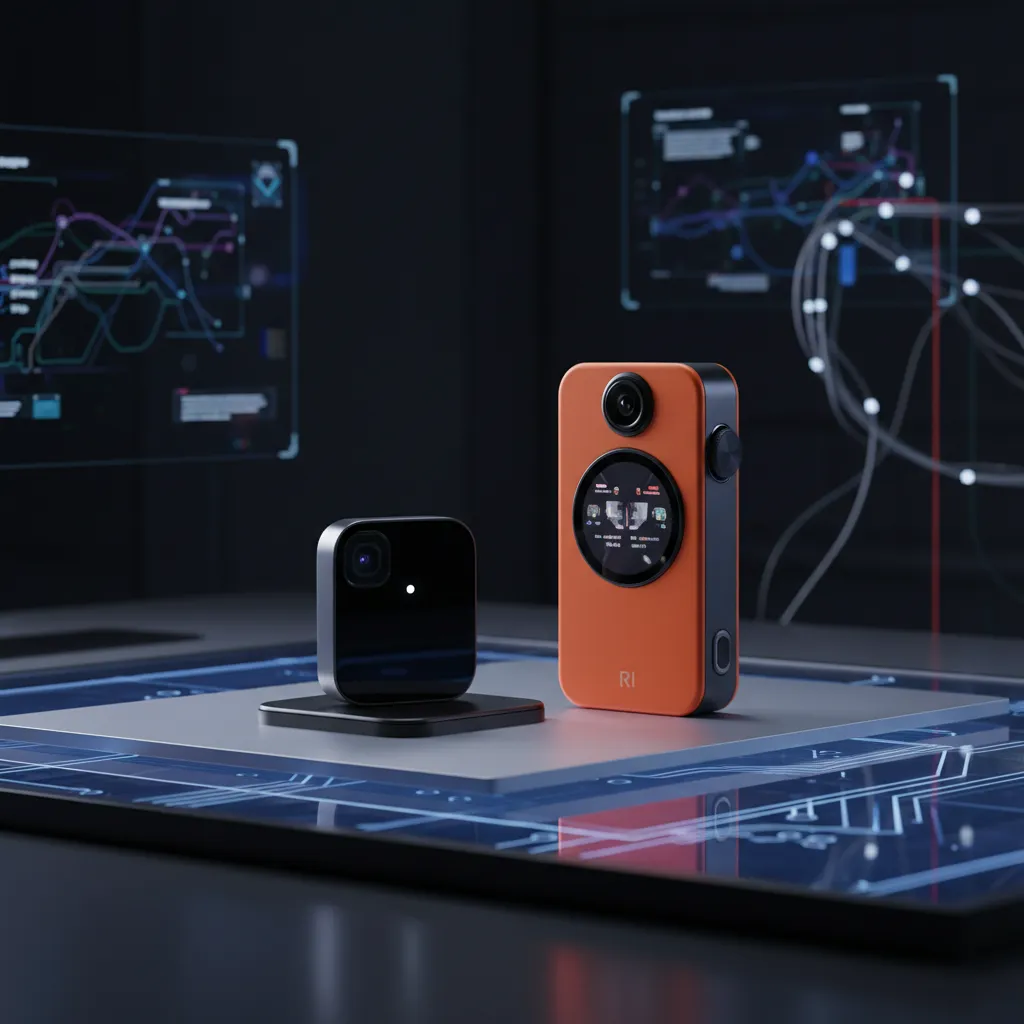
For nearly two decades, the smartphone has been the undisputed center of our digital lives. Yet, the screen-tethered existence it mandates—the constant notifications, the head-down scrolling—has bred a deep sense of digital fatigue. Tech visionaries have long sought a less intrusive, more seamless way to interact with technology. This desire culminated in the arrival of two of the most ambitious and polarizing AI gadgets 2024: the Humane AI Pin and the Rabbit R1.
These devices, backed by heavy funding and significant buzz, are not merely accessories; they represent a fundamental shift in the future of mobile computing. They are leading the charge for wearable AI and the post-smartphone era, promising to replace apps and screens with context-aware intelligent assistants.
But are these early attempts true successors, or merely expensive prototypes? This deep-dive comparison explores the radically different philosophies of the Humane AI Pin and the Rabbit R1, analyzes their reception in crucial tech reviews, and determines what their successes and failures mean for the future of human-computer interaction. We’ll break down the hardware, the AI models, and the user experience to understand if we are truly ready for screenless devices and a new kind of computing.
Defining the Contenders: Two Radical Visions of AI Hardware
The excitement around the Pin and the R1 is rooted in their departure from conventional mobile hardware. While both are built around the concept of an AI personal assistant, their core philosophies diverge dramatically regarding form factor and how they process information.
The Humane Vision: Ambient Computing and the Screenless Device
The Humane AI Pin, created by ex-Apple design and engineering leads (Imran Chaudhri and Bethany Bongiorno, founders of Humane Inc), embodies a sleek, minimalist, and expensive vision of wearable AI.
Key Features and Philosophy:
- Form Factor: A magnetic, standalone device designed to be clipped onto clothing. It’s meant to be always present but minimally invasive.
- Interaction: Primarily voice-controlled, utilizing gesture inputs and its unique Laser Ink display (a small projection onto the palm or nearby surface).
- Core Goal (Ambient Computing): The Pin aims for a truly screenless devices experience. It seeks to weave AI into the fabric of daily life (ambient computing), surfacing information and performing tasks only when requested, removing the “attention economy” distraction inherent in smartphones.
- Safety: It includes a “Trust Light”—a physical indicator that illuminates whenever the Pin’s cameras or microphones are active, addressing immediate privacy concerns often raised by constant-listening AI hardware.
The Rabbit R1 Approach: The Large Action Model (LAM)
In stark contrast, the Rabbit R1, designed in collaboration with the eccentric industrial design house Teenage Engineering, is a compact, vibrant orange gadget that looks less like a minimal future and more like a playful retro gaming accessory.
Key Features and Philosophy:
- Form Factor: Handheld, pocket-sized, featuring a 2.88-inch touchscreen, a scrolling wheel, and a rotating camera (the ‘Eye’). It is a dedicated, specialized device, not strictly a wearable in the same sense as the Pin.
- Interaction: Voice-first, but relies heavily on the screen and scroll wheel for confirmation and navigation.
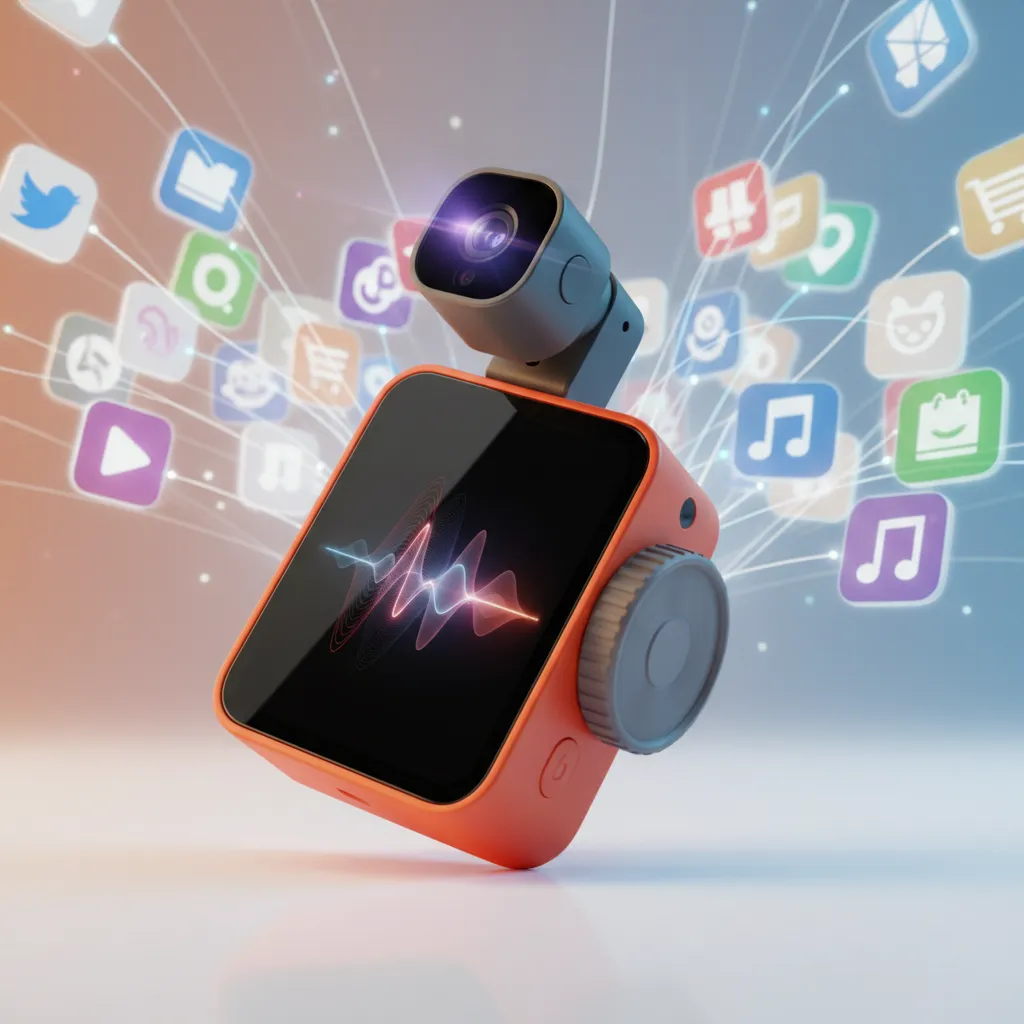
- Core Goal (Action Model): The R1’s true innovation lies in its software—the Large Action Model (LAM). Instead of requiring developers to build APIs for thousands of applications, the LAM learns how a human uses existing apps (e.g., booking a car, ordering food) through its own digital environment. The goal is to act as a universal intermediary for digital tasks.
[Related: unlock-peak-productivity-10-ai-tools-revolutionizing-your-workday/]
Head-to-Head Comparison: Pin vs. R1
While both are fighting for space in the AI hardware market, they appeal to different niches and face unique technical challenges.
1. The Core AI Engine: Cloud, On-Device, and The LAM
| Feature | Humane AI Pin | Rabbit R1 |
|---|---|---|
| Primary AI Model | Humane’s Cosmos OS (leveraging models like GPT-4, proprietary internal models) | Rabbit’s Large Action Model (LAM) |
| Core Function | Contextual search, messaging, translation, music streaming, camera capture. | Universal controller for existing apps; task automation. |
| On-Device AI | Uses some on-device AI processing for localized tasks (e.g., computer vision), but heavily relies on cloud processing. | Cloud-based LAM execution; local processing handles UI and basic commands. |
| Connectivity | Standalone 4G/LTE (T-Mobile) and Wi-Fi. | Standalone 4G/LTE (SIM slot) and Wi-Fi. |
2. Pricing and Business Model: The Cost of the Future
The difference in cost created a major split in their initial market reception. The high Humane Pin price quickly became a barrier to entry, forcing early adopters to commit to a much higher total cost of ownership than with the R1.
- Humane AI Pin: Requires a substantial upfront purchase (starting at $699) plus a mandatory monthly subscription ($24/month) for connectivity and access to the Pin’s core AI services. This subscription model proved controversial, raising AI Pin complaints about the true value being delivered.
- Rabbit R1: Launched at a much more accessible $199 one-time purchase, with no mandatory subscription for its core functions (users pay for their own SIM card and data plan). This aggressive pricing positioned the R1 more as an experimental, entry-level device compared to the premium, luxury positioning of the Pin.
3. User Experience and Interaction
The defining feature of the Pin is its commitment to being a screenless device. While visionary, this proved to be a significant hurdle for basic functions during early AI Pin review cycles. Commands often required precise speech and gestures, slowing down interactions that take mere seconds on a smartphone.
The R1, by retaining a small screen, offers a middle ground. It maintains the speed and clarity of visual confirmation while allowing the LAM to handle complex, multi-step tasks. Its physical controls, designed by Teenage Engineering, offered a tactile, immediate experience that some users preferred over the Pin’s purely ambient, gesture-based inputs.
The Critical Reception: MKBHD, Complaints, and Reality
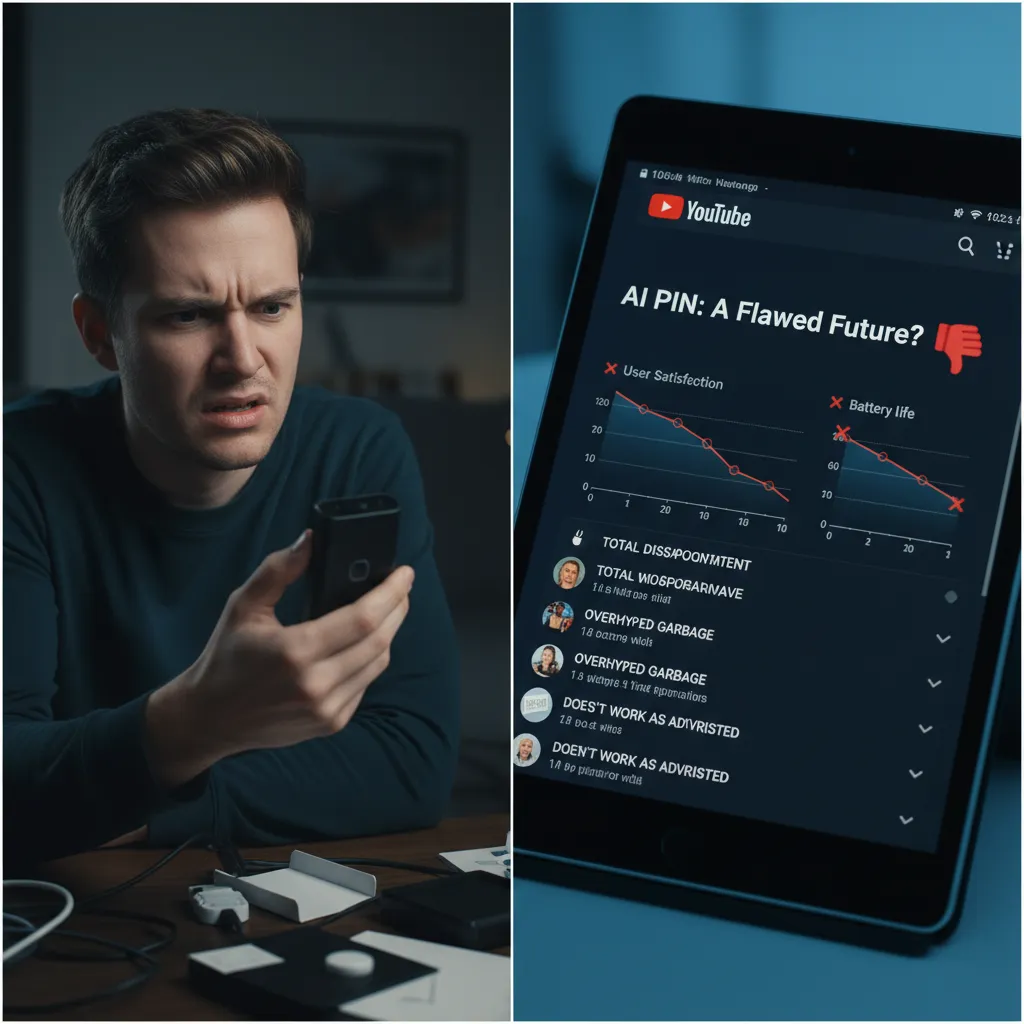
The most significant wave of discourse around both gadgets—particularly the Pin—came from prominent tech reviews and gadget reviews, notably the highly critical MKBHD AI Pin video, which framed the device as “completely unusable.”
The Humane Pin’s Scrutiny and AI Pin Complaints
The backlash against the Humane AI Pin centered on three primary areas:
- Speed and Latency: The AI was often too slow to respond, resulting in frustrating delays for simple queries. What was meant to be instantaneous often took five to ten seconds due to reliance on cloud processing, defeating the purpose of an “ambient” or “immediate” assistant.
- Accuracy and Reliability: Early AI Pin review results showed the AI frequently struggled with basic tasks, hallucinated answers, or failed to connect with services reliably. This highlighted the difficulty of creating an intelligent assistant that is simultaneously context-aware and consistently functional.
- Battery Life and Heat: The device required swapping out battery boosters frequently and was often reported to run hot, raising practical usability concerns for a wearable AI device intended for all-day use.
The overall consensus suggested that while the vision of Humane Inc was ambitious and captivating, the actual hardware was, at launch, underdeveloped. The device felt like an incomplete proof-of-concept wrapped in premium packaging.
The Rabbit R1’s Utility Debate
The Rabbit R1 faced less direct hostility but more skepticism about its core promise: the Large Action Model.
While the hardware received praise for its playful design and immediate feel, the LAM itself, at launch, often underdelivered. Critics found that while the concept was sound—an AI that can use applications the way a human would—the actual utility of the Rabbit R1 features was limited. It performed best on simple, pre-trained tasks and often struggled with complex, multi-step actions or dealing with real-world app variations.
Furthermore, critics argued that the R1 wasn’t a true successor to the smartphone, but rather a specialized accessory. Since it still required access to your existing apps and accounts, it simply added another layer of technology between the user and the service, rather than replacing the phone entirely.
The Philosophical Battle: Ambient Computing vs. Action Layer
The comparison between the Pin and the R1 is less about hardware specs and more about two competing visions for the future of human-computer interaction.
The Case for Ambient Computing
Ambient computing advocates, championed by Humane, believe the ideal future is one where technology disappears into the environment. The focus is on contextual awareness and minimizing screen time.
The appeal of screenless devices lies in reducing cognitive load. Imagine a device that passively listens and only intervenes with relevant information—a digital guardian that doesn’t demand constant attention. The Pin, with its emphasis on voice, gestures, and the “Trust Light,” attempts to build a more respectful relationship with the user.

[Related: ai-ethics-responsible-development-future/]
The Case for the Large Action Model
Rabbit’s LAM represents a more utilitarian, functionalist approach. It acknowledges that people need to interact with complex digital services (like ordering an Uber or managing a playlist), but argues that the current app-based paradigm is inefficient.
By creating an AI capable of performing actions across various digital platforms, the LAM promises to centralize interaction. Instead of having dozens of specialized apps, you would have one generalist intelligent assistant capable of handling everything. This approach bypasses the limitations of API development and streamlines common tasks, potentially making digital life dramatically simpler and faster—if it can achieve 100% reliability.
The Broader Landscape: Wearable Technology Trends and Alternatives
The Pin and the R1 are only two data points in the rapidly expanding universe of wearable AI. Their existence validates the industry’s belief in the future of smartphones being modular, contextual, and less screen-dependent.
Next-Gen Wearables and the Rise of Smart Glasses
While the Pin is a unique form factor, the market is already seeing traction in other next-gen wearables, particularly smart glasses. Devices like the Meta Ray-Ban Smart Glasses (and forthcoming AR glasses) offer a less intrusive way to integrate AI and connectivity into daily life.
AI Pin alternatives often include high-end smartwatches or specialized ear buds with advanced AI personal assistants. However, what sets the Pin and R1 apart is their attempt to be standalone computing platforms, not just phone extensions.
The Role of AI Hardware Startups
The enthusiasm behind these projects shows that VC funding is eager to back AI hardware startups willing to take risks. Companies are learning that simply running a large language model (LLM) on a tiny device isn’t enough. The success of the next wave of devices will hinge on:
- On-Device AI and Edge Computing: Moving complex processing off the cloud and onto the device itself to eliminate latency. This is crucial for making intelligent assistants feel truly instantaneous.
- Seamless Integration: The device must integrate flawlessly into the user’s existing digital ecosystem without demanding significant behavioral changes.
- Power Efficiency: Solving the battery and heat issues that plagued the Humane AI Pin.
This competitive environment is accelerating wearable technology trends, forcing a focus on true utility over novelty.
Lessons Learned: What the Future of Mobile Computing Needs
The initial stumbles of the Humane AI Pin and the Rabbit R1 offer invaluable insights into what consumers expect from the future of mobile computing. They clarify the immense chasm between the capabilities of current Large Language Models (LLMs) and the demands of real-time, physical-world interaction.
1. The Necessity of Reliability
The biggest lesson from the widespread AI Pin complaints is that a core computing device, regardless of form factor, cannot afford to be unreliable or slow. Users are accustomed to the near-instantaneous feedback loops of modern smartphones. If an AI personal assistant takes five seconds to tell you the weather, it will fail. Future devices must utilize sophisticated on-device AI for critical functions, ensuring that basic commands are processed locally, instantly, and accurately.
2. Contextual Awareness Over General Knowledge
While LLMs excel at generating text and general knowledge, the next generation of AI hardware needs mastery over context. It needs to know:
- Where you are.
- Who you are with.
- What time of day it is.
- What your existing data (email, calendar) suggests you are trying to do.
The true breakthrough in the future of human-computer interaction will be when devices shift from being reactive tools to proactive, trustworthy companions. This level of intimacy requires robust, ethically sound AI and security measures, something both the Pin (with its Trust Light) and R1 (with its dedicated profile) attempted to address.
3. The Action Layer Must Be Universal
Rabbit’s Large Action Model concept is revolutionary, but its execution needs vast improvement. For the LAM to truly succeed and usher in the post-smartphone era, it must be able to perform any task on any service with near-perfect reliability, eliminating the need to ever open a specialized application again. This level of functionality demands powerful training on real-world interfaces.
4. Price and Access Must Align with Utility
The high Humane Pin price and required subscription demanded utility levels that the product simply couldn’t meet. As AI hardware moves toward the mainstream, pricing models must reflect the current state of utility. The $199 R1 was an easier bet for consumers willing to experiment; the $699+ Pin was not. Future successful AI gadgets 2024 and beyond will likely adopt tiered pricing based on the robustness of their service offering.
What’s Next: Beyond the AI Pin and Rabbit R1
The Humane AI Pin and Rabbit R1 will likely be remembered as crucial stepping stones—the prototypes that bravely tested the market for dedicated AI computation. Their legacy is not in their current market dominance, but in the lessons they provided to the major players who are watching closely.
The future of wearable AI is not dead; it is simply entering its second phase. We can anticipate:
- Integrated Form Factors: The AI will likely be integrated into objects we already wear: smart glasses, hearing aids, and specialized rings, rather than a separate clip-on device.
- True On-Device Generative AI: Advances in specialized AI chips (like those from Qualcomm and Apple) will allow sophisticated LLMs and action models to run locally, eliminating cloud latency and enhancing privacy.
- Software Consolidation: The industry will likely gravitate towards a unified software platform—a future “AI OS”—that seamlessly manages actions, context, and data across different types of AI hardware startups devices.
The journey toward ambient computing is just beginning. While the Pin and R1 may not have killed the smartphone, they have confirmed that the future is indeed screen-light, action-heavy, and fiercely intelligent.

Conclusion: The Stepping Stones to Intelligent Living
The Humane AI Pin and the Rabbit R1 were 2024’s boldest attempts to redefine personal technology. They offered competing blueprints for escaping the glass rectangle, prioritizing contextual awareness and automation over endless scrolling.
The AI Pin review cycle highlighted the immense difficulty of creating a truly functional, screenless devices experience, while the Rabbit R1 features demonstrated the potential, albeit nascent, power of the Large Action Model for task execution. Both devices, in their own way, forced us to consider the ethical and practical realities of constantly available, intelligent technology.
Though they faced significant AI Pin complaints and R1 skepticism, they served their purpose: validating the market demand for wearable technology trends and accelerating the development of reliable next-gen wearables. The next wave of AI gadgets 2024 and beyond will undoubtedly learn from these pioneering failures, combining instantaneous on-device AI with seamless integration to deliver the true future of human-computer interaction.
The smartphone may still be in your pocket today, but the foundation for its replacement—a more natural, efficient AI personal assistant—has officially been laid.
FAQs (People Also Ask)
Q1. What is the main difference between the Humane AI Pin and the Rabbit R1?
The main difference lies in their philosophy and form factor. The Humane AI Pin is a premium, magnetic, screenless devices focused on ambient computing and gesture/voice interaction. The Rabbit R1 is a handheld, smaller, and cheaper device with a small screen and physical controls, focused on the Large Action Model (LAM) which automates tasks across existing applications.
Q2. Is the Humane AI Pin a replacement for the smartphone?
Currently, no. Due to AI Pin complaints regarding speed, battery life, and utility, most tech reviews concluded it serves better as a novel companion device. It cannot perform essential smartphone functions like accessing numerous third-party apps, making it an ambitious, yet incomplete, proof-of-concept for the post-smartphone era.
Q3. What is the Large Action Model (LAM) used in the Rabbit R1?
The Large Action Model (LAM) is the core AI technology in the Rabbit R1. Unlike traditional AI models that require APIs, the LAM observes and learns how humans interact with apps and interfaces. It acts as an intelligent assistant that can autonomously navigate and execute complex, multi-step tasks (like ordering groceries or booking travel) on behalf of the user, making it a key part of Rabbit R1 features.
Q4. What is the Humane Pin price and what does the subscription cover?
The initial Humane Pin price starts at $699 for the hardware. Additionally, users must pay a mandatory $24/month subscription. This recurring fee covers cellular connectivity (data and phone number) and access to Humane’s core AI services (Cosmos OS), which power its personalized and generative AI capabilities.
Q5. Are there any successful AI Pin alternatives currently available?
Yes, the market for AI Pin alternatives is growing. The most popular next-gen wearables include highly capable smart glasses like the Meta Ray-Bans (focused on image capture and simple voice commands) and advanced wireless earbuds that integrate generative AI for real-time translation and complex query answering.
Q6. Did the MKBHD AI Pin review impact public perception?
Yes, the highly critical MKBHD AI Pin review, along with other prominent gadget reviews, significantly shaped public perception. The critique focused heavily on the device’s speed, lack of core functionality, and high latency, contributing to the initial wave of AI Pin complaints and tempering enthusiasm about the device’s readiness for mainstream adoption.
Q7. What is “ambient computing” in the context of wearable AI?
Ambient computing refers to an environment where digital services and intelligence are seamlessly integrated into the background of daily life, without requiring overt interaction or constant attention. The goal of screenless devices like the Humane AI Pin is to achieve this state, where technology anticipates needs and provides information discreetly through voice, sound, or subtle visual cues.