AI Music Revolution: Shaping the Future of Sound and Industry

Introduction
The music world is vibrating with a new, synthetic frequency. Just a few years ago, the idea of typing a sentence—“a soulful blues track with a gospel choir and a heavy bassline”—and receiving a fully produced song in seconds felt like science fiction. Today, it’s a reality. The AI music revolution is not just knocking on the door of the creative industry; it has kicked it wide open, ushering in an era of unprecedented change, opportunity, and complex questions.
This isn’t just another tech trend. We are witnessing the birth of a new artistic medium, a disruptive music technology that is fundamentally altering how we think about composition, production, and even creativity itself. From sophisticated generative music AI platforms that can craft entire symphonies to intelligent tools that assist human artists, the evolution of AI music is accelerating at a breathtaking pace.
In this deep dive, we’ll explore the entire spectrum of this paradigm shift. We’ll unpack the core AI music technology, survey the best AI music generators available today, and analyze the profound impact of AI on musicians and the industry at large. More importantly, we’ll navigate the murky waters of AI music copyright, royalties, and the pressing ethical debates that will define the future of music AI. Get ready to explore how algorithms and artistry are composing the soundtrack of tomorrow.
What is AI Music Generation? Beyond the Hype
At its heart, AI music generation is the process of using artificial intelligence algorithms to create or assist in creating music. But this simple definition belies the complexity and variety of the technology. Modern AI music models are not just glorified loop machines; they are sophisticated systems, often built on the same kind of neural networks that power large language models like Gemini.
These models are trained on vast datasets of existing music, learning the intricate patterns, structures, melodies, rhythms, and harmonies that define different genres. They learn the “language” of music. When you give a prompt to a text-to-music AI, the model uses this learned knowledge to generate new, original audio that matches your description.
The technology can be broadly categorized into several types:
- Full Song Generation: Platforms like Suno and Udio are the poster children for this category. They take a text prompt and generate a complete song with vocals, instrumentation, and full production.
- Compositional Assistants: These tools act as a collaborator. They can suggest chord progressions, write melodies, or generate drum patterns to help an artist overcome creative blocks.
- AI-Powered Production Tools: This includes software that uses AI for highly technical tasks like mixing, mastering (e.g., iZotope Ozone), or audio restoration. They analyze audio and make intelligent adjustments, saving producers hours of tedious work.
- AI Virtual Instruments & Sound Design: This involves using AI to create entirely new sounds or emulate classic instruments with uncanny realism. This is a frontier for AI sound design, moving beyond sampling to true synthesis.
The AI music creation process is becoming more accessible every day, transforming who can create music and how it’s done.
The New Orchestra: A Look at the Best AI Music Generators in 2024
The landscape of AI music tools is exploding with options, catering to everyone from curious hobbyists to professional producers. Navigating this new ecosystem can be daunting, so let’s break down the key players and what they offer.
For Instant Inspiration: The Rise of Text-to-Music AI
This is the category that has captured the public imagination. The ability to generate music from a simple text description has democratized songwriting in a radical way.
- Suno: Often hailed as the “ChatGPT for music,” Suno allows users to create impressive two-minute songs in almost any genre imaginable, complete with AI-generated lyrics and vocals. Its simplicity and the quality of its output have made it a viral sensation.
- Udio: A direct competitor to Suno, backed by Google DeepMind alumni, Udio offers similar text-to-song functionality. It has been praised for its high-fidelity audio and the emotional range of its vocal performances.
- Google’s MusicFX: Part of Google’s AI Test Kitchen, MusicFX is a more experimental tool focused on generating instrumental loops and soundscapes. It’s great for creating background music or finding a spark of an idea.
These AI music platforms are perfect for social media creators needing royalty-free background tracks, songwriters looking to quickly prototype ideas, or anyone who simply wants to experience the magic of creating a song from scratch without any musical training.
For the Professional Producer: AI as a Studio Partner
For serious musicians and producers, AI isn’t a replacement; it’s the ultimate studio assistant. These tools integrate into professional workflows, enhancing creativity and efficiency.
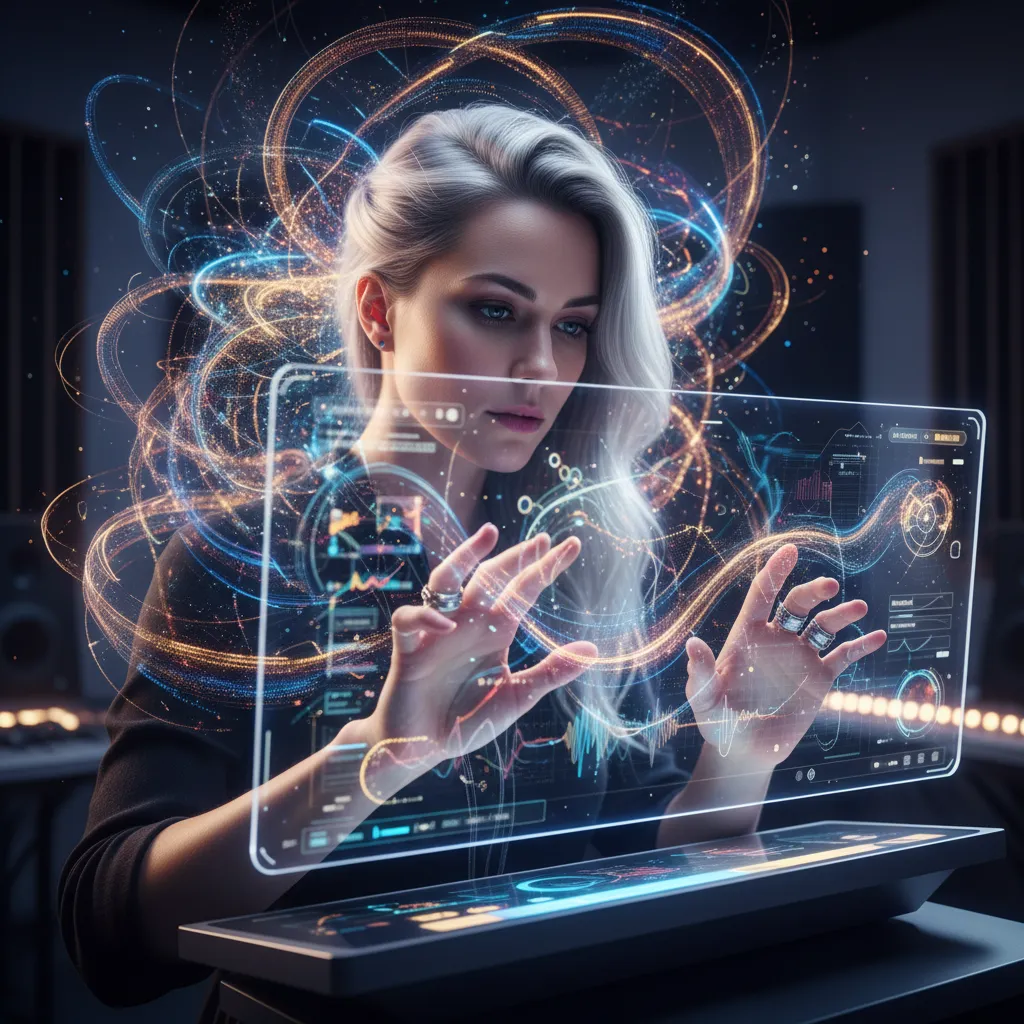
- iZotope Ozone & Neutron: These are industry-standard plugins for mastering and mixing. They use AI to analyze your track and suggest settings to achieve a professional, balanced sound, acting as a “second pair of ears.”
- Arturia Augmented Series: This collection of AI virtual instruments combines high-quality samples with powerful synthesis engines, allowing for the creation of new, expressive sounds that blur the line between acoustic and electronic.
- BandLab SongStarter: This tool generates royalty-free “ideas”—melodies, drum beats, and basslines—based on your text prompts or uploaded tunes. It’s a fantastic way to kickstart a new project when you’re facing a blank screen.
This kind of music production AI focuses on augmenting human skill, handling the technical heavy lifting so the artist can focus on the creative vision.
For the Innovator: Open-Source and Experimental Platforms
For those who want to get under the hood, the world of open-source AI music offers a playground of possibilities.
- Magenta Studio: An open-source project from Google, Magenta provides a collection of plugins for Ableton Live that use machine learning to generate music. It’s a powerful tool for experimental musicians who want more control over the AI’s creative process.
- Riffusion: This innovative project uses stable diffusion, an image-generation model, to create music by generating spectrograms (visual representations of sound) and converting them back into audio.
These platforms are driving AI music innovation from the ground up, pushing the boundaries of what’s possible in synthesizing music with AI.
The Creative Process Reimagined: AI and Human Collaboration
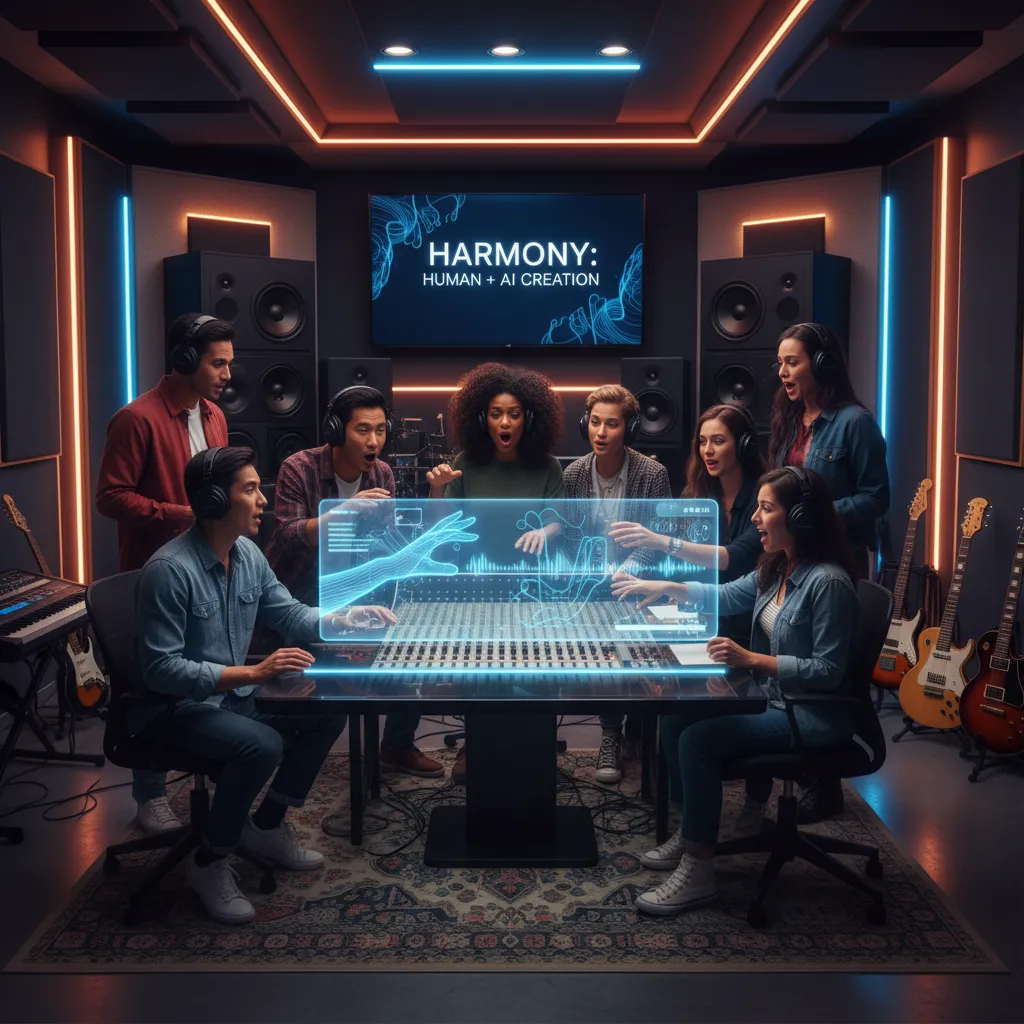
The most persistent fear surrounding AI is that of replacement. Will AI songwriting and composition tools make human artists obsolete? The reality, as it’s unfolding, is far more nuanced and exciting. The future isn’t a battle of human versus machine, but a symphony of AI and human creativity music.
Artists are discovering new ways to weave AI into their workflows:
- The Spark Generator: A songwriter struggling with a creative block can use a tool like Suno or BandLab to generate a dozen different starting points in minutes. A single AI-generated chord progression or melodic phrase can be the catalyst for an entire song.
- The Unlikely Collaborator: AI can generate musical ideas that a human might never conceive of, due to its non-human “understanding” of music theory. This can push artists out of their comfort zones and lead to truly innovative sounds.
- The Efficiency Engine: AI tools that automate mixing, mastering, or creating variations on a theme free up an artist’s most valuable resource: time. This allows them to focus on what matters most—performance, emotion, and storytelling. Related: Top AI Productivity Tools for 2024
Musician and innovator Grimes has been a vocal proponent of this collaborative future. She has openly allowed her voice to be used in AI-generated songs, offering to split royalties on any successful track. This represents a paradigm shift—viewing AI not as a threat, but as a new, globally accessible instrument.
Industry Disruption: How AI is Reshaping Music Business Models
The AI in music industry is not just a creative force; it’s a commercial one, sending shockwaves through long-established business models. The two most significant areas of disruption are copyright and royalties.
The Copyright Quagmire: Who Owns AI-Generated Music?
This is the billion-dollar question. The legal framework is struggling to keep pace with the technology. The core issue revolves around authorship. The U.S. Copyright Office has stated that work generated entirely by AI, without significant human creative input, cannot be copyrighted.
This creates a complex spectrum:
- Fully AI-Generated: A song created from a simple text prompt with no further human modification likely has no copyright protection and falls into the public domain.
- AI-Assisted: If a musician uses AI to generate a melody, but then writes lyrics, arranges the instrumentation, and performs the vocals, the resulting work contains significant human authorship and is likely copyrightable.
- Training Data: A huge legal battle is brewing over the music used to train these AI models. Major record labels have filed lawsuits against AI companies, alleging mass copyright infringement for using their catalogs without permission or compensation.
The outcome of these legal fights will fundamentally shape the future of music AI.
Rethinking Royalties and Revenue Streams
The traditional system of AI music royalties is ill-equipped for a world of generative AI. How do you pay royalties when a song is created from a model trained on millions of other songs? Who gets paid—the user who wrote the prompt, the AI company, or the original artists whose work was in the training data?
New models are beginning to emerge:
- Content Creator Licensing: The most immediate business model is for AI music for artists and video creators. Platforms can offer subscriptions for royalty-free, custom-generated background music, solving a major headache for YouTubers and marketers.
- Artist-Driven AI Models: We may see artists training AI models exclusively on their own work and voice, then licensing that model for others to use. This creates a new, direct-to-fan revenue stream.
- Dynamic and Personalized Music Streaming: Imagine a future where your AI music streaming service doesn’t just play songs but generates a continuous, personalized soundtrack for your life, adapting to your mood, activity, or even your heart rate. This is the ultimate vision for personalized music AI.
The Ethical Tightrope: Navigating the Moral Landscape of AI Music
Beyond the legal and financial implications lies a landscape of profound AI music ethics questions. The technology’s power brings with it a responsibility to consider its societal impact.
The “Deepfake” Dilemma: Unauthorized Voice Cloning
One of the most controversial aspects of AI music technology is voice synthesis. The “Ghostwriter” track, which featured eerily accurate AI-generated vocals of Drake and The Weeknd, went viral and sparked a massive industry debate. While technologically impressive, it raises serious ethical concerns about consent, identity, and the potential for misuse. Artists’ voices are integral to their identity and brand, and unauthorized cloning represents a significant threat.
Bias in the Algorithm: Will AI Homogenize Music?
AI models learn from the data they are fed. If a model is trained primarily on Western pop music from the last 50 years, its output will naturally reflect those biases. There is a real risk that this could lead to a homogenization of sound, marginalizing less-represented genres and stifling the cross-pollination of musical cultures that has historically driven innovation.
The Value of Human Artistry
The most philosophical question is about the value of art itself. Does a song created in 30 seconds by an algorithm hold the same cultural weight as one born from years of practice, struggle, and human experience?
The impact of AI on musicians is not just about job security; it’s about purpose. However, the optimistic view is that AI will handle the formulaic and mundane, freeing human artists to focus on what they do best: injecting emotion, telling stories, and connecting with listeners on a deeply personal level. The “human touch”—the slight imperfection in a voice, the raw energy of a live performance—may become more valued than ever.
The Road Ahead: AI Music Trends for 2024 and Beyond
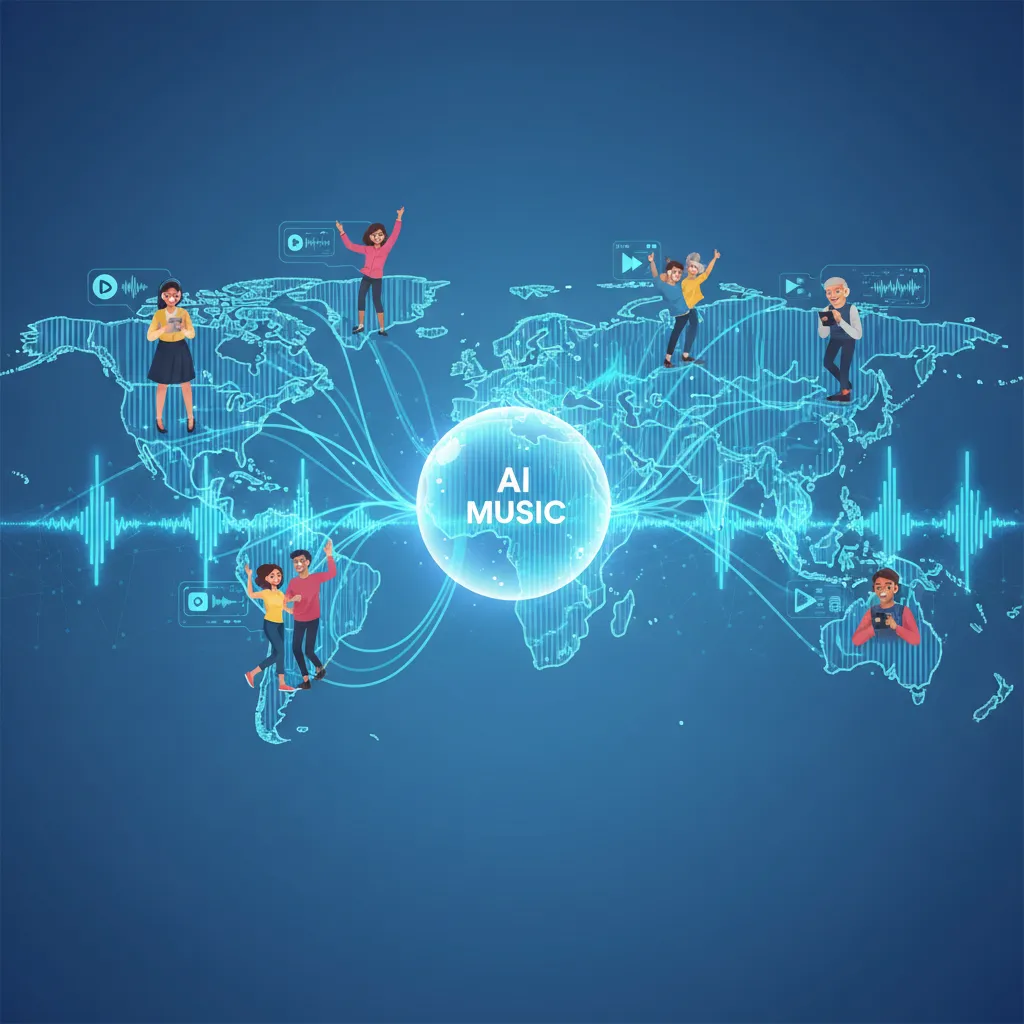
The AI music revolution is just getting started. As the technology continues its exponential growth, we can anticipate several key developments that will shape its future.
- Hyper-Realism and Controllability: The quality of AI-generated audio will become indistinguishable from human recordings. More importantly, users will gain finer control over every element of the music, moving from simple prompts to detailed arrangement and production commands.
- Real-Time Generation: Imagine live performances where a musician collaborates with an AI in real-time, or video games with soundtracks that are generated on the fly to perfectly match the player’s actions.
- Integration with Other Media: The link between AI music and other AI modalities (video, virtual reality) will deepen. Soon, you’ll be able to generate a music video at the same time as the song, or create entire virtual concerts with AI performers.
- Brain-Computer Interfaces: Looking further ahead, the fusion of AI music and neurotechnology could allow for the creation of music directly from thought, a truly mind-bending prospect. Related: The Neurotech Revolution: Unlocking the Future of Brain-Computer Interfaces
The AI music trends 2024 are pointing towards a future of greater access, deeper integration, and more profound collaboration.
Conclusion
We are at a historic inflection point in the creation and consumption of music. The AI music revolution is a powerful, complex, and sometimes chaotic force that is reshaping an entire industry. It offers incredible tools for democratization and creativity, allowing anyone with an idea to become a creator. It promises to streamline professional workflows and unlock sounds we’ve never heard before.
However, this disruptive music technology also forces us to confront fundamental questions about artistry, ownership, and ethics. Navigating the challenges of AI music copyright and ensuring fair compensation for human artists will be the critical task of the next decade.
The future of sound will not be a world without musicians, but a world where musicians have more powerful tools than ever. It will be a world where human experience and emotional truth are the most valuable commodities. The synthesizer didn’t replace the orchestra, and the drum machine didn’t replace the drummer. AI will not replace the artist. Instead, it will become the most versatile, intelligent, and collaborative instrument ever invented—an instrument we are all just learning how to play.
FAQs
Q1. What is the best AI for creating music?
There is no single “best” AI music generator; it depends on your needs. For beginners or those wanting to create full songs from text prompts quickly, platforms like Suno and Udio are excellent choices. For professional producers, AI-powered plugins like iZotope Ozone (for mastering) or compositional assistants integrated into their DAW are more suitable.
Q2. Is AI-generated music copyright free?
It’s complicated. According to the U.S. Copyright Office, works created entirely by AI without significant human input cannot be copyrighted and are essentially public domain. However, if a human significantly modifies, arranges, or adds to the AI’s output, that new work can be copyrighted. Always check the terms of service of the AI tool you are using, as some have specific rules about commercial use.
Q3. Will AI replace human musicians?
It is unlikely that AI will replace human musicians entirely. Instead, it’s becoming a powerful collaborative tool. AI can handle tedious technical tasks, generate ideas to overcome creative blocks, and democratize music creation. Most experts believe the future lies in a partnership where AI enhances, rather than replaces, human creativity, emotion, and performance.
Q4. How do I generate music using AI?
For a text-to-music platform like Suno, the process is simple:
- Sign up for the service.
- Navigate to the creation page.
- Type a descriptive prompt in the text box, detailing the genre, mood, instrumentation, and theme (e.g., “upbeat 80s synth-pop song about robots falling in love”).
- Click “Generate.” The AI will produce one or more song clips based on your prompt, often complete with lyrics and vocals.
Q5. What are the ethical concerns with AI music?
The main ethical concerns include:
- Copyright Infringement: Training AI models on copyrighted music without permission from the original artists.
- Voice Cloning: Creating “deepfake” songs using an artist’s voice without their consent.
- Job Displacement: The potential impact on the livelihoods of session musicians, composers, and producers.
- Algorithmic Bias: The risk that AI could homogenize music by favoring mainstream genres it was trained on.
Q6. Can I sell music made with AI?
Yes, but you must check the specific terms of service for the AI music software you use. Some platforms grant you full commercial rights to the music you create, while others may have restrictions. If you significantly alter the AI-generated music with your own creative input, your claim to ownership and the right to sell it becomes much stronger.
Q7. What is generative music AI?
Generative music AI refers to a specific type of artificial intelligence designed to create new, original music from scratch. Unlike AI that simply analyzes or modifies existing audio, generative models use algorithms like GANs or Transformers to compose novel melodies, harmonies, and rhythms based on the patterns they learned from vast datasets of music.