AI’s Lifesaving Leap: Revolutionizing Early Disease Detection with Smart Tech

Introduction
For centuries, medicine has largely operated on a reactive basis. We wait for symptoms to appear, a lump to be felt, or a test to come back positive before we act. But what if we could shift that paradigm? What if we could see the whispers of disease long before they become a roar? This is no longer the stuff of science fiction. We are standing at the precipice of a healthcare revolution, powered by Artificial Intelligence (AI), that is fundamentally transforming our ability to achieve early disease detection.
The convergence of massive datasets, sophisticated algorithms, and powerful computing has given rise to a new era of preventative medicine AI. This isn’t just about making existing processes more efficient; it’s about giving clinicians superhuman abilities to identify subtle patterns in medical scans, genetic code, and even the data from our smartwatches. The impact of AI on health is a seismic shift towards a proactive, predictive, and personalized future.
In this deep dive, you’ll learn how AI is becoming our most powerful ally in the fight against humanity’s most formidable diseases. We’ll explore the groundbreaking medical AI breakthroughs in oncology, cardiology, and neurology, understand the smart tech that powers AI-powered health insights, and look ahead to the future of medicine AI.
The Silent Revolution: How AI Learns to See the Invisible
The core challenge in early diagnosis is scale and subtlety. A single radiologist might look at hundreds of images a day, while a single human genome contains billions of data points. The human brain, for all its brilliance, has cognitive limits. It can get tired, be influenced by bias, and miss microscopic anomalies that signal the start of a disease. This is where AI excels.
AI, specifically machine learning and deep learning, can process and analyze data at a scale and speed that is simply impossible for humans. It learns to identify the faintest signals of disease hidden within mountains of complex medical information.
Machine Learning: Training Algorithms to Be Expert Diagnosticians
Think of machine learning as training a medical student with a photographic memory and infinite patience. In AI diagnostics, developers feed an algorithm millions of labeled examples—such as medical images tagged as “cancerous” or “benign.” Through this process, the algorithm learns to associate specific features, pixels, and patterns with a particular diagnosis.
Over time, it builds a complex statistical model that allows it to make highly accurate predictions on new, unseen data. This is the foundation of AI medical imaging analysis, turning raw data into actionable clinical insights.
Deep Learning and Neural Networks: Mimicking the Human Brain
Deep learning, a subfield of machine learning, takes this a step further using structures called artificial neural networks. These networks are inspired by the interconnected neurons of the human brain, with multiple layers that process information at increasing levels of complexity and abstraction.
For example, when analyzing a chest X-ray, the first layer of a neural network might identify simple edges and shapes. The next layer might combine these into textures and simple objects. Subsequent layers learn to recognize more complex structures like ribs, lungs, and eventually, the subtle signs of a tiny, nascent tumor. This layered approach is what gives deep learning healthcare applications their remarkable power and nuance.
These complex networks are the engine behind many of the most exciting healthcare AI trends 2024, moving from research labs to real-world clinical practice.
AI in Action: Key Battlegrounds in Early Disease Detection
The theoretical power of AI is impressive, but its real-world application is what truly signifies a revolution. AI is being deployed across various medical specialties, consistently demonstrating its ability to detect diseases earlier and more accurately than ever before.
Oncology: Finding Cancer in the Noise
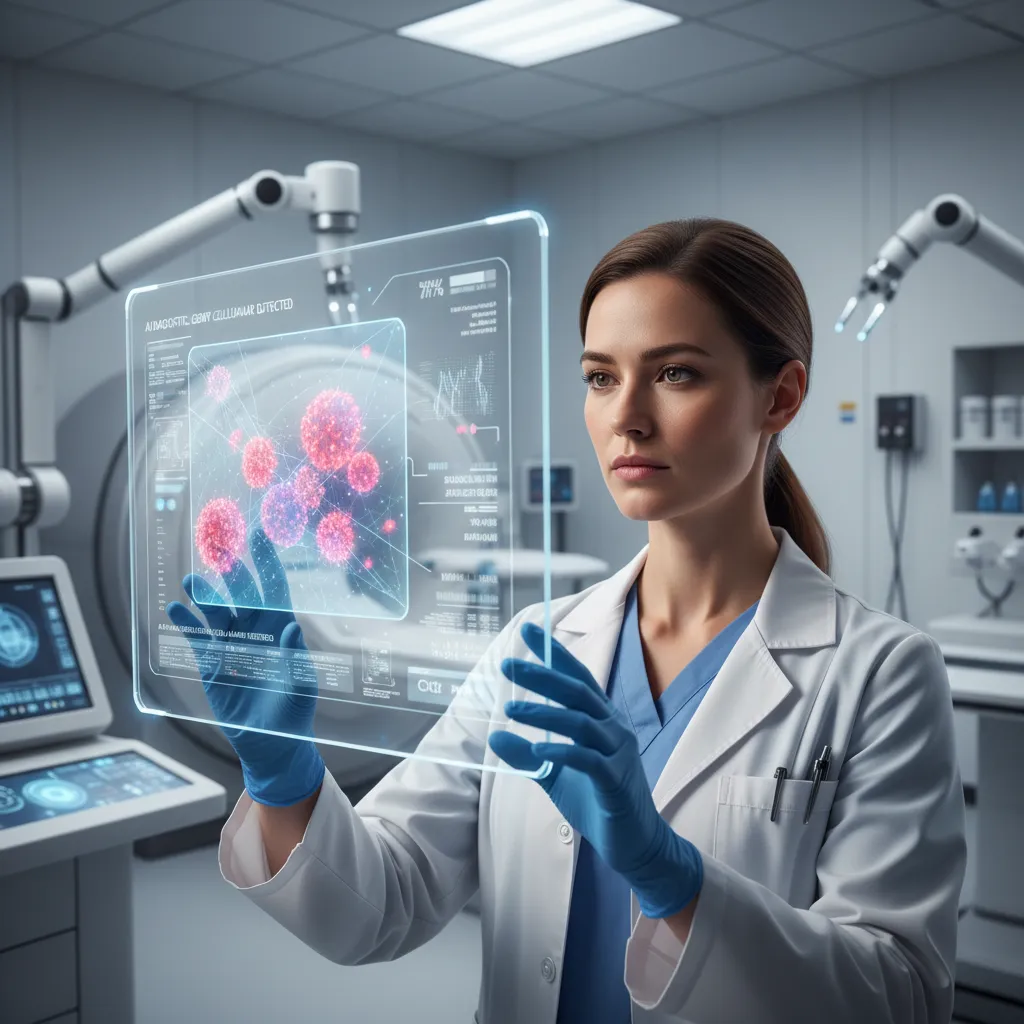
Cancer is a disease where early detection can literally be the difference between life and death. AI in oncology early detection is perhaps the most mature and impactful area of medical AI. Algorithms are now being used as a second pair of eyes for radiologists, helping them spot cancers that might otherwise be missed.
- Breast Cancer: Deep learning models can analyze mammograms and identify suspicious lesions with an accuracy that matches or even exceeds that of human experts. They can also help predict a tumor’s aggressiveness from pathology slides.
- Lung Cancer: AI algorithms scan CT images to detect and classify pulmonary nodules, helping doctors prioritize follow-ups for those most at risk of becoming malignant.
- Skin Cancer: Smartphone apps powered by AI can analyze photos of skin moles and lesions, providing an initial risk assessment for melanoma and encouraging users to seek professional medical advice sooner.
These early cancer detection AI tools are not replacing doctors. Instead, they are augmenting their skills, reducing workload, and catching cancers at their most treatable stage. Related: The AI Revolution in Healthcare: Transforming Patient Care & Medical Innovation
Cardiology: Predicting Heartbeats Before They Falter
Cardiovascular disease remains a leading cause of death globally. Often, the first symptom is a catastrophic event like a heart attack or stroke. Cardiovascular disease AI detection aims to identify at-risk individuals long before that happens.
AI models can analyze electrocardiograms (ECGs) to detect subtle abnormalities like atrial fibrillation—a common cause of stroke—that might be missed during a short doctor’s visit. Furthermore, AI predictive analytics health models can synthesize dozens of risk factors from a patient’s electronic health record—like cholesterol levels, blood pressure, family history, and lifestyle—to calculate a highly accurate, long-term risk score for cardiac events. This allows for early and targeted interventions, such as lifestyle changes or medication.
Neurology: Charting the Brain’s Earliest Warning Signs
Degenerative neurological disorders like Alzheimer’s and Parkinson’s disease often develop silently for years or even decades before clear clinical symptoms emerge. Neurological disorder AI screening offers hope for identifying these conditions at a much earlier, pre-symptomatic stage.
AI algorithms are being trained to:
- Analyze MRI and PET scans to detect the earliest signs of amyloid plaque buildup associated with Alzheimer’s.
- Assess speech patterns, vocal tremors, and linguistic complexity to identify early markers for Parkinson’s disease.
- Analyze retinal scans, as the eye is a window to the brain, to find biomarkers for neurological decline.
By catching these diseases earlier, we open the door to future therapies that can slow or potentially halt their progression.
Chronic Diseases: A Proactive Approach to Management
AI is also a game-changer for managing and preventing chronic conditions that affect billions. For instance, AI for diabetes prevention can analyze patient data to identify individuals at high risk, prompting early lifestyle interventions.
One of the most celebrated successes in AI for chronic disease is the automated detection of diabetic retinopathy. This complication of diabetes can lead to blindness if not caught early. AI systems can now analyze retinal fundus images with stunning accuracy, identifying the condition often better than a trained ophthalmologist. This allows for widespread, low-cost screening in primary care settings, saving the sight of millions.
Beyond the Hospital: The Rise of Smart Health Monitoring
The revolution in early detection isn’t confined to clinics and hospitals. It’s happening in our homes, on our wrists, and in our pockets. The proliferation of smart devices has created a continuous stream of personal health data, and AI is the key to unlocking its lifesaving potential.
Wearable Tech: Your 24/7 Health Guardian
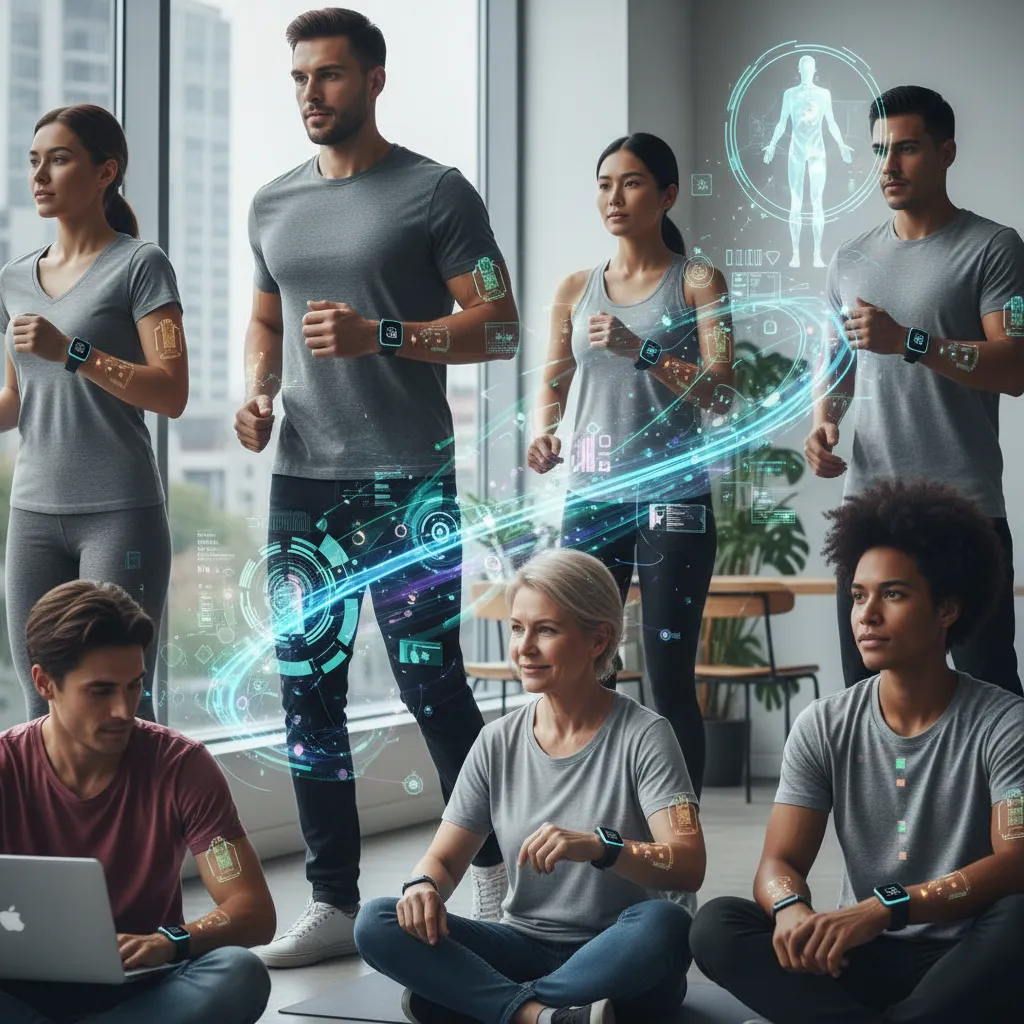
Smartwatches and fitness trackers are no longer just for counting steps. Devices from Apple, Google (Fitbit), and others are equipped with sophisticated sensors that monitor heart rate, blood oxygen levels (SpO2), sleep patterns, and even take FDA-cleared ECGs.
This is where wearable tech disease prediction comes into play. The data from these devices is a goldmine for AI algorithms.
- They can provide a digital health early warning for conditions like atrial fibrillation by continuously monitoring for irregular heart rhythms.
- They can track sleep apnea risk by analyzing breathing and oxygen saturation during the night.
- They can monitor changes in gait and stability, offering potential early clues for neurological or musculoskeletal issues.
This passive, continuous smart health monitoring creates a personalized baseline for each individual, allowing AI to flag deviations that could signal an emerging health problem long before the person feels sick. Related: The Rise of AI Gadgets: The End of Smartphones?
AI Genomics: Decoding Your Personal Health Blueprint
If wearables provide a real-time view of your health, genomics offers a look into your fundamental blueprint. The field of AI genomics health involves using sophisticated algorithms to analyze our vast and complex genetic data.
AI can scan a person’s genome to identify specific mutations or combinations of genes that increase the risk for certain cancers, heart conditions, or rare diseases. This doesn’t just predict risk; it paves the way for precision medicine AI, where treatments and preventative strategies are tailored to an individual’s unique genetic makeup.
The New Frontier: Personalized and Predictive Preventative Care
When you combine AI-powered medical imaging, continuous data from wearables, and insights from genomics, you get a truly holistic and dynamic picture of an individual’s health. This is the foundation of personalized preventative care.
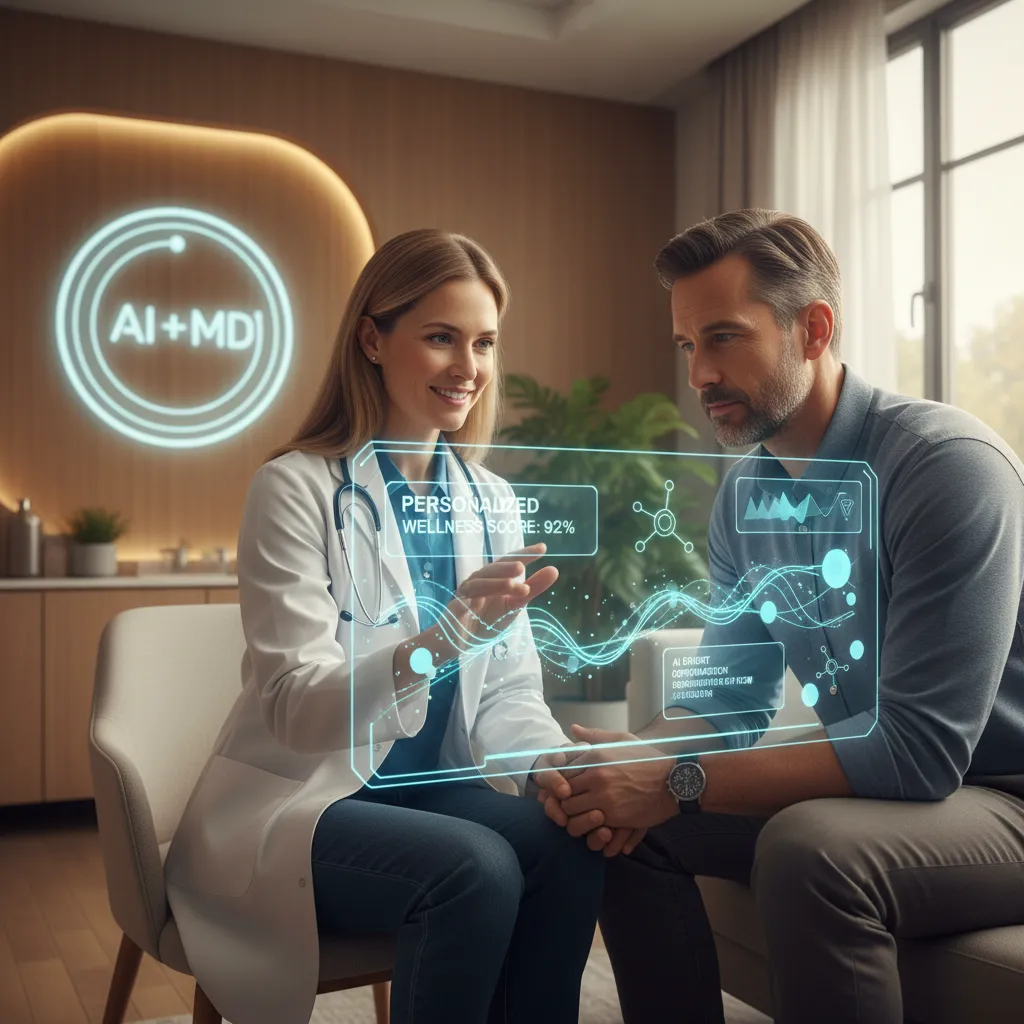
Imagine a future where your AI health assistant, using all this data, provides you with AI-powered health insights. It might advise: “Your genetic risk for type 2 diabetes is elevated, and your recent activity levels have dropped. Let’s adjust your diet and schedule a 20-minute walk each day to mitigate this risk.” Or, “Your heart rate patterns overnight suggest you should speak to your doctor about a sleep study.”
This isn’t about creating anxiety; it’s about empowerment. It’s about giving individuals and their doctors the information they need to make proactive choices, preventing disease before it ever has a chance to take root. Related: The Future of Medicine: How AI is Revolutionizing Healthcare
Navigating the Maze: Ethical Considerations and Challenges
Of course, this powerful technology comes with significant responsibilities. The journey towards AI-integrated healthcare is not without its hurdles, and addressing them is crucial for building trust and ensuring equitable outcomes.
The Black Box Problem and Algorithmic Bias
One of the biggest challenges in ethical AI medical diagnosis is the “black box” nature of some complex deep learning models. It can be difficult to understand precisely why an algorithm made a particular prediction, which can be problematic in a clinical setting. Furthermore, if AI models are trained on data that is not diverse, they can perpetuate and even amplify existing biases, leading to poorer outcomes for underrepresented populations.
Data Privacy and Security
Health data is our most sensitive personal information. Ensuring the security and privacy of the vast datasets used to train and operate these AI systems is paramount. Robust regulations and secure infrastructure are essential to protect patient confidentiality.
The Role of the Human Clinician
It is critical to remember that AI is a tool. It is designed to augment, not replace, the expertise, empathy, and critical thinking of human doctors. The final diagnostic and treatment decisions must always rest with a qualified healthcare professional who can consider the patient’s full context, values, and preferences.
Conclusion
We are witnessing a monumental leap forward in medicine. Artificial intelligence is moving healthcare from a reactive model of treating sickness to a proactive and predictive model of preserving wellness. Through smarter AI diagnostics, tireless machine learning medical imaging analysis, and continuous smart health monitoring, we are gaining an unprecedented ability to detect disease at its earliest and most curable stages.
The journey is ongoing, and challenges surrounding ethics, bias, and regulation must be carefully navigated. But the trajectory is clear. The fusion of human expertise and artificial intelligence is not just one of many medical AI breakthroughs; it is the master key unlocking a future where we can preempt disease, extend lifespans, and create a healthier society for all.
What are your thoughts on AI’s growing role in your personal health? Share your perspective in the comments below!
FAQs
Q1. How is AI used in early disease detection?
AI is used in early disease detection by training algorithms to recognize subtle patterns in medical data that are often invisible to the human eye. This includes analyzing medical images like X-rays and MRIs, interpreting data from wearable devices, scanning genetic information for risk markers, and using predictive analytics on patient health records to identify individuals at high risk for diseases like cancer, heart disease, and diabetes.
Q2. What are the benefits of AI in healthcare?
The primary benefits of AI in healthcare include earlier and more accurate diagnoses, personalized treatment plans, increased efficiency for clinicians by automating repetitive tasks, and the ability to predict disease outbreaks on a population level. It democratizes expertise, making high-level diagnostic capabilities more accessible and affordable.
Q3. Can AI predict future diseases?
Yes, to an extent. AI predictive analytics can’t tell the future with 100% certainty, but it can calculate an individual’s risk of developing future diseases with high accuracy. By analyzing factors like genetics, lifestyle, lab results, and wearable data, AI models can identify high-risk patients who would benefit most from preventative interventions.
Q4. What is an example of AI in medical diagnosis?
A prominent example is in diabetic retinopathy screening. AI algorithms can analyze a photo of a patient’s retina and diagnose the condition with an accuracy that often surpasses trained ophthalmologists. This allows for rapid, widespread screening in primary care settings, preventing a common cause of blindness. Another example is AI software that helps radiologists detect early-stage lung cancer nodules on CT scans.
Q5. What are the limitations of AI in medical diagnosis?
The main limitations include the potential for algorithmic bias if trained on non-diverse data, the “black box” problem where it’s hard to understand an AI’s reasoning, and the high cost of implementation. Furthermore, there are significant ethical concerns regarding patient data privacy and the need for regulatory oversight to ensure safety and efficacy.
Q6. How does machine learning work in medical imaging?
In medical imaging, a machine learning model, often a deep learning neural network, is fed thousands or millions of labeled images (e.g., mammograms labeled as “cancerous” or “healthy”). The model learns to associate specific pixel patterns, textures, and shapes with the correct label. Once trained, it can analyze new, unseen images and highlight areas of concern for a radiologist to review.
Q7. Is AI better than doctors at diagnosing?
The most accurate answer is that AI and doctors are better together. While AI can outperform humans in specific, narrow tasks like identifying patterns in scans, it lacks the general intelligence, empathy, and contextual understanding of a human doctor. The optimal approach is using AI as a powerful tool to augment a doctor’s expertise, leading to a more accurate and efficient diagnostic process.