AI in Education: Transforming Learning for the Future

Introduction: The Dawn of a New Era in Learning
The landscape of education is on the cusp of a profound transformation, driven by the relentless advancement of artificial intelligence. For decades, the traditional classroom model, though effective in many ways, has struggled to cater to the unique needs and learning paces of every student. Enter AI in education, a revolutionary force promising to dismantle these limitations and usher in an era of unprecedented personalized learning, efficiency, and engagement.
From kindergarten to higher education, artificial intelligence in learning is no longer a futuristic concept but a burgeoning reality. It’s reshaping everything from how lessons are delivered and assessed to how teachers manage their workloads and professional development. This isn’t just about integrating a new piece of software; it’s about fundamentally rethinking the entire pedagogical process, making it more dynamic, inclusive, and tailored to the individual.
In this comprehensive exploration, we will delve deep into the multifaceted ways AI is transforming learning for the future. We’ll uncover the innovative AI learning tools that are emerging, analyze the profound AI impact on teachers, and examine how student learning AI is becoming more intuitive and effective than ever before. Join us as we explore the benefits, navigate the challenges, and cast a vision for an educational future powered by the intelligent capabilities of AI.
The Foundation: Understanding AI in Education
At its core, AI in education technology refers to the application of artificial intelligence techniques and tools to enhance various aspects of teaching and learning. This encompasses everything from intelligent tutoring systems and automated grading to predictive analytics and personalized content recommendations. The goal is not to replace human educators, but to augment their capabilities, free up their time, and provide students with more effective, engaging, and equitable learning experiences.
What Constitutes AI-Powered Learning?
AI-powered learning leverages algorithms and machine learning models to analyze data, adapt to user behavior, and provide intelligent feedback or resources. This can manifest in several ways:
- Adaptive Learning Systems: These platforms dynamically adjust the curriculum, pace, and difficulty of material based on a student’s performance, strengths, and weaknesses. This epitomizes adaptive learning AI.
- Intelligent Tutoring Systems: More sophisticated than basic quizzes, these systems can provide real-time, personalized guidance, explain concepts, and answer questions, mimicking a human tutor.
- Content Creation and Curation: AI can assist in generating educational content, summarizing texts, or recommending relevant resources to both students and teachers.
- Assessment and Feedback: AI can automate the grading of certain assignments (e.g., multiple-choice, short answers, even essays to some extent) and provide immediate, constructive feedback.
- Administrative Support: AI can help with scheduling, managing student records, and identifying students who might be at risk of falling behind.
Why is AI Essential for the Future of Learning?
The traditional one-size-fits-all approach to education, while having its merits, often leaves certain students behind or fails to adequately challenge others. The future of education demands a more agile, responsive, and student-centric model. AI offers the scalability and analytical power to make this a reality.
Consider the sheer diversity of learners in any given classroom: different backgrounds, learning styles, prior knowledge, and personal interests. Manually differentiating instruction for each student is an enormous, often impossible, task for a single teacher. AI provides the tools to:
- Personalize Pathways: Create genuinely unique AI for personalized pathways, guiding each student through material at their optimal pace and in a style best suited for them.
- Bridge Gaps: Identify learning gaps faster and provide targeted interventions.
- Enhance Engagement: Offer interactive, gamified, and relevant content to keep students motivated, directly addressing AI and student engagement.
- Global Access: Democratize access to high-quality education, making it available to learners in remote areas or those with specific needs, contributing to AI in remote learning.
The potential for AI to foster a more equitable and effective educational system is immense, setting the stage for a truly transformative era.
Personalized Learning: The Core Promise of AI
One of the most profound impacts of AI in education is its ability to deliver truly personalized learning AI. Gone are the days when every student in a classroom was expected to learn the same material at the same pace, regardless of their individual understanding or prior knowledge. AI changes this paradigm entirely, crafting educational experiences as unique as each learner.
Adaptive Learning Pathways: Tailoring the Journey
At the heart of personalized learning lies the concept of adaptive learning AI. These sophisticated systems continuously assess a student’s progress, understanding, and learning style. Based on this real-time data, they dynamically adjust the educational content, sequence of topics, and instructional methods.
Imagine a student struggling with a particular mathematical concept. An adaptive AI system wouldn’t just flag a wrong answer; it would identify the specific prerequisite skill they’re missing, provide targeted mini-lessons or practice problems, and only move them forward once mastery is demonstrated. Conversely, a student who quickly grasps a concept can be accelerated to more advanced material, preventing boredom and fostering deeper engagement. This individualized approach ensures that every student is challenged appropriately and receives the support they need, precisely when they need it.
AI Tutoring Systems: A Digital Helping Hand
The dream of a personal tutor for every student is becoming a reality thanks to AI tutoring systems. These intelligent agents go beyond simple question-and-answer formats. They can:
- Provide immediate feedback: Not just “right” or “wrong,” but detailed explanations for errors.
- Offer hints and guidance: Guiding students toward the correct solution rather than simply providing it.
- Explain complex concepts: Breaking down difficult topics into digestible parts, often using different analogies or examples based on the student’s interaction history.
- Proactively identify areas of weakness: Before a student even realizes they’re struggling, the AI can detect patterns and offer preventative support.
This constant, non-judgmental support empowers students to take risks, learn from mistakes, and develop a deeper understanding of the subject matter.
AI for Personalized Pathways and Student Engagement
The goal of AI for personalized pathways extends beyond just adapting content. It involves creating a holistic learning journey that considers a student’s interests, career aspirations, and even emotional state. AI can recommend extracurricular activities, suggest mentors, or even identify potential career paths based on a student’s developing skills and passions. This holistic approach makes learning more relevant and motivating.
Furthermore, student learning AI tools are designed to boost AI and student engagement. Through gamified learning modules, interactive simulations, and virtual reality experiences, AI makes learning more immersive and enjoyable. When students feel seen, understood, and actively involved in their learning process, their motivation and retention rates soar.
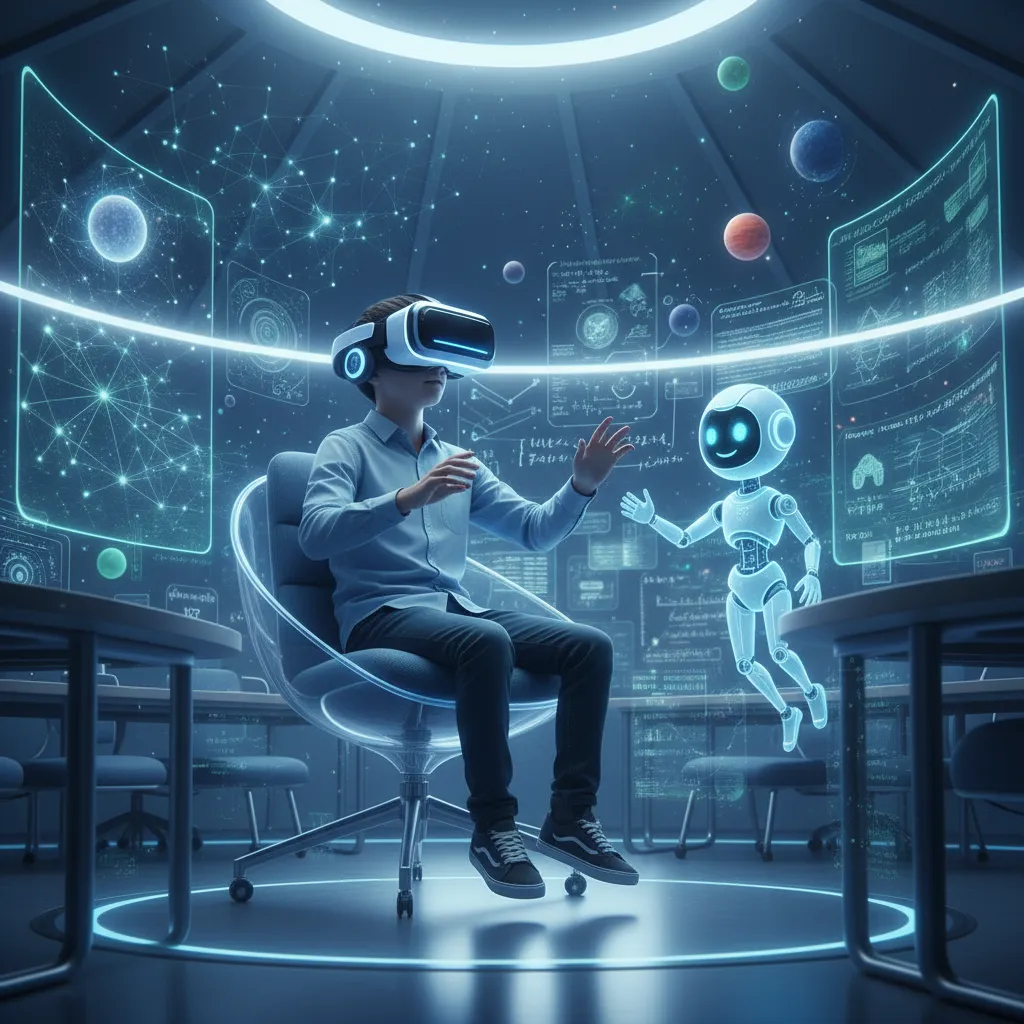 Image: Student in VR goggles experiencing AI learning
Consider how virtual reality (VR) integrated with AI, under the umbrella of virtual reality education AI, can transport students to ancient civilizations, inside the human body, or even to distant galaxies. These experiences are not only highly engaging but also offer a deeper, more experiential understanding that traditional textbooks often cannot replicate. This is a powerful example of AI augmented learning.
Empowering Educators: AI as a Collaborative Partner
While the focus often shifts to student benefits, the AI impact on teachers is equally transformative. Far from replacing educators, AI tools are designed to empower them, freeing up valuable time and providing insights that were previously unimaginable. The future sees AI and teachers working in a powerful synergy, enhancing the human element of education rather than diminishing it.
From Burden to Breakthrough: AI’s Impact on Teachers
Teachers often face an overwhelming workload, balancing lesson planning, grading, classroom management, and individual student support. AI can significantly alleviate these burdens, allowing educators to focus on what they do best: inspiring and guiding students.
Automating Administrative Tasks
One of the most immediate benefits is the automation of routine administrative tasks. AI can:
- Grade assignments: Especially for multiple-choice, short-answer questions, and even provide preliminary feedback on essays.
- Manage schedules: Optimizing class schedules, parent-teacher conference bookings, and resource allocation.
- Track attendance: Using facial recognition or other smart systems to automatically mark students present or absent.
- Generate reports: Compiling student progress reports, identifying trends, and flagging students who might need extra support.
This reduction in administrative overhead provides teachers with more time for direct student interaction, lesson creativity, and professional development.
Teacher Professional Development AI
Teacher professional development AI platforms can offer personalized learning pathways for educators themselves. AI can identify areas where a teacher might need additional training, recommend relevant resources, workshops, or even peer collaboration opportunities. It can analyze classroom performance data (anonymously and with consent, of course) to provide insights into teaching strategies that are most effective for different student cohorts. This continuous, tailored professional growth ensures that teachers remain at the forefront of pedagogical innovation.
AI Curriculum Development
The creation of engaging and effective curricula is a time-consuming process. AI curriculum development tools can assist teachers by:
- Suggesting content: Recommending articles, videos, and interactive exercises relevant to specific learning objectives.
- Mapping standards: Ensuring that lesson plans align with national or local educational standards.
- Identifying gaps: Pointing out areas where a curriculum might be lacking in diversity, depth, or contemporary relevance.
- Generating lesson outlines: Providing initial structures that teachers can then customize and enrich with their expertise.
This collaborative approach allows teachers to build richer, more dynamic curricula with greater efficiency.
The Future of Teaching with AI: A Human-Centric Approach
The future of teaching with AI is not one where robots stand at the front of the classroom. Instead, it’s a future where AI handles the data analysis, the repetitive tasks, and the personalized content delivery, freeing teachers to act as facilitators, mentors, and innovators. They can spend more time on:
- Deepening student relationships: Understanding their emotional needs and fostering a supportive learning environment.
- Cultivating critical thinking and creativity: Guiding discussions, facilitating project-based learning, and encouraging original thought.
- Addressing complex socio-emotional needs: Providing the human connection and empathy that AI cannot replicate.
- Designing truly innovative learning experiences: Leveraging AI tools to create engaging and immersive lessons that were previously impossible.
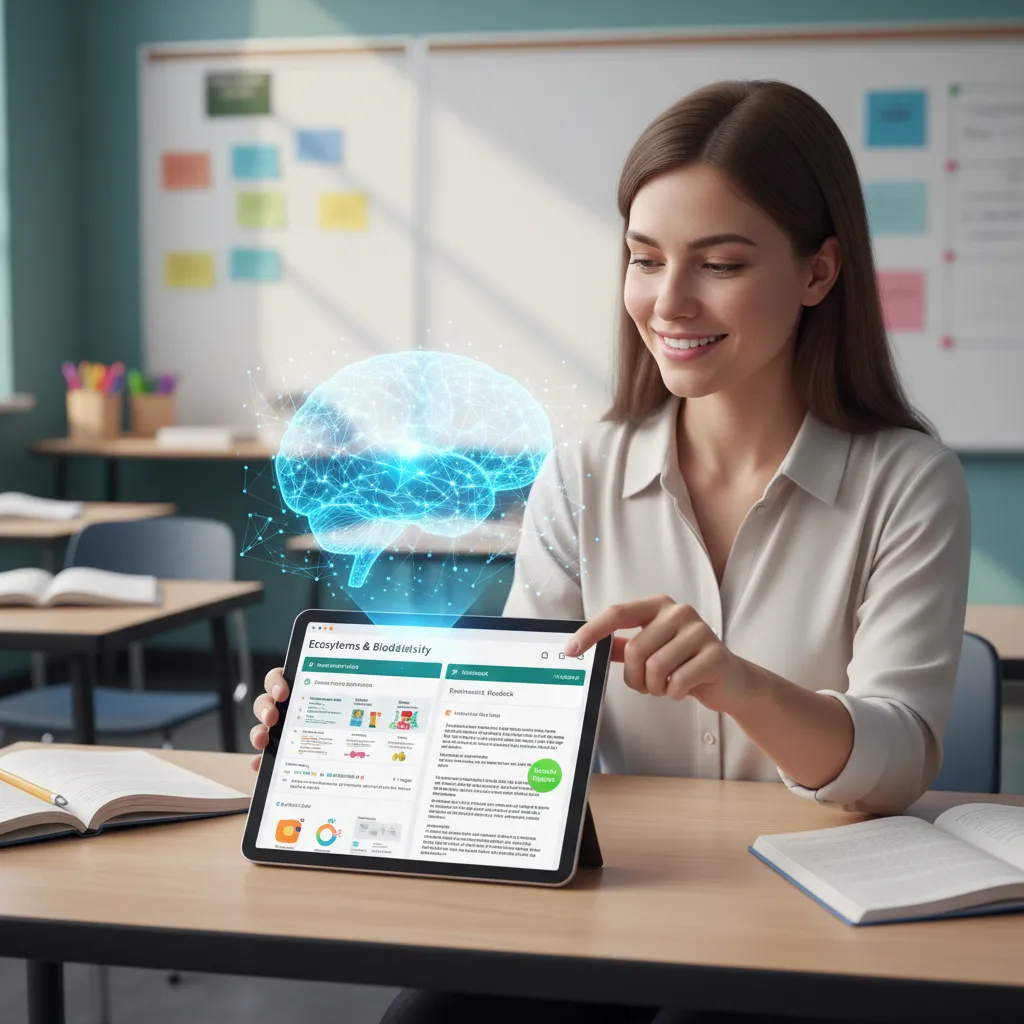 Image: Teacher using AI assistant for lesson planning
In this partnership, AI becomes an indispensable assistant, empowering teachers to deliver a higher quality of education and truly connect with their students on a deeper, more meaningful level. This collaboration is key to unlocking the full potential of AI educational software.
Cutting-Edge AI Learning Tools and Technologies
The rapid evolution of AI has led to an explosion of innovative AI learning tools and technologies designed to transform educational delivery and impact. These tools are being integrated across all levels of education, from early childhood to professional development, creating dynamic and responsive learning environments.
AI-Powered Learning Platforms and Environments
Central to the adoption of AI in education are comprehensive educational AI platforms. These platforms serve as central hubs where students can access personalized content, interact with AI tutors, complete assignments, and track their progress. They often integrate various AI functionalities:
- Content Recommendation Engines: Similar to streaming services, these engines suggest learning materials, videos, or courses based on a student’s past performance, interests, and learning goals.
- Intelligent Assessment Tools: Beyond simple multiple-choice, these tools can analyze complex answers, provide detailed feedback, and even detect plagiarism.
- Speech Recognition and Natural Language Processing (NLP): Enabling students to interact with AI through voice commands, ask questions in natural language, and receive spoken feedback.
These platforms are making learning more accessible, flexible, and tailored to individual needs, whether for AI in K-12 education or AI in higher education.
AI in Classrooms and K-12 Education
The integration of AI in classrooms at the K-12 level is focused on making foundational learning more engaging and effective. Examples include:
- Gamified Learning Apps: AI-powered games that adapt difficulty levels to keep young learners challenged and motivated in subjects like math and reading.
- Smart Whiteboards: Interactive boards that can recognize handwriting, translate languages, and connect students to online resources.
- AI for early intervention: Systems that can identify learning difficulties or behavioral patterns early on, allowing educators to provide timely support.
These tools are helping create more dynamic and responsive learning environments for younger students, setting them up for future success.
AI in Higher Education: Research, Skills, and Beyond
AI in higher education is pushing the boundaries even further. Universities are leveraging AI for:
- Research Assistance: AI tools can help students and faculty sift through vast amounts of academic literature, identify trends, and even assist with data analysis for research papers.
- Personalized Career Guidance: AI can analyze a student’s academic record, skills, and interests to recommend suitable majors, internships, and career paths, creating more effective AI for personalized pathways.
- Smart Campus Management: Optimizing resource allocation, managing facilities, and enhancing security.
- Developing AI Skill Development: Universities are also incorporating AI into their curricula, ensuring students gain the AI skill development necessary for the jobs of the future.
Virtual Reality Education AI and Augmented Learning
The immersive potential of virtual reality education AI is transforming how complex subjects are taught. Imagine medical students practicing intricate surgeries in a simulated environment or architecture students walking through their designs before they’re built. AI enhances these VR experiences by:
- Adapting scenarios: Changing parameters within the simulation based on student performance.
- Providing real-time feedback: Guiding students through complex procedures and highlighting mistakes.
- Personalizing content: Ensuring the VR experience aligns with a student’s learning objectives.
This is a prime example of AI augmented learning, where AI elevates the effectiveness of existing technologies. Similarly, augmented reality (AR) overlays digital information onto the real world, allowing students to interact with 3D models of molecules on their desks or explore historical sites virtually from their classroom.
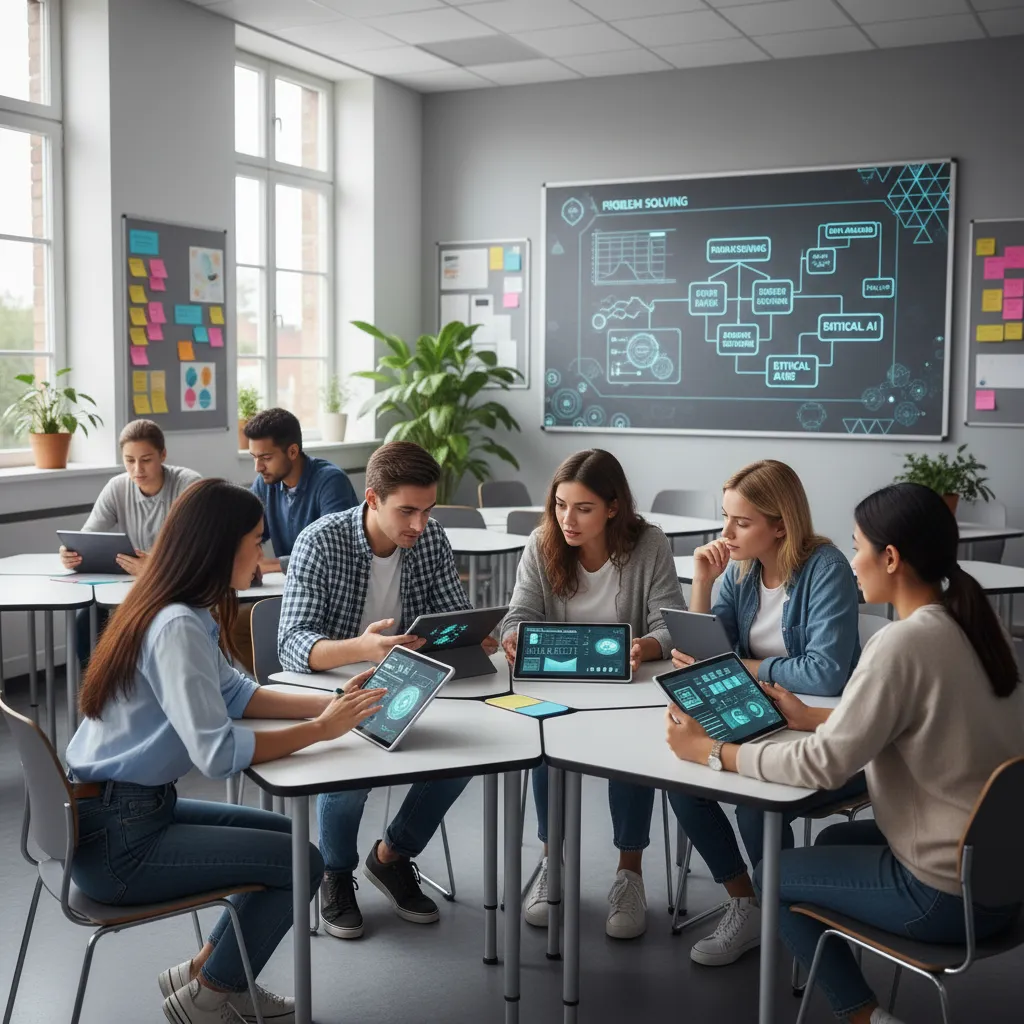 Image: Students collaborating with AI tools
Benefits of AI in Education: A Paradigm Shift
The integration of AI into the educational sphere heralds a paradigm shift, promising a multitude of benefits of AI in education that extend far beyond mere technological novelty. These advantages fundamentally change how we approach learning and teaching, making education more effective, accessible, and engaging for all.
Enhanced Accessibility and Inclusivity
One of the most powerful benefits of AI is its capacity to break down barriers to learning, fostering greater accessibility and inclusivity. AI tools can:
- Provide real-time translation: Allowing students from diverse linguistic backgrounds to access content in their native language.
- Offer accessibility features: Text-to-speech, speech-to-text, and enhanced visual aids cater to students with various disabilities, making content more consumable.
- Deliver remote learning solutions: For students in geographically isolated areas or those unable to attend traditional schooling, AI in remote learning platforms ensure continuous access to quality education.
- Address diverse learning styles: By adapting content presentation, AI can cater to visual, auditory, kinesthetic, and reading/writing learners simultaneously, ensuring no student is left behind due to a mismatch in instructional style.
This inclusive approach means that education can truly become a universal right, tailored to the unique needs of every individual.
Improved Learning Outcomes
The primary goal of any educational innovation is to improve learning outcomes, and AI delivers significantly on this front. Through AI-powered learning and personalized approaches, students demonstrate better comprehension, retention, and application of knowledge.
- Targeted Interventions: AI identifies specific areas where students struggle and provides immediate, targeted support, preventing small misunderstandings from becoming major learning gaps.
- Mastery-Based Learning: By allowing students to progress only after demonstrating mastery of a concept, AI ensures a solid foundation before moving to more complex topics.
- Consistent Practice and Feedback: AI tutors provide endless opportunities for practice and instant, constructive feedback, reinforcing learning loops.
- Predictive Analytics: AI learning analytics can identify students at risk of disengagement or failure, allowing educators to intervene proactively before issues escalate.
Increased Student Engagement and Motivation
Boredom and disengagement are often significant impediments to learning. AI, particularly through gamification, interactive content, and personalized relevance, can dramatically boost AI and student engagement.
- Interactive Content: AI can generate interactive simulations, quizzes, and virtual labs that make learning an active, hands-on experience rather than passive reception.
- Gamification: By incorporating game-like elements such as points, badges, leaderboards, and progress tracking, AI motivates students to achieve learning goals.
- Relevance: When content is dynamically adapted to a student’s interests and learning style, it feels more relevant and meaningful, fostering intrinsic motivation.
- Self-Paced Learning: The ability to learn at one’s own pace reduces anxiety and increases a sense of autonomy, empowering students to take ownership of their education.
Furthermore, these platforms can integrate AI skill development into the learning process, preparing students not just with knowledge but with crucial competencies for a rapidly evolving world. This includes problem-solving, critical thinking, and digital literacy, all honed through interaction with sophisticated AI tools.
Navigating the Challenges: Ethical Considerations and Implementation
While the transformative potential of AI in education is undeniable, its widespread adoption also introduces a unique set of challenges of AI in education. Addressing these issues proactively is crucial for ensuring that AI serves as a force for good, rather than inadvertently creating new disparities or ethical dilemmas.
AI Ethics in Education: Data Privacy and Bias
One of the most pressing concerns revolves around AI ethics in education, particularly regarding data privacy and algorithmic bias.
- Data Privacy: AI systems collect vast amounts of student data – performance, engagement patterns, demographic information. Ensuring this data is securely stored, used ethically, and protected from breaches is paramount. Regulations like GDPR and FERPA must be strictly adhered to, and transparency with students and parents about data usage is essential. Without robust safeguards, the privacy of young learners could be compromised.
- Algorithmic Bias: AI models are trained on existing data, and if that data reflects societal biases (e.g., gender, race, socioeconomic status), the AI can perpetuate or even amplify those biases. This could lead to unfair assessments, discriminatory recommendations for learning pathways, or unequal access to resources. Developing diverse and representative datasets, and continuously auditing AI algorithms for bias, is a critical ongoing challenge. Ensuring fairness in AI for personalized pathways is an ethical imperative.
Bridging the Digital Divide
The promise of personalized learning via AI is incredible, but it risks exacerbating the existing digital divide. Not all students have equal access to:
- Reliable internet connectivity: Especially in rural or economically disadvantaged areas.
- Appropriate devices: Laptops, tablets, or even smartphones capable of running sophisticated AI educational AI platforms.
- Digital literacy skills: The foundational knowledge to effectively use AI tools.
If AI-powered education becomes the standard, students without these resources could be left even further behind, undermining the goal of equitable access. Initiatives to provide hardware, internet access, and digital skills training are crucial alongside AI deployment.
Ensuring Human-Centric Learning
While AI can automate tasks and personalize content, it cannot replicate the nuanced empathy, emotional intelligence, and interpersonal skills of a human educator. There’s a concern that over-reliance on AI could diminish the human element of education, leading to:
- Reduced social interaction: Limiting opportunities for students to develop critical social skills through peer collaboration and teacher interaction.
- Over-reliance on technology: Potentially stifling creativity, critical thinking, or problem-solving skills that require non-algorithmic approaches.
- Depersonalization: Students might feel less connected to their learning if human guidance is minimized.
The key is to use AI to augment, not replace, human teachers. The future of teaching with AI should be one where AI handles the data and repetitive tasks, allowing teachers to focus on fostering creativity, critical thinking, and socio-emotional development – skills that require human interaction.
 Image: Abstract visualization of AI data analytics in education
Furthermore, educators need adequate teacher professional development AI training to effectively integrate these tools into their pedagogy. Without proper training, teachers may struggle to leverage AI’s full potential or may inadvertently misuse it, impacting student learning AI. The successful implementation of AI in education requires a careful balance between technological innovation and human-centered design, ensuring that ethical considerations are always at the forefront.
The Future Landscape: AI in Remote Learning and Beyond
The trajectory of AI in education points towards an increasingly integrated and transformative role, particularly as AI in remote learning becomes a permanent fixture in the global educational landscape. The future will see AI not just optimizing existing processes but fundamentally redefining the possibilities of learning and assessment.
AI in Remote Learning: Bridging Distances and Enhancing Experiences
The COVID-19 pandemic accelerated the adoption of remote learning, and AI has proven to be an indispensable tool in making these experiences more effective and engaging. In the future, AI in remote learning will continue to evolve, offering solutions that transcend the limitations of traditional online education.
- Intelligent Virtual Classrooms: AI-powered platforms can monitor student engagement (e.g., eye-tracking, participation in chat, time spent on tasks), provide real-time feedback to instructors on who might be struggling, and even manage breakout rooms more effectively.
- Dynamic Content Delivery: AI can adapt lectures and materials on the fly, tailoring them to the collective understanding of the remote class or to individual students’ needs, ensuring that AI-powered learning is truly personalized, even from a distance.
- AI for Student Support: Beyond just academics, AI chatbots can provide 24/7 support for technical issues, administrative queries, or even basic mental health resources, improving the overall remote learning experience.
- Virtual Proctoring: While controversial, AI-driven proctoring tools can help ensure academic integrity in remote assessments, though careful ethical considerations must guide their implementation.
AI Learning Analytics: Unlocking Deeper Insights
One of the most powerful and evolving areas is AI learning analytics. By collecting and analyzing vast amounts of data from student interactions, AI can provide unprecedented insights into the learning process.
- Predictive Analytics for Student Success: AI models can identify patterns and predict which students are at risk of falling behind or dropping out, allowing educators to intervene proactively. This goes beyond simple grades, looking at engagement, time spent on tasks, and interaction patterns.
- Curriculum Optimization: Analytics can reveal which parts of a curriculum are most effective, which topics cause the most confusion, and where content might need revision for better student outcomes. This directly informs AI curriculum development.
- Identifying Best Practices: By analyzing the teaching styles and resource usage of successful educators, AI can help identify and disseminate best practices across an institution or district, enhancing teacher professional development AI.
- Understanding Learning Styles: Deep dives into data can uncover previously unobservable learning patterns, allowing educators to fine-tune their approaches and enhance student learning AI.
AI Skill Development: Preparing for the AI-Powered World
Beyond using AI for learning, a critical aspect of the future is learning about AI. AI skill development will become a fundamental component of education across all levels.
- AI Literacy: Equipping students with a basic understanding of how AI works, its capabilities, limitations, and ethical implications. This is crucial for navigating an increasingly AI-driven world.
- Coding and AI Development: Providing opportunities for students to learn coding languages and develop their own AI applications, preparing them for careers in technology.
- Critical Thinking about AI: Fostering the ability to critically evaluate AI-generated information, identify biases, and understand the societal impact of AI.
The future will undoubtedly see AI woven into the fabric of education, not just as a tool but as a subject of study, preparing students for a world where understanding and interacting with AI is an essential life skill. The potential for AI augmented learning is limitless, from intelligent language translation to advanced scientific simulations, all contributing to a richer, more effective, and profoundly personalized educational journey.
Conclusion: Embracing the Intelligent Future of Education
The journey through the intricate world of AI in education reveals a future brimming with possibility and profound transformation. We’ve seen how artificial intelligence is not merely a technological add-on, but a foundational shift that is redefining the very essence of learning. From crafting hyper-personalized learning pathways and empowering educators with intelligent assistants to creating immersive virtual reality education AI experiences, AI is poised to unlock the full potential of every learner.
The benefits of AI in education are clear: enhanced accessibility, improved learning outcomes, and unprecedented student engagement. Yet, we must also acknowledge and proactively address the challenges of AI in education, particularly concerns around AI ethics in education, data privacy, algorithmic bias, and bridging the ever-present digital divide. The goal is not to blindly embrace technology, but to thoughtfully integrate it, ensuring that AI serves as a catalyst for equitable, human-centric learning experiences.
As we look towards the future of education, it’s clear that AI learning tools will continue to evolve, further refining AI-powered learning and expanding the capabilities of AI in classrooms and AI in higher education. The synergy between human educators and intelligent machines promises a dynamic and responsive educational ecosystem where every student receives the tailored support and challenge they need to thrive.
Embracing this intelligent future requires foresight, collaboration, and a commitment to continuous innovation. The transformation is underway, and by harnessing the power of AI responsibly, we can truly revolutionize education for generations to come.
FAQs
Q1. What is the main goal of AI in education?
The main goal of AI in education is to personalize the learning experience for each student, making education more accessible, engaging, and effective, while also empowering teachers by automating administrative tasks and providing insightful data.
Q2. How does personalized learning AI benefit students?
Personalized learning AI benefits students by adapting the curriculum, pace, and teaching style to their individual needs, strengths, and weaknesses. This leads to improved comprehension, better retention of information, and increased motivation as learning becomes more relevant and engaging.
Q3. What impact does AI have on teachers?
AI significantly impacts teachers by automating time-consuming administrative tasks like grading and reporting, providing data-driven insights into student performance, and offering resources for teacher professional development AI. This frees up educators to focus more on direct student interaction, fostering critical thinking, and addressing socio-emotional needs.
Q4. Are there ethical concerns regarding AI in education?
Yes, significant ethical concerns include AI ethics in education, especially regarding student data privacy, ensuring the security of sensitive information, and addressing algorithmic bias to prevent discriminatory outcomes in learning recommendations or assessments.
Q5. How does AI contribute to AI skill development for students?
AI contributes to AI skill development by not only using AI for learning but also by teaching about AI. This includes fostering AI literacy, introducing coding and AI development concepts, and cultivating critical thinking skills necessary to navigate an AI-driven world.
Q6. Can AI replace human teachers in the future?
No, the consensus is that AI will not replace human teachers. Instead, AI serves as a powerful tool to augment teachers’ capabilities, handle repetitive tasks, and provide data-driven insights. The future of teaching with AI envisions a collaborative relationship where teachers focus on higher-level tasks like mentorship, fostering creativity, and providing the essential human connection that AI cannot replicate.
Q7. What are some examples of AI learning tools?
Examples of AI learning tools include adaptive learning platforms that adjust content based on student performance, intelligent tutoring systems that offer personalized guidance, AI-powered assessment tools, content recommendation engines, and virtual reality education AI systems that create immersive learning experiences.
Q8. How can AI help with AI in remote learning?
AI can enhance AI in remote learning by providing intelligent virtual classrooms with engagement tracking, dynamically adapting online content, offering 24/7 student support via chatbots, and using AI learning analytics to optimize curriculum and identify at-risk students, making remote education more effective and accessible.