AI in Education: Revolutionizing Learning and Teaching in 2024
Introduction: The Tectonic Shift in Learning and Teaching
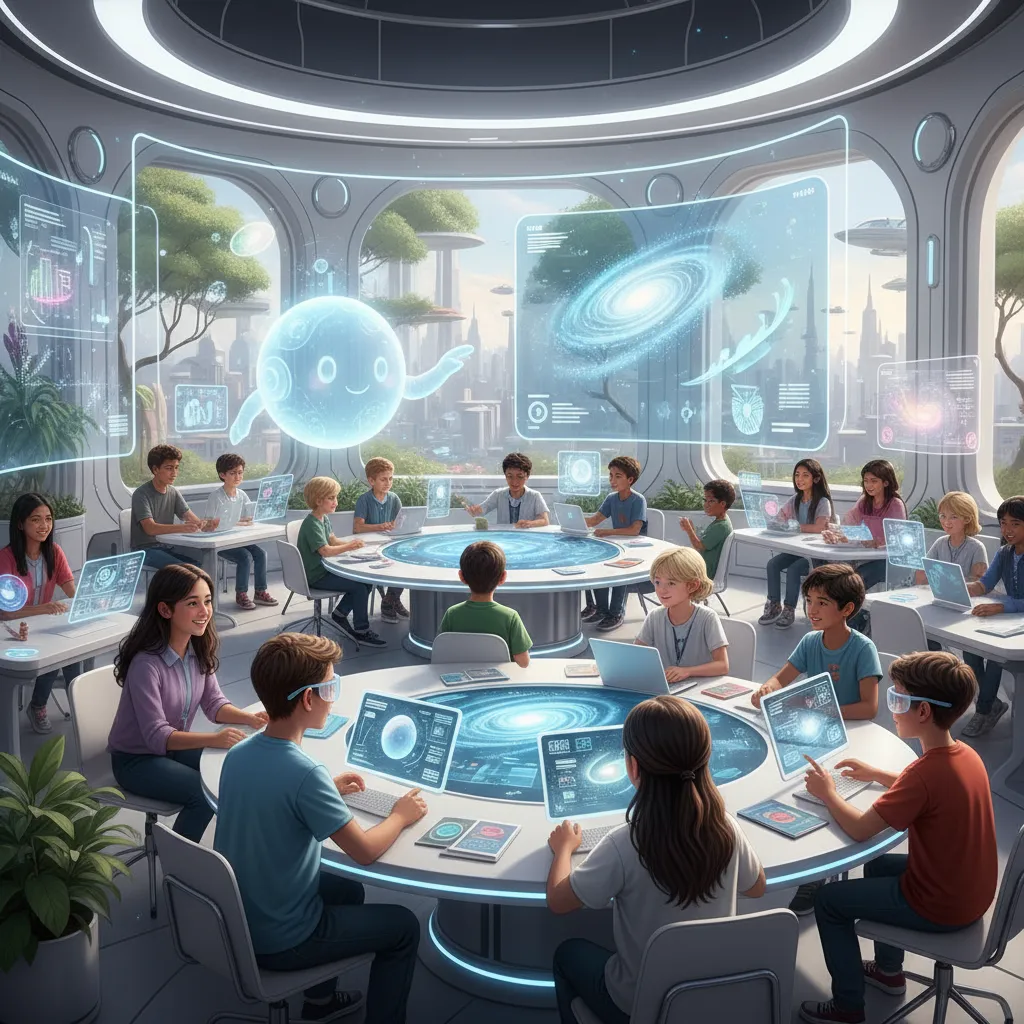
The landscape of education is undergoing a seismic transformation, and at the heart of this revolution is Artificial Intelligence (AI). What was once the realm of science fiction is now a tangible reality, with AI in education rapidly reshaping how we learn, teach, and interact with knowledge itself. In 2024, the AI impact on education is more profound than ever, moving beyond theoretical discussions to practical applications that enhance every facet of the learning journey.
This article delves deep into the multifaceted ways AI for learning and teaching is revolutionizing schools, universities, and continuous professional development. We’ll explore the incredible AI education benefits, from hyper-personalized learning experiences to intelligent assessment, and examine the myriad of educational AI tools that are empowering both students and educators. We’ll also candidly address the AI education challenges, including ethical considerations and the imperative for AI literacy education, ensuring a balanced and comprehensive understanding of this pivotal moment. Join us as we uncover the future of education AI and its potential to unlock unprecedented opportunities for a smarter, more equitable, and engaging educational ecosystem.
Personalized Learning Paths: AI at the Core of Individualized Education
One of the most significant promises of AI in education is its ability to deliver truly personalized learning experiences. Gone are the days of a one-size-fits-all curriculum; personalized learning AI dynamically adapts content, pace, and teaching methods to suit each student’s unique needs, strengths, and weaknesses. This is not merely about differentiating instruction, but about creating an entirely bespoke educational journey.
Adaptive Learning Systems: Tailoring Every Step
Adaptive learning AI systems are at the forefront of this personalization. These sophisticated platforms utilize algorithms to continuously assess a student’s performance, identify learning gaps, and then recommend specific resources, exercises, or explanations. If a student struggles with a particular concept in algebra, the system might provide additional practice problems, tutorials, or even re-explain the concept from a different angle. Conversely, if a student quickly masters a topic, the AI can fast-track them to more advanced material, preventing boredom and fostering continuous engagement. This dynamic adjustment ensures that every student is challenged appropriately, maximizing AI and learning outcomes.
AI for Personalized Learning Paths: Beyond the Classroom
The concept of AI for personalized learning paths extends beyond traditional subjects. It can guide students through complex skill acquisition, recommend career pathways based on their aptitudes, and even suggest extracurricular activities that align with their interests. Imagine an AI mentor that understands your learning style, your career aspirations, and your current skill set, then crafts a meticulously tailored roadmap for your academic and professional development. This is the power of AI in action, moving us closer to a truly student-centric educational model.

Student AI Tools 2024: Empowering Learners Directly
A plethora of student AI tools 2024 are emerging, designed to empower learners directly. These tools range from AI-powered writing assistants that provide real-time feedback on grammar, style, and coherence, to intelligent language tutors that offer conversational practice and pronunciation correction. Students can leverage these tools for homework help, exam preparation, or simply to explore subjects beyond the curriculum. They offer immediate, non-judgmental support, making learning more accessible and less intimidating.
Revolutionizing Teaching and Administrative Efficiency with AI
While much attention focuses on students, AI in teaching is equally transformative for educators and school administrators. By automating mundane tasks and providing invaluable insights, teacher AI tools are freeing up educators to focus on what they do best: inspiring and guiding their students. This leads to AI enhanced learning environments where teachers are empowered, not replaced.
Automating Assessment and Feedback
One of the most time-consuming aspects of teaching is grading and providing feedback. AI assessment in education is rapidly changing this. AI-powered tools can grade multiple-choice questions, fill-in-the-blank exercises, and even provide preliminary feedback on essays and coding assignments. This doesn’t mean AI replaces human judgment, but rather automates the initial, repetitive stages, allowing teachers to dedicate more time to qualitative feedback, one-on-one interactions, and addressing specific student needs. Imagine the time saved, which can then be reinvested in lesson planning, student support, or professional development.
Data-Driven Insights for Educators
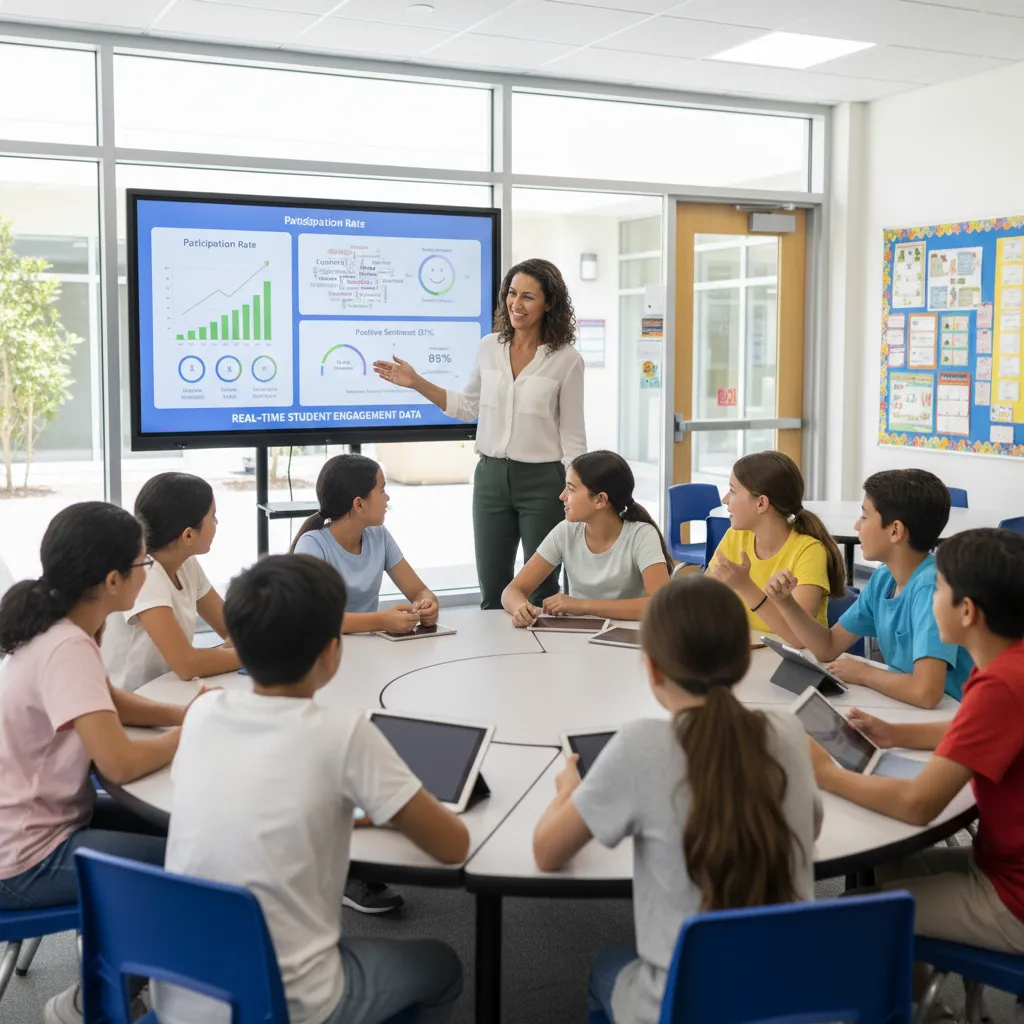
AI in schools collects and analyzes vast amounts of data on student performance, engagement, and learning patterns. This data, processed by AI, provides teachers with actionable insights into individual student progress and overall classroom trends. Educators can quickly identify students who are struggling, pinpoint specific concepts causing difficulty for the class, and adjust their teaching strategies accordingly. These AI education technology trends are transforming teaching into a more data-informed practice, leading to better AI and learning outcomes.
AI and Teacher Professional Development
AI and teacher professional development is another exciting area. AI tools can analyze a teacher’s classroom performance (with appropriate privacy safeguards), provide personalized coaching on teaching techniques, or recommend relevant professional development courses based on observed needs. This creates a continuous feedback loop, helping teachers refine their skills and stay updated with the latest pedagogical approaches and educational AI tools. It’s about empowering teachers to be even more effective in their crucial role. If you’re interested in boosting your own productivity as an educator, exploring resources like top AI productivity tools can be incredibly beneficial.
AI-Driven Curriculum and Enhanced Learning Environments
Beyond individual lessons, AI in education is also impacting the very structure of what and how we learn. AI driven curriculum development promises a more dynamic, responsive, and relevant educational content that evolves with the world.
Dynamic Curriculum Design
AI can analyze real-world data, industry trends, and job market demands to inform curriculum development, ensuring that what students learn remains relevant and prepares them for AI and future job skills. For example, an AI could identify emerging skill gaps in the tech industry and recommend updates to computer science curricula to address them. This ensures that education is not a static entity but a living, breathing system that adapts to societal needs.
AI Enhanced Learning Environments: Immersive and Engaging
AI enhanced learning environments go beyond traditional classrooms. Think about virtual reality (VR) and augmented reality (AR) experiences powered by AI, allowing students to explore ancient civilizations, dissect virtual organs, or simulate complex scientific experiments without physical constraints. AI powered learning platforms are increasingly integrating these immersive technologies, making learning more engaging, memorable, and accessible. For instance, an AI tutor system could guide a student through a VR simulation of the human circulatory system, providing real-time feedback and explanations.
The Broad Spectrum of AI Application: From K-12 to Higher Education
The reach of AI in education is not limited to a single demographic or educational stage. Its versatile applications are transforming learning across the entire spectrum, from early childhood to postgraduate studies.
AI in K-12 Education: Building Foundational Skills
In AI in K-12 education, the focus is often on foundational skills. AI tutor systems can provide personalized assistance with reading, writing, and mathematics, identifying where a young learner struggles and offering targeted interventions. Gamified educational AI tools make learning engaging and fun, fostering a positive attitude towards education from an early age. AI can also help identify learning disabilities earlier, allowing for timely support and personalized educational plans. This early intervention is crucial for long-term AI and learning outcomes.
AI in Higher Education: Research, Specialization, and Innovation
For AI in higher education, the applications become more sophisticated. AI assists in research by sifting through vast amounts of data, identifying patterns, and even generating hypotheses. It supports specialized learning paths, offering advanced resources and mentorship connections. Students can use AI for complex data analysis in their dissertations or for developing innovative solutions in their fields of study. Furthermore, AI helps universities manage large student bodies, optimize course scheduling, and analyze enrollment trends, contributing to overall institutional efficiency. The ability of AI to process and analyze large datasets is truly a game-changer across various sectors, not just education. For example, AI is also revolutionizing healthcare diagnostics and patient care by identifying patterns in medical data.
The Future Trajectory: AI, Future Job Skills, and Global Impact
As we look ahead, the future of education AI is intrinsically linked to preparing students for a rapidly evolving global workforce. The skills needed for success are shifting, and AI in education is key to equipping the next generation.
AI and Future Job Skills: Adapting to the New Economy
The rise of AI itself means that future jobs will demand different competencies. Critical thinking, creativity, problem-solving, digital literacy, and collaboration will be paramount. AI in education helps cultivate these skills by providing platforms for experiential learning, complex problem-solving scenarios, and opportunities for interdisciplinary projects. Furthermore, AI literacy education will become a foundational skill, enabling students to understand, ethically use, and even develop AI technologies. This prepares them not just for existing jobs, but for roles that haven’t even been conceived yet. Understanding and utilizing AI tools will be crucial across many fields, similar to how AI personal assistants are revolutionizing productivity in the workplace.
Global Accessibility and Equity through AI
AI impact on education also has the potential to bridge educational gaps globally. In regions with limited access to qualified teachers or resources, AI powered learning platforms can provide high-quality education to millions. AI can translate educational content, adapt it to different cultural contexts, and deliver it remotely, making learning more equitable. This democratizes access to knowledge and opportunities, fostering a more inclusive global learning community.
AI Education Technology Trends: Emerging Innovations
The AI education technology trends continue to evolve at a breathtaking pace. We can anticipate more sophisticated AI tutor systems that can engage in natural language conversations, advanced sentiment analysis to gauge student emotional states and adapt accordingly, and AI-powered content generation for customized learning materials. The integration of AI with brain-computer interfaces (BCI) might even be on the horizon, offering unprecedented levels of personalized interaction and learning. For a broader view of AI’s transformative power, consider how AI is revolutionizing healthcare across various domains.
Navigating the Ethical Maze: Challenges and Responsible AI Implementation
While the potential of AI in education is immense, it’s crucial to address the AI education challenges and ethical considerations that accompany this technological leap. Responsible implementation is key to harnessing its benefits without compromising core educational values.
AI Ethics in Education: Privacy, Bias, and Accountability
A primary concern is AI ethics in education, particularly regarding student data privacy. AI systems collect vast amounts of personal and performance data, necessitating robust safeguards to protect student information from misuse or breaches. Another critical issue is algorithmic bias. If AI is trained on biased data, it can perpetuate or even amplify existing inequalities, leading to unfair outcomes for certain student groups. Ensuring fairness, transparency, and accountability in AI algorithms is paramount. Educators and policymakers must work together to establish clear ethical guidelines and regulatory frameworks.
The Role of the Human Teacher: Beyond Automation
A common fear is that AI will replace teachers. However, a more accurate perspective is that teacher AI tools will augment, not replace, the human element. While AI can automate tasks and provide data, the unique qualities of human teachers – empathy, mentorship, emotional intelligence, and the ability to foster critical thinking and creativity through nuanced interaction – remain irreplaceable. The challenge lies in redefining the teacher’s role, shifting from a dispenser of information to a facilitator, mentor, and guide in an AI enhanced learning environment.
AI Literacy Education: Equipping Everyone
For AI in education to truly flourish, AI literacy education is essential for all stakeholders: students, teachers, parents, and administrators. Students need to understand how AI works, its capabilities, and its limitations, to become responsible digital citizens. Teachers need training to effectively integrate educational AI tools into their pedagogy and to understand the ethical implications. This ongoing professional development is crucial for successful AI classroom integration. Training and development are vital across all professional fields, and similar to how AI and teacher professional development is evolving, we can observe parallel trends in sectors like healthcare, where AI is in healthcare revolutionizing personalized medicine.
Conclusion: The Dawn of a New Educational Era
The integration of AI in education is not just a passing trend; it is a fundamental shift that promises to redefine the very essence of learning and teaching. In 2024, we are witnessing the burgeoning potential of AI for learning to create hyper-personalized, engaging, and effective educational experiences for students of all ages. From AI in K-12 education fostering foundational skills to AI in higher education driving cutting-edge research, the AI impact on education is profound and far-reaching.
While AI education benefits are undeniable, offering unparalleled opportunities for adaptive learning AI, enhanced teacher productivity through teacher AI tools, and the development of crucial AI and future job skills, it is imperative to navigate the accompanying AI education challenges with foresight and responsibility. Issues of AI ethics in education, data privacy, and algorithmic bias demand careful consideration and proactive solutions.
The future of education AI is one where technology serves as a powerful ally, augmenting human capabilities rather than supplanting them. By fostering AI literacy education, investing in AI and teacher professional development, and ensuring thoughtful AI classroom integration, we can harness the transformative power of educational AI tools to cultivate AI enhanced learning environments that prepare students not just for the challenges of tomorrow, but to shape a brighter, more intelligent future. The revolution is here, and it’s an exciting time to be a part of it.
FAQs
Q1. What is AI in education?
AI in education refers to the application of Artificial Intelligence technologies to enhance and personalize learning and teaching processes. This includes tools for adaptive learning, automated assessment, intelligent tutoring systems, and data-driven insights for educators.
Q2. How does AI personalize learning for students?
AI personalizes learning by analyzing individual student data, such as performance, learning style, and pace, to create tailored learning paths. It adapts content, recommends resources, and provides targeted feedback, ensuring each student receives instruction best suited to their needs.
Q3. What are the main benefits of AI in schools?
The main benefits of AI in schools include personalized learning, automated administrative tasks, data-driven insights for teachers, enhanced student engagement through interactive tools, and improved access to educational resources, ultimately leading to better learning outcomes.
Q4. What are some examples of AI tools for students in 2024?
In 2024, AI tools for students include AI-powered writing assistants for grammar and style feedback, intelligent language learning apps, virtual AI tutors for subject-specific help, and adaptive platforms that provide customized practice problems and learning materials.
Q5. How does AI support teachers in the classroom?
AI supports teachers by automating routine tasks like grading and administrative duties, providing data-driven insights into student performance, helping identify struggling learners, and offering resources for professional development. This frees up teachers to focus on mentorship and deeper student engagement.
Q6. What are the ethical concerns surrounding AI in education?
Ethical concerns include student data privacy and security, potential algorithmic bias leading to unfair educational outcomes, the need for transparency in AI decision-making, and ensuring that AI tools do not diminish the essential human connection between teachers and students.
Q7. How does AI prepare students for future job skills?
AI prepares students for future job skills by fostering critical thinking, problem-solving, and digital literacy through AI-enhanced learning environments. It also helps students develop an understanding of AI itself (AI literacy education), which is becoming a crucial skill in many future careers.