AI’s Healthcare Revolution: Predictive Diagnostics & Personalized Treatment

For centuries, medicine has largely operated on a reactive basis. You feel sick, you see a doctor, you get a diagnosis, and you receive a treatment designed for the “average” patient. But what if we could predict illnesses before symptoms even appear? What if your treatment was tailored not just to your condition, but to your unique genetic code, lifestyle, and environment? This isn’t science fiction; it’s the reality being built today, powered by one of the most transformative technologies of our time: Artificial Intelligence.
The integration of AI in healthcare is sparking a revolution, moving us from a one-size-fits-all model to an era of unparalleled precision and proactivity. This shift is most profound in two key areas: predictive diagnostics AI, which aims to identify diseases earlier than ever, and personalized medicine AI, which crafts treatments specifically for you.
In this deep dive, we’ll explore the incredible medical AI advancements that are reshaping our world. We’ll uncover how machine learning in medicine is decoding complex biological data, accelerating AI drug discovery, and creating smart healthcare solutions that promise a healthier future for everyone. Get ready to witness the dawn of a new age in medicine.
The Dawn of a New Era: What is AI in Healthcare?
Before we explore its revolutionary applications, let’s clarify what we mean by “AI in healthcare.” It’s not about sentient robots replacing doctors. Instead, it’s about using sophisticated algorithms and computational power to analyze vast amounts of medical data far beyond human capability.
At its core, AI health technology leverages several key subfields:
- Machine Learning (ML): This is the engine driving most medical AI. ML algorithms are trained on massive datasets (like patient records, medical images, and genomic sequences) to recognize patterns and make predictions without being explicitly programmed.
- Deep Learning: A more advanced subset of ML, deep learning uses multi-layered “neural networks” to identify incredibly subtle patterns. This is the technology behind breakthroughs in AI medical imaging and complex disease prediction.
- Natural Language Processing (NLP): NLP gives machines the ability to understand and interpret human language. In healthcare, it’s used to extract critical information from unstructured text like clinical notes, research papers, and patient feedback.
This technological trifecta allows us to transition from simply storing data in electronic health records to actively learning from it. The goal isn’t to replace the human touch but to augment it, providing clinicians with powerful tools to make faster, more accurate, and more informed decisions. Related: The AI Hardware Race: How Next-Gen Gadgets are Changing Everything.
The Power of Prediction: AI in Early Diagnostics and Disease Prediction
One of the most significant promises of AI is its ability to see the invisible. By sifting through mountains of data, AI health diagnostics can detect faint signals of disease long before a patient feels a single symptom, fundamentally changing the game for countless conditions.
Revolutionizing Medical Imaging
Medical imaging—X-rays, CT scans, MRIs—is a cornerstone of modern diagnostics. However, interpreting these images requires highly trained specialists, and even they can miss subtle abnormalities. This is where AI medical imaging shines.
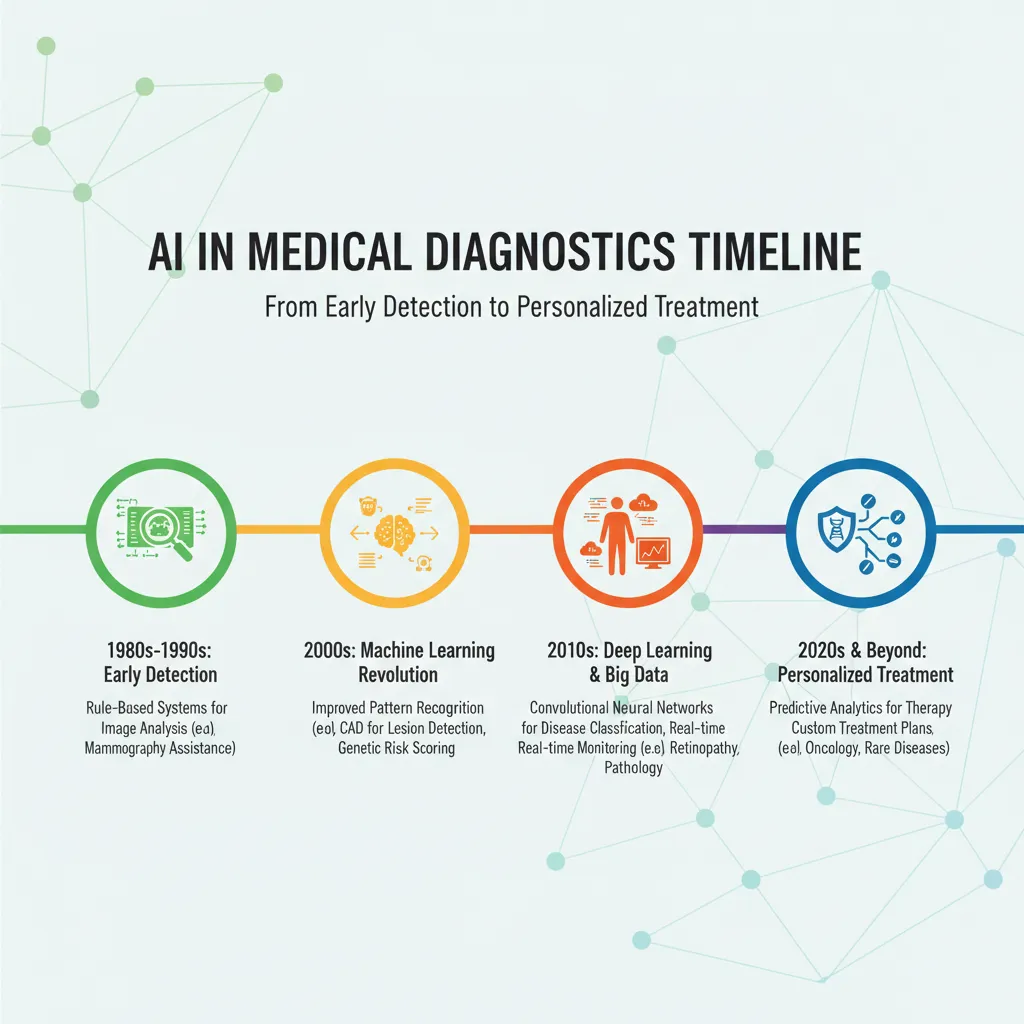
Deep learning algorithms can be trained on millions of annotated scans to identify signs of disease with superhuman accuracy and speed. For example:
- Oncology: AI models can detect cancerous nodules in lung CT scans or identify malignant skin lesions from photographs, often flagging suspicious areas that might be overlooked.
- Ophthalmology: Google’s DeepMind developed an AI that can analyze eye scans to detect diabetic retinopathy—a leading cause of blindness—with an accuracy level on par with human retinal specialists.
- Neurology: AI helps identify early signs of Alzheimer’s disease or stroke from brain scans, enabling earlier intervention when treatments are most effective.
This technology acts as a tireless, expert second opinion, helping radiologists prioritize critical cases and boosting the overall accuracy of AI for early detection.
From Genes to Diagnosis: The Role of AI and Genomics
Our DNA holds the blueprint to our health, but it’s incredibly complex. AI and genomics are a perfect match. AI algorithms can analyze an individual’s entire genetic sequence and cross-reference it with population-level data to pinpoint genetic markers associated with diseases like cancer, heart disease, and rare inherited disorders.
This powerful combination enables:
- Risk Stratification: Identifying individuals at high genetic risk for certain conditions, allowing for targeted screening and preventative measures.
- Pharmacogenomics: Predicting how a patient will respond to a particular drug based on their genetic makeup, avoiding adverse reactions and ineffective treatments.
- Rare Disease Diagnosis: Accelerating the diagnostic odyssey for patients with rare genetic conditions, which can often take years of testing and uncertainty.
The future of personalized health is written in our genes, and AI is the key to finally reading it.
Listening to the Data: Predictive Analytics
Beyond images and genes, AI excels at analyzing real-time data from electronic health records (EHRs) and wearable devices. By monitoring vital signs, lab results, and clinical notes, predictive analytics models can forecast health events before they become critical. Hospitals are using this form of AI disease prediction to identify patients at high risk for sepsis, a life-threatening condition, allowing for immediate intervention. Similarly, data from smartwatches and other wearables can feed into algorithms that monitor for signs of atrial fibrillation or sleep apnea. Related: Unlock Deeper Sleep: How AI Wearables are Revolutionizing Rest.
Beyond Diagnosis: Crafting Personalized Treatment Plans with AI
Identifying a disease early is only half the battle. The next step is treating it effectively. This is where personalized medicine AI—also known as precision medicine AI—comes in, promising a future where treatments are as unique as the patients receiving them.
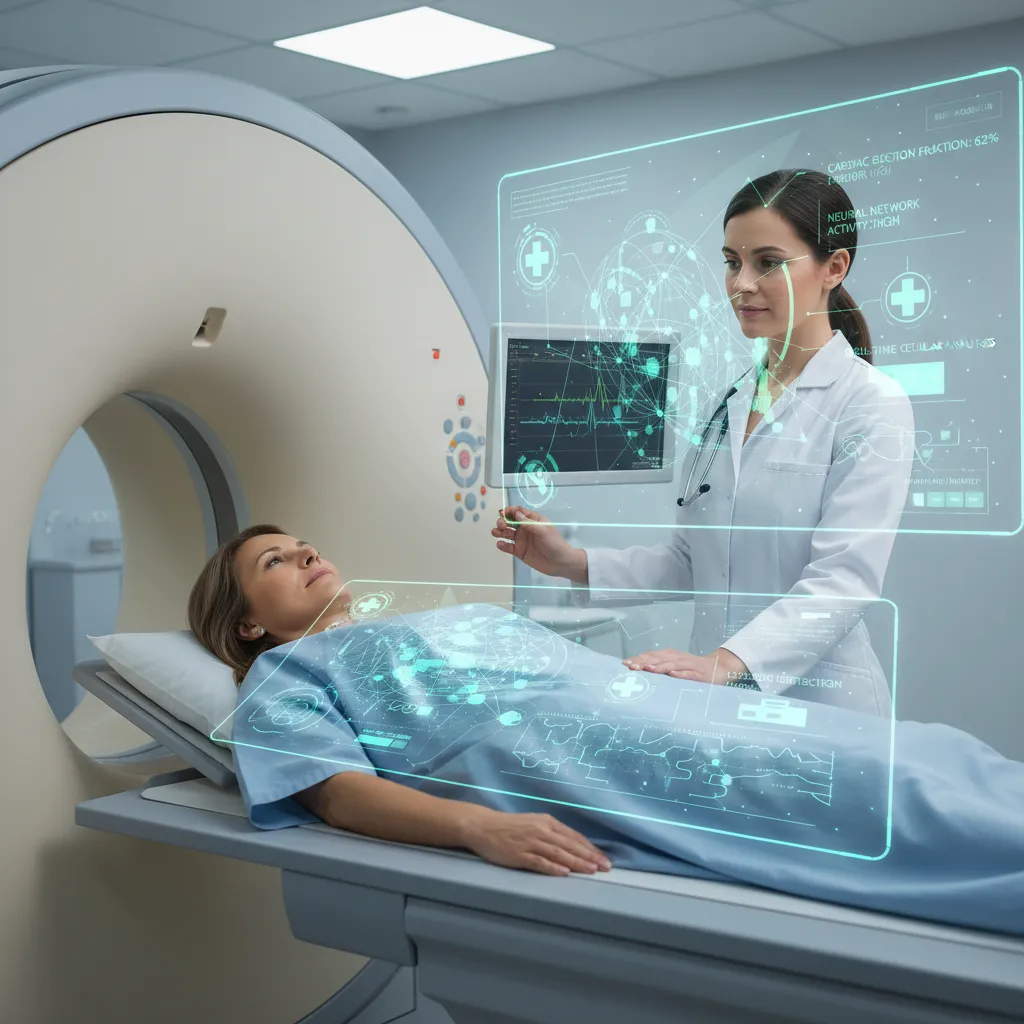
The goal of an AI driven treatment is to deliver the right intervention to the right patient at the right time. AI achieves this by integrating a vast array of data points—genomics, lifestyle, environment, medical history, and real-time biomarkers—to create a holistic view of the individual.
Tailored Therapies: AI-Driven Treatment Recommendations
Nowhere is the impact of personalized treatment plans AI more evident than in oncology. Cancer is not one disease but thousands of distinct conditions, each with a unique molecular signature. AI platforms can:
- Analyze the genomic profile of a patient’s tumor.
- Cross-reference this data with extensive databases of clinical trials, research papers, and drug efficacy reports.
- Recommend a targeted therapy or immunotherapy combination most likely to be effective for that specific cancer subtype.
This approach is also being applied to AI for chronic diseases like diabetes and hypertension. AI systems can analyze a patient’s glucose monitoring data, diet, and activity levels to recommend personalized insulin dosages or lifestyle adjustments, moving beyond generic advice to provide actionable, individualized guidance.
The Future of Pharmaceuticals: AI in Drug Discovery and Clinical Trials
The traditional path to developing a new drug is incredibly slow and expensive, often taking over a decade and costing billions of dollars. AI drug discovery is set to shatter this paradigm.
AI is accelerating this process at every stage:
- Target Identification: AI analyzes biological data to identify proteins and pathways involved in a disease that could be targeted by a new drug.
- Molecule Design: Generative AI models can design novel drug candidates from scratch that are optimized for efficacy and safety.
- Predicting Success: AI predicts which compounds are most likely to succeed in clinical trials, reducing the massive failure rate.
- Optimizing Trials: AI in clinical trials helps identify the right patient cohorts, monitor participants remotely, and streamline data analysis.
Companies like Insilico Medicine and Schrödinger are already using these techniques to bring new drugs to trial in a fraction of the traditional time, a true AI medical breakthrough. Related: AI Unleashed: Revolutionizing Drug Discovery for Medical Breakthroughs.

Precision in Practice: AI-Assisted Surgery
The operating room is also being transformed by AI. While fully autonomous surgery is still in the future, AI assisted surgery is a present-day reality. AI enhances the capabilities of surgical robots, like the da Vinci system, by:
- Providing real-time guidance to surgeons using augmented reality overlays.
- Analyzing video from the operation to identify critical structures like nerves and blood vessels.
- Stabilizing instrument movements to eliminate tremors and improve precision.
This leads to less invasive procedures, fewer complications, and faster recovery times for patients.
The Expanding Ecosystem of Smart Healthcare Solutions
The AI healthcare innovation wave extends far beyond the hospital walls, creating a connected ecosystem of smart healthcare solutions that empower both patients and providers.
The Rise of Virtual Healthcare and AI Patient Care
The pandemic accelerated the adoption of telehealth, and AI is making it smarter and more accessible. Virtual healthcare AI is taking many forms:
- AI Chatbots: These can act as a first point of contact, triaging patient symptoms, answering common questions, and scheduling appointments, freeing up administrative staff for more complex tasks.
- Remote Patient Monitoring: Digital health AI platforms analyze data from at-home medical devices to monitor patients with chronic conditions, alerting care teams to any concerning trends. Related: Samsung Galaxy Ring: The Future of Wearables is Here.
- Mental Health Support: AI-powered apps are providing accessible, on-demand support for mental wellness through conversational agents and therapy exercises.
This focus on continuous, accessible AI patient care is crucial for managing health proactively.
The Business of Health: AI Health Startups and Innovation
This technological revolution is fueled by a vibrant ecosystem of AI health startups. These agile companies are challenging incumbents and pushing the boundaries of what’s possible, attracting billions in venture capital. From developing novel diagnostic tools to creating new platforms for decentralized clinical trials, these startups are a key driver of current healthcare technology trends.
Navigating the Challenges: The Ethics and Hurdles of Medical AI
For all its incredible promise, the road to widespread AI adoption in healthcare is not without obstacles. Addressing the ethical and practical challenges is critical for building a trustworthy and equitable system.
The core tenets of AI ethics healthcare revolve around:
- Data Privacy and Security: Medical data is deeply personal. Ensuring that AI systems comply with regulations like HIPAA and are protected from cyberattacks is paramount.
- Algorithmic Bias: If an AI model is trained on data that is not representative of the entire population, it can perpetuate and even amplify existing health disparities. For example, an algorithm trained primarily on data from one demographic might be less accurate for others.
- The “Black Box” Problem: Some complex deep learning models can be “black boxes,” meaning even their creators don’t fully understand how they arrive at a specific conclusion. Developing “Explainable AI” (XAI) is crucial for clinicians to trust and verify AI recommendations.
- Regulatory Hurdles: Gaining approval from bodies like the FDA for medical AI tools is a rigorous and necessary process that can slow down innovation.
- Integration and Workflow: Implementing new AI tools into complex and often outdated hospital IT systems is a major logistical and financial challenge.
Successfully navigating these issues requires collaboration between technologists, clinicians, ethicists, and policymakers.
The Horizon: What’s Next for the Future of Healthcare AI?
We are only scratching the surface of what’s possible. The future of healthcare AI looks even more integrated, intelligent, and personalized.
Here are a few trends to watch:
- Digital Twins: AI will enable the creation of virtual models of individual patients. These “digital twins,” built from their unique health data, can be used to simulate how they might respond to different treatments or lifestyle changes before they are ever administered in real life.
- Ambient Clinical Intelligence: Imagine a doctor’s office where AI listens to the conversation between a doctor and patient, automatically transcribes the notes, updates the EHR, and queues up prescriptions. This would eliminate the administrative burden and allow doctors to focus entirely on the patient.
- AI and Quantum Computing: The convergence of AI with other powerful technologies will unlock new frontiers. Related: Quantum AI: The Next Frontier in Intelligent Computing, for instance, could solve molecular-level problems that are currently impossible, supercharging drug discovery and our understanding of biology.
Conclusion: A New Prescription for Humanity
The healthcare revolution is here. Artificial Intelligence is no longer a futuristic concept but a powerful, present-day force for change. From predicting disease with unprecedented accuracy to designing personalized treatment plans AI that honor our individuality, this technology is fundamentally rewriting the rules of medicine.
We are moving towards a system that is more predictive, proactive, participatory, and personalized. The journey will have its challenges—ethical, regulatory, and technical—but the potential to extend lifespans, eradicate diseases, and democratize access to high-quality care is undeniable. The fusion of human expertise and artificial intelligence isn’t just a medical AI advancement; it’s a new prescription for the future of human health.
Frequently Asked Questions (FAQs)
Q1. What is AI in healthcare in simple terms?
In simple terms, AI in healthcare is the use of computer algorithms to analyze complex medical data. Its goal is to assist doctors in making faster, more accurate diagnoses, personalizing treatments for individual patients, and accelerating medical research to find new cures.
Q2. What are some real-world examples of AI in healthcare?
Real-world examples are abundant. AI is used to detect cancer in X-rays and CT scans, predict patient risk for conditions like sepsis, analyze genomic data to recommend targeted cancer therapies, and power virtual health assistants that help patients manage their symptoms.
Q3. How does predictive diagnostics AI work?
Predictive diagnostics AI works by training machine learning models on vast datasets containing millions of data points (like medical images, lab results, and patient histories). The AI learns to identify very subtle patterns and early warning signs associated with a disease, allowing it to predict the likelihood of that disease even before clear symptoms emerge.
Q4. What are the main benefits of using AI in medicine?
The main benefits include:
- Early and Accurate Diagnosis: Catching diseases sooner when they are more treatable.
- Personalized Treatment: Moving away from a one-size-fits-all approach to medicine.
- Increased Efficiency: Automating repetitive tasks and accelerating drug discovery.
- Improved Accessibility: Powering telehealth and remote monitoring solutions.
Q5. Will AI replace doctors and other healthcare professionals?
No, the consensus is that AI will not replace doctors. Instead, it will augment their abilities, acting as a powerful tool to help them manage information and make better decisions. The human elements of empathy, clinical judgment, and patient communication will remain irreplaceable.
Q6. What are the biggest risks or challenges of AI in healthcare?
The biggest challenges include ensuring patient data privacy, eliminating bias in algorithms to prevent health disparities, overcoming the “black box” problem with explainable AI, navigating complex regulatory approvals, and integrating AI seamlessly into existing clinical workflows.
Q7. How is AI changing drug discovery?
AI is revolutionizing drug discovery by dramatically speeding up the process. It can identify new biological targets for drugs, design novel molecules from scratch, predict which compounds will be effective and safe, and optimize the design of clinical trials, potentially cutting years and billions of dollars from development costs.