AI for Green Journeys: Your Guide to Sustainable Travel Tech

Introduction
The call to explore our planet has never been stronger, yet it’s intertwined with a growing urgency to protect it. We dream of pristine beaches, ancient forests, and vibrant cultures, but the very act of reaching them often leaves a heavy environmental footprint. This is the great paradox of modern travel. For years, the eco-conscious traveler has faced a mountain of research, battling confusing information, and the pervasive threat of “greenwashing.” How do you truly plan a trip that aligns with your values?
Enter the unlikely hero of the green travel movement: Artificial Intelligence. Far from being a distant, complex technology, AI is emerging as a powerful, practical ally for anyone seeking a more sustainable adventure. It’s the smart co-pilot that helps you navigate the complexities of eco-travel with precision and ease.
This guide will illuminate how AI travel technology is reshaping our relationship with the globe. We’ll explore how AI-driven sustainable trip planning can craft your perfect green getaway, how it helps in carbon footprint reduction, and which innovative AI tools for sustainable travel you can use today. Get ready to see how data-driven insights are making eco travel more accessible, transparent, and impactful than ever before.
The Modern Eco-Travel Dilemma: Why We Need a Smarter Approach
Planning a sustainable trip can feel like a full-time job. The intention is there, but the execution is fraught with challenges. You want to support local communities, minimize your carbon emissions, and choose genuinely eco-friendly accommodations, but the path is rarely clear.
Here are the core obstacles that make green travel so complex:
- Information Overload: The internet is a sea of conflicting advice. One blog post recommends a specific “eco-lodge” while another points out its parent company’s poor environmental record. Vetting sources is exhausting.
- The Greenwashing Trap: “Eco-friendly,” “green,” and “sustainable” have become marketing buzzwords. Companies often make vague claims without transparent data to back them up, a practice known as greenwashing. It’s incredibly difficult for the average person to distinguish genuine commitment from clever branding.
- Complex Calculations: What’s the true carbon cost of your trip? Is it better to take a direct flight or a series of connecting trains? Calculating and comparing the environmental impact of different choices requires data and tools that most travelers simply don’t have access to.
- Finding Authentic Experiences: Mass tourism can often harm local cultures and environments. Discovering authentic, low-impact experiences that directly benefit the local community requires deep research and often, local knowledge.
This is precisely where sustainable tourism technology powered by AI steps in. It acts as a filter, an analyst, and a personalized guide, turning a chaotic flood of information into clear, actionable choices for eco-conscious travelers. [Related: Sustainable Travel Guide: Eco-Friendly Adventures]
How AI is Revolutionizing Sustainable Travel Planning
Artificial intelligence isn’t just about booking flights faster. It’s about making fundamentally better, more informed decisions from the moment you start dreaming of a trip. AI algorithms can process vast datasets in seconds, uncovering patterns and providing insights that would take a human weeks to find.
Personalized Sustainable Itineraries at Your Fingertips
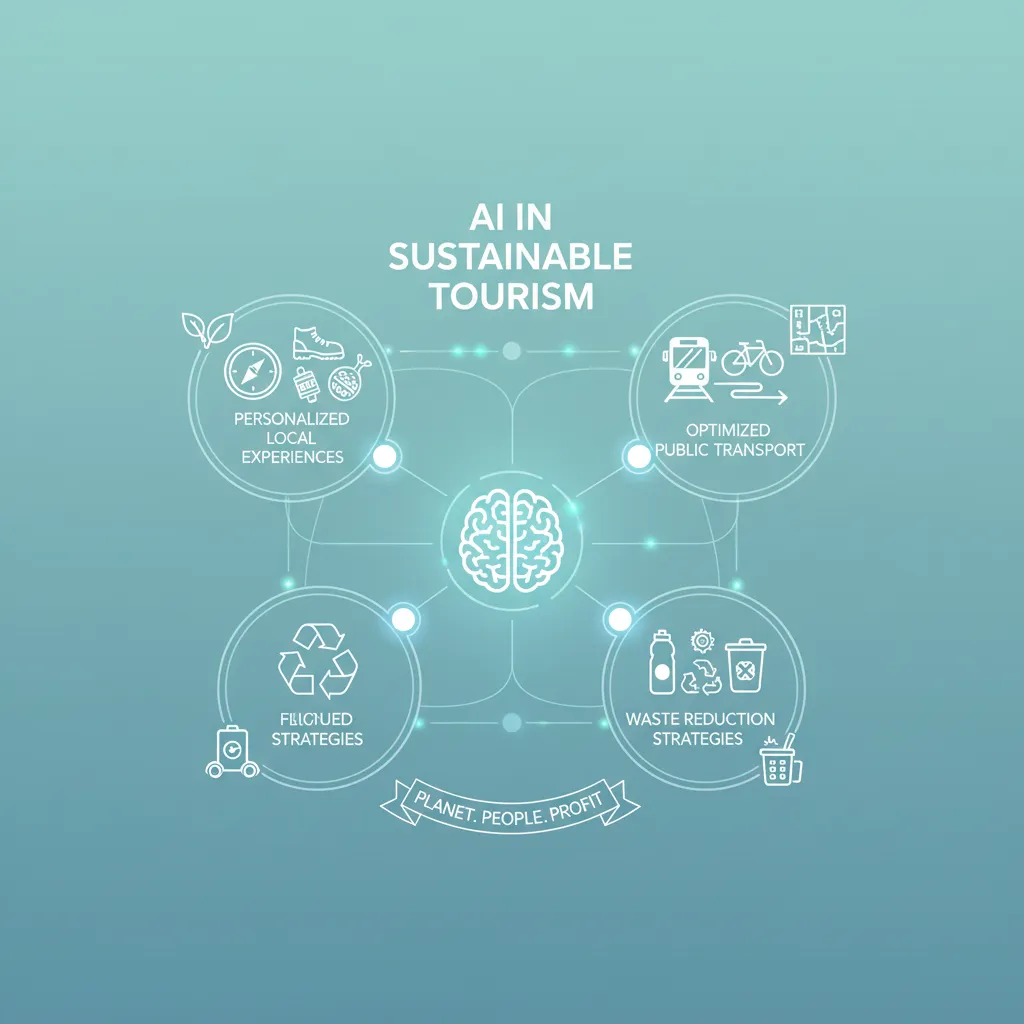
Generic travel packages are a thing of the past. Modern AI platforms are mastering the art of personalized sustainable itineraries. Imagine telling an AI assistant your budget, your interests (like hiking, culinary tours, or history), and your core value—sustainability.
The AI then gets to work, sifting through millions of data points to:
- Identify Vetted Accommodations: It can cross-reference hotel listings with recognized eco-certifications like Green Globe, B Corp, or LEED, prioritizing properties that use renewable energy, manage waste effectively, and support their local communities.
- Suggest Low-Impact Activities: Instead of promoting overcrowded tourist traps, the AI can recommend experiences that foster a deeper connection with the destination, such as guided nature walks with local conservationists, community-run cooking classes, or visits to social enterprises.
- Optimize Pacing and Logistics: AI can build an itinerary that minimizes unnecessary travel between locations, suggests using public transport or electric vehicles, and even schedules activities during off-peak hours to reduce strain on local infrastructure.
This level of AI optimized eco trips ensures your journey is not only enjoyable but also aligns perfectly with the principles of responsible tourism. [Related: Unlock Your Dream Trip: Top Generative AI Tools for Personalized Travel]
Optimizing Routes for a Lighter Carbon Footprint
One of the most significant impacts of travel is carbon emissions from transportation. Carbon footprint reduction travel AI is a game-changer in this domain. AI tools are becoming incredibly adept at optimizing every leg of your journey.

Consider these applications:
- Flight Analysis: AI-powered search engines now integrate carbon emission estimates directly into their results. They can highlight flights that are more fuel-efficient (based on aircraft type, directness, and even historical tailwind data) allowing you to make a choice based on more than just price.
- Multi-Modal Transport: For journeys across continents or countries, an AI can analyze and compare complex combinations of flights, high-speed trains, buses, and ferries to find the optimal balance of speed, cost, and low environmental impact. It can uncover a scenic train route that produces 90% fewer emissions than a short-haul flight.
- Smart Driving Directions: For road trips, AI navigation apps are beginning to offer “eco-friendly routing” options. These routes prioritize constant speeds, fewer hills, and less traffic congestion to reduce fuel consumption.
Cutting Through the Greenwashing: AI as a Truth Detector
Perhaps AI’s most crucial role is in fostering transparency and combating greenwashing. Using a technology called Natural Language Processing (NLP), AI algorithms can read and analyze thousands of reviews, sustainability reports, and news articles about a company in seconds.
This enables ethical tourism AI to:
- Analyze Sentiment: It can gauge the true sentiment of customer reviews, filtering out fake or biased feedback to see what real travelers say about a hotel’s “eco” claims.
- Verify Certifications: The AI can check if a claimed eco-certification is legitimate, current, and from a reputable body.
- Flag Inconsistencies: It can cross-reference a company’s marketing language with its official corporate sustainability reports, flagging discrepancies that might indicate greenwashing.
This analytical power gives travelers the confidence that their choices are genuinely supporting businesses committed to a healthier planet.
The Best AI Tools and Apps for Sustainable Travel
The theory is compelling, but what does this smart travel for environment look like in practice? A new generation of apps and platforms are integrating AI to empower travelers.
For Planning & Booking: Smart Platforms
While a single, all-encompassing AI travel super-app is still on the horizon, many existing platforms are using AI in clever ways:
- Google Flights: Already incorporates carbon emission estimates for nearly every flight, allowing for at-a-glance comparisons.
- Wayaj: An app dedicated to booking sustainable hotels, using a proprietary rating system to vet properties on criteria like community support, waste management, and energy efficiency.
- Good Trip: A platform that helps travelers find and book tours from certified, locally-owned operators, ensuring the money goes directly into the community.
For On-the-Go Decisions: Real-Time Impact Tracking
The power of AI extends to the choices you make during your trip. New responsible travel apps AI are designed to give you real-time feedback on your impact.

Imagine an app that connects to your digital wallet and uses AI to categorize your spending. It could show you what percentage of your money is going to local businesses versus international chains, helping you make more conscious purchasing decisions. Other apps can use your phone’s GPS to track your transportation choices in real-time and visualize the carbon savings of walking or taking the subway instead of a taxi.
For Conscious Consumption: AI-Powered Guides
AI can also be your guide to living like a local. An AI assistant could recommend farmers’ markets over supermarkets, point you to restaurants that specialize in locally sourced, seasonal ingredients, or even help you translate phrases to buy from a local artisan respectfully. This granular level of assistance makes AI for conscious travel a practical reality.
Beyond the Traveler: AI’s Role in Protecting Destinations
The benefits of AI in sustainable tourism extend far beyond individual trip planning. The same technology is being deployed on a larger scale to protect the very destinations we love to visit. This is where we see some of the most innovative eco travel solutions.
AI in Wildlife Conservation and Overtourism Management
Protecting biodiversity is a cornerstone of sustainable tourism. AI is a powerful tool for conservationists:
- Anti-Poaching: Drones equipped with AI-powered thermal imaging can patrol vast nature reserves, automatically identifying potential poachers and alerting rangers in real-time.
- Species Monitoring: AI analyzes millions of images from camera traps and satellites to track animal populations, migration patterns, and habitat health without intrusive human intervention.
Simultaneously, AI helps manage the threat of overtourism. By analyzing data from cell phones, social media check-ins, and booking systems, AI models can predict when and where crowds will form. This allows authorities to implement strategies like timed entry systems or dynamically priced tickets to distribute visitors more evenly, reducing the strain on fragile ecosystems and historical sites.
Optimizing Resource Management in Hospitality
The hospitality industry has a massive environmental footprint. AI is helping to reduce it from the inside out. Smart hotels use AI-powered building management systems to:
- Optimize Energy Use: AI can adjust heating and cooling based on real-time occupancy, weather forecasts, and energy grid prices.
- Reduce Water Consumption: Smart sensors can detect leaks, and AI can optimize irrigation schedules for hotel grounds.
- Minimize Food Waste: AI systems can analyze restaurant data to predict demand for certain dishes more accurately, helping chefs reduce food waste—a major contributor to greenhouse gas emissions.
The Human Element: Pairing Tech with Conscious Choices
For all its power, AI is a tool, not a silver bullet. The future of green travel tech is one where technology empowers, but does not replace, human consciousness. A solar-powered charger is a great piece of green tech for travelers, but the decision to use it and reduce reliance on the grid is a human one.

Ethical tourism AI can point you to a community-run enterprise, but it can’t teach you how to engage with its members with respect and curiosity. It can find you a low-carbon travel route, but the willingness to choose a slightly longer journey for the sake of the planet comes from within.
The most profound travel experiences happen when we are present and engaged. Use AI to handle the complex logistics so you can free up your mental energy to connect with the culture, appreciate the nature, and make mindful choices on the ground. [Related: Master Money Abroad: Digital Nomad Finance Guide]
The Future of Green Travel Tech: What’s on the Horizon?
The integration of AI and sustainable travel is still in its early stages. The future promises even more seamless and impactful innovations.
- Hyper-Personalization: Future AI will be like a “sustainability concierge,” learning your personal values over time. It might know you prioritize vegan-friendly hotels or businesses owned by women and proactively filter your options.
- Predictive Environmental Modeling: AI will be able to model the potential long-term environmental impact of tourism on a destination, helping local governments make smarter, more sustainable development decisions.
- Real-Time Language Translation: Advanced AI will break down communication barriers, enabling deeper, more respectful interactions between travelers and local communities.
- Tokenized Incentives: Imagine a system where you earn “eco-credits” for making sustainable choices—tracked by an AI—which you can then redeem at other green businesses.
These sustainable travel tech innovations will be powered by increasingly sophisticated hardware and software, making the systems faster, more intuitive, and more capable. [Related: NVIDIA Blackwell: The AI Chip That’s Changing Everything] [Related: Neuromorphic Computing: Brain-Inspired AI Hardware]
Conclusion
The journey towards a truly sustainable travel industry is a long one, but for the first time, we have a uniquely powerful guide to help us navigate it. Artificial Intelligence is transforming the abstract ideal of “green travel” into a set of concrete, accessible, and data-driven choices. It empowers us to find personalized eco-itineraries, slash our carbon footprints, see through the fog of greenwashing, and contribute positively to the places we visit.
By embracing these AI tools for sustainable travel, we are not outsourcing our responsibility; we are enhancing our ability to be responsible. We are using the best of human innovation to protect our planet’s most precious treasures. So, as you plan your next adventure, let technology handle the heavy lifting. Let AI be your researcher and analyst, so you can be what you were always meant to be: a curious, conscious, and considerate traveler.
FAQs
Q1. What is sustainable travel?
Sustainable travel, or responsible tourism, is about visiting a place in a way that makes a positive impact on the environment, society, and economy. It involves minimizing your negative footprint, respecting local cultures, supporting local communities, and conserving natural and cultural heritage.
Q2. How does AI help in planning eco-friendly travel?
AI helps plan eco-friendly travel by analyzing vast amounts of data to find the most sustainable options. It can identify certified eco-hotels, calculate the lowest carbon transportation routes, create personalized itineraries with low-impact activities, and even help detect “greenwashing” claims made by companies.
Q3. Can AI really reduce my travel carbon footprint?
Yes, absolutely. AI can significantly reduce your travel carbon footprint by optimizing your transportation choices. It compares the emissions of different flights, trains, and driving routes, suggesting the most fuel-efficient options. This data-driven approach allows you to make informed decisions that directly lower your environmental impact.
Q4. What are some examples of AI tools for sustainable travel?
Examples include flight search engines like Google Flights that show carbon emissions, booking platforms like Wayaj that vet and rate eco-friendly hotels, and navigation apps that offer “eco-friendly routing” to save fuel. Many new responsible travel apps are also emerging to track your real-time impact.
Q5. Is AI the only solution for responsible tourism?
No, AI is a powerful tool, but it’s not the only solution. The foundation of responsible tourism is a conscious mindset. AI should be used to empower travelers to make better choices, but it doesn’t replace the need for personal responsibility, respecting local customs, and making mindful decisions about consumption and interaction.
Q6. How can I avoid greenwashing when booking travel?
Look for specific, measurable claims rather than vague buzzwords like “eco-friendly.” Prioritize businesses with reputable, third-party certifications (like B Corp, Green Globe, or Fair Trade Tourism). AI tools can help by analyzing user reviews and company reports to flag inconsistencies between marketing claims and actual practices.
Q7. What is the future of sustainable travel technology?
The future lies in hyper-personalization and predictive analytics. Expect AI that learns your specific ethical preferences, platforms that can predict the environmental impact of tourism on a destination before it happens, and seamless integration of tools that make sustainable choices the easiest and most obvious option. [Related: The AI Revolution in Healthcare: Transforming Patient Care & Medical Innovation]