AI for Green Cities: Sustainable Urban Planning & Smart Solutions

Introduction: Forging a Greener Tomorrow with Artificial Intelligence
Our planet faces unprecedented environmental challenges, with urban areas at the forefront of both impact and potential solutions. Cities, while centers of innovation and economy, are also significant contributors to resource consumption, waste generation, and greenhouse gas emissions. The urgent need for sustainable urban planning has never been clearer. But what if we could harness the power of artificial intelligence (AI) not just to manage, but to truly transform our cities into thriving, eco-friendly hubs? This isn’t science fiction; it’s the rapidly unfolding reality of AI in urban development.
This article will delve into the transformative potential of AI in creating green cities and fostering urban sustainability technology. We’ll explore how AI for smart cities is moving beyond theoretical discussions to implement tangible, eco-friendly urban design principles and AI-powered city management systems. From optimizing energy consumption and public transportation to revolutionizing waste management and enhancing green infrastructure, AI offers an intelligent pathway to a more resilient, resource-efficient, and livable urban future. Join us as we uncover the innovative applications and profound impact of AI in shaping the cities of tomorrow.
The Imperative of Sustainable Urban Planning in the AI Era
The rapid pace of urbanization brings with it a host of complex issues: sprawling infrastructure, increased carbon footprints, resource depletion, and growing inequality. Traditional urban planning, often reactive and siloed, struggles to keep pace with these dynamic challenges. This is where the synergy of sustainable urban planning and AI becomes critical. AI provides the analytical horsepower and predictive capabilities necessary to move beyond conventional approaches, enabling proactive, data-driven decisions that align with long-term environmental and social goals.
At its core, sustainable urban planning aims to meet the needs of the present without compromising the ability of future generations to meet their own needs. It encompasses environmental protection, social equity, and economic viability. AI, with its capacity to process vast datasets, identify complex patterns, and simulate future scenarios, is emerging as an indispensable tool for achieving these ambitious objectives. It transforms cities from passive structures into responsive, intelligent ecosystems.
Why AI is a Game-Changer for Green Infrastructure
Green infrastructure AI is not just about planting more trees; it’s about strategically integrating natural systems into the urban fabric to deliver ecological, economic, and social benefits. AI enhances this by:
- Optimizing Location and Design: AI algorithms can analyze factors like sunlight exposure, water runoff patterns, existing biodiversity, and heat island effects to recommend optimal locations for parks, green roofs, and permeable surfaces. This ensures maximum ecological impact and resource efficiency.
- Predictive Maintenance: AI-powered sensors can monitor the health of urban greenery, detecting diseases, water stress, or structural issues in trees, allowing for timely intervention and reducing maintenance costs.
- Water Management: Smart irrigation systems, guided by AI, use real-time weather data and soil moisture levels to water plants only when and where needed, conserving precious water resources.
- Biodiversity Enhancement: AI can analyze urban ecosystems to identify opportunities for increasing biodiversity, suggesting native plant species that thrive in specific microclimates and attract local wildlife.
By making green infrastructure more effective and efficient, AI directly contributes to improved air quality, reduced urban temperatures, enhanced stormwater management, and increased urban biodiversity, making cities more resilient and livable.
Smart City Solutions Powered by AI: A Holistic Approach
The concept of a “smart city” is evolving beyond mere connectivity to one where AI actively manages and optimizes urban systems for sustainability. These smart city solutions leverage data from countless sensors, cameras, and IoT devices to create a comprehensive, real-time understanding of the urban environment.
1. Energy Management and Renewable Energy Integration
One of the most significant impacts of AI in green cities is in energy optimization. AI for smart cities is instrumental in creating genuinely renewable energy urban landscapes by:
- Smart Grids Urban Planning: AI algorithms analyze energy demand patterns, weather forecasts, and renewable energy generation (solar, wind) to dynamically balance the grid, minimize waste, and prevent blackouts. This ensures efficient distribution and storage of energy.
- Building Energy Management Systems (BEMS): AI-powered BEMS learn occupancy patterns and adjust heating, ventilation, air conditioning (HVAC), and lighting in buildings to reduce energy consumption without compromising comfort.
- Predictive Maintenance for Renewables: AI can predict maintenance needs for solar panels and wind turbines, ensuring optimal performance and extending their lifespan.
These applications not only reduce a city’s carbon footprint but also lower energy costs for residents and businesses.
2. Waste Management & Circular Economy
Waste is a colossal challenge for modern cities. AI is transforming waste management AI cities by moving towards a more circular economy model:
- Smart Bins and Collection Routes: AI-enabled smart bins equipped with sensors can detect fill levels and automatically notify waste management services when they need emptying. AI algorithms then optimize collection routes, reducing fuel consumption, emissions, and operational costs.
- Waste Sorting and Recycling: AI-powered robotic systems can sort waste with greater accuracy and speed than manual methods, increasing recycling rates and recovering valuable materials from the waste stream.
- Predictive Waste Generation: AI can analyze historical data, population density, and consumption patterns to predict future waste generation, allowing cities to plan resources more effectively.
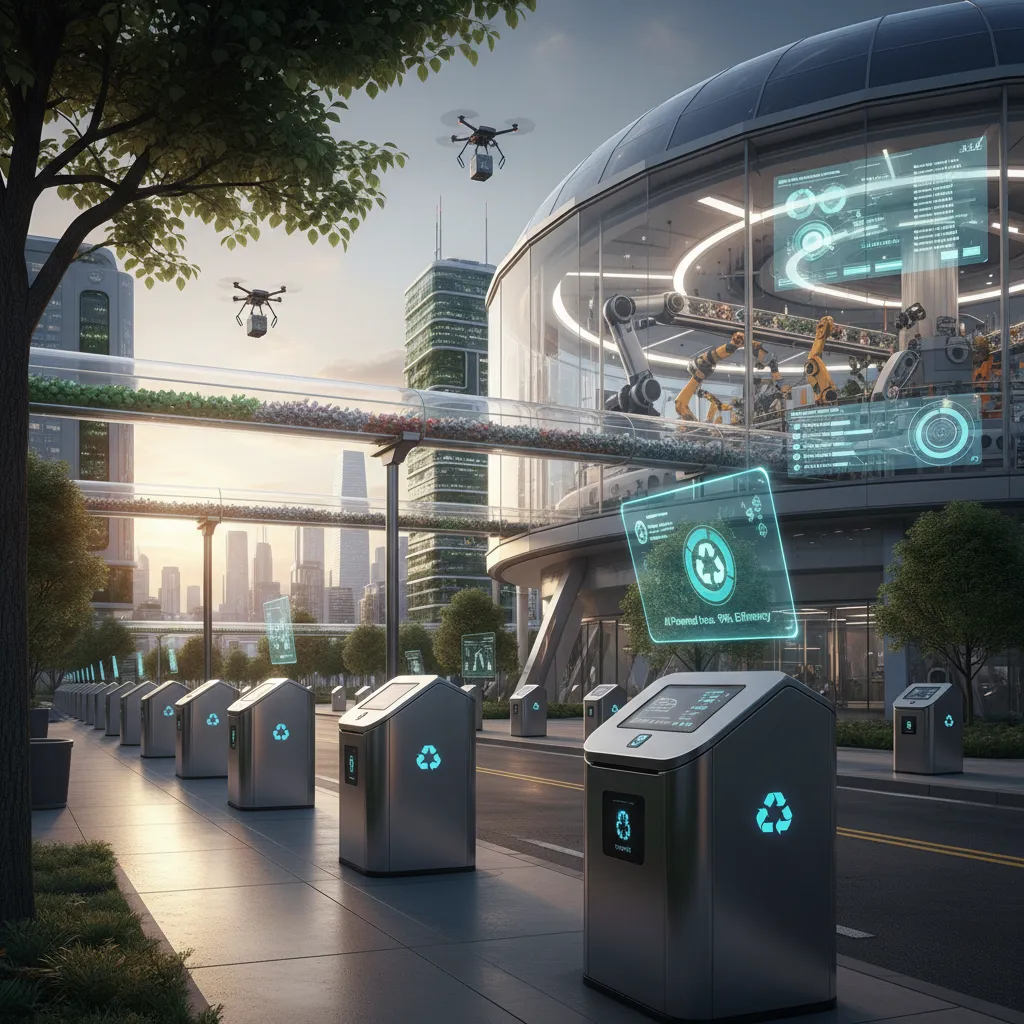
By making waste management more efficient and intelligent, AI helps cities reduce landfill volume and promote resource recovery.
3. Traffic Optimization & Public Transportation
Urban congestion is a major source of air pollution and lost productivity. Traffic optimization AI urban systems offer intelligent solutions:
- Real-time Traffic Flow Management: AI analyzes live traffic data from sensors, cameras, and GPS devices to adjust traffic light timings, manage lane usage, and provide dynamic rerouting suggestions to drivers, reducing congestion and travel times.
- AI in Public Transportation: AI optimizes public transport routes and schedules based on demand patterns, special events, and real-time traffic conditions, making public transit more efficient, reliable, and attractive. This encourages a shift away from private vehicles, further reducing emissions.
- Autonomous Vehicles: While still developing, AI is the backbone of autonomous public transport fleets, promising even greater efficiency and reduced human error in the future.
- [Related: AI productivity tools 2024]
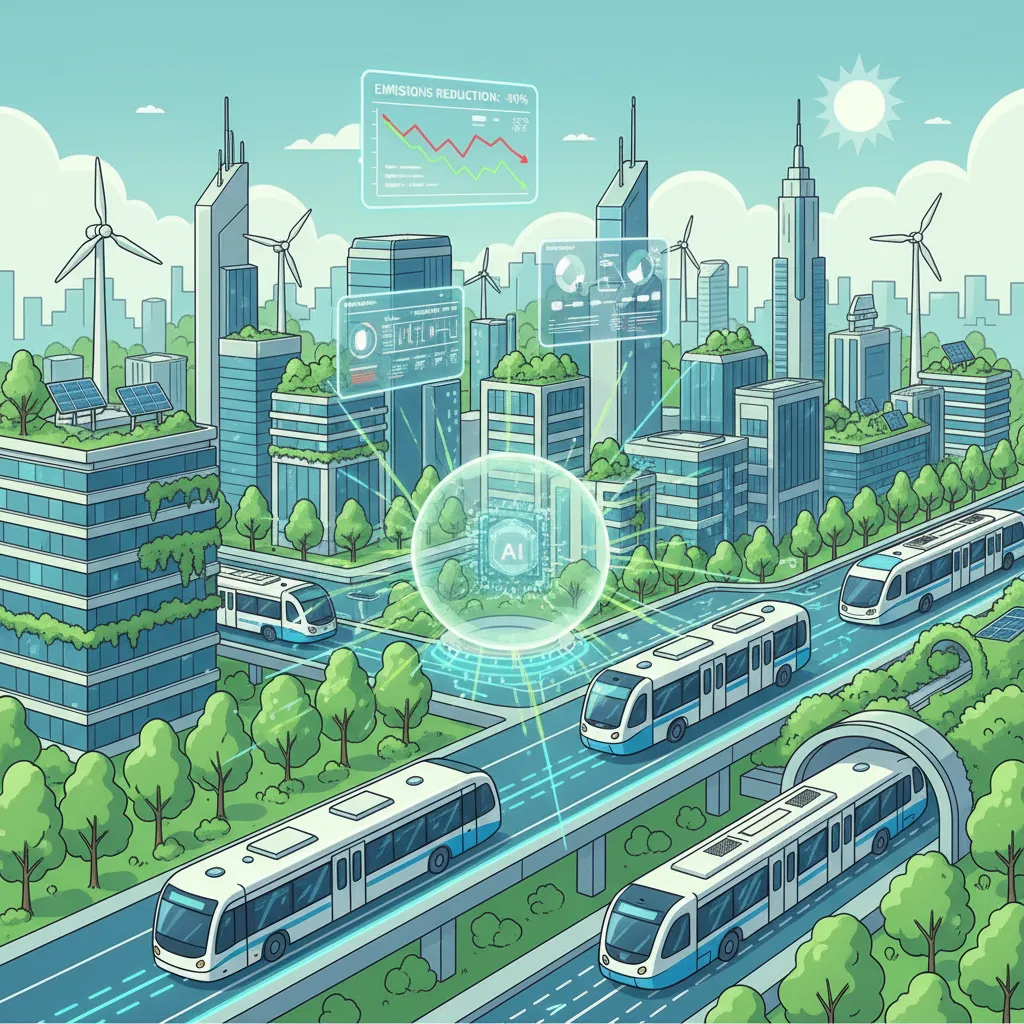
By streamlining urban mobility, AI contributes significantly to cleaner air and a more pleasant urban experience.
4. Water Resource Management
With climate change exacerbating water scarcity, water management smart cities are crucial. AI offers sophisticated tools for conservation:
- Leak Detection and Predictive Maintenance: AI analyzes water flow data to identify anomalies that indicate leaks in the urban water infrastructure, enabling prompt repairs and minimizing water loss.
- Demand Forecasting: AI models predict urban water demand based on weather, population, and historical usage, allowing water utilities to optimize supply and treatment processes.
- Smart Irrigation: As mentioned earlier, AI-powered irrigation systems for public green spaces and agriculture within city limits significantly reduce water waste.
- Water Quality Monitoring: AI can analyze data from sensors in water bodies to detect contaminants early, ensuring safe drinking water and protecting aquatic ecosystems.
These intelligent systems ensure that water, a finite resource, is managed responsibly and sustainably.
5. Air Quality Monitoring & Pollution Control
Poor urban air quality is a significant public health concern. Air quality monitoring AI provides real-time insights for targeted interventions:
- Hyper-local Monitoring: Networks of AI-enabled sensors collect granular data on pollutants (PM2.5, NOx, O3) across the city. AI then analyzes this data to create detailed air quality maps, identifying pollution hotspots.
- Source Attribution: AI can help pinpoint the sources of pollution, allowing city planners to implement targeted measures like traffic restrictions, industrial emission controls, or public transport promotion in affected areas.
- Predictive Modeling: AI can forecast air quality based on weather patterns, traffic volumes, and industrial activity, enabling cities to issue early warnings and advise citizens on protective measures.
By giving cities a clear, real-time picture of their air, AI empowers them to take effective steps towards cleaner, healthier environments.
AI for Climate Change Adaptation & Urban Resilience
Beyond mitigating environmental impact, AI plays a pivotal role in helping cities adapt to the inevitable effects of climate change and build urban resilience AI.
- Early Warning Systems: AI analyzes weather patterns, sensor data, and historical events to predict extreme weather events like floods, heatwaves, or storms with greater accuracy, allowing cities to prepare and evacuate if necessary.
- Vulnerability Assessment: AI can map urban areas most vulnerable to climate risks (e.g., flood-prone zones, heat islands) by integrating data on topography, infrastructure, demographics, and climate projections. This information is crucial for targeted urban regeneration AI efforts and infrastructure upgrades.
- Resilient Infrastructure Design: Sustainable architecture AI can assist architects and engineers in designing buildings and infrastructure that are more resilient to future climate impacts, such as higher winds, extreme temperatures, or increased rainfall.
- Emergency Response Optimization: In the event of a disaster, AI can optimize the deployment of emergency services, manage communication networks, and assess damage, leading to faster and more effective recovery efforts.
These applications transform cities from reactive entities to proactive centers of resilience, safeguarding their inhabitants and assets.
Data-Driven Urban Planning: The AI Backbone
The foundation of all these AI environmental solutions and sustainable city planning tools is data. Data-driven urban planning is revolutionized by AI’s ability to:
- Integrate Diverse Datasets: AI can ingest and synthesize data from disparate sources—GIS maps, sensor networks, social media, demographic statistics, traffic cameras, satellite imagery—to create a holistic view of the city.
- Identify Hidden Patterns: Through machine learning, AI can uncover non-obvious correlations and patterns that human analysts might miss, revealing insights into urban dynamics, resource consumption, and citizen behavior.
- Predictive Modeling for Future of Urban Planning: AI is invaluable for forecasting future trends, such as population growth, energy demand, traffic congestion, and the impact of policy changes. This allows planners to make informed decisions that shape the future of urban planning.
- Simulation and Scenario Planning: AI can simulate the effects of different planning interventions—like new public transport lines, zoning changes, or green space additions—before they are implemented, helping planners optimize outcomes and avoid costly mistakes.

This shift towards smart urban planning software and innovative urban solutions powered by AI ensures that decisions are based on evidence, not assumptions.
Ethical AI and Citizen Engagement in Urban Development
While the benefits are clear, the deployment of AI in cities raises important ethical considerations. AI ethical urban planning mandates transparency, accountability, and fairness.
- Privacy Concerns: The vast amounts of data collected by smart city systems could potentially infringe on citizen privacy. Robust data governance frameworks, anonymization techniques, and clear consent mechanisms are crucial.
- Bias in Algorithms: If AI models are trained on biased data, they can perpetuate or even exacerbate existing social inequalities. Developers must ensure datasets are representative and algorithms are regularly audited for fairness.
- Algorithmic Transparency: Decisions made by AI systems, especially those impacting public services, should be explainable. Citizens need to understand how AI is influencing their urban environment.
- Citizen Engagement AI urban: AI can facilitate better citizen engagement by analyzing public feedback from various channels (social media, surveys, public forums) to understand community needs and priorities. This ensures that smart city solutions are truly responsive to the people they serve. Platforms could even use AI to summarize complex urban proposals, making them more accessible to the public for feedback.
A truly green and smart city must be equitable and inclusive, with AI serving as a tool to empower communities, not control them.
The Future of Urban Living: Eco-Smart Cities
The integration of AI into urban planning is not just about incremental improvements; it’s about fundamentally rethinking how cities function. The vision of eco-smart cities is one where every aspect of urban life is optimized for sustainability, efficiency, and livability.
Consider a future where:
- Your building’s energy consumption is dynamically managed by AI, drawing from a local smart grid primarily powered by renewable energy urban sources, with excess energy shared back to the community.
- Your daily commute is seamless, guided by AI in public transportation systems that predict demand and adjust routes in real-time, reducing reliance on private cars.
- Waste collection is invisible, with waste management AI cities systems operating autonomously, and materials efficiently recycled or composted.
- Urban parks and rooftop gardens are intelligently managed, with AI overseeing irrigation and plant health, contributing to local biodiversity and cooling urban heat islands.
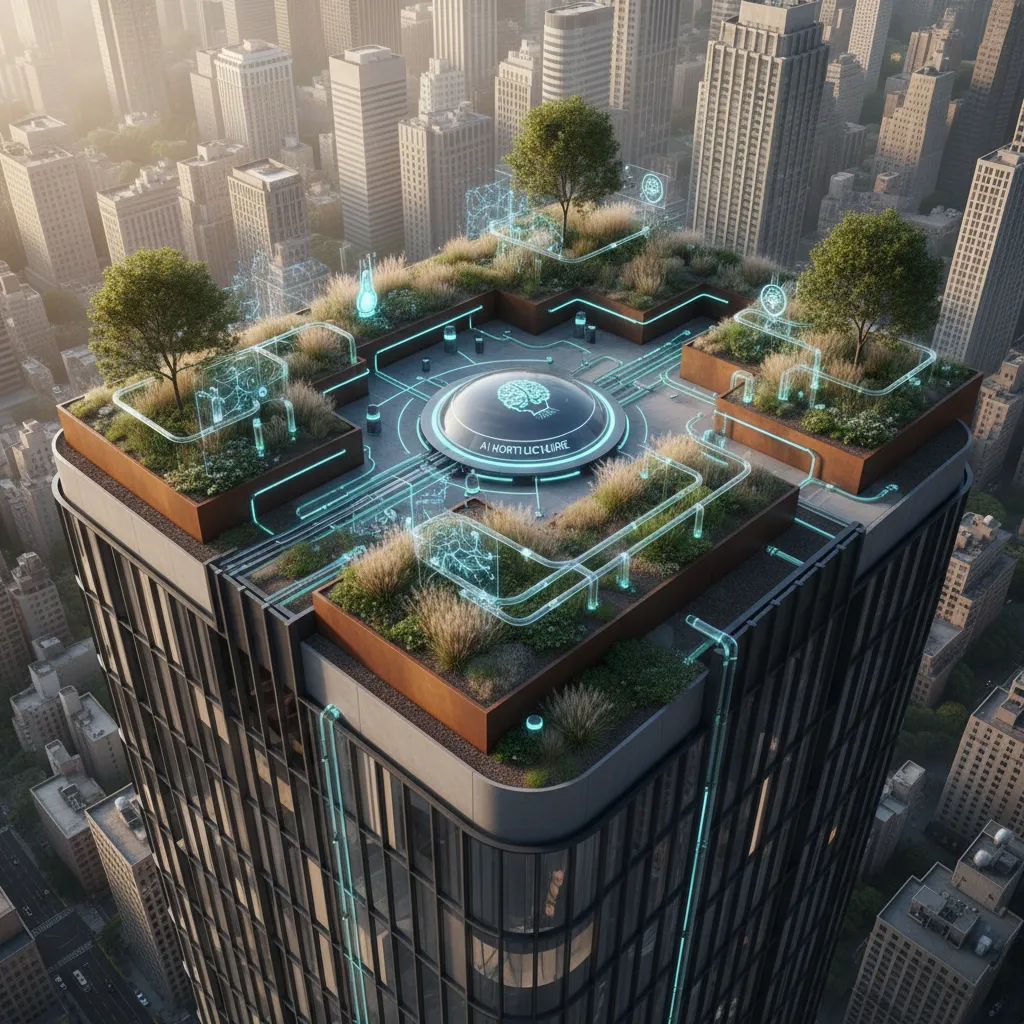
This future is not distant. Many of these technologies are already in pilot phases or active deployment worldwide. The continuous evolution of AI, coupled with advancements in IoT and data analytics, promises to accelerate this transformation. As we move forward, the focus will remain on developing AI environmental solutions that are not only technologically advanced but also human-centric, ensuring our cities are truly great places to live for all.
Conclusion: Building a Brighter, Greener Urban Horizon
The journey towards creating truly green and sustainable cities is complex, but AI offers a powerful compass. From enhancing green infrastructure AI and optimizing renewable energy urban systems to revolutionizing waste management AI cities and enabling precise air quality monitoring AI, AI is proving to be an indispensable ally in the quest for urban sustainability. It empowers city planners and managers with sustainable city planning tools to make more informed, proactive decisions, driving us closer to achieving global sustainable development goals cities.
As we continue to integrate AI in urban development, the focus must remain on ensuring ethical deployment, fostering citizen engagement, and prioritizing human well-being alongside environmental stewardship. The vision of an eco-smart city — one that is resilient, resource-efficient, and vibrant — is within reach. By embracing AI for green cities, we are not just building smarter infrastructure; we are constructing a more hopeful, sustainable future for generations to come.
FAQs
Q1. How can AI help with urban sustainability?
AI assists urban sustainability by optimizing resource management (energy, water, waste), improving traffic flow, enhancing public transportation, monitoring environmental quality (air, water), and designing more efficient green infrastructure. It achieves this by analyzing vast datasets to identify patterns, make predictions, and automate processes.
Q2. What are some examples of AI in smart cities?
Examples include AI-powered smart grids for energy distribution, autonomous public transport systems, intelligent waste bins that optimize collection routes, AI-driven traffic signal management, sensors for real-time air and water quality monitoring, and predictive models for urban planning and climate change adaptation.
Q3. What is sustainable urban planning?
Sustainable urban planning is an interdisciplinary approach to designing and managing cities to meet the needs of current generations without compromising the ability of future generations to meet their own needs. It integrates environmental protection, social equity, and economic viability into all aspects of urban development.
Q4. How does AI contribute to green infrastructure?
AI optimizes green infrastructure by identifying ideal locations for parks and green spaces, managing smart irrigation systems based on real-time weather, predicting maintenance needs for urban greenery, and analyzing environmental data to maximize the ecological benefits of natural systems within cities.
Q5. What are the challenges of using AI in urban planning?
Challenges include data privacy and security concerns, potential algorithmic bias leading to inequitable outcomes, the need for robust ethical frameworks, high implementation costs, integrating disparate data sources, ensuring public trust and acceptance, and the requirement for specialized technical expertise.
Q6. Can AI predict urban growth patterns?
Yes, AI can predict urban growth patterns by analyzing historical data on population, economic activity, infrastructure development, land use changes, and environmental factors. Machine learning models can identify trends and project future growth scenarios, aiding planners in proactive development strategies.
Q7. How can AI optimize public transportation?
AI optimizes public transportation by analyzing real-time demand, traffic conditions, and historical rider data to dynamically adjust routes, schedules, and vehicle deployment. This leads to reduced wait times, more efficient travel, lower operational costs, and a decreased carbon footprint.
Q8. What is the role of data in AI-powered urban planning?
Data is the foundational input for AI-powered urban planning. AI processes and analyzes vast amounts of urban data (sensors, GIS, satellite imagery, social media, demographic statistics) to identify patterns, make predictions, simulate scenarios, and provide actionable insights for decision-makers.